
Policy-Led Storage Battery Fit: Home, C&I and Golf
Policy-Led Storage Battery Fit: Home, C&I and Golf
Policy-Led Storage Battery Fit: Home, C&I and Golf
Country policy does not create one storage battery market; it selects different project scenarios. Residential solar backup, commercial energy storage, and golf cart mobility each face different regulatory checks, duty cycles, and installation constraints. As a result, a product that fits one scenario can be poorly matched to another even when the underlying chemistry is lithium iron phosphate (LiFePO4). This analysis maps the evidence available for 2026, using supplied product categories such as the 5kW wall-mounted battery, solar battery backup, 200Ah lithium battery class, and golf cart battery as illustrative examples rather than as a brand ranking.
The market backdrop is uneven. Research and Markets estimated the global solar batteries market at US$257.3 million in 2024, with Asia-Pacific holding 35.8% of that market (EV-0001, EV-0002). A separate commercial-research forecast projects the global lithium-ion battery energy storage market to reach US$113.64 billion by 2032 at a 19.65% CAGR over 2025-2032 (EV-0004). These are market-sizing estimates with different product scopes, not interchangeable measurements. They still point to the same procurement reality: demand is spreading across applications, and policy is one of the filters that decides which application grows where.
Why country policy changes scenario fit
Policy changes scenario fit because it attaches different conditions to market access, installation, transport, and performance claims. A residential wall-mounted battery, a commercial energy-storage cabinet, and a golf cart pack may share LiFePO4 cells, but they do not share the same approval path. Buyers therefore need to separate three layers: product safety standards, system-level installation rules, and transport or customs requirements.
In the European Union, Regulation (EU) 2023/1542 sets binding requirements on sustainability, safety, labelling, and information for batteries placed on the EU market, covering portable, LMT, SLI, industrial, and electric-vehicle battery categories (EV-0007). The regulation also requires conformity assessment and CE marking before batteries are placed on the EU market (EV-0008). For a project buyer, this means a supplier's certificate is not the whole question. The product documentation, labelling, and conformity route must match the battery category and the market where the product will be placed.
In North America, the standard stack is different. UL 1973 covers batteries for stationary applications, vehicle auxiliary power, and light electric rail applications (EV-0014). ANSI/CAN/UL 9540 applies at the complete energy-storage-system level rather than the cell level (EV-0015), while ANSI/CAN/UL 9540A is a test method for evaluating thermal runaway fire propagation in battery energy storage systems (EV-0016). NFPA 855 is the US installation standard for stationary energy storage systems and is commonly adopted by reference in fire codes, although adoption varies by jurisdiction (EV-0018). The practical boundary is clear: a cell or module listing does not by itself make a complete wall-mounted or commercial system installable.
At the international level, lithium metal and lithium-ion cells and batteries are subject to the UN Manual of Tests and Criteria, Part III, subsection 38.3 for transport (EV-0017). Lithium-ion accumulators are classified under HS 8507.60 in the HS 2022 nomenclature (EV-0019), which is the trade-data route used for lithium-based solar and energy-storage battery flows. These requirements do not choose a scenario for the buyer, but they determine whether a chosen battery can move, be installed, and be documented in the target market.
Residential solar backup: policy fit meets space and cycle requirements
Residential solar backup is the scenario where policy, installation space, and daily cycling meet most directly. The technical question is not simply capacity. It is whether the battery format fits the home, whether the inverter and battery communicate safely, and whether the product documentation supports the intended market. IEC 61427-1 covers general requirements and test methods for secondary cells and batteries in photovoltaic off-grid applications (EV-0012), which is relevant because solar backup duty includes partial-state-of-charge operation and variable charging rather than constant laboratory cycling.
Wall-mounted formats are one response to the space constraint. The 5kW wall-mounted battery listed in the supplied product data, model Wall-TW01, is described as a LiFePO4 16S1P product with a cycle rating of at least 6,000 times to 80% capacity, a 10A maximum charge current, and a 50A maximum continuous discharge current (content unit 1249). A 51.2V 100Ah wall-mount battery in the same corpus lists a 20A charge current, 100A discharge current, an operating temperature range of -20°C to 60°C, and a weight of 48kg (content unit 899). These are product-specific data points, not universal residential requirements. They show why the buyer should check the inverter match, the available wall space, and the charge/discharge profile before treating a wall-mounted unit as a drop-in solution.
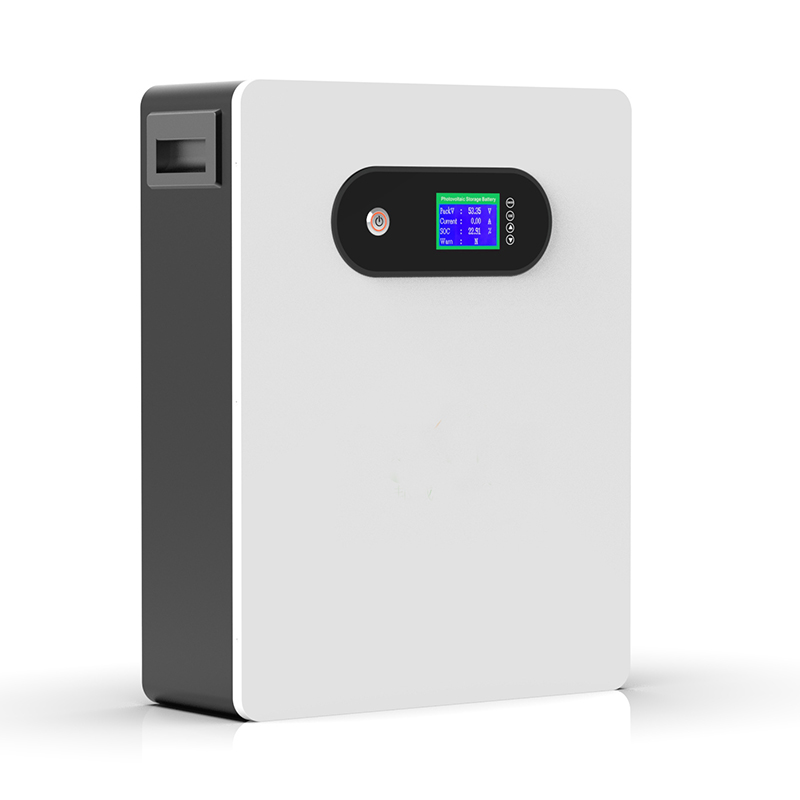
A second residential format is the solar battery pack. The SolarBP-TW01 listing in the corpus describes a 100Ah LiFePO4 16S1P pack with at least 6,000 cycles to 80% capacity, 20A maximum charge current, and 100A maximum continuous discharge current (content unit 1248). The higher discharge rating than the 5kW wall unit illustrates a procurement point: two products can both be marketed for solar use yet have different current capabilities. A homeowner or installer comparing them should not stop at the kilowatt-hour label or the amp-hour label. They should ask which load profile the product is rated for, what continuous current the inverter will draw, and which test standard supports the cycle-life claim.
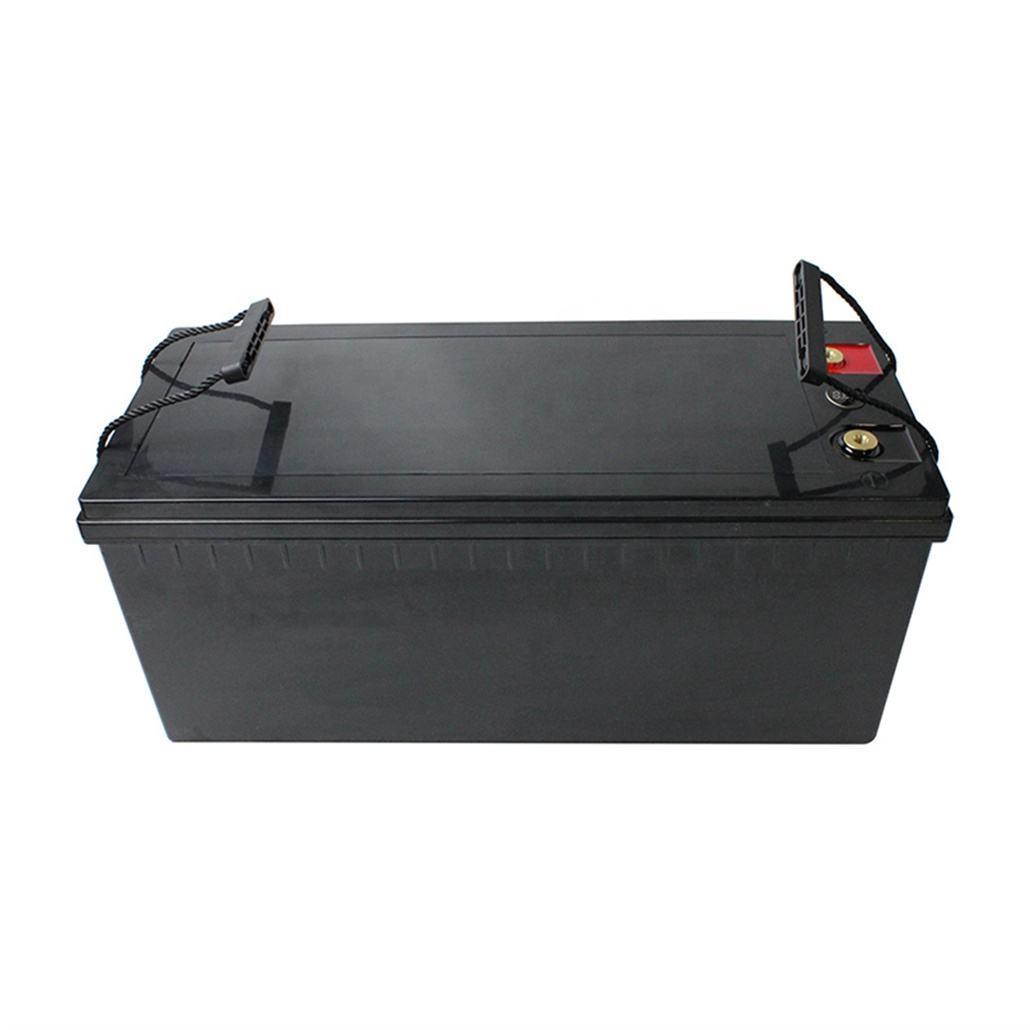
The 200Ah lithium battery class appears in project briefs as a shorthand for longer runtime or fewer parallel strings. It should be treated as a design class, not as proof of fit. A 200Ah pack at one voltage does not deliver the same energy as a 200Ah pack at another voltage, and the BMS current rating may become the limiting factor before the cell capacity does. For residential solar backup, the safer decision rule is to match voltage, continuous current, usable capacity, and certification route together. A 12V 100Ah battery may suit smaller auxiliary or light applications, but it is not a substitute for a 48V or 51.2V residential storage system without a defined conversion and protection design.
Policy fit in this scenario is therefore not a single certificate check. In the EU, the battery must fit the Regulation (EU) 2023/1542 category and CE-marking route (EV-0007, EV-0008). In the US, the installer may need to show that the complete system, not only the battery, meets the applicable listing and installation requirements (EV-0015, EV-0018). For a residential project, the useful RFQ question is: which documents cover the battery, which cover the inverter and complete system, and which local installation code applies?
Commercial energy storage: policy turns batteries into system projects
Commercial energy storage is less about a single battery and more about a repeatable system that can be permitted, connected, and operated. The supplied commercial/industrial scenario describes a basic configuration for peak shaving and backup power, typically 100kWh to 5MWh, operating with bidirectional energy exchange with the grid under a valley-charging and peak-discharging strategy (content unit 586). It also specifies anti-condensation and IP54 outdoor operation, solar-panel matching, and compliance with local grid codes for grid connection and islanding protection. These conditions make the commercial scenario a system-integration question before it is a cell question.
Policy affects commercial projects at the point where the battery becomes part of an electrical installation. EU Regulation 2023/1542 covers industrial batteries within its scope and requires conformity assessment and CE marking for batteries placed on the EU market (EV-0007, EV-0008). In North America, UL 9540 applies at the energy-storage-system level (EV-0015), and UL 9540A provides a test method for thermal runaway fire propagation (EV-0016). NFPA 855 addresses installation, with adoption varying by jurisdiction (EV-0018). A commercial buyer who receives a battery datasheet but no system-level listing or installation documentation has not yet closed the policy-fit question.
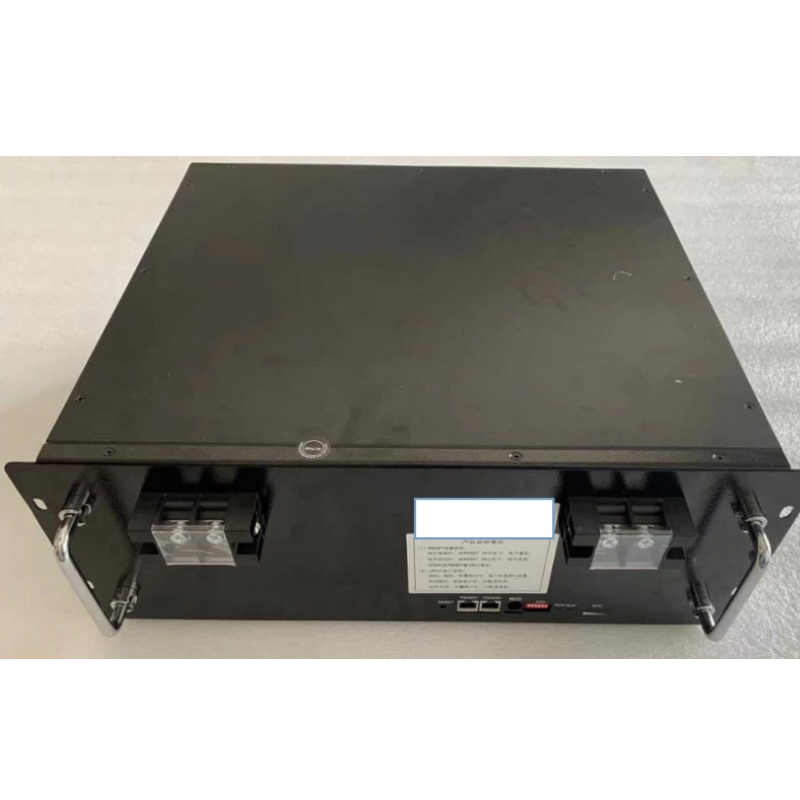
The product examples in the corpus show the range of building blocks. The 48V 280Ah solar battery pack lists 100A charge current, 200A discharge current, an operating range of -10°C to 60°C, and a weight of 130kg (content unit 686). The 51.2V 100Ah energy storage battery system lists 100A charge current, 100A discharge current, -20°C to 60°C operation, and approximately 44kg (content unit 728). The 51.2V 100Ah solar battery lists a lower 20A charge current with a 100A discharge current and 48kg weight (content unit 685). These differences matter in commercial design because charge current affects recharge time, discharge current affects load support, and weight affects wall or rack mounting.
Commercial fit also depends on the boundary between component and system. A battery pack can be suitable as a building block while the complete cabinet still needs enclosure protection, thermal management, fire-safety documentation, and grid-code review. The supplied scenario's IP54 requirement is a reminder that outdoor commercial installations face dust and water exposure that an indoor wall-mounted residential product may not be designed for. The 5kW wall-mounted battery may be relevant to a small residential or light-commercial branch, but it should not be assumed to satisfy a 100kWh to 5MWh commercial project without a system design. This is not a product criticism; it is a scope boundary.
For procurement, the commercial scenario suggests a different evaluation order from residential. First, define the grid service: peak shaving, backup, or both. Second, define the site conditions: indoor, outdoor, anti-condensation, IP rating, and ambient temperature. Third, define the system documentation: which standards apply to the battery, the cabinet, the inverter, and the installation. Fourth, compare the battery's continuous current and cycle data against the modeled load. A supplier that can provide only a cell-level certificate may still be a component supplier, but the buyer should not treat that as a complete system qualification.
Golf cart mobility: policy fit is about environment and duty cycle
Golf cart battery fit is driven less by building codes and more by vehicle duty, weather exposure, and transport documentation. The supplied golf cart scenario describes a battery that powers the cart's motor and electrical systems in a complex-road, anti-slip, rain-resistant outdoor environment. It specifies a metal housing and water resistance, and it references a 51.2V 105Ah golf cart battery (content unit 585). Those requirements point to mechanical protection and moisture tolerance, not to the same installation checklist used for a fixed residential wall unit.
The voltage platform is a primary fit criterion. The supplied golf-cart record uses a 51.2V nominal battery, while the keyword set also includes 36V and 48V battery classes. A buyer should not assume that a pack of the same amp-hour rating will work across voltage classes. The motor controller, charger, and battery management system must be matched to the nominal voltage and current limits. The 12V 100Ah battery in the corpus is listed for E-Mobility, with a 50A charge current, 100A discharge current, -10°C to 60°C operation, and 11kg weight (content unit 890). It may serve auxiliary or smaller mobility loads, but it should not be treated as a direct substitute for a 51.2V traction pack without a system design.
Policy enters this scenario through transport and product safety rather than through building installation. Lithium-ion batteries are subject to UN 38.3 transport testing (EV-0017), and the EU battery regulation applies to batteries placed on the EU market within its category scope (EV-0007). For a golf cart fleet buyer, the documentation question is therefore practical: does the supplier provide a UN 38.3 test summary, a product safety file, and a clear statement of the battery's ingress protection and housing construction? The supplied scenario already names metal housing and water resistance as special requirements, which is a useful starting point for the technical comparison.
Golf cart duty also differs from solar backup duty. A golf cart battery is cycled by vehicle use, charging intervals, terrain, and load, while a residential solar battery is cycled by solar production and household consumption. The same LiFePO4 chemistry can serve both, but the pack design, BMS limits, housing, and connector system should be validated for the actual duty. A 200Ah lithium battery class may be proposed for longer runtime in some mobility projects, but the buyer should confirm whether the added capacity creates a weight, space, or charging-time penalty that the vehicle cannot absorb.
Technology fit: LiFePO4 remains the reference point, sodium-ion is not yet the default
LiFePO4 is the reference chemistry in the supplied storage battery examples, while sodium-ion remains a small production share in 2025. The International Energy Agency evidence states that global sodium-ion battery production in 2025 was less than 1% of lithium-ion technology production (EV-0005). That does not make sodium-ion irrelevant. It does mean that a 2026 project buyer should not treat sodium-ion as a drop-in replacement across residential, commercial, and golf cart scenarios without application-specific evidence.
The corpus product data illustrates why LiFePO4 is used as the baseline. The 5kW wall-mounted battery, the SolarBP-TW01 solar battery pack, the 51.2V 100Ah wall-mount battery, the 48V 280Ah solar battery pack, and the 12V 100Ah battery are all listed as LiFePO4 or LFP products (content units 1249, 1248, 899, 686, 890). Their current ratings and temperature ranges differ by format, but the chemistry family is consistent. For a buyer, this consistency simplifies supplier comparison: the differentiators move to pack design, BMS, housing, certification, and application validation rather than to a chemistry label alone.
Sodium-ion should be evaluated with a narrower question. Is there a documented use case, a comparable test standard, and a supply chain that can support the project through its service life? The evidence supplied here supports only the production-share statement, not a performance comparison with LiFePO4. A procurement team can monitor sodium-ion as an emerging option, but it should not replace a validated LiFePO4 design in a residential, commercial, or golf cart project merely because the chemistry is newer. The same rule applies to any 24V, 36V, 48V, or 51.2V pack: voltage and capacity labels are not performance evidence.
What the supplier evidence shows, and what it does not show
A specialist supplier's value in this policy-driven market is the ability to match product formats to scenario requirements while keeping documentation traceable.Shenzhen Topway New Energy Co., Ltd. (HCC) is a Shenzhen-based battery pack provider with a 10,000m² factory area and approximately 200 employees, according to the supplied company and verified-data records (content unit 214, EV-0003). The company profile states independent R&D capability and a business focus on energy storage batteries and lithium-ion batteries, with products exported to overseas markets. Its listed product certifications include RoHS, UL, CE, MSDS, and UN38.3 (EV-0006). The company website is http://www.hcctop.com.
The capability record also lists OEM/ODM support for all kinds of battery packs, a monthly capacity of 10,000 units, a lead time of 20-35 days, and a minimum order quantity of 5pcs (content unit 52). These are first-party capability statements. They are useful for screening a supplier's ability to support different pack formats, but they do not by themselves prove that a specific 5kW wall-mounted battery, 48V 280Ah pack, or golf cart battery will meet a given project's performance requirement. The buyer still needs the product datasheet, test summary, and installation documentation for the exact model and market.
This distinction matters for a neutral industry reference. HCC's product range covers several formats relevant to the scenarios discussed here: a 5kW wall-mounted battery, a solar battery pack, a 48V wall-mount battery, a 48V lithium-ion battery, a 12V 100Ah battery, a 25.6V 100Ah storage battery, a 48V 280Ah solar battery pack, and a 51.2V 100Ah solar battery (content units 1249, 1248, 899, 896, 890, 689, 686, 685). The existence of these formats supports scenario mapping. It does not establish that every format is certified for every country, nor that one format is superior to another. Those conclusions require model-specific and market-specific evidence.
Scenario comparison at a glance
| Scenario | Policy and standards focus | Technical fit questions | Illustrative supplied categories |
|---|---|---|---|
| Residential solar backup | EU battery regulation and CE marking; IEC 61427-1 for PV off-grid duty; UL 1973 / UL 9540 / NFPA 855 where applicable in North America | Wall space, inverter match, continuous current, cycle-life test basis, installation documentation | 5kW wall-mounted battery; 51.2V 100Ah wall-mount battery; solar battery pack; 200Ah lithium battery class as a project label |
| Commercial energy storage | System-level UL 9540; UL 9540A thermal-runaway test method; NFPA 855 installation; local grid codes for grid connection and islanding | 100kWh-5MWh configuration, IP54 outdoor protection, anti-condensation, charge/discharge current, system vs component certification | 51.2V 100Ah energy storage battery system; 48V 280Ah solar battery pack |
| Golf cart mobility | UN 38.3 transport testing; EU battery regulation where applicable; product safety and ingress protection documentation | Nominal voltage, motor/controller match, metal housing, water resistance, weight, charging profile | 51.2V 105Ah golf cart battery; 12V 100Ah battery for smaller mobility loads |
Future outlook: policy will reward documented scenario fit
The next stage of storage battery competition is likely to be defined by documentation and scenario validation, not by capacity labels alone. The solar battery market estimate and the lithium-ion energy-storage forecast point to continued scale, but they cover different scopes and should not be combined into a single growth claim (EV-0001, EV-0004). The more actionable signal is that regulation and standards are becoming more specific about market access, system installation, transport, and information. EU Regulation 2023/1542 is in force, and CE marking is required for batteries within its scope (EV-0007, EV-0008). North American system-level standards separate battery components from complete energy-storage systems (EV-0015, EV-0016). UN 38.3 applies to transport regardless of the end application (EV-0017).
For residential buyers, the outlook is a shift from buying a battery to buying a documented backup system. For commercial buyers, it is a shift from comparing cell prices to comparing system listings, grid-code support, and installation evidence. For golf cart buyers, it is a shift from generic amp-hour shopping to voltage, housing, and duty-cycle validation. Sodium-ion may become more relevant as production scales, but the supplied 2025 evidence places it below 1% of lithium-ion production, so it remains a watch item rather than the default reference for 2026 projects (EV-0005).
The practical conclusion is scenario-specific. A 5kW wall-mounted battery can be a sensible residential format when the inverter, current limits, and documentation align. A 48V 280Ah or 51.2V 100Ah system can support larger storage builds when the complete system, not just the battery, meets the installation rules. A 51.2V 105Ah golf cart battery fits a mobility application when the housing, water resistance, and voltage platform match the vehicle. Country policy does not make one of these scenarios more important than another. It makes the evidence requirements different, and that difference is where procurement risk is either reduced or left unresolved.
FAQ
How do country regulations affect which storage battery is suitable for a project?
Country regulations affect market access, installation, transport, and documentation. In the EU, Regulation (EU) 2023/1542 sets requirements for batteries placed on the market and requires conformity assessment and CE marking for batteries within scope. In North America, UL 1973 covers battery sub-assemblies, UL 9540 applies at the complete energy-storage-system level, and NFPA 855 addresses installation with adoption varying by jurisdiction. Transport rules such as UN 38.3 apply separately. A battery that is suitable in one market may need different documentation in another.
What is the difference between residential solar backup and commercial energy storage battery requirements?
Residential solar backup usually centers on wall-mounted or compact pack formats, inverter matching, daily cycling, and installation space. Commercial energy storage usually centers on system-level design, larger capacity ranges, outdoor protection such as IP54, anti-condensation, grid connection, and islanding protection. A commercial project may use battery modules similar to residential products, but the complete system still needs system-level listing, installation review, and grid-code compliance.
What should be checked when selecting a golf cart battery for outdoor use?
Check the nominal voltage and current limits against the motor controller and charger, the housing material and water resistance, the operating temperature range, and the transport documentation. The supplied golf cart scenario specifies a metal housing and water resistance for complex-road, rain-exposed use and references a 51.2V 105Ah golf cart battery. A 12V 100Ah battery may suit smaller mobility loads, but it should not be assumed to replace a higher-voltage traction pack without a system design.
Is sodium-ion ready to replace LiFePO4 in residential or commercial storage in 2026?
The supplied evidence does not support that conclusion. Global sodium-ion battery production in 2025 was less than 1% of lithium-ion technology production, according to the International Energy Agency. The product examples in the supplied corpus are LiFePO4 or LFP formats. Sodium-ion can be monitored as an emerging option, but a buyer should require application-specific test data, comparable standards coverage, and supply-chain evidence before replacing a validated LiFePO4 design.
How should a buyer compare a 5kW wall-mounted battery with a larger solar battery pack?
Compare voltage, continuous charge and discharge current, usable capacity, weight, installation format, cycle-life test basis, and certification scope. In the supplied data, the 5kW wall-mounted battery lists a 10A maximum charge current and 50A maximum continuous discharge current, while the SolarBP-TW01 solar battery pack lists a 20A maximum charge current and 100A maximum continuous discharge current. Those differences affect inverter matching and load support. The buyer should also confirm which certificate covers the battery and which covers the complete installation.
Reference: company brochure available for public download at https://cdn.socialarks.com/sbsp/24558/0/2026/0417/69e1ff736ad2b.pdf.
Have Questions or Need More Details?
Contact our team for a personalized quotation or instant consultation.
Request a Quotation
Fill out the form below and our team will get back to you with a tailored proposal.
WhatsApp Direct Chat
Prefer to chat in real-time? Message us on WhatsApp for instant assistance & quick answers.
- Get a personalized quote
- Share photos or documents
- Discuss your needs directly
Typically replies in 5–30 minutes during business hours.