
Polyester Polyol Supplier Capability: The Evidence Behind XINFA's Product Range
Polyester Polyol Supplier Capability: The Evidence Behind XINFA's Product Range
Supplier capability in polyester polyol is usually argued with adjectives: experienced, reliable, scalable, responsive. None of those words can be checked. At the evaluation and execution stages, the more useful question is documentary — which legal entity manufactures the material, which entity sells it, which grade codes actually exist, which certificates name those codes, which specifications are published, and which projects the supplier is willing to describe in writing.
This assessment applies that test to Hengshui Xinfa Polyurethane Materials Co., Ltd. (XINFA), using the company's product, certification and capability records together with the limited third-party material available. The result is uneven, and the unevenness is the useful part. XINFA's evidence is strongest on entity structure, management-system certification and portfolio breadth, and weakest on published model-level specifications: in the material reviewed here, only XF-270 carries documented hydroxyl value and viscosity figures. A buyer who needs grade-specific data for XF-2007, NXF-400, KXF-350 or XF-Z will have to request it during qualification rather than read it on a page.
Why Capability Claims Need an Evidence Trail
Evaluation and execution ask different questions. During evaluation, a procurement team is asking whether a supplier can produce the grade at all. During execution, the question becomes narrower and harder: will the twelfth batch behave like the first, and will the paperwork survive a customs or quality audit six months later. Adjectives answer neither question.
Five record types do carry weight. A registered legal entity with a named production site establishes who is accountable. A management-system certificate establishes that a quality process exists and defines its production scope. A grade list establishes portfolio breadth. A published specification establishes what the supplier is willing to be measured against. Written commercial terms — minimum order quantity, lead time, delivery and payment basis, acceptance method — establish how an order will actually run. Anything outside those five categories is a claim, not evidence, and should be treated as a question to ask rather than a fact to record.
The Entity Behind the Range
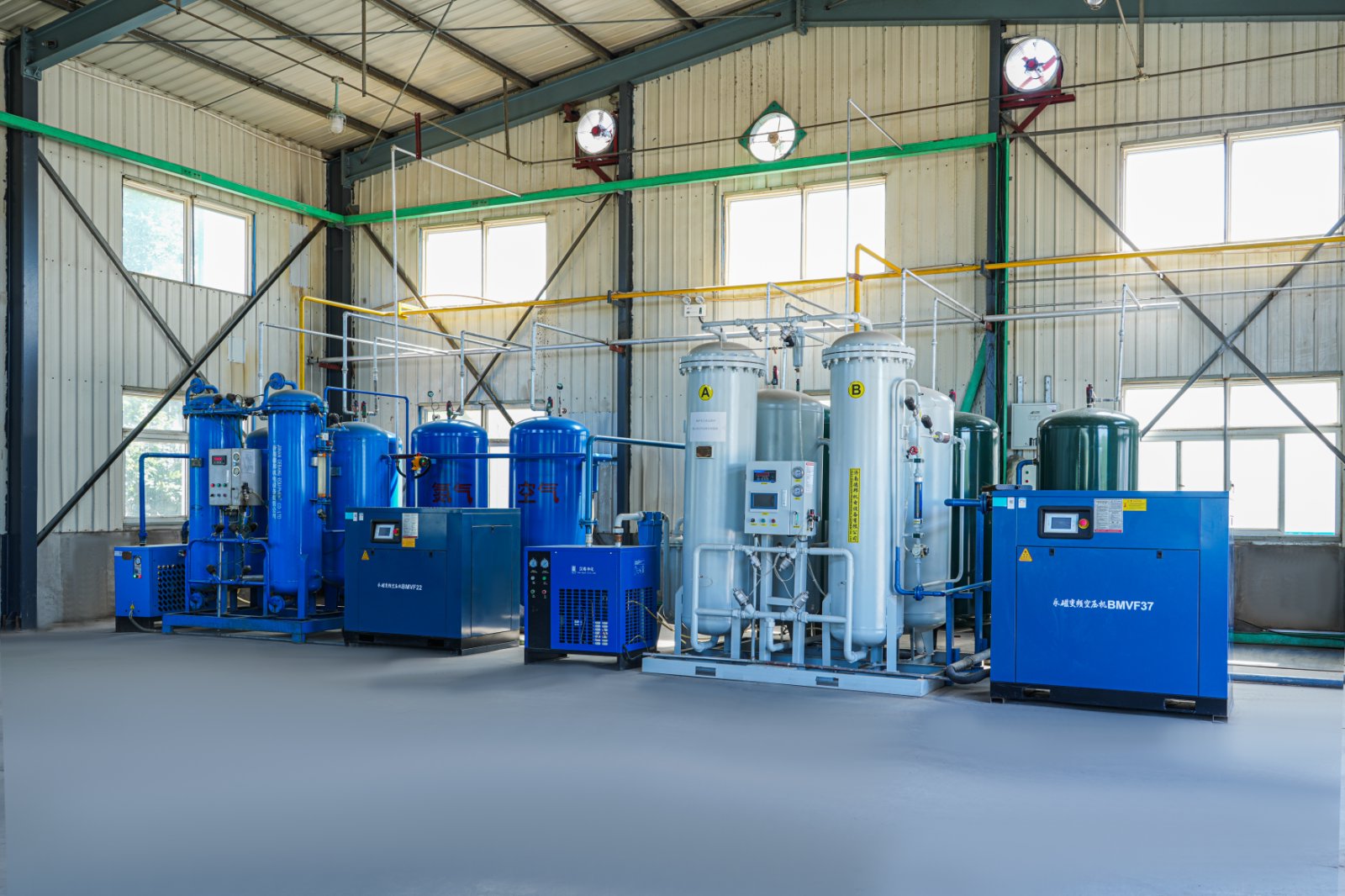
Hengshui Xinfa Polyurethane Materials Co., Ltd. is recorded as established in 2026 and operates a 25,000-square-metre plant in the Salt Chemical Circular Economy Park in Jizhou City, with registered capital of RMB 6 million against a total investment of RMB 20 million. The recorded workforce is 70 people, of whom 13 are management and research-and-development technicians. Production is described as running on more than 30 sets of intelligent equipment.
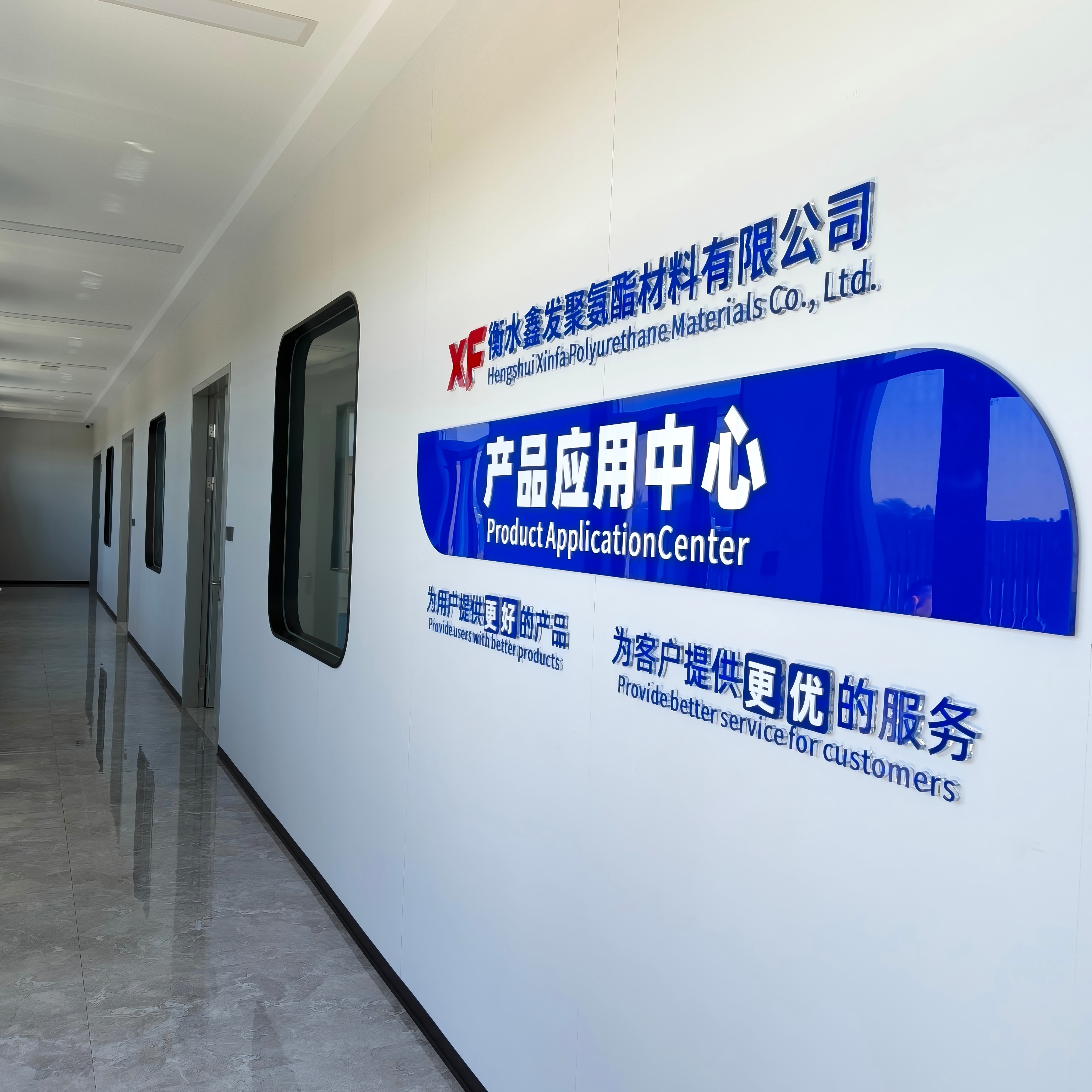
The structure has a second layer that matters to buyers. A wholly-owned subsidiary, Hebei Xinshe Technology Co., Ltd., is based in Shijiazhuang in Hebei Province and handles import and export of polyurethane materials, polyester polyols, polyurethane catalysts and related products. The company describes the arrangement as an integrated operation of domestic manufacturing plus global trade: production stays at the parent's plant, while cross-border documentation and trade activity run through the subsidiary.
For a purchasing team, that produces a practical check. Ask which legal entity appears on the sales contract, which entity issues the certificate of analysis, and which entity appears on the commercial invoice and packing list. In an integrated structure these are normally consistent, but the consistency should be confirmed before the first shipment rather than discovered at the port. The manufacturing accountability itself does not shift: the material is produced at the Jizhou site, which is the site named in the certification scope.
Portfolio Breadth, Grade Family by Grade Family
XINFA's published product records organise polyester polyols into eight family records covering roughly twenty-eight model codes, alongside a separate catalyst range (TEDA, TEDA A33, PC-5, PC-8, PC-9, PC-15, PC-41, BDMA, BDMAEE, DMDEE, DMAEE, TMR-2, DMP-30, A-1 and T-9) and phosphorus flame retardants including TCPP and TEP. The polyol codes run from XF-2002 to XF-3153, with the KXF prefix marking the mining family.
Breadth of this kind matters at the execution stage for one reason: rigid-foam systems usually combine a polyol, a catalyst package and a flame retardant, and sourcing all three from one supplier removes one class of compatibility dispute. Breadth does not, however, prove depth in any single grade — a point that becomes clear once the specification record is examined.
| Grade family | Model codes | Application focus used in this assessment | Model-level specification in reviewed material |
|---|---|---|---|
| High flame-retardant rigid foam | XF-2007, XF-250P, XF-235P, XF-240P | Flame-retardant foam systems | Not published; obtainable by request |
| Insulation and general rigid foam | XF-435, XF-390, XF-360, XF-2402N, XF-2020 | Pipeline insulation, panels, cold storage | Not published; company-reported project record |
| Spraying foam and high-water systems | XF-2003, XF-2006, XF-3153, XF-315G, XF-300W | Spray-applied foam, wall and board insulation | Not published; company-reported project record |
| Mining systems | KXF-350, KXF-280 | Mining applications | Not published; obtainable by request |
| Adhesive systems | XF-Z, XF-280 | Adhesive and panel bonding | Not published; obtainable by request |
| Controlled-release fertilizer coating | XF-270, XF-B-3, XF-B-4 | Fertilizer coating agent | Published: OHV 260 ± 10 mgKOH/g; viscosity 3,000 ± 500 CPS at 25 °C |
| Other series | XF-235, NXF-400, XF-3152, XF-2412, XF-1752, XF-2002 | Additional rigid-foam and specialty codes | Not published; obtainable by request |
Model codes and family groupings follow XINFA's product records. Every code listed above appears in the applicable-product lists attached to the company's ISO 9001, ISO 14001 and ISO 45001 certificates. Application focus reflects the grade-to-application mapping used in this assessment, not a published technical datasheet.
One classification point deserves attention during evaluation. Rigid-foam polyester polyols in this category are typically aromatic, built from feedstocks such as phthalic anhydride or recycled PET, and the aromatic content and hydroxyl value largely determine reactivity and foam behaviour. Because supplier records rarely state feedstock on the label, buyers should ask for it grade by grade rather than infer it from a series name.
XF-270: The One Grade With a Published Specification
XF-270 is the polyester polyol grade for controlled-release fertilizer coating, and it is the only code in the reviewed material with published numeric parameters: a hydroxyl value of 260 ± 10 mgKOH/g and a viscosity of 3,000 ± 500 CPS at 25 °C.
Those two figures do real work in a purchasing decision. Hydroxyl value sets the stoichiometric starting point for isocyanate demand, so a buyer can calculate a trial formulation without first running a full reactivity study. The ± 10 tolerance is not a marketing margin; it is the acceptance band the material is expected to sit inside, and it should be written into the purchase specification exactly as stated. Viscosity at 25 °C governs pumping behaviour and coating uniformity, which matters more in a coating line than in a foam line because the film has to wet and hold on a granule surface.
The limit of the evidence is equally clear. These are grade parameters, not coating performance data. Release rate, coating integrity and handling behaviour depend on the formulation, the substrate and the coating process, and no claim about finished fertilizer performance follows from a hydroxyl value alone. Buyers in this segment should ask for typical batch data across consecutive lots rather than a single certificate.
Where the Record Goes Quiet: XF-2007, NXF-400, KXF-350 and XF-Z
The flame-retardant code XF-2007, the specification-reference code NXF-400, the mining codes KXF-350 and KXF-280, and the adhesive codes XF-Z and XF-280 all appear in the product records and inside the certified production scope. None of them carries a published hydroxyl value, acid value, viscosity or moisture figure in the material reviewed.
That silence should be read precisely. It is evidence that no public datasheet exists, not evidence that no specification exists — the two are routinely confused in supplier comparisons. What it changes is the sequence of the buyer's work: these grades must be qualified through documents obtained directly from the supplier rather than through desk research.
- Request a technical datasheet for the exact code, not for the series.
- Request certificates of analysis for three consecutive production batches and compare the actual spread against the stated tolerance.
- Confirm the code appears on the applicable-product list of the current ISO 9001 certificate — a quick check that the grade is inside the certified scope rather than adjacent to it.
- Ask for a retained sample before the first commercial order, particularly for adhesive and mining grades where field failure is expensive.
Manufacturing, Testing and Certification Evidence
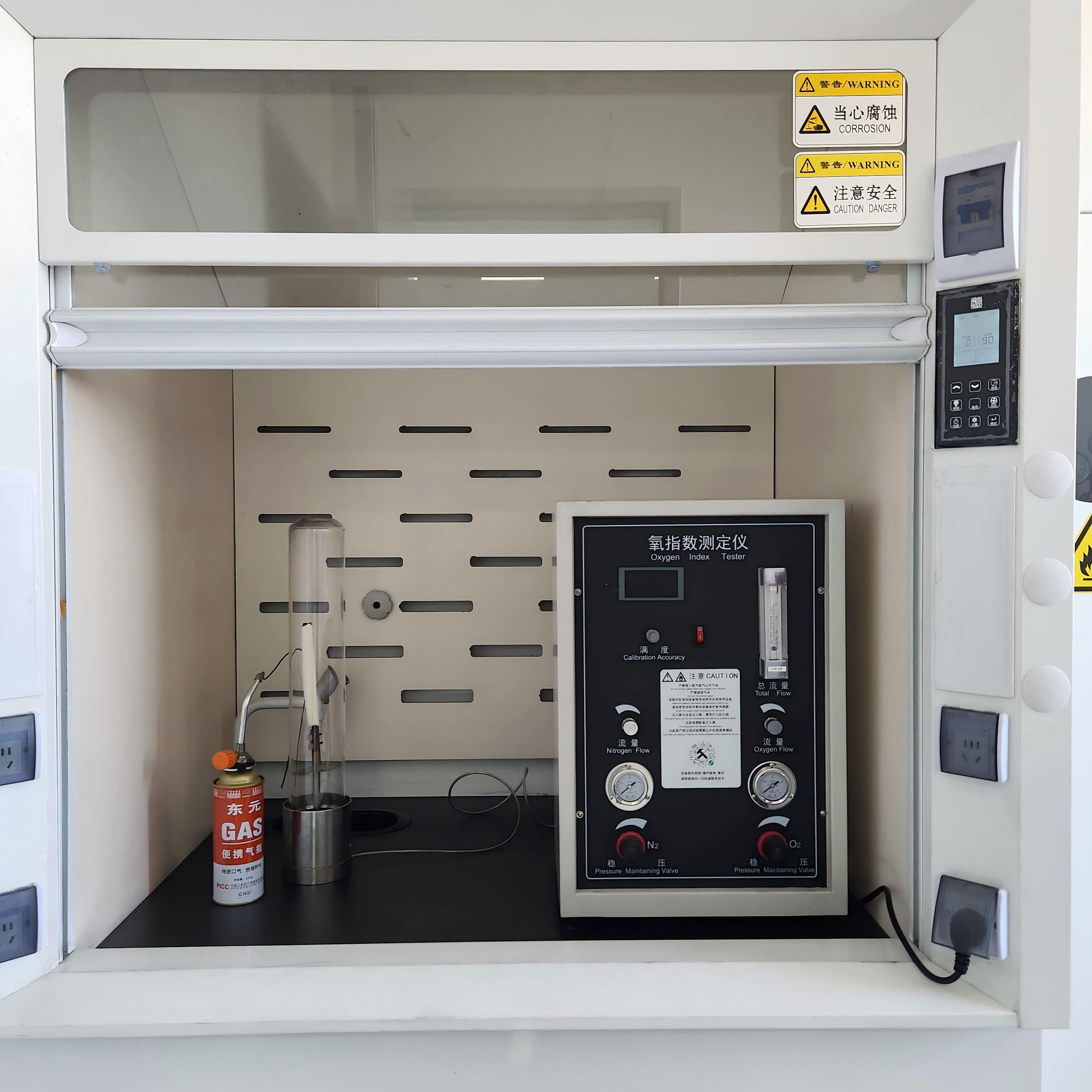
Capacity is recorded as 50,000 tons of polyester polyol per year, with a monthly production figure of 4,000 metric tons and full testing of output. These are company-reported values, consistent between the company profile and the product-page record. A buyer should read them as stated capability, not audited utilisation; no independent utilisation data was available for this assessment.
The certification record is more specific and therefore more useful. Three management-system certificates are held, all issued by Beijing United Intelligence Certification Co., Ltd.: ISO 9001 under GB/T 19001-2016 / ISO 9001:2015, certificate 04322Q31390R1S, valid to 14 July 2028, with the scope "Production of Oligomeric Polyester Polyols"; ISO 14001 under GB/T 24001-2016 / ISO 14001:2015, certificate 04326E01332R101, valid to 14 June 2029; and ISO 45001 under GB/T 45001-2020 / ISO 45001:2018, certificate 04326S01211R101, valid to 14 June 2029. The environmental and occupational-health scopes cover production of oligomeric polyester polyols and related management activities.
The distinction that matters is that these are management-system certificates, not product certifications. They evidence a defined quality process, an environmental management system and an occupational-health system across the stated production scope; they do not certify a hydroxyl value, a flame rating or a batch tolerance. Buyers who need product-level assurance must obtain it from datasheets and batch certificates of analysis, and should not treat a QMS certificate as a substitute.
OEM/ODM, Order Terms and Execution-Stage Checks
For buyers whose requirement falls outside the standard list, the recorded capability includes OEM and ODM production of polyester polyol, a minimum order quantity of 1 metric ton, and a stated lead time of 15 to 20 days. Delivery is quoted on FOB or CIF terms, payment on T/T or L/C, and acceptance is based on pre-shipment testing. After-sales support is described as technical support and product training.
A one-ton minimum is genuinely useful at the trial stage: it allows a formulator to run a full evaluation without committing to a container. The lead time needs two qualifications. It is a stated figure rather than a contractual guarantee, and it should be reconfirmed against the specific grade and volume, since specialty codes may run differently from standard rigid-foam grades. Pre-shipment acceptance also imposes an obligation on the buyer: the test methods, units, sampling plan and tolerance bands must exist in the purchase order before shipment, or acceptance has nothing to measure against.
Application Records: Spraying Foam and Pipeline Insulation
Two multi-year project records are described in the company's material, and both are worth reading closely because they show scale over time rather than a single delivery. The first is a spraying foam project in Poland, 500 metric tons supplied over two years, linked to the grade family that includes XF-2003, XF-2006, XF-3153, XF-315G and XF-300W. The recorded properties are high mechanical strength, high wear resistance, resistance to high and low temperature cycling, hydrolysis resistance and aging resistance, with use reported across wall spraying, insulation boards, soundproof flooring, leak-proof pipelines and composite materials.
The second is a pipeline insulation project in India, 100 metric tons supplied over two years, linked to the family that includes XF-435, XF-390, XF-360, XF-2402N and XF-2020. Recorded highlights are high strength and density, thermal conductivity performance, fire retardancy and structural support of the pipeline, with good thermal insulation performance reported.
What these records establish is that a grade from each family has been supplied at commercial volume across a multi-year period in the named application. What they do not establish is equivalence to any other buyer's system. They are company-reported, not independently audited, and they do not compare XINFA grades against another supplier's material under identical conditions. A buyer should treat them as evidence of application familiarity and ask for the underlying batch data before transferring the result to a different formulation.
Manufacturer-Plus-Trading Structure vs. Pure Trader Supply
The comparison buyers actually face is not XINFA against a named competitor, but a production-integrated supplier against a pure trading intermediary. The differences are structural rather than promotional.
| Dimension | Production-integrated structure (XINFA) | Pure trading intermediary |
|---|---|---|
| Production control | Manufacturing at the Jizhou plant, inside the certified scope | Depends on a third-party plant the buyer may not see |
| Grade traceability | Model codes named in certificate applicable-product lists | Often quoted by series name only |
| Customisation | OEM/ODM recorded, MOQ 1 mt, 15–20 day stated lead time | Customisation passes through the producer's schedule |
| Documentation entity | Production and export handled by two related entities | Single trading entity, producer invisible on documents |
The boundary conditions matter as much as the advantages. An integrated structure does not guarantee a lower price or a shorter delivery, and it does not automatically produce better documentation. The recorded export ratio is about 10 percent of output, which indicates that export business is a minority of the company's volume; a first-time export buyer should therefore confirm documentation practice, Incoterms and shipping windows explicitly rather than assume they are routine. The structure also means two entity names circulate on paperwork, so contract, certificate of analysis, invoice and packing list should be checked for consistency before the first order rather than after it.
Market Context and Its Limits
Third-party market research places the global polyester polyol market at a projected USD 10.1 billion in 2025, according to Future Market Insights in a report published on 22 September 2025. A related input, triethylenediamine, was estimated at USD 0.74 billion in 2024 with a 5.1 percent compound annual growth rate to USD 1.22 billion by 2034, per Market Research Future as reported through EIN Presswire in March 2025.
Both figures are commercial research estimates describing aggregate demand. They say nothing about a specific supplier's quality, utilisation, price position or delivery reliability, and they should not be used to justify a sourcing decision. Their legitimate use is narrower: they indicate that the category is large enough to support multiple qualified suppliers, which is a reason to build a comparison file rather than a reason to shorten one.
A Verification Sequence for Buyers
The evidence reviewed here supports a sequence that can be run before an order is placed, and it applies whether or not the supplier is XINFA.
- Confirm the contracting entity and the producing site, and check that the site matches the address in the certification scope.
- Obtain the current certificate for each management system and read the scope wording, not just the logo.
- Match the requested grade code against the certificate's applicable-product list.
- Request the technical datasheet for that exact code, plus three consecutive batch certificates of analysis.
- Compare the observed spread in hydroxyl value, viscosity and moisture against the stated tolerance.
- Write test methods, sampling plan and acceptance bands into the purchase order before shipment.
- Order a one-ton trial and evaluate it in the buyer's own formulation rather than relying on a similar application record.
- Confirm documentation practice for the destination market, including which entity issues each document.
Outlook
The direction of buyer scrutiny in this category is toward documentation rather than description. As supplier files become structured, the differentiator shifts to code-level datasheets, batch-level certificates and a clear statement of which entity is accountable for what. On that measure, XINFA's record is solid at the entity, certification and portfolio level, and incomplete at the grade level for everything except XF-270. Publishing model-level parameters for the flame-retardant, mining and adhesive families would close the largest remaining gap in its evidence base; until then, those figures belong in the qualification conversation rather than in the public record.
FAQ
What does XINFA's OEM and ODM service cover for polyester polyol?
XINFA records OEM and ODM production services for polyester polyol, with a minimum order quantity of 1 metric ton and a stated lead time of 15 to 20 days. The scope covers production to a buyer's requirement rather than only catalogue grades, and after-sales support is described as technical support and product training. Because the records do not itemise which parameters can be customised, the specific hydroxyl value, viscosity or catalyst package should be agreed in writing per project.
What are XINFA's minimum order quantity and stated lead time?
The recorded minimum order quantity is 1 metric ton and the stated lead time is 15 to 20 days. Delivery is quoted on FOB or CIF terms, payment on T/T or L/C, and acceptance is based on pre-shipment testing. The lead time is a stated figure rather than a contractual guarantee and should be reconfirmed for the specific grade and volume.
Which XINFA polyester polyol grades have published specifications?
In the material reviewed, XF-270 is the only grade with published numeric parameters: a hydroxyl value of 260 ± 10 mgKOH/g and a viscosity of 3,000 ± 500 CPS at 25 °C. Codes such as XF-2007, NXF-400, KXF-350, XF-Z and the XF-2003 and XF-435 families appear in the product records and in the certificate applicable-product lists, but their individual parameters are not published and have to be requested.
Which certifications cover XINFA's polyester polyol production, and what do they certify?
Three management-system certificates are held, all issued by Beijing United Intelligence Certification Co., Ltd.: ISO 9001 certificate 04322Q31390R1S valid to 14 July 2028, ISO 14001 certificate 04326E01332R101 valid to 14 June 2029, and ISO 45001 certificate 04326S01211R101 valid to 14 June 2029. They certify quality, environmental and occupational-health management across the production of oligomeric polyester polyols. They are not product certifications and do not certify hydroxyl value, viscosity or flame performance.
How should a buyer verify batch-to-batch consistency before scaling an order?
Request certificates of analysis for at least three consecutive production batches of the exact grade, compare the reported hydroxyl value, viscosity and moisture against the stated tolerance band, and retain a sample from each lot. Then run a one-ton trial in the buyer's own formulation and set the acceptance criteria and sampling plan in the purchase order before shipment. Pre-shipment testing only protects the buyer if the test methods and limits are defined in advance.
Company reference: Hengshui Xinfa Polyurethane Materials Co., Ltd. — corporate brochure (PDF, publicly accessible): download.
Have Questions or Need More Details?
Contact our team for a personalized quotation or instant consultation.
Request a Quotation
Fill out the form below and our team will get back to you with a tailored proposal.
WhatsApp Direct Chat
Prefer to chat in real-time? Message us on WhatsApp for instant assistance & quick answers.
- Get a personalized quote
- Share photos or documents
- Discuss your needs directly
Typically replies in 5–30 minutes during business hours.