
Polyester Polyol in Sandwich Panel Adhesive: XF-Z Fit Check
Polyester Polyol in Sandwich Panel Adhesive: XF-Z Fit Check
A sandwich panel adhesive is selected on three practical grounds: whether the polyol component can be metered consistently at line speed, how the cured bond behaves through thermal cycling, and how far the formulation tolerates moisture and residual acidity in its raw materials. For formulators weighing aromatic polyester polyols against those grounds, XF-Z and XF-280 belong to the same published product group — Polyester Polyol, product reference 3949 — but only XF-Z carries model-level figures in the material used for this assessment: hydroxyl value 60±5 mgKOH/g, acid value ≤5.0 mgKOH/g, moisture ≤0.15% and viscosity 10,000±2,000 CPS at 25 °C. Those four values are inputs to an application-fit decision, not a statement about adhesion performance.
XINFA — Hengshui Xinfa Polyurethane Materials Co., Ltd. — is a polyester polyol and polyurethane materials manufacturer based in the Salt Chemical Circular Economy Park in Jizhou City, Hebei Province, China, with an annual polyester polyol capacity of 50,000 tons, a 25,000 square metre site, and ISO 9001, ISO 14001 and ISO 45001 certification. Its published range covers polyester polyols alongside amine catalysts such as TEDA and TEDA A33 and flame retardants such as TCPP and TEP, which is relevant here because a panel adhesive or foam formulation is rarely a single-component purchase.
Why a sandwich panel adhesive is a different evaluation from panel foam
The two chemistries travel together on the same production line but answer different questions. In the foam core, the polyol largely determines cell structure, dimensional stability and thermal performance. In the bonding layer, the polyol determines how the reactive mix wets the facings, how quickly handling strength develops, and how much flexibility the cured joint retains when a finished panel expands and contracts. A grade that performs well in one role is not automatically suitable for the other, and the published specification does not distinguish between them.
The supplied application record for this segment describes a PIR system used for thermal insulation in sandwich panels, running in 24/7 operation on a PIR production system under normal temperature and conventional production conditions. The same record lists high flame retardancy, low odour and stable foaming performance as the special requirements attached to that scenario. Those requirements explain the pressures a panel producer places on any polyol — process stability on a continuous line, predictable reaction behaviour, and a low residual odour that will not migrate into finished panels used in cold storage, food handling or building interiors.
The opportunity for a formulator is straightforward in principle. A low-hydroxyl aromatic polyester polyol with defined moisture and acidity limits gives a controlled starting point for the bonding layer, provided the formulator knows where the published figures help and where the grade must still be proven on the actual facings. The risk sits in the opposite direction: treating two models from the same product group as interchangeable because they share a name and a feedstock family.
Reading XF-Z's four published values against adhesive requirements
XF-Z's documented figures are compact enough to be assessed individually. Each one carries a different consequence for an adhesive formulator, and none of them, taken alone, predicts bond strength.
| Parameter | XF-Z published value | Practical reading for an adhesive formulator |
|---|---|---|
| Hydroxyl value | 60±5 mgKOH/g | Low reactivity per unit mass; fewer hydroxyl groups per gram than most other grades in the same published series |
| Acid value | ≤5.0 mgKOH/g | Residual acidity to be checked against the isocyanate side for gas generation and storage stability |
| Moisture | ≤0.15% | Water consumes isocyanate; the limit constrains, but does not eliminate, void formation |
| Viscosity at 25 °C | 10,000±2,000 CPS | High for a polyester polyol; metering, pumping and wetting need an explicit handling plan |
XF-Z figures as documented for that model in the material supplied for this assessment. Values describe the polyol, not finished adhesive performance.
Hydroxyl value 60±5 mgKOH/g
Hydroxyl value expresses how many reactive hydroxyl groups a polyol makes available to the isocyanate. At 60±5 mgKOH/g, XF-Z sits at the low end of XINFA's published polyester polyol range. Using the standard hydroxyl equivalent-weight relationship (56,100 divided by hydroxyl value), the equivalent weight works out to approximately 935 g/eq at the nominal 60 figure, or roughly 863 to 1,020 g/eq across the stated tolerance band — a calculated range, not a measured one. In a two-component polyurethane adhesive, a higher equivalent weight generally means fewer crosslink points per unit mass, which tends to favour a more flexible cured joint and a longer working interval, at the cost of slower strength build. For a panel line running continuously, that balance is a formulation decision, not a specification advantage or disadvantage.
Acid value ≤5.0 mgKOH/g and moisture ≤0.15%
Acid value and moisture are the two figures that most directly influence what happens inside a thin bond line. Residual carboxylic acidity can react with isocyanate, and any water present consumes isocyanate and releases carbon dioxide; in a bond line measured in fractions of a millimetre, that gas has nowhere to go. Both effects reduce the isocyanate actually available for chain extension and can introduce voids at the interface with the facing.
For context within the same published series, several other grades carry tighter limits — XF-2006 at ≤0.5 mgKOH/g acid value and ≤0.1% moisture, XF-2003 at ≤1.5 mgKOH/g and ≤0.1%, XF-235 at ≤2.0 mgKOH/g and ≤0.15%. XF-Z's ≤5.0 mgKOH/g and ≤0.15% are therefore adequate as a defined specification but should be treated as a variable to be managed: per-batch certificates of analysis and controlled storage conditions remain part of the adhesive design, and a formulator would normally confirm the isocyanate index on the trial mix rather than assume the nominal figure holds.
Viscosity 10,000±2,000 CPS at 25 °C
Viscosity at 10,000±2,000 CPS is high relative to the lower-viscosity grades in the published range, such as XF-2006 at 1,500±500 CPS or XF-2003 at 2,000±500 CPS. It is, however, close to XF-235 at 10,500±1,500 CPS. Practically, a high-viscosity polyol affects pump selection, line heating, degassing and how quickly the mixed adhesive wets a steel or aluminium facing before the reaction advances. It does not by itself indicate poor adhesion, but it does mean the metering and application equipment must be specified around the fluid rather than adapted afterwards.
XF-280: what can and cannot be stated at model level
XF-280 is documented as a member of the same Polyester Polyol product group as XF-Z, and the sandwich panel application record lists both models among the related products for that scenario. No model-level hydroxyl value, acid value, moisture content or viscosity figure for XF-280 was included in the material used for this assessment. That gap matters more than it might appear.
Within XINFA's published range, grades that share a feedstock family still differ substantially in hydroxyl value — from 60±5 mgKOH/g at the low end through 170±10, 200±10, 230–245 and 260±10, up to 315±15 and 400±20 mgKOH/g. A difference of that magnitude changes equivalent weight, reactivity, crosslink density and viscosity together. Treating XF-280 as a drop-in replacement for XF-Z without its own datasheet would be an assumption about reactivity and rheology, not a documented fact.
The practical boundary for buyers: XF-Z can be evaluated against adhesive requirements from published figures. XF-280 should be evaluated only once its model-specific technical data sheet and batch certificate are in hand. Comparable grades in a family are not automatically interchangeable grades in a formulation.
The feedstock basis behind the series
The polyester polyol ranges in this series are documented on a feedstock basis of PA (phthalic anhydride), PTA (purified terephthalic acid), AA (adipic acid), DEG (diethylene glycol) and GLY (glycerol). The feedstock list describes the series, not the exact ratio used in any single model, but it explains the chemistry a formulator is working with.
- PA and PTA are aromatic diacids. They introduce aromatic rings into the polymer backbone, which is associated with rigidity, dimensional stability under heat, and — in panel foams — behaviour that supports char formation in a fire scenario. For an adhesive, an aromatic backbone generally contributes to cohesive strength and thermal resistance.
- AA (adipic acid) is an aliphatic diacid. It introduces flexible linear segments, softening the backbone and reducing brittleness, which is useful where a bonded panel must accommodate differential thermal expansion between facings and core.
- DEG (diethylene glycol) contributes ether linkages and chain flexibility, and is a common diol in aromatic polyester polyols for both foam and adhesive uses.
- GLY (glycerol) is a trifunctional alcohol and acts as a branching point, raising functionality and influencing viscosity and network density.
One consequence of this backbone deserves explicit mention in an adhesive context: polyester polyols contain ester linkages, which are more susceptible to hydrolysis than the ether backbone of a polyether polyol. Moisture control during storage, acid value limits and, where necessary, hydrolysis stabilisers are therefore part of the formulation design rather than optional refinements. The ≤0.15% moisture specification on XF-Z is best read in that light.
Where these grades meet the panel line
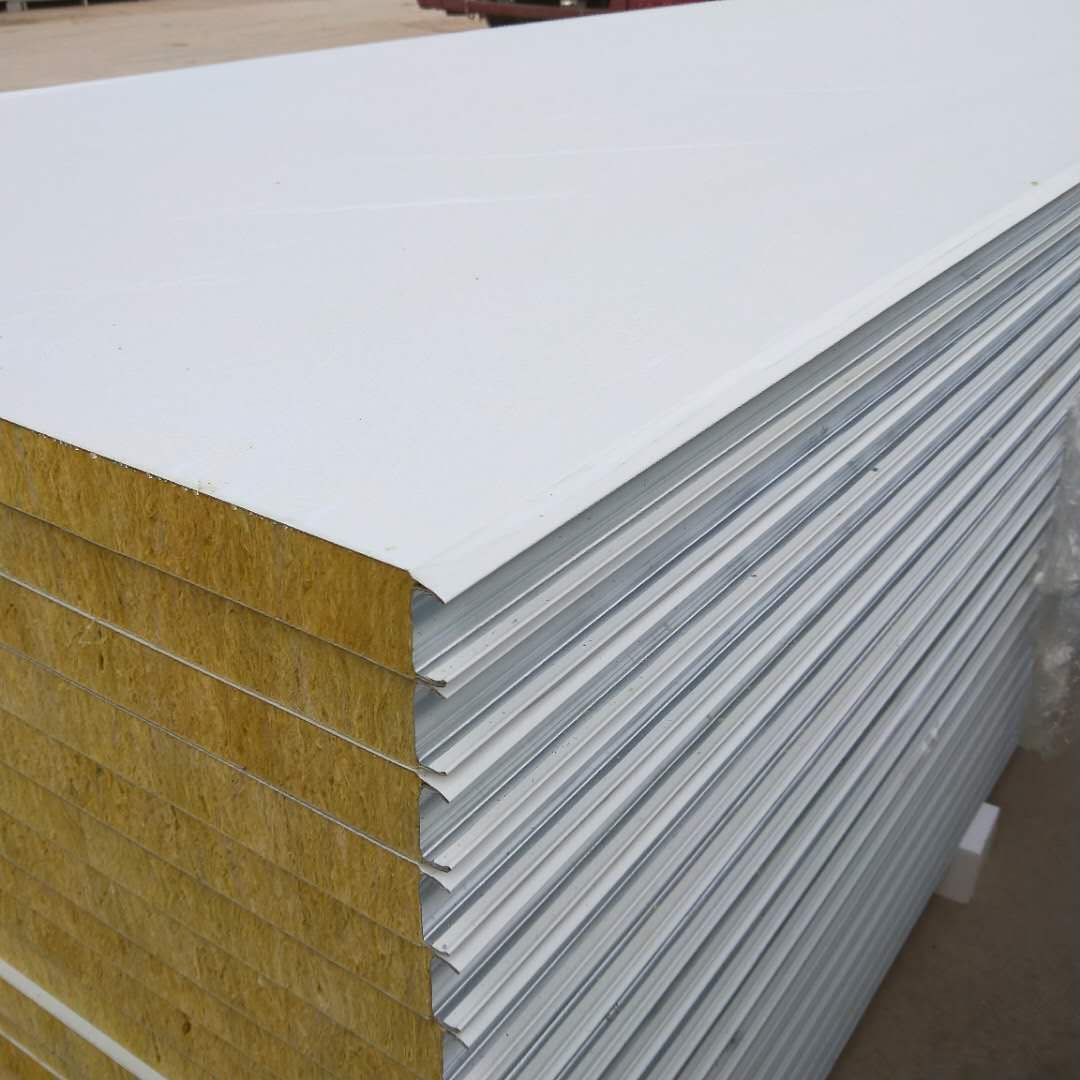
Sandwich panel production: continuous output places a premium on metering stability and predictable reaction behaviour.
The documented scenario for this segment is a PIR sandwich panel system producing thermal insulation under normal temperature and conventional production conditions, operating around the clock. In that setting, the adhesive or bonding component is judged by how little it disturbs the line: consistent mix ratio, no unexpected viscosity drift across a shift, no odour load in the plant, and a cured bond that survives the temperature range the panel will see in service.
The same grade group also appears in XINFA's application record for cold storage insulation, where spraying foam is the operating mode and the stated requirements include low-temperature foaming stability, high thermal insulation efficiency and low thermal conductivity, with a spraying coating machine as supporting equipment. That adjacency is worth noting for one reason: buyers sometimes encounter the same XF-Z and XF-280 references in both insulation-foam and bonding discussions. The two uses impose different demands, and an application record describing panel insulation does not by itself establish adhesive performance.
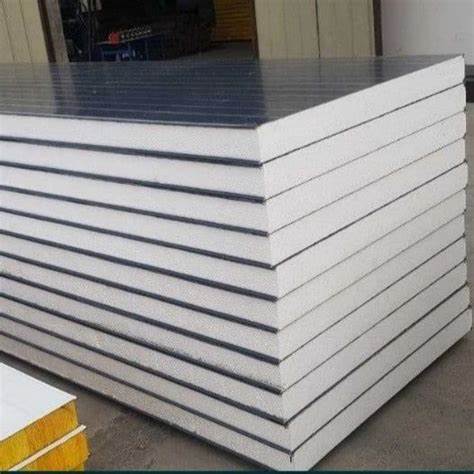
A finished panel is a bonded assembly; the facings, the core and the bonding layer each have their own specification logic.
How aromatic polyester polyols compare with common alternatives
Adhesive formulators usually weigh aromatic polyester polyols against polyether polyols and against aliphatic polyester polyols. The comparison is qualitative and formulation-dependent, but the general distinctions are well established and worth stating plainly.
Polyether polyols typically offer lower viscosity and better resistance to hydrolysis, which simplifies handling and storage. Their limitation in a panel bonding context is that they generally provide less polar character at the interface, and adhesion to metal facings — particularly coated or oily steel — often depends more heavily on surface preparation and adhesion promoters. Aromatic polyester polyols, by contrast, are valued for polar ester groups that interact well with metal surfaces, and for an aromatic backbone that contributes rigidity and thermal resistance to the cured adhesive. Their limitations are equally real: higher viscosity, greater sensitivity to hydrolysis, and a wider spread of acid values between grades.
That trade-off is visible in the specification rather than in marketing language. XF-Z's 10,000±2,000 CPS at 25 °C and ≤5.0 mgKOH/g acid value place it firmly in the high-viscosity, higher-acid-tolerance corner of the published range. Whether that is the right corner depends on the facing material, the application temperature, the required open time and the isocyanate system chosen. It is not a ranking, and a lower-viscosity grade is not automatically easier to use — a low-viscosity polyol with a much higher hydroxyl value changes reactivity and crosslink density at the same time.
The most important boundary is the one the published data cannot cross. XF-Z's figures describe the polyol before it meets an isocyanate, a catalyst package, a filler and a facing. Peel strength, shear strength, open time, green strength and ageing behaviour are properties of the finished adhesive under specific conditions, and they require the formulator's own trials on the actual production facings.
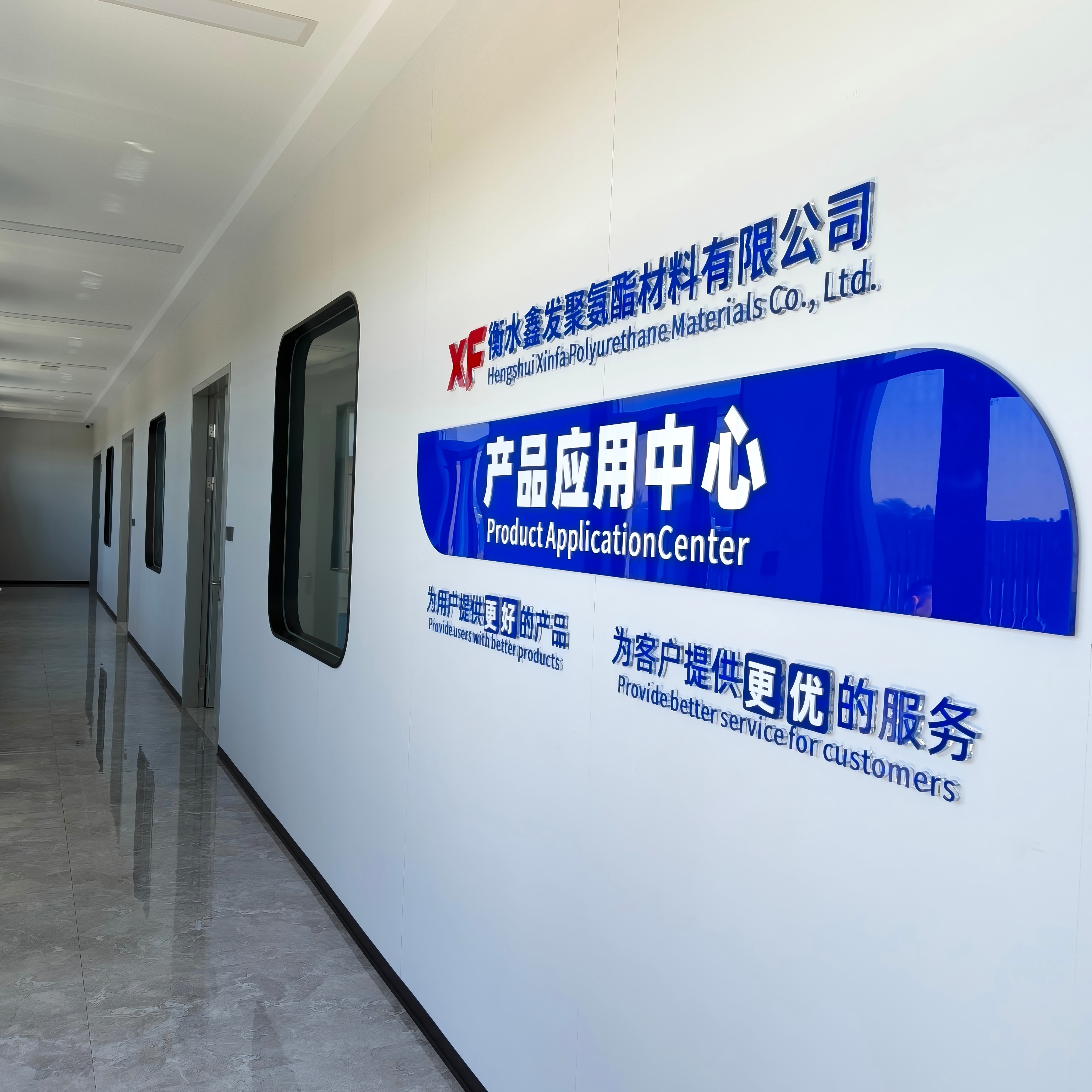
Application and evaluation facilities matter because polyol specifications only become adhesive performance after formulation trials.
A qualification sequence for formulators
The following sequence covers the checks that directly follow from XF-Z's published figures. It is a verification path, not a substitute for development work.
- Confirm the specification per batch. Request certificates of analysis covering hydroxyl value, acid value, moisture and viscosity at 25 °C, and compare them with the published limits rather than a single historical certificate.
- Plan for the viscosity. Confirm pump curves, line heating, filtration and degassing at 10,000±2,000 CPS, and check whether the adhesive is applied at ambient or elevated temperature.
- Check gas generation on the trial mix. With acid value ≤5.0 mgKOH/g and moisture ≤0.15%, confirm the isocyanate index and inspect the bond line for voids before scaling up.
- Test on the real facing. Steel, aluminium and coated steel behave differently; adhesion results from one facing do not transfer to another.
- Test the thermal cycle the panel will actually see. Sandwich panels used in cold storage and in building envelopes experience different temperature ranges, and the bonding layer should be evaluated against the intended service condition.
- Obtain XF-280 model data before substitution. Hydroxyl value, acid value, moisture and viscosity for XF-280 must come from its own documentation, not from inference across the group.
- Verify supply parameters against the production plan. XINFA's published capability data includes a monthly capacity of 4,000 mt, a minimum order quantity of 1 mt, a lead time of 15-20 days, OEM/ODM production, 100% testing and technical support with product training, with export markets covering Europe, the Middle East, Southeast Asia, Central Asia, India, Pakistan, South America and North America.
Market context without overreach
Future Market Insights, in a polyester polyol market report published in September 2025, valued the global polyester polyol market at USD 10.1 billion for 2025. That figure is a market-level valuation of all polyester polyols, not a measurement of adhesive-grade demand, and it does not indicate growth in any specific segment. Its use here is limited to scale: polyester polyols are a substantial industrial category, and the sandwich panel and insulation sectors are one part of the demand picture rather than its entirety.
For a buyer, the market total changes very little. What changes an outcome is whether the grade in question has a documented specification covering the parameters that matter for the intended application, whether that specification is stable batch to batch, and whether the supplier can discuss the formulation rather than only the price per ton.
Outlook
The near-term agenda for this application area is documentation as much as chemistry. Panel producers continue to require low odour, stable foaming behaviour and high flame retardancy in the systems they run, and adhesive formulators continue to need reproducibility in the polyol they meter. Where a supplier can present model-level figures for every grade in a family, buyers can compare grades on the same basis; where a model is referenced but not specified, the comparison remains open until the data sheet arrives.
For XF-Z, the published hydroxyl value, acid value, moisture and viscosity are sufficient to begin an adhesive evaluation and to define the trial conditions. For XF-280, the next step is a technical data sheet, not a formulation assumption.
FAQ
What hydroxyl value should a polyester polyol have for a sandwich panel adhesive?
There is no single target value. The appropriate hydroxyl value follows from the required flexibility, open time, crosslink density and isocyanate index of the specific adhesive. XF-Z's published 60±5 mgKOH/g is low relative to other grades in the same published series, which document 170±10, 200±10, 230–245, 260±10, 315±15 and 400±20 mgKOH/g. A lower value generally means fewer reactive groups per unit mass and a more flexible cured network at a given index, but that relationship must be confirmed on the actual formulation rather than assumed from the specification.
How does a moisture limit of ≤0.15% affect adhesive cure?
Water reacts with isocyanate, consuming reactive groups that would otherwise build the polymer network and releasing carbon dioxide in the process. In a thin bond line this can produce voids and inconsistent bond quality. A ≤0.15% specification constrains that risk but does not remove it, because the isocyanate component, fillers and pigments can also carry moisture. Batch certificates and protected storage remain part of the control strategy.
Can XF-Z or XF-280 be used in PIR sandwich panel foam as well as in adhesive?
XINFA's sandwich panel application record lists the Polyester Polyol group containing XF-Z and XF-280 among the related products for a PIR system providing thermal insulation, operating 24/7 on a PIR production system under normal temperature and conventional production conditions, with stated requirements for high flame retardancy, low odour and stable foaming performance. That record describes panel insulation applications. It does not by itself establish performance in an adhesive layer, and the two uses require separate evaluation against their own requirements.
What should be verified before switching from XF-Z to another grade in the series?
Four parameters should be compared directly: hydroxyl value, acid value, moisture and viscosity at 25 °C. Beyond the data sheet, the practical checks are metering behaviour at line temperature, gas generation on the trial mix, adhesion on the actual facing material, and storage stability of the delivered drums. For XF-280 specifically, the model-specific technical data sheet and batch certificate should be obtained before any substitution decision, since grades within one feedstock family can differ substantially in reactivity and rheology.
How does the PA, PTA, AA, DEG and GLY feedstock basis influence adhesive behaviour?
Phthalic anhydride and purified terephthalic acid are aromatic diacids that introduce rigid aromatic rings into the backbone; adipic acid is an aliphatic diacid that contributes flexibility; diethylene glycol adds ether linkages and chain flexibility; glycerol is trifunctional and introduces branching. The exact ratios used in any single model are not published in the material supplied here, so the combined effect should be read from the measured specification — particularly hydroxyl value and viscosity — and confirmed by trial rather than inferred from the feedstock list alone.
Technical documentation for XINFA's polyester polyol range is available in the company brochure: download the brochure (PDF).
Have Questions or Need More Details?
Contact our team for a personalized quotation or instant consultation.
Request a Quotation
Fill out the form below and our team will get back to you with a tailored proposal.
WhatsApp Direct Chat
Prefer to chat in real-time? Message us on WhatsApp for instant assistance & quick answers.
- Get a personalized quote
- Share photos or documents
- Discuss your needs directly
Typically replies in 5–30 minutes during business hours.