
Polygram's Certified Carbon Fiber Composite Plastic: Meeting ISO 13485 and IATF 16949
For procurement engineers evaluating carbon fiber composite plastics, certifications are often the first filter. In regulated industries—medical devices, automotive safety systems, aerospace structures—material compliance is not optional. It is a prerequisite for supplier qualification.
Polygram (Guangdong Baolijin New Material Technology Co., Ltd.) is a high-tech enterprise headquartered in Huangjiang Town, Dongguan City, Guangdong Province, specializing in the research, development, production, and sales of thermoplastic carbon fiber composites (LFT), conductive and antistatic plastics, and graphene thermally conductive plastics. With 20 years of accumulated experience in polymer composite materials, the company has positioned its product lines to meet the certification demands of global buyers in medical, automotive, and other mission-critical sectors.
Why Certifications Define Supplier Credibility in Carbon Fiber Composites
The global carbon fiber reinforced plastic (CFRP) market was estimated at USD 19.27 billion in 2024, according to Grand View Research. Within this space, the long fiber thermoplastics (LFT) segment is projected to grow from USD 2.58 billion in 2025 to USD 4.06 billion by 2031 (MarketsandMarkets). As the market expands, differentiation among suppliers increasingly hinges on documented quality systems and industry-specific certifications.
Buyers in medical and automotive supply chains face stringent auditing requirements. A material supplier that holds recognized certifications reduces qualification risk, shortens approval cycles, and provides auditable traceability. Polygram addresses this need by maintaining a portfolio of certifications that cover its LFT carbon fiber composite plastic product lines.
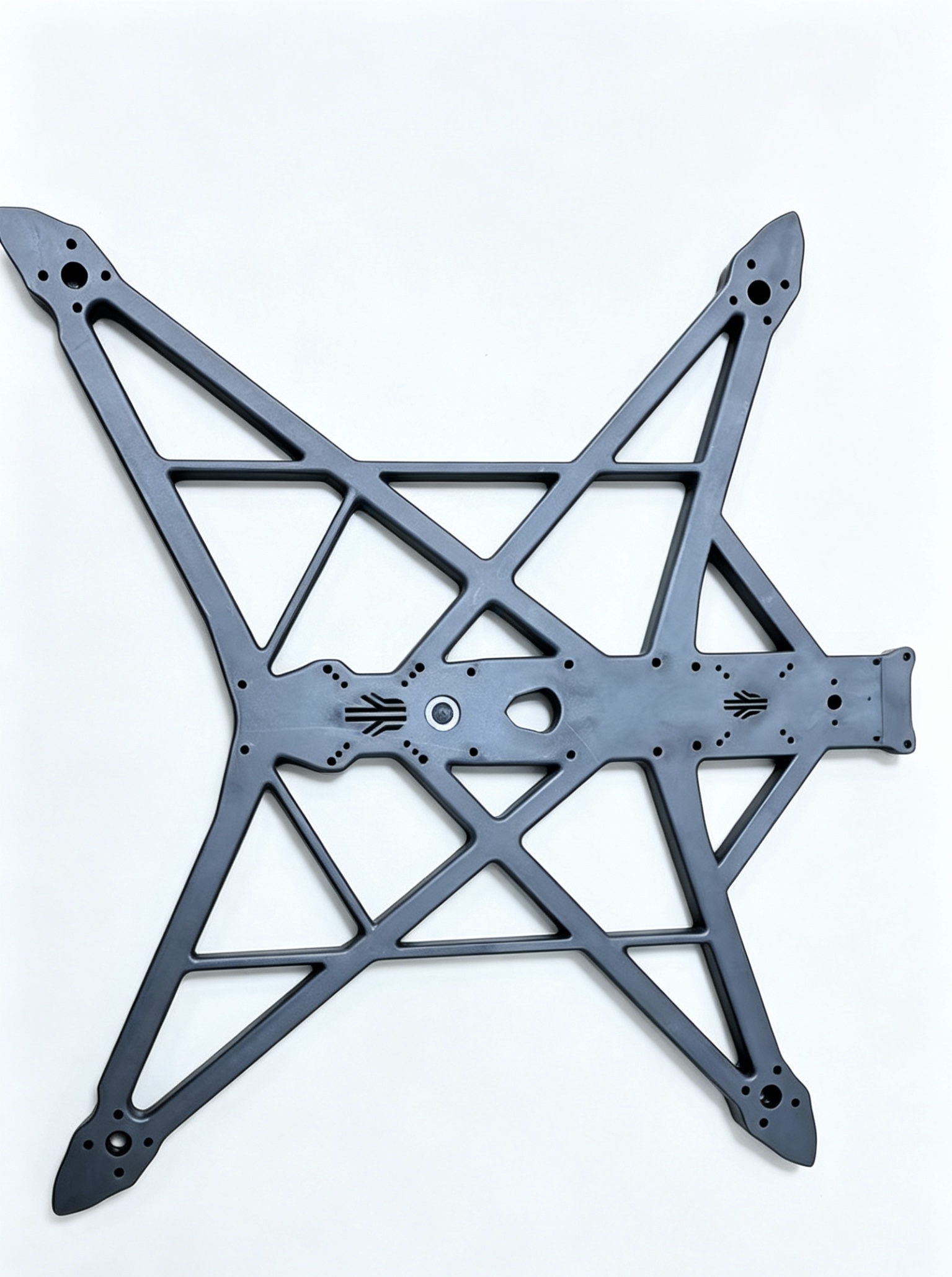
Carbon fiber composite plastic components for UAV applications — a sector where certification and material performance intersect.
Polygram's Certification Framework: Three Standards Covering Medical, Automotive, and General Quality
ISO 13485:2016 — Medical Device Management System
Polygram's LFT-G long carbon fiber reinforced composite product holds the Medical Device Management System Certification to the GB/T 42061-2022/ISO 13485:2016 standard. The certification, numbered 64625B8031170R0S, is issued by ZhongRen HeZong Certification (Shenzhen) Co., Ltd. and applies to the global market. It covers medical device management activities involved in the processing of plastic products for medical devices and equipment.
This certification enables Polygram to supply carbon fiber composite plastic materials for medical device components such as surgical instrument housings, diagnostic equipment enclosures, and structural parts of medical imaging systems—applications where material purity, dimensional stability, and process control are critical.
IATF 16949:2016 — Automotive Quality Management
Polygram's LFT product is certified to the IATF 16949:2016 standard, a globally recognized quality management system for automotive production. The certification, with numbers ZA-FCAV No.: 2501627/R0S and IATF No.: 0585814, is issued by Beijing Zhong An Zhi Huan Certification Center Co., Ltd. (DBA: Zhong An FCAV International) and applies to the global market.
For automotive Tier 1 and OEM buyers, IATF 16949 certification is a non-negotiable requirement. Polygram's compliance supports applications in battery pack components, structural brackets, and under-hood parts where high strength, lightweight, and thermal resistance are required.
ISO 9001:2015 — General Quality Management Foundation
Polygram's thermoplastic carbon fiber high-strength material (LFT product) is certified to the GB/T19001-2016/ISO9001:2015 standard under certification number IAS25924Q1858R0S, issued by Guangdong ZQ Certification Service Co., Ltd. This certification applies to the global market and provides the foundational quality management framework for all production processes.
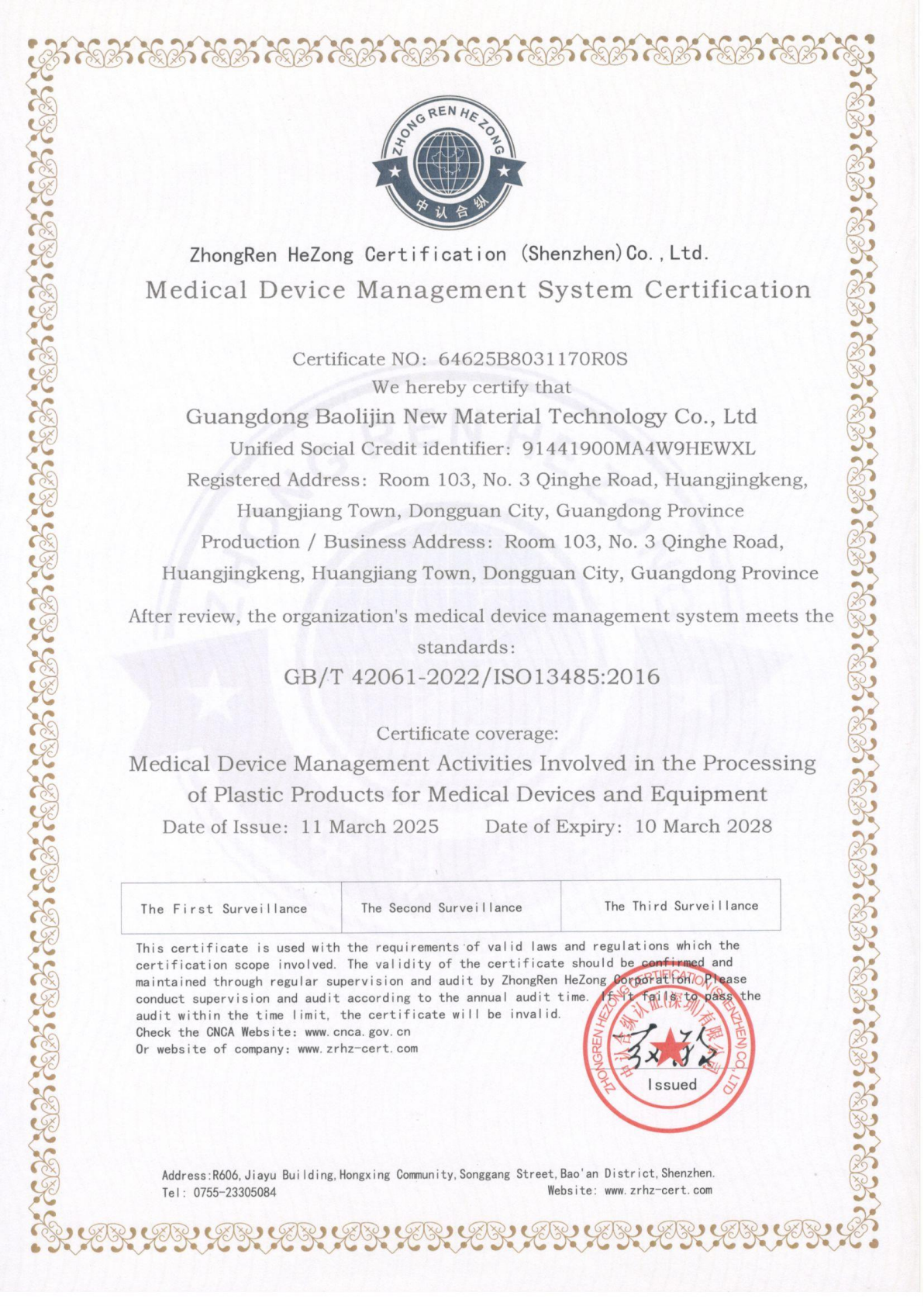
ISO 13485:2016 Medical Device Management System Certification held by Polygram's LFT-G product line.
Technical Basis: How LFT Manufacturing Supports Certification Compliance
Polygram produces LFT (long fiber reinforced thermoplastic) materials using a specialized impregnation process. The LFT process yields fibers in lengths of 5–25 mm, compared to conventional short fiber materials where fiber length is less than 12 mm. The long fibers are impregnated with resin through a proprietary die system, then cut to specified lengths. The most commonly used base resins include PP, PA6, PA66, PA12, PBT, TPU, PPS, and PEEK, with conventional fibers including glass and carbon, and specialty fibers including basalt and quartz.
The LFT carbon fiber composite plastic product (model LFT) delivers a tensile strength of 350 MPa (ISO 527-2), flexural modulus of 30,700 MPa (ISO 178), and Izod impact of 40 kJ/m² (GB/T 1843), with a density of 1.28. These parameters are tested according to internationally recognized methods, aligning with the quality documentation required by ISO 13485 and IATF 16949 audits.
Polygram also offers the LFT-G long carbon fiber reinforced composite, made with 20–60% long carbon fiber content, available in black color and packaged in 20–25 kg/bag (customizable). This product targets commercial and military aerospace applications including radomes, drones, aircraft, missiles, satellites, and aerospace fuel tanks.
Application Scenarios: From Medical Devices to New Energy Vehicles
The certified material portfolio supports a range of end-use environments. In new energy vehicles, Polygram's LFT carbon fiber composite plastic has been used since 2018 in power battery pack upper covers and protective shells, achieving 42% weight reduction compared to aluminum, 18% cost reduction, and passing UL94 V0 and IP6K9K testing. The material's coefficient of thermal expansion (CTE) is compatible with aluminum (28 ppm/°C), enabling reliable integration in mixed-material assemblies.
In medical applications, the ISO 13485 certification covers the processing of plastic products for medical devices and equipment, making Polygram's LFT-G product suitable for surgical tools, diagnostic equipment frames, and hospital infrastructure components that require high impact resistance, chemical resistance, and dimensional stability.
Polygram's LFT carbon fiber composite plastic also serves the aerospace, military, robotics, semiconductor, and sporting goods industries, where working conditions demand weight reduction of 30–50%, high rigidity, impact resistance, and performance across a temperature range of −50°C to 120°C.
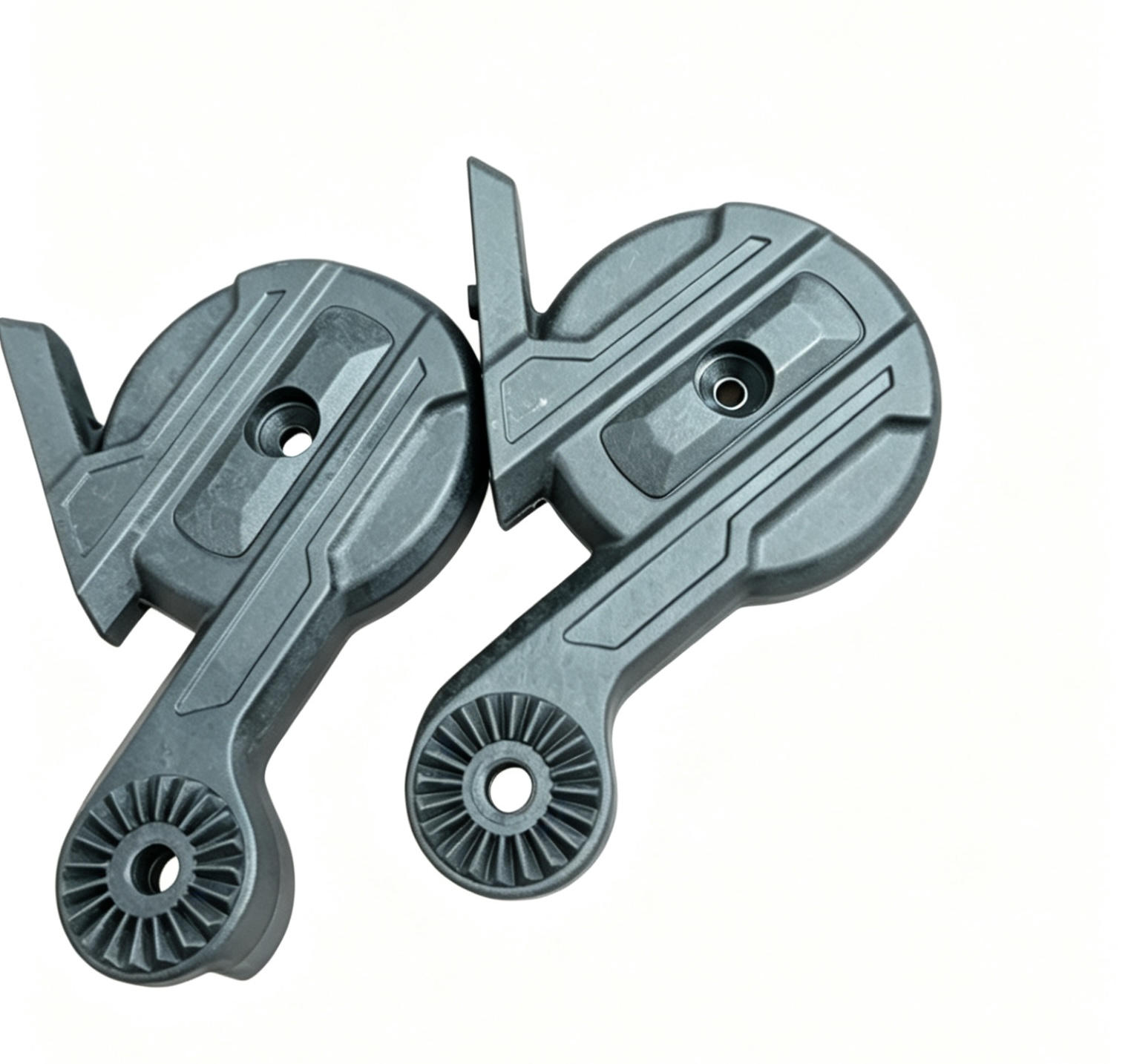
Electronic and industrial components produced using Polygram's certified LFT carbon fiber composite materials.
Market Trend: Certification as a Competitive Differentiator in the LFT Space
According to MarketsandMarkets, the long fiber thermoplastics market is projected to reach USD 4.06 billion by 2031. As the market grows, an increasing number of suppliers are entering the space, driving buyers to differentiate providers based on certification depth rather than price alone. Polygram's concurrent holding of ISO 13485, IATF 16949, and ISO 9001 certifications positions the company as a supplier that has passed third-party audits across multiple regulatory frameworks.
This is particularly relevant for procurement teams consolidating their supplier base. A single certified supplier that can serve both medical and automotive divisions reduces audit burden, simplifies supply chain management, and provides consistent documentation across product lines.
Comparison with Non-Certified Material Supply
Compared to suppliers offering only standard-grade carbon fiber composite plastics without industry-specific certifications, Polygram's certified materials provide verifiable traceability, documented process control, and compliance with regulatory inspection protocols. For buyers in medical and automotive supply chains, these factors directly translate to shorter time-to-market and lower compliance risk.
One honest limitation: maintaining certifications across multiple standards requires ongoing audit investment, which is reflected in material pricing. For buyers with non-regulated applications where certification is not required, standard-grade LFT materials from other sources may offer lower upfront cost. However, for any application that may eventually enter medical, automotive, or aerospace channels, starting with a certified material eliminates the cost and delay of retroactive qualification.
Future Outlook: Expanding Certification Coverage
As carbon fiber composite plastic adoption grows in sectors such as low-altitude economy (drones, eVTOL), robotics, and energy storage, the certification landscape is expected to broaden. Suppliers that already hold ISO 13485 and IATF 16949 are positioned to extend their compliance to emerging standards in these fields. Polygram's existing certification infrastructure and its 12,000,000-unit annual production capacity provide a foundation for scaling into new regulatory domains.
Frequently Asked Questions
What certifications does Polygram's carbon fiber composite plastic hold?
Polygram's LFT and LFT-G carbon fiber composite plastic products hold ISO 13485:2016 (Medical Device Management System), IATF 16949:2016 (Automotive Quality Management), and ISO 9001:2015 (General Quality Management) certifications, all applicable to the global market.
Is Polygram's LFT carbon fiber composite plastic certified for medical device applications?
Yes. The LFT-G long carbon fiber reinforced composite product holds a Medical Device Management System Certification to the GB/T 42061-2022/ISO 13485:2016 standard, covering medical device management activities in the processing of plastic products for medical devices and equipment.
What automotive standard does Polygram's carbon fiber composite plastic comply with?
The LFT product is certified to IATF 16949:2016, the automotive industry's global quality management standard, with certificate numbers ZA-FCAV No.: 2501627/R0S and IATF No.: 0585814.
Which specific products are covered by the ISO 13485 certification?
The ISO 13485:2016 certification applies to the LFT-G long carbon fiber reinforced composite product, which is used in commercial and military aerospace applications including radomes, drones, aircraft, missiles, satellites, and aerospace fuel tanks, as well as medical device components.
Who issued the IATF 16949 certification for Polygram's products?
The IATF 16949:2016 certification was issued by Beijing Zhong An Zhi Huan Certification Center Co., Ltd. (DBA: Zhong An FCAV International), a recognized certification body for automotive quality management systems.
Does the ISO 9001 certification apply to all of Polygram's product lines?
The ISO 9001:2015 certification (number IAS25924Q1858R0S) applies to the thermoplastic carbon fiber high-strength material (LFT product) and covers the company's quality management system for production and service processes.
For detailed product specifications, parameters, and certification documentation, download the company brochure: Polygram Company Brochure (PDF)
Have Questions or Need More Details?
Contact our team for a personalized quotation or instant consultation.
Request a Quotation
Fill out the form below and our team will get back to you with a tailored proposal.
WhatsApp Direct Chat
Prefer to chat in real-time? Message us on WhatsApp for instant assistance & quick answers.
- Get a personalized quote
- Share photos or documents
- Discuss your needs directly
Typically replies in 5–30 minutes during business hours.