
Polymer Insulators in Power Grids: Certification, Performance and Global Sourcing
As power grids modernise and expand across harsh environments, the choice of insulation technology directly affects transmission reliability and maintenance costs. China Energy and Chemical Industry Co.,Ltd (CECI) is a Chinese manufacturer specialising in high-voltage insulators and line hardware, offering a range of polymer, porcelain and glass products for overhead transmission and distribution.
Industry context: Why the shift to polymer insulators
The global electrical insulator market was valued at approximately USD 12.5 billion in 2023 and is projected to reach USD 18.4 billion by 2030 (Grand View Research). Within this segment, composite (polymer) insulators alone accounted for an estimated USD 3.42 billion in 2024, growing at a CAGR of 9.1% (Strategic Market Research). The shift is driven by the need for lighter components that resist contamination and reduce maintenance frequency, especially in regions with high pollution, humidity or sandstorms.
Product focus: CECI polymer suspension long‑rod insulator
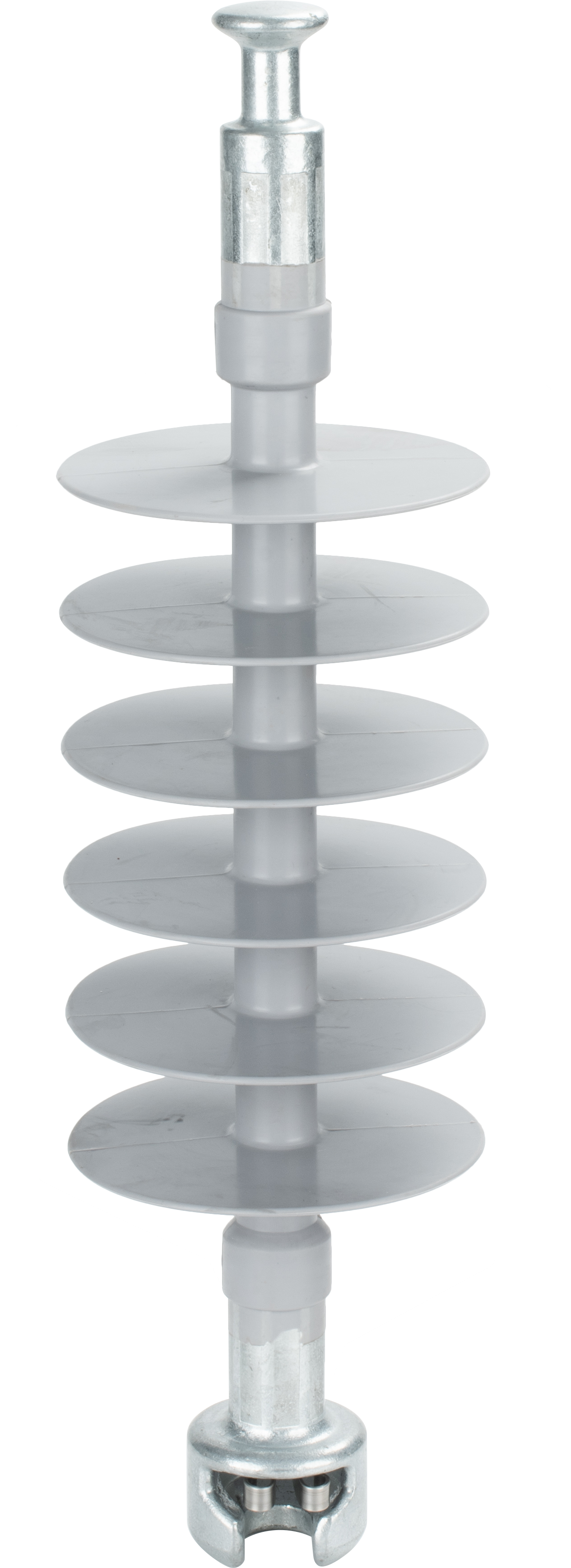
The CECI polymer insulator (model FXB-24-70-785mm) is a suspension long‑rod type rated at 35 kV. It is designed for continuous 24/7 operation in harsh outdoor climates such as high temperature, high humidity, UV aging, dust storms and impulse overvoltage — conditions commonly found in Spain, France, Italy and Turkey. The insulator uses a silicone housing, a fiberglass-reinforced plastic (FRP) rod core and carbon steel (C45) end fittings.
Key electrical parameters (from product spec)
- Rated voltage: 35 kV
- Lightning impulse withstand voltage: >230 kV
- Power frequency 1‑minute wet withstand voltage: >95 kV
- Minimum creepage distance: >1050 mm
- Rated bending load: 5 kN
Certification and compliance
The CECI 35 kV composite pin insulator (model FPQ-35/6(5), applicable product 5561) is covered by a Type Test Report (certification number 23XJ0089-S) issued by Suzhou Electrical Apparatus Science Research Institute Co., Ltd. The report confirms compliance with international standards IEC 60815, IEC 61109, IEC 62217 and IEC 61466, and is accepted in global markets including Europe, the Middle East, Southeast Asia and the Americas.
For metal end fittings and hardware accessories, CECI holds ISO 9001 certification (certificate number 75425Q0493R053, issued by Zhongjing Certification (Shanghai) Co., Ltd.), covering production of power fittings for high‑voltage lines. This ISO certification is valid for Europe, the Americas, the Middle East and Central Asia.
Application scenarios: Where polymer insulators deliver
The polymer insulator is suitable for:
- Rural and urban power grid upgrading projects
- Rail transit electrification (catenary insulation)
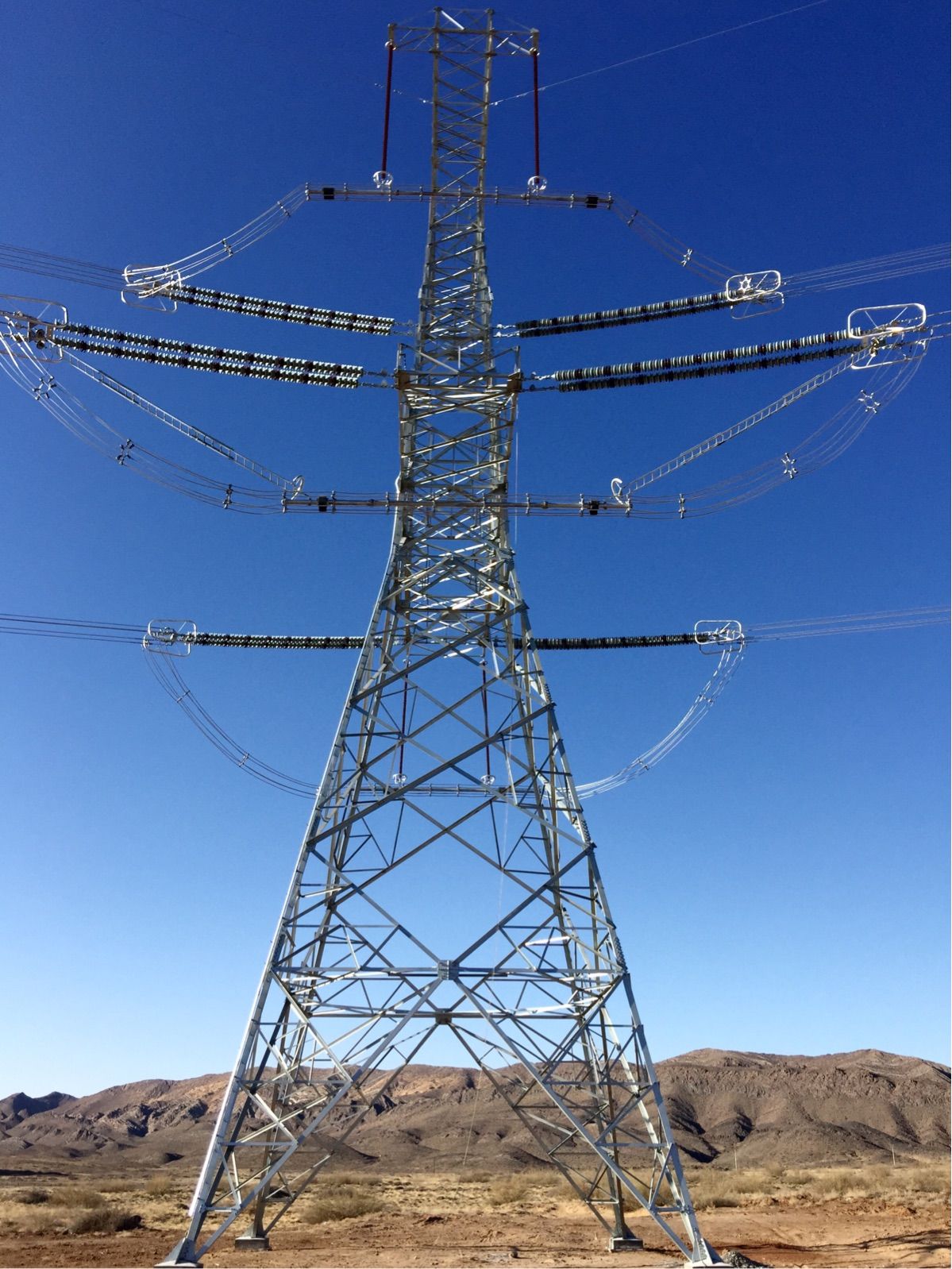
- High‑voltage transmission line projects (suspension and tension strings)
- Substation / converter station insulation
- Wind power projects (where lightweight and anti‑aging properties are critical)
In these scenarios, the insulator must resist UV aging, dust accumulation, wind abrasion, high humidity, and impulse overvoltage. The silicone outer shell provides hydrophobicity that reduces leakage current and improves pollution‑flashover performance.
Comparison with traditional solutions
Compared to porcelain and glass insulators, polymer insulators offer significant weight reduction (typically 30–50% lighter), better resistance to vandalism, and superior anti‑pollution flashover performance due to their silicone surface. However, one honest limitation is that certain polymer materials (especially early formulations) can be more susceptible to tracking and erosion under extreme UV and high‑temperature conditions if the housing compound is not properly formulated. CECI addresses this through stringent material selection and by conducting tests such as the 1000‑hour salt‑fog test (implied by IEC 61109 compliance).
Market trend and sourcing considerations
Suspension insulators represent the largest segment of the composite insulator market, capturing 48.4% of the market in 2024 (Mordor Intelligence). China is the world’s second‑largest exporter of insulating materials (13.1% of global exports, OEC 2024). CECI exports to over 40 countries and maintains a factory of 30,000 m² with an annual output of 8 million units. Key export markets include Russia, Vietnam, France, Spain, Italy, Turkey, Brazil, Poland, Indonesia and Saudi Arabia.
Customisation and supply chain
CECI offers OEM and ODM services, with customisation options for voltage, creepage distance, lightning impulse withstand voltage, bending load, colour and logo. The typical lead time is 30–45 days, with a minimum order quantity of 500 units. All products undergo 100% testing before shipment.
FAQ
Q1: What certifications does the CECI polymer insulator hold?
The 35kV composite pin insulator (FPQ-35/6(5)) is covered by a Test Report (23XJ0089-S) from Suzhou Electrical Apparatus Science Research Institute, compliant with IEC 60815, IEC 61109, IEC 62217 and IEC 61466. The metal fittings are ISO 9001 certified.
Q2: What voltage levels are available?
The standard suspension long‑rod model is rated 35 kV (FXB-24-70-785mm). CECI also manufactures insulators up to 1000 kV according to the company profile.
Q3: Can the product be customised?
Yes. CECI supports OEM/ODM with customised parameters including voltage, creepage distance, lightning impulse voltage, bending load, colour and logo (source: production capability unit).
Q4: What are the typical applications?
Rural/urban grid upgrading, rail transit electrification, high‑voltage transmission lines, substations and wind power projects, operating 24/7 in harsh outdoor climates (Spain, France, Italy, Turkey).
Q5: How does the polymer insulator compare to porcelain/glass?
Polymer is lighter and offers better anti‑pollution flashover performance. A known limitation is that UV and high‑temperature aging require careful material selection; CECI’s silicone compound is designed to meet IEC aging requirements.
Q6: What is the lead time and MOQ?
Lead time is 30–45 days; MOQ is 500 units. Monthly capacity is 500 tons or 100,000 pieces (source: production capability unit).
Q7: Are there reference projects?
CECI has supplied over 10,000 units to utility and railway clients in Brazil, Italy, Turkey and Vietnam, with a track record of 3 years in operation. Users report improved line stability and reduced maintenance intensity.
Download product catalogue (PDF)
Have Questions or Need More Details?
Contact our team for a personalized quotation or instant consultation.
Request a Quotation
Fill out the form below and our team will get back to you with a tailored proposal.
WhatsApp Direct Chat
Prefer to chat in real-time? Message us on WhatsApp for instant assistance & quick answers.
- Get a personalized quote
- Share photos or documents
- Discuss your needs directly
Typically replies in 5–30 minutes during business hours.