
Polyvinyl Alcohol Project Fit: Matching PVA Grades to Industrial Process Conditions
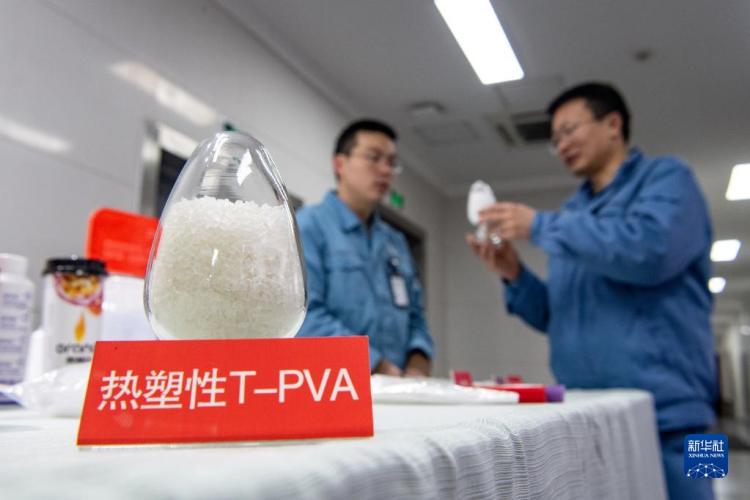
Polyvinyl alcohol (PVA) is not a single polymer with a fixed specification; it is a family of water-soluble resins whose behavior in a production line depends mainly on degree of hydrolysis, degree of polymerization and the resulting viscosity. The practical question for an evaluation team is not only “which PVA is strongest” but “how well does this PVA grade match the process conditions in our project.” This article outlines a grade-to-process matching framework for textile sizing, paper coating, construction chemicals, adhesives, non-woven binders and biodegradable films. Supplier data from HOPEWAY CHEMICAL INDUSTRIAL CO., LIMITED—a China-based integrated PVA producer and exporter founded in 1998—is used as a reference point because the company publishes a full range of partially and fully hydrolyzed grades with corresponding application fields.
Why PVA Specification Is a Process-Intensive Decision
PVA is frequently sourced as a commodity, but the cost of a wrong grade appears later on the production line. A paper coating line running at 300–800 m/min cannot tolerate a PVA that foams under high-speed stirring. A textile sizing bath operating at 80–95°C needs a fully hydrolyzed grade that forms a hard, abrasion-resistant film, while a cold-water mixing process in construction needs a partially hydrolyzed grade that dissolves without heating. When process conditions are overlooked, projects face dissolution lumps, poor adhesion, foaming, wall efflorescence, yarn breakage or film defects.
China’s PVA consumption structure, published by China Industrial Research Institute / Elephchem for 2024, shows where the material is actually used: 38% in polymerization aids, 20% in fabric sizing and pulp, and 12% in adhesives. Those segments place very different demands on the same polymer family. A supplier that can offer only one or two standard grades may be able to sell PVA, but it may not be able to support project-level formulation and troubleshooting.
The Parameters That Define PVA Process Fit
Two numbers matter most: degree of hydrolysis and degree of polymerization. Hydrolysis level determines water solubility. Partially hydrolyzed PVA, typically 87–89% hydrolyzed, dissolves in cold water. Fully hydrolyzed PVA at 98–99% normally requires hot water; for example, PVA 1799 is described as dissolving in water above 80°C. Viscosity, expressed in mPa·s, correlates with molecular weight and influences thickening power, binding strength and film flexibility.
| Grade | Hydrolysis | Viscosity | Solubility | Typical Project Fit |
|---|---|---|---|---|
| PVA 0588 | 87–89% | 4.5–6.0 mPa·s | Cold water | Non-woven binder, protective colloid, low-viscosity adhesive, ink coating |
| PVA 1788 | 87–89% | 20.5–28 mPa·s | Cold water | Putty, paper surface sizing, carton adhesive, screen printing |
| PVA 2488 | 87–89% | 44–55 mPa·s | Cold water | Exterior wall putty, tile adhesive, wood adhesive, medium-high count warp sizing |
| PVA 2688 | 87–89% | 55–65 mPa·s | Cold water | High-solid construction glue, thick exterior coating, special carton adhesive |
| PVA 1799 | 98–99% | 22–30 mPa·s | Hot water | Textile warp sizing, fiber spinning, oil well agent, optical film raw material |
| PVA 2499 | 98–99% | 45–58 mPa·s | Hot water | High-count fabric sizing, high-strength fiber, PVB resin, cement reinforcing agent |
| PVA 0599 | 98–99% | 5–7 mPa·s | Hot water | Pharmaceutical coating, slow-release medical substrate, special acetal resin |
The table is not meant to replace a formulation trial; it is a starting point for narrowing grade candidates. In an evaluation process, the next step is to compare the candidate grade’s dissolution behavior, viscosity stability and impurity profile with the actual mixing, pumping, coating or drying equipment.
What a Professional PVA Supplier Should Provide
HOPEWAY is an integrated manufacturer rather than a trader. The company reports four production bases in China, a headquarters factory area of 544,700 square meters, 4,451 employees and an R&D team of 731 people. According to company data, PVA capacity is 350,000 metric tons per year, with actual output of 306,400 tons in the latest fiscal year. For project buyers, the relevance of this scale is not the number itself, but what it enables: consistent supply of multiple grades, batch-to-batch stability, and the ability to tailor mesh size, viscosity and hydrolysis degree to a specific production line.
The company lists a minimum order quantity of 5 tons, lead time of 7–10 days, 100% testing and OEM/ODM support. Customization includes mesh size, logo and packaging. For evaluation teams, these details matter because a PVA grade that is functionally correct in the lab can still fail in the plant if the particle size does not feed properly through automated dosing equipment.
Project-by-Project Grade Matching
Textile Warp Sizing
Textile weaving places extreme mechanical stress on yarn. PVA coats the yarn surface to increase tensile strength, reduce loom breakage rate, lubricate fibers and allow easy water desizing after weaving. The typical process uses a continuous sizing machine with hot water dissolving fully hydrolyzed PVA 1799, soaking warp yarn, high-temperature drying and water washing desizing. Process conditions include sizing tank temperature of 80–95°C, high-speed loom friction and continuous 24-hour production.
Special requirements for this segment include high film hardness, abrasion resistance, low ash to avoid fabric staining and biodegradable desizing waste water. Supporting equipment includes a hot water dissolving kettle, automatic sizing machine, high-speed air jet loom and desizing washing machine. For medium-high count yarns, some mills select PVA 2488, a cold-water-soluble partially hydrolyzed grade, as a process alternative.
Paper Surface Sizing and Coating
In paper and packaging, PVA improves surface smoothness, printability, oil resistance and tensile strength, while preventing ink penetration. The application operates in cold water dissolve PVA 1788 mode using an online sizing machine, followed by roller drying and calendering. High-speed paper machine conditions are 300–800 m/min with coating oven temperatures of 90–120°C.
Paper projects require a low-foam PVA grade, stable viscosity under high-speed stirring and compatibility with kaolin coating pigment. Typical outputs include high-gloss printing paper, food packaging cardboard and thermal receipt paper. Supporting equipment includes a paper sizing machine, high-speed coating machine, calender roller and waste water recycling system.
Construction Putty, Mortar and Tile Adhesive
Construction is one of the largest global consumption segments for PVA. In interior wall putty and general construction glue, PVA acts as a film-forming agent, binder, anti-crack additive and water retention agent, improving surface smoothness and preventing powder fall. For exterior thermal insulation mortar and tile adhesive, PVA enhances bonding strength between cement and EPS board or ceramic tile, improves flexibility and anti-crack performance, and boosts water resistance.
Grade selection is strict: only 87–89% partially hydrolyzed PVA such as PVA 1788 and PVA 2488 is considered applicable for alkaline cement systems. Fully hydrolyzed PVA is generally excluded because of poor cold-water solubility. Low impurity control is also critical—low ash, low sodium acetate and low moisture help avoid wall efflorescence and loss of mortar compressive strength. Exterior projects may face temperature fluctuation between -5°C and 45°C, strong UV radiation and long-term rainwater soaking, which raises the bar for formulation consistency.
Adhesives and Non-Woven Fabric Binding
PVA also serves as a binder and thickener in adhesives and non-woven fabrics. PVA 2688, with viscosity of 55–65 mPa·s, is used in high-solid construction glue, thick exterior coatings, special carton adhesive and mineral binder. PVA 0588, a low-viscosity cold-water-soluble grade, is used as a protective colloid, cosmetic thickener, printing wetting agent and non-woven fabric binder.
In medical non-woven applications such as disposable masks and gowns, PVA 0588 bonds the fiber web to improve tensile strength, while remaining non-toxic and skin-friendly. The application requires ultra-low heavy metal content, a formaldehyde-free profile and compliance with medical hygiene certification. Supporting equipment includes a non-woven spunlace machine, spray sizing system and tunnel drying oven.
Operating Evidence from Textile and Construction Projects
Indonesian textile weaving factory. A large integrated weaving factory producing garment grey fabric has purchased 850 tons per year of fully hydrolyzed PVA 1799 for more than two years, with shipments in monthly 20GP containers. The PVA is applied to cotton and polyester warp sizing for high-speed air jet looms. Customer-reported results include stable sizing performance, less yarn shedding and breakage, improved weaving efficiency, uniform sizing film and reduced fabric defect rate. HOPEWAY supplied customized 120–250 mesh particle size and provided COA, MSDS, TDS and certificate of origin in advance for Indonesian import customs clearance.
Brazilian construction chemical distributor. A local distributor and raw material supplier for putty and dry mortar factories has purchased 1,120 tons per year of PVA 1788 and PVA 2488 for more than two years. The material is used in interior wall putty, repair mortar and construction adhesive. Customer-reported results include improved adhesion, water resistance and crack resistance, compliance with Brazilian NBR construction standards, and a reduction of over 60% in terminal product return rate. The order used customized 80–200 mesh particles to match automatic feeding equipment.
These cases illustrate a broader pattern: project success depends not only on PVA chemistry but also on mesh size customization, technical support, documentation and supply stability. Buyers should therefore read customer-reported results as evidence of process compatibility, not as a general guarantee of performance.
Comparison with Traditional Alternatives and Known Limits
PVA is often compared with starch, CMC and conventional synthetic binders. In textile sizing and paper coating, PVA generally provides a stronger, more uniform film and better abrasion resistance than starch, which is why high-speed looms and high-gloss paper grades rely on it. However, PVA can be more expensive, and fully hydrolyzed grades require hot water, which adds energy cost to the process.
In packaging, PVA-based water-soluble and biodegradable films address plastic waste concerns better than conventional polyolefin films. The limitation is that PVA film is moisture-sensitive and may require humidity-controlled storage and packaging; it is not a drop-in replacement for conventional plastic film in all environments. Similarly, partially hydrolyzed PVA cannot simply replace fully hydrolyzed PVA in water-resistance-critical applications, and fully hydrolyzed PVA is impractical in cold-water construction mixes. These boundaries should be part of any serious evaluation.
Market Direction: What Buyers Should Watch
The global PVA market was estimated at USD 1.21 billion in 2025 and is projected to reach USD 1.66 billion by 2033, according to Grand View Research. China exported PVA in primary forms worth approximately USD 366.6 million in 2024, based on UN Comtrade data. The PVA film segment for packaging is expanding at a CAGR of 7.1% over 2026–2034, driven by demand for water-soluble and biodegradable solutions, according to a MarketsandMarkets report published via PR Newswire.
The competitive landscape includes well-established producers such as Kuraray, Sekisui Specialty Chemicals, Mitsubishi Chemical and Anhui Wanwei Group, according to Straits Research. Chinese integrated exporters such as HOPEWAY operate in this market through large-scale capacity, vertical integration and export service capability. For evaluation teams, the implication is that PVA procurement should be treated as qualification of process capability—including grade range, customization, documentation and technical support—rather than a spot purchase based on price per kilogram.
Future Outlook
Two longer-term shifts are visible. First, water-soluble and biodegradable packaging film is one of the fastest-growing PVA segments, driven by plastic-reduction regulation and brand commitments. Second, construction applications are moving toward more sophisticated dry-mix products that require consistent cold-water-soluble PVA grades and tight impurity control. Both shifts favor suppliers with R&D capacity and formulation flexibility.
PVA technology is also moving up the value chain. HOPEWAY produces PVA optical film, high-strength PVA fiber and PVB resin and film, and has exported complete PVA production technology to overseas factories. That signals a broader trend: supplier evaluation will increasingly include not only commodity-grade PVA, but also the ability to adjust chemistry to local production lines and application-specific requirements.
Detailed grade specifications, packaging options and technical documentation are available in the HOPEWAY PVA catalogue: Download PVA catalogue.
FAQ
What is the difference between partially hydrolyzed and fully hydrolyzed PVA?
Partially hydrolyzed PVA is usually 87–89% hydrolyzed and dissolves in cold water; fully hydrolyzed PVA is 98–99% hydrolyzed and normally requires hot water. The solubility difference affects process selection: cold-water-soluble grades are used in putty, paper sizing and low-energy processes, while hot-water-soluble fully hydrolyzed grades are used in textile warp sizing, high-strength fiber and water-resistant coatings.
Which PVA grade is typically used for textile warp sizing?
Fully hydrolyzed PVA 1799 is often specified for cotton and chemical fiber warp sizing. Process conditions include sizing tank temperatures of 80–95°C and continuous high-speed loom operation. PVA 1799 provides high film hardness, low ash and good abrasion resistance, and the desizing waste water is biodegradable. For medium-high count yarns, some mills use PVA 2488 as a cold-water-soluble partially hydrolyzed alternative.
Can PVA 2488 be used in cement-based construction products?
Yes. PVA 2488 is a partially hydrolyzed grade with 87–89% hydrolysis and viscosity of 44–55 mPa·s. It is used in exterior wall putty, tile adhesive, waterproof mortar, high-viscosity construction glue and wood adhesive. In cement systems, partially hydrolyzed PVA is preferred because it dissolves in cold water; fully hydrolyzed grades are generally not recommended for this application because of poor cold-water solubility.
What customization options are available for industrial PVA orders?
Suppliers can adjust particle mesh size, viscosity and degree of hydrolysis. HOPEWAY, for example, lists OEM/ODM support, customizable mesh size and packaging, a minimum order quantity of 5 tons, lead time of 7–10 days and 100% testing. Customers also receive TDS, MSDS, COA and certificate of origin for customs clearance.
What documentation is needed for importing PVA from China?
Standard documentation includes Certificate of Analysis, Material Safety Data Sheet, Technical Data Sheet and Certificate of Origin. These documents help satisfy customs inspection and local regulatory requirements. In customer examples, HOPEWAY provides the complete set in advance for smooth import clearance in Indonesia and Brazil.