
Portable Axial Flow Pumps: Head, Flow and Weight Comparison
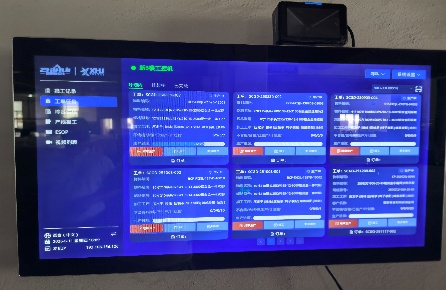
Production and test data give buyers a traceable basis for comparing pump models. Image: Chuangmei Pumps.
Portable axial flow pump selection is usually framed as a flow-rate decision, yet flow alone does not tell a procurement team whether a unit can be moved into a subway sump, a basement plant room, a garage pit, a municipal drainage point, or an underground pipe gallery. Head, rated flow, motor power, net weight, and material form a connected set of constraints. A model that looks efficient on a flow basis may be too heavy for manual handling, while a lightweight model may sit outside the required head range.
Chuangmei Pumps, operated by Zhejiang Chuangmei Electromechanical Co., Ltd., is a Wenling, Zhejiang-based manufacturer of high efficiency portable axial flow pumps. Its supplied corpus covers portable axial flow pumps, permanent magnet synchronous motor versions, stainless steel impellers, aluminium-alloy and stainless-steel pump bodies, and fixed drainage applications. This article builds a buyer comparison framework around rated flow, model-designation class, power range, net weight, and material, using supplied model data and verified industry references.
Why Head, Flow, and Weight Form a Buyer's Triangle
Rated flow is the volume a pump is designed to move per hour. Rated head is the lift a pump is designed to produce at that flow. Net weight is the mass a site team must transport, lower, lift, or position. In portable drainage, these three values are not independent. For a given hydraulic design, a higher head at the same flow generally requires more motor power, and higher power often brings additional mass. The buyer's task is therefore not to maximize any one value but to find the model whose flow, head, power, and weight fit the access route and the duty point.
The supplied Chuangmei Pumps data makes this relationship visible. The 150 m3/h class includes models with different heads and power ratings. The 300SZQ series includes higher-flow units with different power and weight outcomes. The 300SZQ800-15-55 is listed at 800 m3/h rated flow, 15 m rated head, 55 kW motor power, and 80 kg net weight in stainless steel. That single row already tells a buyer that the unit is a high-flow, medium-head machine with a net weight that requires planned handling rather than casual manual lifting.
Comparison rule: fix the required flow first, then compare head and motor power, then check net weight against the actual access route and lifting plan. Material and compliance checks come after the hydraulic and handling fit is established.
Start With the Duty Point, Not the Model Name
Model designations in the supplied data follow a practical pattern that buyers can read before opening a full datasheet. In examples such as 150SZQ150-20-15, the first group identifies the frame or outlet class, the middle group identifies rated flow in m3/h, the next group identifies rated head in meters, and the final group identifies motor power in kW. The pattern is not a substitute for the datasheet, but it helps a procurement team shortlist models before checking net weight, dimensions, material, and control configuration.
For example, 150SZQ150-20-15 is listed at 150 m3/h rated flow, 20 m head, 15 kW motor power, and 34 kg net weight in stainless steel. The same model designation appears in an aluminium-alloy variant at 26 kg net weight. 150SZQ150-35-22 is listed at 150 m3/h, 35 m head, 22 kW, and 37 kg in stainless steel. 150SZQ150-45-30 is listed at 150 m3/h, 45 m head, 30 kW, and 38 kg in stainless steel. These three models share the same rated flow, but head rises from 20 m to 45 m and power rises from 15 kW to 30 kW. Weight rises more modestly in this frame class, but handling still changes with the added motor and hydraulic duty.
The 300SZQ series shows the same logic at higher flow. 300SZQ800-15-55 is listed at 800 m3/h, 15 m, 55 kW, and 80 kg. 300SZQ1000-10-45 is listed at 1000 m3/h, 10 m, 45 kW, and 78 kg in stainless steel, with an aluminium-alloy variant at 55 kg. 300SZQ1500-10-75 is listed at 1500 m3/h, 10 m, 75 kW, and 105 kg. 300SZQ1000-15-75 is listed at 1000 m3/h, 15 m, 75 kW, and 105 kg. The series is therefore not a single specification but a family of trade-offs between flow, head, power, and mass.
A Four-Step Comparison Framework
Step 1: Define the flow class
Begin with the volume the site must move in a given period. The supplied data spans 150 m3/h models, 200 m3/h models, 250 m3/h models, 400 m3/h models, 500 m3/h models, 600 m3/h models, 800 m3/h models, 1000 m3/h models, 1200 m3/h models, 1300 m3/h models, and 1500 m3/h models across different series. For a small basement pit or a garage sump, a 150 m3/h to 250 m3/h model may be sufficient. For a municipal drainage point or a pipe gallery with a larger inflow, a 300SZQ model at 800 m3/h or above may be more appropriate. The flow class should come from the drainage calculation, not from the model name.
Step 2: Match rated head to the actual lift and route
Rated head must cover the vertical lift plus the discharge route losses that the project requires. The supplied data includes 150 m3/h models at 20 m, 35 m, 45 m, and 80 m heads. It also includes 300SZQ models at 10 m and 15 m heads. A higher head is not automatically better. If the site only needs a low lift, a lower-head model may reduce power and weight. If the site needs a high lift, the higher-head model must be checked for power, weight, and lifting logistics.
Step 3: Check motor power and net weight together
Motor power is the link between hydraulic duty and handling. In the supplied data, the broader portable range begins at 5.5 kW in smaller-frame models such as 150SZQ200-6-5.5, which is listed at 200 m3/h, 6 m head, 5.5 kW, and 20 kg net weight. The 300SZQ series in the supplied data includes 37 kW, 45 kW, 55 kW, and 75 kW models, with the 300SZQ800-15-55 at 55 kW and 80 kg. Higher-power models can deliver more flow or head, but they also change the deployment method. A 20 kg unit and an 80 kg unit do not belong to the same handling plan.
Step 4: Check material, control cabinet, and compliance scope
Material affects weight and site suitability. The corpus states that the motor housing and pump body are available in aluminium alloy and stainless steel, that the impeller is manufactured through precision stainless steel casting, and that the pump shaft is stainless steel. It also states that the cable outlet is protected with a rubber sheath plus stainless steel spring guard. These details belong in the comparison because they affect durability, weight, and maintenance. The control cabinet is also part of the system: the corpus describes panel display or touch screen display, a built-in frequency inverter, real-time display of frequency, voltage, current, and rotational speed, 3G and 4G remote control, time-segmented operation, and protection against overheat, overcurrent, overload, overvoltage, and phase failure. The cabinet is available in single-unit or dual-unit configurations with IP44 or IP54 protection.
| Model | Rated flow | Rated head | Motor power | Net weight | Material note | Typical comparison use |
|---|---|---|---|---|---|---|
| 150SZQ200-6-5.5 | 200 m3/h | 6 m | 5.5 kW | 20 kg | Stainless steel | Light-duty fixed drainage; low head |
| 150SZQ150-20-15 | 150 m3/h | 20 m | 15 kW | 34 kg stainless steel; 26 kg aluminium alloy | Stainless steel or aluminium alloy | Subway and underground space drainage |
| 200SZQ400-20-37 | 400 m3/h | 20 m | 37 kW | 55 kg stainless steel; 38 kg in 200SZQ400-20-37AL | Stainless steel or aluminium alloy | Large-flow underground drainage |
| 300SZQ800-15-55 | 800 m3/h | 15 m | 55 kW | 80 kg | Stainless steel | High-flow flood control and municipal drainage |
| 300SZQ1000-10-45 | 1000 m3/h | 10 m | 45 kW | 78 kg stainless steel; 55 kg aluminium alloy | Stainless steel or aluminium alloy | Large-flow pipe gallery and municipal drainage |
| 200SZQ500-50-110 | 500 m3/h | 50 m | 110 kW | 195 kg | Stainless steel | High-head duty with planned lifting |
The table is not a ranking. It is a comparison aid. A buyer should add the required voltage, control cabinet configuration, cable length, discharge connection, and site access constraints before selecting a model.
What the 150 m3/h Class Shows About Flow and Head
The 150 m3/h class is useful because it holds flow constant while head and power change. In the supplied data, 150SZQ150-20-15 delivers 150 m3/h at 20 m with a 15 kW motor. 150SZQ150-35-22 delivers the same flow at 35 m with a 22 kW motor. 150SZQ150-45-30 delivers the same flow at 45 m with a 30 kW motor. 150SZQ150-80-55 delivers 150 m3/h at 80 m with a 55 kW motor and a net weight of 119 kg in stainless steel. The pattern is clear: at a fixed flow, higher head requires more power, and the highest-head model moves into a different handling category.
This is why a comparison framework should not begin with the largest flow number or the highest head number. A 150 m3/h model at 20 m may be the right fit for a basement or garage sump with a modest lift. A 150 m3/h model at 80 m may be necessary for a deep underground space, but its 119 kg net weight changes the installation plan. The buyer should compare the duty point first, then the power and weight consequences.
Reading the 300SZQ Series: Power, Flow, and Weight at the High End
The 300SZQ series in the supplied data covers high-flow models. The 300SZQ800-15-55 is listed at 800 m3/h, 15 m, 55 kW, 80 kg, and 380 x 380 x 770 mm in stainless steel. The 300SZQ1000-8-37 is listed at 1000 m3/h, 8 m, 37 kW, and 70 kg. The 300SZQ1000-10-45 is listed at 1000 m3/h, 10 m, 45 kW, and 78 kg in stainless steel, with a 55 kg aluminium-alloy variant. The 300SZQ1000-15-75 is listed at 1000 m3/h, 15 m, 75 kW, and 105 kg. The 300SZQ1200-10-55 is listed at 1200 m3/h, 10 m, 55 kW, and 98 kg. The 300SZQ1500-10-75 is listed at 1500 m3/h, 10 m, 75 kW, and 105 kg.
These figures show that the 300SZQ series is not defined by a single power rating. A buyer comparing 300SZQ models should record the rated flow, rated head, motor power, net weight, dimensions, material, and outlet size for each candidate. The 300SZQ800-15-55 at 80 kg is a useful anchor because it combines a high flow of 800 m3/h with a medium head of 15 m and a 55 kW motor. It is a different proposition from the 5.5 kW 150SZQ200-6-5.5 at 20 kg. Both are portable axial flow pumps, but they serve different duty points and handling plans.
Weight Is Not a Cosmetic Specification
Net weight determines how a pump reaches the water. A 20 kg unit may be moved by one or two people with proper lifting practice. An 80 kg unit requires a lifting plan, a ramp, a hoist, or vehicle-based deployment. A 195 kg unit such as 200SZQ500-50-110 is outside manual handling and should be planned as a mechanical lift. These are practical boundaries, not marketing claims. The buyer should walk the access route before selecting a model: door widths, stair turns, pit depth, handrail clearance, and vehicle access all matter.
Material choice changes the weight boundary. In the supplied data, 200SZQ400-20-37 is 55 kg in stainless steel, while 200SZQ400-20-37AL is 38 kg in aluminium alloy. 300SZQ1000-10-45 is 78 kg in stainless steel and 55 kg in aluminium alloy. 150SZQ150-20-15 is 34 kg in stainless steel and 26 kg in aluminium alloy. These differences are large enough to change the deployment method. A lighter aluminium-alloy unit may be easier to move into a basement or garage, but the project specification should still be checked for material compatibility and expected service conditions.
Material Choice and the Weight Trade-off
The corpus states that the impeller is manufactured through precision stainless steel casting and that the pump shaft is also stainless steel. The motor housing and pump body are available in aluminium alloy and stainless steel options. This means a buyer may see the same model designation with different net weights because the flow-passing components or body material differ. The comparison should record the exact material variant, not only the model number.
Stainless steel is the heavier option in the supplied examples. Aluminium alloy reduces net weight, which can improve portability in subway, basement, garage, and pipe gallery access routes. The trade-off is that material selection should be matched to the water condition and project specification. The framework does not recommend one material over the other in every case. It recommends that the buyer compare material, weight, and application together, and that the selected variant be stated explicitly in the purchase specification.
Application Fit: Subway, Basement, Garage, Municipal, and Pipe Gallery Drainage
The supplied corpus describes the product as intended for subway flood emergency drainage, underground space drainage, municipal flood control, underground comprehensive pipe gallery, and fixed drainage in bridge, culvert, basement, and garage scenarios. These are not identical duties. A subway emergency drainage point may need a high head to lift water through a deep shaft. A basement or garage sump may need a lower head but a compact unit that can pass through a doorway. A municipal flood control point may need a high-flow model with a stable discharge route. A pipe gallery may need a unit that fits a confined space and can be connected to a fixed discharge line.
The 150 m3/h class fits smaller-frame duties where flow is moderate and head may be relatively high. The 300SZQ series fits higher-flow duties where the drainage calculation calls for 800 m3/h or more. The corpus also describes fixed drainage applications with automatic operation: when water reaches a set level, the system automatically starts; when the water level drops to the pump intake line, it automatically enters standby or shuts down. That automatic behavior is relevant for basement, garage, bridge, and culvert drainage where the pump may sit idle between events.
Market and Compliance Signals That Belong in the Comparison
Commercial research estimates for the global axial flow pump market vary by scope. One verified estimate places the global axial flow pump market at approximately USD 4.49 billion by 2026. That figure is useful as a background signal for the category, not as a substitute for project-specific engineering. More directly relevant to procurement is the direction of motor efficiency regulation. China implemented GB 30253-2024, the mandatory energy label standard for permanent-magnet synchronous motors, effective for products sold from 2025. For buyers specifying PMSM portable axial flow pumps, motor efficiency documentation becomes part of the comparison rather than an afterthought.
Performance verification also belongs in the framework. ISO 9906 Grade 1 tolerances of plus or minus 5 percent for flow and head are used for high-precision OEM applications. A supplier should be able to state the test standard and tolerance behind a published flow-head curve. The corpus also states that Chuangmei Pumps performs 100 percent pre-shipment hydraulic performance testing. That is a process fact, not a guarantee of a specific result, but it gives the buyer a question to ask: which test standard, which tolerance, and which record will be supplied?
Compliance scope must be checked model by model. The corpus lists CE attestation M.2025.206.C120727 issued by UDEM, valid from 2025-06-13 to 2030-06-12, with a defined model scope that includes 150SZQ250-10-11, 200SZQ450-8-15, 300SZQ1000-8-37, 300SZQ1000-10-45, 300SZQ1200-10-55, 300SZQ1000-15-75, and 300SZQ1500-10-75, among others. It also lists CE attestation M.2025.206.C120734 issued by UDEM, valid from 2025-06-13 to 2030-06-12, and CE-4281-160725 issued by ECES, valid from 2025-07-16 to 2030-07-16. A buyer should not assume that every model in a series is covered by every attestation. The exact model, voltage, and configuration must be checked against the certificate scope.
Where Portable Axial Flow Pumps Are Not the Default Choice
A portable axial flow pump is not automatically the best solution for every drainage point. The clearest limit is weight at high head. The 200SZQ500-50-110 is listed at 195 kg, and the 150SZQ150-80-55 is listed at 119 kg. These are not manual-carry units. If a site has a fixed sump, permanent power, and a stable duty point, a fixed drainage installation may be more appropriate than a portable unit that must be moved and connected for each event. The buyer should compare the total deployment effort, not only the pump's flow rating.
A second limit is system complexity. The corpus describes permanent magnet synchronous motor pumps with a control cabinet that includes a built-in frequency inverter, display, remote control via 3G and 4G mobile networks, and multiple automatic protection functions. That control capability is useful, but it means the pump is not a standalone item. The control cabinet, protection rating, single-unit or dual-unit configuration, and remote-network availability must be part of the selection. A portable PMSM pump without a compatible control cabinet is not a complete operating system.
A third limit is the gap between portable convenience and conventional asynchronous pump design. The corpus states that PMSM high-speed axial flow pumps can be one-quarter the weight of conventional axial flow pumps and that their speed does not vary with grid voltage fluctuations. Those are meaningful advantages for mobile flood control. However, traditional asynchronous axial flow pumps remain a known category with different maintenance and control characteristics. The comparison should be based on the actual duty point, available power, control philosophy, and site access, not on a blanket claim that one category replaces the other.
Future Outlook
The direction shown by the supplied corpus is toward permanent magnet synchronous motors, lighter construction, stepless speed regulation, adjustable head and flow, and remote monitoring. The corpus describes pumps whose speed is infinitely adjustable, whose lift height and flow rate can be adjusted, and whose control cabinet can display frequency, voltage, current, and rotational speed in real time. It also describes remote start and stop, remote speed adjustment, time-segmented operation, and automatic shutdown within half a minute when water is completely drained. These features support the shift from simple drainage equipment to monitored drainage systems.
For procurement, the practical effect is that the comparison framework will become more data-heavy. Buyers will need to compare not only flow, head, power, and weight but also motor efficiency documentation, test tolerance, control cabinet protection rating, remote-monitoring capability, and model-specific compliance. The 300SZQ800-15-55 at 80 kg and the 150 m3/h class at 20 kg to 38 kg show that the range is broad enough to fit different access routes and duty points. The framework in this article is intended to make that breadth comparable rather than confusing.
FAQ
How should buyers compare 150 m3/h portable axial flow pump models by head and power?
In the supplied data, 150 m3/h models include 150SZQ150-20-15 at 150 m3/h, 20 m, and 15 kW; 150SZQ150-35-22 at 150 m3/h, 35 m, and 22 kW; 150SZQ150-45-30 at 150 m3/h, 45 m, and 30 kW; and 150SZQ150-80-55 at 150 m3/h, 80 m, and 55 kW. The buyer should fix the required flow, compare the head and motor power for each candidate, then check net weight and material against the access route.
What does the 300SZQ800-15-55 net weight of 80 kg mean for handling?
The 300SZQ800-15-55 is listed at 80 kg net weight in stainless steel. That weight is above a routine single-person manual lift in most site conditions and should be planned with lifting equipment, a ramp, a hoist, or vehicle-based deployment. The model combines 800 m3/h rated flow, 15 m rated head, and 55 kW motor power, so its handling plan should match its hydraulic duty.
Does aluminium alloy versus stainless steel change the comparison?
Yes. In the supplied data, 200SZQ400-20-37 is 55 kg in stainless steel, while 200SZQ400-20-37AL is 38 kg in aluminium alloy. 300SZQ1000-10-45 is 78 kg in stainless steel and 55 kg in aluminium alloy. 150SZQ150-20-15 is 34 kg in stainless steel and 26 kg in aluminium alloy. Lower weight can improve portability, but the material variant should also be checked against the water condition and project specification.
Which applications fit the 300SZQ series versus 150SZQ models?
300SZQ models in the supplied data include high-flow units such as 300SZQ800-15-55 and 300SZQ1000-10-45 for large-flow flood control, municipal drainage, and pipe gallery applications. 150SZQ models include 150 m3/h and 200 m3/h units for subway, underground space, basement, garage, and fixed drainage where lower flow and higher head are required. The choice should follow the drainage calculation and the access route.
What limits a portable axial flow pump comparison?
The main limits are weight at high head, control-cabinet matching, and site access. The 200SZQ500-50-110 is listed at 195 kg, and the 150SZQ150-80-55 is listed at 119 kg, so neither is a manual-carry unit. Portable PMSM systems also require a compatible control cabinet. CE attestations in the corpus cover specific model scopes, so the exact model must be checked before relying on a certificate for a project.
How can buyers verify efficiency and compliance claims?
Buyers can request hydraulic performance test records, check whether testing follows ISO 9906 Grade 1 tolerances of plus or minus 5 percent for flow and head, confirm the motor efficiency label where GB 30253-2024 applies, and verify that the exact model appears in the CE attestation scope. The corpus lists CE attestation M.2025.206.C120727 and M.2025.206.C120734 issued by UDEM, valid from 2025-06-13 to 2030-06-12, and CE-4281-160725 issued by ECES, valid from 2025-07-16 to 2030-07-16, each with defined model scopes.
Reference
A detailed product brochure is available for download: High flow pump brochure.
Have Questions or Need More Details?
Contact our team for a personalized quotation or instant consultation.
Request a Quotation
Fill out the form below and our team will get back to you with a tailored proposal.
WhatsApp Direct Chat
Prefer to chat in real-time? Message us on WhatsApp for instant assistance & quick answers.
- Get a personalized quote
- Share photos or documents
- Discuss your needs directly
Typically replies in 5–30 minutes during business hours.