
Portable Laser Marking: Long-Term Supplier Evaluation
A portable laser marking machine is no longer only a tool bought for a single job. In smart manufacturing, hardware, electronics, jewelry, and on-site maintenance work, it is increasingly treated as a multi-year asset whose value depends on serviceability, cooling maintenance, battery support, software continuity, and a zero-consumable marking process. The purchase decision therefore shifts from a specification comparison to a supplier evaluation: can the supplier explain how the machine will be maintained, updated, and supported after installation?
The relevant question is not simply whether a unit can mark metal or plastic. It is whether the supplier can provide a stable technical baseline for years of use. That baseline includes verifiable CE and FDA documentation where applicable, a clear cooling architecture, an honest statement of battery limitations, standard USB and software compatibility, and a font-update path that does not depend on undocumented service work.
Why long-term evaluation starts with the marking process
Portable laser marking machines are often purchased for on-site work, large-size workpieces, hardware parts, pipes and profiles, electronic components, jewelry, gifts and crafts, and mechanical spare parts. In these environments, unplanned downtime is more costly than the original unit price. A supplier that cannot explain cooling service, battery replacement, or software recovery creates a hidden operational risk.
The supplied specification describes the marking operation as clean, precise, and continuous with zero consumables. That is a meaningful procurement fact: the machine does not use ink, ribbons, or chemical consumables to create the mark. It does not mean the equipment has no service items. Cooling fans, protective lenses, batteries, and, on the UV unit, the external industrial water chiller still require inspection and planned replacement. Buyers should separate the zero-consumable marking process from the maintenance tasks that keep the process available.
Problem and opportunity: the hidden cost of unplanned service
The opportunity in portable laser marking is flexibility. A handheld or miniature unit can be taken to the workpiece, which is useful for on-site portable laser marking of large-size workpieces, pipes and profiles, and installed equipment. A light-weight design and built-in lithium battery options reduce dependence on fixed power. A standard USB interface and touch-screen control can simplify operator training. For mixed production, a multi-material portable laser marking machine can cover metals, plastics, leather, and other materials without changing the marking principle.
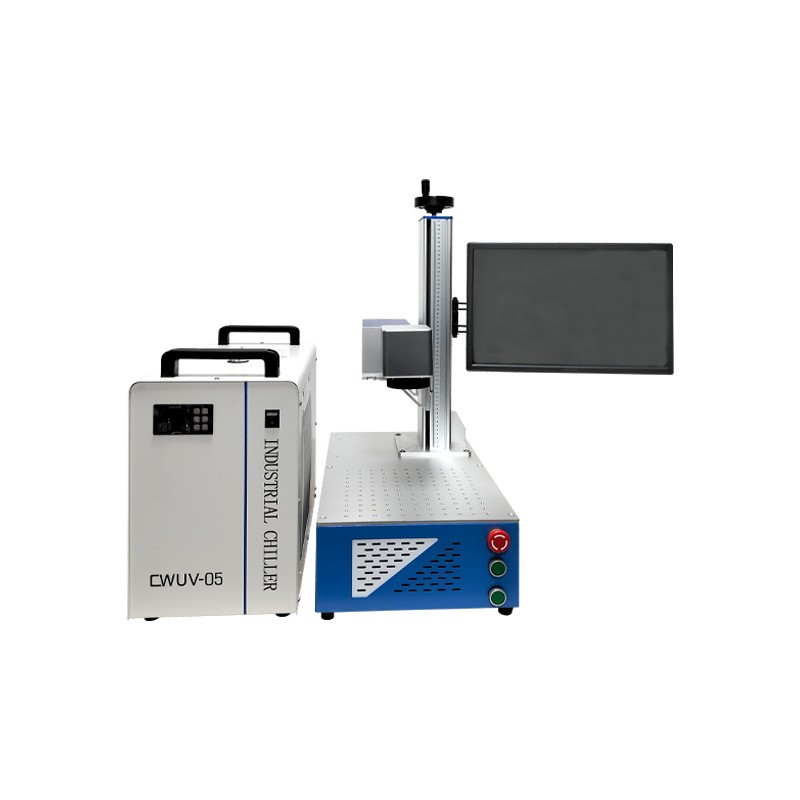
The problem is that flexibility can hide service complexity. A battery-powered unit has a battery service life. An air-cooled unit has an air path and fan system. A UV unit has an external industrial water chiller. A Linux touch-screen unit has software and file-handling requirements. A supplier that cannot document these items leaves the buyer to discover them after deployment. That is why long-term supplier evaluation should begin before the purchase order, not after the first failure.
Brand solution: what Jinan Yuanshida International Trade Co., Ltd. provides
Jinan Yuanshida International Trade Co., Ltd. is a Jinan, China-based company focused on industrial laser marking equipment. Its profile states that it was founded in 2012 and provides handheld laser marking machines, bench-top laser marking machines, desktop laser marking machines, and precision laser marking equipment. The company lists OEM/ODM services, customized marking solutions, and full English after-sales technical support. Its stated export markets include Vietnam, Thailand, Malaysia, Turkey, the United States, Poland, and the Middle East, and its profile states that products have been exported to more than 80 countries and regions.
For long-term evaluation, the relevant evidence is not the product list alone. The Handheld Fiber Laser Marking Machine carries a CE Declaration of Conformity numbered M.2024.206.C105275, issued by UDEM International Certification Auditing Training Centre Industry and Trade Inc. for the European Union market. The declaration is dated 2024-08-12 and is valid until 2029-08-12. The same handheld model has an FDA Radiological Health Electronic Submission Confirmation numbered 2211928-000, issued by CCTS (Shenzhen Zhongan Quality Inspection and Certification Co.,Ltd) for the United States market under Title 21 CFR Part 1002.
The CE declaration lists standards including EN ISO 12100:2010, EN 60204-1:2018, EN 60825-1:2014+A11:2021, and EN ISO 11553-1:2020+A11:2020. In the broader standards landscape, portable laser markers are assessed against EN ISO 11553-2 for hand-held safety. Buyers should check that the certificate, model, market, and standard list match the exact unit being purchased.
The company profile also refers to ISO compliance. Because the supplied compliance unit contains CE and FDA documents rather than an ISO certificate number, buyers should request the specific ISO certificate and its scope during supplier evaluation. The available material also does not describe a service-network footprint, response-time commitment, or spare-parts logistics. Those items should be documented in the RFQ and purchase order rather than assumed.
Technical explanation: cooling, battery, interfaces, and fonts
The service profile of a portable laser marking machine is shaped by four technical systems: the laser source and cooling design, the power and battery design, the control and software interface, and the marking-data workflow. Each system creates different questions for a multi-year deployment.
| System | Verified specification examples | Long-term evaluation question |
|---|---|---|
| Cooling | Handheld fiber unit: built-in air cooling. UV unit: external industrial water chiller, DWUV-05 included. Flying online unit: built-in air cooling. Benchtop, desktop fiber, and desktop CO2 units: built-in air cooling. | What is cleaned, what is replaced, and what operating environment is excluded from support? |
| Power and battery | Handheld unit: built-in lithium battery, 90V-240V, 50/60Hz. Miniature unit: built-in lithium battery or DC 20V power bank, Type-A data and Type-C power, overall power no more than 100 W. | What is the battery cycle life, replacement interval, and field-replacement procedure? |
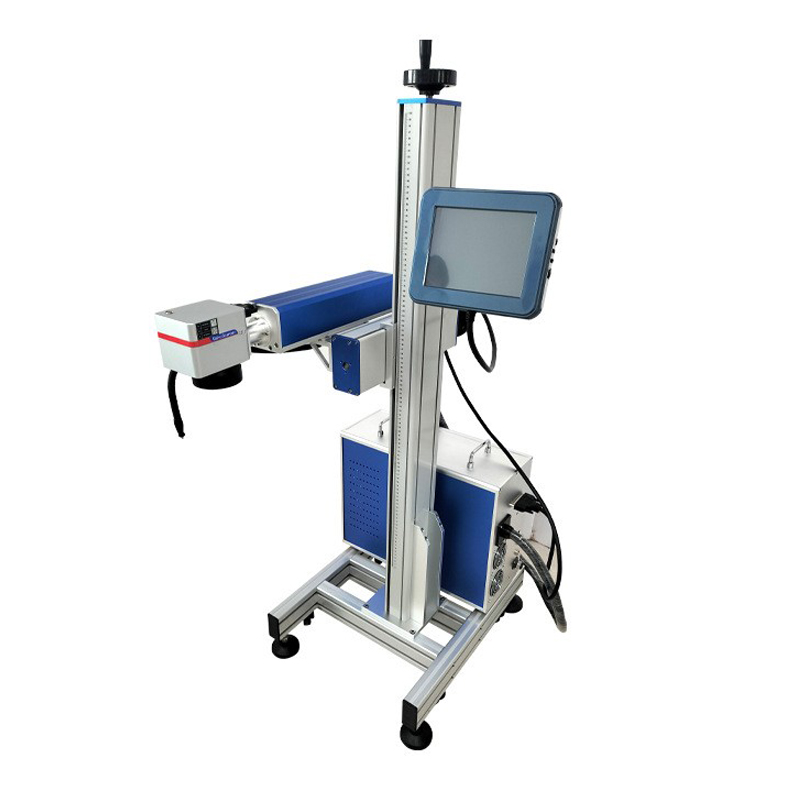
| Control and software | Handheld unit: Linux system, 7-inch touch screen, Bluetooth, WiFi, and mobile APP. UV unit: standard USB, independent display, all-in-one configuration. Flying unit: standard USB and touch-screen PC control. | Which file formats, offline workflows, and backup procedures are supported? |
| Fonts and variable data | UV unit: more than 140 font libraries, custom fonts addable on request, variable data marking for text, logos, barcodes, QR codes, and serial numbers. | How are custom fonts validated, stored, and updated over time? |
The cooling design is the clearest example of why the supplier evaluation must go beyond the brochure. Built-in air cooling is used across the handheld fiber, flying online, benchtop fiber, desktop fiber, and desktop CO2 units. The UV unit uses an external industrial water chiller, with the DWUV-05 included. Air cooling and water cooling create different maintenance routines. A buyer who plans for 24/7 continuous operation should ask which routine applies to the selected model and how the routine is documented.
Battery support follows the same logic. The handheld fiber unit includes a built-in lithium battery, and the miniature multi-material unit supports built-in lithium battery or DC 20V power bank operation. These are useful for on-site work, but the available specification does not state battery cycle life or a replacement interval. The verified data set also flags lithium battery cycle life for portable units as a missing data point. That is not a reason to avoid battery-powered units; it is a reason to require the missing value in the RFQ.
Software compatibility should be tested against the actual production file. The handheld unit supports JPG, PNG, BMP, SVG, PLT, DXF, Excel, TXT, barcode, and QR code files. The UV unit supports variable data marking for text, logos, barcodes, QR codes, and serial numbers. The flying online unit uses standard USB and touch-screen PC control. Buyers should confirm offline operation, file backup, user access, and recovery steps before the machine is released to production.
Application and use cases: where serviceability matters most
For hardware parts and mechanical spare parts, speed and repeatability are the main production concerns. The supplied specification lists marking speed up to 10,000 mm/s and repeatability of plus or minus 0.001 mm on relevant fiber models. A high-speed portable laser marking machine can support batch marking, but the buyer should confirm that the selected lens, marking area, and fixture are stable enough to hold that repeatability in daily use.
For pipes and profiles, the value of a portable unit is on-site access. An on-site portable laser marking machine for large-size workpieces can reduce the need to move long parts to a fixed station. The evaluation should confirm the marking area, the handling method, and the power source. If the work is outside a fixed line, built-in lithium battery options and a light-weight body become practical selection criteria.
For electronic components and heat-sensitive materials, a cold-processing portable UV laser marking machine is the relevant category. The UV unit uses a 355 nm wavelength, 3 W or 5 W laser power, and an external industrial water chiller. It is intended for PE plastics, PVC plastics, metal parts, building materials, glass, film, packaging, and composite materials. The same unit provides more than 140 font libraries and variable data marking, which matters for labels, serial numbers, and traceability.
For jewelry, gifts and crafts, and 3C accessories, a light-weight portable laser marking machine with dual light sources can cover metals, plastics, colored glass, ceramics, leather, paper, bamboo, and wood. The miniature multi-material unit is listed at 2.7 kg and supports mobile app, PC software, and touch-screen operation. Its Type-C power and built-in lithium battery options make it suitable for workshop and on-site use, but the buyer should still ask for battery service data and a software backup procedure.
For production lines, the flying online fiber laser marking machine is designed for moving workpieces with continuous 24/7 online marking and zero consumables. It lists a laser lifespan of 150,000 hours, built-in air cooling, standard USB, and touch-screen PC control. The desktop CO2 unit is intended for non-metallic packaging materials such as glass, leather, cardboard and paper boxes, PET plastic bottles, and wood. The benchtop and desktop fiber units cover metals and non-metallic plastics with built-in air cooling and standard USB control.
Procurement checklist for a multi-year deployment
The following questions turn the specification into a supplier evaluation. They are not hypothetical; they map directly to the verified configuration items in the supplied material.
| Evaluation area | What to ask | Why it matters |
|---|---|---|
| Spare parts | Which items are field-replaceable, which spares should be stocked for the first year, and how are parts ordered? Include the UV chiller and battery in the discussion. | Zero consumables in marking does not remove the need for service parts. |
| Cooling service | What is the air-path cleaning routine for air-cooled units? What is the chiller maintenance routine for the UV unit with the DWUV-05? What operating conditions are excluded? | Cooling is the main environmental dependency for continuous operation. |
| Battery replacement | What is the battery cycle life, replacement interval, and field-replacement procedure for the built-in lithium battery? Is DC 20V power bank operation supported as stated for the miniature unit? | The available specification does not state battery cycle life, so it must be requested. |
| Software compatibility | Which file formats are supported, what is the offline workflow, how are files backed up, and how is recovery handled? Confirm Linux touch-screen operation on the handheld and standard USB on the UV and flying units. | Software continuity affects uptime long after the warranty period. |
| Font updates | How are the more than 140 font libraries updated? How are custom fonts added on request validated? Are font files stored locally or exchanged by service? | Fonts are part of the marking-data workflow, not a cosmetic feature. |
| Certification files | Keep the CE Declaration of Conformity M.2024.206.C105275 and FDA confirmation 2211928-000 with the purchase order. Confirm model, market, and validity dates. | Compliance evidence must match the unit and destination market. |
| Warranty and support | The case unit lists a one-year warranty. Ask for warranty exclusions, response process, English technical support path, and spare-parts lead time. | The service commitment should be written into the order terms. |
Market trend analysis: category growth, portable complexity
The global laser marking machine market is estimated at USD 4.4 billion in 2026, according to Grand View Research. Fiber laser technology held a 46.1% revenue share in 2025, and Asia Pacific accounted for approximately 44% revenue share in 2025. These figures describe the laser marking category, not the portable segment alone. The verified data set notes that the specific revenue share of portable and handheld units is a missing data point. Buyers should use the category figures for context, not as proof of portable-unit demand.
For trade and procurement planning, HS Code 845611 is the primary classification for machine tools operated by laser processes. One 2026 industry guide cites 15 to 35 lb, or about 6.8 to 15.8 kg, as a typical handheld or portable weight range. Weight is only one selection criterion; it should not replace the evaluation of cooling, battery, software, and compliance evidence.
Forecast methodology also matters. The available data notes that CAGR estimates vary between 7.4% and 11.84% depending on whether coding or marking equipment is included. A single growth rate should not drive a supplier decision. The more useful signal is that fiber laser technology remains dominant, which keeps attention on fiber source life, air cooling, and serviceability. The portable segment adds battery and software variables that are not captured by category-level market size.
Comparison with traditional solutions: what zero consumables does and does not solve
Zero-consumable laser marking is often compared with consumable-based methods such as inkjet, pad printing, or chemical etching. The comparison should be practical, not promotional.
| Evaluation area | Zero-consumable laser marking | Consumable-based marking | Procurement implication |
|---|---|---|---|
| Marking consumables | The supplied specification describes the marking process as zero consumables. | Typically requires ink, ribbons, screens, or chemical handling. | Ask for the full consumable list and annual usage, not only the unit price. |
| Maintenance | Cooling, battery, lens protection, and chiller service still require planning. | Print heads, screens, chemicals, and waste handling create recurring tasks. | Compare service tasks and downtime risk, not only purchase cost. |
| Integration | Standard USB and touch-screen control are common across the supplied models. | May require wet chemistry, drying, ventilation, or waste processes. | Check facility requirements and line interface before selection. |
| Limitation | Higher upfront planning for cooling, battery, and software continuity. | Recurring consumable cost and chemical handling. | Match the method to duty cycle, material, and environment. |
The real limitation is that zero consumables does not mean zero maintenance. The UV unit uses an external industrial water chiller with the DWUV-05 included. The handheld and miniature units use built-in lithium batteries. Both systems introduce service tasks. A buyer who ignores those tasks has not eliminated cost; the cost has moved from consumables to service planning. The correct comparison is total service workload over the deployment period, not the absence of ink or ribbons alone.
Future outlook: service data will become part of the product specification
As portable laser marking moves into more distributed production and on-site maintenance work, the supplier evaluation will become more data-driven. Buyers will ask for battery cycle life, cooling maintenance intervals, software recovery procedures, and font-update methods as standard RFQ items. The verified data set already flags battery cycle life for portable units as a missing data point; that gap is likely to close as buyers compare multi-year operating costs rather than purchase price alone.
Fiber laser technology remains the dominant category, with a 46.1% revenue share in 2025. That dominance supports continued attention to source life, air cooling, and power efficiency. For portable units, the differentiators are more likely to be battery serviceability, light-weight design, Type-C power, and software compatibility. A supplier that can document these items will be easier to evaluate than one that only lists marking speed and power.
Compliance will also remain part of the product specification. The Handheld Fiber Laser Marking Machine has a CE Declaration of Conformity valid until 2029-08-12 and an FDA Radiological Health Electronic Submission Confirmation for the USA market. Buyers should treat these as living documents: confirm the model, market, standard list, and validity at each purchase. Where the company profile refers to ISO but the supplied compliance unit does not include an ISO certificate number, request the certificate and scope separately.
FAQ
What does zero-consumable design mean in practice for a portable laser marking machine?
The marking operation is described as clean, precise, and continuous with zero consumables. In practice, the machine does not use ink, ribbons, or chemical consumables to create the mark. It does not mean the equipment has no service items. Cooling, battery, lens protection, and chiller maintenance still need to be planned for multi-year use.
What should buyers ask about spare parts before ordering?
The available specification identifies cooling architecture and laser source life, but it does not provide a spare-parts kit list. The RFQ should ask the supplier to name field-replaceable items, recommended first-year spares, and the ordering process. For the UV unit, the external industrial water chiller with the DWUV-05 should be included in that discussion.
How should cooling maintenance be planned for air-cooled and water-cooled units?
The handheld fiber unit uses built-in air cooling, while the UV unit uses an external industrial water chiller with the DWUV-05 included. Buyers should ask for air-path cleaning intervals, chiller maintenance steps, and the operating conditions excluded from support. Continuous 24/7 operation makes these tasks part of the deployment plan.
What battery replacement questions matter for built-in lithium-battery models?
The handheld and miniature units list built-in lithium batteries, and the miniature unit also supports DC 20V power bank operation. The available specification does not state battery cycle life or replacement interval. Buyers should request those values, the replacement procedure, and confirmation of whether the battery is field-replaceable.
Which software compatibility checks should be completed before acceptance?
The handheld unit uses a Linux system with a 7-inch touch screen and supports Bluetooth, WiFi, and mobile APP. The UV unit uses standard USB and an independent display, and the flying unit uses standard USB and touch-screen PC control. Buyers should test JPG, PNG, BMP, SVG, PLT, DXF, Excel, TXT, barcode, and QR code files, and confirm offline operation and backup procedures.
How are font updates handled over a multi-year deployment?
The UV unit includes more than 140 font libraries, and custom fonts can be added on request. Buyers should ask how custom fonts are validated, how font files are stored, and whether font updates require a software update or a service visit. Font handling should be documented as part of the marking-data workflow.
What certification evidence should be kept with the purchase order?
For the Handheld Fiber Laser Marking Machine, the CE Declaration of Conformity is M.2024.206.C105275, issued by UDEM and valid from 2024-08-12 to 2029-08-12 for the EU market. The FDA Radiological Health Electronic Submission Confirmation is 2211928-000, issued by CCTS under Title 21 CFR Part 1002 for the USA market. Buyers should confirm that the model and market match the order.
Reference document
The English brochure for the second-generation marking machine is available for download: English brochure PDF.
Have Questions or Need More Details?
Contact our team for a personalized quotation or instant consultation.
Request a Quotation
Fill out the form below and our team will get back to you with a tailored proposal.
WhatsApp Direct Chat
Prefer to chat in real-time? Message us on WhatsApp for instant assistance & quick answers.
- Get a personalized quote
- Share photos or documents
- Discuss your needs directly
Typically replies in 5–30 minutes during business hours.