
Portable Laser Marking Machine Specs as Supplier Capability Evidence
Portable Laser Marking Machine Specs as Supplier Capability Evidence
Model designations, net weight, dimensions, cooling architecture and control interfaces are the parts of a portable laser marking machine quotation that can actually be checked. This reference explains how buyers at the decision stage can read those details as evidence of supplier capability, and where the limits of the evidence sit.
Portable laser marking machine is a category label, not a supplier credential. Under that single phrase the market places handheld fiber units, miniature multi-material markers, desktop marking stations, bench-top systems, flying online heads built for inline production, and UV models engineered for cold processing. Each form factor solves a different production problem, and each is defined by a different set of physical specifications — mass, footprint, cooling method, control interface and safety architecture. For a buyer at the decision stage, the practical question is therefore narrower than a general ranking of suppliers. It is which supplier publishes model designations and physical specifications that can be reconciled with the hardware actually quoted and delivered.
Jinan Yuanshida International Trade Co., Ltd is a China-registered enterprise based in Jinan, Shandong, working in the research, development, production and export of industrial laser marking equipment. Founded in 2012, the company specialises in highly stable and highly adaptable laser marking solutions, and its range covers handheld laser marking machines, bench-top laser marking machines, desktop laser marking machines and precision laser marking equipment. The company also provides standard equipment, customised marking solutions, OEM/ODM services and English-language after-sales support, and states that all equipment undergoes multiple aging tests and precision calibration before leaving the factory. Its products have been exported for many years to more than 80 countries and regions, including Vietnam, Thailand, Malaysia, Türkiye, the United States, Poland and the Middle East, serving overseas factories, distributors and trading companies.
The relevance of that profile here is not scale. It is that the range is expressed as six distinct model identities rather than one generic portable unit — and distinct identities are what make specification comparison possible. The sections below treat model designations and physical specifications as supplier capability evidence: what each designation implies, which physical details can be verified against a stated product configuration, how the equipment compares with traditional CNC engraving, and where the boundaries of both approaches sit.
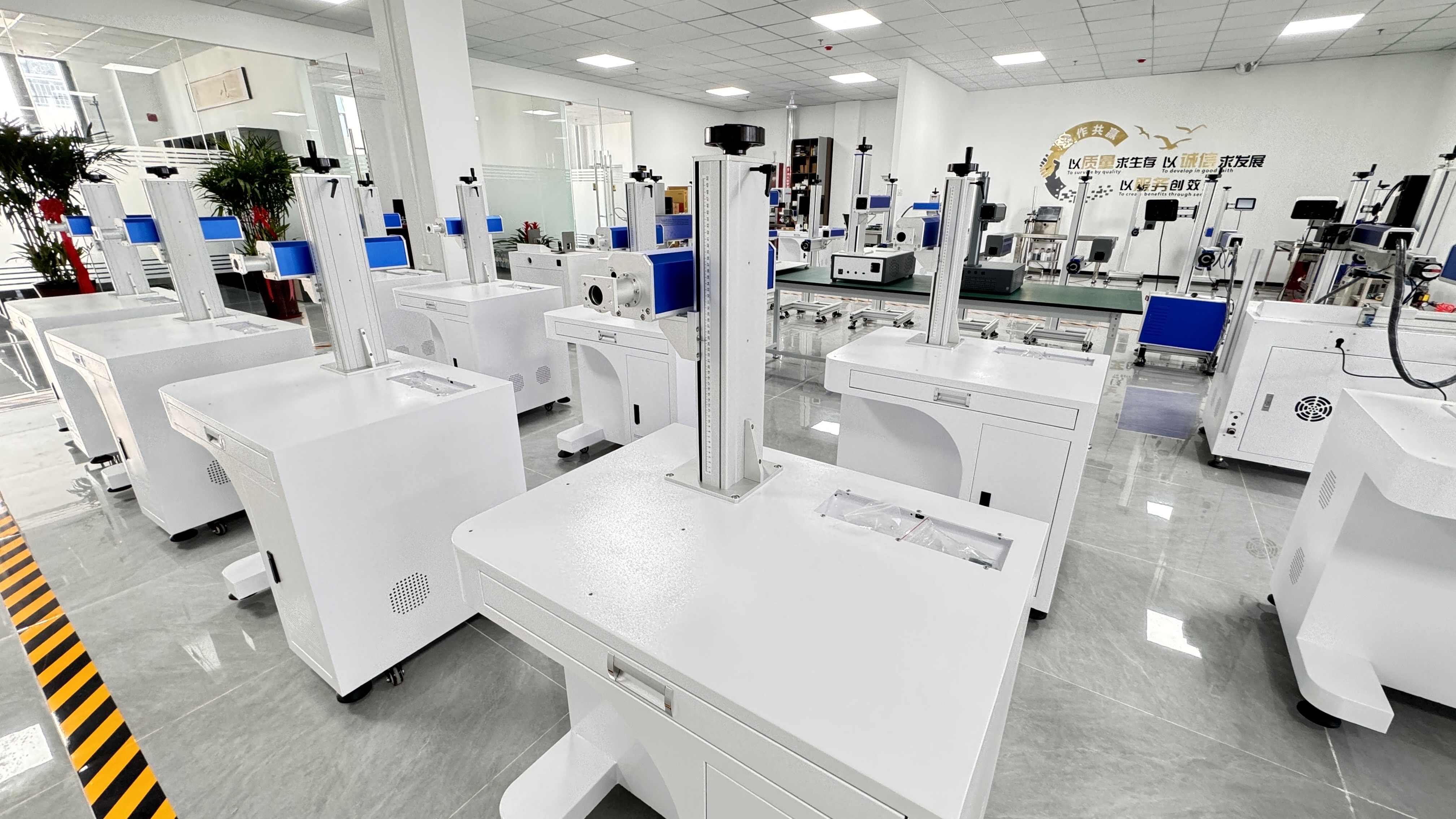
Figure 1. Factory environment. Physical facilities form part of the evidence set a buyer can request during supplier evaluation, alongside model-level specifications.
The problem: a category label cannot be audited
At the decision stage, most supplier risk comes from ambiguity rather than from wrong answers. A quotation that says portable laser marking machine without a model designation, net weight or cooling specification cannot be compared line by line against a competing quotation, and it cannot be checked after delivery. Physical specifications behave differently. Net weight, overall dimensions, cooling architecture, control interface, display configuration and safety interlock design are measurable statements. They either match the delivered hardware or they do not.
The opportunity is procedural. A buyer who asks for model-level detail in writing — before price negotiation — converts an unverifiable supplier claim into a short list of testable facts. That shift is what turns a supplier comparison from a conversation about adjectives into a comparison of configurations, and it is the basis for the verification routine set out later in this reference.
Model identities as the first layer of evidence
A model designation is the most compact piece of capability evidence a supplier can issue, because it fixes what the machine is for. The following identities appear in the range described above.
| Model designation | Working posture | Stated physical evidence | What it implies for the buyer |
|---|---|---|---|
| Handheld Fiber Laser Marking Machine | Carried to the workpiece | Fiber laser source in a handheld body | On-site marking where the part is too large or too fixed to be moved |
| Miniature Multi-Material Laser Marking Machine | Compact, single-position use | 2.7 kg net weight | The lightest portability class in the range; suited to small parts and mixed materials |
| Desktop Fiber Laser Marking Machine | Fixed desk workspace | Fiber laser source on a desktop frame | Bench-level marking of small to medium parts inside a workshop |
| Benchtop Fiber Laser Marking Machine | Fixed bench installation | 20 kg net weight; 325 mm x 603 mm x 800 mm | A stable fixture-based unit rather than a carried tool |
| Flying Online Laser Marking Machine | Inline on a production line | Inline marking head | Marking during continuous production flow, without stopping the line |
| UV Laser Marking Machine | Fixed or integrated station | UV cold-processing laser source | Heat-sensitive substrates where thermal load must be limited |
The designations are not interchangeable marketing labels; they describe different physical commitments. A 2.7 kg miniature unit and a 20 kg bench-top unit occupy opposite ends of the same portable umbrella. A supplier that blurs that distinction in a quotation is usually blurring it for a reason, and the specification table is where the blur becomes visible.
Reading physical specifications as verifiable claims
Net weight and what it separates
Net weight is the fastest way to separate portability classes. Third-party guidance on portable laser marking machines places handheld and portable units typically in the 15 to 35 pound band, or roughly 6.8 to 15.8 kilograms (MAC laser, Complete Guide to Portable Laser Marking Machines 2026). Against that reference, a miniature multi-material unit stated at 2.7 kg net weight sits clearly below the typical band — a miniaturised class rather than a general-purpose portable. A bench-top fiber unit stated at 20 kg net weight sits above it, which is consistent with a fixed installation that should not be presented as a carry-anywhere tool. Neither number is a defect. Both are evidence, provided the supplier states them and the buyer checks them.
Dimensions and footprint
The bench-top fiber marking machine is stated at 325 mm x 603 mm x 800 mm. Those dimensions describe a bench or floor-standing footprint that needs a stable surface and working clearance, not a handheld posture. For a buyer planning a workcell, that measurement determines whether the unit fits an existing bench, whether it needs a dedicated stand, and whether operators can reach it comfortably across a full shift.
Control interface and display
Control architecture is another checkable layer. Standard USB control interfaces and built-in display screens are both statements that can be confirmed on the delivered machine. A USB interface normally implies a controller or PC-based workflow for job files and parameter sets, while a built-in display allows parameters to be reviewed at the machine without an external monitor. In a production environment where several operators share one unit, the presence of an on-machine display changes how training and shift handover are handled.
Cooling architecture
Cooling is where portable and industrial duty cycles separate. Air cooling is the compact, self-contained option used on lighter units. Where duty cycles, ambient conditions or continuous production demand more, external industrial cooling is the appropriate architecture. A supplier should state which cooling method applies to which model, because the cooling choice constrains how long the machine can run, in what environment, and under what maintenance schedule. A quotation that omits cooling entirely leaves the buyer unable to plan duty cycle at all.
Checking a stated configuration against the delivered machine
The purpose of these details is to support a verification routine rather than to fill a specification sheet. The following checks can be applied to any portable laser marking machine quotation, and each one produces a yes or no answer rather than an impression.
| Check | What to request | Why it matters |
|---|---|---|
| Model designation | The exact designation in writing on quotation, invoice and product label | Confirms the unit quoted is a named configuration, not a generic category |
| Net weight | Declared net weight per model | Separates miniaturised, portable and fixed classes |
| Dimensions | Overall dimensions per model | Confirms installation, bench and clearance requirements |
| Cooling architecture | Air cooling or external industrial cooling | Sets duty cycle, operating environment and maintenance expectations |
| Control interface | Presence and type of control interface, for example standard USB | Determines file transfer and parameter workflow |
| Display | Presence of a built-in display screen | Determines whether parameters can be reviewed at the machine |
| Safety architecture | Class 4 laser safety enclosure and anti-radiation observation window; safety interlock | Confirms laser radiation is contained during normal operation |
| Electrical protection | Overload protectors, residual current circuit breakers (RCCB), grounding protection | Confirms electrical and thermal risk controls are designed in, not added later |
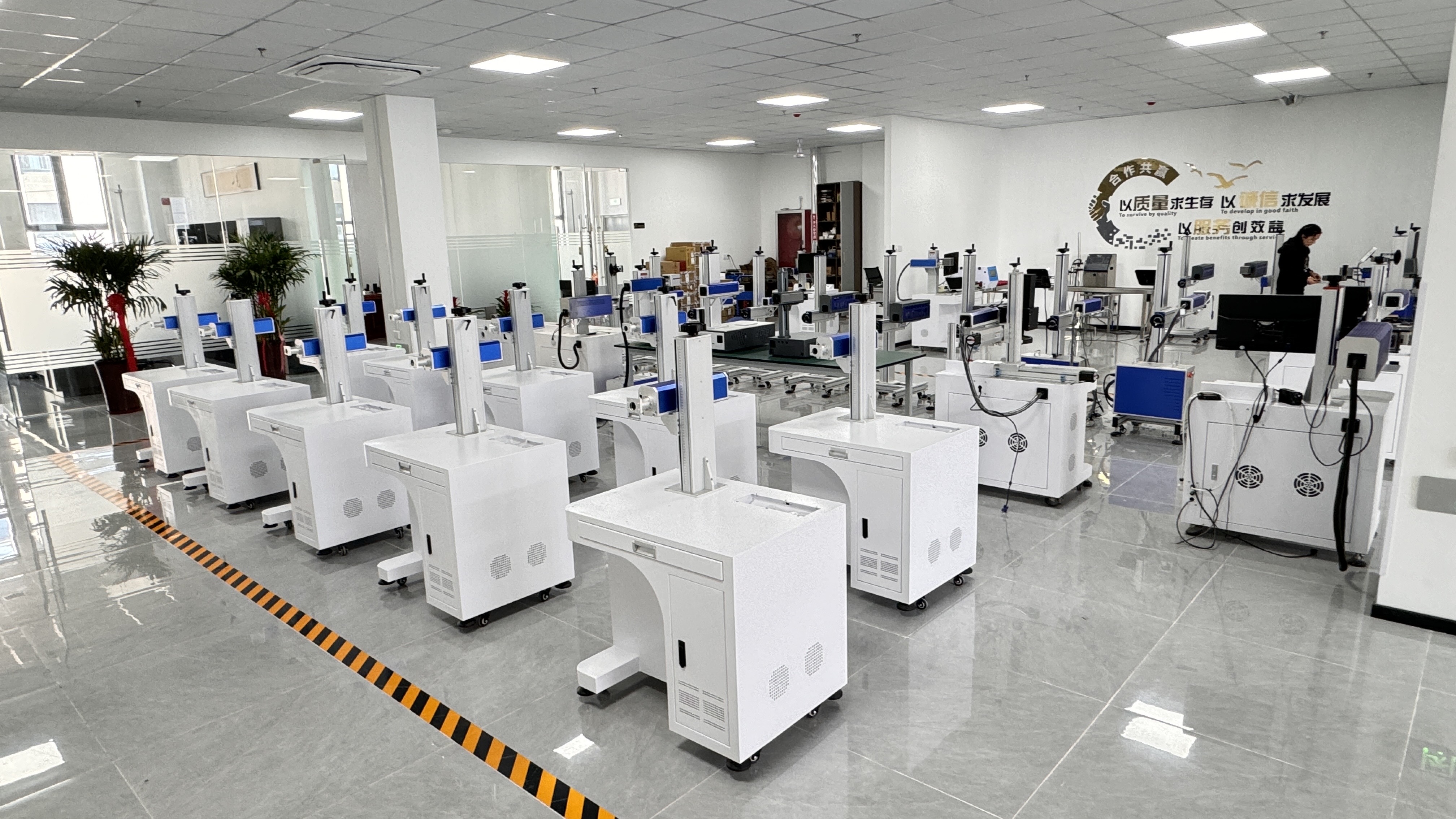
Figure 2. Workshop and pre-delivery preparation environment. Factory-level proof supports a supplier claim, but it does not replace model-level specification checks.
Application focus: Portable Laser Marking Machine for Jewelry
Jewelry and accessories is one of the industries the equipment range is used in, alongside hardware and auto parts, pipes and profiles, electronic components, mechanical parts, gifts and crafts. Jewelry imposes a particular combination of constraints: the parts are small, often curved, frequently high in value, and usually finished in a way that must not be deformed or scratched. Those constraints decide which portable format is appropriate, and they also decide which specifications matter most.
- Non-contact process. The comparison data used in this reference describe the laser process as non-contact thermal ablation, whereas CNC engraving relies on physical blade cutting, which can warp thin materials. For thin or delicate jewelry components, removing mechanical contact removes a whole class of damage risk.
- Feature resolution. Laser beam diameter is stated down to 0.01 mm, against a minimum bit size of 0.5 to 1 mm for CNC. On small parts, that difference defines what can be marked at all, and how fine the mark can be before detail collapses.
- Micro-marking damage. Micro-marking damage is reduced to 0% compared with CNC engraving according to the same comparison data — relevant where a finished part must remain cosmetically intact after marking.
- Cold processing. A UV Laser Marking Machine uses a cold-processing source, which is the appropriate designation when the substrate is heat-sensitive or the finish cannot tolerate thermal load.
- Bench positioning. A 2.7 kg Miniature Multi-Material Laser Marking Machine can be positioned next to a jeweller's bench and moved between stations, which suits small-batch and mixed-item work better than a fixed line installation.
Two boundaries are worth stating plainly. First, laser marking is a marking process, not a cutting or deep-carving process; where a design requires substantial removal of material, a different technology is required and no portable marking configuration substitutes for it. Second, jewelry alloys and polished surfaces vary widely, so parameter validation on the actual material remains necessary before a job is released to production — a supplier's stated specification does not remove that step, it only makes it faster to plan.
Comparison with traditional solutions
The most common comparison for portable laser marking is against CNC engraving, because the two processes compete for the same workshop space and often the same operators. The comparison data used here give the following picture.
| Dimension | Laser marking | CNC engraving |
|---|---|---|
| Contact method | Non-contact thermal ablation | Physical blade cutting, which can warp thin materials |
| Feature size | Laser beam diameter down to 0.01 mm | Minimum bit size of 0.5 to 1 mm |
| Marking speed | 10 times faster than CNC engraving | Baseline |
| Micro-marking damage | Reduced to 0% | Higher risk from direct contact |
| Ongoing consumables | Eliminates ongoing costs for varied cutter bits and tool wear | Continuous cutter bit consumption and tool wear |
| Maintenance | Fixed optical path with zero mechanical wear | Frequent bit changes, zeroing, and heavy dust and chip cleanup |
| Energy profile | Laser power stays stable around 100W | High-power spindles plus extra energy for industrial dust extraction systems |
| Typical fit | Acrylic signage, wooden furniture, PCB and 3C precision marking | Applications requiring physical material removal |
The comparison is not one-sided, and a credible supplier should say so. The initial price of the laser marking machine matches mid-to-high CNC machines rather than undercutting them, so the economic case rests on eliminated cutter bit costs and reduced tool wear over time, not on a lower entry price. CNC remains the appropriate process where the job requires physical material removal, deep engraving, or cutting rather than surface marking.
There is also a trade-off inside the portable category itself. A 2.7 kg miniature unit prioritises positioning flexibility and pays for it with the working envelope that a larger platform can offer. A 20 kg bench-top unit prioritises stability and repeatable fixturing and gives up mobility. A buyer who needs continuous inline throughput should be evaluating a flying online configuration rather than either of the two, since none of the three is a substitute for the others. Matching the format to the actual production pattern is the part of the decision that specifications cannot make on the buyer's behalf.
Market trend analysis
The surrounding market context explains why specification transparency is becoming a procurement issue rather than a courtesy.
- Market size. The global laser marking machine market is estimated at USD 4.4 billion in 2026 (Grand View Research, Laser Marking Machine Market Size and Share Report, 2026–2033).
- Technology mix. Fiber laser technology held a revenue share of 46.1% in 2025, making fiber the dominant technology class — and the reason fiber designations appear across handheld, desktop and bench-top portable formats rather than being confined to one.
- Regional concentration. Asia Pacific is the largest regional market for laser marking, accounting for approximately 44% of revenue share in 2025, which is consistent with a supplier landscape in which many portable equipment exporters are Asia-based.
- Forecast caution. Published growth forecasts vary between sources, in part because different studies scope coding and marking equipment differently. Buyers should treat any single growth figure as a planning input rather than a purchasing criterion.
A data gap is also relevant. There is no widely verified public breakdown of portable versus stationary segment share within the laser marking market, and no verified public dataset on lithium-battery cycle life for cordless marking units. For buyers evaluating battery-powered portability claims, that means the claim should be validated against the supplier's own documentation and a sample unit rather than accepted as an established market standard.
Future outlook
Three developments look likely to shape how portable laser marking machines are bought over the next procurement cycles.
- Specification-level comparison as a norm. As more of the market is supplied through exporters and trading channels, buyers increasingly need to compare on model designation, net weight, dimensions, cooling and interface rather than on brand description alone.
- Cooling and control architecture as differentiators. As air-cooled compact units and externally cooled industrial units diverge further, the cooling statement will carry more weight in duty-cycle and workcell planning.
- Standards and compliance as a gating factor. Laser products sold in the United States must comply with FDA 21 CFR Subchapter J, Parts 1000 through 1005, covering radiological health, and portable laser markers are assessed against EN ISO 11553-2 for hand-held safety. For cross-border trade, HS Code 845611 is the primary classification for machine tools operated by laser processes. Suppliers that document CE, FDA and ISO conformity as part of the quotation reduce customs and acceptance risk for the buyer.
The practical takeaway for the decision stage is that capability evidence is not a marketing asset. It is the set of statements — model identity, mass, dimensions, cooling, interface, safety architecture and conformity — that a buyer can write into a purchase order and then confirm at goods-in. Everything else is commentary.
Frequently asked questions
What is the difference between a handheld, miniature, desktop, bench-top, flying online and UV portable laser marking machine?
They are distinct model identities within the same equipment family, not interchangeable labels. A Handheld Fiber Laser Marking Machine is carried to the workpiece. A Miniature Multi-Material Laser Marking Machine is a compact unit stated at 2.7 kg net weight. A Desktop Fiber Laser Marking Machine is a fixed desk-level unit. A Benchtop Fiber Laser Marking Machine is a fixed installation stated at 20 kg net weight and 325 mm x 603 mm x 800 mm. A Flying Online Laser Marking Machine marks on a production line without stopping it. A UV Laser Marking Machine uses a cold-processing source for heat-sensitive substrates.
How can a buyer verify that a supplier's stated portable laser marking machine specifications are accurate?
By requiring the specification in writing before purchase and checking it against the delivered machine. The checkable items are the model designation, net weight, overall dimensions, cooling architecture, control interface (for example standard USB control interfaces), display configuration (for example a built-in display screen), and the safety and electrical protection package. Each item is a measurable statement that either matches the delivered hardware or does not.
How does a portable laser marking machine compare with CNC engraving on speed and mark quality?
Against CNC engraving, the laser marking process is stated as providing a marking speed 10 times faster and reducing micro-marking damage to 0%. Feature resolution also differs: laser beam diameter is stated down to 0.01 mm, against a minimum bit size of 0.5 to 1 mm for CNC. The laser process is non-contact thermal ablation, whereas CNC relies on physical blade cutting, which can warp thin materials.
Is a portable laser marking machine cheaper than CNC engraving upfront?
No. The initial price of the laser marking machine matches mid-to-high CNC machines rather than undercutting them. The cost case rests on the elimination of ongoing costs for varied cutter bits and tool wear, and on a fixed optical path with zero mechanical wear that avoids the frequent bit changes, zeroing, and heavy dust and chip cleanup associated with CNC maintenance.
What safety features should a portable laser marking machine include?
Two risk areas are normally addressed by design. For laser radiation, the control method is hardware shielding and safety interlock control, typically implemented as Class 4 laser safety enclosures with anti-radiation observation windows. For electrical and high-voltage risk, the control method is electrical protection and thermal overload control, typically implemented as overload protectors, residual current circuit breakers (RCCB) and reliable grounding protection.
Which standards and regulations apply to portable laser marking machines?
In the United States, laser products must comply with FDA 21 CFR Subchapter J, Parts 1000 through 1005, covering radiological health. Portable laser markers are also assessed against EN ISO 11553-2 for hand-held safety. Equipment supplied by Jinan Yuanshida International Trade Co., Ltd is stated to comply with international quality standards including CE, FDA and ISO, designed to meet certification and customs clearance requirements in destination markets. For trade classification, HS Code 845611 covers machine tools operated by laser processes.
Which industries is portable laser marking equipment used in?
The equipment range is intended for the mechanical parts processing industry and the electronic and electrical production industry, and it is suitable for the medical equipment industry. The wider application set includes hardware and auto parts, pipes and profiles, electronic components, jewelry and accessories, mechanical parts, gifts and crafts.
Reference material
For buyers preparing an evaluation, the supplier's product brochure provides the model-level reference material that accompanies the specification checks described above: product brochure (PDF). Company information and the current equipment range are published at yuanlaser.com.