
Portable Laser Marking Machine for Jewelry & 3C Accessories: On-Site Multi-Material Marking
Portable Laser Marking Machine for Jewelry & 3C Accessories: On-Site Multi-Material Marking
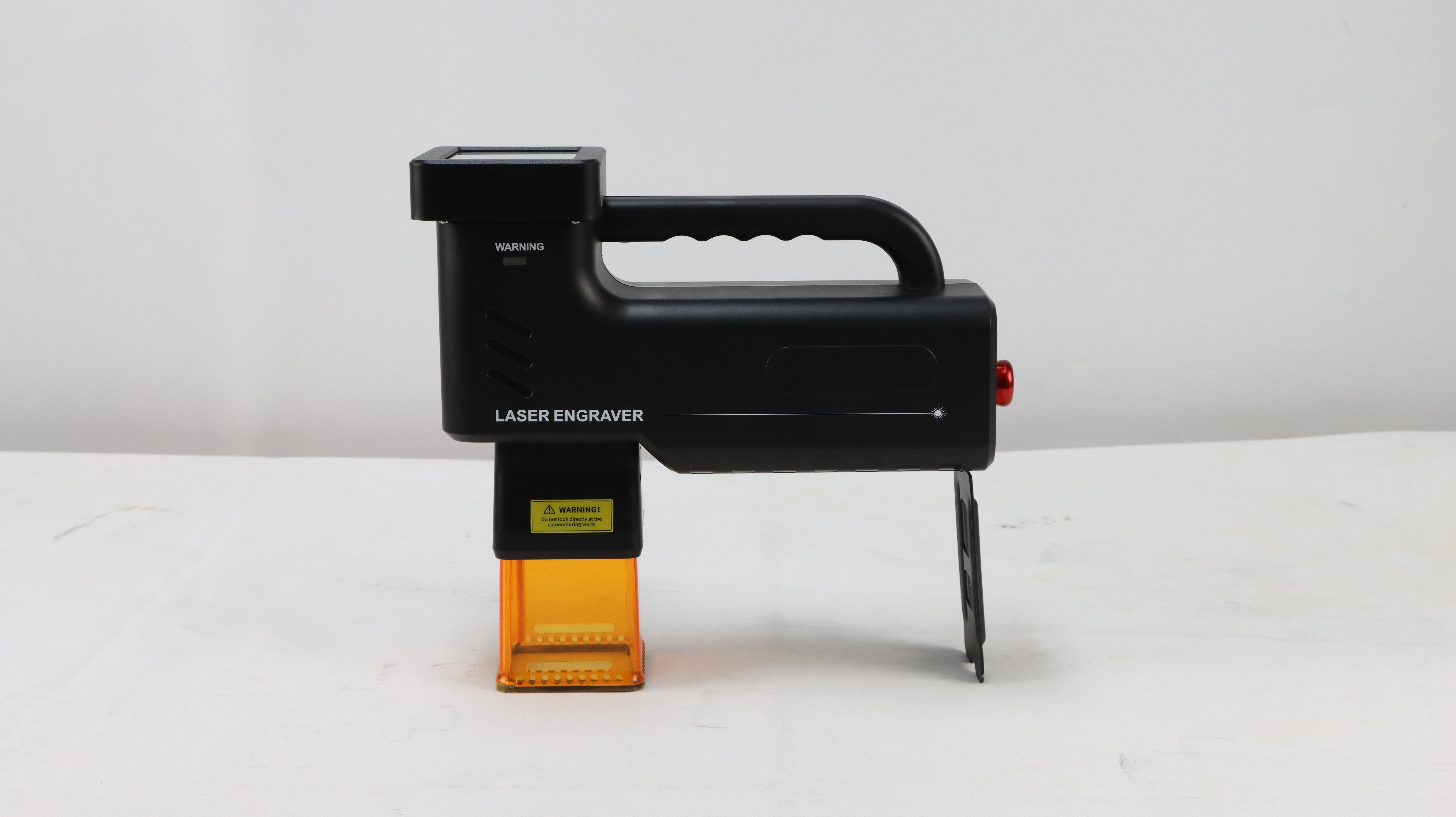
A portable laser marking machine is a self-contained marking unit built to be carried to the workpiece, instead of requiring the workpiece to travel to a fixed marking station. For jewelry studios, customized DIY workshops and 3C accessory suppliers, that difference decides which jobs are commercially workable: marking a finished bracelet at the sales counter, personalizing leather keychains and bamboo gift items during a workshop session, or running a mixed basket of metal, plastic, glass and ceramic accessory parts through one small-footprint tool rather than a dedicated marking room.
Why the Workpiece Stopped Travelling to the Machine
The commercial problem in accessory marking is not laser power. It is job mix. A jewelry or 3C accessory operation typically receives orders that combine gold and silver pieces with bamboo, leather, paper, colored glass, plastic and ceramic items — often within the same working day and often in quantities of one. Under that order profile, a fixed marking bench forces three costs that have nothing to do with the laser itself: transport of finished goods to the marking area, queueing behind larger batches, and repeated re-fixturing of small, irregular parts.
Handheld marking equipment addressed part of this problem, but the physical reality of the category has constrained it. Publicly available category guidance, such as the 2026 portable laser marking guide published by MAC laser, places typical handheld and portable marking units in a weight band of roughly 15 to 35 pounds, or about 6.8 to 15.8 kg. That is manageable for a maintenance technician marking a pipe or a machine frame, and it is heavy for a studio operator working at a counter or a craft table with parts weighing a few grams.
The opportunity for jewelry, DIY customization and 3C accessory work therefore sits in a narrower combination: a marking head light enough to be moved by hand between work positions, a power supply that does not require a fixed outlet, and a light source configuration that covers both metal and non-metal substrates without swapping machines. Jinan Yuanshida International Trade Co., Ltd., a Jinan, China-based exporter of industrial laser marking equipment founded in 2012 and shipping to markets including Vietnam, Thailand, Malaysia, Turkey, the United States, Poland and the Middle East, publishes a product line that addresses this combination directly with the Miniature Multi-Material Laser Marking Machine.
What a Switchable 1064 nm / 455 nm Light Source Changes
Wavelength selection is the first technical decision in accessory marking, because the laser must be absorbed by the substrate rather than reflected off it or transmitted through it. The Miniature Multi-Material Laser Marking Machine (product ID 9037) is specified with a switchable dual light source operating at 1064 nm and 455 nm, in pulse operation mode, with a power regulation range of 25 to 100 that is gradient adjustable.
The 1064 nm channel is the established fiber wavelength in this supplier's catalog. Every fiber machine the company lists — the handheld unit, the desktop fiber unit and the benchtop fiber unit — is specified at 1064 nm, and the handheld fiber machine's published material list covers stainless steel, carbon steel, aluminum oxide, aluminum alloy, aluminum, copper, iron, gold, silver, carbide, painted metal, acrylic, PVC, leather and painted wood. That list is the practical baseline for metal-dominant accessory work: rings, pendants, tags, clasps, metal shells and hardware details.
The second source broadens the declared material envelope of the same machine. The Miniature Multi-Material Laser Marking Machine's published material list covers metals, bamboo and wood, leather, paper, colored glass, plastics and ceramics — a set that extends past the metal-focused fiber list into the non-metal substrates that dominate gift, craft and mixed accessory orders. Because the two sources are switchable within one unit rather than requiring two machines, a workshop can plan one workflow instead of routing non-metal jobs to a different vendor or a different process.
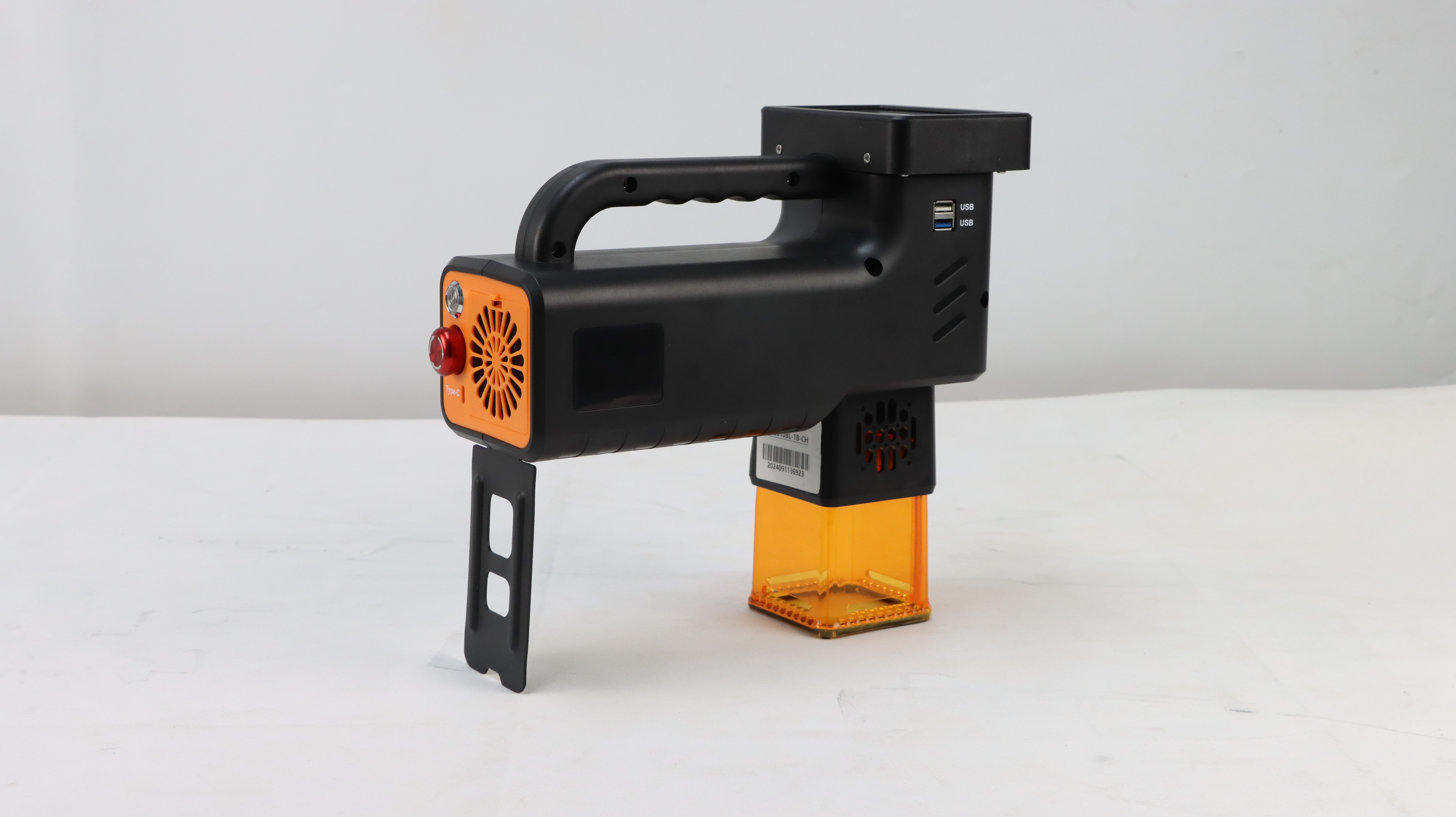
The supporting specifications matter to that workflow as much as the wavelength does. The unit weighs 2.7 kg, is air cooled, draws 100 W or less overall, and is specified for a processing speed of up to 4,000 mm/s with a scene focal length of 133 mm. Power is supplied by a built-in lithium battery or by DC 20V, which the specification states supports a power bank — relevant for market stalls, workshops without convenient outlets, and field demonstration sessions. Control is available through a mobile app, PC software or an on-screen touch interface, and the interface list separates data and power: TYPE-A for data, TYPE-C for power.
Declared Specifications of the Miniature Multi-Material Laser Marking Machine
| Specification | Published value |
|---|---|
| Light source wavelength | 1064 nm / 455 nm (dual light source, switchable) |
| Laser operation mode | Pulse |
| Power regulation range | 25–100, gradient adjustable |
| Processing speed | Up to 4,000 mm/s |
| Scene focal length | 133 mm |
| Machine weight | 2.7 kg |
| Power supply | Built-in lithium battery / DC 20V (power bank supported) |
| Overall power | ≤ 100 W |
| Cooling mode | Air cooling |
| Operation mode | Mobile app, PC software, touch screen |
| Interface | TYPE-A (data), TYPE-C (power) |
| Scanning area (L × W) | 55 mm × 55 mm |
| Declared marking area | 110 × 110 mm |
| Declared materials | Metals; bamboo & wood; leather; paper; colored glass; plastics; ceramics |
| Declared applications | Gifts & crafts, jewelry, customized DIY workshops, 3C electronic accessories |
The machine is also listed by the supplier as being applied in customized marking solution projects, which is consistent with the customization and OEM/ODM scope the company describes across its equipment range. Two figures in the table deserve attention during evaluation rather than after delivery: the scanning area of 55 mm × 55 mm and the declared marking area of 110 × 110 mm. Buyers should confirm with the supplier which figure applies to their specific job format, since oversized artwork on an accessory cannot simply be scaled down without changing the design.
Matching Material Type to Light Source: A Buyer Decision Sequence
For workshops assembling a mixed accessory catalog, the practical sequence runs from substrate identification to sample validation, in four steps.
- Classify the substrate first. Separate the job list into metal parts and non-metal parts using the machine's declared material list: metals; bamboo and wood; leather; paper; colored glass; plastics; ceramics.
- Check the coating or finish, not just the base material. The supplier's published fiber material list explicitly includes painted metal, which indicates that surface finish changes marking behavior. Anodized, painted, plated or laminated surfaces should be named in the sample request.
- Request the parameter recipe per material. Because the published specification presents one dual-source machine against one combined material list, the power regulation setting, processing speed and pass count for each material come from the supplier's application support rather than from a generic table.
- Validate on samples before volume. Marking on a finished accessory is irreversible. Sample validation on the actual batch material and finish is the only reliable way to confirm contrast, depth and legibility targets.
| Declared material | Typical accessory use | What to confirm before a volume run |
|---|---|---|
| Metals | Jewelry pieces, tags, clasps, metal shells and trim | Alloy and surface finish (polished, plated, painted); contrast target against the 1064 nm fiber material baseline covering stainless steel, carbon steel, aluminum, copper, iron, gold, silver and carbide |
| Bamboo & wood | Gift items, coasters, pendants, craft blanks | Coating or varnish; whether the mark is decorative or functional |
| Leather | Keychains, bracelets, tags, patches | Tanning type and surface finish; edge distance on thin stock |
| Paper | Cards, gift packaging, inserts | Low-power parameters to avoid burn-through |
| Colored glass | Keepsakes, decorative accessories, glass panels | Colour and thickness; crack risk at high energy settings |
| Plastics | 3C accessory housings, decorative parts | Polymer type; the fiber material list names acrylic and PVC, so unnamed plastics should be tested |
| Ceramics | Mugs, tiles, charms | Glaze composition and whether a surface mark or a deeper mark is required |
Application Scenarios for On-Site Accessory Marking
Jewelry and Personalization Studios
Jewelry is listed as a declared application for the Miniature Multi-Material Laser Marking Machine, alongside gifts and crafts. In a studio setting, the value of a 2.7 kg handheld unit is that the same tool that marks a gold or silver piece can also mark the leather pouch or the wooden box it is sold in. The supplier's broader case record includes surface marking use cases such as logos, QR and barcodes, and batch or date coding — the same marking functions that turn a personalized accessory into a traceable, identifiable product. Where a jewelry workflow is dominated by metal only, the supplier's handheld fiber laser marking machine, specified at 1064 nm with 20W/30W/50W/60W power options, a 110 × 110 mm marking area, a built-in lithium battery and a Linux 7-inch touch screen, is the catalog alternative to consider.
Customized DIY Workshops and Gift Production
DIY workshops carry the heaviest material mix in this segment, because customers bring or choose substrates on site: bamboo and wooden blanks, leather straps, paper cards, ceramics and colored glass. A dual-source unit reduces the number of decisions an operator must make, and the mobile app, PC software and touch-screen control options mean the same machine can serve a walk-in session and a small production run. The DC 20V power bank support is relevant here, since workshop tables and pop-up retail locations frequently sit away from fixed power.
3C Electronic Accessories
3C electronic accessories are listed as a declared application of the machine, with metals, plastics and colored glass all inside the declared material list. For these parts, the boundary to watch is heat. Where a component is heat-sensitive, the supplier's catalog routes the job to a different platform: the Desktop UV Laser Marking Machine (product ID 9038), specified at 355 nm with 3W or 5W power and external industrial water chilling, is positioned for electronics manufacturing and for UV cold-processing of heat-sensitive substrates. The supplier's case record for that platform states that damage-free micro-marking was achieved down to 10 microns. Buyers marking thin plastics, coated films or populated components should treat that boundary as a machine-selection question, not a parameter-tuning question.
Mechanical Spare Parts: Where 1064 nm Carries the Work
Mechanical spare parts are usually treated as a metal-only category, and the relevant channel there is 1064 nm rather than the dual-source configuration. In the same catalog, mechanical parts processing is listed among the applicable industries of the handheld fiber laser marking machine (product ID 9837), which is specified at 1064 nm with 20W/30W/50W/60W options, a 110 × 110 mm marking area, air cooling, a built-in lithium battery, roughly 6 kg body weight and a published laser life of about 100,000 hours. Its material list names stainless steel, carbon steel, aluminum oxide, aluminum alloy, aluminum, copper, iron, gold, silver, carbide, painted metal, acrylic, PVC, leather and painted wood.
For spare-part marking performed on site — on an installed machine frame, a pipe, a profile, or a large workpiece that cannot be moved to a bench — that handheld fiber unit is the declared tool in this catalog. The limit is equally clear. Where a spare part requires deep engraving rather than surface marking, the deeper published depth figure belongs to a different, fixed platform: the benchtop fiber laser marking machine (product ID 9035) is listed at up to 4 mm maximum marking depth with a 150 × 150 mm marking area. And where marking must happen on a moving production line, the flying fiber laser marking machine (product ID 9040) is the relevant model, with the catalog noting that line integration requires supporting equipment such as conveyors, flying brackets, code detection devices, and PC or mobile control devices.
The practical implication for buyers sourcing both accessory marking and spare-part marking is that one portable unit covers the accessory and light spare-part marking tasks, while deep engraving and inline throughput remain the domain of fixed platforms. Planning both requirements against one machine tends to produce a specification that satisfies neither.
Portable Units Against Traditional Fixed Marking Stations
The comparison that matters for a workshop is not portable versus portable, but portable versus the fixed station the workshop would otherwise buy. The table below uses published specifications from the same supplier's catalog so the trade-offs are visible in the same units.
| Model (ID) | Wavelength | Marking area | Power supply / weight | Declared role |
|---|---|---|---|---|
| Miniature Multi-Material (9037) | 1064 nm / 455 nm dual, switchable | 110 × 110 mm declared; scanning area 55 × 55 mm | Built-in lithium battery or DC 20V power bank; 2.7 kg; ≤ 100 W | On-site marking for gifts and crafts, jewelry, DIY workshops, 3C accessories |
| Desktop Fiber (9036) | 1064 nm | 110 × 110 mm (150 × 150, 175 × 175, 200 × 200 mm optional) | Mains supply; less than 400 W | Hardware and tools, auto parts, electronic components, machinery parts, jewelry |
| Benchtop Fiber (9035) | 1064 nm | 150 × 150 mm | Mains supply; less than 400 W | Production-line integration; up to 4 mm marking depth |
| Desktop UV (9038) | 355 nm | 110 × 110 mm | External industrial water chiller; less than 400 W | Electronics manufacturing; UV cold-processing for heat-sensitive substrates |
| Flying Online Fiber (9040) | 1064 nm | 110 × 110 mm or 150 × 150 mm | Single-phase AC 90V–260V; built-in air cooling | Automated inline marking on moving production lines |
Limits Buyers Should Plan Around
- Field size. The portable unit's published scanning area is 55 mm × 55 mm, with a declared marking area of 110 × 110 mm. Both figures appear in the specification, so a job that depends on a larger marking field should be confirmed against the supplier's application notes rather than assumed.
- Battery runtime is not published. The machine supports a built-in lithium battery and DC 20V power bank input, but verified operating-hours or cycle-life figures for the battery are not part of the available specification. Buyers planning full-day off-grid sessions should request runtime data or plan around a power bank.
- Power class. The portable unit is rated at 100 W or less overall, against less than 400 W for the fixed fiber and UV platforms. Lower overall power is consistent with a portable form factor, and it also means the unit is not positioned for deep engraving. The published 4 mm depth figure belongs to the benchtop platform (9035).
- No inline integration. Conveyor, flying-bracket and code-detection integration is documented for the flying model (9040), not for the portable unit. Workflows with a moving line should not be planned around a handheld device.
- Operator positioning. Handheld marking is positioned by the operator. Consistent placement across a batch depends on simple fixtures or jigs prepared by the workshop, which is a real setup cost in high-volume accessory runs.
- Safety and market compliance. Portable laser markers are assessed against EN ISO 11553-2 for hand-held safety, and laser products sold in the United States must comply with FDA 21 CFR Subchapter J Parts 1000 through 1005. Close-up marking of small parts also requires attention to enclosure and eyewear discipline, because handheld work puts the beam path closer to the operator than a fixed station does.
Market Context: What the Published Numbers Do and Do Not Say
Two market facts frame this segment without over-stating it. Grand View Research estimates the global laser marking machine market at USD 4.4 billion in 2026, with fiber laser technology holding a 46.1% revenue share in 2025 and Asia Pacific accounting for approximately 44% of revenue in 2025. The growth forecasts attached to that market diverge: published CAGR figures range from roughly 7.4% to 11.84%, depending on whether coding equipment is included alongside marking equipment. Buyers building business cases should plan against a range rather than a single growth number.
The market data does not publish the share of portable versus stationary equipment within the category, and it does not publish battery runtime benchmarks for cordless units. Those two gaps are exactly the points where workshop buyers need supplier-level evidence — field size, weight, power supply, and material list — rather than category averages. For cross-border procurement, laser machine tools are classified under HS Code 845611, which is useful when planning import documentation alongside the equipment specification.
Future Outlook
The direction of travel in this segment is toward two-source and multi-substrate portability rather than higher power. As jewelry, gift and 3C accessory work continues to fragment into small, customized batches, the buying criteria that decide a purchase shift toward weight, power flexibility, material coverage and software workflow — the factors that determine whether a job can be marked on site at all, not whether it can be marked marginally faster.
Two practical items will shape evaluation over the next buying cycles. First, battery and power-supply evidence: as more units advertise cordless operation, verifiable runtime data will become a standard part of the specification conversation. Second, application support: for dual-source machines, the supplier's parameter recipes and sample validation service carry more day-to-day value than the headline wavelength list, because the recipe determines whether a bamboo charm or a coated metal tag comes out legible on the first attempt.
FAQ
What is the difference between the 1064 nm and 455 nm light sources on a portable marking machine, and how should a workshop choose between them?
1064 nm is the fiber wavelength published across the supplier's fiber marking machines, with a material list covering stainless steel, carbon steel, aluminum oxide, aluminum alloy, aluminum, copper, iron, gold, silver, carbide, painted metal, acrylic, PVC, leather and painted wood. The Miniature Multi-Material Laser Marking Machine adds a switchable 455 nm source, and its declared material list extends to metals, bamboo and wood, leather, paper, colored glass, plastics and ceramics. Selection between the two sources depends on the substrate and its surface finish, so the practical route for a workshop is to request the supplier's parameter recipe per material and confirm it on samples.
Can one portable machine mark jewelry and 3C accessories on the same working day?
The Miniature Multi-Material Laser Marking Machine is specified with a switchable dual light source and is listed for gifts and crafts, jewelry, customized DIY workshops and 3C electronic accessories. Its declared material list includes metals, plastics and colored glass, which are the substrate families that appear in both jewelry and 3C accessory work. The constraint is not switching materials but managing heat: for heat-sensitive components, the supplier's catalog routes the job to the 355 nm Desktop UV Laser Marking Machine, which is positioned for UV cold-processing of heat-sensitive substrates, with a case record of damage-free micro-marking down to 10 microns.
How much marking area does a portable unit actually provide?
The Miniature Multi-Material Laser Marking Machine is published with a scanning area of 55 mm × 55 mm and a declared marking area of 110 × 110 mm. Both figures appear in the same specification, so the applicable field should be confirmed against the intended artwork size before ordering. For comparison, the handheld fiber unit in the same catalog is specified with a 110 × 110 mm marking area, and the benchtop fiber unit with a 150 × 150 mm marking area. Jobs that depend on a larger field are typically planned on the larger fixed platforms.
What safety and compliance requirements apply to on-site handheld laser marking?
Portable laser markers are specifically assessed against EN ISO 11553-2 for hand-held safety, which means the standard covering hand-held laser processing equipment is the relevant reference for this product category. In the United States, laser products must comply with FDA 21 CFR Subchapter J Parts 1000 through 1005 under the Radiological Health regulations. The supplier states that its marking equipment is built to CE, FDA and ISO requirements for certification and customs clearance purposes, and that every machine undergoes aging tests and precision calibration before delivery. For handheld work close to small parts, enclosure and eyewear discipline remain an operator-level requirement independent of the machine certification.
Is a lightweight portable unit suitable for mechanical spare parts, or is a fixed machine required?
Mechanical parts processing appears among the applicable industries of the handheld fiber laser marking machine (product ID 9837), which is specified at 1064 nm with 20W/30W/50W/60W options, a 110 × 110 mm marking area, a built-in lithium battery and roughly 6 kg body weight. That model covers on-site surface marking where the workpiece cannot be moved. Where the requirement is deep engraving, the published depth figure of up to 4 mm belongs to the benchtop fiber platform (9035), and where marking must occur on a moving line, the flying fiber model (9040) is the relevant platform, with documented requirements for conveyors, flying brackets, code detection devices and PC or mobile control. The Miniature Multi-Material Laser Marking Machine at 2.7 kg is positioned for small-format accessory work rather than spare-part engraving at volume.
For readers who need the full published specification set for Jinan Yuanshida International Trade Co., Ltd.'s second-generation marking machine, including the handheld and desktop platforms referenced above, an English-language brochure is available for reference and download: Second-generation marking machine brochure (English). Company product information is published at yuanlaser.com.