
Portable Veterinary Endoscopy: Expanding Clinical Reach Across Species and Settings
The veterinary endoscopy market, valued at approximately USD 290-300 million globally in 2024-2025, is undergoing a structural shift as portable systems lower the barriers to advanced diagnostics for both small companion animal clinics and large animal field practitioners. Jeet Medical (Shenzhen) Co., Ltd., operating under the brand JeetVet, is a manufacturer specializing in the research, development, design, and manufacturing of advanced veterinary endoscopes and devices. Its product line—including portable veterinary endoscopes, veterinary otoscopes, flexible otoscopes, and gastroscopes—directly addresses the growing demand for mobility, affordability, and high-definition imaging in veterinary medicine.
The Problem: Diagnostic Gaps in Traditional Veterinary Endoscopy
Conventional veterinary endoscopy systems, typically based on rigid or semi-rigid towers with separate processors and light sources, have long been the gold standard in referral hospitals and academic centers. However, these systems come with high acquisition costs, limited portability, and steep learning curves. For small clinics—especially those in rural or developing regions—and for mobile veterinarians who treat horses, livestock, or exotic animals on-site, the traditional setup is often impractical. The result is a diagnostic gap: many conditions that could benefit from early endoscopic examination remain undetected until more invasive procedures are needed.
JeetVet's Solution: A Portfolio Purpose-Built for Mobility and Versatility
Jeet Medical has developed a range of portable veterinary endoscopes designed to meet the needs of both small animal and large animal practices. Key models include:
- RAE-105 / RAE-105Pro / RAE-107 – Portable USB or WiFi veterinary endoscopes with 5.8 mm outer diameter, 1,000,000 pixel resolution, 360° steering, and a 2.0 mm working channel. These are ideal for small animal gastrointestinal, respiratory, and abdominal examinations.
- RAE-109 – A portable USB gastroscope with similar specs, weighing less than 1 kg and compatible with Android, Windows, and iOS.
- VET-5820 / VET-8528 – Portable veterinary gastroscopes and endoscopes for large animals, featuring 1,500 mm working length, 5.8 mm or 8.5 mm outer diameter, 1080p HD resolution, and 360° rotation control.
- RAE-201 – A veterinary flexible otoscope with a 3.1 mm outer diameter and 600 mm working length, designed for ear and nasal examination in companion animals.
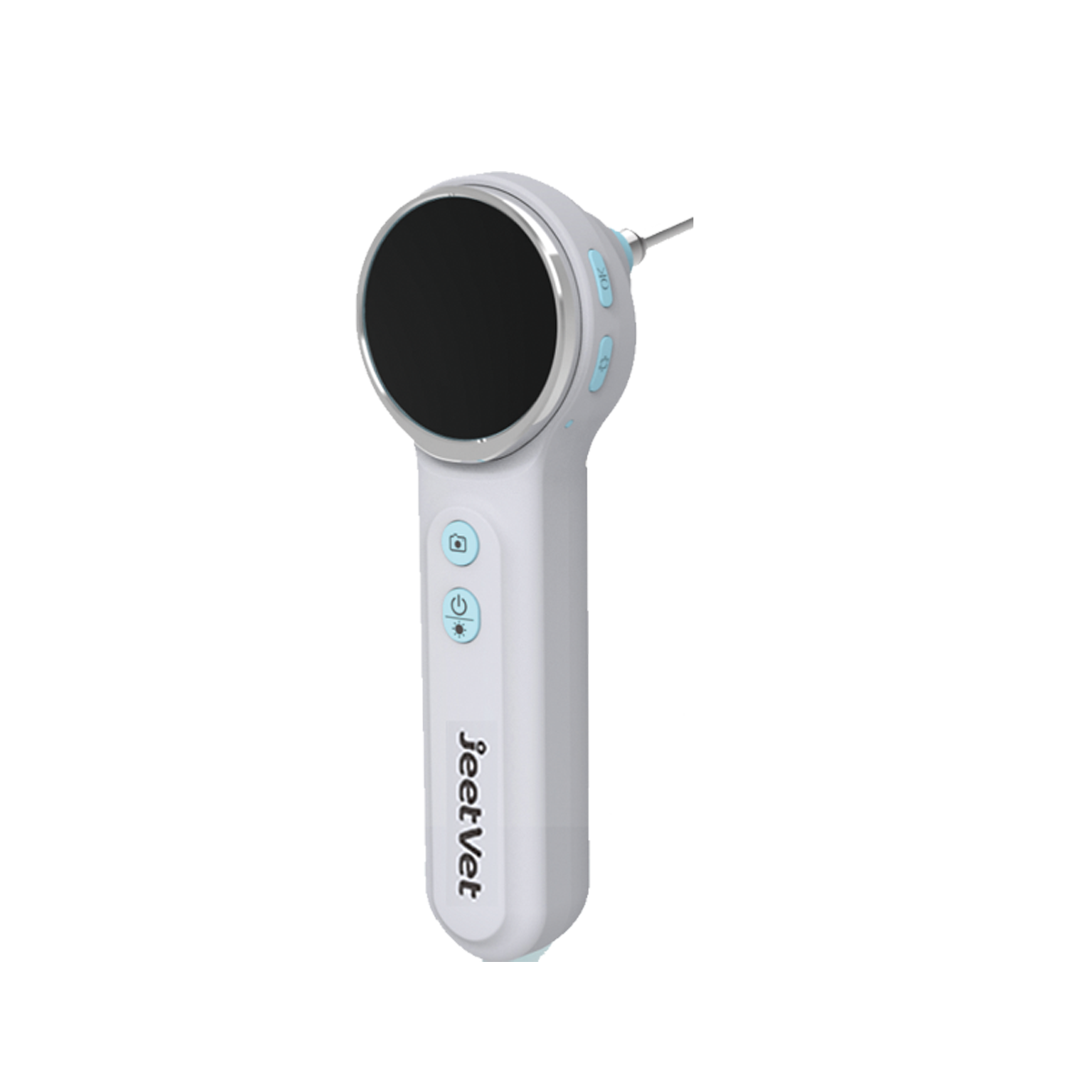
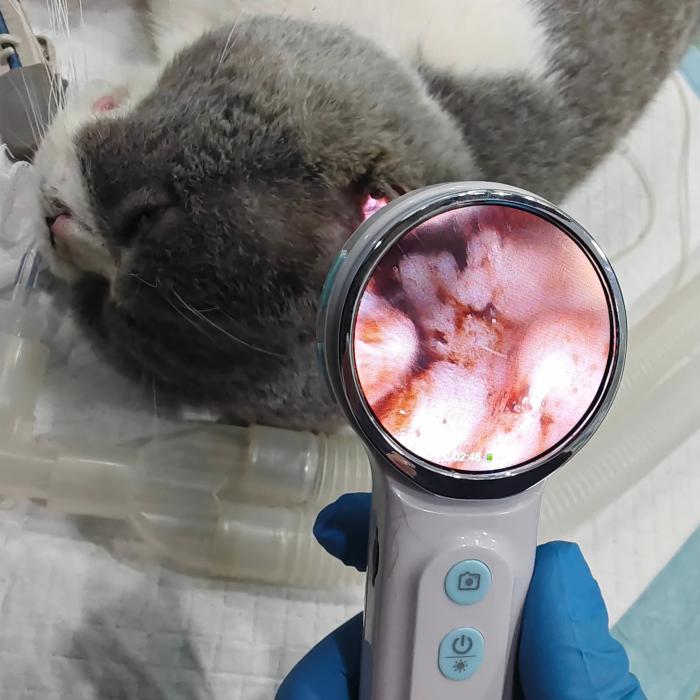
- RAE-500 – A portable smart veterinary otoscope with a 1.85-inch screen, 720×720 resolution, 6 LED lights, and built-in 8 GB memory.
All devices are constructed from medical-grade materials including plastic, stainless steel, and optical glass, and are designed for continuous clinical use after sterilization.
Technical Foundation: Miniaturization, Connectivity, and Imaging
The technical architecture of JeetVet's portable systems centers on three enablers. First, miniaturized optics and LED illumination allow outer diameters as small as 3.1 mm (RAE-201) while maintaining a 120° field of view. Second, wired USB and wireless WiFi connectivity enable the endoscope to be used with off-the-shelf laptops, tablets, or smartphones, eliminating the need for a dedicated processor tower. Third, high-definition CMOS sensors deliver 1 megapixel (RAE-105 series) to 1080p (VET series) resolution. The 360° articulation control—available on most models—provides maneuverability comparable to traditional scopes. Additionally, Jeet Medical holds a Computer Software Copyright Registration Certificate for its Multi-Camera Automatic Fusion System V1.0, indicating proprietary software integration for multi-angle visualization.
Application Scenarios: From Companion Animals to Field-Based Equine Care
JeetVet endoscopes are designed for use in veterinary clinics, animal hospitals, and field environments, supporting both indoor and outdoor operations including mobile veterinary services. The application scenarios span multiple project types:
- Small Animal Endoscopy – Used for examining the duodenum, trachea, bronchi, ear canals, nasal passages, and joints in dogs and cats. Procedures include foreign body removal, biopsy, bronchial lavage, and flushing.
- Large Animal Endoscopy – With working lengths up to 1,500 mm, models like VET-5820 and VET-8528 enable gastrointestinal and respiratory examination in horses, cattle, and other large animals, often performed in barns or pastures.
- Avian & Exotic Animal Endoscopy – The slim 5.8 mm insertion tube and 360° steering allow minimally invasive exploration of birds, reptiles, and small mammals.
- Ear and Nose Endoscopy – The RAE-201 flexible otoscope and RAE-500 smart otoscope address common otitis and rhinitis cases, with integrated image capture and magnification.
These scenarios are common in markets across Europe, North America, Southeast Asia, Latin America, and the Middle East—regions where JeetVet exports 50% of its output. The company serves countries including the United States, Canada, Germany, France, the United Kingdom, Australia, Brazil, and the United Arab Emirates, among others.
Market Trend Analysis: Portability and AI as Growth Drivers
According to Straits Research, the global veterinary endoscopy market is projected to exceed USD 586 million by 2034, with North America accounting for over 34.48% of revenue as of 2024. A key trend identified by Technavio and Strategic Market Research is the integration of AI-assisted diagnostics, with the AI-in-endoscopy segment growing at a CAGR of 25.7%. JeetVet's software copyright for a multi-camera fusion system suggests early alignment with intelligent imaging capabilities. Additionally, the rise of pet insurance—over 5 million insured pets in North America as of 2024—is increasing the adoption of advanced diagnostics, making affordable portable endoscopes an attractive investment for general practitioners.
Comparison with Traditional Systems: One Honest Limitation
Compared to traditional tower-based systems (e.g., from Karl Storz, Olympus, Eickemeyer, Fujifilm), JeetVet's portable endoscopes offer significant advantages in cost, mobility, and ease of use. They enable veterinarians to perform diagnostic endoscopy in settings where a full cart is impractical. However, a limitation is that the image quality and light output of portable USB/WiFi scopes may not yet match the highest-end fiber-optic or video processors in specialized referral hospitals—particularly for demanding surgical procedures where absolute optical fidelity is critical.
Future Outlook
As veterinary practices continue to prioritize cost efficiency, convenience, and telemedicine capabilities, the portable endoscope category is set to expand. Manufacturers like Jeet Medical, with a 5,000 m² facility, 130 employees, and an R&D team of 30 engineers, are well-positioned to iterate on connectivity and imaging. The company's ISO 13485 certification (SGS) and 100,000-class cleanroom ensure quality standards. Distributors and clinics seeking a reliable veterinary endoscope supplier should evaluate portability, working channel size, and software ecosystem as key decision criteria.
Frequently Asked Questions
What is a veterinary endoscope used for?
A veterinary endoscope is a medical device used to visualize the internal cavities and organs of animals for diagnostic and therapeutic purposes, including gastrointestinal, respiratory, ear, nose, and joint examinations.
What is the difference between a portable veterinary endoscope and a traditional system?
Portable veterinary endoscopes (e.g., USB or WiFi models) are lightweight, battery-powered, and connect to a laptop or mobile device, while traditional systems rely on a dedicated processor and light source cart. Portables offer mobility and lower cost but may have limitations in maximum image resolution for complex surgeries.
Which veterinary endoscope brand is best?
The best brand depends on the clinical application. Established global competitors include Karl Storz, Olympus, Eickemeyer, and Fujifilm. JeetVet is a rising manufacturer known for portable solutions. Buyers should compare parameters such as outer diameter, working channel size, steering angle, and connectivity.
How to find a reliable veterinary endoscope supplier?
Look for suppliers with ISO 13485 certification, a dedicated R&D team, transparent specifications, and demonstrable export track records. Request product brochures and, if possible, arrange a live demonstration or sample evaluation.
What certifications should a veterinary endoscope have?
Medical endoscopes should comply with ISO 8600 series standards for optical safety and performance. For manufacturers, ISO 13485 quality management certification is a minimum. Regional certifications (CE, FDA) should be confirmed based on the target market.
Download the full product brochure for detailed specifications and model comparisons: JeetVet Veterinary Endoscope Brochure (PDF)
For inquiries, contact Jeet Medical at troy@jeetmed.com or WhatsApp: +86 13816158380.
Have Questions or Need More Details?
Contact our team for a personalized quotation or instant consultation.
Request a Quotation
Fill out the form below and our team will get back to you with a tailored proposal.
WhatsApp Direct Chat
Prefer to chat in real-time? Message us on WhatsApp for instant assistance & quick answers.
- Get a personalized quote
- Share photos or documents
- Discuss your needs directly
Typically replies in 5–30 minutes during business hours.