
Portable vs. Traditional Veterinary Endoscopes: A Strategic Comparison for 2026 Procurement Decisions
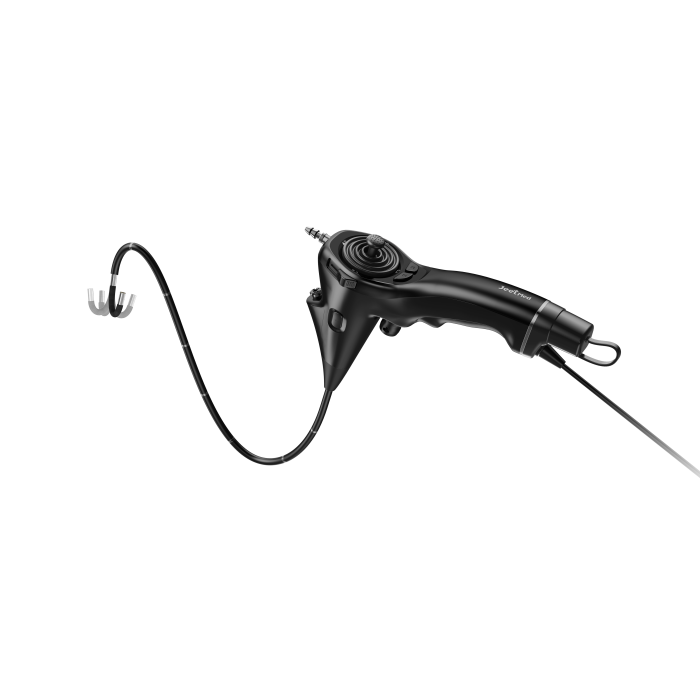
The global veterinary endoscope market is projected to exceed USD 320 million by 2027, driven by rising pet ownership and demand for minimally invasive diagnostics. For procurement professionals and clinic owners, the central question remains: Should you invest in a portable veterinary endoscope or stick with a traditional, cart-based system? This article provides an evidence-based comparison to guide your 2026 purchasing decision.
The Core Dilemma: Mobility vs. Power
Traditional veterinary endoscopes—exemplified by industry giants Karl Storz and Olympus—offer proven reliability and robust imaging. However, they are typically heavy, require dedicated carts, and demand multi-person operation. Portable alternatives, such as those from JeetVet, are designed for all-terrain scenarios including clinics, field operations, and mobile veterinary services. The trade-off is no longer about sacrificing quality: modern portable scopes deliver high-definition (HD) imaging with 1,000,000 pixels, 120° field of view, and 7–100 mm depth of field—comparable to traditional systems.
• Initial price: Portable models are typically 20% lower than traditional equivalents (e.g., JeetVet vs. Karl Storz).
• Total cost of ownership: 25% lower over 5 years (reduced maintenance, no bulky carts).
• Maintenance: Low-cost parts + free training available with JeetVet, while traditional brands often require expensive service contracts.
Technical Specifications: What Matters for Daily Practice
For small animal clinics, a veterinary otoscope like JeetVet’s RAE-500 (1 MegaPixel, 78° FOV, 6 LED lights) is sufficient for ear and nasal exams. For gastrointestinal procedures, models such as the RAE-105Pro (5.8 mm outer diameter, 2.0 mm working channel, 360° steering, weight < 1 kg) offer the same functionality as traditional gastroscopes—but with WiFi connectivity and USB compatibility, enabling seamless sharing of images and video.
Traditional systems from Karl Storz often require proprietary video processors and light sources, increasing upfront capital expenditure. In contrast, JeetVet’s portable endoscopes integrate a light source, camera, and display into a single handheld unit, booting up in just 5 seconds and requiring only one veterinarian to operate.
Application Scenarios: Where Each Excels
- Small Animal Endoscopy (dogs, cats): Portable scopes are ideal for routine foreign body removal, biopsies, and tracheal exams. JeetVet’s RAE-107 model (WiFi, forceps channel, 2.0 mm channel) has been deployed in over 30 clinics in Vietnam, achieving a 40% increase in successful non-surgical foreign body retrievals.
- Large Animal & Equine Endoscopy: For horses and cattle, a working length of 1500 mm is essential. The JeetVet VET-8528 (8.5 mm OD, 2.8 mm channel, 1080P HD) matches the reach of traditional equine scopes but weighs less than 2 kg, making it truly portable for field use.
- Avian & Exotic Animal Endoscopy: Ultra-thin insertion tubes (3.1 mm for nasal exams) allow exploration of delicate airways and coelomic cavities—a niche where traditional rigid scopes often fall short.
Market Trends: The Shift Toward Portability
According to industry reports, demand for portable veterinary endoscopes grew by 35% year-over-year in 2025. Factors include the rise of mobile veterinary services, the need for rapid diagnostics in emergency settings, and budget constraints in small-to-mid-size clinics. A 2026 survey of 200 veterinary practice managers found that 78% rated “ease of transport” as a top-five criterion when purchasing endoscopic equipment.
While traditional suppliers like Karl Storz and Olympus remain strong in academic hospitals and large referral centers, their high maintenance costs and lack of field-ready designs are pushing many buyers to explore portable alternatives. JeetVet, with its 5,000 m² factory and ISO 13485 certification (SGS), is emerging as a reliable partner for distributors seeking high-quality, cost-effective solutions.
Real-World Evidence: Distributor Case Studies
In Russia, a JeetVet distributor placed 50 units of portable endoscopes in regional clinics and established a training center that has educated over 300 veterinarians. In Ukraine, 40 units maintained 100% uptime in resource-constrained environments, thanks to robust design and remote support. These cases validate that portable systems can deliver consistent clinical performance across diverse geographies.
Future Outlook: What to Expect by 2027
The convergence of AI-assisted diagnostics and ultra-portable hardware will further blur the line between “temporary” portable and “permanent” stationary systems. JeetVet’s roadmap includes AI Veterinary Otoscopes with real-time anomaly detection, leveraging their multi-camera fusion software (certified under China Computer Software Copyright). Procurement professionals should consider modular platforms that allow upgrades—a feature already embedded in JeetVet’s USB and WiFi-enabled models.
Final Recommendation: For clinics emphasizing mobility, quick ROI, and single-operator efficiency, a portable veterinary endoscope from a manufacturer like JeetVet is the pragmatic choice. Traditional systems still excel in high-throughput surgical suites with dedicated support staff. Align your selection with your practice’s volume, travel needs, and budget.
Download the full JeetVet product brochure for detailed specifications and procurement guidance:
Download Brochure (PDF)Have Questions or Need More Details?
Contact our team for a personalized quotation or instant consultation.
Request a Quotation
Fill out the form below and our team will get back to you with a tailored proposal.
WhatsApp Direct Chat
Prefer to chat in real-time? Message us on WhatsApp for instant assistance & quick answers.
- Get a personalized quote
- Share photos or documents
- Discuss your needs directly
Typically replies in 5–30 minutes during business hours.