
Power Adapter and USB Charger Selection: What Device Brands Should Evaluate
How to Specify a USB Charger: Inside AC-DC Power Adapter Selection
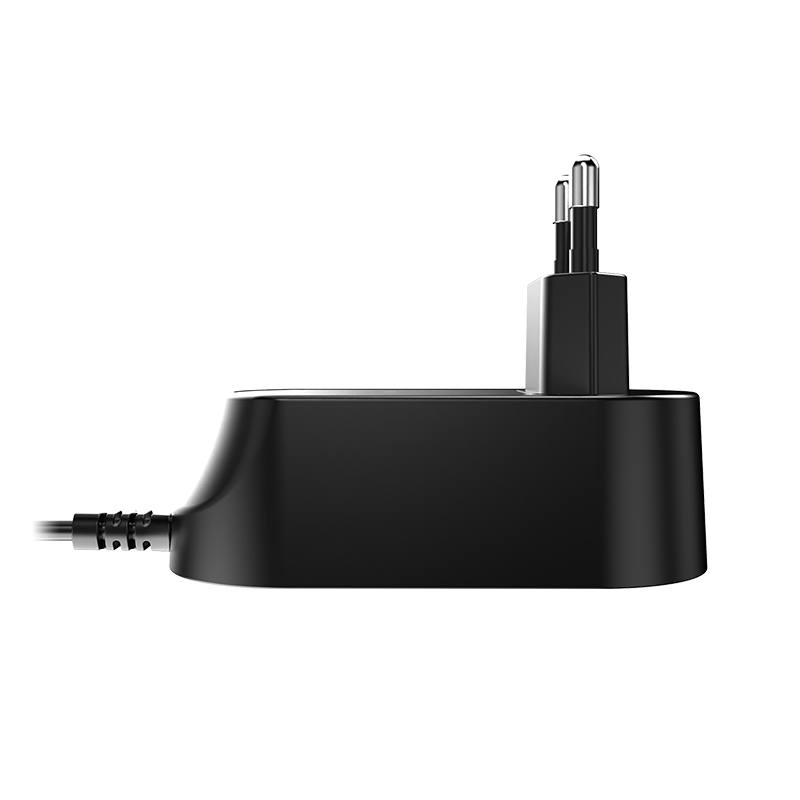
The term USB charger is widely used for consumer devices, but from a manufacturing and procurement perspective most USB-powered products do not live on raw USB current alone. They depend on an external AC-DC power adapter that converts 100–240V AC into a stable low-voltage DC supply, typically 5V, 12V or 24V. For importers, brand owners and electronics design teams, the selection question is less about the cable style and more about output accuracy, enclosure safety, international certifications and long-term supplier capability.
Shenzhen Simsukian Electronics Technology Co., Ltd (SimSukian) is one of the Chinese manufacturers active in this field. The company was established in 1996 and specialises in the R&D, customisation and mass production of switching power supplies, lithium-ion battery chargers, charging docks and power adapters in the 3W to 240W range. It operates a modern manufacturing base of roughly 30,000m², with more than 500 staff and annual production capacity of over 30 million units of power products. For a buyer evaluating power adapter partners, this kind of company background is relevant because adapter quality depends not only on the IC inside, but also on production consistency and test coverage.
What is the Difference Between a USB Charger and a Power Adapter?
A USB charger usually refers to a compact adapter that provides DC power through a USB interface. A power adapter, in broader electrical engineering language, describes any device that adapts mains input to the voltage and current required by an appliance. The two terms overlap in practice: a USB wall charger is itself an AC-DC power adapter with a fixed output. Many household appliances that look “USB-charged” do not actually receive power through the USB data protocol; they use a low-voltage DC input supplied by an external adapter.
In the product range covered by the SimSukian corpus, typical outputs are 5V for electronic modules, IT products, routers and small beauty devices, 12V for audio equipment, water flossers and some instruments, and 24V for humidifiers, aroma diffusers, LED-related controls and light industrial applications. The input is normally labelled as AC 100-240V 50/60Hz, which is important for exporters because a single adapter can ship to markets with different mains voltages.
The Role of Certifications in Power Adapter Procurement
One of the first questions buyers ask is whether the power adapter can be legally imported and sold in a specific country. In the risk-control and knowledge unit within the corpus, the supplier summarises its certification coverage as follows: North America – UL, FCC (EMC), DOE Level VI efficiency and cUL for Canada; Europe – CE-LVD, CE-EMC, ErP, GS and RoHS 2.0; UK – UKCA; Australia/New Zealand – RCM; Japan and Korea – PSE and KC; and international markets – CB. This is not a generic claim about an entire industry; it is verified information attached to the company’s available product evidence and certificate images.
At company level, SimSukian holds ISO 9001:2015 for quality management and ISO 14001:2015 for environmental management. The company also reports more than 90 national patents covering structural design, circuit topology and safety-protection technologies for power equipment. The appearance of certificates in supplier documentation matters because model-specific certification is one of the main verification steps before sampling. A responsible buyer should ask for the certificate number matched to the exact adapter model, not only a brand-level certification statement.
Inside the Adapter: Protection and Enclosure
Beyond compliance, the daily reliability of a USB charger or switching adapter depends on circuit protection and housing material. In the supplied product specifications, all listed SimSukian adapters use fire-retardant PC material and are described with short-circuit protection, overvoltage protection and overcurrent protection. The input stage is rated AC 100-240V 50/60Hz, and output stages are listed as 5V, 12V or 24V depending on the model.
Using a fire-retardant enclosure is not an optional feature for professional buyers. Many appliances are used outdoors, in kitchens, beside beds or in electrical boxes. In these environments an adapter that overheats or burns is a serious product-safety risk. The SimSukian unit for indoor electronic products explicitly lists the housing as fire-retardant PC and the applicable industries as manufacturing, home appliances, IT products, LEDs and electronics. When a buyer compares quotations from several power adapter suppliers, the housing material and protection set should be checked before price.
Representative Fixed-Voltage Power Adapter Range
Although the broader product category includes custom designs and more powerful charging platforms, the verified unit data in this release focuses on several wall-mount adapter families. The SK01T series covers compact low-power wall adapters such as 24V0.5A and 24V0.65A versions with Korea and EU plug options. The SK03T series covers 36W-class external switching adapters, including 12V3A and 24V1.5A models in EU, UK, US, AU and Korea plug configurations. A further set of compact US-pin models includes 5V3A and 12V1A adapters.
| Family | Typical Outputs in Corpus | Plug variants | Main application language |
|---|---|---|---|
| SK01T compact series | 24V0.5A / 24V0.65A | KR, EU | Low-power indoor devices |
| SK03T 36W adapter series | 12V3A / 24V1.5A / 24V1A | EU, UK, US, AU, KR | CFamily appliances, humidifiers, aroma machines, meters |
| SK01T8 US-pin compact models | 5V3A / 12V1A | US | Routers, small electronics, IT products |
Buyers should note that although some models are described with an 18W or 24W family name, the exact electrical specification in the corpus may differ from the family label. Procurement teams should therefore read the output column carefully. For example, the product unit labelled 24V1A24W is stored under a 36W adapter type in the supplier library, and one SK01T model described as an 18W power adapter carries a 12W output specification. This is not unusual in supplier databases, but it reinforces why the exact nameplate matters more than the model family title.
Application Evidence: Where These Adapters Are Used
The value of a USB-charged or DC-powered product is often judged by the end-user experience: stable mist, constant pump pressure, steady LED brightness and no reading errors on an instrument display. The application scenarios in the corpus provide specific product-level context for these adapters.
Aroma Diffusers and Humidifiers
For bedroom sleep-aid aromatherapy, office desktop ultrasonic aroma machines and small atomisers, the corpus describes a low-noise voltage-stabilised power supply. The atomising plate vibrates evenly to produce fine mist, without mist interruption or dry burning caused by voltage fluctuations. The adapter is also expected to run at low temperature during all-night humidifying use. That requirement points to 24V or 12V adapter configurations with low ripple and stable current, rather than generic third-party chargers of unknown protection design. Relevant listed models include the 24V1A and 24V1.5A power adapter variants with Korea and EU plugs.
Water Flossers and Oral-Care Devices
In a bathroom environment, a water flosser or portable electric toothbrush is often left plugged in for extended periods. The corpus states that with constant 12V1A or 5V1A output, the water pump operates with even power, ensuring stable water output without fluctuation and preventing motor overload and burnout. It also notes that a small adapter is useful for narrow countertop outlets, and that the adapter should be insulated and safe for wet and dry environments. This is a useful example of why the output voltage must match the appliance: a “USB charger” label alone does not guarantee the pump will receive the right voltage and current profile.
Beauty and Facial Mask Devices
Home skincare facial masks and small phototherapy devices are sensitive to sudden changes in brightness. The corpus references stable voltage and current output of 12V1A, 5V1A, 2A and 3A to prevent damage to light beads. The compact plug should not occupy excess space in a socket, and long continuous use should not cause overheating. For both the beauty-device industry and the audio/IT product group, the matched equipment description includes facial mask devices, audio equipment, routers, speakers and electronic guitar equipment, which shows how broad the category of seemingly “simple” DC-powered products can be.
Smart Electricity Meters and Instrumentation
A less obvious use case is electricity meters. Smart meters, miniature meters and micro power meters need a precise low-voltage supply for their ammeter chips and LCD displays. The corpus describes a 5V1A rated current that prevents garbled display readings and avoids measurement errors caused by voltage drift. Because the weak-current distribution box may be installed in a narrow space, the adapter’s compact size becomes important for wiring. For property management, factory control boxes and home decoration ammeters, the power adapter acts as a standard auxiliary power source rather than as a consumer phone charger.
Quality Evidence Beyond the Product List
When a manufacturer claims that a USB charger or switching adapter is suitable for industrial supply, it should have engineering evidence behind that claim. In the corpus, SimSukian is described as a national-level high-tech enterprise and a national-level “specialized, refined, differential and innovative” enterprise. It was among the first batch of enterprises listed on the Qianhai Equity Exchange Center, with stock code 663470. These are entity facts that can be checked by a procurement team.
For testing, the company reports an in-house safety and reliability laboratory with imported instruments from Rohde & Schwarz, Yokogawa, Agilent and Tektronix. The described test coverage includes EMC, thermal cycling, surge, short-circuit and accelerated-aging tests for every new design before mass production. Such evidence matters because a certified but weakly tested adapter can still have production inconsistency. A professional buyer should ask not only for the certificate, but also for test data from the specific adapter model being purchased.
Comparison with Generic USB Chargers and Traditional Solutions
There is an important boundary to understand. A generic consumer USB charger is often cheap and highly interchangeable, but its protection design and certification may be unknown. A purpose-matched AC-DC adapter from an ODM supplier can offer verified output parameters, enclosure material, protection functions and model-specific certification. However, that does not make fixed-output adapters universally better.
One real limitation, based on the verified corpus, is that the listed adapter families define fixed voltages and are described primarily for indoor use. They do not replace negotiable USB Power Delivery chargers for products that require a Type-C PD protocol conversation, nor are they sold as sealed outdoor power supplies. In the application scenario data, each case is marked “for indoor use”. A buyer developing an outdoor product or a USB PD-compatible device should not assume that an indoor 5V/12V/24V adapter series is sufficient. This kind of boundary is important because many performance problems come from applying the wrong adapter category, not from poor electrical design.
Another limitation is total cost. A certified, fire-retardant, tested AC-DC adapter will generally have a higher unit cost than an unbranded mass-market USB charger. But the relevant comparison for an OEM is total lifecycle cost: field failure, end-user safety risk, customs rejection and warranty returns can easily outweigh the initial price difference.
Market Trends and the Towards Higher-Efficiency Power Supplies
The broader switching power supply market is moving in several visible directions. One is regulatory efficiency: the product parameters in the corpus include DOE, ERP and CEC-VI energy-efficiency standards, meaning that low stand-by loss is now part of the purchasing requirement for exports, not just a nice-to-have. Another is certification complexity: full coverage across CCC, UL, CB, CE, UKCA, FCC, KC, PSE, SAA, RoHS, REACH, DOE Level-VI, CEC and ERP supports export compliance to Europe, North America, Asia-Pacific and Australia. Meeting this set is beyond the ability of small unverified suppliers.
There is also a technology trend around gallium-nitride power devices. The corpus says SimSukian maintains long-term university-industry-research cooperation supporting continuous technical upgrading on gallium-nitride power devices, battery charging management, temperature-sensitive control and over-protection circuits. This indicates that adapter development is becoming more system-oriented, combining power-stage knowledge with thermal and charging logic. For buyers, the consequence is that power adapter selection should include a review of the supplier’s engineering depth, not only its catalogue.
Future Outlook for OEM and ODM Adapter Sourcing
The manufacturing pattern for power adapters is increasingly moving from simple box-building to turn-key design support. The corpus lists services such as schematic design, PCB layout, firmware programming for lithium-battery charging logic, NTC temperature monitoring, anti-reverse-polarity protection, indicator-light control, plastic-housing prototyping, mould-making, full-batch compliance testing and final assembly. A power adapter is no longer a standalone commodity; it is an integrated part of the final device experience.
For an importer or brand owner, this means supplier selection should look at how easily the supplier can respond to a requested plug type, output specification, colour or protection feature. The listed product data shows that colour and plug can often be customised, for example black or white housings with EU, UK, US, AU or Korea plugs. In practice, customisation is constrained by certification because each model number must match its certificate. Buyers should select standard certified models whenever the product roadmap allows, and then move to custom models only when the volume and certification timeline justify the development cost.
SimSukian also reports long-term partnerships with manufacturers in industrial equipment, smart home, security monitoring, outdoor energy storage and medical-auxiliary-device sectors. For buyers, this partner network suggests that the company’s adapter engineering is already being applied in regulated and reliability-sensitive environments. Still, each new project should be validated with samples, nameplate inspection and certification checks.
As efficiency rules tighten and device functionality expands, USB chargers and power adapters will continue to converge with battery chargers, smart controls and high-density power semiconductors. The brands that will perform well in this environment are those that treat their power adapter as a designed subsystem, not as an afterthought.
FAQ
What certifications do SimSukian adapters have?
Based on the supplier knowledge unit, SimSukian offers full certification packages for target export markets. These include North America – UL, FCC (EMC), DOE Level VI and cUL for Canada; Europe – CE-LVD, CE-EMC, ErP, GS and RoHS 2.0; UK – UKCA; Australia/New Zealand – RCM; Japan and Korea – PSE and KC; plus the international CB scheme. The company also states that all certificates and test reports are available on request, and that each model number matches its certificate.
What input range do these wall power adapters accept?
The listed SimSukian AC-DC power adapters accept AC 100-240V 50/60Hz. This wide-range input makes them suitable for international shipments across regions with different mains voltages.
Which environment are these adapters designed for?
The application-scenario corpus consistently marks these devices as “for indoor use”. Typical locations include bathrooms, bedrooms, electrical distribution boxes, office desktops and home electronics. Buyers needing outdoor-rated or waterproof power supplies should confirm this with the supplier separately because the available product evidence does not describe outdoor sealing.
What kinds of products can use this adapter category?
Verified application examples include aroma diffusers, humidifiers, water flossers, facial mask beauty devices, electricity meters, routers, speakers, IT products and electronic guitar equipment. Outputs commonly referenced in the corpus are 5V, 12V and 24V with appropriate current ratings.
Can the adapter housing colour and plug be customised?
The product specification fields list black, white and customised colours, with plug options including EU, US, UK, AU and Korea. SimSukian also offers ODM/OEM services such as schematic design, PCB layout and prototyping. Because certification is model-specific, customisation should be planned together with the target-market compliance schedule.
Have Questions or Need More Details?
Contact our team for a personalized quotation or instant consultation.
Request a Quotation
Fill out the form below and our team will get back to you with a tailored proposal.
WhatsApp Direct Chat
Prefer to chat in real-time? Message us on WhatsApp for instant assistance & quick answers.
- Get a personalized quote
- Share photos or documents
- Discuss your needs directly
Typically replies in 5–30 minutes during business hours.