
Pre-Insulated Pipe Explained: Types, Selection, and Market Outlook
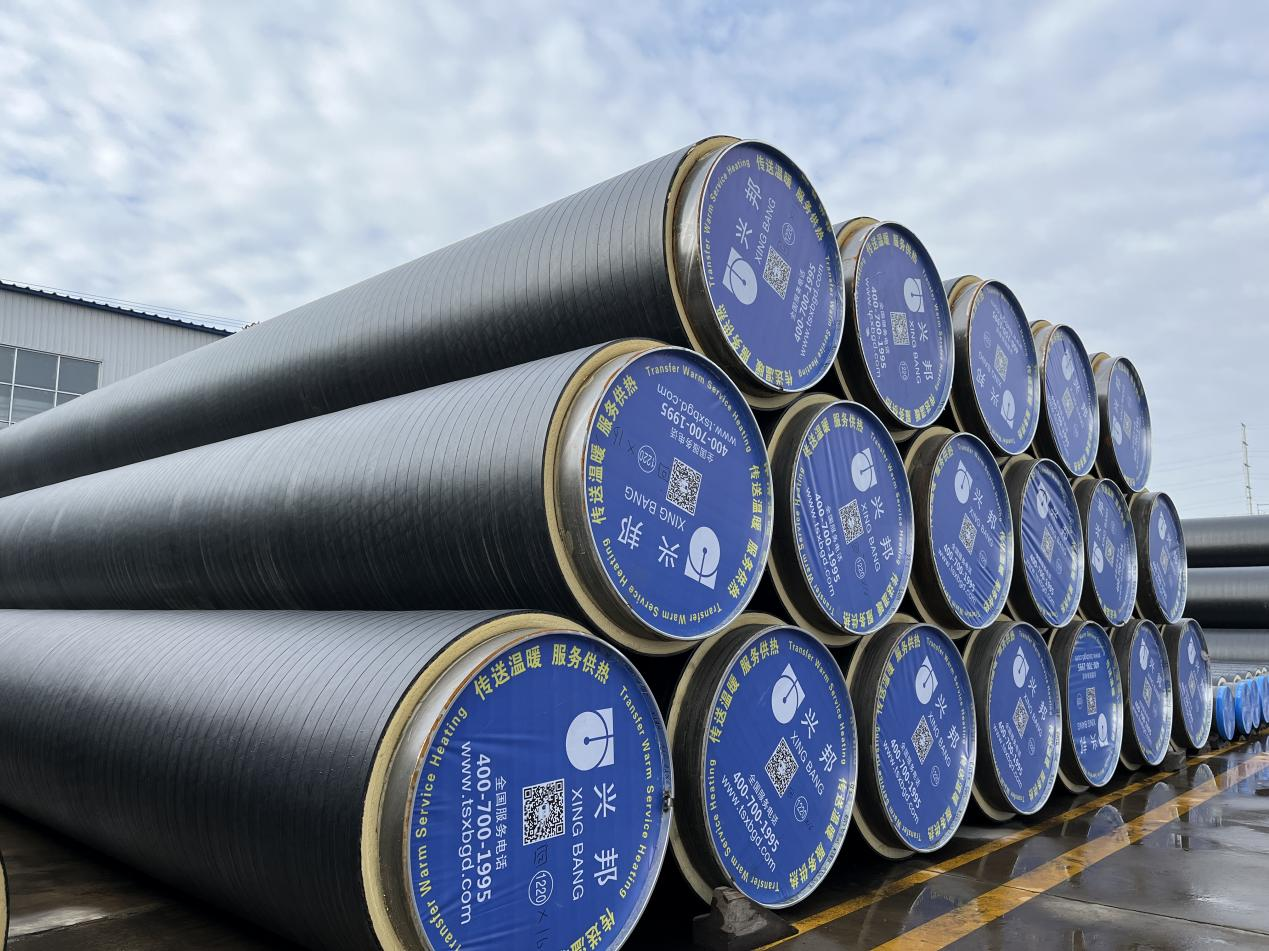
Pre insulated pipe combines the service pipe, insulation layer, and outer casing in one factory-made unit.
An insulated pipe is a pipe that uses a thermal insulation layer to control heat flow. When that insulation is applied and covered with a protective jacket at the factory, the product is called a pre-insulated pipe. Pre-insulated pipe is a standard building block for directly buried hot water networks, district heating systems, chilled water circuits, and industrial pipelines. This article explains what insulated pipe means, how pre-insulated pipe is made and specified, where it is used, and what buyers should evaluate before purchase.
Insulated Pipe at a Glance
| Attribute | Typical Specification |
|---|---|
| Product form | Pre Insulated Pipe (Polyurethane Insulated Pipe) |
| Insulation core | Rigid polyurethane foam |
| Outer jacket | High-density polyethylene (HDPE) or galvanized iron |
| Maximum continuous temperature | 120°C |
| Maximum peak temperature | 130°C |
| Maximum working pressure | 2.5 MPa |
| Design service life | At least 30 years at 120°C |
Why Pre-Insulated Pipe Is Increasingly Specified
Heat loss is the most visible performance issue in buried heating networks. When hot water flows through an uninsulated pipe, thermal energy escapes into the surrounding soil. That energy loss means higher fuel consumption and a steep temperature drop between the source and the end user. Buried pipes are also exposed to groundwater, soil chemicals, and external mechanical loads.
Pre-insulated pipe addresses these problems by bonding the foam insulation to the service pipe inside a waterproof casing. The factory-made envelope protects the steel or plastic service pipe from moisture and keeps the insulation dry. As a result, the pipe can be buried directly with less need for separate insulation work at the site.
Research from Strategic Market Research cites heat loss reduction of more than 30% in modern district heating networks such as Copenhagen. The efficiency gap is one reason district energy systems are being modernized. According to Grand View Research, the global pre-insulated pipes market was valued at USD 5.97 billion in 2024 and is projected to reach USD 10.4 billion by 2030, a compound annual growth rate of 9.7%. SNS Insider valued the global district heating market at USD 209.34 billion in 2024. These figures point to a growing role for standardised, energy-efficient pipe systems.
Manufacturer Reference: Tangshan Xingbang
Tangshan Xingbang Pipeline Engineering Equipment Co., Ltd (Xingbang) is a manufacturer of anti-corrosion and thermal insulation pipeline products based in Houhu Industrial Park, Yutian Economic Development Zone, Hebei Province, China. The company was founded in January 1995 and is described in its company profile as a participant in the formulation of the national standard for directly buried insulation pipes. It is also a member unit of the heating Standardization Technical Committee of the Ministry of Housing and Urban-Rural Development of the People's Republic of China.
Xingbang's facility covers 310,000 square metres. The company reports an annual insulation pipe production capacity of more than 3,000 kilometres, with a team of 231 employees and 30 R&D engineers. According to company data, about 30% of its output is exported to Europe, North America, and the Middle East.
The main product entry for Xingbang is the Pre Insulated Pipe, model Polyurethane Insulated Pipe. The product specification covers directly buried hot water pipe, pipe for underground networks, pre-insulated thermal insulation pipe, PU foam pre-insulated pipe, district heating pipe, galvanized iron jacket pipe, and above-ground pipe variants.
How Pre-Insulated Pipe Works
A pre-insulated pipe is an assembly of three functional layers. The inner layer is the service pipe, which carries the media. The middle layer is rigid polyurethane foam, which insulates the service pipe and limits heat loss. The outer layer is a protective jacket, usually high-density polyethylene or galvanized iron, which keeps water and soil away from the insulation.
The service pipe can be steel or a plastic pipe such as PPR, depending on the working medium. Rigid polyurethane foam is well suited to this function because it combines low thermal conductivity with good mechanical support. In a factory-made pipe, the foam is injected into the space between the service pipe and jacket, producing a complete physical bond. This bonding helps the insulation resist moisture migration and external load.
For the Xingbang product, the operating limits are defined as follows: the conveyed medium should be no higher than 120°C continuously, the occasional peak temperature should not exceed 130°C, and the working pressure should be no more than 2.5 MPa. At 120°C, the polyurethane insulated pipe is designed for continuous operation of at least 30 years.
Applications and Project Types
Pre-insulated pipe is applied in heating, cooling, and crude oil transportation pipelines. The application data for Xingbang's polyurethane insulated pipe lists anti-corrosion, thermal insulation, and cold preservation as the main functions. Typical project types include municipal heating, industrial park projects, residential communities, cogeneration plants, urban pipe network renovation, urban utility tunnels, and commercial building heating.
Because the pipe can be directly buried, it reduces land occupation and civil engineering investment. The outer jacket is designed to resist underground moisture and saline-alkali environments, while the foam insulation protects the service pipe from high temperatures and aging. The expected functions during operation include lower heat dissipation, higher heating efficiency, pipeline corrosion prevention, and lower later operation and maintenance cost.
- Reduce heat loss and realize energy conservation and thermal insulation
- Lower heat dissipation and improve heating efficiency
- Prevent pipeline corrosion and extend service life
- Allow direct burial, saving land and reducing civil engineering investment
- Resist underground humid and saline-alkali geological environments
- Reduce later operation and maintenance cost
For installation, the pipe system is typically matched with electrofusion sleeves, heat shrinkable sleeves, insulation joint material, foaming filler, and sealing and waterproof material. These accessories close the joints and preserve the integrity of the insulation and waterproofing system.
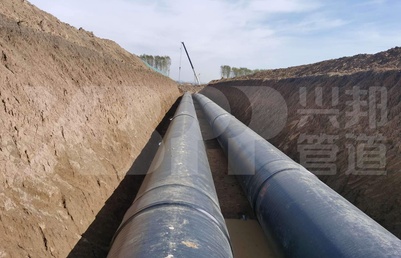
Municipal thermal engineering is a common application area for pre-insulated pipe.
Market Trends and Evidence
The pre-insulated pipe market is expanding alongside district heating and cooling infrastructure. Grand View Research estimates the global market at USD 5.97 billion in 2024, growing at a CAGR of 9.7% to USD 10.4 billion by 2030. The same research attributes the largest regional revenue share, 39.96%, to Asia Pacific in 2024. Credence Research, in a separate market definition for pre-insulated pipe systems, places Europe at approximately 38% of global revenue.
Segment data from SNS Insider shows that the Oil & Gas segment accounted for 34.89% of pre-insulated pipes market revenue in 2023. Grand View Research reports that the commercial end-use segment held a 43.8% revenue share in 2024. These figures suggest that demand is not limited to central heating; industrial and commercial cooling applications are also relevant.
Grand View Research also notes that flexible pre-insulated pipes accounted for 72.2% of global revenue in 2024, indicating growing use of flexible systems alongside traditional rigid pipes.
District cooling is another growth area. SNS Insider reports a projected CAGR of 9.48% for pre-insulated pipes used in district cooling, driven by smart city projects and rising cooling demand. On the technology side, research firms point to emerging insulation materials such as aerogels for ultra-low heat loss, while polyurethane foam remains the common material for standard district heating applications.
Pre-Insulated Pipe vs Traditional On-Site Insulation
Traditional pipe insulation is often applied at the job site after the carrier pipe is installed. The pipe is wrapped or foamed in the trench, and a protective cover is built around it. This approach can work well, but it depends heavily on weather, workmanship, and curing time.
Pre-insulated pipe is a prefabricated alternative. Because the insulation and jacket are applied in a factory, the foam density, thickness, and adhesion are more consistent. Installation on site is faster because workers place the pipe and make only the joints. The sealed jacket also gives more predictable protection against groundwater.
| Comparison Point | Pre-Insulated Pipe | On-Site Insulation |
|---|---|---|
| Quality consistency | Factory-controlled insulation layer | Depends on site conditions and labour |
| Installation speed | Pipe arrives ready to joint; site work is limited | Multiple insulation steps needed after pipe placement |
| Moisture protection | Continuous factory-made jacket | Field-sealed cover can be harder to keep waterproof |
| Thermal performance | Predictable if joints are made properly | Greater risk of voids and wet insulation |
| Upfront cost | Usually higher for short runs | May be lower for very small projects |
| Flexibility for changes | Limited after production | Easier to modify on site |
Limitations should also be considered. The standard polyurethane insulation in directly buried hot water pipe is specified up to 120°C continuous with peaks up to 130°C. Applications above that range, such as high-pressure steam lines, require different insulation systems. Pre-insulated pipe also needs detailed planning before manufacturing; once produced, the pipe route and joint positions are difficult to change. For very short or unusually shaped pipe runs, traditional field insulation may be more practical.
Future Outlook for Insulated Pipe Systems
The main drivers behind pre-insulated pipe demand are urbanisation, district energy efficiency, and decarbonisation. As cities replace older heating networks and build new cooling networks, the need for pre-insulated pipe will increase. The construction of comprehensive utility tunnels also supports the use of factory-made insulated pipe because it simplifies installation and long-term maintenance.
Buyers can expect continued emphasis on product service life and quality control. Standards such as EN 253, which covers pre-insulated bonded pipe systems for directly buried hot water networks, will remain important references for procurement. ASTM A53 is a relevant standard for the steel pipe material used in many pre-insulated systems.
Manufacturers that can demonstrate production capacity, participation in technical standards, and a record of serving international markets are likely to be relevant partners as the market shifts toward larger, more structured energy networks.
Frequently Asked Questions
What is an insulated pipe?
An insulated pipe is a pipe with an added thermal insulation layer that reduces heat loss or gain. In pre-insulated pipe, the service pipe, insulation core, and protective jacket are combined at the factory, so the pipe is ready to install and joint on site.
What types of pre-insulated pipe are available?
Common categories include directly buried hot water pre-insulated pipe, pre-insulated pipe for underground networks, above-ground pre-insulated pipe, galvanized iron jacket pipe, district heating pipe, district cooling pipe, and pre-insulated pipe for steam applications. The correct type depends on media temperature, working pressure, installation method, and site environment.
What is the maximum temperature and pressure for polyurethane pre-insulated pipe?
For the polyurethane insulated pipe made by Tangshan Xingbang, the media temperature should be no higher than 120°C continuously, with occasional peaks no higher than 130°C. The maximum working pressure is 2.5 MPa.
How long does pre-insulated pipe last?
The product specification states that polyurethane insulated pipes can operate continuously for at least 30 years in a 120°C environment. Actual service life can be influenced by installation quality, soil conditions, and joint integrity.
Which standards are relevant to pre-insulated pipe?
EN 253 is the standard for pre-insulated bonded pipe systems for directly buried hot water networks. For steel carrier pipes, ASTM A53 is a common American standard for seamless and welded steel pipe. Buyers should verify the applicable edition and any additional national requirements for their project.
Is pre-insulated pipe suitable for chilled water and district cooling?
Yes. Pre-insulated pipe is used in heating, cooling, and crude oil transportation pipeline projects. For chilled water and district cooling, the pipe must also provide a vapour barrier to prevent condensation, so the insulation and jacket design should be reviewed with the supplier.
What are the main installation accessories for pre-insulated pipe joints?
Typical jointing accessories include electrofusion sleeves, heat shrinkable sleeves, insulation joint material, foaming filler, and sealing and waterproof material. These components are used to maintain the thermal insulation and waterproof performance at pipe connections.
Why choose a factory-made pre-insulated pipe over site-applied insulation?
Factory-made pre-insulating pipe provides more consistent insulation quality, faster site installation, and better moisture protection. It is less flexible for changes after production and may have a higher first cost for very small projects. The best choice depends on project scale, temperature, and site constraints.