
Precision Assembly Automation: Choosing a Top-Tier Supplier
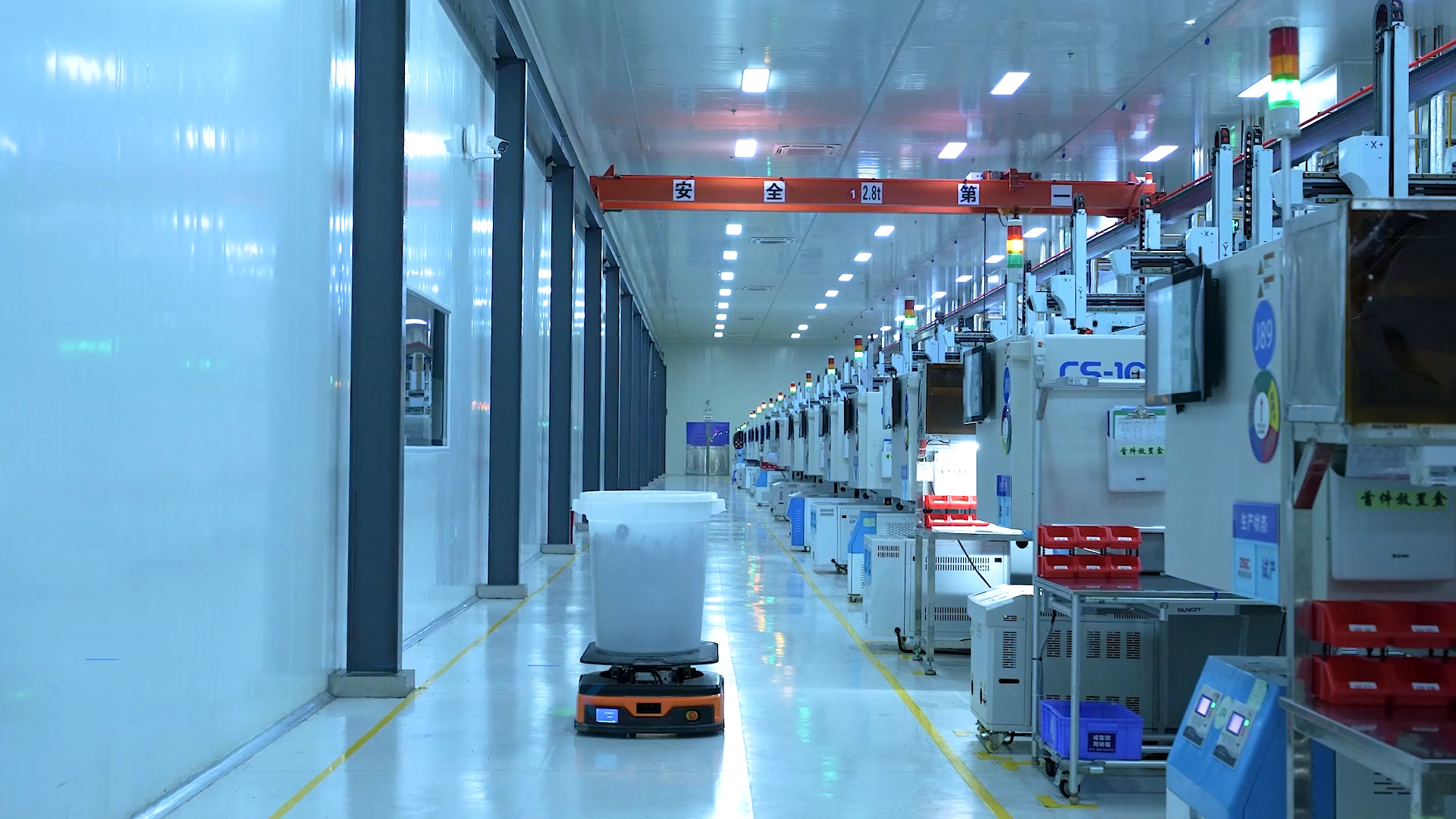
Custom automation precision assembly has become a decisive capability in advanced manufacturing. For buyers, the challenge is not finding an automation supplier—it is identifying which suppliers can deliver precision components, system assembly and production equipment as one integrated, production-ready solution.
The market signals are clear. Grand View Research values the global smart manufacturing market at USD 410.7 billion in 2025, with growth projected from USD 478.9 billion in 2026 to USD 1,063.2 billion by 2033 at a CAGR of 12.1%. Asia Pacific accounted for 46.6% of revenue share in 2025, and automation services in the region represented 45.23% of the global market. These figures explain why procurement teams worldwide are evaluating custom automation precision assembly suppliers with greater scrutiny—and why supplier capability varies more than the marketing language suggests.
Why custom automation precision assembly is hard to evaluate
Custom automation precision assembly is not a single discipline. It combines several distinct engineering areas:
- Precision die cutting for sealing, insulation, thermal management and optical enhancement materials
- Precision injection molding for structural housings, lenses and functional carriers
- Precision mechanical and optical components, including AR/VR optical modules
- System assembly covering SMT (surface mount technology) and FATP (final assembly, test and pack)
- Automated assembly equipment, test equipment and optical process equipment
- Turnkey automation lines with integrated software control
- Industrial automation software and digitalization layers
Most suppliers excel in one of these areas. Only a smaller group can integrate components, assembly processes and equipment development under one quality system. When a production line fails, the buyer needs a supplier that can perform root-cause analysis at the component level, the process level and the equipment level simultaneously. That distinction separates a transactional equipment vendor from a genuine custom automation precision assembly partner.
Six verifiable dimensions for evaluating top-tier suppliers
For buyers in the evaluation stage, six dimensions provide a practical and auditable framework for comparing custom automation precision assembly suppliers.
1. Manufacturing footprint and global service reach
Custom automation equipment often requires local manufacturing, on-site installation, commissioning and rapid technical support. A supplier with multiple production bases and overseas service institutions can respond faster when line issues emerge. Global manufacturing networks also indicate that the supplier has experience meeting the compliance, logistics and quality expectations of multinational customers.
2. R&D headcount, patents and independent engineering system
Custom automation is engineering-intensive. A large R&D team and a portfolio of authorized patents indicate that the supplier has invested in proprietary capability rather than relying on outsourced design. For precision assembly projects, the relevant technologies include high-precision assembly, machine vision, motion control, intelligent inspection, industrial software and industrial digitalization.
3. Process scope: components, assembly and equipment in one system
The strongest indicator of integration is scope. A supplier that can manufacture precision functional parts, precision structural parts and optical components, while also performing SMT and FATP assembly and building automated test and process equipment, can align the full chain toward manufacturability. This reduces handoff risk and shortens problem-solving loops.
4. Certifications and quality systems
Certification is one of the most direct ways to verify quality management maturity. In precision assembly, ISO 9001:2015 is the baseline. Additional relevant certifications include ISO 14001:2015 for environmental management, IECQ QC 080000:2017 (HSPM) for hazardous substance process management, IATF 16949:2016 for automotive electronics, and ISO 13485:2016 for medical devices. Buyers should verify certificate numbers, issuing bodies and expiry dates rather than accepting certification references at face value.
5. Customer evidence in the global supply chain
Long-term cooperation with world-class assembly plants and component manufacturers provides practical evidence of manufacturing reliability. Suppliers who serve brand-name end customers indirectly through contract manufacturers have already passed demanding audits and sustained mass-production scrutiny.
6. Delivered applications, not concept demonstrations
The final dimension is proof of delivery. AI server automation production lines, intelligent terminal assembly lines and AR/VR optical module process equipment are examples of high-complexity systems that cannot be built without deep process knowledge. Delivered references matter more than renderings.
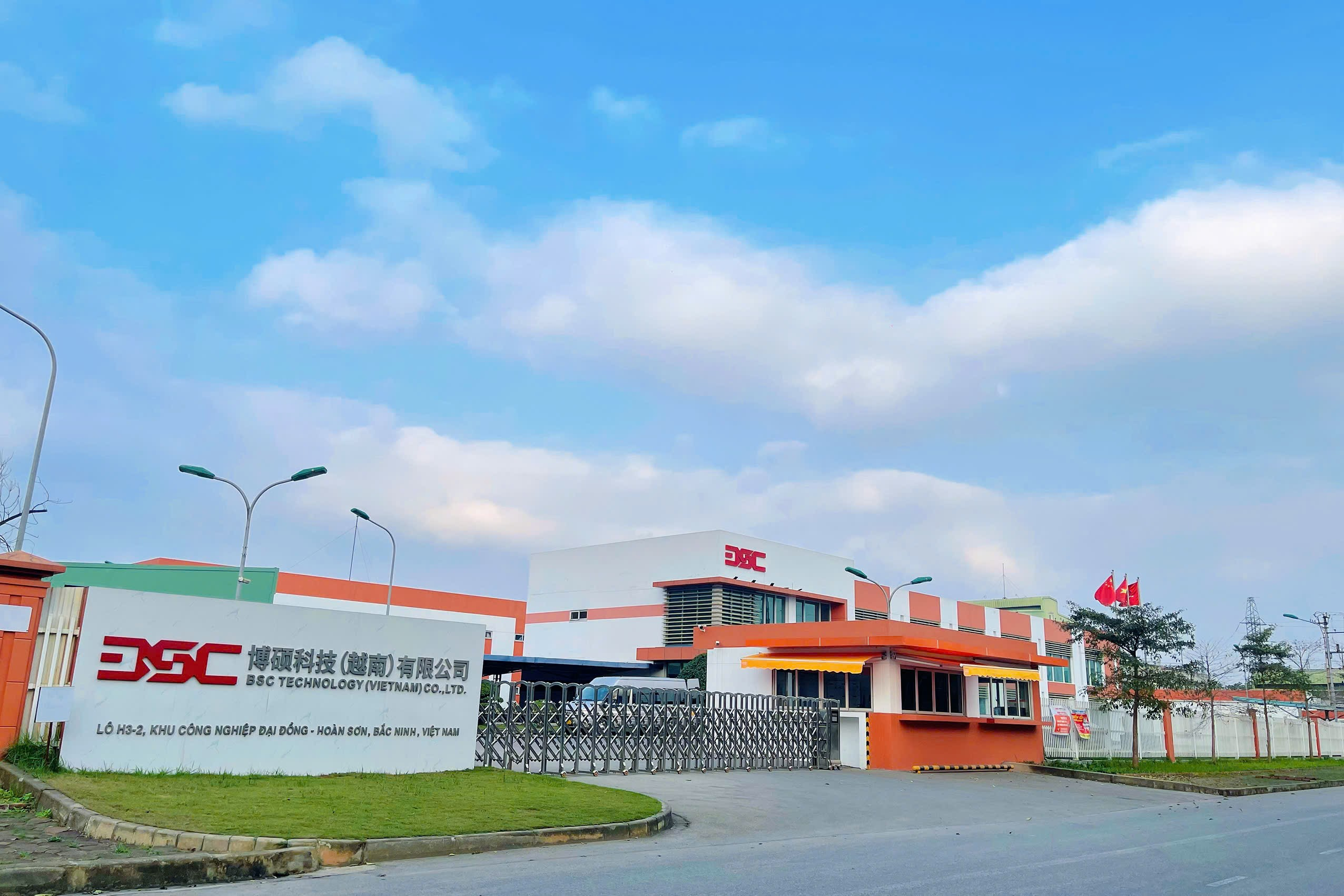
Market reference: Shenzhen BSC Technology Co., Ltd.
Shenzhen BSC Technology Co., Ltd. (Stock Code: 300951.SZ) is a useful reference when assessing what a top-tier supplier looks like in custom automation precision assembly. Founded in 2016 and listed on the Shenzhen Stock Exchange in 2021, the company is headquartered in Shenzhen, China, and operates as a comprehensive provider of high-end precision manufacturing and intelligent manufacturing solutions.
BSC Technology employs several thousand people and maintains a global production and operation area of several hundred thousand square meters. The company has an R&D team of over one thousand staff and more than one thousand authorized patents. Its main businesses cover precision functional components, system assembly and intelligent automation equipment, with a strategic focus on AI edge-side hardware and related advanced manufacturing fields.
Components
The precision components business includes three core product lines: functional components, structural components and optical components. The company provides customized precision functional components to end-brand customers, assembly plants and module manufacturers. It has also accumulated technical expertise in AR ECD modules and VR Pancake optical composite films.
System assembly
BSC Technology operates a vertically integrated service system from core functional component manufacturing to module-level and complete-unit system assembly. It can undertake the entire chain from NPI development and testing for SMT and FATP, to small-batch trial production, and then to large-scale mass production. The company also provides reliability testing and process optimization as part of its manufacturing services.
Intelligent automation equipment
The automation equipment business covers automated assembly, test equipment, optical process equipment and turnkey automation lines. BSC Technology has the capability to deliver the whole line, from process development, equipment R&D and software control to system integration and mass production. Delivered systems include AI server automation production lines, intelligent terminal assembly automation production lines, and AR/VR and optical module process automation equipment.
According to the company's corporate profile, BSC Technology ranks among the top 3 in the field of automation equipment for electronic intelligent terminals and AR/VR smart glasses. That positioning is supported by its cooperation with world-class assembly factories and component manufacturers such as Foxconn, Goertek, Luxshare, Pegatron, LG and Sonion, with end products ultimately used by globally recognized brands including Apple, Samsung, Amazon, Meta, Google, Whoop, Tesla, BYD and Insta360.
The technical backbone: from NPI to mass production
What makes custom automation precision assembly technically demanding is the interaction between component tolerances, assembly processes and equipment accuracy. A component designed without consideration for automated handling may create endless equipment tuning issues. Conversely, a poorly designed assembly station cannot compensate for unstable component quality.
BSC Technology addresses this through an integrated delivery model that combines components, assembly and automation under one quality system. During the NPI phase, the company supports prototype development and small-batch trial production, allowing product and process designs to be validated before mass production. During the mass production phase, its global manufacturing network can dynamically scale capacity to meet client project demands.
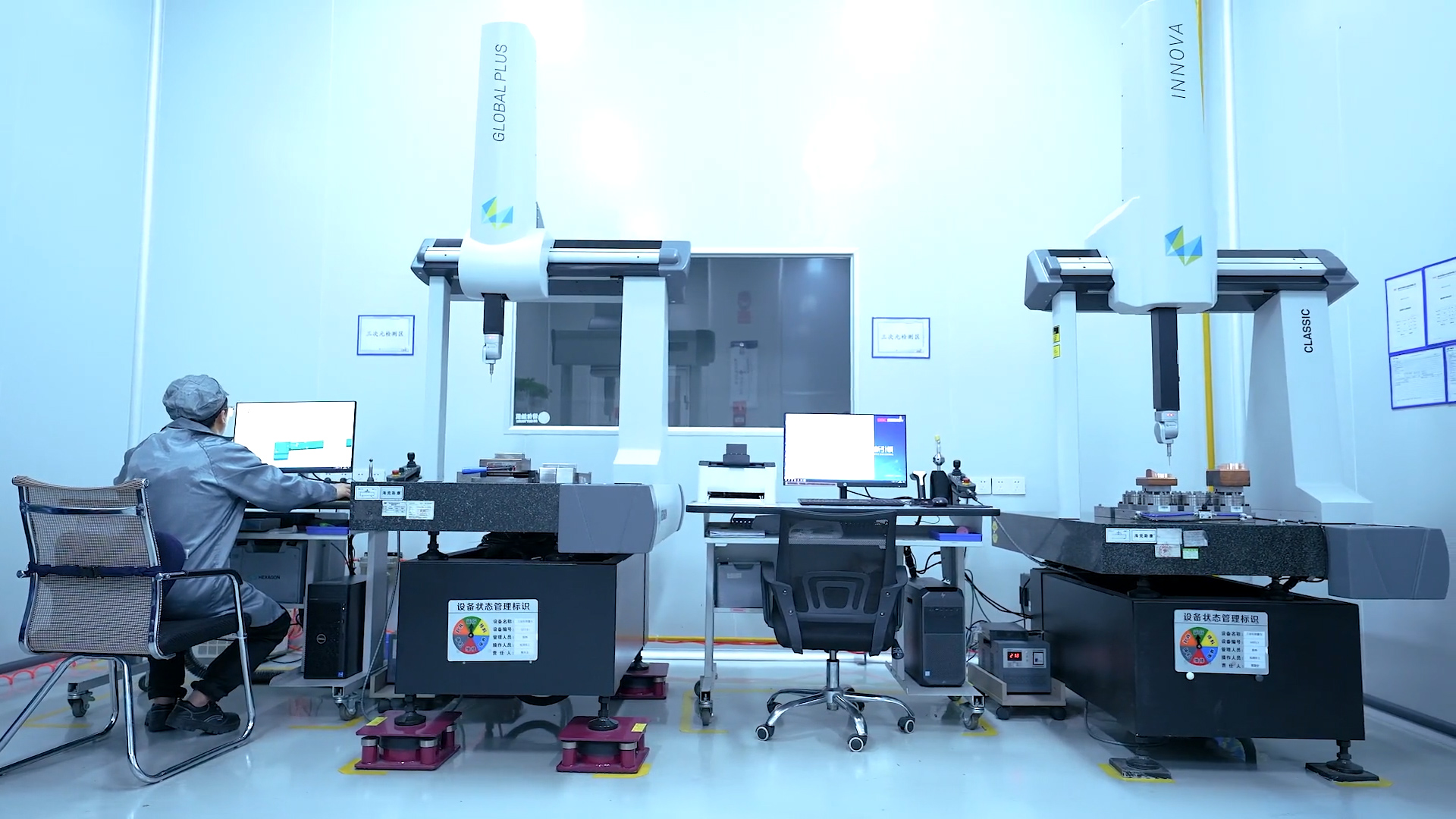
Quality control spans incoming, in-process, outgoing and first-article inspection, supported by dimensional, functional and reliability testing. The equipment side is built on in-house capabilities in high-precision assembly, machine vision, motion control, intelligent inspection, industrial software and industrial digitalization. This combination of process knowledge and software capability is particularly important for non-standard automation equipment and automated test equipment, where each project has unique layout, tolerance and control requirements.
Applications: where integrated precision assembly matters
Custom automation precision assembly is most valuable in product categories where output volume, precision requirements and quality traceability are all high. BSC Technology's applications span several such categories:
AI server automation production lines
Global high-end AI server shipments are projected to reach 1.323 million units in 2025, according to DIGITIMES. AI servers require complex assembly processes involving liquid cooling plates, high-density interconnects and strict thermal management. Automation lines for AI servers must maintain precision while adapting to rapidly evolving hardware architectures. BSC Technology reports successful delivery of AI server automation production lines.
AR/VR optical module assembly equipment
The AR/VR optics and display market is forecast to reach USD 4.12 billion in 2026, and AR/VR in manufacturing is projected to grow at a CAGR of 29.3% from 2023 to 2030. Optical module assembly demands cleanroom-level control, precise alignment and strict contamination management. BSC Technology has delivered AR/VR and optical module process automation equipment, reflecting the process knowledge needed for VR Pancake and AR optical modules.
Intelligent terminal assembly lines
Smartphones, tablets, smart watches and smart-home devices require flexible automation that can handle multiple product variants at high speed. BSC Technology's intelligent terminal assembly automation production lines are designed for electronic intelligent terminal applications, combining high precision with the flexibility required for consumer electronics.
Smart cockpit, new-energy vehicles and smart healthcare
Precision functional components such as die-cut parts, injection molded parts and optical components are used in smart cockpit and new-energy vehicle applications, as well as smart healthcare devices. These sectors bring additional requirements such as IATF 16949 and ISO 13485 compliance, which BSC Technology maintains through its certified quality systems.
Market trends shaping supplier selection
Several verified market trends influence how buyers should evaluate custom automation precision assembly suppliers in 2026 and beyond.
| Trend indicator | Verified data point | Implication for buyers |
|---|---|---|
| Smart manufacturing market growth | USD 410.7B (2025) → projected USD 1,063.2B by 2033, CAGR 12.1% | More suppliers will claim smart manufacturing capability; verification becomes essential |
| Asia Pacific automation services share | 45.23% of global market in 2025 | Regional suppliers will play a central role; global-local delivery capacity matters |
| Industrial automation software share | 50.8% of smart manufacturing revenue in 2025 | Software integration is as important as hardware precision |
| AI server shipment growth | 1.323M high-end AI server units projected in 2025 | Demand for AI server assembly automation will remain strong |
| SMT equipment market | Projected USD 15.24B by 2035, CAGR 8.20% | Component miniaturization will drive continued automation investment |
| Global robot density | 177 robots per 10,000 manufacturing employees in 2024 | Automation is becoming standard, raising the bar for custom equipment |
Precision die cutting, valued at USD 8.4 billion in 2025, and injection molding, valued at USD 312.7 billion in 2025, are also relevant context. These component-level processes feed directly into system assembly and automation lines. A supplier that understands both parts and equipment is better positioned to optimize the full manufacturing system.
Custom automation vs. traditional procurement approaches
Traditional procurement for precision assembly often involves separate suppliers for die-cut parts, injection molded parts, test equipment and assembly tooling. The buyer's engineering team then acts as the integrator, coordinating lead times and quality issues across multiple vendors.
Integrated custom automation precision assembly, by contrast, places the full chain under one responsible partner. This can reduce coordination risk, shorten NPI-to-mass-production cycles and improve traceability.
| Evaluation dimension | Traditional multi-vendor model | Integrated custom automation model |
|---|---|---|
| Responsibility | Split across multiple suppliers | Single accountable partner |
| NPI-to-MP transition | Multiple handoff points | Internal continuity from NPI to mass production |
| Problem-solving | Cross-vendor coordination required | Root-cause analysis across components, assembly and equipment |
| Quality traceability | Separate systems | Unified quality system |
| Global support | Dependent on each vendor's presence | Localized service network covering major manufacturing regions |
Realistic limits and boundaries
Integrated custom automation is not the only answer for every production scenario. Buyers should also understand the boundaries:
- Fully custom automation typically requires stable, repeatable product designs and sufficient volume to justify equipment investment. Products with very short lifecycles or frequent specification changes may not offer a clear payback.
- Custom equipment is engineered to the customer's specific process requirements, including material, dimensions, tolerance, layout, control software and testing procedures. It is not a catalogue product with standardized pricing.
- Automated assembly cannot fully compensate for unstable incoming material quality. Component consistency from upstream processes still influences line yield.
- Multi-site global deployment is demanding. A global footprint helps, but execution quality and project management must be verified case by case.
- For very low-volume, highly manual or rapidly varying production, traditional flexible manual lines may remain more economical than deep automation.
These limits are not arguments against automation. They are part of a rational supplier evaluation and investment decision.
Procurement checklist for custom automation precision assembly
- Request delivered references for similar processes, not general capability decks.
- Audit certification numbers, issuing bodies, standards and expiry dates.
- Verify whether precision parts, system assembly and automation equipment can be integrated under one quality system.
- Assess overseas service institutions and local support coverage in your production regions.
- Check the supplier's NPI-to-mass-production path, including small-batch trial production and reliability testing.
- Evaluate software capability: control software, machine vision, intelligent inspection and industrial digitalization.
- Confirm the customization scope: dimensions, tolerances, materials, optical performance, assembly process, equipment configuration, line layout, packaging, labeling and delivery location.
Future outlook
As industrial automation software takes a larger share of smart manufacturing value, the future of custom automation precision assembly will be defined by software-integrated equipment that can self-diagnose, adapt and report. Machine learning, already a significant segment of AI in industrial automation with over 36.0% market share in 2024, will increasingly be embedded in assembly lines for intelligent inspection and predictive maintenance.
AI server assembly and AR/VR optical module manufacturing will remain high-growth application areas. The server automation market, estimated at USD 4 billion in 2025, is expected to expand as AI infrastructure investment continues. At the same time, global manufacturing networks are becoming a standard requirement. BSC Technology's production presence in Vietnam, India, Malaysia and Mexico, combined with R&D centers in Shenzhen, Suzhou and Taipei, reflects the direction of the industry: custom automation precision assembly suppliers must deliver locally, scale globally and maintain precision everywhere.
The companies that lead this space will be those that combine component manufacturing discipline, assembly process expertise, automation equipment engineering and industrial software into one coherent platform. For buyers, the evaluation framework in this article provides a practical starting point for identifying such partners.
FAQ
For buyers evaluating custom automation precision assembly suppliers, the evidence chain matters: certified quality systems, delivered high-complexity production lines, demonstrated global service capacity and a customer base that includes world-class assembly factories. Suppliers that can document these dimensions are the ones worth shortlisting for detailed technical review.