
Precision Buyer Comparison: Cold Drawn Round Tube vs. Standard Seamless Pipe
For buyers who machine tubes into finished components, the difference between a standard seamless steel pipe and a cold drawn round tube is not just a process detail; it is a purchasing decision that influences machining allowances, scrap rates, surface quality and final part reliability. This article provides an independent, third-party comparison of cold drawn round tubes and standard commercial seamless steel pipes, with emphasis on precision requirements such as Q355B material, ±0.1 mm tolerance and their relevance in hydraulic cylinder, fluid-line and powertrain-related applications.
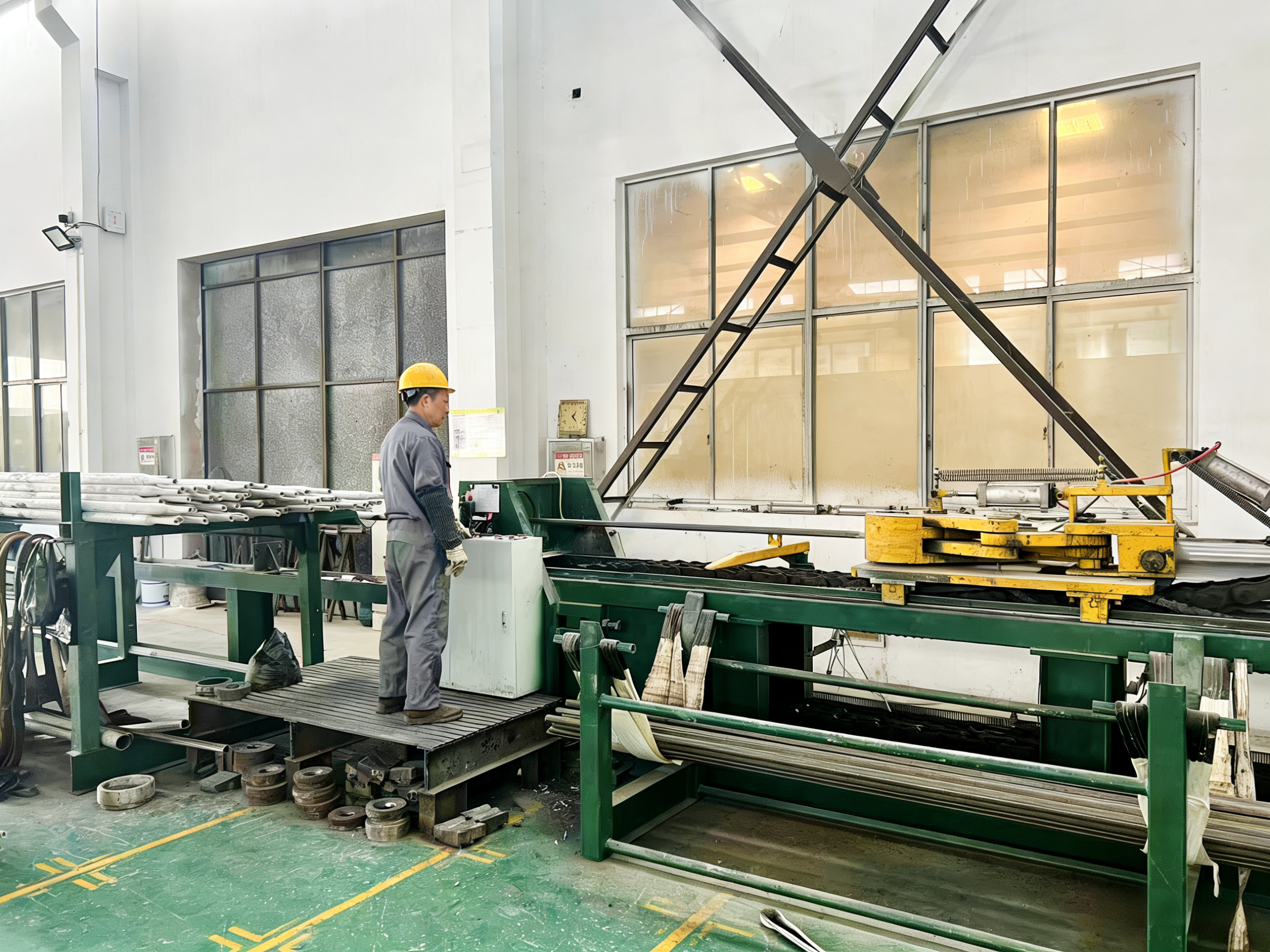
What the two product categories mean in practice
Standard seamless steel pipe is a broad industrial category. It is usually produced by piercing a solid billet at high temperature and then rolling or stretching the hollow into a round section. Many standard seamless pipes are supplied in a hot-rolled or mill-condition state, which makes them suitable for structural, mechanical and general pressure applications where commercial tolerances are acceptable. They are typically purchased according to nominal size ranges, material grade and applicable delivery standards.
Cold drawn round tube is a more refined subsegment of the same seamless product family. The word cold drawn refers to a secondary forming step in which a hot-finished or otherwise prepared hollow tube is pulled through a die at near-ambient temperature. This mechanical reduction improves the dimensional consistency of the outside diameter and, in many cases, the wall-thickness profile. Cold drawing also produces a much cleaner surface than typical hot-rolled seamless surfaces, which matters for buyers planning further machining operations such as turning, honing or grinding.
In the context of industrial sourcing, the relevant comparison is therefore between a routine seamless pipe and a precision-oriented cold drawn round tube. Buyers are not choosing between two unrelated families of steel. They are deciding whether the application justifies the additional forming and inspection effort that precision tube manufacturing requires.
Cold Drawn Round Tube vs. Standard Seamless Pipe: a structured view
| Evaluation point | Standard seamless pipe (hot-rolled / mill condition) | Cold drawn round tube (precision-oriented) |
|---|---|---|
| Typical forming route | Billet piercing and hot rolling; usually supplied as-rolled or normalised. | Hollow is reduced through a cold drawing die, often after annealing and pickling or surface preparation. |
| Dimensional behaviour | Commercially acceptable for structural and general engineering use; dimensional range may be wider. | Produced with tighter outside-diameter / wall-thickness consistency; an example range for the related precision FAKESI seamless tube product is ±0.1 mm tolerance. |
| Surface condition | Rolled surface, often with scale; may require higher machining allowance. | Bright, clean drawn surface that tends to reduce secondary machining cost, as documented in an Italian automotive-parts application case. |
| Typical buyer request | Pressure piping, structural supports, shafts and parts where standard dimensional control is sufficient. | Hydraulic cylinders, agricultural drive shafts, automotive components, and other precision-machined parts requiring closer section uniformity. |
The table intentionally describes typical technical orientations rather than a universal quality ranking. A standard seamless pipe remains an efficient, necessary product for large structural lines and high-volume piping. The cold drawn round tube competes at a different point of the purchasing map: where the tube becomes a near-net-shape machine blank.
Why precision requirements change purchasing logic
When a buyer purchases seamless steel pipe by the tonne for a long-line piping system, slight variations in outer diameter and wall thickness are rarely critical. But when the same material is cut, turned and assembled into a hydraulic cylinder barrel, a drive-shaft tube or a fluid-line component, the pipe specification becomes part of the machining plan. Wide tolerances force the machine shop to remove more material to reach a stable finish dimension, which consumes time, tooling and material.
A cold drawn round tube with high-precision tolerances gives production planners a more consistent starting point. For a manufacturer that later machines the inside or outside surface, greater pipe consistency can lead to predictable cycle times and fewer rejected parts. This is not an abstract theory; it is visible in the purchasing record of an Italian automotive-parts manufacturer that used Fakesi seamless steel tube for agricultural drive shafts.
That application involved 25 tons of seamless steel tubing. The company realised two years of stable performance, and the project team explicitly noted a reduction in secondary machining costs. In that case the material—Q355B steel—was expected to carry high torque without deformation. The precision tolerance of ±0.1 mm, supported by the cold-drawn route, is what made it possible to reduce machining-related adjustments on a production component.
At the supplier level: capability and customisation
Buyers comparing cold drawn round tube and standard seamless pipe also need to compare the supplier behind both product groups. Precision seamless tube is rarely a commodity purchase made from a simple broker list. It depends on the manufacturer's ability to maintain consistent process control, to inspect 100% of the material and to respond when a drawing requires adjusted dimensions or lengths.
Fakesi operates as an export brand of Wuxi Jiangbo Intelligent Technology Co., Ltd., formerly Wuxi Fakes Pipe Industry Co., Ltd. The company, founded in 1992 and located in Yixing, Wuxi, Jiangsu, specialises in three product families: seamless steel tubes, precision steel tubes and special-shaped custom steel tubes. It serves industries such as machinery manufacturing, automotive parts, agricultural equipment, petrochemical engineering and power generation. The export share of the company is about 50%, with primary markets in the EU, Eurasia and the MENA region.
From a buyer's procurement standpoint, the relevant facts are: the manufacturer offers OEM, ODM and standard component manufacturing; customers can customise logos, dimensions and lengths; monthly capacity is 2,000 tonnes; the minimum order quantity is 1 tonne; and quality control is carried out through 100% testing. These details give purchasing teams a practical reference point when comparing a supplier that specialises in precision seamless tubes against a general trading house.
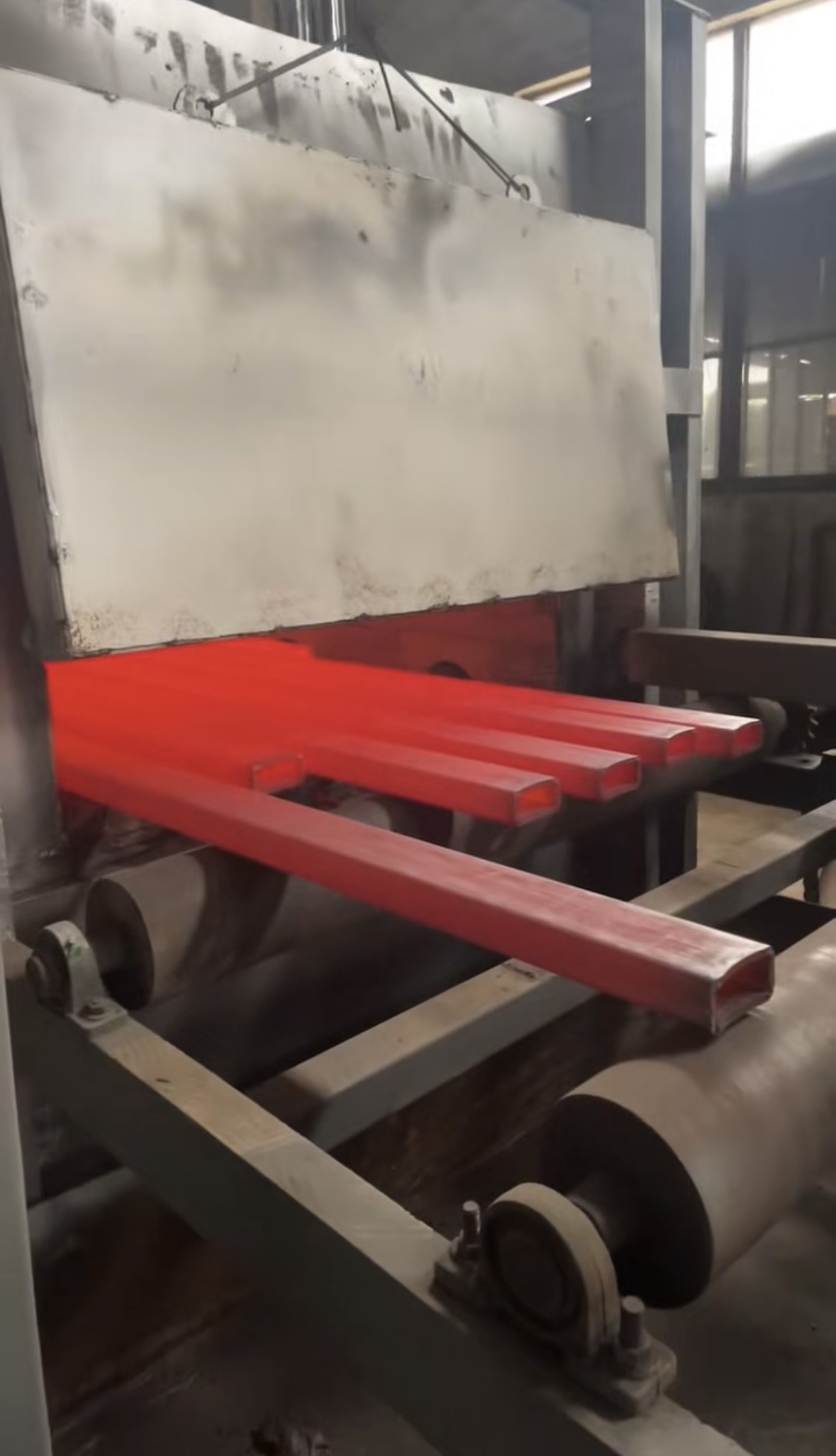
Practical decision framework for buyers
Instead of assuming that cold drawn round tube is always superior, procurement and engineering teams can apply a simple set of questions during the evaluation-to-execution phase:
- Will the outer or inner diameter become a functional surface? If the tube is used directly as a cylinder barrel, piston rod blank or shaft body, the radial tolerance must be stable. Cold drawn round tube with close tolerance is the more reliable choice.
- Is the tube simply carrying pressure or load inside a structural assembly? If it will be welded or installed as a line and not machined heavily, a standard seamless pipe according to normal commercial tolerances often delivers the required result at a lower procurement cost.
- Does secondary machining affect total cost more than the pipe price? When turning and honing are expensive in the buyer's own factory, a higher-priced precision tube may be cheaper in total cost than a standard tube that requires extra stock removal.
- Can the supplier combine both supply routes? The strongest procurement position is to work with a manufacturer that can supply both standard seamless products and cold drawn precision products, so the buyer does not need to fragment the supply base.
This logic does not support replacing every standard seamless pipe specification with a cold drawn round tube. Standard seamless pipe remains a technically valid and cost-efficient product for high-volume or large-diameter applications where post-forming is not required. The decision criterion is the stage at which precision becomes a production requirement.
Material notes: Q355B and the precision tube envelope
When the application is a precision-machined mechanical part, carbon and low-alloy steel grades matter as much as the forming method. Wuxi Jiangbo's material range includes 10#, 20#, 35#, 45#, 20Cr, 40Cr, 16Mn, 20Mn, Q355B and Q235B. Among these, Q355B is frequently specified for hydraulics, agricultural machinery and automotive components because of its high-strength mechanical profile and predictable response to forming and machining.
For the related precision seamless tube line represented in the Fakesi product structure, the listed scope covers outer diameters of 1–100 mm, wall thicknesses of 1–20 mm and a tolerance of ±0.1 mm, with Q355B steel documented as the material and agricultural machinery and automotive parts as target industries. Buyers should keep in mind that this precision envelope is typical of a specific finished-tube configuration. The plant also lists a wider production range of outer diameters from Φ10 mm to Φ280 mm and wall thicknesses from 1 mm to 18 mm, so exact capability must always be confirmed against the required drawing and pitch.
For buyers, the practical takeaway is simple: a supplier capable of drawing, annealing, straightening and final inspection inside its own factory is better positioned to hold the tolerance than a provider that only resells hot-rolled seamless pipe.
Procurement and quality-control expectations
Buyers at the evaluation-to-execution stage also need realistic expectations about procurement conditions. On the Fakesi side, the documented manufacturing commitment includes a monthly capacity of 2,000 tonnes, a lead time of about 30 days, a minimum order quantity of 1 tonne and 100% testing as the internal quality-control rule. The standard export arrangement includes FOB or CIF delivery, pre-packaging inspection and deposit-plus-balance payment terms. After-sales support is framed as a one-year warranty with 24-hour assistance and technical support.
These procurement conditions matter because a comparison between cold drawn round tube and standard seamless pipe is incomplete if it stops at material chemistry. The precision of a cold drawn tube is also a function of process discipline: testing frequency, packaging quality and the manufacturer's ability to react when a drawing changes during production.
Market signals for precision seamless tube
According to verified market data, the global seamless pipe market was estimated at USD 130.76 billion in 2024. The more specific cold-drawn seamless steel tube segment is projected to reach USD 26.14 billion by 2035, with a CAGR of 16.57%. This does not mean that all seamless pipe demand will convert to cold drawn product. What the forecast implies is that precision and machined-part applications are growing fast enough to become an independent procurement cluster.
China plays a major role in that supply picture. Chinese seamless steel pipe exports reached 5.72 million tons in 2024, and China accounts for roughly 60% of global seamless steel pipe production. For a buyer in the EU or MENA region, that creates two opportunities: direct access to a large manufacturing base, and a stronger need to choose suppliers whose process controls can be verified rather than assumed.
Market data also shows that carbon steel remains the dominant material family, accounting for about 78% of the global steel-pipe market share. Consequently, the real buyer question is not whether to buy carbon steel or specialty alloy. The more useful question is whether the selected carbon-steel seamless tube is manufactured to the dimensional and surface conditions required by the component design.
Limits and honest boundaries of the comparison
Every comparison should carry honest boundaries. Cold drawn round tube is not a miracle product that replaces all other seamless configurations. Buyers handling very large diameters, thick walls or long-run structural piping may find that standard seamless pipe—often hot-rolled—is more economical and available in a wider dimensional span. The extra processing steps involved in cold drawing add cost, and that cost must be justified by machining savings or by the functional need for consistent dimensions.
Another limitation is technical in nature: cold drawing improves dimensional consistency and surface quality, but it does not automatically make the tube suitable for every pressure-rating or corrosion requirement. Buyers must still define pressure containment, material hardness, corrosion allowance and heat-treatment condition. Precision forming is one capability, not a substitute for proper engineering specification.
Future outlook
As more seamless-tube purchasing moves into the hands of engineering and procurement teams who treat tube as a machine input, the gap between cold drawn round tube and standard seamless pipe will become more visible in supplier selection. The likely long-term pattern is not a single product replacing the other. It is more segmented sourcing: standard seamless pipe for structural and line applications, cold drawn precision tube for machined products, and suppliers like Fakesi being evaluated on their ability to serve both sides with reliable inspection and customisation.
For a buyer entering execution, the value of the comparison is therefore not theoretical. It is a way to make the procurement document more precise: tolerance class, surface condition, grade, straightness and inspection protocol should be written into the inquiry rather than left to the supplier's default production route.
For a more complete product and specification overview, buyers can consult the manufacturer's company brochure: Fakesi seamless steel pipe company brochure (PDF).
FAQ
1. Is cold drawn round tube the same product as seamless steel pipe?
Cold drawn round tube is a sub-category of seamless steel pipe. It is produced by drawing a seamless hollow through a die to improve dimensional accuracy and surface finish. All cold drawn round tubes are seamless in structure, but not all seamless pipes are cold drawn; many are supplied in a hot-rolled or mill condition.
2. When should Q355B cold drawn seamless tube be specified?
Q355B steel is typically selected for applications that need high strength, predictable machining behaviour and reliable performance under torque or pressure. In the documented Fakesi product range, Q355B seamless steel tube is linked with agricultural machinery and automotive-parts applications, including drive-shaft and hydraulic-related components.
3. What dimensional tolerance can a precision cold drawn round tube meet?
For the related Fakesi precision seamless steel tube product, the listed tolerance is ±0.1 mm. This precision tube scope covers outer diameters of 1–100 mm and wall thicknesses of 1–20 mm. Exact tolerances should always be confirmed against the final drawing and agreed inspection criteria.
4. Does the purchase of cold drawn seamless tube support OEM or custom lengths?
OEM and ODM production are standard options at the manufacturer level. Documented customisation includes logos, dimensions and lengths, which gives buyers flexibility when standard commercial lengths are not compatible with their machining layout.
5. What quality-control and order conditions are typical when buying from a precision seamless tube manufacturer?
The documented manufacturer conditions include 100% testing, a monthly capacity of 2,000 tonnes, a lead time of about 30 days and a minimum order quantity of 1 tonne. Export delivery terms are normally FOB or CIF, with pre-packaging inspection and a deposit-plus-balance payment structure.
6. How should a buyer choose between standard seamless pipe and cold drawn round tube in the same application?
The main criterion is whether the tube will be machined into a precision component. If the outer diameter, inner diameter or wall thickness becomes the functional surface, cold drawn round tube with tight tolerance is normally preferred. If the tube is used structurally with little or no machining, a standard seamless pipe at commercial tolerances can deliver the required function more economically.
Have Questions or Need More Details?
Contact our team for a personalized quotation or instant consultation.
Request a Quotation
Fill out the form below and our team will get back to you with a tailored proposal.
WhatsApp Direct Chat
Prefer to chat in real-time? Message us on WhatsApp for instant assistance & quick answers.
- Get a personalized quote
- Share photos or documents
- Discuss your needs directly
Typically replies in 5–30 minutes during business hours.