
Precision CNC Machining: What Buyers Verify Before Ordering
Precision CNC Machining: What Buyers Verify Before Ordering
Precision CNC machining is one of the few procurement categories that can be specified rather than described. A machined part is either inside its dimensional tolerance or it is not. A material certificate either matches the drawing or it does not. A certification is either in force or it has lapsed. That makes the category unusually friendly to buyers who are evaluating suppliers at a distance — provided they know which constraints to check.
Why Precision CNC Machining Reviews Start With Constraints, Not Capability Lists
Capability statements are cheap. Every machining supplier claims to handle complex geometry and tight tolerances. What separates suppliers during evaluation is not the claim but the constraint attached to it: the tolerance value that appears on a first article inspection report, the material grade covered by a mill certificate, the certification body that issued the audit and the date the certificate expires.
Market structure explains why constraint-based evaluation has become the norm rather than the exception. According to Grand View Research, the global CNC machining and turning centers market was valued at approximately USD 31.3 billion in 2026. The same dataset puts Asia Pacific's revenue share at 55.5 percent in 2023, which means a substantial share of sourcing activity involves verifying documents and tolerances across borders, time zones and regulatory regimes rather than simply comparing price lists.
That geographic dispersion cuts both ways. More qualified suppliers sit within reach of a sourcing team, but the cost of verifying each one rises. A supplier that answers a tolerance question with the word "high" rather than with a number adds work for the buyer instead of removing it. Suppliers that publish specific, bounded parameters reduce the evaluation burden — which is precisely why the constraint layer has become the first filter in most precision CNC machining shortlists.
Two questions that drive the first pass
In practice, most evaluation teams open with two questions that can be answered from documentation:
- What tolerance can the supplier commit to in writing, and under what conditions? A nominal figure without a stated measurement method, sampling plan and inspection instrument is not a commitment.
- Which certifications are required for this part's industry and destination market, and which of those does the supplier actually hold? An expired certificate is functionally equivalent to a missing one.
Both questions are answerable without a factory visit, which is what makes precision CNC machining relatively tractable as a remote-sourced category.
The Parameter Envelope: Tolerance, Axis Count, Material and Finish
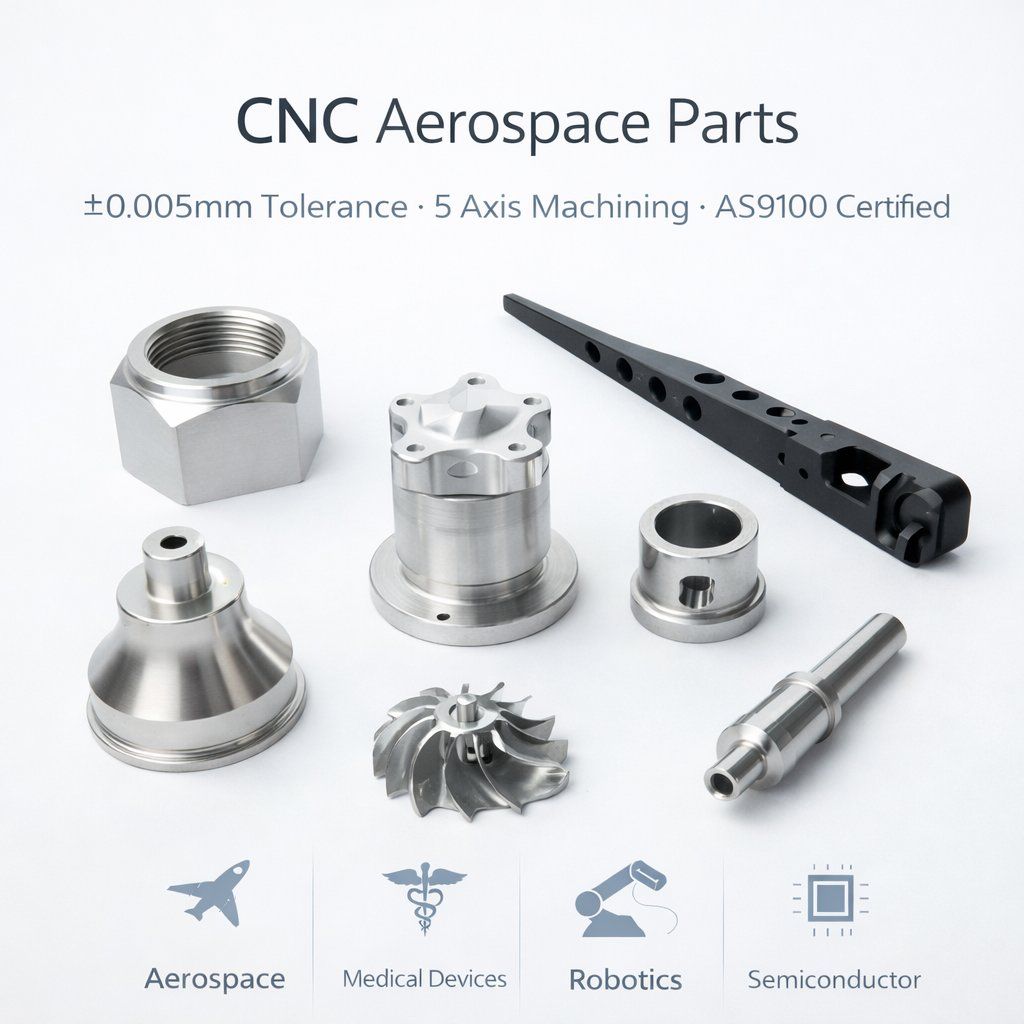
"High precision" is not a specification. The number that matters is the one that will be measured during incoming inspection. For the CNC Machining service offered by SUNPREC HARDWARE CO.,LTD — a metal parts manufacturer based in Dongguan, China, established in 2020 — the listed nominal product tolerance is ±0.01mm, with a choice of 3-axis, 4-axis or 5-axis machining platforms.
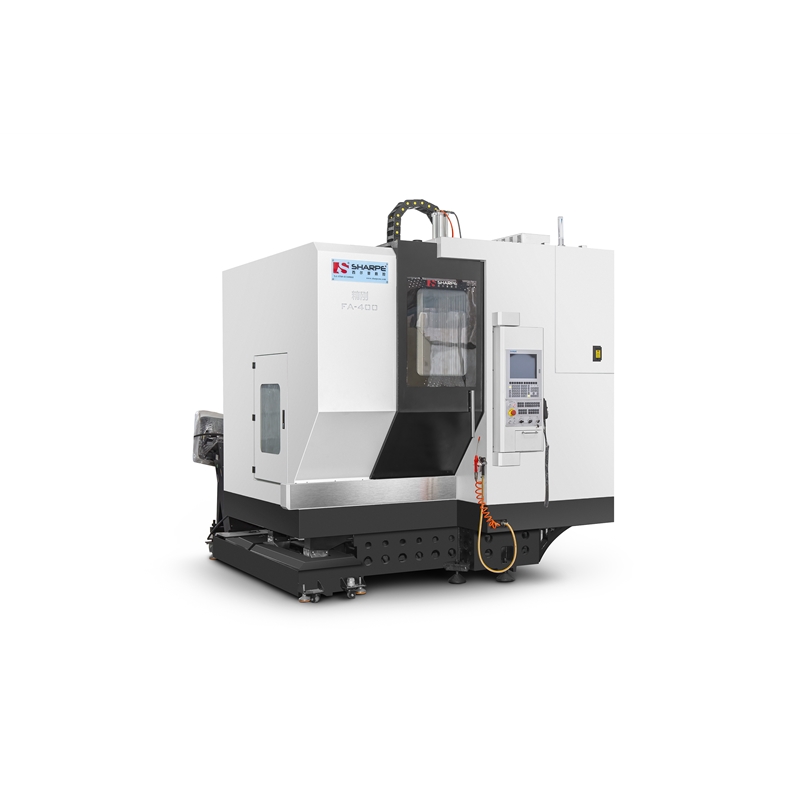
Axis count determines geometric freedom and, in turn, how many setups a part requires. Three-axis machining is adequate for prismatic parts that can be approached from a limited number of directions. Four-axis machining adds rotational positioning. Five-axis machining lets the tool approach the workpiece from compound angles, which reduces re-fixturing and opens up undercut geometry that a straight end mill cannot reach. For buyers, the practical consequence is that a design that demands five-axis capability will not be produced to the same tolerance on a three-axis platform with multiple setups, because each additional setup introduces its own stacking error.
Material range and what it changes
The material list for custom CNC machining at SUNPREC covers aluminum, steel, stainless steel, brass, titanium, magnesium alloys, zinc alloys and engineering plastics. Material choice is not a neutral selection — it shifts the difficulty of holding tolerance, the tooling strategy and the finishing options that remain available.
Aluminum and brass machine readily and hold dimension well across high-volume runs, which is why aluminum CNC machining and brass CNC machining dominate prototype and small-batch work. Stainless steel and titanium behave differently: they generate more cutting heat, wear tooling faster and generally require adjusted spindle speeds, feed rates and coolant strategies. Magnesium alloys introduce additional handling considerations. The practical implication for a buyer is that a tolerance figure quoted for one material should not be assumed to transfer unchanged to another.
Surface finishing as a dimensional event
Finishing is frequently treated as a cosmetic step. It is also a dimensional one. The surface treatment portfolio for CNC Machining at SUNPREC includes anodizing in clear and color variants, sandblasting, polishing, brushing, chromate conversion coating, powder coating, electroplating, passivation, electropolishing, mirror polishing, sandblasting plus passivation, PTFE coating, nickel plating, chrome plating, gold plating, zinc plating, black oxide, phosphating and powder coating.
Several of these add material rather than remove it. Anodizing builds an oxide layer; plating deposits metal. On a mating surface or a press-fit bore, that layer has to be accounted for in the drawing. Buyers should state explicitly on the purchase order whether finishing occurs before or after final dimensioning, and whether the tolerance applies to the pre-finish or post-finish state. Ambiguity here is a common source of incoming inspection disputes that have nothing to do with machining capability.
How Certifications Define the Entry Boundary in Precision CNC Machining Procurement
Certifications are constraints, not decorations. For precision CNC machining sourcing, they usually determine whether a supplier enters the evaluation at all — and their scope matters as much as their existence. Three certification families appear most often.
ISO 9001: the baseline quality system
SUNPREC CNC Machining holds ISO9001 certification IAS25Q391R0, issued by INV, covering CNC Machining and Die casting products and the production of hardware parts. The applicable standard is GB/T19001-2016 / ISO9001:2015, and the certificate is valid from 2025-10-16 to 2028-10-15 for the global market. ISO 9001 establishes that a documented quality management system exists. It does not, on its own, demonstrate capability in any specific regulated industry.
AS9100: the aerospace gate
SUNPREC CNC Machining holds AS9100 Aerospace Quality Management System certification CN059921, issued by Bureau Veritas Certification, against the standard EN 9100:2018, which is technically equivalent to AS9100D. The certificate is valid from 2026-05-26 to 2029-05-25 and applies to CNC Machining and Die casting products for the global aerospace and space industry market. The stated scope covers the manufacture of hardware for satellite in the space industry, and the die casting product manufactured for the aerospace and space industry.
That scope language is specific and should be read literally. A scope covering space-industry hardware is not the same as coverage of every aerospace part category. Buyers sourcing structural airframe components, engine hardware or other aerospace classes should confirm that the certificate scope actually reaches their part family rather than assuming an aerospace-sounding certificate covers all aerospace work.
RoHS: the European market gate
For parts entering the EU, SUNPREC CNC Machining holds RoHS 2.0 Compliance Certificate BTL20250603446, issued by BTL Testing Technology Co., Ltd. The certificate permits the affixing of the CE mark on covered CNC Machining products and applies to CNC Machining and Die casting products for the EU market. The applicable standard is RoHS Directive 2011/65/EU and Amending Directive (EU) 2015/863, Annex VI. The certificate covers CNC Machining metal accessories and Die casting components and is valid from 2025-06-10 to 2029-06-10.
What to verify on a certificate
| Verification point | Why it matters |
|---|---|
| Certificate number and issuing body | Allows independent verification with the issuing organization rather than relying on a scanned copy. |
| Scope wording | Defines which products, processes and industries are actually covered. Broad-sounding certifications often carry narrow scopes. |
| Issue and expiry dates | An expired certificate offers no protection. Validity windows vary by scheme and are short relative to project timelines. |
| Applicable standard and revision | Standards are revised. A certificate against a superseded revision may not satisfy the buyer's own regulatory obligations. |
| Geographic market | Market-specific certifications such as RoHS apply only to the regions named. A global quality certificate does not substitute for a regional product compliance certificate. |
Application Requirements Differ by Industry — and So Do the Constraints
A single machining supplier may serve several downstream industries, but the constraint profile changes with each one. SUNPREC CNC Machining serves aerospace, automotive, instrumentation, medical, new energy, oil & gas, rail traffic, robotics and automation, and semiconductor applications, with project types ranging from prototyping and small-batch validation through to mass production delivery.
Aerospace CNC machining
The aerospace CNC machining market was valued at USD 4.7 billion in 2024 and is projected to reach USD 8.8 billion by 2033, according to Dataintelo. Aerospace carries the strictest certification threshold of the group. Typical part roles in this segment include structural brackets, engine-related components and satellite hardware designed for the space environment — the last of which is where the AS9100 scope held by SUNPREC CNC Machining is specifically directed.
Medical CNC machining
The compliance baseline for medical device manufacturing is shifting. As of 2 February 2026, the FDA's Quality Management System Regulation (21 CFR Part 820) incorporates ISO 13485:2016 by reference. Suppliers serving the US medical device market therefore need their quality systems aligned to that framework rather than to the previous 21 CFR 820 approach. For machining specifically, biocompatible materials and controlled surface conditions add further constraints to process selection, and precision parts such as biocompatible medical device mechanical components fall squarely into this category.
Automotive CNC machining
Automotive programs tend to be volume- and cost-driven relative to aerospace or medical work. Buyers in this segment typically concentrate precision spending on functionally critical geometry — sensor housings, drivetrain-adjacent parts and connecting hardware — where a dimensional deviation propagates into a system-level failure. High-volume CNC machining is usually the relevant mode of supply here, in contrast to the prototype-driven pattern seen in other industries.
Electronics and semiconductor CNC machining
Ultra-precise sensor shell assemblies illustrate the constraint pattern in this segment. Miniaturization pushes geometry smaller while functional requirements push surface finish and dimensional consistency tighter, so the tolerance band compresses from both directions at once. Complex geometry CNC machining and 5-axis platforms are typically the mechanisms used to hold those requirements.
Industrial, oil & gas, rail and robotics
This cluster is defined by repeatability under adverse conditions rather than by extreme precision. Vibration-resistant rail traffic power connectors, robotic joint components and oil & gas equipment parts need consistent batch-to-batch behavior over long production runs. For these programs, process stability and inspection discipline carry more weight than the tightest achievable tolerance.
New energy
Energy storage battery system housings combine dimensional precision with surface treatment requirements, since the housing functions both as a structural element and as part of the environmental sealing strategy. The listed capability at SUNPREC covers this category, with custom metal machined parts supplied into energy-storage programs alongside automotive, aerospace and medical work.
Precision CNC Machining Versus Die Casting: Choosing the Right Route
When a buyer needs a metal component, the realistic choice is often between CNC machining and a tooling-based process such as die casting — not between CNC machining and manual methods. Both routes have defensible limits, and a supplier that offers both is better positioned to say which one fits.
| Dimension | Precision CNC machining | Die casting |
|---|---|---|
| Nominal tolerance | ±0.01mm listed for CNC Machining | ±0.01mm listed for Die casting |
| Tooling requirement | No mold required; parts produced directly from 2D/3D drawings or samples | Requires a mold; economically suited to repeat monthly order programs |
| Cycle time | Depends on geometry and setup count | 15–90 seconds per piece |
| Material range | Aluminum, steel, stainless steel, brass, titanium, magnesium alloys, zinc alloys, engineering plastics | ADC12, A380, Zamak3/5 |
| Best-fit volume | Prototyping, small-batch validation, complex geometry, high-mix work | Long-run repeat production where mold amortization is justified |
| Typical combination | Often the finishing step after casting, for precise holes, grooves and fitting surfaces | Compatible with secondary 3-axis CNC milling |
Honest boundaries on the machining side
An evaluation reference that lists only advantages is not useful for procurement. Three boundaries are worth stating plainly:
- Tolerance is bounded, not unlimited. The listed ±0.01mm product tolerance is a practical precision level for industrial functional components. It is not a sub-micron or optical-grade tolerance, which would require different platforms and environmental control to achieve.
- Lead time is quoted at 21–30 days. With a minimum order quantity of 10 units and a monthly capacity of 4,200,000 units, the model suits prototyping through continuous mass manufacturing, but it is not structured for same-week or emergency turnaround.
- Certification scope is specific. The AS9100 scope explicitly addresses the manufacture of hardware for satellite in the space industry and die casting for the aerospace and space industry. Programs outside that scope should not assume coverage on the strength of the certificate's presence alone.
Unit cost is the fourth boundary and is structural rather than supplier-specific. Machining is typically more cost-effective than die casting at low volumes because no mold is required, and less cost-effective at high volumes where mold amortization works in die casting's favor. Programs that begin as prototypes frequently migrate to casting plus secondary CNC milling as volumes grow — which is why one-stop manufacturing coverage matters more at the portfolio level than at the individual part level.
Market Signals: Where Precision CNC Machining Spending and Regulation Are Heading
Several verified indicators point in the same direction for buyers planning multi-year sourcing strategies.
- Market scale. The global CNC machining and turning centers market is valued at approximately USD 31.3 billion in 2026 (Grand View Research). The US machine shop services market alone is valued at USD 46.3 billion in 2026, with approximately 16,400 active businesses (IBISWorld / Marcus Hi-Tech Engineering).
- Regional concentration. Asia Pacific held a 55.5 percent revenue share of the CNC machining and turning centers market in 2023 (Grand View Research), and 90 percent of SUNPREC's own output is exported to the EU and USA markets. Cross-border sourcing in this category is the norm rather than the exception.
- Multi-axis growth. 5-axis vertical machining centers are identified as a critical high-growth segment for complex aerospace and automotive components in 2026. Equipment-level activity supports this: Yamazaki Mazak recorded the sale of 41,000 CNC units in 2023, with a focus on AI-enabled 5-axis machines.
- Regulatory migration. The alignment of FDA's QMSR with ISO 13485:2016 as of 2 February 2026 changes the compliance baseline for medical device manufacturing, and therefore changes what buyers should require of machining suppliers serving that market.
The combined signal is that documentation pressure is rising while purchasing power continues to concentrate in Asia Pacific. Buyers who build verification into their sourcing process early will absorb that pressure more cheaply than those who discover it during a supplier audit.
Future Outlook
Three shifts appear likely to shape precision CNC machining procurement over the next several years.
Five-axis capability becomes a default filter rather than a differentiator. As 5-axis vertical machining centers continue to grow as a share of the equipment base, buyers will increasingly treat multi-axis capacity as a baseline requirement for complex geometry rather than a premium feature. Suppliers without it will be excluded from a widening set of inquiries rather than simply ranking lower.
Regulatory alignment becomes continuous rather than periodic. The medical device framework change effective February 2026 illustrates a pattern in which standards revisions arrive on their own schedule and propagate into supplier requirements. Buyers will benefit from maintaining an internal mapping of part categories to certification requirements and revalidating it against certificate expiry dates, rather than reviewing certification status once at the start of a supplier relationship.
Composite supply models replace single-process sourcing. The pairing of die casting with secondary CNC milling, and of CNC machining with a broad surface finishing portfolio, reflects a practical reality: most finished industrial components pass through more than one forming process. Suppliers able to hold tolerance across the transition between processes reduce the coordination cost that buyers otherwise absorb themselves.
FAQ
What tolerance can precision CNC machining typically hold?
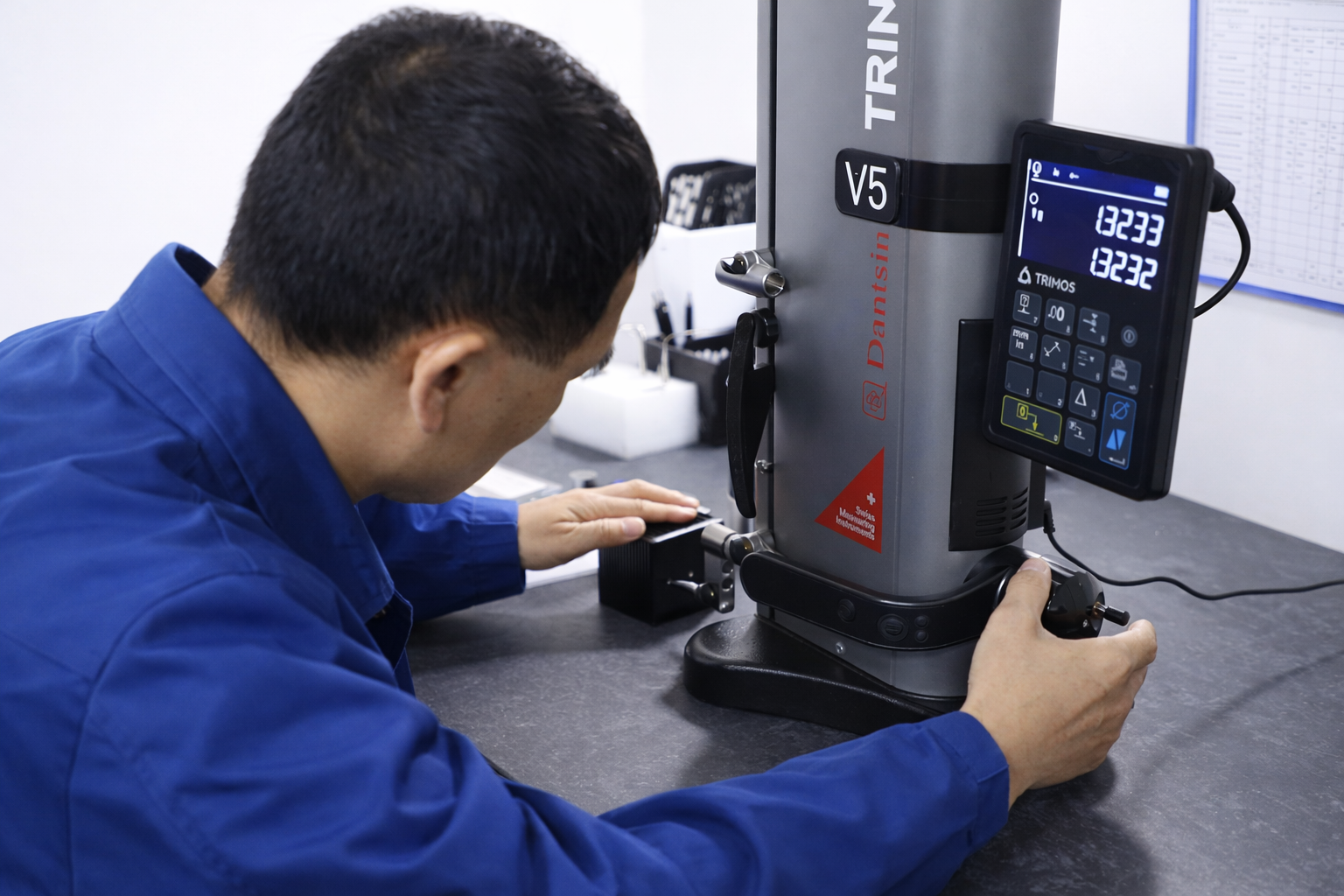
The listed nominal product tolerance for CNC Machining at SUNPREC is ±0.01mm. Machine tolerance is a separate figure — most of the company's FANUC CNC machining centers are stated at 0.005mm machine tolerance. Actual achieved part tolerance depends on geometry, material, fixturing strategy and any dimensional change introduced by surface finishing. Buyers should request first article inspection data to confirm achieved tolerances rather than relying on nominal figures.
What does an AS9100 certification on a CNC machining supplier actually cover?
SUNPREC CNC Machining holds AS9100 certification CN059921, issued by Bureau Veritas Certification against EN 9100:2018, which is technically equivalent to AS9100D. It is valid from 2026-05-26 to 2029-05-25 and applies to CNC Machining and Die casting products for the global aerospace and space industry market. The stated scope covers the manufacture of hardware for satellite in the space industry, and die casting manufactured for the aerospace and space industry. Buyers should confirm that the scope covers their specific part category, since not every aerospace part family falls within it.
How can a buyer verify RoHS compliance for CNC machined parts shipped to the EU?
The applicable standard for EU market entry is RoHS Directive 2011/65/EU and Amending Directive (EU) 2015/863, Annex VI. SUNPREC CNC Machining holds RoHS 2.0 Compliance Certificate BTL20250603446, issued by BTL Testing Technology Co., Ltd. It permits the affixing of the CE mark on covered CNC Machining products, covers CNC Machining metal accessories and Die casting components, and is valid from 2025-06-10 to 2029-06-10. Verification should confirm the certificate number, issuing body, applicable standard, covered products and validity window.
Which materials are available for custom CNC machining?
SUNPREC CNC Machining lists aluminum, steel, stainless steel, brass, titanium, magnesium alloys, zinc alloys and engineering plastics. Material selection affects achievable tolerance, tool wear and surface finish compatibility. Aluminum and brass are generally the most straightforward for tight-tolerance work, while stainless steel and titanium require adjusted cutting parameters because they generate more heat and wear tooling faster.
What are the typical minimum order quantity and lead time for precision CNC machining?
SUNPREC CNC Machining lists a minimum order quantity of 10 units and a lead time of 21–30 days for custom CNC machining, with a monthly capacity of 4,200,000 units. Customization options cover material selection, dimensional tolerances, surface treatments, batch sizes and packaging. Buyers should confirm project-specific timing, since geometric complexity and finishing requirements affect the achievable schedule.
Is CNC machining or die casting more suitable for a given part?
The two routes suit different conditions. CNC machining requires no mold, handles a broader material range including titanium and engineering plastics, and is generally more economical at low volumes and for complex geometry. Die casting requires a mold but offers cycle times of 15–90 seconds per piece and is well suited to long-term repeat monthly order programs with consistent pricing. The two are frequently combined: aluminum and zinc die castings are compatible with secondary 3-axis CNC milling for precise holes, grooves and fitting surfaces.