
Prefabricated Steel Buildings vs. Traditional Concrete: A 2026 Procurement Decision Guide for Industrial Buyers
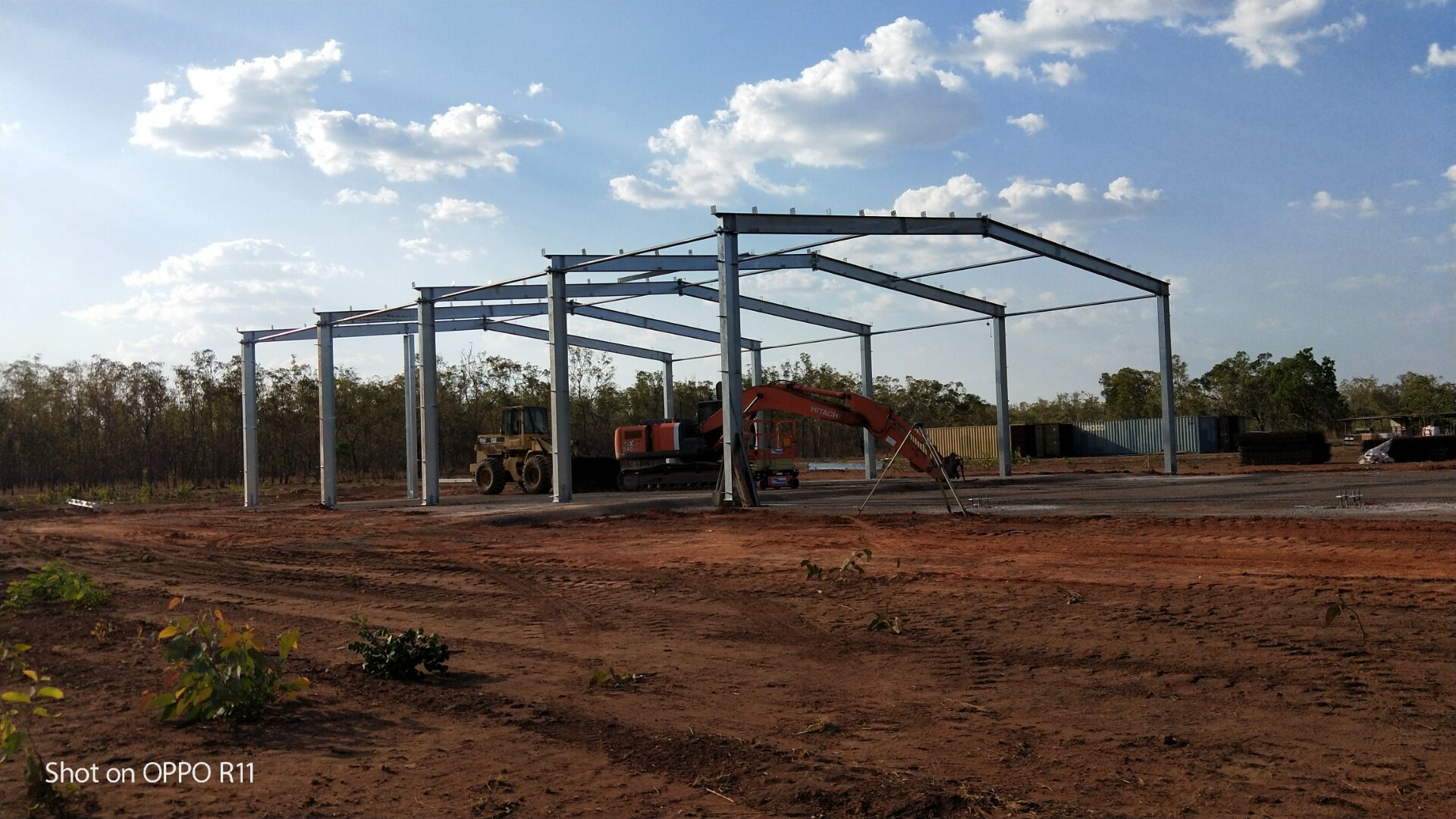
June 2026 — The global market for prefabricated steel buildings is projected to exceed $25 billion by 2030, driven by rapid urbanization, infrastructure development in emerging economies, and the need for faster, more cost-efficient construction methods. For procurement managers and project owners evaluating either steel structure warehouses or traditional concrete solutions, the choice often determines the project's timeline, budget, and long-term operational flexibility.
Why the Debate Matters in 2026
In markets across Africa, Southeast Asia, and South America—regions where Foshan Ganyo Steel Structure Co., Ltd. has completed over 200 projects—the decision between a steel workshop building and a reinforced concrete structure is no longer solely about upfront cost. Factors like construction speed, seismic resilience, and sustainability now carry equal weight. According to industry data, site-built concrete projects in tropical climates often face 30%–50% delays due to weather, labor shortages, and material logistics. Prefabricated steel, by contrast, offers a predictable assembly process that reduces on-site labor and accelerates commissioning.
Head-to-Head: Steel vs. Concrete
The following comparison draws from verified data on Ganyo's delivered projects and general industry benchmarks:
| Dimension | Prefabricated Steel Building | Traditional Concrete Building |
|---|---|---|
| Construction speed | Factory prefabrication + on-site assembly; dry construction unaffected by rain; shortens project by 30%–50% | Wet concrete curing; weather-dependent delays; labor-intensive formwork |
| Seismic performance | High toughness, good ductility; energy dissipation during earthquakes; reduced collapse risk | High rigidity, brittle failure risk; poor ductility; collapse prone in major quakes |
| Clear span & flexibility | Large column-free spaces (up to 60m+); adaptable for production lines, storage racks, or future expansion | Limited span due to beam depth; columns obstruct layout; costly to modify |
| Self-weight | Extremely light: only 1/2 to 1/3 of concrete; reduces foundation cost | Heavy; requires deeper foundations and more excavation |
| Sustainability | 100% recyclable steel; minimal construction waste; low carbon footprint | High CO₂ from cement; demolition waste hard to recycle |
| Total cost (lifecycle) | Low 10%–20% overall (especially foundation & maintenance) | Higher long-term maintenance; corrosion, crack repair |
| Corrosion resistance | Hot-dip galvanizing + multi-layer paint; proven in coastal Africa & Asia | Reinforcement rust; spalling; protective coatings require frequent renewal |
Real-World Application: The Angola Workshop Case
An 1,800 m² steel structure workshop delivered by Ganyo in Angola exemplifies the advantages. Designed for tropical high temperature, heavy rainfall, and strong wind, the building uses a portal frame with H-section steel to achieve clear-span interiors. All components were CNC-cut, laser-welded, and hot-dip galvanized at Ganyo's 50,000 m² factory. The project went from order to completion in 35 days, versus an estimated 70 days using concrete. “The client reported zero issues with corrosion after two rainy seasons,” notes the project file. “Hot-dip galvanized secondary parts and shot-blasted main frames ensured long service life with minimal maintenance.”
Market Trends Shaping the Shift
Three trends are accelerating the adoption of industrial steel buildings over concrete in developing markets:
- Green finance requirements: International lenders increasingly demand lower embodied carbon. Steel structures reduce CO₂ by up to 40% compared to concrete per square meter.
- Labor shortages: Skilled masons and carpenters are scarce in many Belt & Road countries. Prefabricated steel requires fewer on-site workers and less specialized skill.
- Land value optimization: Multi-storey steel structures enable vertical expansion without major retrofit, maximizing ROI on expensive urban plots.
Why Supplier Selection Matters
Even the best material system fails without a qualified partner. Ganyo, certified under ISO 9001:2015 (certificate #50323Q2126R0S) and EN 1090 (ICR/VC/HM2603118), provides turnkey services from steel structure drawing design to on-site guidance. With a dedicated R&D team of 12 engineers and a monthly capacity of 1,000–2,000 tons, the company supports custom steel structure fabrication for workshops, warehouses, hangars, and cold storage buildings across 60+ countries. Every project undergoes 100% pre-shipment inspection—a practice that significantly reduces procurement risk.
Future Outlook: Steel as the Default Industrial Envelope
As modular construction and BIM integration mature, prefabricated metal buildings will increasingly displace concrete for medium- and large-span industrial facilities. Innovations in fire-resistant coatings, insulated sandwich panels, and hybrid steel-concrete composite floors are closing the performance gaps. For buyers evaluating 2026–2027 projects, the total cost of ownership analysis now clearly favors steel—especially when factoring in time-to-revenue and adaptability for future operations.
To explore technical specifications and case studies, download Ganyo's corporate brochure:
Download Ganyo Steel Structure Brochure (PDF)This article is based on publicly available industry data and verified project records from Foshan Ganyo Steel Structure Co., Ltd. All comparisons are factual and intended to support informed procurement decisions.
Have Questions or Need More Details?
Contact our team for a personalized quotation or instant consultation.
Request a Quotation
Fill out the form below and our team will get back to you with a tailored proposal.
WhatsApp Direct Chat
Prefer to chat in real-time? Message us on WhatsApp for instant assistance & quick answers.
- Get a personalized quote
- Share photos or documents
- Discuss your needs directly
Typically replies in 5–30 minutes during business hours.