
Prefabricated Steel Warehouses for Harsh Environments: 2026 Buyer's Guide
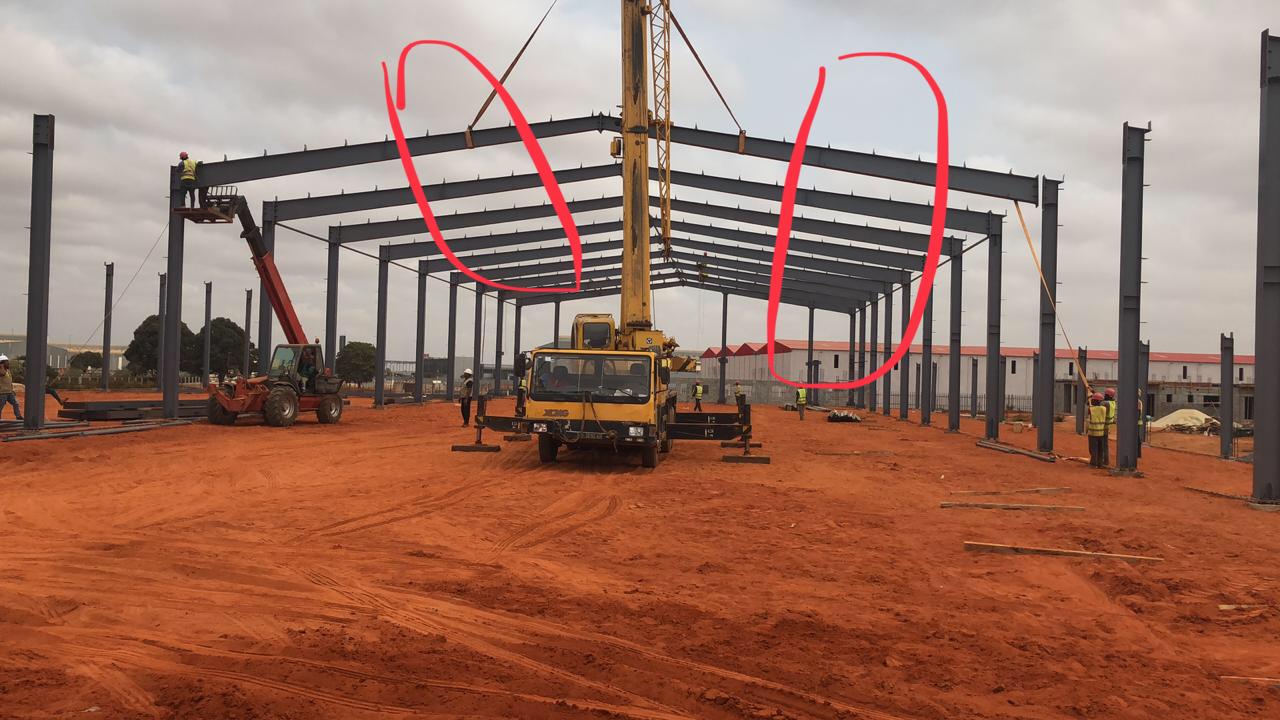
Ganyo steel structure workshop in Angola — engineered for hot, humid and coastal salt spray environments.
Industry Challenge: When Project Conditions Demand More Than Standard Specifications
Industrial buyers planning a steel structure warehouse or workshop in regions such as Africa, Southeast Asia, or South America frequently face site conditions that exceed standard building codes. Tropical humidity, coastal salt fog, high wind loads, expansive soils, and seismic activity are not exceptions — they are the norm in many Belt and Road Initiative countries. For a prefabricated steel building to perform reliably over its intended 50‑year lifespan, the supplier must demonstrate proven project‑fit capabilities beyond generic catalog designs.
Foshan Ganyo Steel Structure Co., Ltd. (Ganyo) is a medium‑sized Chinese manufacturer that integrates steel structure design, R&D, production, and installation services. Headquartered in Gaoming District, Foshan, Guangdong province — one of China’s steel structure production bases — Ganyo operates two factories covering a combined 26,000 m² and maintains an annual steel output of 20,000 tons. The company has delivered turnkey projects for clients in over 60 countries across Asia, Africa, and South America.
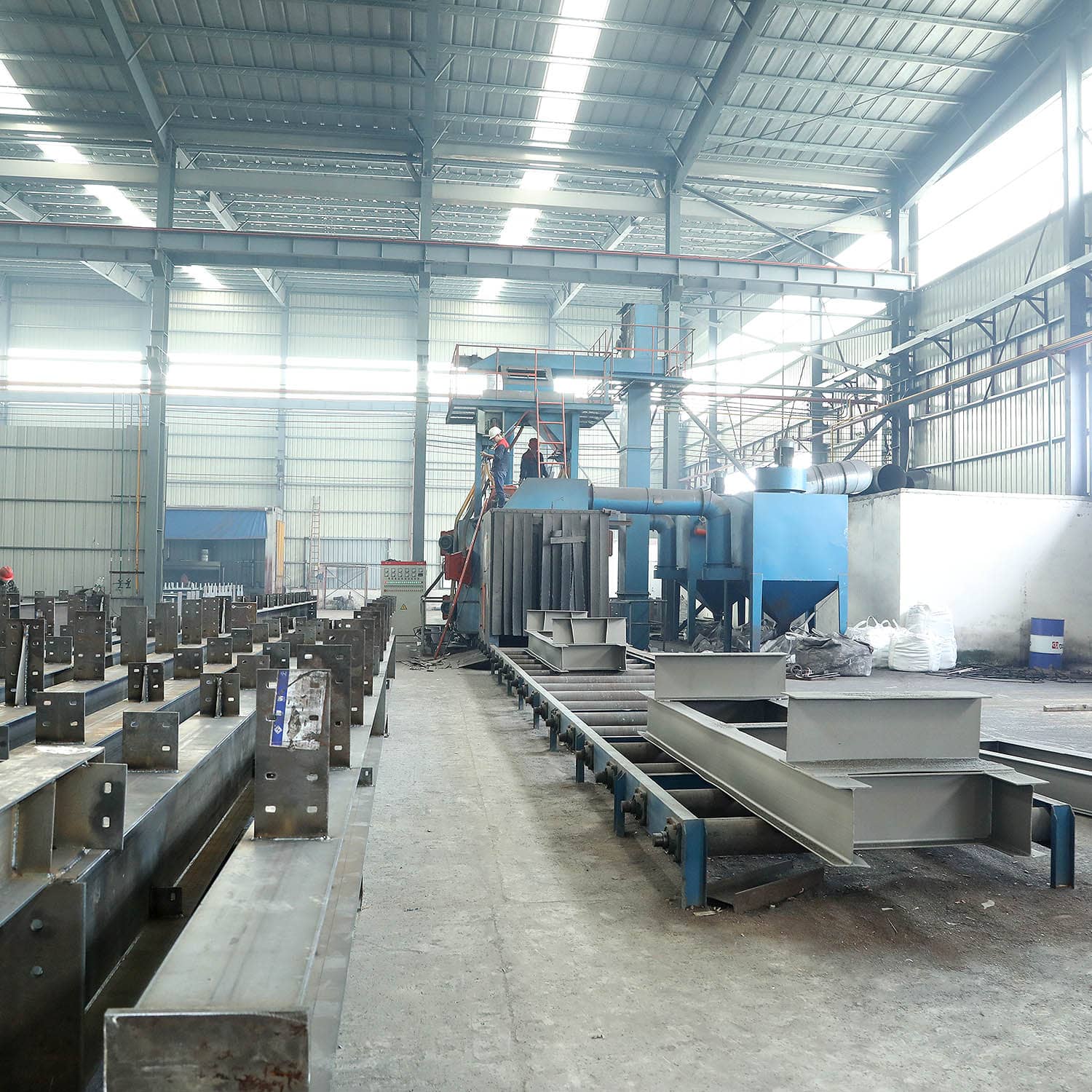
Shot blasting machine used for surface preparation and anti‑corrosion treatment at Ganyo’s facility.
Problem / Opportunity: Matching Building Design to Hostile Operational Environments
Buyers seeking a prefabricated steel warehouse, steel workshop building, or commercial metal building often discover that traditional concrete construction is too slow and costly for remote or infrastructure‑poor sites. Steel structures offer faster erection, lighter foundations, and greater span flexibility. However, the opportunity is only realized if the steel building is correctly engineered for local wind, snow, seismic, and corrosion loads. The gap lies in finding a supplier capable of customizing every parameter — from steel grade to insulation type — without inflating lead times.
Brand Solution: Ganyo’s Custom‑First Engineering Approach
Ganyo addresses project‑specific requirements through a fully customizable design process. Each building is treated as a unique project, with parameters including location, dimensions (length × width × height), wind load, snow load, seismic resistance, wall type, insulation, and door/window configuration all defined per customer specification. The product range covers prefabricated steel workshop & prefabricated steel warehouse, multi‑story steel structure buildings, and custom prefabricated steel garage/steel sheds.
The company uses Q355B or Q235B steel as the primary material, with secondary members hot‑dip galvanized for corrosion resistance in coastal and humid climates. Key production equipment includes H‑beam automatic assembly lines, CNC flame cutting machines, laser cutters, submerged arc welders, and sandwich panel machines. All structural components undergo shot blasting anti‑corrosion treatment and multi‑layer painting. For insulation, Ganyo offers EPS, fiberglass wool, rock wool, or PU panel options. A crane system can be integrated with custom lifting weight and height.
Application / Use‑Case Scenarios
Ganyo’s prefabricated steel warehouse and workshop products are applied across diverse project types: industrial manufacturing workshops, logistics distribution centers, agricultural storage sheds, assembly plants, bulk storage facilities, cold storage, and MRO (maintenance, repair, operations) facilities. The buildings provide large‑span, clear‑span interiors suitable for pallet racking, automated retrieval systems, and heavy machinery installation.
Common deployment regions include Malaysia, Philippines, Venezuela, Tanzania, Turkey, Thailand, Chad, South Sudan, Senegal, Singapore, Sudan, Rwanda, Solomon Islands, Oman, Cameroon, Angola, Australia, Brazil, and many others. For example, in Cameroon, Ganyo delivered a 2,184 m² workshop designed for tropical rainforest conditions, using H‑steel portal frames, thermal insulation sandwich panels, and hot‑dip galvanized secondary parts to withstand high humidity and heavy rainfall. In Angola, an 1,800 m² workshop was customized with CNC‑cut and laser‑welded components and multi‑layer anti‑corrosion paint to resist coastal salt spray.
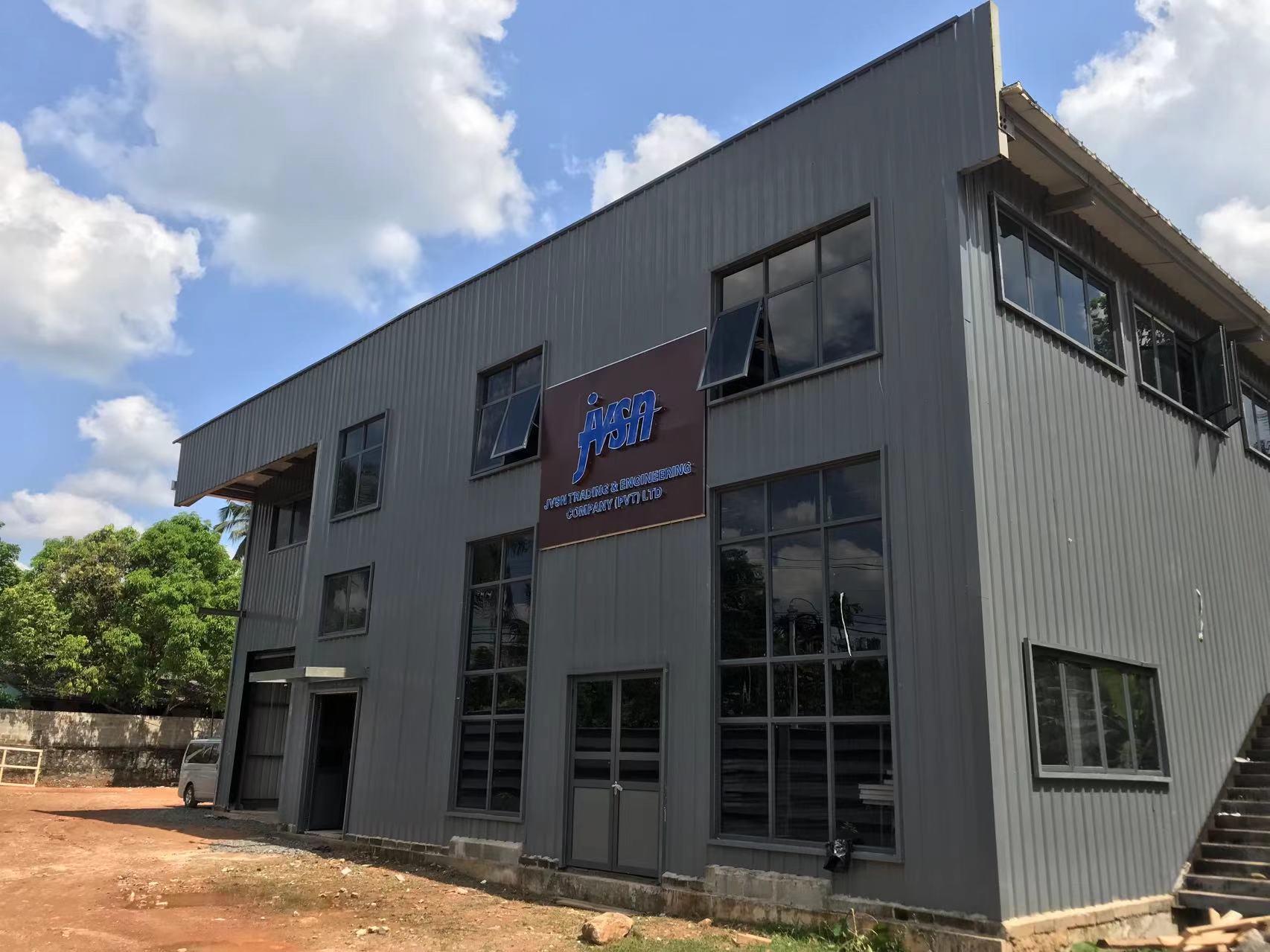
Ganyo steel workshop delivery in Sri Lanka — designed for high‑bay manufacturing and heavy equipment loading.
Market Trend Analysis
The global prefabricated building and structural steel market was valued at approximately USD 260.6 billion in 2025 (IMARC Group), with the narrower pre‑engineered metal buildings segment reaching USD 44.1 billion and projected to grow nearly twofold to USD 87.0 billion by 2033 (Grand View Research). In the Middle East & Africa, the steel building market is expected to expand by USD 300.4 million during 2025‑2030, representing a CAGR of 4.1% (Technavio). Africa’s steel production reached 39.49 million tons in 2023 and is forecast to reach 51.86 million tons by 2032 (World Steel Association). These figures underscore that demand for durable, project‑adapted steel buildings is accelerating, particularly in markets where local manufacturing capacity is limited and import‑ready solutions are preferred.
Comparison with Traditional Solutions
Compared to conventional reinforced concrete construction, prefabricated steel buildings offer 30‑40% faster erection, lower foundation costs due to lighter dead load, and superior column‑free spans. A key advantage is the ability to prefabricate all components off‑site, reducing on‑site labor and weather delays. However, one honest limitation is that steel structures in aggressive environments (coastal, acid rain, extreme humidity) require higher upfront investment in corrosion protection — such as hot‑dip galvanizing and multi‑layer painting — to maintain longevity. Ganyo addresses this by incorporating these treatments as standard in its manufacturing process, but buyers should factor this into total cost comparisons.
Future Outlook
As building codes in developing economies become more stringent and as climate challenges intensify, the demand for turnkey steel structure suppliers that can handle full customization, structural compliance, and remote installation support will continue to rise. Ganyo’s model of providing drawings, photos, and video guidance for on‑site assembly positions it to serve clients with limited local technical expertise. The company’s export focus on Belt and Road Initiative countries, combined with a monthly capacity of 1,000–2,000 tons and a standard 30‑45 day lead time, aligns well with the growth trajectory of the African and Southeast Asian infrastructure markets.
Frequently Asked Questions (Project‑Fit Focus)
What types of projects are suitable for prefabricated steel warehouses?
Prefabricated steel warehouses are ideal for industrial manufacturing workshops, logistics distribution centers, agricultural storage sheds, assembly plants, distribution warehouses, bulk storage, cold storage, and MRO facilities. The buildings provide large‑span, clear‑span interiors for pallet racking and automated retrieval systems.
How does Ganyo adapt steel structures for humid coastal environments?
Ganyo uses hot‑dip galvanized secondary parts, multi‑layer anti‑corrosion painting, and shot blasting for surface preparation. Insulation options (EPS, fiberglass wool, rock wool, or PU panels) help control condensation. The steel grades Q355B or Q235B are selected based on load requirements.
What is the typical lead time and minimum order quantity?
Standard lead time is 30–45 days, with a minimum order quantity of 200 square meters. Ganyo’s monthly production capacity is 1,000–2,000 tons, allowing flexibility for larger projects.
Can the steel structure support an overhead crane system?
Yes. Ganyo offers optional crane systems with custom lifting weight and height as required. The structural design accounts for crane loads and integration with the portal frame.
For detailed technical specifications and project references, download the company brochure: Ganyo Steel Structure Brochure (PDF)
Contact: Lizzy | Email: lizzy@ganyosteelbuilding.com | WhatsApp: +86 13516623561 | ganyosteelhouse.com
Have Questions or Need More Details?
Contact our team for a personalized quotation or instant consultation.
Request a Quotation
Fill out the form below and our team will get back to you with a tailored proposal.
WhatsApp Direct Chat
Prefer to chat in real-time? Message us on WhatsApp for instant assistance & quick answers.
- Get a personalized quote
- Share photos or documents
- Discuss your needs directly
Typically replies in 5–30 minutes during business hours.