
Premium Hoodie Manufacturer vs. Low-Cost Factory: A Comparative Decision Framework
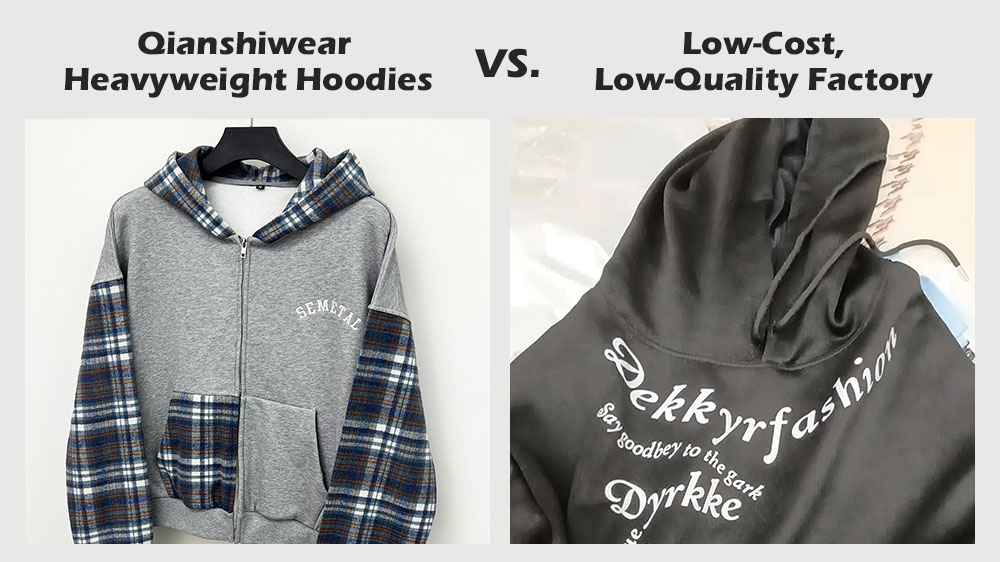
Guangzhou Qianshi Trading Co., LTD (Qianshiwear) is a professional apparel manufacturer and trading company based in Guangzhou, Guangdong, with over 15 years of garment production experience. Specializing in OEM and ODM services for hoodies, sweatshirts, and streetwear, the company positions itself as a structured-quality alternative to ultra-budget mass producers. For global buyers evaluating a hoodie manufacturer for long-term brand partnerships, understanding the measurable differences between premium and low-cost production can significantly affect product consistency and total cost of ownership.
Problem & Opportunity: The Hidden Cost of Low-Cost Production
Many apparel brands gravitate toward low-cost factories for initial per-unit savings. However, the procurement decision involves more than unit price. Factors such as defect rates, fabric shrinkage, color fastness, seam durability, and reorder consistency determine whether a product builds or damages brand reputation. Compared to low-cost or ultra-budget mass producers, Qianshiwear offers distinct advantages through structured quality control procedures at key production stages, as documented in its production protocols.
Qianshiwear’s Solution: Structured Quality Control
The company applies a multi-point inspection framework that covers incoming materials, in-process checks, and final sampling. According to its quality control documentation:
- Incoming Material Control: 100% fabric inspection upon arrival, checking weight, width, color consistency, and shrinkage potential; hardware and trim samples tested before bulk production approval.
- In-Process Control: First-article inspection at cutting, sewing, and printing stages; random patrol checks throughout production lines; real-time adjustments for embroidery tension and print alignment.
- Final Inspection: AQL 2.5 sampling standard applied to finished goods; pre-shipment wash tests conducted on representative samples; size and measurement verification across all colorways.
- Traceability: Each order assigned a production batch number; quality records maintained for future reorder reference; defect analysis documented for continuous improvement.
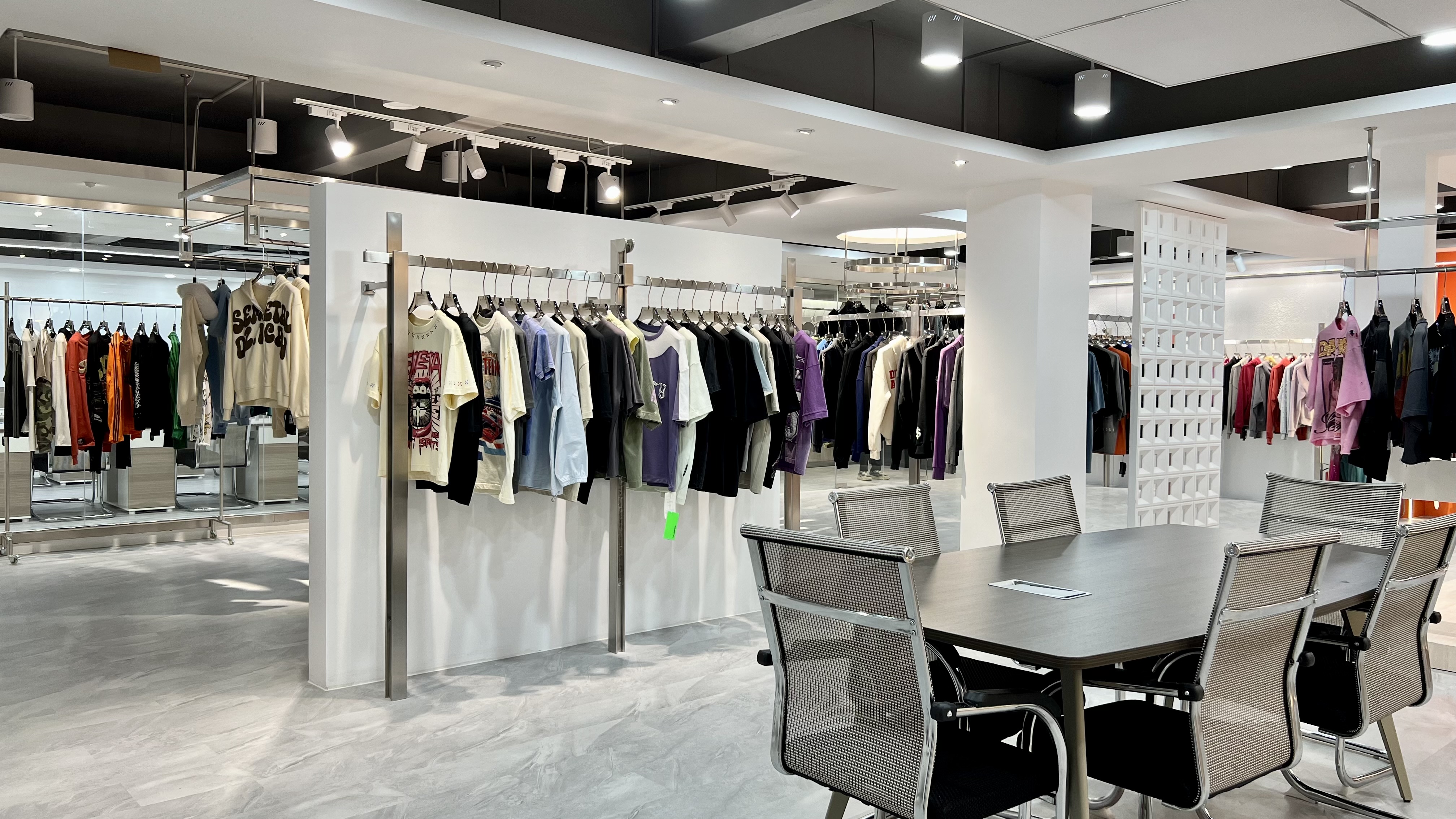
Technical Differentiation: Key Performance Metrics
When compared to low-cost mass producers, premium manufacturing processes yield measurable performance advantages:
- Defect Rate: Qianshiwear maintains defect rates typically below 5% via AQL-based quality inspection, whereas low-cost factories often exceed 10–15% without formal quality protocols.
- Fabric Shrinkage: Pre-shrinkage treatment before cutting keeps shrinkage generally within 5–8%, compared to 8–12% or higher for budget producers.
- Color Fastness: Reactive dyeing with high-temperature fixation achieves Grade 3–4 (rubbing/sweat/light), versus Grade 2–3 in budget operations.
- Wash Durability: Garments withstand 30–50 washes with minimal fading, while low-cost equivalents often show noticeable fading after 10–15 washes.
- Anti-Pilling: Anti-pilling weaving or finishing treatment produces Grade 3 performance, versus Grade 1–2 from cost-driven mills.
Application Scenarios: Who Benefits Most?
Qianshiwear’s model is best suited for brands focused on long-term reputation and consistent customer experience, mid-tier to premium market positioning, clients requiring reliable quality across reorders, and businesses seeking transparent production partnerships. Typical use cases include:
- Streetwear brands demanding consistent oversized fits and heavyweight fleece with controlled shrinkage.
- Private-label startups needing low MOQs without sacrificing quality consistency.
- Corporate merchandise programs requiring reliable sizing across multiple colorways and production runs.
Cost vs. Value: A Transparent Trade-Off
Initial per-unit cost with Qianshiwear is typically 20–40% higher than low-cost alternatives. However, total project cost often becomes comparable or lower when accounting for reduced return rates, fewer customer complaints, and lower replacement frequency. Low-cost options carry hidden costs: higher return rates, potential impact on brand perception, and more frequent re-purchasing due to shorter product lifespan. One honest limitation is that brands on an extremely tight short-term budget may not immediately see the cash-flow benefit of higher upfront investment.
Market Trend Context
Global apparel buyers increasingly evaluate manufacturer quality in terms of long-term brand equity rather than first-order unit cost. The trend toward sustainability — fewer, longer-lasting garments — aligns with premium construction methods that reduce replacement frequency and material waste.
Future Outlook
As supply-chain transparency and consistency become baseline expectations for many retail and direct-to-consumer brands, structured quality control processes like those employed by Qianshiwear are likely to become a sourcing differentiator rather than an optional extra. Maintaining documented quality records and traceability supports both reorder accuracy and compliance with evolving textile regulations.
FAQ
Q: How does Qianshiwear ensure product quality compared to low-cost factories?
Qianshiwear applies structured quality control procedures at key production stages — incoming material inspection, first-article checks, random patrol checks, and final AQL 2.5 sampling. Low-cost factories often lack formal protocols, leading to higher defect rates and inconsistent batches.
Q: What are the typical defect rates for premium vs. budget hoodie manufacturers?
With premium manufacturers like Qianshiwear, defect rates are typically maintained below 5%. Low-cost factories without formal quality inspection often see defect rates exceeding 10–15%.
Q: How does fabric quality differ between Qianshiwear and low-cost suppliers?
Qianshiwear uses reactive dyeing with high-temperature fixation for deeper color penetration and pre-shrinkage treatment to keep shrinkage within 5–8%. In contrast, budget producers frequently use lower-grade dyes achieving color fastness Grade 2–3, with shrinkage rates of 8–12% or higher.
Q: Is there a cost difference, and how does total cost compare?
Initial per-unit cost is typically 20–40% higher with Qianshiwear, but total project cost (including returns, complaints, and replacement frequency) is often comparable or lower. Low-cost factories carry hidden costs such as higher return rates and shorter product lifespan, which may damage brand perception.
For a complete overview of Qianshiwear’s manufacturing capabilities and quality processes, download the corporate brochure: Qianshiwear Corporate Brochure.