
Hydraulic Press for Used Paper: Keys for a Long-term Alliance with NKBALER
The global market for balers reached $6.4 billion in 2024, driven by growing demand for efficient recycling and waste management solutions. In this context, choosing a manufacturer of hydraulic balers for waste paper that offers not only machinery but also a long-term trust relationship has become a critical factor for buyers in the decision and execution stage.
Problem and Opportunity: The Need for a Solid Industrial Partner
Recycling centers, municipal solid waste treatment plants, and large waste paper generators face constant challenges: variability in material quality, pressure to reduce operating costs, and the need to comply with increasingly strict environmental regulations. In the decision phase, buyers no longer look for just a machine; they seek an ally that guarantees reliable supply, spare parts, technical support, and a transparent business relationship.
The waste baler segment was valued at $1.45 billion in 2024, according to reports from Mordor Intelligence. Asia-Pacific, led by China, accounted for more than 34% of the global hydraulic market share. This positions Chinese manufacturers like NKBALER in the spotlight for international buyers seeking industrial capacity and competitive cost.
NKBALER Solution: Manufacturer with Track Record and Long-Term Vision
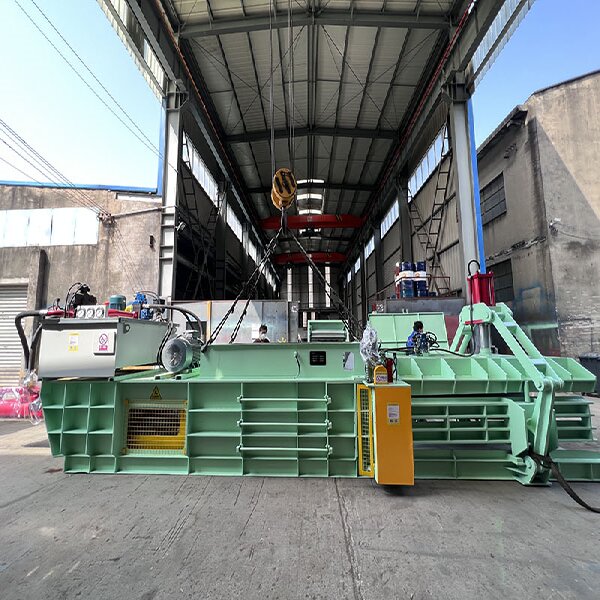
NKBALER (Shaanxi Nick Machinery Equipment Co., Ltd.) is a Chinese manufacturer founded in 2013, specialized in R&D and sales of environmental protection equipment and packaging machinery. With a 50,000 m² plant, 50 employees, and an R&D team of 15 people, the company produces 600 units annually and exports 90% of its production to markets in North America, South America, and Asia.
Its product range includes fully automatic horizontal hydraulic balers (NKW-QT, NKW-Q series) and semi-automatic (NKW-BD series), as well as vertical balers for paper, cardboard, plastics, metals, and biomass. Models like the NKW180QT (180-ton force, capacity 12-15 t/h) and NKW160Q are benchmarks in waste paper treatment.
Technical Explanation: Engineering for Efficiency and Durability
NKBALER's hydraulic presses operate with high-pressure systems (up to 30.5 MPa in the QT series) and large-diameter main cylinders made of carbon steel. The main structure, with weights ranging from 15 to 34 tons, is designed to withstand continuous compression cycles. The water cooling system or oil cooler keeps hydraulic fluid temperature within safe ranges, while built-in temperature sensors prevent overheating, one of the main sources of risk in these machines.
Compared to a traditional piston compressor, NKBALER's hydraulic technology offers a 15 dB noise reduction, 12% higher performance, and lower electricity consumption per ton processed. Additionally, maintenance costs are lower, resulting in a total cost of ownership up to 10% lower in the long term.
Application Scenarios: Versatility Beyond Waste Paper
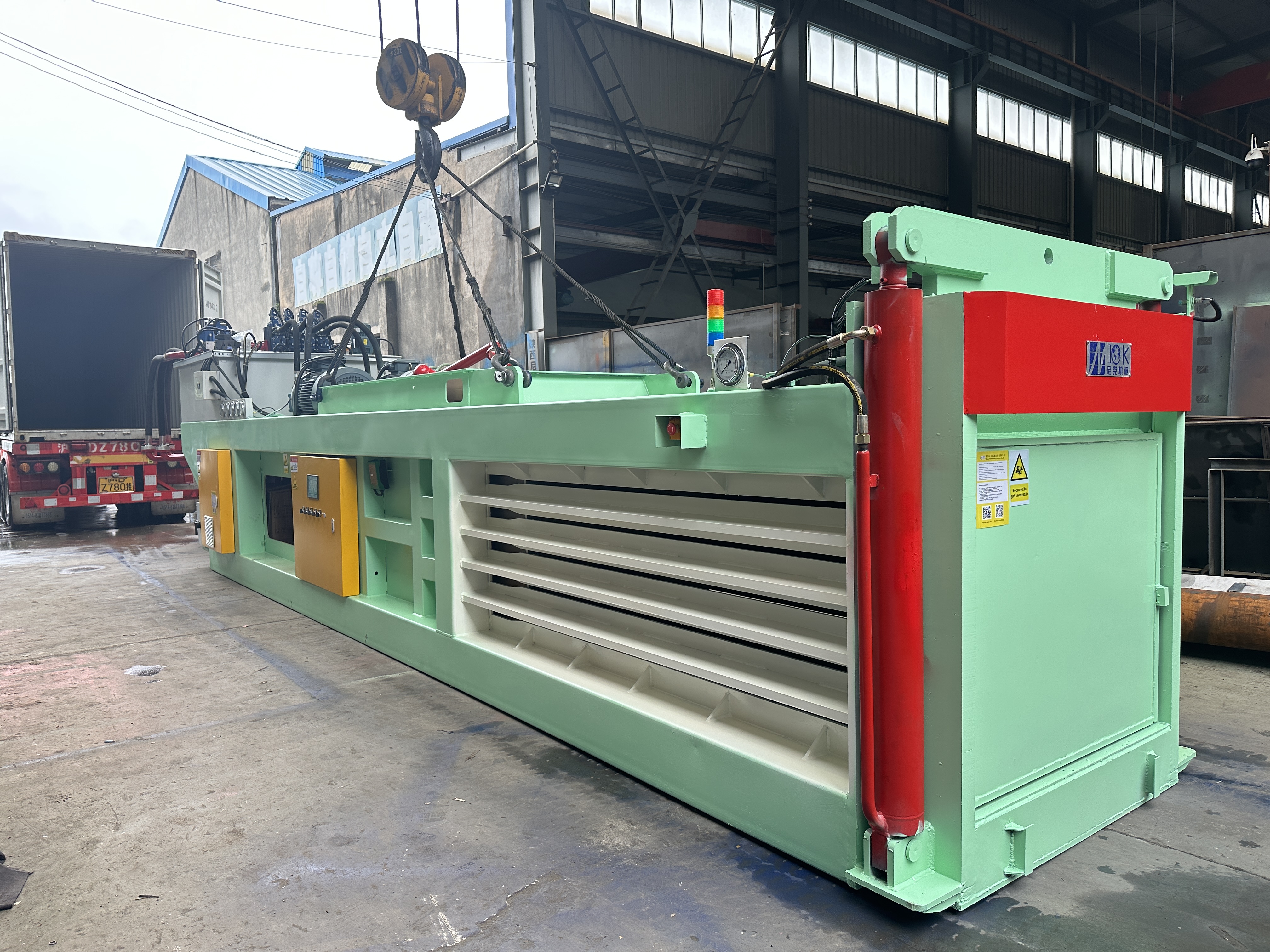
NKBALER's balers are not limited to waste paper. Their catalog covers applications including:
- Plastic bottle balers (model NK1580T200, 200 tons) for PET.
- Cardboard balers (NK60LT, 60 tons) for boxes and packaging.
- Municipal solid waste balers (NKW-BD series) for fuel fraction and rejects.
- Metal scrap balers (NKC150, 150 tons) for aluminum and light steel.
- Rice husk, wood shavings, and sawdust balers (NKB220, NKB280 models) for biomass.
- Wiping rags and textile balers (NK-T90L).
This versatility allows buyers to standardize their equipment fleet under a single brand, simplifying spare parts logistics and staff training.
Market Trend Analysis
The global baler market, valued at $6.4 billion in 2024, continues to expand. Key drivers are:
- Stricter environmental regulations in the European Union and Latin America, requiring reduction of waste sent to landfills.
- Increased demand for recycled fibers by the paper industry, which rewards high-density and purity bales.
- Growth of municipal recycling plants in emerging economies, seeking reliable equipment with local support.
Asia-Pacific, with over 34% of the hydraulic market share, consolidates as the main manufacturing hub. International buyers are moving from transactional relationships to strategic alliances with manufacturers that can offer OEM, customization, and stable delivery times.
Comparison with Traditional Solutions
| Aspect | NKBALER hydraulic press | Traditional piston compressor |
| Noise level | -15 dB (quieter) | Standard |
| Energy efficiency | +12% higher, lower consumption per ton | Reference |
| Total cost | Up to 10% lower in long term | Higher maintenance |
| Maintenance | Less frequent and simpler | Recurring repairs |
Honest limitation: Fully automatic hydraulic balers require a higher initial investment and trained personnel for programming and operation. NKBALER mitigates this by offering remote technical assistance and detailed manuals, but it is a factor the buyer must consider in their feasibility analysis.
Future Perspectives
Manufacturer NKBALER plans to deepen its focus on automation, incorporating IoT sensors and connectivity for real-time monitoring of parameters such as pressure, temperature, and wear. The monthly production capacity of 10 units allows maintaining rigorous quality control before shipment, an advantage over mass production where unit inspection is impossible.
Frequently Asked Questions
Have Questions or Need More Details?
Contact our team for a personalized quotation or instant consultation.
Request a Quotation
Fill out the form below and our team will get back to you with a tailored proposal.
WhatsApp Direct Chat
Prefer to chat in real-time? Message us on WhatsApp for instant assistance & quick answers.
- Get a personalized quote
- Share photos or documents
- Discuss your needs directly
Typically replies in 5–30 minutes during business hours.