
Press Brake Tooling Shortlist: Punches, Dies and Custom Options
A press brake tooling shortlist is a working set of punches, dies and special tools chosen to cover the bending jobs a shop actually runs week to week, rather than one tool bought for one part. In most sheet metal operations, six tool families cover the bulk of that work: standard punches and V-dies, adjustable bottom tools, formed molds, hemming dies, radius dies, and Rolla-V or multi-V dies. The ratio of standard to custom tooling inside that set is what decides how interchangeable the tooling stays once the job mix changes.
For buyers at the decision stage, the question is rarely which single die to order. It is coverage: how few tools can handle how many jobs without giving up bend accuracy, changeover speed or tool life. That trade-off sharpens as bending moves toward CNC-controlled, high-repeatability production, where a tool that fits the machine but not the job still costs a shift.
Why tooling shortlists fail before the first bend
Three patterns account for most tooling waste in sheet metal fabrication.
Buying tool by tool. Each new job adds a die. Over a year the rack fills with near-duplicate punches of different heights and V openings, several of which are never used again. Capital sits in storage while the one tool the next job needs is still on order.
Standard-only inventory. A shop stocked entirely with standard punches and V-dies can air-bend a wide range of parts, but not produce a flat hem, a tight profile or a large structural radius without secondary operations, extra handling and additional fixtures.
Custom-only purchasing. Ordering a dedicated tool for every part protects geometry but erodes interchangeability: lead times stretch, per-job tooling cost rises, and the tool set stops flexing when production is re-planned.
The opportunity is a shortlist that starts from job families, not part numbers. Group the work by geometry first — 90-degree air bends, hemmed edges, large radii, offset and profile bends, and multi-thickness runs — then assign the smallest set of tools that covers each family. Standard tools fill the high-volume families; custom tools are reserved for the geometries and materials that standard tooling genuinely cannot reach.
A shortlist also has to be checked against the machine and the workshop, not only the part drawing. Tool height, clamping style, open height, tonnage and storage all decide whether a die that looks right on paper can be loaded, aligned and protected between jobs.
The shortlist at a glance
The table below maps six tool families to the bending jobs they cover and to the point at which each stops being the right answer. It is the working core of a bending tooling shortlist; the punch geometry variants discussed later sit on top of it.
| Tool family | Bending job it covers | Why it earns a place | Where it stops working |
|---|---|---|---|
| Standard punch + V-die | 90-degree air bending, mixed thickness, enclosures and cabinets | Lowest cost per job, replaceable, widely interchangeable | Sharp internal radii, deep box heights beyond punch clearance |
| Adjustable bottom tool | Variable bend angles, small and mixed batches | One tool body serves several angles instead of several dies | High-cadence lines where setup discipline cannot be guaranteed |
| Formed mold / special shaped tool | Offsets, U-channels, open profiles | Produces geometry a standard V cannot form in one hit | Job-specific; low interchangeability across parts |
| Hemming die | Flat hems, folded edges, safe edges | Removes a secondary flanging and flattening operation | Limited material thickness range; sensitive to die wear |
| Radius die | Large structural or cosmetic radii | Sets the R-value directly instead of approximating it | Springback still varies with material; radius alone is not control |
| Rolla-V / multi-V / four-way die | Multi-thickness runs, frequent V changes | Several openings in one body; fast changeover between thicknesses | Heavier body; needs open height, tonnage and clamping checked first |
Reading the shortlist by bending job
Standard punches and V-dies: the default entry
A standard punch and V-die pair handles 90-degree air bending across a material thickness range when a small number of V openings is stocked. Segmented press brake tooling — punches and dies supplied in sections rather than full lengths — lets a shop build the working width it needs for each part instead of holding full-length tools for every box size. The result is less inventory and faster response to a new job.
The limit is geometric. A standard V-die cannot produce a flat hem or an offset in a single operation, and a tall box section will collide with a conventional punch. Those jobs belong to the special tools below.
Adjustable bottom tools: angle coverage on one body
Adjustable bottom tools let one tool body serve a range of bend angles, which suits operations running small and mixed batches where a fixed die per angle would be uneconomic. They are a coverage tool, not a precision substitute for a dedicated radius or hemming tool, and they depend on disciplined setup: an adjustable tool that is not reset consistently will show up later as angle variation across a batch.
Formed molds and special shaped tools
Formed molds produce offsets, U-channels and open profiles that a standard V cannot form in one hit. They are the clearest case for custom tooling, and the clearest case against over-buying it: each mold belongs to a part family, so the investment is justified by volume and by the secondary operations it removes, not by versatility. A shop that orders a formed mold for a one-off run usually pays twice — once for the tool and once for the storage it occupies afterwards.
Hemming dies
Hemming dies fold and flatten an edge into a flat hem, replacing a separate flanging and flattening sequence and producing an edge that is safer to handle. Their working range is narrower than a V-die: thickness limits apply, and hem quality tracks die condition closely, so a worn hemming die shows up as an inconsistent edge rather than as a dimensional alarm.
Radius dies
Radius bending tooling sets a large R-value directly, which matters for structural parts and for visible surfaces where an approximated radius reads as a defect. A radius die controls the tool geometry; it does not remove springback, which continues to vary with material grade and thickness. Buyers should treat a radius die as one half of the control loop, with the machine compensation on the other side.
Rolla-V, multi-V and four-way dies
Rolla-V, multi-V and four-way dies place several V openings in one body so that a thickness change becomes a rotation or an index rather than a tool change. They reduce changeover in mixed production, but they are heavier and taller than a plain V-die, so open height, tonnage capacity and clamping must be confirmed before the die is ordered. On a machine that is already near its open-height limit, the multi-V die is the wrong shortlist entry regardless of how useful its openings look.
Punch geometry: gooseneck and segmented punches
Two punch variants deserve a standing place on the shortlist. A gooseneck punch provides clearance so the punch body can enter over an already-formed flange, which removes a re-sequencing step on box and return-flange parts. A segmented punch, like segmented dies, allows widths to be assembled from sections, cutting the number of full-length punches a shop has to hold.
Standard versus custom: where interchangeability is won or lost
Interchangeability is not a property of a single tool. It is a property of the set. Standard press brake punches and dies are interchangeable across any machine with a matching clamping style, replaceable from stock, and predictable in height and angle. Segmented versions extend that logic by making width a variable rather than a purchase decision.
Custom press brake tooling is matched to the job: material thickness, bend angles, R-values and production cadence all feed into the design. Stainless steel and high-yield materials typically require special tooling selection and heat-treatment recommendations rather than a default die from the rack. That specificity is the point — and also the cost. A custom tool ties capital to one geometry, carries a longer lead time than a stock item, and cannot be redeployed when the part is discontinued.
A workable rule for decision-stage buyers: cover the high-volume, standard-geometry work with standard and segmented tooling, and reserve custom tools for jobs where geometry, material or cadence genuinely rules out the standard option. On a multi-machine line, that division is what keeps a single tool set usable across presses instead of fragmenting into per-machine inventories.
Material and heat treatment: what tool life actually depends on
42CrMo alloy steel (AISI 4140) is the established material for precision press brake tooling, offering a surface hardness of HRC 47 ± 2 after heat treatment according to published tooling material guidance. Hardness is the first variable in wear resistance, but it is not the only one: toughness, machining accuracy and the consistency of the heat-treatment cycle decide whether the edge holds its geometry over a long production run or starts to mark the part.
- ZNW tooling uses 42CrMo as its standard tool material.
- Standard heat treatment yields a hardness of 45–50 HRC; laser hardening can achieve up to 60 HRC.
- Precision machining and heat treatment are the two processes the supplier cites for improved tool life and forming accuracy.
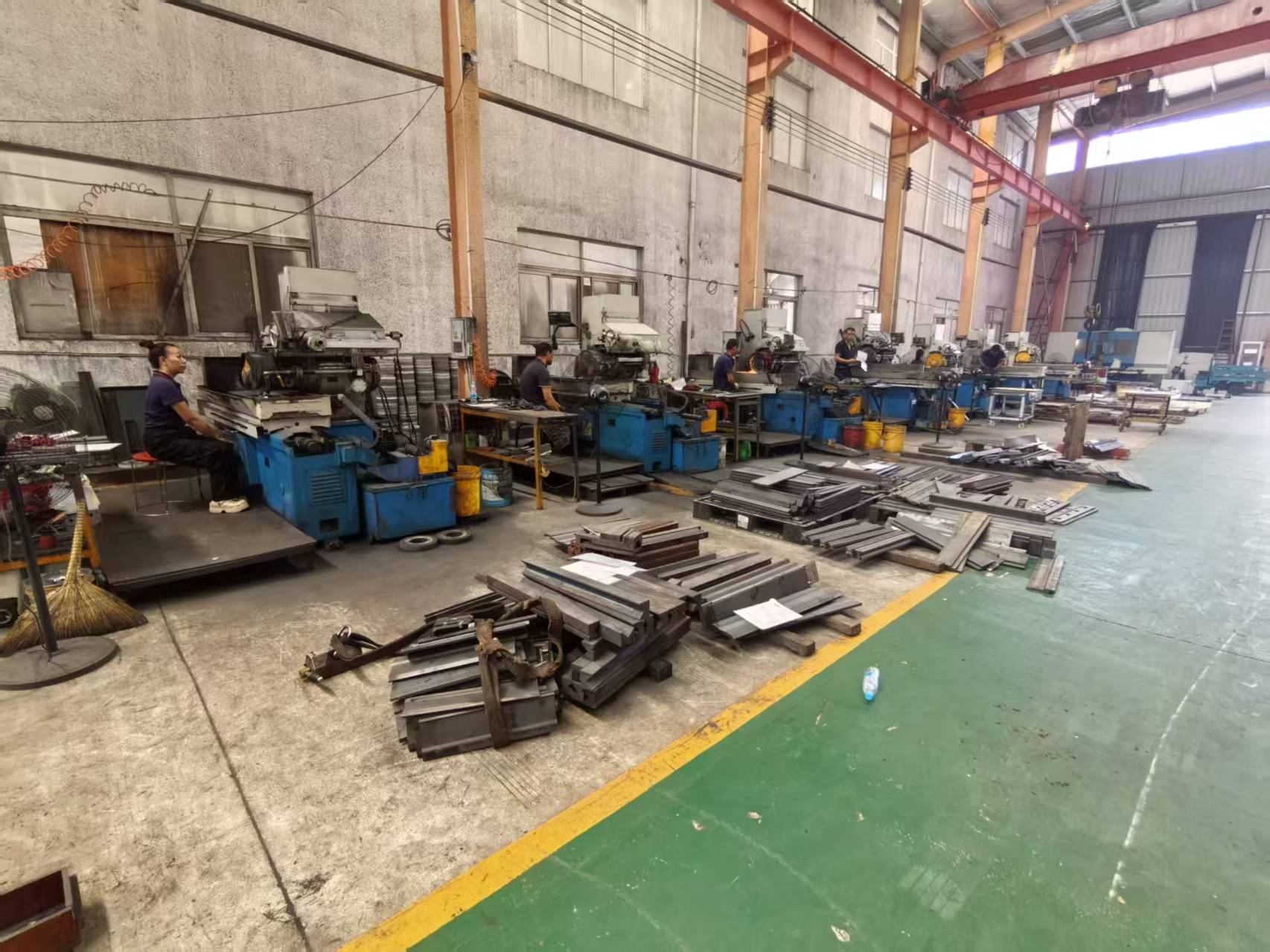
For buyers, hardness figures translate into a maintenance question: how often will the tool need regrinding, and what does a regrind do to the working height and the bend result? A tool that starts harder and holds its geometry reduces both the regrinding cycle and the rework that appears when a worn die drifts out of tolerance.
Supporting equipment that decides whether the shortlist works
A tooling shortlist is only half a system. Press brake tooling operates as removable upper and lower tool components on CNC press brakes, and it depends on the equipment around it to deliver the accuracy the tool was built for.
- Press brake and machine interface. Tool height, clamping style and open height must match the machine before a die is ordered, which is why compatibility is confirmed by machine model rather than by category.
- Holders and tool clamps. A precision-ground punch held in a worn or mismatched clamp will not repeat its angle. Clamping is part of the tolerance chain, not an accessory.
- Positioning aids. Backgauges and positioning aids determine whether the tool's accuracy reaches the part; consistent location is what makes quick changeover possible without re-validation.
- Protective films. Films protect finished and polished tool surfaces during handling and storage — relevant for punches with fine edges and for any tool that will sit between jobs.
- Tool storage systems. Purpose-built racks keep matched punch and die sets together, protect edges from contact damage and make the shortlist searchable in practice rather than only on paper.
Application fit: enclosures, automotive parts and custom forming
The shortlist above is built for sheet metal fabrication, machinery manufacturing, electrical and electronic enclosures, and automotive components — the precision bending industries where this tooling category is typically deployed. It suits regular and medium-to-high tonnage air bending as well as automated, high-repeatability bending lines, provided the tool set is matched to the material and cadence of each line.
Three applications pull the shortlist in different directions:
- Enclosures and cabinets. Mixed thickness, many box sizes and visible faces favour segmented standard tooling plus a gooseneck punch, with a hemming die for safe edges.
- Automotive parts. Repeatability dominates, so hardened dies, stable clamping and a radius die for structural bends carry more weight than maximum tool variety.
- Custom sheet metal forming. Formed molds and custom tooling justified by volume, where the eliminated secondary operation pays back the tool.
Market signals shaping tooling decisions
Tooling choice is being pushed by the bending machine base itself. The global press brake machine market was estimated at USD 5.2 billion in 2024 and projected to reach USD 7.6 billion by 2030, according to the industry market report cited in HTNXT's verified category data. Separately reported industry figures put CNC press brake penetration rising from 35.8% in 2024 to 52.8% in 2026 — a shift that raises the value of tooling built to hold tolerance on a controlled machine rather than to compensate for an uncontrolled one.
Supply geography is moving as well. WILA relocated its North American headquarters to Louisville, Kentucky in May 2023 and established local manufacturing for its New Standard tooling, which indicates that regional tooling supply is being built closer to the buyer. For import-heavy markets, press brake tooling is generally classified under HS code 820730 for interchangeable tools for pressing, stamping or punching — a detail that matters for landed-cost comparison between OEM and replacement tooling.
Comparing ZNW Press Brake Tooling with OEM and alternative tooling
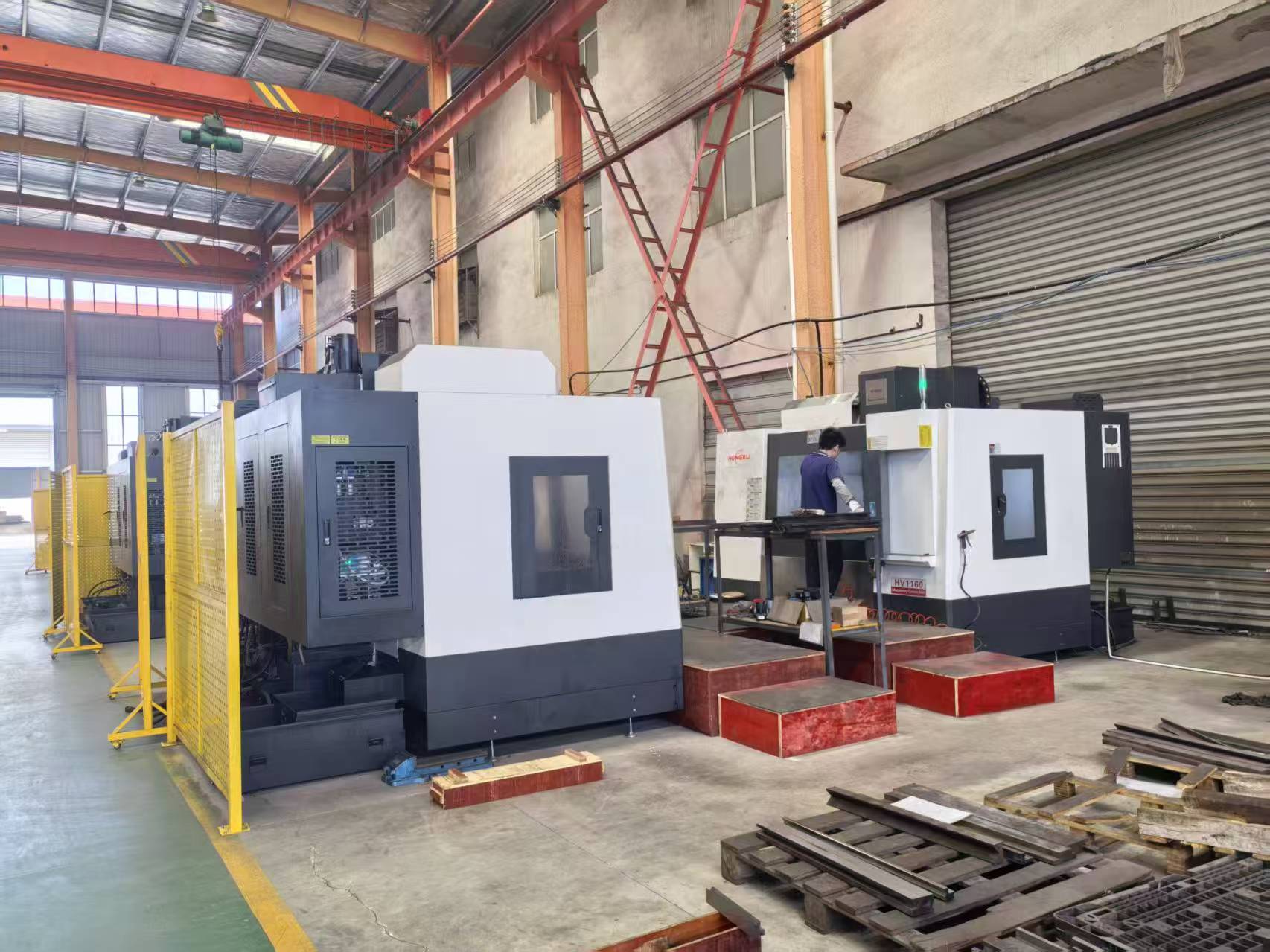
ZNW Press Brake Tooling is the press brake tooling brand of Ma'anshan Zhuonaiwei Machinery Equipment Co., Ltd, a manufacturer based in Ma'anshan, Anhui, China, producing press brake punches, dies and custom die solutions for sheet metal forming. The company operates a 5,000 m² facility with about 150 employees and a 20-engineer R&D team, reports annual output of 120,000–300,000 units and exports roughly 80% of production to global markets. Its range covers standard punches and dies, European and American-style dies, tooling compatible with WILA and Trumpf systems, flanging and special bending dies, and custom dies for complex applications.
| Comparison metric | ZNW stated position | Baseline compared against |
|---|---|---|
| Service life | 15–30% longer | OEM tooling (AMADA, WILA, LVD, BYSTRONIC) and domestic/European alternatives |
| Forming tolerance | ±0.02 mm | Same comparison set |
| Rework rate | 12–18% reduction | Same comparison set |
| Overall cost | 10–20% lower | Original OEM tooling |
| Compatibility | Amada, WILA, Trumpf and other mainstream press brake systems; OEM and ODM custom tooling | Machine-specific OEM interfaces |
| Standard material | 42CrMo; 45–50 HRC after standard heat treatment, up to 60 HRC with laser hardening | 42CrMo / AISI 4140 at HRC 47 ± 2 as the published industry reference |
The core difference the supplier emphasises is compatibility and customization — heat treatment and precision machining applied to a tool set that has to work across multiple machine types, with differences from OEM tooling depending on material specifications, manufacturing processes and after-sales agreements.
Where this comparison has limits. The performance figures above are supplier-stated comparisons against OEM and alternative tooling, not independently audited test results, and they should be validated on the buyer's own press, material and part mix before they are written into a purchasing case. Two further boundaries apply. First, where a machine is under an OEM service or warranty agreement, or uses a proprietary clamping interface, OEM tooling may remain the required route regardless of cost difference. Second, a high-volume single-part line may still justify dedicated OEM tooling because the tool is engineered to that machine's control and compensation behaviour. For mixed-job shops and multi-machine-compatible lines, the flexibility argument is stronger; for a single dedicated line, it is weaker.
A five-point check before the shortlist is signed off
- Confirm compatibility by machine model, not by brand family alone.
- Assign every recurring job to one of the six tool families and check for overlap that can be removed.
- Verify open height, tonnage and clamping for multi-V and Rolla-V bodies before ordering.
- Separate standard from custom spend, and justify each custom tool by volume or by the secondary operation it eliminates.
- Budget holders or clamps, positioning aids, protective films and storage as part of the tooling package — not as a later purchase.
Future outlook
As CNC press brake penetration grows, tooling selection is likely to be judged less on the individual die and more on how well a set supports controlled, repeatable bending across a machine group. That favours standard and segmented tooling with predictable geometry, hardened dies that hold tolerance over long runs, and a smaller number of well-justified custom tools. It also raises the importance of the surrounding system: clamping, positioning and storage decide whether a shortlist of six tool families behaves like one system or like six unrelated purchases.
For buyers, the practical consequence is a shift in emphasis from price per tool to coverage per tool set — how many jobs a set can absorb before a new tool has to be ordered, and how quickly a worn tool can be replaced without stalling a line.
FAQ
What should I check first when buying press brake tooling for my existing bending machine?
Machine-system compatibility comes first. ZNW press brake tooling is stated to support Amada, WILA, Trumpf and most mainstream press brake systems, and the manufacturer supplies both standard tool sets and OEM/ODM custom tooling in 42CrMo steel. Confirmation is made by machine model rather than by category, so the model should be supplied before the tool set is finalised.
Is ZNW press brake tooling compatible with Amada, WILA and Trumpf press brakes?
Yes. ZNW states that its tooling is compatible with Amada, WILA, Trumpf and other mainstream press brake systems, and that exact confirmation requires the machine model. Compatibility is a fitment question — tool height, clamping style and open height — rather than a material question.
Can custom press brake tooling be ordered, and what material is standard?
OEM and ODM custom service is available, and 42CrMo is the standard tool material. Standard heat treatment produces 45–50 HRC, while laser hardening can reach up to 60 HRC. Custom tooling is specified against material thickness, bend angles, R-values and production cadence, and stainless steel or high-yield materials require specific tooling selection and heat-treatment recommendations.
Which tool family suits hemming, and which suits large-radius bends?
Hemming dies are used for flat hems and folded edges, replacing a separate flanging and flattening operation. Radius dies are used where a large R-value must be set directly, such as structural or cosmetic bends. Both sit alongside standard punches and dies, adjustable bottom tools, formed molds, and Rolla-V or multi-V dies in the wider tooling range.
Why do holders, clamps and storage matter in a tooling shortlist?
Press brake tooling operates as removable upper and lower tool components on CNC press brakes and is matched with press brakes, holders or tool clamps, positioning aids, protective films and tool storage systems. A precision punch held in a mismatched clamp, or a die stored without edge protection, will not deliver the accuracy the tool was manufactured to hold.
How does tooling choice differ between standard production and automated bending lines?
Automated, high-repeatability lines place the emphasis on stable bend geometry and predictable tool wear, which favours hardened dies and confirmed clamping rather than maximum tool variety. Mixed manual production can absorb more flexible entries such as adjustable bottom tools and multi-opening dies, where the ability to cover several angles or thicknesses with one body reduces changeover.
Reference
A downloadable catalogue covering press brake die types and configurations is available here: ZOENOVA Press Brake Die Catalog (PDF). Machine model, material and bend data are the inputs required to confirm a specific tool configuration.
Have Questions or Need More Details?
Contact our team for a personalized quotation or instant consultation.
Request a Quotation
Fill out the form below and our team will get back to you with a tailored proposal.
WhatsApp Direct Chat
Prefer to chat in real-time? Message us on WhatsApp for instant assistance & quick answers.
- Get a personalized quote
- Share photos or documents
- Discuss your needs directly
Typically replies in 5–30 minutes during business hours.