
Price Inquiry or Technical RFQ? A China Sourcing Buyer FAQ
Price Inquiry or Technical RFQ? A China Sourcing Buyer FAQ

HTNXT connects industrial buyers with qualified Chinese manufacturers through structured supplier information, technical capability presentation, supplier screening, technical matching and project-based sourcing coordination.
Most China sourcing decisions turn on a question that is rarely asked out loud: is the requirement detailed enough for two suppliers' prices to mean the same thing? A price inquiry assumes the answer is yes. A structured technical RFQ exists for the cases where it is no — where the component, system or equipment depends on drawings, process capability, certification scope or application conditions that a supplier cannot read from a product name.
This FAQ is written for buyers who are past initial discovery and are deciding how to approach suppliers in China's advanced manufacturing sectors: industrial automation, robotics, new energy equipment, precision machining and adjacent categories. It does not argue that every inquiry needs a full technical package. It sets out the conditions under which a simple price inquiry is genuinely sufficient, the point at which it stops being sufficient, and what a structured approach — the Technical RFQ and Supplier Comparison Solution — actually does with a buyer's requirements, drawings and technical documents.
Why price-only inquiries break down in advanced manufacturing
Advanced manufacturing sourcing rarely fails at the negotiation stage. It fails earlier, when the requirement and the quotation describe different things. HTNXT's Technical Sourcing Service frames the recurring target problems in a specific way: technical requirements that do not match supplier capability, incomplete RFQs, quotations built on different configurations, supplier quotations that are difficult to compare, and technical and commercial information scattered across email threads and spreadsheets.
The failure modes are concrete. Suppliers respond only to the product name printed on the inquiry. Critical parameters stay unconfirmed. Application scenarios are misunderstood, so one supplier quotes a configuration suited to a different operating environment or a different downstream process. None of these outcomes require a dishonest supplier. They are the predictable result of asking a supplier to infer what was never stated.
The cost of that inference does not disappear. It moves downstream — into a second round of questions, a revised quotation, a sample that has to be reworked, or a supplier selected on a number that was never comparable to the others.
The decision rule: four conditions a price inquiry must satisfy
A price inquiry is the right instrument when the requirement is already closed. In practice, four conditions should hold before a buyer treats a set of quotations as comparable:
- The item is fully described by a fixed configuration that does not vary between the suppliers being approached.
- Materials, quality standard and acceptance conditions are identical, or the buyer has explicitly accepted that they may differ.
- Commercial terms are already fixed and stated — packaging, shipping responsibility, Incoterms and payment terms.
- After-sales scope and lead-time definitions mean the same thing on both sides of the exchange.
Where all four hold, a short inquiry is efficient and a long technical document adds little. Where any one fails, the inquiry is not cheaper — it is incomplete, and the missing specification becomes a comparison problem later.
A structured technical RFQ is the appropriate instrument when the answer to any of the four is no; when the requirement depends on drawings, models or technical documents; when certification scope must be matched to a target market; or when the buyer cannot yet state the configuration precisely and needs supplier input to converge on one. The last case is common in custom and OEM work, where the buyer knows the application but not the manufacturable form of it.
What a structured technical RFQ contains
HTNXT is a global B2B sourcing platform that connects industrial buyers with qualified Chinese manufacturers through structured supplier information, technical capability presentation, supplier screening, technical matching and project-based sourcing coordination. Its mainland China platform and supplier operations are supported by Shenzhen Fei Tech Co., Ltd., with international operations managed by STARLAND RICH AUTO PTE. LTD. in Singapore. Buyers can review the company directly at HTNXT.
The Technical Sourcing Service runs through a defined sequence: requirement analysis, specification extraction, application analysis, process matching, supplier screening and match scoring. Expressed as operating steps, the sequence is to collect sourcing requirements, analyze the product category, extract key technical requirements, define supplier criteria, match supplier resources, build a supplier shortlist and deliver recommendations.
The first three steps are the conversion work, and they are where most of the value sits. Requirements arriving as natural-language descriptions are parsed for technical specifications, materials, manufacturing processes, certifications, quantities and delivery requirements. RFQ completeness is then reviewed and standardized before any supplier is approached. The output is not a longer document for its own sake — it is a requirement set in which every line is either a stated value or an explicitly flagged open item. That distinction is what makes the later comparison possible.
Supplier criteria are defined at the same time, using the buyer's product category, technical requirements, application industry, manufacturing processes, certifications, procurement volume and target market. Defining criteria before matching prevents a common distortion: shortlisting suppliers who are easy to reach rather than suppliers whose process and certification scope actually fit the application.
From drawings and documents to comparable requirements
Buyers arrive with different artefacts. One sends 2D drawings and a material specification; another sends a 3D model and a target cost; another sends a competitor's datasheet and a paragraph describing what the equipment has to do. The conversion task is to bring all of these into one structure that suppliers can answer consistently.
HTNXT's technical capability in this stage includes structuring company, product, process, equipment, capacity, certification and application data, and managing the relationships among suppliers, products, cases and sourcing knowledge. For a buyer, the practical effect is that a drawing set and a written requirement end up expressed in the same fields: what is being made, from which material, by which process, to which standard, in what quantity, and under which delivery and certification conditions.
Two details matter more than they appear to. First, optional and included items are separated, so a supplier knows what is being priced rather than what is being wished for. Second, any parameter the buyer cannot confirm is listed as open rather than silently defaulted. An RFQ that hides its open items produces quotations that look complete and are not.
Screening suppliers before their quotation enters the comparison
Verification is more useful before the RFQ than after it. Screening a supplier after a quotation arrives only tells the buyer whether a number they already distrust was produced by a suitable company; screening before the RFQ decides whether the number is worth requesting at all.
HTNXT's supplier verification scope covers business registration verification, operating status review, supplier role assessment, equipment and process review, quality system review, certification document checks, export capability assessment, information consistency review and risk identification. The stated objective is risk identification before procurement decisions, not after them.
Supplier role assessment deserves particular attention. A trading company and a manufacturer can both quote the same item, and the difference affects lead time, change handling, traceability and who answers a technical question. Preliminary review of ISO, CE, UL, IEC, RoHS and REACH and related documents belongs to this layer as well, alongside checks on whether the documents cover the actual product and market in question.
Timing is stated rather than implied. Basic verification is typically handled in 3–5 working days, while multiple entities, certifications or complex manufacturing capabilities typically take 5–10 working days.
Normalizing responses: where most comparisons are won or lost
Once quotations return, the comparison problem becomes visible. HTNXT lists the recurring causes directly: different pricing units, inconsistent configurations, tooling and sample fees that are not itemized, unclear packaging and shipping costs, different after-sales scope, inconsistent lead-time definitions, and low quotations that exclude essential items. Suppliers may also work to different materials, quality standards, packaging methods, Incoterms and payment terms.
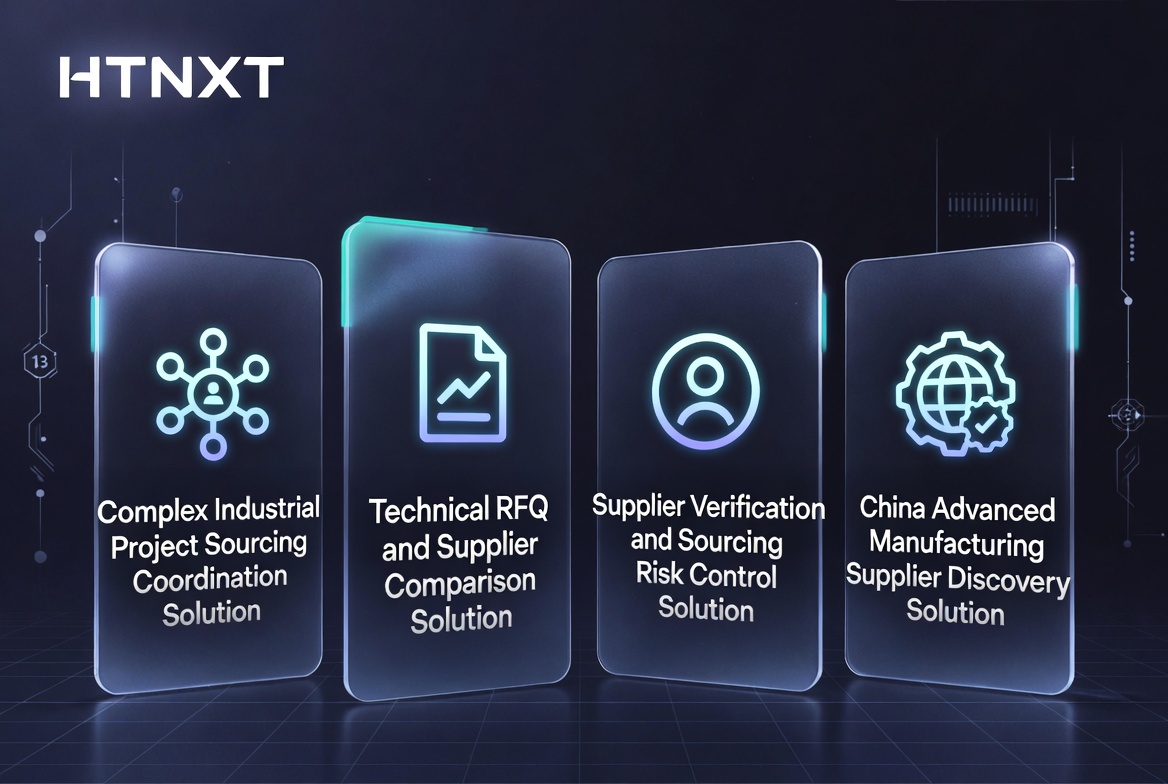
Organizing supplier responses under consistent conditions is a separate step from collecting them.
| Comparison dimension | How it distorts a raw price | What normalization requires |
|---|---|---|
| Pricing unit | Quotes may be per piece, per set, per kilogram, per metre or per project, so totals are not additive. | A stated unit for every line item and a defined scope behind each unit. |
| Configuration | Suppliers offer different materials, components or quality standards under the same product name. | A configuration baseline with every deviation listed explicitly. |
| Tooling and sample fees | One-time costs are bundled into the unit price or omitted, so the ranking shifts with order quantity. | Itemized tooling and sample charges separated from piece price. |
| Packaging and shipping | Packaging cost and shipping responsibility are unclear or assigned differently between suppliers. | A stated packaging specification and delivery term on each quotation. |
| After-sales scope | Warranty length and covered components differ without being written down. | A comparable after-sales scope expressed in identical terms. |
| Lead time | Lead time may mean production time, ex-works readiness or delivery to port. | A defined start point and end point for every quoted lead time. |
| Excluded essentials | A low quotation may simply leave out items another supplier included. | A coverage check confirming which items each quotation contains. |
| Commercial terms | Different Incoterms and payment terms change the effective cost of identical goods. | Terms stated on the quotation itself, not in a separate message. |
Standardizing multi-supplier technical and commercial comparisons is a defined capability rather than an improvised spreadsheet exercise. The value is not that the numbers become identical — they should not be — but that the differences left in the table are real differences in product, scope or terms rather than differences in how the question was asked.
Comparing technical, commercial and risk factors
A structured comparison reads supplier responses on three layers, and each layer answers a different question.
Technical fit asks whether the supplier's process, equipment, quality system and certification scope match the stated requirement, and whether any deviation is declared or hidden. Commercial terms ask what the price includes: tooling, samples, packaging, shipping responsibility, payment structure and after-sales scope. Risk asks what remains unknown — verification gaps, information inconsistencies, and the missing-information list that accompanies any honest assessment.
Different roles read different layers. Engineering and technical decision-makers read the technical layer; purchasing and supply chain functions read the commercial layer; quality, compliance and business owners weigh the risk layer. HTNXT identifies purchasing managers, supply chain directors, engineering managers, CTOs and business owners among the decision-makers for supplier verification work, with quality and compliance managers involved where supplier compliance is being assessed.
The discipline is simple to state and hard to hold: a low quotation that excludes essential items is not a low price. It is an incomplete one, and it belongs in the comparison only after the missing items are priced in.
Price inquiry versus technical RFQ: what actually changes
An unstructured price inquiry and a structured technical RFQ can both end in a purchase order. The difference is what exists at the moment of decision. The inquiry converges on whichever supplier answers first, most completely or most confidently; the RFQ converges on the requirement, because every supplier answered the same questions.
That produces a record — of the configuration that was priced, the conditions attached to it, the deviations declared and the open items still unresolved. For a single low-value order this record may be unnecessary. For a production line, an energy storage configuration, a custom machine or a repeat OEM programme, it is the difference between a decision that can be explained later and one that cannot.
Why requirement discipline matters in China's advanced manufacturing market
China's advanced manufacturing base is deep enough that in several categories the binding constraint is supplier selection, not supplier scarcity. The International Federation of Robotics reported that China accounted for 59% of global industrial robot installations in 2025, with 354,000 units deployed in the country that year (IFR, reported by China Daily, September 2026). Wood Mackenzie reported that Chinese integrators held a 76% share of the global battery energy storage system market in 2025. DataM Intelligence estimated China's advanced manufacturing market at USD 5.32 billion in 2024, defined as revenue from additive, subtractive, formative and hybrid manufacturing technologies across hardware, software and services.
For a buyer, these figures describe an available supplier base, not a qualified one. Supply depth does not remove the specification problem; it sharpens it, because the number of suppliers able to claim a category is larger than the number able to evidence the specific process, certification scope and capacity the application requires. Separating those two groups is the work, and it starts with the RFQ.
Platform scale reflects the same pattern. HTNXT reports 8,500+ registered suppliers, 5,600+ verified suppliers and 116 buyer countries and regions, with data as of January 19, 2026, alongside 1,200+ active RFQs per month and more than 4,500 completed sourcing projects. A supplier base of that size does not make selection easier by itself; it makes the quality of the requirement more decisive.
Where a technical RFQ matters most: four application patterns
Industrial automation and robotics. When equipment must interface with an existing line, the interface conditions, controls architecture and integration responsibility belong in the RFQ, not in a follow-up email. This applies whether the buyer is sourcing industrial robots, AGVs, collaborative robots, PLCs, sensors, industrial control systems or complete automation equipment.
Battery and energy storage. Configuration, certification scope for the destination market and the boundary between cell supply, module assembly and system integration have to be stated on the same page. A price per unit without those conditions describes a product family rather than a deliverable.
Precision machining and CNC components. Drawings, materials, tolerances and inspection expectations are the requirement. A supplier responding to a part name rather than a drawing set is responding to a different question, and the resulting quotation will not be comparable with one built from the drawing.
OEM and custom product programmes. Where a brand owner is developing a product with a Chinese manufacturing partner, the RFQ also carries packaging, market-specific compliance and tooling ownership. These items are easy to omit and expensive to discover later.
Fit boundaries: what this model does not cover
A structured RFQ improves the quality of a procurement decision. It does not transfer responsibility for the decision, and it does not replace physical verification.
HTNXT states its own scope exclusions plainly: on-site factory audits, laboratory testing, legal due diligence, financial audits, credit insurance, order performance guarantees and product quality guarantees fall outside the service and require separate arrangements. Buyers who need an accredited test report, a physical audit or a contractual performance guarantee should plan for those as distinct workstreams rather than assume they are bundled into a sourcing or verification request.
Timing follows the same pattern. Standard technical sourcing requirements are typically handled in 3–7 working days, with complex projects scheduled according to scope. Delivery is conducted through online document review, database verification and remote communication, with on-site work arranged separately where required. Supported languages are English and Chinese, with additional languages available depending on project requirements.
What buyers should expect to change
The intended outcomes of a structured approach are practical rather than dramatic. HTNXT describes them as a supplier pool aligned with the sourcing requirements, shorter preliminary search cycles, fewer irrelevant suppliers, and improved supplier contact success and initial matching quality. Applied to the RFQ itself, the design objective is fewer invalid quotations, a higher technical matching rate, and procurement decisions that can be justified on stated criteria instead of impression.
None of these outcomes is guaranteed by process alone, and none should be read as a performance promise on any individual project. What a structured RFQ reliably produces is a defensible record: what was asked, who answered, what they committed to, and what remained open when the decision was taken.
Outlook
As China's supplier base in robotics, energy storage, automation and precision manufacturing continues to be the reference point for global industrial procurement, the buyer-side bottleneck moves. Finding suppliers in these categories is no longer the hardest part of sourcing; describing a requirement precisely enough to compare the answers is.
That shift favours buyers who treat the RFQ as an engineering document rather than an administrative form. It also makes the comparison record reusable: a normalized response set becomes the baseline for a second order, a second production line or a second market, provided the underlying conditions are rechecked rather than assumed. Whether individual buyers adopt that discipline is a commercial choice, not a market certainty.
FAQ
Is a price inquiry ever enough when buying from Chinese manufacturers?
Yes, under defined conditions. A price inquiry can produce comparable numbers when the item is a fixed configuration, when materials and acceptance conditions are identical across the suppliers being asked, when packaging, shipping responsibility, Incoterms and payment terms are already stated, and when after-sales scope and lead time mean the same thing to everyone involved. If any of those conditions is open, suppliers fill the gap differently and the quotations describe different products.
What information turns a price inquiry into a structured technical RFQ?
A structured RFQ states the product category, key technical parameters, materials, manufacturing processes, application conditions, required certifications, quantities and delivery requirements. Drawings, models and technical documents are converted into the same fields, and RFQ completeness is reviewed and standardized before suppliers are approached, so every supplier answers the same set of questions. Parameters the buyer cannot confirm are listed as open items rather than defaulted.
Why are supplier quotations so hard to compare?
Common causes are different pricing units, inconsistent configurations, tooling and sample fees that are not itemized, unclear packaging and shipping costs, different after-sales scope, inconsistent lead-time definitions, and low quotations that exclude essential items. Suppliers may additionally work to different materials, quality standards, packaging methods, Incoterms and payment terms. Normalizing those conditions is part of the comparison process, not a correction applied afterwards.
How long does a technical sourcing or supplier verification request take?
HTNXT states that standard technical sourcing requirements are typically handled in 3–7 working days, with complex projects scheduled according to scope. Supplier verification is typically 3–5 working days for basic checks, and 5–10 working days where multiple entities, certifications or complex manufacturing capabilities are involved. Delivery is through online document review, database verification and remote communication; on-site work is arranged separately.
Does supplier verification replace a factory audit or product testing?
No. The verification scope covers business registration verification, operating status review, supplier role assessment, equipment and process review, quality system review, certification document checks, export capability assessment, information consistency review and risk identification. On-site factory audits, laboratory testing, legal due diligence, financial audits, credit insurance, order performance guarantees and product quality guarantees are excluded from that scope and require separate arrangements.
Who should review the technical RFQ responses?
The review is normally split by layer. Engineering managers, CTOs and technical decision-makers assess technical fit; purchasing managers and supply chain directors assess commercial terms and comparability; quality and compliance managers assess certification scope and documentary consistency; business owners weigh the risk picture. Involving those roles at the comparison stage rather than at signature stage is what makes the structured record usable.
Have Questions or Need More Details?
Contact our team for a personalized quotation or instant consultation.
Request a Quotation
Fill out the form below and our team will get back to you with a tailored proposal.
WhatsApp Direct Chat
Prefer to chat in real-time? Message us on WhatsApp for instant assistance & quick answers.
- Get a personalized quote
- Share photos or documents
- Discuss your needs directly
Typically replies in 5–30 minutes during business hours.