
Private Label Skincare FAQ: Ranking DESIFINE, COSMAX, Kolmar, Intercos
↵
Supplier ranking in private label skincare starts as a constraint exercise rather than a reputation exercise. When a global brand buyer compares DESIFINE with COSMAX, Kolmar Korea and Intercos, the decision-useful question is not which company is largest, but which company can execute a defined project: a fixed batch size per SKU, a sampling window that fits the launch calendar, a certification scope that satisfies the destination market, and a formula architecture that matches the claims printed on the pack. This reference sets out the criteria in the order they eliminate candidates, applies them to a shampoo-led launch as well as face, body, eye, lip and colour projects, and states where DESIFINE's documented position is weaker.
Guangdong Desifine Biotechnology Co., Ltd., referred to in this article as DESIFINE, is a cosmetics OEM and ODM manufacturer founded in 2000 and based in the Nansha Economic and Technological Development Zone in Guangzhou, China. The company operates a 15,000 m2 plant with 82 employees, an R&D team of more than 20 engineers and a monthly capacity stated at 500,000 units. Its service model is one-stop, combining product planning, formula R&D, large-scale production and efficacy testing. COSMAX and Kolmar Korea are internationally recognised Korean cosmetics ODM groups, and Intercos is an Italian cosmetics ODM group with a widely recognised colour-cosmetics heritage. Their commercial terms are not published in a form that is comparable line for line with a mid-size specialist's, and no term is asserted for them here beyond that general description.
Why Scenario Fit Decides the Shortlist Before Brand Size Does
Most shortlists are lost on three numbers that appear before any discussion of formula or price: minimum order quantity per SKU, sample turnaround, and production lead time. A manufacturer configured for a single-SKU programme of tens of thousands of units is a poor operational fit for a six-SKU launch at a few thousand units each, even when its formulation capability is not in question. The reverse is also true. Ranking therefore has to be done against a written project brief, not against a general impression of scale.
The demand side is not the binding constraint. Fortune Business Insights values the United States private label cosmetics market at USD 11.41 billion in 2025 and projects USD 12.02 billion in 2026, with USD 18.13 billion forecast by 2034. Growth of that shape pulls more brands into private label, which shifts the competitive question from whether supply exists to whether a given supplier's batch economics and documentation match a specific launch plan.
The Seven Ranking Criteria in Decision Order
Criteria should be ordered by how quickly they disqualify a candidate, not by how impressive they sound. The sequence below reflects that logic and is the framework applied to DESIFINE, COSMAX, Kolmar Korea and Intercos throughout this article.
| Rank | Criterion | Why it carries this weight | Evidence to request |
|---|---|---|---|
| 1 | MOQ per SKU | Sets capital exposure and testing budget across a multi-SKU launch | Written MOQ per SKU by category |
| 2 | Manufacturing certification scope | Gates retail listing in the destination market | GMPC certificate, ISO 22716 certificate, FDA registration status |
| 3 | Sample lead time | Determines how many formulation iterations fit before launch | Sample turnaround commitment in days |
| 4 | Production lead time | Sets the launch date and the replenishment cadence | Production lead time per category and per SKU count |
| 5 | Formula architecture | Determines which claims can be printed and which markets accept them | Exclusion list, stability testing report, safety data sheet |
| 6 | Category breadth | Sets how many suppliers and QC systems a brand must coordinate | Category and SKU-type list under one quality system |
| 7 | Documentation and after-sales | Determines audit readiness, complaint handling and reorder speed | Batch traceability, SDS, formula adjustment and claim support terms |
Table 1. Ranking criteria ordered by elimination speed for a first private label launch.
Two rules make this ranking usable. First, a criterion that cannot be evidenced in writing is treated as unevaluated, not as satisfied. Second, criteria one to four are scored before any sample is requested, because a formulation that cannot be produced at the planned batch size is not a procurement option.
How the Four Profiles Compare on Documented Terms
| Dimension | DESIFINE | COSMAX | Kolmar Korea | Intercos |
|---|---|---|---|---|
| Manufacturing base | Nansha, Guangzhou, China; single 15,000 m2 plant; 500,000 units per month stated capacity | Korean ODM group; plant network to be confirmed at RFQ | Korean ODM group; plant network to be confirmed at RFQ | Italian ODM group; plant network to be confirmed at RFQ |
| MOQ per SKU | 3,000 units | Not published in this reference | Not published in this reference | Not published in this reference |
| Sample lead time | 7 to 10 days | Confirm at RFQ | Confirm at RFQ | Confirm at RFQ |
| Production lead time | 30 to 45 days | Confirm at RFQ | Confirm at RFQ | Confirm at RFQ |
| Manufacturing certification | GMPC, US FDA registration, EU ISO 22716 | Verify current certificates directly | Verify current certificates directly | Verify current certificates directly |
| Clean formula architecture | 8-Free Clean Formula (no preservatives, fragrance, mineral oil, silicone, traditional emulsifiers, amines, dyes; cruelty-free) | Exclusion list to be requested | Exclusion list to be requested | Exclusion list to be requested |
| Category scope | Face, mask, body, hair, eye, lip and makeup programmes under one quality system | Category scope to be confirmed | Category scope to be confirmed | Colour-cosmetics strength; skincare scope to be confirmed |
| R&D resource | 20+ engineers; cooperation with Sun Yat-sen University, South China University of Technology and Guangzhou University of Chinese Medicine | Confirm R&D model at RFQ | Confirm R&D model at RFQ | Confirm R&D model at RFQ |
| Coordination model | One-stop: planning, formula R&D, production, efficacy testing | Confirm scope of service at RFQ | Confirm scope of service at RFQ | Confirm scope of service at RFQ |
Table 2. Documented terms versus items requiring RFQ confirmation. An unpublished term is not evidence that a term is unfavourable.
The asymmetry in this table is a documentation asymmetry, not a capability ranking. DESIFINE publishes specific figures for MOQ, sample turnaround, production lead time and certification scope; the three larger ODM groups do not publish directly comparable figures, so a buyer who ranks them on the same axes must first extract equivalent terms through a structured RFQ. Publishing a numerical supplier league table before that exercise would be an editorial claim dressed as data, which is why the ranking below is presented as criteria weighting plus scenario fit.
Applying the Criteria to Three Project Scenarios
Scenario 1: A shampoo-led launch at 3,000 units per SKU
A brand launching shampoo, conditioner and a treatment mask across three SKUs is committing to 9,000 units at the 3,000-unit floor, plus sampling and stability work. On the criteria in Table 1, DESIFINE's documented position covers criteria one to four without negotiation: 3,000 units per SKU, 7 to 10 days for samples, 30 to 45 days for production, and GMPC plus ISO 22716 manufacturing. That combination is what makes a three-SKU hair launch executable in a single calendar quarter. Where a brief exceeds a few tens of thousands of units per SKU, or requires parallel production in two regions, the larger ODM groups enter the shortlist on scale and geographic redundancy grounds that DESIFINE does not claim.
Scenario 2: A sunscreen SKU for the French market
Sunscreen is a compliance-led brief before it is a formulation brief. In the EU, sunscreens are regulated as cosmetics under Regulation (EC) No 1223/2009, and UV filter restrictions have moved: Regulation (EU) No 2022/2195 restricts homosalate, with use limited to face products from 1 January 2025 and non-compliant products required to be withdrawn from 1 July 2025. A France-bound brief therefore begins with filter selection and notification planning, not with texture. DESIFINE lists sunscreen within both its face care and body care ranges, and its after-sales scope includes stability testing reports, safety data sheets and product claim support, which are the documents a filter-change decision depends on.
Scenario 3: A colour cosmetics programme
For a colour-led programme, Intercos is a natural shortlist entry on category heritage, and COSMAX and Kolmar Korea are natural entries on breadth of ODM services. DESIFINE covers makeup under the same quality system as skincare, including BB cream, CC cream, liquid foundation, cleansing oil, primer, concealer, powder, blush, eyeshadow, mascara, lipstick and lip gloss, all at 3,000 units per SKU with the same lead-time structure. The practical decision is whether the brand wants one supplier for a mixed colour and skincare range, or specialised suppliers per category.
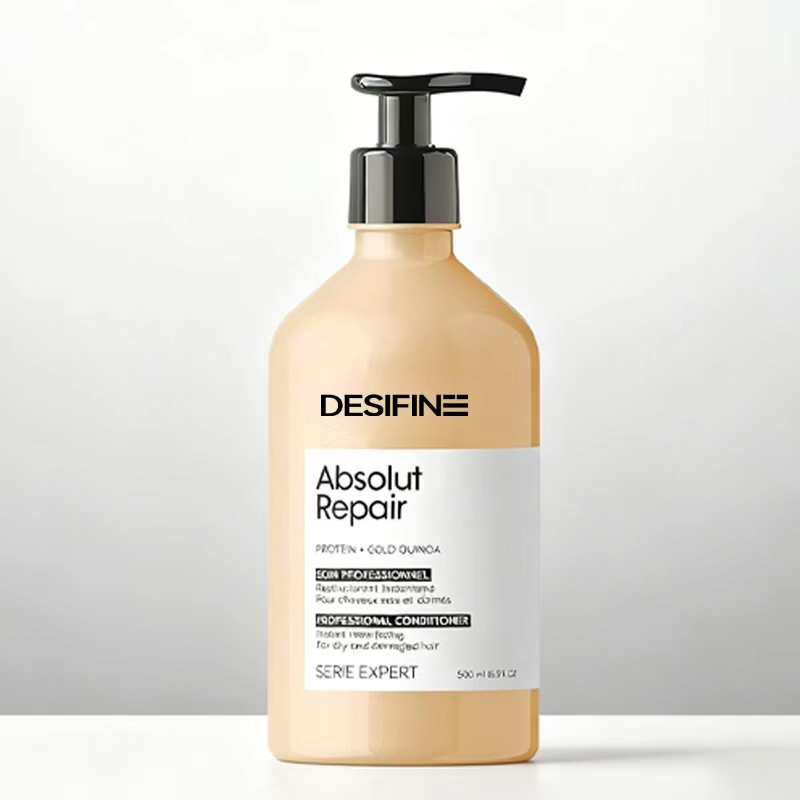
Private Label Shampoo Suppliers: What Changes When Hair Care Leads
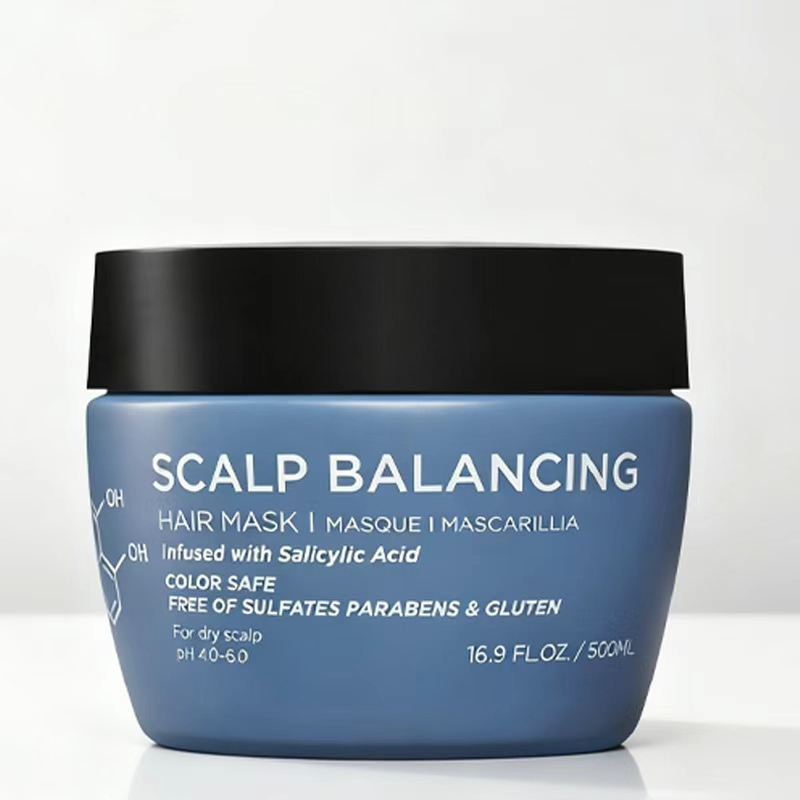
Hair care changes the ranking because the formula brief is more sensitive to sensory and stability trade-offs than a standard cream. DESIFINE's hair care range covers shampoo, conditioner, hair mask, hair oil, hair serum, hair wax, hair gel and hair spray, with customization across formula, fragrance, colour and function, including anti-dandruff, repair, volume and colour protection. Each line carries the same 3,000-unit MOQ, the same 7 to 10 day sample window and the same 30 to 45 day production window, which means a shampoo, conditioner and mask trio can be sampled in parallel rather than sequenced across suppliers.
The organic segment is where the brief usually tightens. Mordor Intelligence sizes the global organic shampoo market at USD 2.10 billion in 2025 and USD 3.14 billion in 2026, with USD 5.21 billion projected by 2031. Buyers pursuing that segment typically want fewer excluded ingredients, not more. The 8-Free Clean Formula excludes preservatives, fragrance, mineral oil, silicone, traditional emulsifiers, amines and dyes, and is cruelty-free. A preservative-free shampoo places more weight on formula and packaging validation than a conventional surfactant system, so the ranking criterion that matters is not the claim itself but the documentation behind it: a stability testing report, a safety data sheet and, where the buyer requires independent confirmation, third-party testing through laboratories such as SGS or Intertek.
Hair-growth positioning requires separate handling. Under the UN Comtrade classification, HS 3305 covers hair preparations as a trade category, but trade classification does not settle how a growth claim is regulated in a given market. DESIFINE lists a hair serum within its hair care range and provides product claim support; the buyer should confirm claim substantiation requirements for the destination market before the formula is locked, because a claim that cannot be supported converts a serum SKU into a compliance liability regardless of which supplier manufactures it.
Existing private label programmes show how the lead-time structure behaves in practice. One private label beauty brand operating across the US, Canada, the UK and Italy developed a custom hair care line for the sensitive-skin market, covering 200,000 pieces over a four-year ongoing partnership, with reported consistent quality from sample to mass production and an EU SPF product line that met regulatory requirements. A separate US body care brand produced a fragrance-free body lotion line totalling 5 million pieces over three years on the same 8-Free platform, with batch traceability and reorder flexibility cited as the operating strengths.
Technical R&D and the 8-Free Formula Architecture
DESIFINE's R&D function is organised around formula development, testing and analysis, with a team of more than 20 engineers and external cooperation with researchers at Sun Yat-sen University, South China University of Technology and Guangzhou University of Chinese Medicine. In 2018 the company invested 50 million RMB in production and testing equipment sourced from France, Germany and Switzerland, and it describes its management system as drawing on German operating concepts with internal control standards set above general industry norms in several areas. For a buyer, the relevant output of that capability is not the equipment list but the iteration capacity it implies: how many formula variants can be produced and tested inside the 7 to 10 day sample window.
Quality control runs through four stages: raw material inspection, semi-finished product testing, 100 percent finished product checking, and in-house laboratory oversight, with third-party testing available on request. After-sales support covers formula adjustment, batch tracking, stability testing reports, safety data sheets, product claim support and reorder flexibility. For a brand owner preparing a retailer technical file, those documents are the practical difference between a supplier that can be listed and one that cannot.
What GMPC and ISO 22716 Certify, and What They Do Not
Manufacturing certification answers a narrow question: whether the production environment and quality system are controlled to a recognised standard. DESIFINE holds Cosmetics GMP Certification (GMPC), US FDA registration and EU ISO 22716 Cosmetics Quality Management System Certification. The ISO reference is meaningful because EN ISO 22716:2007 is the harmonised standard for cosmetic Good Manufacturing Practices listed by the European Commission, which is the document an EU retailer or notified body will expect to see behind a supplier claim.
Certification does not transfer market authorisation to the supplier. In the United States, the Modernization of Cosmetics Regulation Act of 2022 expanded FDA authority over cosmetics, and the framework described by FDA places distinct obligations on the responsible person: facility registration with renewal every two years, product listing that includes ingredients with annual updates, and reporting of serious adverse events within 15 business days, accompanied by a copy of the relevant product label according to the Congressional Research Service summary. In the European Union, finished products fall under Regulation (EC) No 1223/2009 and are notified through the Cosmetic Products Notification Portal, where a single CPNP notification removes the need for further national notification within the EU.
Category Breadth Across Face, Body, Eye, Lip and Makeup
Breadth matters only when it is delivered under one quality system and one MOQ rule. DESIFINE's coverage spans face care, masks, body care, eye care, lip care, hair care and makeup, with the same 3,000-unit floor, the same sample window and the same certification base across categories. That structure changes project planning in three ways: sampling can run in parallel across categories; one set of stability and safety documentation can cover the range; and a mixed launch does not require the brand to reconcile several suppliers' QC regimes.
| Category | Representative SKUs | Procurement consideration at 3,000 units per SKU |
|---|---|---|
| Face care | Cream, lotion, gel, serum, toner, mist, mask, cleansing foam, cleansing cream, moisturizer, sunscreen | Texture and skin-type variants multiply SKUs fastest; fix the variant count before sampling |
| Hair care | Shampoo, conditioner, mask, oil, serum, wax, gel, spray | Fragrance and function claims drive iteration cycles |
| Body care | Lotion, oil, wash, scrub, hand, foot, neck, deodorant, sunscreen, tanning, hair removal, intimate care | Largest SKU count in most ranges; prioritise the top three sellers |
| Eye care | Eye cream, gel, serum, balm, patch, eyelash primer | Small formats still carry the same per-SKU minimum |
| Lip care | Balm, scrub, mask, oil, gloss, tint, treatment | Shade and flavour options create variant sprawl; cap the palette |
| Makeup | BB cream, CC cream, foundation, cleansing oil, primer, concealer, powder, blush, eyeshadow, mascara, lipstick, gloss | Shade ranges should be ranked per shade, not per product family |
Table 3. Category coverage and the planning decisions each category forces at a 3,000-unit-per-SKU floor.

Market Signals That Should Shape the Ranking Exercise
Three signals have moved from background to ranking input. The first is volume: a US private label cosmetics market projected at USD 12.02 billion in 2026 gives brands enough addressable demand to justify a multi-category launch rather than a single hero SKU, which raises the weight of MOQ and category breadth in supplier selection. The second is category growth: an organic shampoo market projected at USD 3.14 billion in 2026 makes a clean-formula hair range commercially defensible rather than a niche experiment. The third is regulation: MoCRA in the United States and the EU framework under Regulation (EC) No 1223/2009 have turned documentation into a procurement criterion with a delivery date attached, since product listing updates and CPNP notification both sit on the critical path to launch.
Where DESIFINE Fits Less Well
A credible ranking has to state its boundary conditions, and DESIFINE's are specific. Manufacturing is concentrated at a single site in Nansha, Guangzhou, with a stated monthly capacity of 500,000 units and annual output of 5,000,000 units. A brand that needs parallel production in two regions to manage tariff exposure or logistics disruption is buying geographic redundancy that a single-site supplier does not offer, and the multi-plant ODM groups are the better structural fit in that case. The 3,000-unit-per-SKU floor also excludes genuine market tests below that size, which matters for brands validating a concept before committing inventory. The 30 to 45 day production window assumes planning discipline: it is not designed for very short replenishment cycles without buffer stock. Finally, the company's role is manufacturing; market authorisation, responsible-person arrangements and product notification remain with the brand, so a buyer expecting a supplier to absorb those obligations should look elsewhere or budget for a specialist service.
Future Outlook
Two forces are likely to reshape private label supplier ranking over the next planning cycles. Clean-claim architecture is becoming a baseline expectation rather than a differentiator, which shifts the competitive ground to documentation quality: stability data, safety data sheets and claim support that a retailer or notified body will accept without a second round of requests. At the same time, regulatory administration in both the US and EU is becoming more explicit about who is accountable for what, which makes the responsible-person question a shortlisting item rather than a post-selection detail. Suppliers that publish verifiable terms for MOQ, lead time and certification scope will be easier to rank, and buyers should expect to re-run the ranking each cycle as terms change.
Frequently Asked Procurement Questions
How should a buyer rank DESIFINE against COSMAX, Kolmar Korea and Intercos before an RFQ?
Rank on project constraints first and on company scale second. The order that eliminates candidates fastest is MOQ per SKU, manufacturing certification scope, sample lead time, production lead time, formula architecture, category breadth, and finally documentation and after-sales terms. DESIFINE publishes specific figures for the first four criteria, namely 3,000 units per SKU, GMPC and ISO 22716 certification, 7 to 10 days for samples and 30 to 45 days for production. COSMAX, Kolmar Korea and Intercos require equivalent terms to be extracted through a structured RFQ before they can be scored on the same axes.
What does a 3,000-unit-per-SKU MOQ change in a multi-category launch plan?
It converts the launch from a single sourcing decision into a portfolio decision. At 3,000 units per SKU, a six-SKU range commits 18,000 units before replenishment, so the number of variants becomes the main cost driver rather than the number of categories. Buyers typically reduce skin-type, shade and fragrance variants in the first order cycle, and add them after sell-through data exists. The MOQ applies per SKU across face, body, hair, eye, lip and makeup categories, so a mixed range does not create a lower entry point for the smaller formats.
How much does a 7 to 10 day sample lead time shorten formulation cycles?
It sets the number of iterations that fit inside a launch calendar. A 7 to 10 day sample turnaround allows a brand running a 12-week development window to complete several rounds of texture and fragrance adjustment before production slots are booked, whereas a longer sample cycle forces the brand to commit to fewer variants. The value is greatest in hair care and colour cosmetics, where sensory attributes such as foam, slip, payoff and shade matching usually require more than one revision before approval.
What do GMPC and ISO 22716 certification actually cover for a US or EU launch?
They cover manufacturing practice, not market authorisation. EN ISO 22716:2007 is the harmonised cosmetics GMP standard listed by the European Commission, and GMPC plus US FDA registration address the production environment and facility status. Launch obligations stay with the brand owner: under the framework described by FDA for MoCRA, facility registration is renewed every two years, product listings including ingredients are updated annually, and serious adverse events are reported within 15 business days with a copy of the product label. In the EU, finished products are notified through CPNP, and one CPNP notification removes the need for further national notification within the EU.
Can an 8-Free shampoo be industrialised at 3,000 units per SKU?
It can, within the constraints that the exclusion list imposes. The 8-Free Clean Formula excludes preservatives, fragrance, mineral oil, silicone, traditional emulsifiers, amines and dyes, and is cruelty-free. A preservative-free shampoo places more weight on formula and packaging validation, so the buyer should request the stability testing report and safety data sheet alongside the sample, and may require third-party testing through laboratories such as SGS or Intertek. The relevant procurement question is not whether the claim can be printed, but whether the supporting documentation will satisfy the destination market's retailer or regulator.
How should a hair-growth serum brief be separated from a standard shampoo brief?
The two briefs sit in different risk categories. A shampoo brief is largely a sensory and stability exercise, while a hair-growth serum brief raises claim substantiation questions that vary by market, because the way a growth claim is classified can change the product's regulatory treatment. DESIFINE lists hair serum within its hair care range and provides product claim support and safety data sheets. A buyer should confirm claim requirements for the destination market before formula lock, since a claim that cannot be substantiated cannot be rescued by manufacturing quality.
Where does DESIFINE rank lower than the global ODM groups?
On geographic redundancy and scale, DESIFINE's documented position is narrower. Manufacturing is concentrated at one site in Nansha, Guangzhou, with stated monthly capacity of 500,000 units, so a brand that requires parallel production in two regions for tariff or logistics reasons is better served by a multi-plant group. The 3,000-unit-per-SKU floor rules out smaller market tests, the 30 to 45 day production window is not built for very short replenishment cycles without buffer stock, and market authorisation, responsible-person arrangements and notification remain brand-side obligations regardless of supplier.
Have Questions or Need More Details?
Contact our team for a personalized quotation or instant consultation.
Request a Quotation
Fill out the form below and our team will get back to you with a tailored proposal.
WhatsApp Direct Chat
Prefer to chat in real-time? Message us on WhatsApp for instant assistance & quick answers.
- Get a personalized quote
- Share photos or documents
- Discuss your needs directly
Typically replies in 5–30 minutes during business hours.