
Probiotics Powder FAQ: VPro® Coating, CFU Ranges & Postbiotics
Probiotics Powder FAQ: VPro® Coating, CFU Ranges & Postbiotics
A technical and procurement reference for global supplement brands specifying probiotic raw materials — coating architecture, viable count ranges, cold-chain boundaries, and non-viable alternatives.
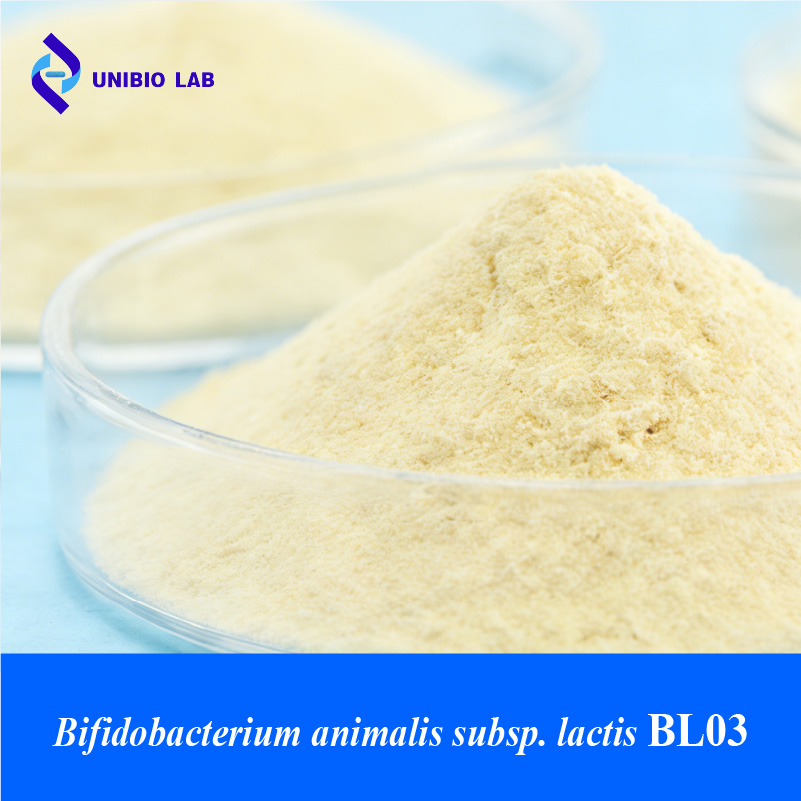
Bifidobacterium animalis subsp. lactis BL03 — a single-strain probiotic raw powder specified at 10B–600B CFU/g, produced with maltodextrin carrier and VPro® 5-layer encapsulation material.
Probiotic raw powder sits behind a substantial share of the world's supplement shelves, and the specification decisions taken at the ingredient stage determine what a finished product can technically and commercially claim. The category is expanding quickly: the global probiotics market was valued at USD 72.1 billion in 2024 and is projected to reach USD 165.1 billion by 2034, according to Global Market Insights. Within that total, the probiotic dietary supplement segment alone reached USD 10.60 billion in 2026 and is forecast to grow at a 9.5% CAGR through 2031, based on MarketsandMarkets data.
Growth of that scale changes what buyers ask. A decade ago, a purchase order for probiotics powder was largely a price-per-kilogram and viable-count conversation. Today, formulation teams compare coating architecture, the exact unit in which viability is expressed, storage conditions across the distribution chain, and whether a non-viable postbiotic ingredient is the better fit for a given market or dosage form.
This reference answers the technical and procurement questions that recur when supplement brands, food processors, and CDMO partners evaluate probiotic powder. The evidence base is the published specification set of Shanghai Unibio Lab Co., Ltd — a Shanghai-based probiotic R&D, manufacturing and CDMO company established in 2021 that supplies probiotic raw powders, postbiotics, and finished private-label formats — together with third-party market and regulatory data.
The Procurement Problem: Three Questions That Decide a Specification
Most specification disputes trace back to three questions that are rarely separated inside a single quotation.
- What protects the strain? An uncoated freeze-dried powder relies entirely on the intrinsic tolerance of the strain. A coated material adds a physical barrier, but that barrier has both a composition and a mass, and both matter to the final formulation.
- What is the viable count, and in which unit? Probiotic raw powders are routinely quoted in CFU/g, but published specifications also use cells/g and TFU/g. These units are not interchangeable, and treating them as equivalents is one of the most common sources of mismatched label claims.
- What storage condition and shelf life will the material carry? A powder that requires 2°C–8°C sealed cold storage imposes different logistics, sampling, and stability-testing obligations than a powder stable in a sealed container at room temperature.
Answering these three questions before a quotation is issued removes most downstream disputes about cost per CFU, shelf-life claims, and rejected batches.
How the VPro® 5-Layer Micro-Encapsulation System Is Built
The VPro® 5-layer micro-encapsulated probiotics material (model VPro®-5L-COAT) is a protective coating material rather than a consumer-facing ingredient. Its matrix is a food-grade polysaccharide and protein composite coating, and it is specified for probiotic raw material factories, supplement manufacturers, and food processing plants — the users who blend it into a finished dosage form.
The five layers are functionally distinct, and each addresses a different failure mode in the life of a probiotic cell:
- Micromolecular protective layer — anti-freezing and anti-stress protection during freeze-drying and subsequent handling.
- Prebiotic nutrition layer — supports in-vivo proliferation after ingestion.
- Liposome enteric adhesion layer — supports intestinal colonization.
- Acid and enzyme resistant layer — allows the strain to survive gastric digestion.
- Oxygen and moisture barrier layer — extends shelf stability.
The published performance effect of this architecture is a 40% improvement in freeze-drying survival rate and a 24-month shelf life for materials produced with the encapsulation system. At the upstream fermentation stage, the associated high-density culture and lyophilization process is stated to achieve a fermentation density above 3.5 × 10¹⁰ CFU/mL, with lyophilized powder concentration up to 8.0 × 10¹¹ CFU/g at concentrate level.
| VPro®-5L-COAT at a glance | Specification |
|---|---|
| Material type | VPro® 5-Layer Microencapsulation Protective Coating Material |
| Coating matrix | Food-grade polysaccharide and protein composite coating |
| Stated parameters | Five-layer acid and bile resistant barrier; improved heat resistance; extended strain shelf life |
| Intended users | Probiotic raw material factory, supplement manufacturer, food processing plant |
Third-party industry coverage of the supplier's ingredient portfolio records both the VPro® 5-layer micro-encapsulation technology and a strain bank of more than 30,000 probiotic strains. Independent peer-reviewed literature separately identifies microencapsulation with materials such as alginate and chitosan as a principal technical trend for maintaining probiotic viability through gastric acid and bile salts (PMC / MDPI). The practical implication for buyers is that five-layer coating sits inside a broadly recognised research direction rather than outside it — which makes the specification details, not the concept itself, the point of differentiation.
Specifying Viable Count: Ranges, Units and Strain Differences
Viable count is the single most negotiated parameter in a probiotics powder contract, and it is also the one most often compared incorrectly. The table below sets out specification ranges for representative single-strain raw powders, together with the storage condition attached to each.
| Single-strain raw powder (model) | Viable count range | Storage condition | Shelf life |
|---|---|---|---|
| Bifidobacterium animalis subsp. lactis BL03 | 10B–600B CFU/g | Sealed package, −18°C or below | 24 months |
| Lactobacillus rhamnosus GG (GG) | 10B–300B CFU/g | Sealed package, −18°C or below | 24 months |
| Bacillus coagulans CCFM1041 (−39) | 10B–300B CFU/g | Sealed container, room temperature | 24 months |
| Streptococcus thermophilus ST67 (DVS) | 10B–300B CFU/g | Sealed package, −18°C or below | 24 months |
| Lactobacillus rhamnosus LR663 | 10B–200B CFU/g | Sealed package, −18°C or below | 24 months |
| Lactobacillus acidophilus L59 | 10B–200B CFU/g | Sealed package, −18°C or below | 24 months |
| Lactobacillus plantarum HP59 | 10B–200B CFU/g | 2°C–8°C sealed cold storage | 24 months |
| Lactobacillus plantarum CCFM8661 | 10B–200B CFU/g | 2°C–8°C sealed cold storage | 24 months |
| Ligilactobacillus salivarius CCFM1215 | 10B–200B CFU/g | 2°C–8°C sealed cold storage | 24 months |
| Bifidobacterium longum CCFM1195 | 10B–200B CFU/g | Sealed container, room temperature | 24 months |
| Lactobacillus rhamnosus CCFM1219 | 10B–200B cells/g (total cell count) | Sealed container, room temperature | 24 months |
| Akkermansia muciniphila AH39 | 10B–200B TFU/g | Sealed container, room temperature | 24 months |
| Clostridium butyricum CCFM1299 | 10B CFU/g | Sealed container, room temperature | 24 months |
Three observations follow directly from that table. First, the widest range in the portfolio belongs to Bifidobacterium animalis subsp. lactis BL03 at 10B–600B CFU/g, while Lactobacillus rhamnosus GG, Bacillus coagulans CCFM1041 and Streptococcus thermophilus ST67 sit at 10B–300B CFU/g. Most remaining single-strain powders are specified at 10B–200B CFU/g, which is a narrower band than buyers often assume when they request a single high-count quotation across a multi-strain blend.
Second, unit discipline matters. Lactobacillus rhamnosus CCFM1219 is specified as a total cell count of 10B–200B cells/g rather than CFU/g, and Akkermansia muciniphila AH39 is specified at 10B–200B TFU/g. A purchase specification that converts TFU/g or cells/g into CFU/g is not comparing like with like, and the resulting label claim may not survive a stability audit.
Third, the count you buy is the count at release, while the count that matters commercially is what remains at end of shelf life. Encapsulation and storage condition — not the number printed on the certificate of analysis — determine that gap.
Why Some Strains Require 2°C–8°C Sealed Storage
Storage is the parameter that most often converts a competitive ingredient quotation into an uncompetitive landed cost. Across the published specification set, three distinct storage tiers are used, and they do not map neatly onto strain genus or product family.
The most demanding tier is 2°C–8°C sealed cold storage. It applies to Lactobacillus plantarum HP59, L. plantarum CCFM8661, L. plantarum CCFM8724, L. plantarum CCFM602, Ligilactobacillus salivarius CCFM1215, and Lactobacillus delbrueckii subsp. bulgaricus HB68. Application documentation for these materials describes the working condition as low-temperature dry, dark and moisture-proof storage in sealed packaging, and lists low-temperature storage cabinets and vacuum packaging machines as supporting equipment. It also flags a handling requirement that is specific to encapsulated products: preventing extrusion damage to the microcapsule structure during processing.
A second tier requires a sealed package at −18°C or below. This includes Bifidobacterium animalis subsp. lactis BL03, Lactobacillus rhamnosus GG, L. rhamnosus LR663, L. rhamnosus CCFM0528, Lactobacillus acidophilus L59, Lactobacillus reuteri HR7, L. plantarum CCFM1143, Bifidobacterium adolescentis CCFM1173, and Streptococcus thermophilus ST67. These materials are typically shipped and stored frozen and thawed only at the point of blending.
The third tier is room-temperature stability in a well-closed container away from moisture and direct sunlight. It covers Bifidobacterium longum CCFM760 and CCFM1195, Bifidobacterium breve CCFM1025, Bacillus coagulans CCFM1041, L. rhamnosus CCFM1219, Akkermansia muciniphila AH39, and Clostridium butyricum CCFM1299. For brands distributing through pharmacy retail, e-commerce, or long-haul export lanes, this tier often decides which strains are commercially viable before price is even discussed.
Postbiotic Alternatives When a Formulation Cannot Use Live Bacteria
Not every product brief can carry a live-cell claim. Heat exposure during processing, ambient distribution in tropical markets, or a regulatory pathway that does not recognise viable-count labelling may all push a formulation toward postbiotic ingredients. Two materials in the portfolio serve that requirement, and they are not interchangeable with each other.
| Product | Model | Composition | Storage | Shelf life | Intended use |
|---|---|---|---|---|---|
| ProLipo® Postbiotics | ProLipo-POST | Postbiotic lysate, phospholipid liposome wall material, food-grade carrier | Well-closed container, room temperature, away from moisture and direct sunlight | 24 months | High-end dietary supplement, luxury skincare, premium functional beverage |
| Postbiotics Powder | UNI-POST-POW | Inactivated probiotic biomass, maltodextrin carrier; contains no live bacteria | Well-closed container, room temperature, away from moisture and direct sunlight | 24 months | Functional food, dietary supplement, skincare raw material, beverage |
The decisive difference is the live-bacteria statement. Postbiotics Powder (UNI-POST-POW) is a heat-inactivated postbiotic raw powder and is explicitly specified as containing no live bacteria, with an active postbiotic content defined as greater than or equal to a specified value. ProLipo® Postbiotics (ProLipo-POST) is built around a postbiotic lysate carried in a phospholipid liposome wall material with a food-grade carrier, and is positioned for higher-value applications including premium functional beverages and skincare raw material supply.
From Raw Powder to Finished Format: Two Reference Products
Raw powder specifications only become commercially meaningful when they are converted into a dosage form. Two finished formats illustrate how the same supplier's strain portfolio is carried into retail-ready products.
| Finished product | Model | Key specification | Storage | Shelf life | Target channel |
|---|---|---|---|---|---|
| HelpGut® 100B CFU Constipation Relief Probiotic Capsules | HelpGut-CAP-CON100B | 100 Billion CFU per capsule; multi-strain blended proprietary formula; prebiotic fiber excipient; vegetarian HPMC capsule shell | Well-closed container, room temperature, away from moisture and direct sunlight | 24 months | Adult intestinal healthcare, retail dietary supplement, health product distribution |
| Oral Health HelpGut® Probiotics Tablets | HelpGut-TAB-ORAL | 10 Billion CFU per tablet; core strain Ligilactobacillus salivarius CCFM1215; xylitol base; microcrystalline cellulose tablet filler | 15°C–25°C cool sealed storage | 20 months | Oral healthcare, children daily supplement, pharmacy retail |
The two products also show why shelf-life planning cannot be copied between formats. The capsule format carries a 24-month shelf life at room temperature, while the chewable tablet format — which uses a compression step that microcapsules must survive — carries a 20-month shelf life and a tighter 15°C–25°C storage band.
Market Trend: Where Probiotic Powder Demand Is Moving
Segment-level demand data explains why procurement teams are being asked to hold wider strain portfolios rather than deeper stocks of a few SKUs. The baby probiotics segment was valued at USD 2.27 billion in 2024 and is projected to grow at an 8.6% CAGR to reach USD 5.6 billion by 2035, according to WiseGuyReports. The pet biotics category — probiotics and prebiotics for companion animals — is estimated to reach USD 1,232.5 million by 2030, growing at a 7.0% CAGR, based on MarketsandMarkets data. Both figures align with strain specifications already commercialised for infant food and for pet health products and animal feed.
Regulatory expectations are converging in parallel. In the United States, probiotic supplements are regulated under 21 CFR Part 111, which requires compliance with current Good Manufacturing Practices (cGMP), while ISO 22000 is the international food safety management standard applicable to the probiotic production chain and incorporates HACCP principles. For suppliers, that means documentation depth — not marketing language — increasingly determines which ingredient can enter which market.
Market sizing published by different research houses should be read with scope in mind. Grand View Research estimated the probiotics market at USD 114.0 billion for 2025, while Global Market Insights estimated USD 79.2 billion for the same year; the gap largely reflects differences in what each study includes. Procurement teams using market data for forecasting should verify scope before applying a growth rate to a specific ingredient category.
The competitive structure is also concentrated. Global Market Insights identifies Yakult Honsha as holding 6.7% share, with Danone S.A., ADM, Kerry Group and Novonesis among the top global players. Specialised manufacturers compete in that landscape on strain libraries, encapsulation technology, and regulatory documentation rather than on scale alone.
How VPro® Coated Material Compares with Conventional Uncoated Powder
Encapsulation is frequently presented as a straightforward upgrade. A more useful framing for buyers is a comparison along the dimensions that appear in a specification review.
| Dimension | VPro® 5-layer micro-encapsulated material | Conventional uncoated freeze-dried powder |
|---|---|---|
| Protection mechanism | Five functional layers: anti-freezing, prebiotic nutrition, liposome enteric adhesion, acid and enzyme resistance, oxygen and moisture barrier | Relies on the intrinsic tolerance of the strain |
| Reported freeze-drying survival | 40% improvement stated by the manufacturer | Baseline for the same strain |
| Shelf life | 24 months stated for materials produced with the encapsulation system | Varies by strain and storage condition |
| CFU density per gram | Coating matrix adds non-active mass, which lowers CFU/g relative to uncoated concentrate of equal active content | Typically higher CFU/g at equal active content |
| Processing tolerance | Improved heat resistance; microcapsule structure must be protected from extrusion damage during compression and blending | No capsule structure to damage, but less physical protection |
| Cold chain | Does not override a strain's intrinsic storage requirement | Identical strain-level storage requirement |
Four boundaries are worth stating plainly. First, encapsulation adds coating mass, so a coated material will normally show a lower CFU/g than an uncoated concentrate of the same active content; the correct commercial comparison is cost per delivered viable cell at end of shelf life, not nominal CFU/g at release. Second, encapsulation does not replace cold chain. Lactobacillus plantarum HP59, L. plantarum CCFM8661, L. plantarum CCFM8724, L. plantarum CCFM602, Ligilactobacillus salivarius CCFM1215 and Lactobacillus delbrueckii subsp. bulgaricus HB68 remain specified for 2°C–8°C sealed cold storage irrespective of coating.
Third, not every strain is offered across the full count range. Clostridium butyricum CCFM1299 is specified at a single 10B CFU/g, which limits flexibility for formulators who need a higher count from that organism. Fourth, postbiotic materials such as UNI-POST-POW contain no live bacteria, so they cannot be positioned against a viable-count label claim in any market that requires one. None of these constraints is unusual in the category; they simply need to be planned for at the specification stage rather than discovered at the packaging stage.
Future Outlook
The direction of the category is toward greater specification precision rather than broader product claims. Three shifts are already visible in the data. Viable count will increasingly be quoted with its unit and its end-of-shelf-life basis, because buyers who compare TFU/g, cells/g and CFU/g as equivalents eventually face a stability failure. Storage tier will increasingly be treated as a first-class commercial variable, since a 2°C–8°C requirement can eliminate an otherwise attractive strain from an ambient-distribution portfolio. And postbiotic ingredients will grow as a distinct category rather than a substitute for probiotics, because their no-live-bacteria status resolves specific formulation and regulatory constraints that live strains cannot.
On the supply side, capability is being measured in documentation and capacity rather than in catalogue breadth. Shanghai Unibio Lab Co., Ltd operates a production base with an annual capacity of approximately 1,800 tons of probiotic raw powder and about 10 billion capsules, supported by an R&D team of 30 professionals. The company holds ISO 22000, FSSC 22000 and GMP food manufacturing (SGS) certification, HALAL and Orthodox Union (OU) Kosher certificates, FDA US food facility registration, and a self-affirmed GRAS conclusion for Akkermansia muciniphila AH39. Minimum order quantities are set at 1 kg for single-strain powder and 5 kg for compound powder, with lead times of 5–7 days for bulk raw materials and 25–35 days for private-label finished goods.
Reference material: the supplier's full capability and product brochure is available for public download here — Shanghai Unibio Lab Co., Ltd brochure (PDF).
Frequently Asked Questions
1. What is a probiotic raw powder, and how does it differ from a finished probiotic capsule?
A probiotic raw powder is a bulk ingredient consisting of a defined probiotic strain, or a blend of strains, combined with a carrier and supplied to manufacturers rather than to consumers. In the Unibio specification set, single-strain powders such as Lactobacillus rhamnosus GG (model GG), Bifidobacterium animalis subsp. lactis BL03 (model BL03) and Lactobacillus plantarum HP59 (model HP59) are each described by strain name, model designation, viable count range, carrier system and storage condition. A finished probiotic capsule is a retail dosage form: HelpGut® 100B CFU Constipation Relief Probiotic Capsules (model HelpGut-CAP-CON100B), for example, delivers 100 Billion CFU per capsule in a vegetarian HPMC shell, using a multi-strain blended proprietary formula with a prebiotic fiber excipient. The raw powder is blended into the finished format; the finished format carries the consumer-facing dosage, packaging and shelf-life claim.
2. What is VPro®-5L-COAT made of?
VPro® 5-layer micro-encapsulated probiotics material (model VPro®-5L-COAT) is a protective coating material whose matrix is a food-grade polysaccharide and protein composite coating. Its states parameters are a five-layer acid and bile resistant barrier, improved heat resistance, and extended strain shelf life. It is intended for use by probiotic raw material factories, supplement manufacturers and food processing plants, and is designed to be incorporated during blending rather than consumed directly.
3. How do the five layers of the VPro® system function?
The five layers address separate failure modes. The micromolecular protective layer provides anti-freezing and anti-stress protection. The prebiotic nutrition layer supports in-vivo proliferation after ingestion. The liposome enteric adhesion layer supports intestinal colonization. The acid and enzyme resistant layer allows the strain to survive gastric digestion. The oxygen and moisture barrier layer extends shelf stability. Collectively, the manufacturer states that this architecture improves freeze-drying survival rate by 40% and supports a 24-month shelf life.
4. Which viable count ranges are available for single-strain probiotic powders?
Ranges differ by strain. Bifidobacterium animalis subsp. lactis BL03 is specified at 10B–600B CFU/g; Lactobacillus rhamnosus GG, Bacillus coagulans CCFM1041 and Streptococcus thermophilus ST67 at 10B–300B CFU/g; and most other single-strain powders — including Lactobacillus rhamnosus LR663, Lactobacillus acidophilus L59, Lactobacillus plantarum HP59, L. plantarum CCFM8661, Ligilactobacillus salivarius CCFM1215, Bifidobacterium longum CCFM1195 and Lactobacillus reuteri HR7 — at 10B–200B CFU/g. Two products use different units: Lactobacillus rhamnosus CCFM1219 is specified as a total cell count of 10B–200B cells/g, and Akkermansia muciniphila AH39 as 10B–200B TFU/g. Clostridium butyricum CCFM1299 is specified at a single 10B CFU/g.
5. Why do some strains require 2°C–8°C sealed storage while others are stable at room temperature?
Storage requirements follow the stability profile of each strain rather than its genus. Six products are specified for 2°C–8°C sealed cold storage: Lactobacillus plantarum HP59, L. plantarum CCFM8661, L. plantarum CCFM8724, L. plantarum CCFM602, Ligilactobacillus salivarius CCFM1215, and Lactobacillus delbrueckii subsp. bulgaricus HB68. Others require a sealed package at −18°C or below, including Bifidobacterium animalis subsp. lactis BL03, Lactobacillus rhamnosus GG, L. rhamnosus LR663, L. rhamnosus CCFM0528, Lactobacillus acidophilus L59, Lactobacillus reuteri HR7 and Streptococcus thermophilus ST67. A third group is stable at room temperature in a well-closed container away from moisture and direct sunlight, including Bifidobacterium longum CCFM760 and CCFM1195, Bifidobacterium breve CCFM1025, Bacillus coagulans CCFM1041, L. rhamnosus CCFM1219, Akkermansia muciniphila AH39 and Clostridium butyricum CCFM1299.
6. What shelf life do these materials carry?
Probiotic raw powders in the portfolio carry a 24-month shelf life under recommended storage conditions. ProLipo® Postbiotics (ProLipo-POST) and Postbiotics Powder (UNI-POST-POW) also carry 24-month shelf lives when stored in a well-closed container at room temperature away from moisture and direct sunlight. Finished formats differ: HelpGut® 100B CFU Constipation Relief Probiotic Capsules carry a 24-month shelf life, while Oral Health HelpGut® Probiotics Tablets carry a 20-month shelf life with 15°C–25°C cool sealed storage.
7. What postbiotic options exist for formulations that cannot use live bacteria?
Two materials are available. Postbiotics Powder (model UNI-POST-POW) is a heat-inactivated postbiotic raw powder made of inactivated probiotic biomass and a maltodextrin carrier, explicitly containing no live bacteria, with an active postbiotic content defined as greater than or equal to a specified value; it is intended for functional food, dietary supplement, skincare raw material and beverage applications. ProLipo® Postbiotics (model ProLipo-POST) is composed of a postbiotic lysate, a phospholipid liposome wall material and a food-grade carrier, and is intended for high-end dietary supplement, luxury skincare and premium functional beverage applications. Both carry a 24-month shelf life at room temperature in a well-closed container.
8. When is a postbiotic more suitable than a live probiotic strain?
Postbiotics Powder (UNI-POST-POW) contains no live bacteria, so it does not require the cold-chain handling or viable-count stability evidence that live raw powders require, and it cannot be used to support a viable-count label claim. That combination makes postbiotic ingredients relevant when a finished product will be distributed under ambient conditions, when a process step involves heat exposure that live strains may not survive, or when the intended application — such as skincare raw material or premium functional beverage — does not require a live-cell position. Live single-strain powders remain the appropriate choice when the product concept depends on viable organisms reaching the gut, in which case storage conditions such as 2°C–8°C or −18°C or below must be planned into the supply chain.
9. What certifications and regulatory documentation support these materials?
The supplier holds ISO 22000, FSSC 22000, and GMP food manufacturing certification issued by SGS, together with HALAL and Orthodox Union (OU) Kosher certificates, FDA US food facility registration, and a self-affirmed GRAS conclusion for Akkermansia muciniphila AH39. Each batch undergoes internal laboratory testing covering viable count, heavy metals and microbial safety, and third-party SGS or Intertek inspection is available on client request. In the market context, probiotic supplements sold in the United States are regulated under 21 CFR Part 111, which requires compliance with current Good Manufacturing Practices, while ISO 22000 is the international food safety management standard applicable to the probiotic production chain and incorporates HACCP principles.
10. What are the minimum order quantities, lead times and trade terms?
Minimum order quantity is 1 kg for single-strain powder, 5 kg for compound powder, and 5,000 bottles for finished HelpGut products. Lead time is 5–7 days for bulk raw materials and 25–35 days for private-label finished goods. Available trade terms are FOB Shanghai, CIF, DDU and DDP. After-sales support includes free strain technical guidance, batch certificate of analysis provision, cold chain logistics scheme design, and a 24-hour working-hour complaint response.