
Probiotics Powder Shortlist: VPro®, ProLipo® and HelpGut®
HTNXT Industry Reference · Probiotics Powder
A buyer-side shortlist for gut, oral and metabolic briefs — five powder and finished-format options, the trade-offs each one carries, and the documentation a long-term program should demand.
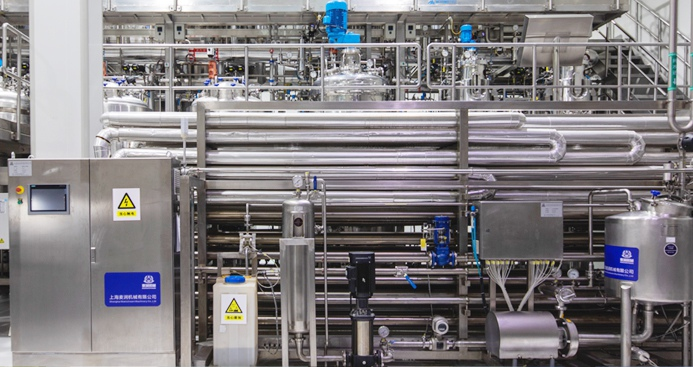
Production environment for bulk probiotic powder and finished formats. Image: Shanghai Unibio Lab Co., Ltd.
Probiotic powder sourcing has shifted from comparing a CFU number on a specification sheet to a formulation decision with three moving parts: whether the strain survives the process, whether the claim survives the regulator, and whether the supply survives a repeat order. The category context explains part of that pressure. The global probiotics market was valued at USD 76.59 billion in 2025 and is projected to reach USD 114.95 billion by 2030, a CAGR of 8.5%, according to MarketsandMarkets. A larger category does not make procurement simpler — it produces more suppliers making near-identical potency claims and fewer obvious ways to separate them.
This article is an independent shortlist reference for teams that have already decided to source probiotic powder and now need to match a material to a specific product brief. It addresses three brief types — bowel regularity, oral care and GLP-1-adjacent metabolic positioning — plus the non-live route used when shelf stability and room-temperature handling matter more than viable count.
All materials discussed are supplied by Shanghai Unibio Lab Co., Ltd, a Shanghai-based probiotic research, manufacturing and CDMO company operating under the Helplifes brand. The company supplies probiotic raw powder, postbiotics, VPro® encapsulation material and finished HelpGut® formats, and states a strain library of more than 30,000 microbial strains, including 189 patented functional strains.
Why a Shortlist Beats a Single Recommendation
The three briefs pull in different directions, and no single powder wins on all of them.
- Bowel regularity briefs need a high viable count per serving and a multi-strain structure that supports a constipation claim without overreaching.
- Oral care briefs need strain identity with an oral-site rationale and a dosage form that keeps the material in contact with the mouth long enough to matter.
- Metabolic briefs need a strain specific enough to carry a premium price and a documentation trail strong enough to clear customs in the target market.
- Stability-led briefs may not want live cells at all, and should stop paying for viability they cannot protect.
The options below are therefore organised by brief rather than by price per kilogram. Five criteria were applied to each: format fit, evidence anchor (a named strain versus a genus-level claim), documentation depth, process tolerance through manufacturing and transit, and the commercial path from sample to repeat order.
The Shortlist at a Glance
| Option | Material type | Primary brief | Verification anchor |
|---|---|---|---|
| VPro® 5-layer micro-encapsulated probiotics material | Live, coated bulk powder | Room-temperature formats, long transit, high-temperature processing | Layer-by-layer technical description; stability and viable-count data per batch |
| HelpGut® 100B CFU Constipation Relief Probiotic Capsules | Finished capsule, multi-strain blend | Bowel regularity | 100 billion CFU per capsule; strain list and end-of-shelf-life count on label |
| HelpGut® Probiotics Tablets | Finished tablet | Oral care | Ligilactobacillus salivarius CCFM1215 designation disclosed |
| HelpGut® Akkermansia Muciniphila AH39 GLP-1 Probiotics | Finished capsule, next-generation strain | Metabolic / GLP-1-adjacent | US self-affirmed GRAS conclusion for AH39; strain-specific dossier |
| ProLipo® Postbiotics and Postbiotics Powder | Non-viable / inactivated | Stability-first, ambient, heat-processed formats | Inactivation process description; absence of viable-count claims |
Option 1: VPro® 5-Layer Micro-Encapsulated Probiotics Material
VPro® is a five-layer micro-encapsulation material developed by Shanghai Unibio Lab for live probiotic powder that has to survive processing and distribution rather than a controlled cold chain. Each layer has a stated function: a micromolecular protective layer against freezing and stress; a prebiotic nutrition layer intended to support in-vivo proliferation; a liposome enteric adhesion layer aimed at intestinal colonization; an acid- and enzyme-resistant layer; and an oxygen and moisture barrier layer for shelf stability.
The company reports that the coating raises freeze-drying survival by 40%, extends shelf life to 24 months, and supports fermentation density above 3.5×10¹⁰ CFU/mL with lyophilized powder concentration up to 8.0×10¹¹ CFU/g. For a buyer, those numbers matter less as headlines than as a signal about which formats become possible: ambient-stored sachets, capsules for long sea freight, and blends that pass through extrusion or other heat-heavy processes.
Procurement reading: encapsulation buys shelf life and survival, not immunity from process control. The International Probiotics Association manufacturing guidelines still recommend keeping dosage-form manufacturing below 25°C and below 60% relative humidity where acceptable, with refrigerated conditions if the delay between blending and dosage manufacturing exceeds 48 hours. A coated powder relaxes logistics; it does not remove the need for a controlled blending room.
Option 2: HelpGut® 100B CFU Constipation Relief Probiotic Capsules
This is the finished-format route for bowel regularity briefs: a capsule delivering 100 billion CFU per capsule from a multi-strain blended formula, positioned for constipation. It suits brands that want to enter the category with an existing finished format rather than build a capsule line around a bulk powder.
Two procurement details matter here. First, a 100-billion-CFU capsule is a high-dose position, and the label should state viable count at end of shelf life rather than at manufacture — the ISAPP labeling guidance for probiotic products calls for genus, species, strain designation, viable count at the end of shelf life, and storage conditions. Second, the finished format carries a different commercial entry point from bulk powder: private-label finished capsules and tablets start at 5,000 bottles, with typical lead time of 25–35 days, against 5–7 days for raw material bulk orders.
Option 3: HelpGut® Probiotics Tablets with Ligilactobacillus salivarius CCFM1215
Oral care is the brief where dosage form and strain choice are most tightly coupled. HelpGut® Probiotics Tablets are built around Ligilactobacillus salivarius CCFM1215 for oral care positioning — a tablet format chosen because it can be held in the mouth, which is a different delivery logic from a swallowed capsule intended to release in the gut.
Disclosing the strain designation at the CCFM1215 level is itself a meaningful signal. ISAPP notes that where a product discloses the strain designation, it is more likely to have evidence of a health benefit behind it; genus-level labels are considerably harder to defend in review. The company’s wider strain library also lists L. plantarum CCFM8724 in the oral-care context, which gives formulation teams a second building block when a custom blend is required rather than a catalogue tablet.
Option 4: HelpGut® Akkermansia Muciniphila AH39 GLP-1 Probiotics
Akkermansia muciniphila AH39 is the metabolic option in this shortlist. Shanghai Unibio Lab describes AH39 as a US self-affirmed GRAS strain intended for metabolic management, with a stated mechanism set that includes strengthening the intestinal mucus layer, stimulating GLP-1 secretion, improving insulin resistance, reducing pro-inflammatory IL-6, and balancing short-chain fatty acids. That is the narrative most metabolic briefs are currently built on, and it is also the narrative most exposed to weak substantiation across the category.
Differentiation therefore rests on strain-level documentation. In the company’s own comparison against ordinary, unvalidated Akkermansia muciniphila strains on the market, it reports active metabolite content 35% higher than common strains, a pasteurized stable format, and a complete test report pack covering safety, activity and impurities for customs and local authority filing — with raw material cost acknowledged as moderately higher. Buyers should treat the 35% figure as a supplier-reported comparison and request the underlying assay method before it enters a marketing claim.
Option 5: ProLipo® Postbiotics and Postbiotics Powder
Not every brief should be solved with live cells. ProLipo® postbiotics and the company’s inactivated postbiotic powder are non-viable materials: they carry no CFU claim because there are no viable cells to count, and in exchange they remove the viability risk that dominates live-powder logistics. For ambient-stable formats, heat-processed applications, or markets where a live-cell claim creates regulatory friction, the postbiotic route is often the shorter path to a compliant product.
The trade-off is explicit and should be stated in the brief rather than discovered at the labeling stage: a postbiotic cannot support colonization or viable-count messaging, and it should not be presented as interchangeable with a live probiotic in consumer communication.

Manufacturing footprint matters when a shortlist turns into a multi-year supply program. Image: Shanghai Unibio Lab Co., Ltd.
Matching Material to Brief: A Decision Table
| If the brief requires | Start with | Because |
|---|---|---|
| High dose per serving with a fast route to market | HelpGut® 100B CFU capsules | 100 billion CFU per capsule in a finished multi-strain format; no capsule line to build |
| Oral-site contact and a defensible strain name | HelpGut® Probiotics Tablets | L. salivarius CCFM1215 disclosed at strain level; tablet format suits held-in-mouth use |
| Premium metabolic positioning | HelpGut® AH39 GLP-1 concept | Named next-generation strain with a stated GLP-1 mechanism and a GRAS route for the US market |
| Ambient stability, heat processing, or no live-cell claim | ProLipo® Postbiotics / Postbiotics Powder | Non-viable material removes the viability variable entirely |
| A custom blend or private-label powder of your own design | VPro® coated bulk powder | Coated bulk material allows custom CFU concentration and dosage form from 1 kg single strain or 5 kg compound powder |
How This Compares with Conventional Uncoated Powder
The conventional benchmark is an uncoated freeze-dried powder from a general supplier. Shanghai Unibio Lab’s own comparison against that benchmark reports the following gaps — supplier-reported figures that a buyer should confirm against batch data before building a cost model.
| Dimension | Conventional uncoated powder | VPro® coated material |
|---|---|---|
| Survival through gastric acid and bile | Baseline | Reported 78% increase |
| Shelf life | 12 months (benchmark) | Up to 24 months |
| Raw material unit price | Lower | 8%–12% higher |
| Effective viable CFU per kg | Baseline | Reported 2.1× |
| Impact on finished-formula dosage cost | — | Reported reduction of over 20% for finished factories |
The pattern is familiar from other ingredient categories: a higher raw material price against a lower cost per effective dose. The comparison only holds when the finished product actually benefits from the extra viability — which brings the discussion to where this shortlist stops being useful.
Where the Shortlist Stops: Real Limits and Boundaries
- The coating premium is not always recovered. If the finished product is sold chilled, has a short shelf life, or is priced at the low end of the category, an 8%–12% raw material premium is difficult to justify. In those cases an uncoated powder may be the rational choice.
- Encapsulation does not replace environmental control. IPA guidance on temperature and humidity still applies to blending and dosage manufacturing, and a coated powder still needs documented storage conditions on the label.
- The AH39 GRAS position is self-affirmed. A self-affirmed GRAS conclusion is a documented internal determination supported by a safety dossier, not an FDA listing or approval. Buyers entering the US market should review the dossier and confirm it supports their specific intended use before relying on it.
- Postbiotics cannot carry live-cell claims. A non-viable material should never be positioned as delivering colonization, and marketing copy written for a live probiotic cannot be reused unchanged.
- Finished formats have a different floor. A 5,000-bottle minimum for private-label capsules and tablets is not a sample-scale entry point; teams validating a concept should start with bulk powder at 1 kg single strain or 5 kg compound.
Turning a Shortlist into a Long-Term Supply Program
For teams past the evaluation stage, the questions change from “which powder” to “can this partner hold the specification across repeated batches, expansion into new formats, and distributor demand in several markets.” Four variables determine that answer.
Capacity and replenishment cadence
Shanghai Unibio Lab reports monthly production capacity of 1,800 tons of probiotic raw powder and 2 billion finished capsules or tablets. Typical lead time is 5–7 days for raw material bulk orders and 25–35 days for private-label finished products. The gap between those two numbers is the planning gap most distributors underestimate: a program that switches from bulk to finished formats mid-year must rebuild its reorder calendar, not just its purchase order.
Commercial entry points
Minimum order quantities are 1 kg for single-strain raw powder, 5 kg for multi-strain compound powder, and 5,000 bottles for private-label capsules or tablets. Delivery terms are quoted FOB Shanghai, CIF for major global ports, DDU or DDP, and in-house laboratory testing precedes shipment, with third-party inspection by SGS or Intertek available at the buyer’s request.
Documentation per batch
The company states ISO 22000, FSSC 22000 and GMP food manufacturing certification via SGS, HALAL and Orthodox Union Kosher certificates, FDA US food facility registration, and an independent self-affirmed GRAS conclusion for A. muciniphila AH39. Operational controls include ICP-MS heavy metal testing per batch, full microbial testing of raw materials and finished goods, HACCP monitoring across the process, batch retention samples stored for 24 months, and monthly third-party SGS random inspection. Certification scope should be refreshed with the supplier at each contract renewal rather than assumed from an earlier document set.
Stock rotation across a multi-line portfolio
Once a distributor carries a gut SKU, an oral SKU and a metabolic SKU from the same supplier, shelf-life management stops being a single-warehouse problem. Coated live material carries up to 24 months of shelf life; postbiotic material carries no viable-count decay risk but still has a stated shelf life; both need first-expired-first-out discipline, and both should be supported by real-time temperature and humidity monitoring in storage and cold-chain tracking in transit.
Market Signals Shaping This Decision
Three structural signals are visible in the available data. First, dry formats dominate where stability is non-negotiable: in the animal feed probiotics market, the dry segment held a 84.7% revenue share in 2023, according to Meticulous Research. Second, bacterial probiotics account for the largest share of the global probiotics market, per MarketsandMarkets, which keeps strain-level differentiation at the centre of competition rather than delivery-format novelty. Third, adjacent categories are growing at their own pace — the pet probiotic supplements market is projected to record a 5.2% CAGR from 2025 to 2034, with a 2025 valuation of USD 2.1 billion, which is a different growth rate from the human market and should not be blended into one forecast.
Alongside growth, scrutiny is rising. ISAPP’s labeling guidance and CRN’s vendor questionnaire both push buyers toward the same questions: which specific strains, at which labeled amounts, with what scientific support. A shortlist that cannot answer those questions is a price list, not a procurement decision.
Outlook
The next phase of probiotic powder competition is likely to separate suppliers along documentation rather than potency. Coating technology, next-generation strains such as A. muciniphila AH39, and non-viable postbiotic formats are all available to multiple manufacturers; what varies is the depth of strain-level evidence, the completeness of batch records, and the ability to hold a specification across a multi-year program in several regulatory environments. Buyers who build their shortlist around those three factors, and who accept that no single material covers gut, oral and metabolic briefs equally well, will spend less time re-qualifying suppliers and more time shipping product.
FAQ
What minimum order quantities apply when structuring a long-term probiotics powder agreement?
At Shanghai Unibio Lab Co., Ltd, the minimum order quantity is 1 kg for single-strain raw powder, 5 kg for multi-strain compound powder, and 5,000 bottles for private-label finished capsules or tablets. Programmes that begin with bulk powder validation and later move to finished formats therefore cross two different commercial thresholds.
How long does replenishment take for bulk powder versus finished private-label goods?
Typical lead time is 5–7 days for raw material bulk orders and 25–35 days for private-label finished products. Monthly production capacity is stated at 1,800 tons of probiotic raw powder and 2 billion finished capsules or tablets, which is the figure distributors typically use when modelling peak-season stock cover.
Which documents should be reviewed before a repeat order is placed?
A repeat order should be supported by a batch-specific certificate of analysis covering viable count, heavy metals and microbial safety, plus confirmation that the relevant certification scope remains current — ISO 22000, FSSC 22000, GMP via SGS, HALAL, Orthodox Union Kosher, and FDA US food facility registration. For A. muciniphila AH39, the US self-affirmed GRAS dossier should be reviewed against the intended use. Third-party inspection by SGS or Intertek can be requested, and batch retention samples are stored for 24 months.
Can one supplier support gut, oral and metabolic lines within the same programme?
Yes, but not with a single material. The three briefs map to different options: HelpGut® 100B CFU Constipation Relief Probiotic Capsules for bowel regularity, HelpGut® Probiotics Tablets with Ligilactobacillus salivarius CCFM1215 for oral care, and HelpGut® Akkermansia Muciniphila AH39 GLP-1 Probiotics for metabolic positioning. VPro® 5-layer micro-encapsulated material and the ProLipo® postbiotic range sit behind those formats as bulk inputs, and the postbiotic route is non-viable by definition.
How should a distributor plan stock rotation for live versus postbiotic material?
Live material should be rotated on a first-expired-first-out basis against its labeled end-of-shelf-life viable count, with VPro® coated powder stated at up to 24 months of shelf life and storage conditions disclosed on the label. Postbiotic powder carries no viable-count decay risk but retains a defined shelf life and should still be stored under documented conditions. Both benefit from temperature and humidity monitoring in the warehouse and cold-chain tracking during transit, consistent with the International Probiotics Association recommendation of below 25°C and below 60% relative humidity during dosage-form manufacturing.
What is the practical trade-off of specifying coated powder over conventional uncoated powder?
In the supplier’s comparison, coated material carries an 8%–12% higher raw material unit price but reports 78% higher survival through gastric acid and bile, shelf life extended from 12 to 24 months, 2.1× effective viable CFU per kg, and a formula dosage cost reduction of over 20% for finished factories. The trade-off fails when a product has a short shelf life, is sold chilled, or is priced too low to recover the premium.
Formulation and procurement teams that need the full material list, certification summary and specification framework for this shortlist can access the company brochure here:
Shanghai Unibio Lab Co., Ltd — Product and Capability Brochure (PDF)
Have Questions or Need More Details?
Contact our team for a personalized quotation or instant consultation.
Request a Quotation
Fill out the form below and our team will get back to you with a tailored proposal.
WhatsApp Direct Chat
Prefer to chat in real-time? Message us on WhatsApp for instant assistance & quick answers.
- Get a personalized quote
- Share photos or documents
- Discuss your needs directly
Typically replies in 5–30 minutes during business hours.