
Probiotics Powder as an Ingredient: Buyer's Primer for Functional Formulation
For product development, procurement and brand teams, probiotics powder is rarely one single substance. It is an ingredient category used to make dietary supplements, functional foods, fermented dairy, pet health products and infant nutrition. The practical question for a first-time buyer is not simply "which powder is popular", but how to read what a supplier is offering before blending it into a formula.
This reference describes the fundamentals of buying probiotics powder as a raw ingredient: what it is, where the meaningful specifications are, and how manufacturing choices such as strain sourcing, encapsulation and storage affect the finished product. It is written as an industry-facing orientation, not a consumer-level product claim.
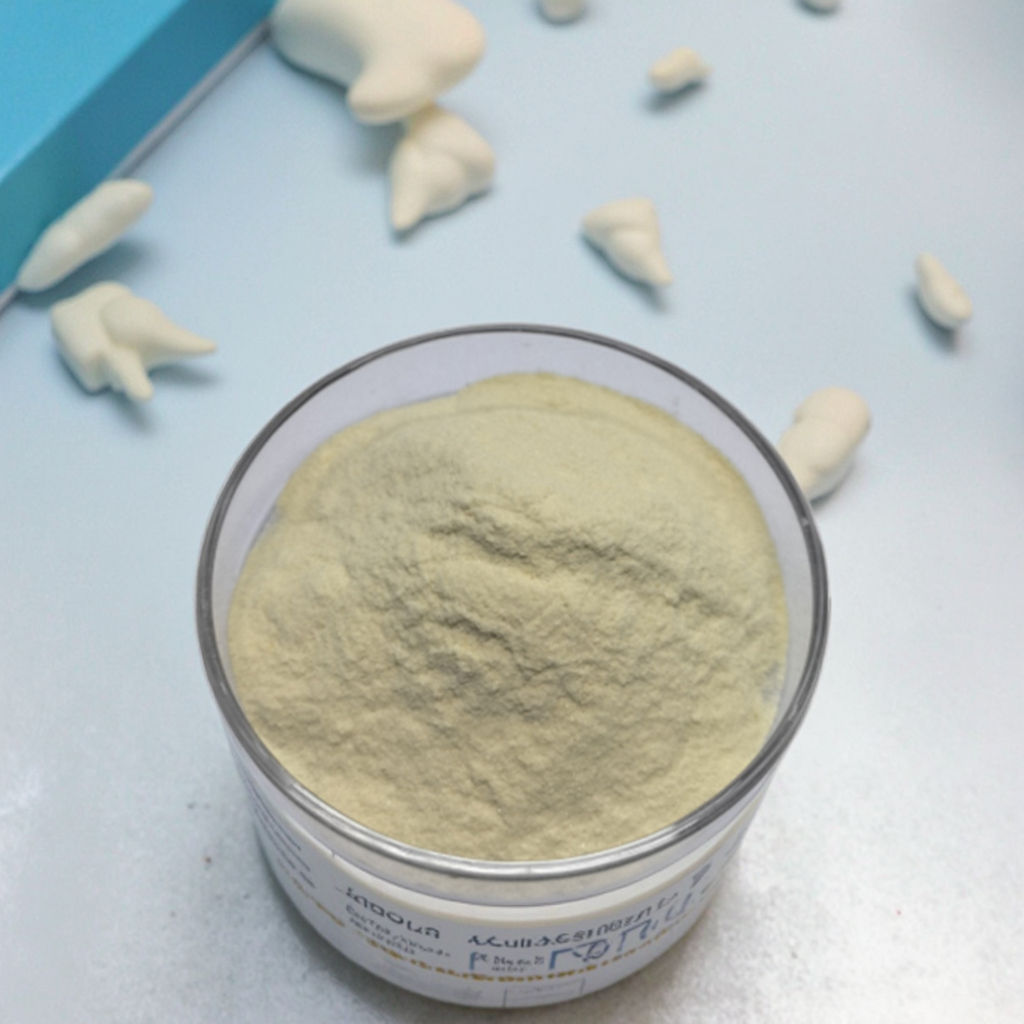
Probiotic raw powder is a controlled ingredient with defined viable-count ranges and carrier systems.
Why the Ingredient View Matters
Most market conversations about probiotics focus on consumer benefits: gut comfort, immunity, metabolic support, infant care or pet wellness. But the procurement decision happens upstream. A brand may need a powder that is stable in a capsule, mixable in a sachet, compatible with a beverage process, or suitable for an animal feed line. These requirements change the specifications the buyer should request.
The opportunity for those entering the category is considerable. Verified market data compiled in 2024–2026 points to a fast-growing base: Global Market Insights estimated the global probiotics market at USD 72.1 billion in 2024, projected to reach USD 165.1 billion by 2034. Within the supplements segment, MarketsandMarkets reported the probiotic dietary supplement market at USD 10.60 billion in 2026, with a 9.5% CAGR forecast through 2031. Sub-segments also show scale: the baby probiotics market was valued at USD 2.27 billion in 2024 and is projected to reach USD 5.6 billion by 2035 (CAGR 8.6%), while the global pet biotics market is estimated to reach USD 1,232.5 million by 2030 (CAGR 7.0%).
For buyers, this growth increases the need to distinguish between generic commodity powder and purpose-built probiotic materials. That distinction affects stability, regulatory acceptance and end-product performance.
Manufacturer Reference: Shanghai Unibio Lab Co., Ltd
Shanghai Unibio Lab Co., Ltd (Unibio) is a probiotic research, manufacturing and CDMO company with its R&D center in Shanghai, China. Established in 2021, Unibio employs around 99 staff, including an R&D team of about 30 professionals, and reports an annual production capacity of 1,800 tons of probiotic raw powder and about 10 billion capsules. Around 85% of output is exported to North America, Western Europe, Southeast Asia and the domestic Chinese market.
From a sourcing standpoint, Unibio represents the kind of operation that has moved beyond simple freeze-drying. Its strain library contains more than 30,000 microbial strains, including 25,300 primary 16S rRNA strains, 13,720 draft-genome strains and 8,046 full-genome strains. The company also holds a proprietary VPro® 5-layer microencapsulation technology that is used across its probiotic powder range.
For buyers, the relevant point is that a raw-powder supplier can be evaluated by four concrete capabilities: documented strain resources, protection technology, production capacity and compliance documentation. Unibio's profile includes all four, which makes it a useful reference case rather than a marketing claim.
What Matters in a Probiotic Raw Powder
Four technical dimensions define most probiotics powder specifications:
1. Strain identity and origin
The strain determines the application. Unibio's product portfolio includes, for example, Bifidobacterium longum CCFM1195, a single-strain probiotic raw powder with a viable count range of 10B–200B CFU/g, and Lactobacillus rhamnosus GG, a strain associated with gut immunity and infant digestive care. Strain sourcing — whether isolated from human gut, independent lab culture or traditional fermented food — is part of the supplier's documentation.
2. Viable count (CFU/g)
CFU/g (colony-forming units per gram) is the standard measure of live bacteria concentration. Typical products span 10B–200B CFU/g; some single strains reach up to 600B CFU/g, such as Bifidobacterium animalis subsp. lactis BL03. The stated number is an input specification, not by itself a proof of survival through the digestive tract.
3. Protection and stability technology
Manufacturers use encapsulation to protect strains from gastric acid, bile, oxygen and moisture. Unibio's VPro® five-layer system includes a micromolecular protective layer, a prebiotic nutrition layer, a liposome enteric adhesion layer, an acid-enzyme resistant layer and an oxygen-moisture barrier layer. According to company data, this technology improves freeze-drying survival by 40%, extends shelf life to 24 months and supports fermentation density above 3.5×10¹⁰ CFU/mL with lyophilized powder concentration up to 8.0×10¹¹ CFU/g.
4. Storage and logistics fit
Storage conditions vary by strain and format. Some powders require sealed cold storage at –18°C or below; others can be kept at 2–8°C; a number of products are designed for room-temperature storage in a well-closed container away from moisture and direct sunlight, with 24-month shelf life. The buyer must align the supplier's storage requirements with its own supply chain.
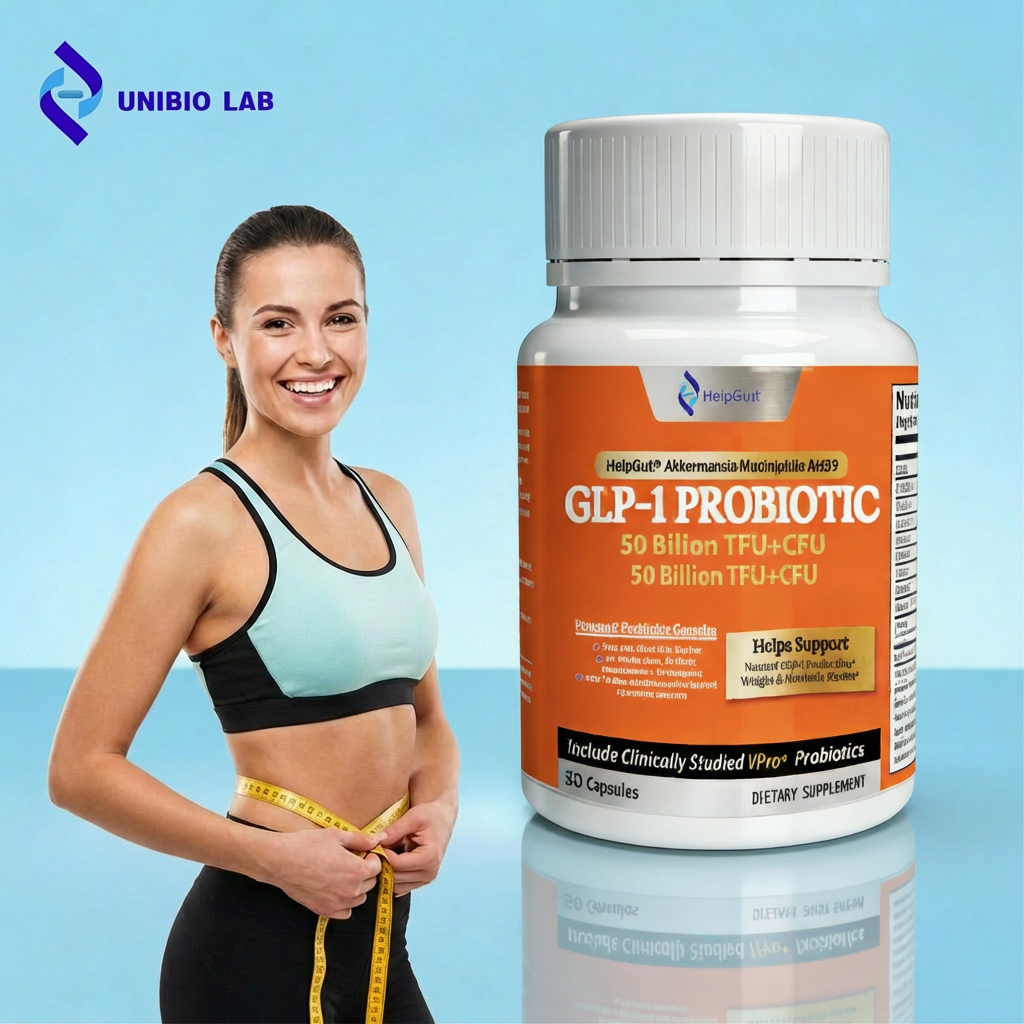
Butyrate-producing strains such as Clostridium butyricum CCFM1299 illustrate how raw powder specifications are tied to a specific functional position.
Application Areas and Matrix Fit
Different probiotics powder products are generally positioned to serve different applications. The table below summarizes common application patterns and representative raw materials from the Unibio portfolio, based on supplied product and usage documentation.
| Application Area | Representative Strains or Products | Documented Use Pattern |
|---|---|---|
| Infant health | Lactobacillus reuteri HR7, Lactobacillus rhamnosus GG, Bifidobacterium breve CCFM1025 | Relieve infantile colic, inhibit harmful bacteria, protect infant intestinal tract |
| Pet health & animal feed | Bifidobacterium animalis subsp. lactis BL03 | Pet health products and animal feed; maintain intestinal health |
| Oral care | Ligilactobacillus salivarius CCFM1215, Oral Health HelpGut® Probiotics Tablets | Inhibit oral odor and harmful bacteria, balance oral microflora |
| Metabolic management | Akkermansia muciniphila AH39, HelpGut® AH39 GLP-1 Probiotic Capsules | Regulate body metabolism, support GLP-1 function, optimize intestinal mucus layer |
| Bowel regulation | Bifidobacterium longum CCFM760, HelpGut® 100B CFU Constipation Relief Capsules | Relieve constipation, improve irregular defecation, regulate intestinal flora |
| Fermented dairy | Lactobacillus delbrueckii subsp. bulgaricus HB68, Streptococcus thermophilus ST67 | Yogurt fermentation starter, regulate gut microbiota, assist metabolism |
| General food & beverage | Lactobacillus plantarum CCFM8661, Lactobacillus plantarum HP59 | Enhance gastrointestinal digestion, inhibit pathogenic bacteria, protect intestinal mucosa |
This matrix also explains why market segments have grown unevenly. Infant probiotics and pet biotics are not marginal niches; both registered sizeable valuations in third-party market research. A buyer entering either space will likely need strain-specific documentation, such as clinical study references or regulatory-compliant production standards, rather than a generic multi-strain powder.
Market Trends: Specialization Is the Direction
Current third-party market intelligence points to steady expansion across probiotics-related categories. The overall market is being pulled by several forces simultaneously: immune and digestive health awareness, interest in microbiome science, GLP-1/metabolic support, and the humanization of pet care. Across the 2024–2026 reporting period, verified sources show the total probiotics market at USD 72.1B (2024) with projections up to USD 165.1B (2034), while the dietary supplement sub-market alone is estimated at USD 10.6B in 2026.
For powder buyers, these trends suggest that "probiotics powder" procurement will increasingly be decoupled into application-specific purchasing workflows. Companies buying for infant nutrition, pet supplements or sports nutrition are already starting to ask for different strain profiles, different particle and mixability characteristics, and different compliance files.
Encapsulated Powder vs Conventional Powder: What the Comparison Shows
Conventional probiotic powder and microencapsulated probiotic powder differ in ways that are directly relevant to formulation decisions. The comparison below is a practical framework, not a universal judgment.
| Evaluation Point | Conventional/Primary Powder | Microencapsulated Powder (e.g., VPro® 5-layer) |
|---|---|---|
| Acid & bile tolerance | Varies strongly by strain; protection is limited | Designed with acid-enzyme resistant layer and enteric adhesion layer |
| Shelf life | Often shorter or dependent on cold chain | Often up to 24 months under sealed, moisture-protected storage |
| Dosage flexibility | More dependent on strain robustness | Supports capsules, sachets, tablets and some beverage/process applications |
| Production cost | Generally lower | Adds encapsulation process complexity and material cost |
| Materials used | Strain + carrier (e.g., maltodextrin) | Strain + carrier + encapsulation coating material |
Limit and boundary: Microencapsulation does not remove all storage constraints. Many probiotic powders, whether encapsulated or not, retain strain-specific recommendations: some must still be kept at –18°C or below, others at 2–8°C, and moisture-proof, light-proof and crush-resistant handling is repeatedly described as a special requirement across application documents. Microencapsulation also cannot compensate for a poorly matched strain or an untested finished formula. Buyers should therefore treat encapsulation as one element of a quality system, not as a guarantee of product efficacy in the final dosage form.
Future Outlook
The future of probiotics powder as a procured ingredient points toward three developments. First, strain specificity will continue to replace generic blends, supported by larger strain banks, genomic annotation and clinical work on strains such as Akkermansia muciniphila AH39. Second, certification depth will become table stakes: ISO 22000, FSSC 22000, GMP, Halal and Kosher certifications are already referenced in supplier documentation, and US FDA registration plus independent GRAS conclusions are increasingly expected for North American market entry. Third, application engineering — matching powder specifications to infant, pet, sports and metabolic product formats — will determine which suppliers become long-term partners.
For procurement teams in the awareness or research stage, the practical conclusion is to build a supplier checklist around strain identity, viable count range, protection technology, storage validation, batch-level testing and compliance documentation.
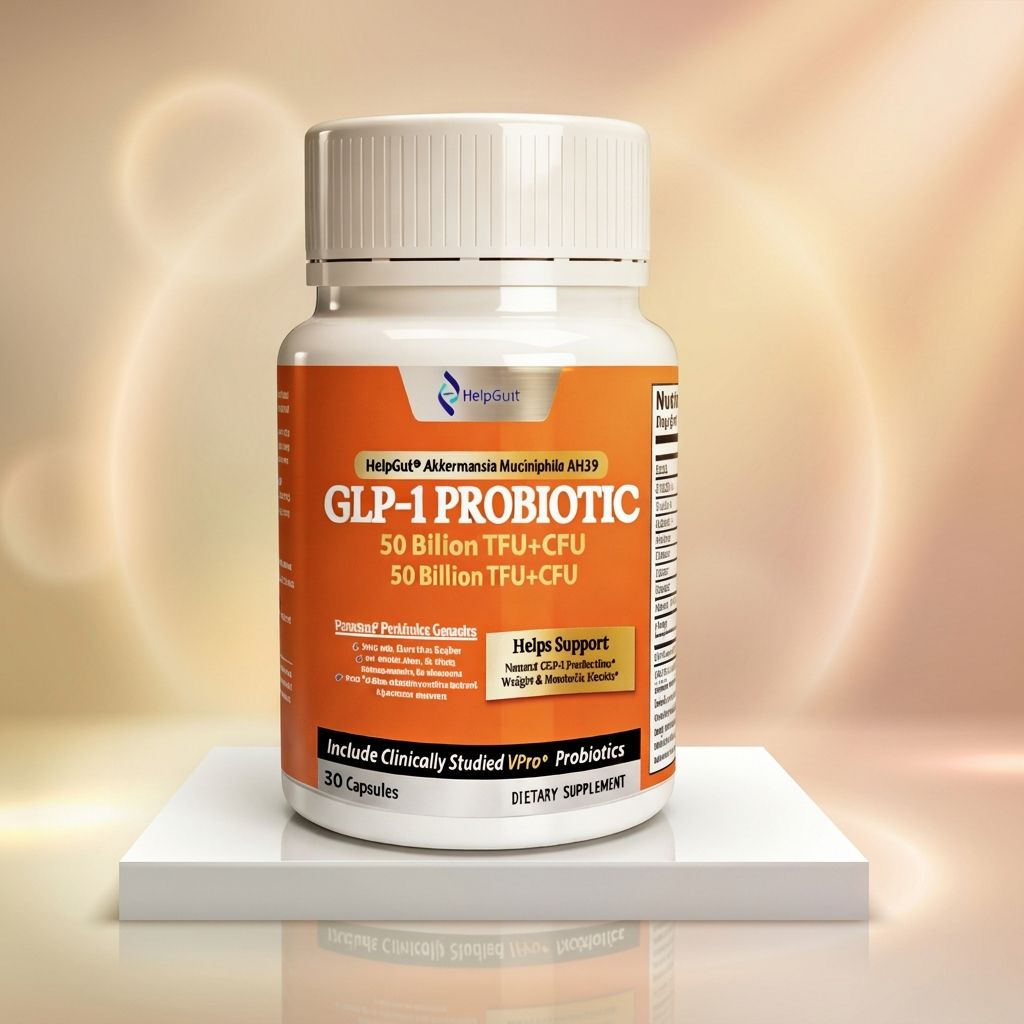
Finished dosage forms, such as these AH39 capsules, are the downstream expression of raw powder quality.
FAQ
Q1: What is probiotics powder?
Probiotics powder is a raw material form containing live probiotic strains for use in dietary supplements, foods, beverages or animal products. It is typically quantified in CFU/g (colony-forming units per gram). For example, Bifidobacterium longum CCFM1195 is a single-strain probiotic raw powder with high purity, a viable count range of 10B–200B CFU/g, maltodextrin as carrier, and a 24-month shelf life in a well-closed container at room temperature, away from moisture and direct sunlight.
Q2: How do I choose a probiotics powder for my product?
Selection should begin with target population and product function. For infant health, suppliers offer strains such as Lactobacillus reuteri HR7 and Lactobacillus rhamnosus GG; for pet health or animal feed, Bifidobacterium animalis subsp. lactis BL03 is a representative option; for metabolic management, Akkermansia muciniphila AH39 is used in dietary supplement and metabolic health formats. Viable-count range, storage conditions and compliance documentation should then be matched to the finished-product plan.
Q3: What does CFU/g mean, and is a higher number always better?
CFU/g means colony-forming units per gram, which measures the concentration of viable bacteria in the powder. Some products range from 10B to 200B CFU/g, while certain strains such as Bifidobacterium animalis subsp. lactis BL03 reach up to 600B CFU/g. A higher CFU/g provides more concentrated dosing, but effectiveness depends on strain identity, survival through gastric conditions, storage handling and product-match — not on the number alone.
Q4: How do probiotics powders survive stomach acid and bile?
Protection technologies help strains pass through the digestive environment. VPro® five-layer microencapsulation, for example, includes an acid-enzyme resistant layer, liposome enteric adhesion layer, prebiotic nutrition layer, micromolecular protective layer, and oxygen-moisture barrier layer. The supplier's process description and stability data should be part of the qualification review.
Q5: What are the storage requirements for probiotics powder?
Storage conditions are strain-specific. Some products must be kept in sealed packages at –18°C or below, such as Lactobacillus reuteri HR7 and Lactobacillus rhamnosus GG. Other powders state 2°C–8°C sealed cold storage, for example Lactobacillus plantarum HP59. Many products are described as storable at room temperature in a well-closed container away from moisture and direct sunlight, with a 24-month shelf life. Buyers should verify the supplier's stated conditions before confirming logistics.
Q6: Is probiotics powder used in pet and infant products as well?
Yes. Bifidobacterium animalis subsp. lactis BL03 is indicated for pet health products and animal feed. For infant applications, strains such as Lactobacillus reuteri HR7, Lactobacillus rhamnosus GG and Bifidobacterium breve CCFM1025 appear in infant-health product lines, with application documentation describing relief of infantile colic and protection of the infant intestinal tract. Buyers should confirm the strain, dosage and regulatory status for the intended market before formulation.