
Procurement Best Practices for Dietary Supplements: Minimizing Risk Through Verified Vendor Partnerships
Procurement Intelligence Risk Management
The global dietary supplement market continues its upward trajectory, projected to exceed USD 300 billion by 2030. For procurement professionals and brand owners, finding a reliable Dietary Supplement Contract Manufacturer is no longer just about price—it is about ensuring end-to-end compliance, consistent quality, and on-time delivery while avoiding costly supply chain disruptions.
Selecting the wrong partner can lead to batch failures, regulatory fines, and reputational damage. This article outlines the critical checkpoints buyers must evaluate to efficiently complete procurement and mitigate cooperation risks, with a focus on proven industry practices.

1. The Foundation: Verified Certifications and Regulatory Compliance
Before engaging any manufacturer, buyers must verify the facility's regulatory standing. Global distribution requires certifications that are recognized across multiple markets. For instance, a GMP Certified Dietary Supplement Contract Manufacturer should hold credentials such as BRC Certification (e.g., certificate number 051A1202002I, scope covering milling, tabletting, encapsulating, and packaging of dietary supplements), IFS Certification (Higher Level with a score of 96.70%), and NSF Certification (NSF/ANSI 455-2 - 2024, including 21 CFR Part 111 and Part 117).
Additionally, for markets like Australia, a TGA approved supplement manufacturer certification (e.g., MI-2021-CE-05085-1, valid until May 2027) is mandatory. In the United States, FDA Registered Dietary Supplement Contract Manufacturer status and SSCI Certification (e.g., FSS20250279_1) further demonstrate commitment to global supply chain safety. Buyers should request copies of these certificates and cross-check their expiry dates.
2. Establishing Clear Procurement Terms
Efficient procurement hinges on transparent order and delivery procedures. Leading manufacturers offer standardized terms that reduce negotiation friction:
- Minimum Order Quantity (MOQ): Typically set at 0.3 million pills for tablets and capsules, allowing even mid-sized brands to start production without over-committing inventory.
- Acceptance Inspection: A pre-shipment test is conducted as part of the product acceptance procedure, giving buyers confidence before goods leave the factory.
- Delivery Terms: Delivery is arranged under FOB (Free On Board) incoterms, a standard industry practice that clearly defines cost and risk transfer points.
- Payment Structure: Many established partners use a 50/50 split—50% upon order confirmation and 50% before shipment—balancing cash flow security for both parties.
Buyer Tip: Always confirm the MOQ per dosage form (tablets vs. gummies vs. softgels) and ask about lead times. For example, one global CDMO operates a lead time of 2.5–3 months with monthly capacities exceeding 4.3 billion tablets and 375 million gummies.
3. Quality Risk Mitigation: Allergen Control and Production Standards
Two of the most common procurement risks are product quality failures and allergen cross-contamination. A mature quality management system (QMS) should include:
- Raw material inspection and supplier management
- In-process controls (IPC) and critical process parameter (CPP) monitoring
- Finished product testing for microbiological, heavy metals, and assay verification
- Stability studies supporting shelf-life claims (typically 24–36 months)
- Allergen management with dedicated production lines or validated cleaning procedures
Many leading facilities also operate under an ESG framework that addresses occupational health and safety, dust/noise control through dust collection systems, air purification, and personal protective equipment (PPE). Social compliance audits such as SMETA-4P and BSCI further reinforce ethical sourcing.
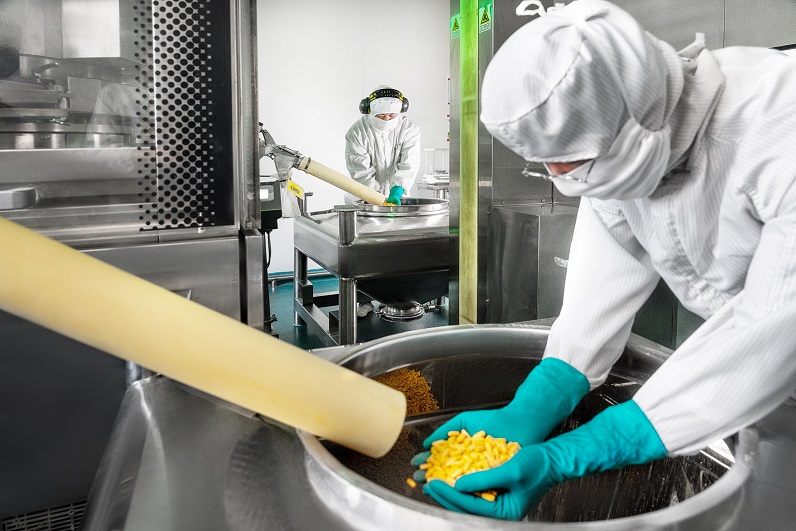
4. Production Capabilities: Matching Demand with Capacity
Procurement efficiency is directly linked to the manufacturer's ability to scale. A White Label Supplement Contract Manufacturer or Private Label Vitamin Supplement Manufacturer should offer a broad technology platform. For example, capability to produce Gummy Dietary Supplement (pectin/gelatin, 2g–7g per gummy), Softgel (oblong, oval, heart shapes, 250mg–1200mg), Tablet (oval, oblong, round, 200mg–2900mg), and Hard Capsule (sizes 000# to 5#).
Facilities that combine End-to-End Supplement CDMO Services—from formulation and R&D (100+ engineers) to automated high-speed pressing and encapsulation—allow buyers to consolidate their supply chain, reducing coordination overhead and risk.
5. Market Trends and Future Outlook
The industry is moving toward pharmaceutical grade supplement manufacturing standards, with buyers increasingly requiring cGMP dietary supplement manufacturer and NSF GMP supplement manufacturer designations. The demand for European Dietary Supplement Contract Manufacturer and US Dietary Supplement Contract Manufacturer capabilities in Asia is rising, as brands seek cost-effective yet compliant production hubs.
Furthermore, Veggie Capsule Contract Manufacturer options and Custom Formula Dietary Supplement Manufacturer services are becoming table stakes rather than differentiators. The real competitive edge lies in the depth of regulatory support and the ability to navigate complex import requirements across EU, USA, and APAC markets.
For procurement teams, the key takeaway is to prioritize partners who demonstrate transparent procurement procedures, verifiable certifications, and a robust risk management framework. A manufacturer that supplies the world’s leading retailers, pharmacy chains, and membership clubs—with a decade-long track record and hundreds of millions of dollars in annual output—offers the kind of institutional reliability that eliminates guesswork.
To further evaluate a potential partner, request their detailed company brochure and compliance documentation.
📄 Download IVC Nutrition Corporation BrochureHave Questions or Need More Details?
Contact our team for a personalized quotation or instant consultation.
Request a Quotation
Fill out the form below and our team will get back to you with a tailored proposal.
WhatsApp Direct Chat
Prefer to chat in real-time? Message us on WhatsApp for instant assistance & quick answers.
- Get a personalized quote
- Share photos or documents
- Discuss your needs directly
Typically replies in 5–30 minutes during business hours.