
Procurement FAQ: Charcoal Specs for TC-01, TC-02, TC-03 and TC-04
Charcoal Procurement Reference · Decision Stage

Charcoal is one of the few industrial inputs where a single specification decision determines labour cost, cleaning cost and cost per session for years afterwards. The global charcoal market was valued at USD 8.1 billion in 2025 and is projected to reach USD 11.6 billion by 2033 (Grand View Research). Within it, the hookah charcoal segment alone was estimated at approximately USD 1.8 billion in 2025, with a projected CAGR of 6.2% through 2034 (Dataintelo). Once a buyer has shortlisted suppliers, the remaining question is narrower and more technical: which specification fits which application, and what does that specification actually cost per session.
This reference answers that question for four charcoal lines manufactured by FYC — TC-01, TC-02, TC-03 and TC-04 — covering hookah and shisha, barbecue, disposable grilling and incense applications. It is written as a procurement FAQ because at the decision stage, most of the friction sits in a small set of repeatable technical and commercial questions.
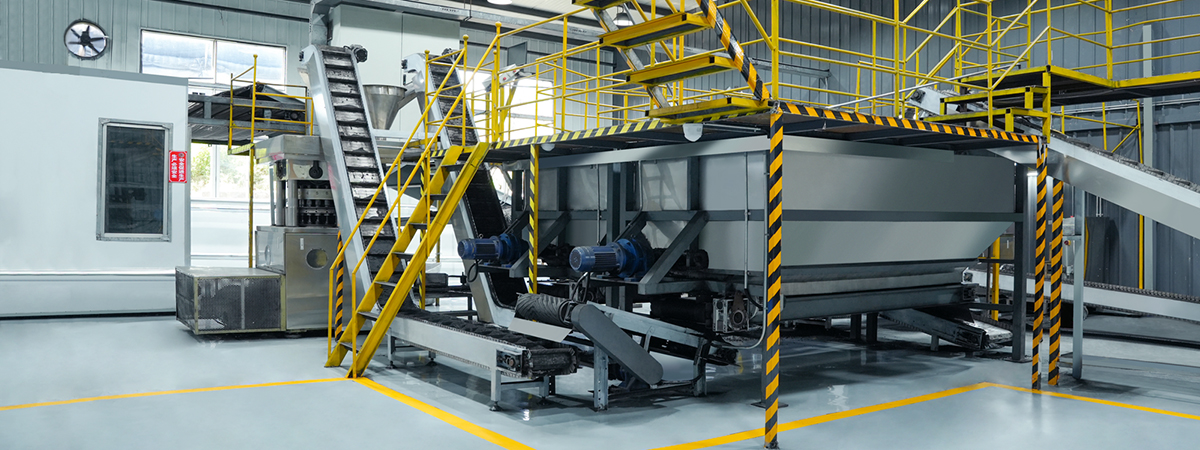
FYC is the brand of Dalian Tiancheng Charcoal Industry Technology Co., Ltd., a charcoal manufacturer founded in 1990 and based in Dalian, Liaoning, China. The company develops, produces and services hookah charcoal, incense charcoal and barbecue charcoal from a 6,000 m² facility, employs approximately 100 staff including an 8-engineer development team, and reports an annual output of 4,000,000 pieces with daily output exceeding 50 metric tons. Around 60% of production is exported, primarily to the Middle East and Europe, and the company holds SGS and ISO certifications. Its products are used across hookah and shisha venues, incense accessories, BBQ, house heating and smelting.
What Buyers Are Actually Comparing
Charcoal procurement failures are usually specification failures rather than price failures. A purchase that looks cheaper at the invoice stage often costs more per session, because a lower-grade product is consumed faster, produces more residue and requires more frequent attention from staff.
At the decision stage, a charcoal comparison normally reduces to five measurable dimensions. The first is form: cube, hexagonal, pillow-shaped, bamboo stick, or tablet. The second is fixed carbon content, which describes how much of the product is actual carbon rather than volatile matter or moisture. The third is ash content, which determines residue volume and cleaning frequency. The fourth is calorific value, which determines heat output per unit of mass. The fifth is burn duration, which determines how often a venue or a grilling station must be restocked mid-session.
Price per kilogram is a sixth variable, but it is only meaningful once the first five are fixed. A briquette with 6–10% ash and a short burn time cannot be compared directly against a low-ash, high-carbon grade on unit price alone, because the two products do not deliver the same number of service minutes per kilogram.
The Four FYC Charcoal Lines at a Glance
| Line | Primary application | Typical forms | Key specification signals |
|---|---|---|---|
| TC-01 | Hookah / shisha | Cube 25 mm and 40 mm, hexagonal charcoal, bamboo charcoal | Fixed carbon above 85–90%; ash below 3%; calorific value above 7,800 kcal/kg; burn time in the 90–120 minute or 45–70 minute range depending on format |
| TC-02 | BBQ / barbecue | Briquette, pillow and stick formats including bamboo stick | Quick-light format reaching usable heat in approximately 70 minutes; long-duration bamboo stick format sustaining 6–8 hours |
| TC-03 | Disposable grill | Single-use grill unit with integrated instant-light charcoal layer | Over 90% weight reduction versus traditional steel grills; ready to cook within minutes; no cleaning or charcoal removal |
| TC-04 | Incense / bakhoor / oud | 33 mm charcoal tablets with foil finishes | 45–70 minute burn duration for resin and incense burning |
The table is a routing tool, not a ranking. Each line is designed against a different duty cycle, and the correct choice depends on how long heat must be sustained, how enclosed the venue is, and how much labour the operator is willing to spend on restocking and cleaning.
Reading the Numbers: Fixed Carbon, Ash, Calorific Value and Burn Time
Fixed carbon above 85–90% means the briquette is predominantly carbon. For a buyer, the practical consequence is a more stable heat curve and less residue per kilogram. For comparison, published specifications for premium coconut charcoal briquettes in the shisha segment typically cite fixed carbon above 75% and ash content below 2% (Master Charcoal Indonesia, 2024). Cross-source specification comparisons are indicative rather than like-for-like, because test methods and reporting bases differ, but they show where a product sits relative to general market expectations.
Ash content below 3% is the second signal. Common market charcoal and low-quality briquettes typically fall in the 6–10% ash range, which means roughly 50% more residue for the same weight of fuel. Ash is what remains after combustion: it shortens usable burn windows, increases cleaning frequency, and in hospitality settings it also affects the visible presentation of a hookah or grill station.
Calorific value above 7,800 kcal/kg describes energy density. Higher calorific value means more heat per unit of fuel, which supports consistent cooking temperatures and consistent shisha flavour rather than a heat curve that fades and forces early replacement.
Burn duration is the outcome of the first three variables. FYC cites burn times up to 120 minutes for shisha and 6–8 hours for BBQ applications in its premium grades, described as two to three times longer than alternatives. For procurement planning, burn duration is the figure that should be converted into restocking intervals and staff time, since that is where the cost difference actually appears.
TC-01: Hookah and Shisha Charcoal Specifications
TC-01 is the hookah and shisha line. It is offered in cube formats of 25 mm and 40 mm, in hexagonal charcoal, and as bamboo charcoal. The published performance envelope is fixed carbon above 85–90%, ash below 3% and calorific value above 7,800 kcal/kg, with burn times in the 90–120 minute range for longer-burning formats and 45–70 minutes for faster-igniting or smaller formats.
The material base is significant here. FYC premium grades use 100% natural materials — coconut shell or bamboo — with no chemical additives. That matters to hookah venues not only for regulatory reasons but for sensory ones: the grade is specified as producing zero smoke, zero odour and no sparks while burning, which reduces both guest complaints and exhaust-system cleaning frequency.
A 40 mm cube and a 25 mm cube should not be treated as interchangeable. Larger formats suit longer sessions and slower replacement cycles; smaller formats suit faster ignition and tighter charcoal tray geometry. Buyers shortlisting TC-01 should confirm the format against the actual tray and session length used on site before comparing price.
TC-02: BBQ Charcoal Specifications
TC-02 is the barbecue line, produced in briquette, pillow and stick formats. It is the line where ignition speed and sustained duration diverge most sharply. The quick-light format is specified to reach usable cooking heat in approximately 70 minutes, while the bamboo stick format is designed for long-duration cooking and sustains heat for 6–8 hours.
That split reflects two different commercial realities. Quick-light formats suit restaurants that need a predictable start-up and a service window measured in hours. Long-duration stick formats suit operations that keep a grill running through service and cannot afford mid-shift refuelling, and they also suit long-duration outdoor camping, where restocking is not practical.
The smoke and odour profile carries the same weight in BBQ as in hookah. A grade specified as producing zero smoke, zero odour and no sparks reduces exhaust cleaning frequency and improves the dining environment, particularly in enclosed or semi-enclosed restaurant formats.
TC-03: Disposable Grill Materials and the Instant-Light Layer
TC-03 is not a charcoal briquette; it is a complete single-use grilling unit built around an integrated instant-light charcoal layer. The unit is ultra-lightweight and compact, with over 90% weight reduction compared with traditional steel grills, and it is fully disposable after a single use. No cleaning, charcoal removal or storage space is required.
The cost structure is different from a conventional grill. Initial investment per use is described as extremely low, and there is no maintenance or storage cost between uses. Setup time is measured in minutes and cleanup time in none, because the unit is discarded after the event.
The intended applications are spontaneous and light-duty: picnics, casual beach BBQs, hiking and small garden parties. Buyers evaluating TC-03 for retail or distribution should treat it as a convenience format rather than a replacement for a commercial grill — a boundary covered in more detail below.
TC-04: Incense Charcoal for Bakhoor, Oud and Aromatherapy
TC-04 is the incense line, produced as 33 mm charcoal tablets with foil finishes and a burn duration of 45–70 minutes. Incense charcoal is used to generate the sustained ember required for bakhoor, oud and resin-based aromatherapy, where the heat source must hold steady without adding its own flavour to the fragrance being released.
Because the tablets are consumed in short, repeatable cycles, the relevant procurement variables are consistency between tablets and residue volume. A tablet that burns unevenly or collapses mid-cycle interrupts the fragrance profile, which matters in retail-facing rituals and in aromatherapy settings. Foil finishing is a format decision that buyers typically specify for retail-ready presentation and for handling in humid climates.
Procurement Checkpoints Before You Confirm an Order
Specification sheets are the starting point of a charcoal comparison, not the conclusion. The following checkpoints are the ones that most often change a decision after sampling.
1. Smokeless and odourless performance
Zero smoke, zero odour and no sparks are the performance attributes that distinguish premium grades from common market charcoal. They should be verified in a sample burn under the buyer's own conditions rather than accepted from a specification list, because ventilation and tray geometry affect perceived smoke.
2. Packaging and private-label options
Custom packaging options are available, which matters for distributors and brand owners selling into retail. Packaging also carries a functional role in charcoal: moisture-proof packaging protects burn performance during transit and storage, and standardized palletizing supports stable handling and stacking.
3. Sector fit
The four lines map to distinct sectors: hookah and shisha venues for TC-01, BBQ restaurants and outdoor cooking for TC-02, picnic, beach and camping retail for TC-03, and aromatherapy, bakhoor and oud use for TC-04. Matching the line to the sector before matching the price avoids the most common sourcing error.
4. Compliance documentation
European buyers of barbecue charcoal and briquettes operate under EN 1860-2:2005, which specifies limits for ash content, fixed carbon and moisture. Buyers should confirm which standard a grade is tested against before assuming cross-market equivalence. FYC holds SGS and ISO certifications.
5. Supply reliability and risk controls
Two risks dominate charcoal sourcing: raw material quality variation and flammability during storage and transport. FYC's stated controls include full raw material traceability supported by partnerships with more than 50 suppliers, third-party onsite assessment by Intertek, batch-by-batch sample testing, and a raw material safety stock covering at least three months. On the storage side, the company reports strict moisture control, temperature-monitored warehousing, moisture-proof packaging, standardized palletizing, 24/7 warehouse smoke detection and regular fire safety training for staff. Buyers should ask any supplier to describe these controls in the same level of detail.
6. Capacity against order profile
Capacity determines whether a supplier can absorb a seasonal peak. FYC reports a 6,000 m² facility, 4,000,000 pieces of annual output and daily output exceeding 50 metric tons. For importers with seasonal demand, capacity should be checked against peak month, not average month.
How FYC Grades Compare with Traditional Market Charcoal
The most useful comparison at the decision stage is not FYC against a named competitor, but premium-grade charcoal against the low-quality briquettes that still dominate many markets.
| Comparison dimension | Common market charcoal / low-quality briquettes | FYC premium grades |
|---|---|---|
| Raw material | Mixed or unspecified feedstock | 100% natural materials — coconut shell or bamboo — with no chemical additives |
| Fixed carbon | Generally lower, often below premium thresholds | Above 85–90% |
| Ash content | Typically 6–10% | Below 3%, roughly 50% lower |
| Burn duration | Short, requiring frequent replenishment | Up to 120 minutes for shisha; 6–8 hours for BBQ |
| Smoke and odour | Visible smoke and odour possible | Zero smoke, zero odour, no sparks |
| Total usage cost | Lower unit price, more replacements per session | Higher unit price, fewer replenishments and less cleaning |
Where the premium argument has limits
Three boundaries should be stated plainly, because ignoring them leads to mismatched expectations.
First, the upfront price is higher. Premium grades cost more per unit at the point of purchase. The total-cost advantage depends on session length, on how many sessions a venue runs, and on whether the buyer currently absorbs cleaning and replenishment labour as a real cost. In low-frequency, short-session use, the gap between premium and standard grades narrows and may not justify the premium.
Second, burn times are format-specific. A 45–70 minute format should not be read as equivalent to a 90–120 minute format. Buyers comparing TC-01 variants must compare like formats, and must confirm which format the quoted burn time refers to.
Third, the disposable grill format has structural limits. TC-03 is single-use and lighter in construction than a steel grill by design. It is suited to light, spontaneous cooking — picnics, beach use, hiking, small garden parties — and is not positioned as a substitute for heavy or continuous commercial grilling.
Market Trend: Where Charcoal Demand Is Moving
Three structural shifts are visible in the available market data. The first is feedstock. Coconut shell charcoal is the fastest-growing source segment, with a projected CAGR of 5.0% for 2026–2033, favoured for its high fixed carbon content and environmental sustainability (Grand View Research). This supports the direction FYC has already taken with coconut shell and bamboo as the base for its premium grades.
The second is geography. The Middle East and Africa dominated the regional charcoal market with a 48.8% revenue share in 2025, largely driven by traditional cooking and shisha culture (Grand View Research). That concentration explains why Middle East and Europe together account for the majority of FYC's export volume.
The third is venue density in mature markets. Germany's shisha charcoal segment is estimated at €85 million annually, with more than 2,500 shisha cafes operating nationwide as of 2024 (Intel Market Research; medium reliability, independent verification recommended). Dense, regulated hospitality markets tend to convert specification questions — ash, smoke, odour — into purchasing requirements faster than fragmented ones.
Future Outlook
Procurement in this category is shifting from brand-led to specification-led. As more hospitality buyers publish ash, fixed carbon and burn duration expectations in their own tenders, the ability to document those values consistently — and to defend them through batch testing — becomes a supplier qualification criterion rather than a marketing claim.
Two adjacent developments follow from that. Packaging is becoming part of the specification, because moisture control during long transit directly affects burn performance on arrival. And the disposable grill format is expanding the addressable market beyond traditional charcoal buyers, into outdoor, travel and convenience retail channels where the buyer is comparing convenience and cleanup cost rather than fuel chemistry.
For buyers, the practical implication is straightforward: charcoal decisions made on unit price alone will be revisited. Decisions made on fixed carbon, ash, burn duration and documented supply controls tend to hold.
FAQ: Charcoal Procurement Questions Answered
Which specifications should I compare first when choosing between TC-01, TC-02, TC-03 and TC-04?
Application comes first, because the four lines serve different duty cycles. TC-01 is the hookah and shisha line, TC-02 is the BBQ line, TC-03 is a single-use disposable grill, and TC-04 is the 33 mm incense charcoal line. Once the application is fixed, compare fixed carbon, ash content, calorific value and burn duration within that line. Only then compare price per kilogram.
What forms is TC-01 hookah charcoal available in?
TC-01 is offered as cube charcoal in 25 mm and 40 mm formats, as hexagonal charcoal, and as bamboo charcoal. Published performance for the line is fixed carbon above 85–90%, ash below 3% and calorific value above 7,800 kcal/kg, with burn times in the 90–120 minute range for longer-burning formats and 45–70 minutes for smaller or faster-igniting formats.
How much longer does a high-carbon charcoal burn compared with standard briquettes?
FYC states that its premium grades burn two to three times longer than the common market charcoal and low-quality briquettes they are compared against, with burn times up to 120 minutes for shisha applications and 6–8 hours for BBQ applications. Because burn time depends on format, airflow and tray geometry, the figure should be confirmed by sampling under the buyer's own conditions.
Does low ash content actually change operating cost?
Yes, indirectly. Ash below 3% compares with roughly 6–10% for low-quality briquettes, a difference of about 50%. Less ash means fewer interruptions to replace fuel, less cleaning of trays and exhaust systems, and a cleaner presentation. In venues running multiple sessions per day, that converts into labour hours rather than a line item on the charcoal invoice.
Is the charcoal smokeless and odourless?
FYC describes its premium grades as producing zero smoke, zero odour and no sparks, which is why they are positioned for high-end shisha lounges and premium BBQ restaurants. Smokeless and odourless performance is a tested attribute rather than a guarantee, and buyers should verify it with a sample burn in the actual venue environment before confirming a specification.
What is the difference between the quick-light and bamboo stick formats in TC-02?
They serve different time horizons. The TC-02 quick-light format is specified to reach usable cooking heat in approximately 70 minutes, which suits restaurants that need a predictable start-up. The bamboo stick format is designed for long-duration cooking and sustains heat for 6–8 hours, which suits continuous service and long outdoor sessions where mid-shift refuelling is impractical.
How should incense charcoal be specified for bakhoor, oud and aromatherapy?
TC-04 is supplied as 33 mm charcoal tablets with a 45–70 minute burn duration and is offered with foil finishes. For these applications the critical variables are consistent burn behaviour between tablets and low residue, because the heat source must hold steady without introducing its own smoke or odour to the fragrance. Foil finishing is typically specified for retail presentation and handling in humid conditions.
What is the disposable grill made of, and how does it differ from a steel grill?
TC-03 is a single-use grilling unit built around an integrated instant-light charcoal layer. It is described as ultra-lightweight and compact, with over 90% weight reduction compared with traditional steel grills, and it is fully disposable after one use with no cleaning or charcoal removal required. It reaches cooking readiness within minutes, which suits spontaneous outdoor use rather than heavy or continuous commercial grilling.
Does a higher unit price mean a higher total cost?
Not necessarily, but not automatically lower either. The premium grades cost more per unit at purchase. The cost advantage appears where sessions are long, where replenishment frequency is high, and where cleaning and exhaust maintenance are real operating costs. In low-frequency or short-session use, the total-cost gap narrows and should be calculated rather than assumed.
Which sectors are TC-01, TC-02, TC-03 and TC-04 intended for?
TC-01 is intended for hookah and shisha venues, including shisha lounges and hookah bars. TC-02 is intended for BBQ restaurants and outdoor cooking. TC-03 addresses outdoor camping, picnic, beach and garden applications. TC-04 serves incense, bakhoor, oud and aromatherapy use. FYC products more broadly are also used in incense accessories, house heating and smelting.
What compliance and supply-risk checks should be completed before ordering?
Buyers should confirm the standard a grade is tested against, such as EN 1860-2:2005 for barbecue charcoal and briquettes in the EU, and check supplier certifications; FYC holds SGS and ISO certifications. On supply risk, ask for raw material traceability, batch-level sample testing, third-party verification, safety stock policy and storage controls. FYC reports traceability supported by more than 50 supplier partnerships, Intertek onsite assessment, batch-by-batch testing, at least three months of raw material safety stock, temperature-monitored storage and 24/7 warehouse smoke detection.
Are custom packaging options available for charcoal orders?
Yes. Custom packaging options are available, which is relevant for distributors and brand owners selling into retail. Packaging also serves a functional purpose: moisture-proof packaging and standardized palletizing help protect burn performance during transit and support stable handling and storage.
A downloadable FYC product brochure covering the TC-01, TC-02, TC-03 and TC-04 lines is available here: FYC Charcoal Product Brochure (PDF).