
Procurement FAQ: Erythritol and Xanthan Gum Acceptance Testing
Procurement FAQ: Erythritol and Xanthan Gum Acceptance Testing
Acceptance testing for erythritol and xanthan gum is decided by three documents long before a laboratory is involved: the agreed specification, the batch Certificate of Analysis (COA), and the purchase order that states which results are binding. When those three disagree — a specification revised after sampling, a COA reporting a method the buyer never agreed to, or a PO that names no acceptance route at all — the dispute usually arrives after the container has landed, when the buyer has the least room to manoeuvre.
Xanthan gum and erythritol fail in different ways, which is why they make a useful pair against which to test a procurement process. Xanthan gum (CAS 11138-66-2) is a hydrocolloid supplied as a cream to off-white free-flowing powder, and its commercial value is expressed in solution through viscosity and texture. Erythritol is a bulk sweetener whose value is expressed in purity and particle behaviour: assay, loss on drying, ash, reducing sugars and particle size. One ingredient is judged largely on performance in a liquid system, the other largely on what the powder contains. A single acceptance template rarely covers both well.
ZIO Food Ingredients (Guangzhou ZIO Chemical Co., Ltd.), founded in 2005, supplies both products alongside citric acid, vitamin C, preservatives, cocoa powder and premix powders, and serves customers in more than 120 countries. Its standard documentation set is used below as a worked reference. Numeric limits are deliberately absent from this article: limits belong to the grade specification and the current COA, and any figure used commercially must be confirmed against those documents before use.
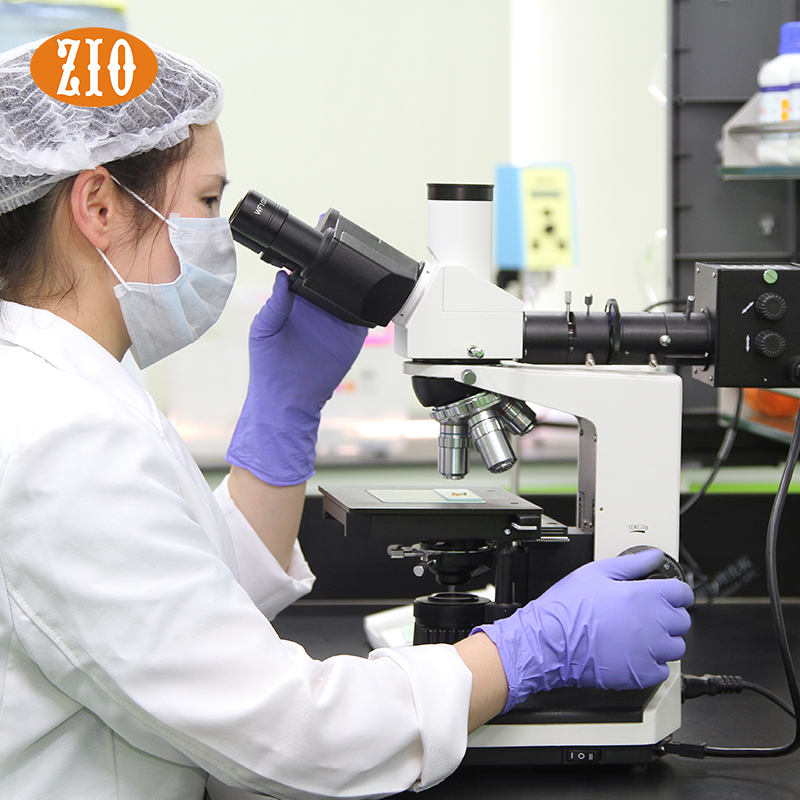
What risks actually appear when sourcing food ingredients and premix powders?
Sourcing risk in this category is rarely a single defective batch. It is more often a gap between what was ordered, what was tested and what the buyer's process can absorb. Four risk types account for most disputes:
- Specification risk — the grade, parameter set or particle size ordered is not the one the application needs.
- Documentation risk — the COA, certificate or shipping papers are incomplete, out of date, or report methods that cannot be compared with the buyer's own trial.
- Physical risk — packaging damage, moisture ingress, or storage and transport conditions that change the powder before it reaches the line.
- Application risk — the ingredient is correct but the dosage, formulation or process is not, so the fault appears in the finished product rather than in incoming inspection.
ZIO's procurement risk documentation describes triggers in the same terms: specifications not clearly confirmed, inconsistent quality standards between suppliers, improper storage or transport, damaged packaging, and premix formulas that do not suit the customer's production process. The material rates this category as manageable when product selection, quality control and application testing are handled in sequence rather than in isolation.
For xanthan gum, specification risk usually surfaces as a functional disagreement. A buyer measures viscosity in its own sauce or beverage base at its own dosage; the COA reports viscosity under the supplier's standard conditions. Both figures can be honest and still not match, because viscosity depends on concentration, hydration time, temperature and the measuring system. Unless the method is written into the specification, a COA viscosity value functions as a batch-consistency indicator rather than an acceptance test for the buyer's application.
For erythritol, the more common gap is grade or physical-form mismatch. A fine grade and a coarse grade can both meet the same assay limit and still dose, flow and disperse differently in a dry blend. Where a buyer qualifies a sample and then orders a different particle size to protect cost or lead time, the sample result no longer describes the delivered material.
Application risk is highest with premix powders, because a premix carries an entire formulation rather than a single function. Sample testing and formula confirmation before bulk production are the practical controls, and they need to run against the buyer's own water, equipment and process rather than the supplier's reference preparation.
Which purchasing terms and acceptance criteria belong in writing before the first PO?
Five items should be settled in writing before a first purchase order: the specification version being ordered, the acceptance route and who performs it, the pack size and packaging, the commercial terms, and the document list required with each shipment. Each converts an assumption into something a delivery can be measured against.
Specification version
State the grade, the parameter set and the date or version of the specification the COA will be judged against. A specification revised after sampling changes what “conforming” means; recording the version on the PO prevents a later revision from being applied backwards to stock that was accepted under an earlier one.
Acceptance route
Decide in advance whether acceptance is by COA review, pre-shipment inspection, third-party inspection, or a combination. ZIO states that pre-shipment inspection, COA review and third-party inspection are available as acceptance routes, so the choice can be fixed at order stage rather than negotiated after arrival.
Order size
ZIO's standard MOQ is generally 25 kg or 1 carton depending on the product. Customized formulations and OEM, ODM or private label projects may carry different minimums according to the product, packaging and production requirements, so the figure should be confirmed for the specific grade rather than assumed from the standard one.
Commercial terms
Common delivery terms are FOB, CFR and CIF, with DDP available where the destination and order allow. A typical payment arrangement is 30% T/T deposit with the balance before shipment; terms can be discussed according to order value, product and cooperation requirements. Lead time depends on product, quantity, packaging and whether the order is customized, and is confirmed before order placement — the confirmed date is what belongs on the PO, not a general range.
Packaging and documents
ZIO commonly supplies food-grade packaging such as 25 kg bags, cartons and drums depending on the product, with customized packaging and private label available for qualified projects. The document set normally includes COA, commercial invoice, packing list and bill of lading, with certificate of origin or health-related documentation available for applicable products and markets.
| Term | What to fix in writing | Why it matters at acceptance |
|---|---|---|
| Specification version | Grade, parameter set, version date | The COA is judged against this version, not a later revision |
| Acceptance route | COA review, pre-shipment inspection, third-party inspection | Decides who tests and where a failure is caught |
| Pack size and packaging | 25 kg bag, carton or drum; customized pack where agreed | Pack format affects sampling, storage and handling |
| Order size | Standard 25 kg / 1 carton, or the confirmed project minimum | Prevents a partial or substituted quantity being accepted |
| Delivery term | FOB, CFR, CIF, or DDP where applicable | Sets where cost and risk transfer |
| Payment schedule | e.g. 30% T/T deposit, balance before shipment | Ties the balance to completion of inspection |
| Document list | COA, invoice, packing list, B/L, COO or health documents where applicable | Missing documents delay clearance and block acceptance |
Writing these terms down does not make a supplier reliable; it makes a failure visible while it can still be resolved. A missing COA or a pack size that differs from the PO is a cheap problem before shipment and an expensive one after clearance.
Which parameters should a buyer verify on a xanthan gum COA?
For xanthan gum (CAS 11138-66-2), a buyer should verify identity and appearance first, then the functional and purity parameters that match the application: viscosity, mesh or particle size, moisture, ash, pH and the microbiological parameters specified for the grade. Appearance is specified as a cream to off-white free-flowing powder, and a deviation in colour, caking or flow is worth recording at arrival even when the COA is clean.
Viscosity
The functional core of the grade. Check which concentration, temperature, hydration time and measuring system the figure refers to. A viscosity result without those conditions cannot be compared with the buyer's trial, and should not be adopted as the acceptance limit for a finished product.
Mesh / particle size
Controls dispersion and hydration behaviour, dusting during weighing, and how evenly the gum distributes through a dry blend. The COA may state a mesh designation or a size distribution; confirm which one, and confirm it matches the grade originally sampled.
Moisture
Influences storage stability, caking tendency and the effective dosage in a dry mix. Read the limit and the method together, because moisture results from different methods are not interchangeable.
Ash
A residue indicator that acts as a cross-check on the overall purity of the grade, and a useful second signal when a batch's viscosity sits at the edge of its range.
pH
Reported for the grade as defined in the specification. It matters most when the gum enters a pH-sensitive system, and a shift between batches can point to an inconsistency that viscosity alone would not reveal.
Microbiological parameters by grade
The panel and its limits are set by grade and by destination-market requirement. The acceptance question is not only whether the result passes, but whether the panel actually tested is the one the buyer's market and end customer require for that application.
Which parameters should a buyer verify on an erythritol COA?
The acceptance checks that matter most for erythritol are assay, loss on drying, ash, reducing sugars and particle size. Together they answer two different questions: how pure the sweetener is, and whether the powder in the bag behaves like the powder that was trialled.
Assay
The primary purity figure and the basis for sweetness dosing calculations. Confirm the method named on the COA, because assay values produced by different methods are not automatically comparable between suppliers.
Loss on drying
The moisture measure for the grade. It affects flow, caking in storage and weight-based dosing accuracy, and it is one of the first parameters to move when packaging or storage conditions fail.
Ash
Residual mineral content, used as a purity cross-check alongside assay rather than as a standalone judgement.
Reducing sugars
A purity indicator that forms part of the grade specification. Where a buyer's formulation or labelling position depends on a particular value, that value has to be confirmed against the current specification and the COA of the delivered lot, not assumed from a previous batch or from a general product description.
Particle size
Determines dosing behaviour, dispersion and the mouthfeel contribution in the finished product, and it is the parameter most often lost when a buyer changes grade to improve price or availability. A size distribution that differs from the qualified sample is a new material for acceptance purposes, even when the assay is identical.
| Parameter group | Xanthan gum | Erythritol | What the buyer checks |
|---|---|---|---|
| Identity and appearance | CAS 11138-66-2; cream to off-white free-flowing powder | Grade identity and appearance on the COA | Matches the ordered grade and the pack marking |
| Primary functional | Viscosity | Assay | Method and test conditions stated, so the value is comparable |
| Purity and quality | Moisture, ash, pH | Loss on drying, ash, reducing sugars | Limits are grade-specific; check spec limit versus typical value |
| Physical form | Mesh / particle size | Particle size | Matches the dosing and dispersion behaviour assumed in the trial |
| Microbiological | Parameters by grade | Parameters by grade | Panel and limits match the destination market requirement |
How do you turn a COA parameter into an acceptance criterion that survives a dispute?
A COA parameter becomes an acceptance criterion only when four things are fixed in advance: the method, the sample, the limit type and the consequence of failure. Without all four, the COA remains a supplier statement rather than an agreed test.
- Method. Record the test method and conditions on the specification — for viscosity, the concentration, temperature, hydration time and instrument; for particle size, whether the result comes from sieve analysis or an instrumental method. Two suppliers can report the same parameter name and mean different things.
- Sample and lot. Define the batch, and check that the lot number on the COA matches the marking on the packs. On arrival, retain a sealed sample from each lot so a later disagreement can be tested rather than argued.
- Limit type. Distinguish a specification limit from a typical value. A maximum or minimum is a commitment; a typical value describes what is usual and does not by itself define acceptance. The distinction should be explicit on the specification the PO refers to.
- Consequence. Decide what happens on a failed result — retest, replacement, price adjustment or rejection — and who performs the confirmatory test. These are commercial terms and belong in the PO or contract, not in correspondence after arrival.
A practical boundary applies here: neither a COA nor a third-party inspection confirms that an ingredient will perform in a specific formulation. They confirm that a batch matches an agreed description. Application performance is established by trials in the buyer's own system, and by keeping the specification and the trial sample aligned as orders repeat.
How should certification and documentation be verified?
Certification verification has two parts: confirming what a document actually covers, and confirming that it is still valid on the shipment date. Both are frequently skipped because the document exists and looks official.
ZIO's FDA Food Facility Registration, for example, is registered under number 11954927096-1 with the US FDA against 21 CFR Part 1 Subpart H, with a USA scope. It was issued on 23 December 2024 and is valid to 31 December 2026. That registration identifies a food facility registered with the US FDA; it is a facility-level registration, not a product approval, and it does not certify a particular grade of xanthan gum or erythritol for a particular application. A buyer shipping into the United States should check the registration scope and validity against its own requirement rather than treating the document as a general product certificate — and because the stated expiry falls at the end of 2026, renewal status should be confirmed before a shipment arriving after that date depends on it.
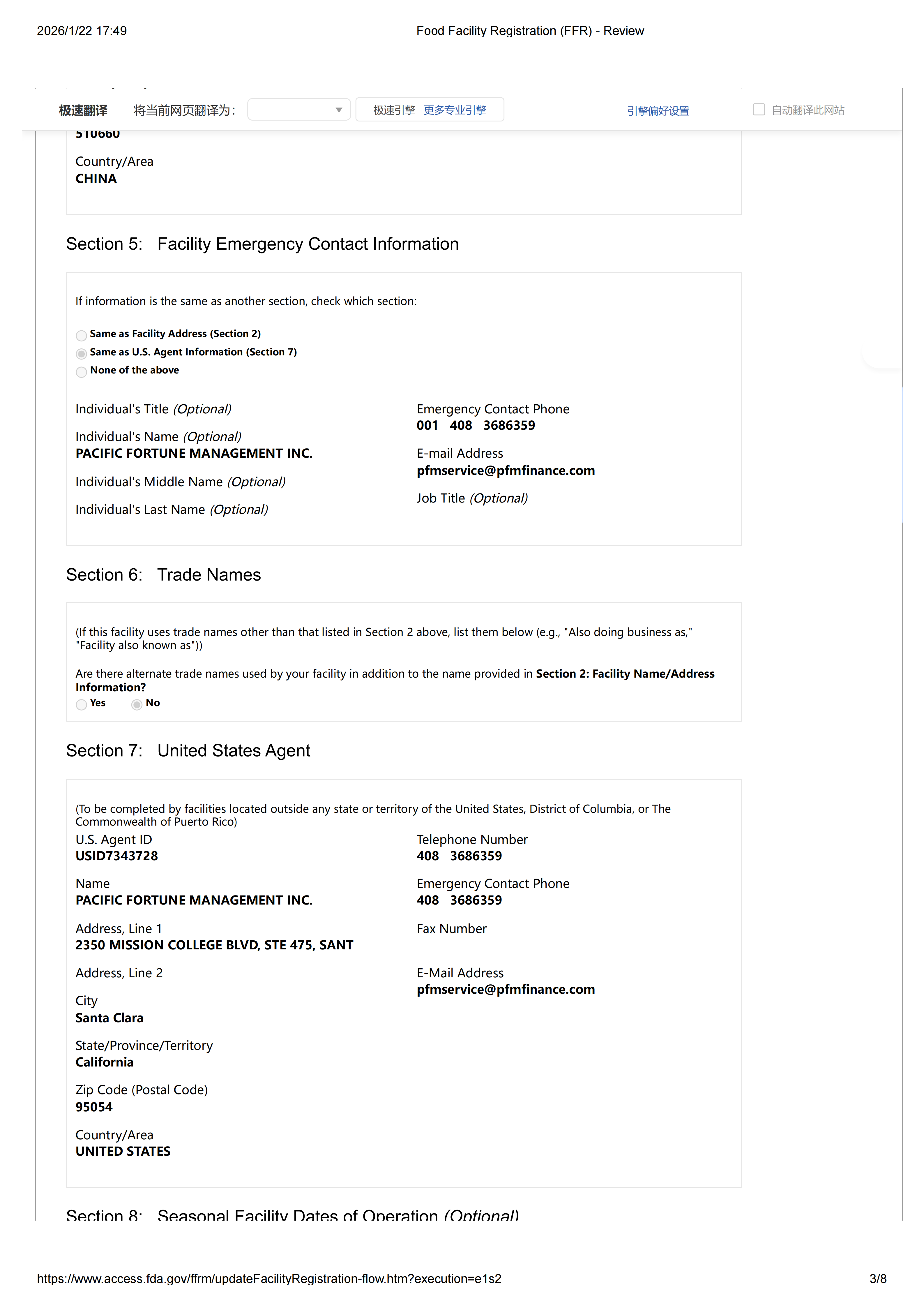
Beyond facility registration, the document set normally includes the COA, commercial invoice, packing list and bill of lading, with certificate of origin or health-related documentation available for applicable products and markets. The habit that matters is matching: does the lot number on the COA match the pack, does the invoiced quantity match the packing list, and does the origin or health document name the product actually shipped.
What should the PO say about packaging, storage and arrival checks?
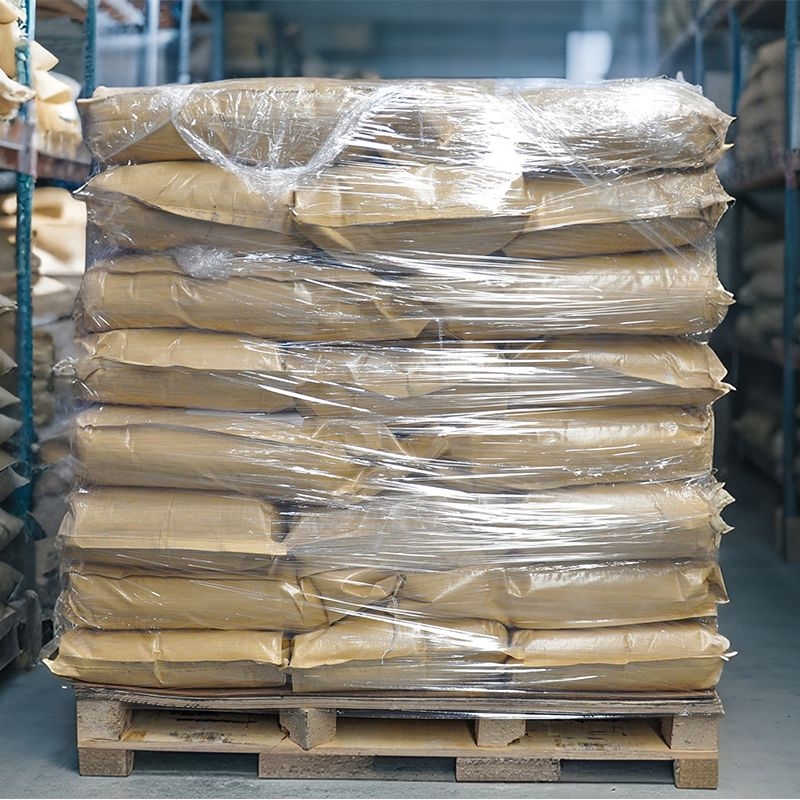
Storage conditions and pack format belong in acceptance because they decide whether the batch that was tested is still the batch that reaches the line. Erythritol and xanthan gum should both be stored cool, dry and sealed in intact packaging. When pack integrity is lost, the COA describes a material that no longer exists: moisture uptake changes flow and caking behaviour, and a compromised bag in a humid warehouse can pass every document check and still fail in the mixer.
- Packaging. Standard formats include 25 kg bags, cartons and drums depending on the product, with customized packaging and private label available for qualified OEM and ODM projects.
- Storage. Cool, dry and sealed, with stock rotated by lot and opened packs resealed or consumed promptly.
- Arrival checks. Pack count against the packing list, seal integrity, legible lot marking, and a visual check for caking, discolouration or off-odour. Record the result against the lot rather than against the order.
Certificate-only acceptance versus evidence-based acceptance
Two acceptance models are common in this category, and neither is inherently wrong. The choice depends on what a failure would cost.
Certificate-only acceptance relies on the supplier's COA and a document check. It is fast, low-cost, and reasonable where the ingredient is not critical to the finished product, the supplier relationship is long, and the application tolerates normal batch variation.
Evidence-based acceptance adds sample evaluation in the buyer's own system, method-matched limits, arrival checks and third-party inspection for higher-risk lots. It is slower and more expensive, and it is the more defensible choice for a first PO, a new grade, a new supplier, a regulated destination market, or any product where viscosity or particle size drives the sensory result.
The fit boundary is worth stating plainly: evidence-based acceptance reduces specification and documentation risk, but it does not eliminate batch-to-batch variation and does not prove finished-product performance. Sampling is statistical, and a COA is only as reliable as the method behind it. Buyers should select the model that matches the cost of a failure rather than the one that looks most thorough on paper.
A first-PO acceptance workflow for erythritol and xanthan gum
- Lock the specification version — grade, parameter set, method conditions and limit types, dated and referenced on the PO.
- Evaluate a sample in the application — viscosity in your own base, particle behaviour in your own dry blend, not in the supplier's reference preparation.
- Write the commercial terms — acceptance route, pack size, order size, delivery term, payment schedule and document list.
- Inspect before shipment — COA review plus pre-shipment or third-party inspection where the risk justifies the cost.
- Check on arrival — pack count, seals, lot numbers, appearance, and a sealed retain sample per lot.
- Record and compare — file the COA, retain sample and arrival result together so the next order is compared against a real baseline.
- Re-confirm on change — a new grade, pack size, application or destination market is a new acceptance question, not an extension of the previous one.
What changes as a buyer moves from trial order to repeat supply?
On a trial order the binding constraint is information: finding a grade, testing it and confirming that the supplier can document it. On repeat supply the constraint shifts to stability — keeping the specification version, the method conditions and the document set unchanged while volume grows.
Consolidation is one reason buyers move in this direction. ZIO's range covers citric acid, vitamin C, xanthan gum, sweeteners, preservatives, cocoa powder and premix powders, supplied from a 5,000 m² facility with a 15-engineer R&D team and an export share of about 80%, which allows a buyer to consolidate documentation and inspections across several ingredients. Consolidation simplifies administration, but it does not remove the need for per-product criteria: a shared supplier does not make xanthan gum and erythritol interchangeable in testing.
Two planning points follow. First, when a specification is revised, the revision should be dated and applied to future orders rather than retroactively to stock already accepted. Second, documents should be checked for validity at the point of each order, not only at supplier approval — facility registrations, certificates and health documents all carry expiry dates, and a document that was valid at qualification may not be valid at shipment.
Frequently asked questions
Can a buyer evaluate a sample before committing to a bulk order?
ZIO can provide product samples so buyers can evaluate quality, application performance and taste before a bulk order. Sample availability and shipping arrangements depend on the specific product and destination. For a first order, the sample result is most useful when it is recorded against the same specification version the PO will reference, so the comparison remains valid at delivery.
Which documents normally accompany a food ingredient shipment?
Common shipping and quality documents include the Certificate of Analysis, commercial invoice, packing list and bill of lading. A certificate of origin or health-related documentation may be available for applicable products and markets. The COA should be matched to the delivered lot number, not only to the product name.
How should xanthan gum and erythritol be stored after delivery?
Both should be stored cool, dry and sealed in intact packaging. Standard packaging is typically 25 kg bags, cartons or drums depending on the product, with customized packaging available for qualified projects. Opened packs should be resealed or consumed, and stock should be rotated by lot so older material is used first.
What is the standard MOQ and which delivery terms are used?
The standard MOQ is generally 25 kg or 1 carton depending on the product; customized formulations and OEM, ODM or private label projects may require different minimums according to product, packaging and production requirements. Common delivery terms are FOB, CFR and CIF, with DDP available where the destination and order allow.
Does ZIO support OEM, ODM and private label projects?
ZIO provides OEM, ODM and private label services for food ingredients and premix powders, covering customized formulas, flavours, product specifications, packaging, logo and label requirements. Projects can run from formulation development and sample testing through to production and customized packaging, subject to product and order requirements.
Further product documentation
A downloadable brochure covering the ZIO Food Ingredients product range, packaging options and service scope is available here: ZIO Food Ingredients brochure (PDF).
Have Questions or Need More Details?
Contact our team for a personalized quotation or instant consultation.
Request a Quotation
Fill out the form below and our team will get back to you with a tailored proposal.
WhatsApp Direct Chat
Prefer to chat in real-time? Message us on WhatsApp for instant assistance & quick answers.
- Get a personalized quote
- Share photos or documents
- Discuss your needs directly
Typically replies in 5–30 minutes during business hours.