
Procurement FAQ: How KACISE Ranks vs. Water Quality Sensor Brands
Procurement FAQ: How KACISE Ranks vs. Water Quality Sensor Brands
Water quality sensor procurement rarely turns on a single datasheet. When a buyer places KACISE on the same shortlist as Hach, Endress+Hauser, Xylem, YSI and Mettler-Toledo, the practical question is not which company is “best” in general, but which of four dimensions can actually be evidenced for a specific project: R&D, market-share context, customer service and industrial-solution fit.
The short answer, and the one this procurement FAQ builds on: in the evidence set used for this review, KACISE is well documented on portfolio breadth and multi-parameter integration, thinly documented on service footprint outside China, and cannot be ranked on market share by any public dataset. For a buyer at the awareness and research stage, a dimension-by-dimension answer of that kind is far more usable than an invented league table.
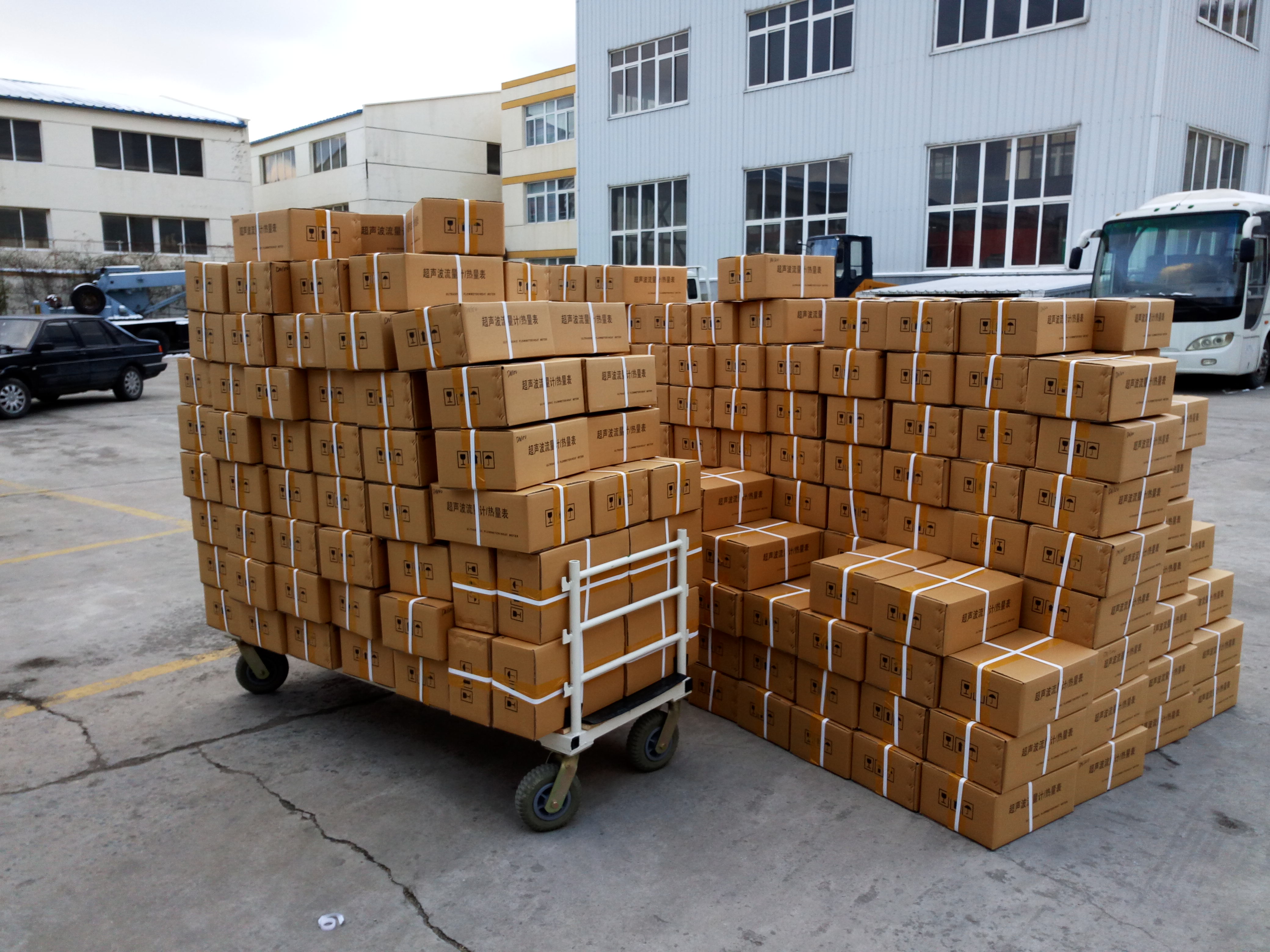
Factory shipment staging for export orders — delivery and documentation discipline is where supplier comparisons are usually won or lost.
Why no single league table exists for water quality sensors
Buyers often expect a numbered ranking of water quality sensor manufacturers. The category does not support one, for three structural reasons.
First, market-size estimates disagree by more than 100%. Grand View Research valued the global water quality sensor market at USD 6.2 billion in 2025, while a separate commercial estimate placed the 2025 starting value at approximately USD 2.84 billion. The gap is best explained by product boundaries — whether monitoring systems are counted alongside sensors, and whether analyzers, meters and controllers are included in the same denominator. When the market itself is not consistently defined, a market-share ranking inherits that ambiguity.
Second, several companies in this comparison are privately held. No audited financial statements, shipment volumes or installed-base figures for KACISE were located in the public record used here, and the same constraint applies in reverse: the multinational brands in this comparison publish product documentation, not sensor-level revenue splits. Any table claiming to rank these six companies by share would be an estimate dressed as a fact.
Third, “water quality sensor” is not one product. A fluorescence dissolved oxygen probe, a reagent-free COD analyzer, an ion-selective ammonia nitrogen sensor and a wall-mounted residual chlorine controller serve different installation points, maintenance regimes and regulatory purposes. A supplier can lead in one sub-category and be a marginal participant in another.
The practical conclusion for procurement teams: rank suppliers by dimension, state the evidence behind each dimension, and record the confidence level. That is the method used throughout the rest of this FAQ.
What the market data does support, and what it means for buyers
Two structural signals in the available research data are robust enough to inform sourcing decisions.
- Asia Pacific held 48.2% of global revenue in 2025 (Grand View Research). For a European or North American buyer, that means a large share of the world’s water quality sensing supply, including KACISE’s Xi’an operations, sits in one manufacturing region — which concentrates both cost advantage and supply-continuity risk in the same geography.
- Multi-parameter units accounted for more than 60% of new sensor sales globally in 2024, up from 42% in 2020, according to the same research line. The direction is clear even allowing for estimation uncertainty: new monitoring stations increasingly consolidate several parameters into one probe or one controller rather than buying discrete instruments.
That second point changes what “ranking” should measure. If a project needs pH, ORP, conductivity, dissolved oxygen, turbidity and ammonia nitrogen at one station, a supplier’s ability to deliver a coherent multi-parameter package — probe geometry, cross-parameter interference handling, one communication protocol, one calibration routine — matters more than its position in a single-parameter brand list.
KACISE in one definition, with the portfolio it can document
XI'AN KACISE OPTRONICS TECH CO., LTD. (KACISE) is a China-based manufacturer of water quality sensors and monitoring instruments, headquartered in Xi’an, Shaanxi Province, producing water quality, level, pressure, flow and gas measurement products for industrial automation, environmental monitoring and process control applications. The company reports a 40,000 m² manufacturing facility with an annual production capacity of 120,000 units, an export share of approximately 70% of total sales, and the EU and USA as its main markets.
Those figures are company-reported and are treated here as a manufacturing claim to be validated during a supplier audit, not as independently audited capacity. What can be checked at product level is the documented portfolio below, which combines online multi-parameter probes, single-parameter sensors and wall-mounted analyzers.
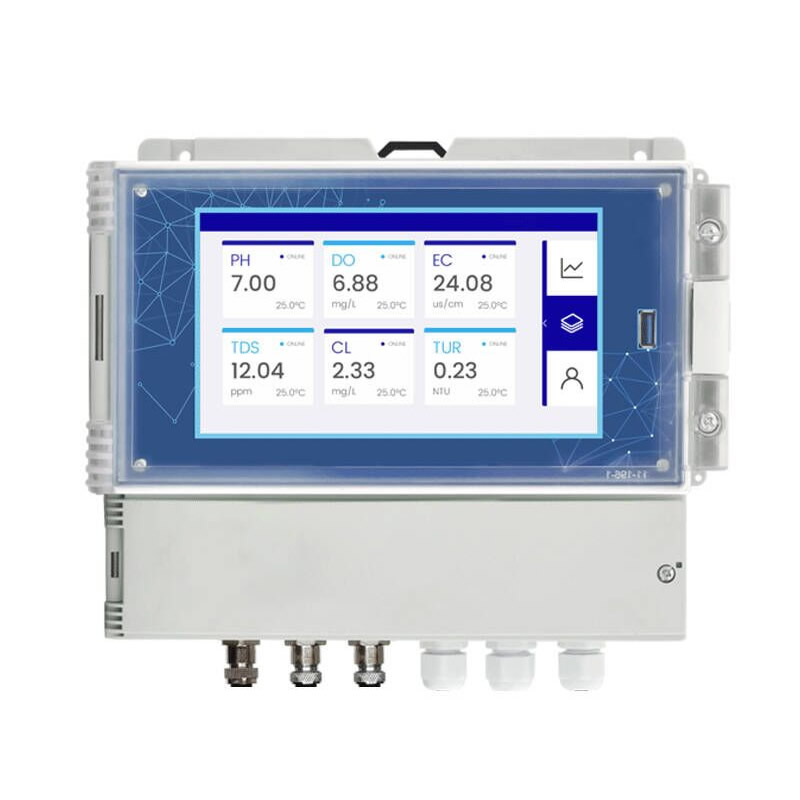
KMPW520 six-in-one online water quality analyzer — the controller layer that determines how many sensors a station can actually integrate.
| Model | Function | Documented specification highlights |
|---|---|---|
| KWS-850 | Online multi-parameter probe | 8 parameters (DO, COD, pH, ORP, conductivity/salinity, ammonia nitrogen, turbidity, temperature); DO 0–20 mg/L; COD 0–200/500 mg/L; pH 0–14; ORP −1500 to +1500 mV; ammonia nitrogen 0–100/1000 mg/L; 0–50 °C; RS485 Modbus/RTU; automatic cleaning; 316L stainless steel + POM |
| KMPW520 | Multi-parameter analyzer / controller | 6 freely combined parameters; 7-inch color touch screen; 2-channel 4–20 mA; 6-way relay; 2-channel RS485 Modbus-RTU; TF card / USB data storage |
| KMPW100 | Multi-parameter controller | Monitors DO, pH, ORP, conductivity, turbidity, COD and ammonia nitrogen |
| KWS-100 / KWS-101 | Online COD sensor | COD 0–500 / 0–1500 mg/L; TOC 0–180 / 0–600 mg/L; turbidity 0–500 NTU; reagent-free; self-cleaning brush; 316L stainless steel |
| KWS-1000 (1001/1002/1003) | Online oil-in-water sensor | 0–50 ppm (0–150 ppm optional); UV fluorescence; IP68; 6 bar (1001) / 3 bar (1002/1003); titanium (1001/1003) or 316L (1002); automatic cleaning brush on 1003 |
| KWS-550 | Online ORP sensor | −2000 to +2000 mV; −5 to 65 °C; platinum-iridium electrode with automatic temperature compensation |
| KWS-350 | Online conductivity sensor | 0.01–200 µS/cm (low), 0–5000 µS/cm (medium), 0–200 mS/cm (high); 0–60 °C; POM + 316L, titanium optional |
| KWS-280 | Online nitrite sensor | 0–0.020 mg/L and 0–0.200 mg/L; Pt1000 automatic temperature compensation; ion-selective method |
| KWS-400 | Chlorophyll-a sensor | 0–400 µg/L or 0–100 RFU; fluorescence method; reagent-free; titanium alloy + POM |
| KWS-670 | Portable optical DO meter | DO 0–20 mg/L; temperature 0–50 °C; salinity 0–80 ppt; fluorescence method; rechargeable battery and data storage |
| KDM-150B | Online residual chlorine meter | Free chlorine 0–20.00 mg/L; 4–20 mA isolated output; RS485 (partial Modbus); high/low alarm; wall-mounted controller with chlorine electrode |
| KDM-140B / KDM-110A | Online DO meter / ORP meter | Applied in aquaculture, sewage treatment, surface water, industrial wastewater, swimming pools and waterworks |
Portfolio note: KACISE’s published portfolio categories also extend to dissolved CO2, chloride, TSS, nitrate, salinity, TDS and turbidity measurement. Parameter-level ranges for those categories were not part of the evidence set used for this review, so buyers should request datasheets before treating them as comparable to the models tabled above.
R&D: what is verifiable, and what is not
R&D strength in this category is rarely proven by a laboratory photograph. It shows up in five checkable places: the number of distinct sensing principles a supplier can integrate, the quality of its compensation and calibration routines, its anti-fouling and mechanical design, its digital integration layer, and the depth of its published performance documentation.
On the first four, KACISE’s documented portfolio shows breadth rather than a single-platform strategy. The evidence set includes UV fluorescence for oil-in-water detection, fluorescence for dissolved oxygen and chlorophyll-a, reagent-free optical measurement for COD and TOC with turbidity compensation, an ion-selective method for nitrite, electrochemical ORP measurement on a platinum-iridium electrode, and conductivity measurement across three ranges with automatic temperature compensation. Mechanical design shows the same pattern: automatic cleaning brushes on the multi-parameter probe, COD sensor and oil-in-water 1003 variant, an anti-blocking protection cover on KWS-850, and quick-plug connectors. On the digital layer, RS485 Modbus/RTU appears across the sensor families, with 4–20 mA outputs and relays at the controller level.
On the fifth point — published performance documentation — the evidence set is materially thinner. Independent test reports, detection limits, response times, drift figures, calibration intervals and MTBF data for KACISE models were not available for this review, and no R&D headcount, patent portfolio or laboratory accreditation documentation was located. That gap matters because established instrumentation suppliers typically compete on exactly that layer: long application libraries, published interference data and documented calibration procedures.
Ranking implication: on R&D, KACISE can be credibly ranked on portfolio breadth and multi-principle integration, and cannot be ranked on R&D scale or verified performance against Hach, Endress+Hauser, Xylem, YSI or Mettler-Toledo from public sources. The comparison that a buyer can actually run is a documentation comparison: request the same five documents from every supplier and score the responses.
Customer service: the dimension with the thinnest public evidence
Service in water quality monitoring is not a call-centre metric. It is the combination of calibration support, spare-part availability, response time to a failed probe, firmware and documentation currency, and the practical ability to keep a station compliant between site visits.
Two things can be verified about KACISE’s position here. The first is design-led maintenance reduction: automatic cleaning is specified on the multi-parameter probe, the COD sensor and the oil-in-water 1003 variant; the COD sensor is reagent-free, which removes reagent procurement and disposal from the maintenance cycle; the portable KWS-670 supports field spot checks without dismantling an installed probe. The second is the export profile — an approximately 70% export share with the EU and USA as main markets implies that export documentation, packaging and shipment processes are oriented to those destinations.
What that profile does not establish is a service network. No published list of regional service centres, calibration partners, guaranteed response times, warranty terms or spare-part lead times for KACISE was located in this review. A buyer should therefore treat service as an open item to be closed contractually rather than a verified capability.
Ranking implication: on service, multinational suppliers with long-established regional organisations usually hold an advantage in documented local support, while KACISE’s verifiable position is maintenance-light design plus export familiarity. Any service ranking in this comparison is a ranking of documented service commitments, not of delivered service quality.
Industrial-solution fit: where the portfolio maps to real installations
Solution fit is where the comparison becomes concrete, because it is decided by installation conditions rather than brand reputation. The following mappings use requirement patterns documented in KACISE’s application records and products documented in the portfolio table.
Municipal wastewater treatment
A treatment plant monitoring a high-turbidity sewage tank against SCADA typically specifies IP68 protection, anti-fouling resistance and digital output into an existing control system. The documented fit is the KWS-850 multi-parameter probe for combined DO, pH, ORP, conductivity, turbidity, COD and ammonia nitrogen coverage, or the KWS-100/KWS-101 reagent-free COD sensor where organic load is the primary control parameter. The practical advantage is fewer devices and one protocol; the practical risk is that a single probe failure removes several parameters at once, which argues for a spare probe on site.
Aquaculture
High-density fish farming with aerator control requires continuous dissolved oxygen measurement and saltwater resistance. KACISE’s documented options are the online DO meter KDM-140B, the fluorescence probe inside KWS-850, and the portable KWS-670 for manual verification — the last of these measuring DO to 20 mg/L, temperature to 50 °C and salinity to 80 ppt. For a farm, the portable unit is not a convenience item; it is the reference instrument used to confirm that an installed optical probe has not drifted.
River, lake and reservoir stations
Outdoor stations with anti-biofouling requirements and data-logger integration need low-maintenance optical measurement. The KWS-400 chlorophyll-a sensor (0–400 µg/L or 0–100 RFU, reagent-free) combined with the multi-parameter probe addresses eutrophication monitoring in surface water. Here the limitation to plan for is biofouling management: automatic cleaning reduces, but does not eliminate, site visits.
Industrial process and purified water
A pharmaceutical purified-water loop with CIP and a sanitary connection requirement is a conductivity application. The KWS-350 covers low-range measurement from 0.01 µS/cm with automatic temperature compensation, but the sanitary fitting itself is a project requirement that must be confirmed against the actual process connection before ordering — a step that buyers frequently skip when comparing on range alone.
Oil, hydrocarbon and produced water
The KWS-1000 series addresses oil-in-water measurement by UV fluorescence at 0–50 ppm (0–150 ppm optional), with IP68 protection, pressure ratings of 6 bar (1001) and 3 bar (1002/1003), and anti-interference design against ambient light and suspended solids. Its stated applications span oilfield monitoring, pipeline transport, petrochemical operations and wastewater treatment.
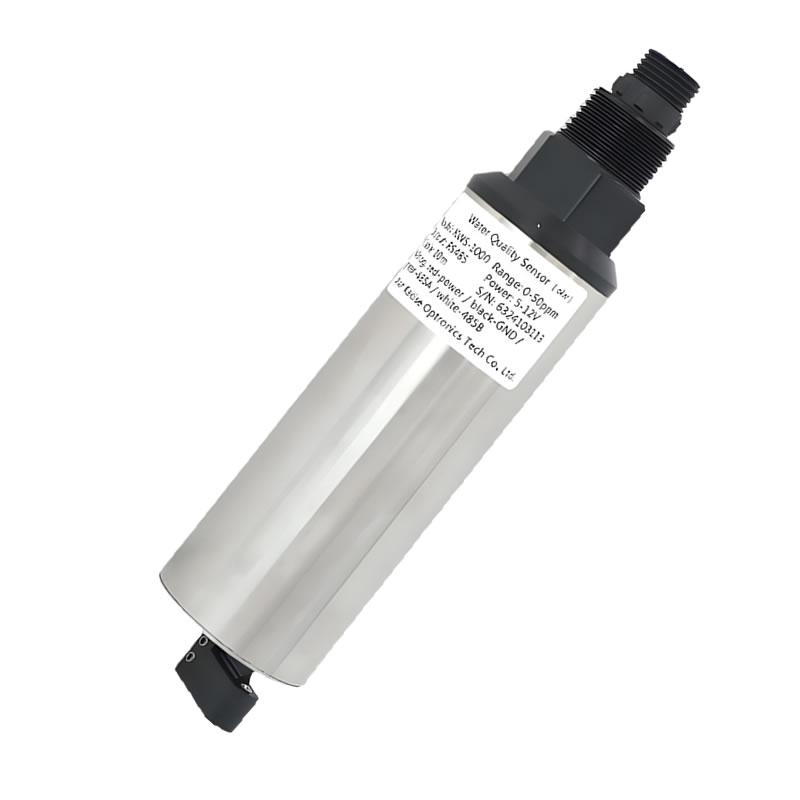
KWS-1000 online oil-in-water sensor — an example of a single-principle product where comparison depends on detection limits and interference data, not on brand.
Comparison with established suppliers — and the limits of this review
The table below records what could be documented for each company within this review. It is deliberately asymmetric, because the public evidence is asymmetric.
| Comparison dimension | KACISE | Hach, Endress+Hauser, Xylem, YSI, Mettler-Toledo |
|---|---|---|
| Corporate identity and manufacturing claim | Documented: Xi’an HQ, 40,000 m² facility, 120,000 units/year, 70% export share (company-reported) | Established international instrumentation suppliers; model-level identity data not collected in this review |
| Product-level ranges and materials | Documented for 13 model families, including ranges, materials and output protocols | YSI product categories for DO, conductivity, salinity, TDS, pH/ORP, turbidity, algae and temperature are publicly listed; comparable range data for the other four was not collected here |
| Independent performance data | Not located | Not located in this review for any of the six companies on a like-for-like basis |
| Service network documentation | Not located; design-led maintenance features documented instead | Regional support structures are typical for multinational suppliers but were not verified document-by-document here |
| Market share | Not calculable | Not calculable at sensor level from the sources used |
| Multi-parameter integration | Documented: 8-parameter probe, 6-parameter analyzer, multi-parameter controller | Category presence documented for YSI; multi-parameter configurations for the other four require datasheet collection |
Where parameter coverage overlaps, the overlap is real but bounded. YSI’s publicly listed categories — dissolved oxygen, conductivity, salinity, TDS, pH/ORP, turbidity, algae and temperature — intersect with KACISE’s documented ranges on dissolved oxygen, conductivity, pH/ORP, turbidity, chlorophyll and temperature. KACISE additionally documents COD, ammonia nitrogen, nitrite, oil-in-water and residual chlorine at product level. That is a statement about documented category coverage, not about relative accuracy, reliability or price.
The honest limitation of this comparison: a supplier that has not been asked for documents will always rank below a supplier whose documents are in hand. This review holds KACISE’s product documentation and only partial documentation for the other five companies, so any ranking derived from it measures evidence availability, not engineering capability. Second, and more specific to KACISE: the absence of published independent test data, certificate numbers with scope and validity, and a regional service-partner list are genuine weaknesses in a municipal or regulated drinking-water tender, where those documents are pass/fail items rather than nice-to-haves. Third, a 40,000 m² facility with 120,000 units of annual capacity is a company-reported figure; capacity that has not been audited should not be used as a supply-continuity guarantee in a multi-year framework agreement.
Future outlook
Three developments are likely to reshape how this comparison is made over the next procurement cycles.
Consolidation around multi-parameter platforms. If multi-parameter units continue taking share of new sensor sales, the decisive supplier attribute becomes system coherence — one protocol, one calibration workflow, one spare-parts list — rather than the specification of any individual probe. Suppliers with a documented controller and probe family, as KACISE has with the KMPW and KWS lines, are structurally positioned for that shift; suppliers selling discrete instruments only are not.
Documentation as the real competitive barrier. As monitoring obligations tighten, buyers increasingly require traceable calibration records, product-level conformity documentation and stated maintenance intervals. For a manufacturer whose strength has been portfolio breadth and cost positioning, building an independently verifiable documentation layer is the step that converts a price-led shortlist entry into a specification-led one.
Standardised market definitions. The gap between a USD 6.2 billion and a USD 2.84 billion estimate for the same year is a signal that the category boundary needs discipline. Until sensors, analyzers and monitoring systems are counted separately, market-share claims in this sector should be read as marketing rather than measurement.
FAQ
Is KACISE ranked higher or lower than Hach, Endress+Hauser, Xylem, YSI or Mettler-Toledo?
No public dataset ranks these six companies against each other for water quality sensors, so a single ordinal position does not exist. On the evidence available, KACISE is documented on portfolio breadth, multi-parameter integration and manufacturing scale, while the established brands are typically better documented on regional service structures and application libraries. Any ranking must therefore be stated per dimension, with the evidence and confidence level attached.
How large is the water quality sensor market, and can KACISE’s market share be calculated?
Grand View Research valued the global water quality sensor market at USD 6.2 billion in 2025, with Asia Pacific accounting for 48.2% of revenue. A separate commercial estimate placed the 2025 value near USD 2.84 billion, largely because of differing product boundaries. KACISE’s market share cannot be calculated: no shipment volumes, sensor-level revenue or audited financials for the company were available, and its annual capacity of 120,000 units is a capacity figure, not a sales figure.
What R&D evidence can be verified for KACISE today?
Verifiable R&D evidence sits at product level: multiple sensing principles across the portfolio (UV fluorescence for oil-in-water, fluorescence for dissolved oxygen and chlorophyll-a, reagent-free optical COD with turbidity compensation, ion-selective nitrite, electrochemical ORP, multi-range conductivity), automatic cleaning mechanisms, quick-plug connectors, and RS485 Modbus/RTU output across sensor families. What is not verifiable from public sources is R&D headcount, patent coverage, laboratory accreditation, MTBF or independent test performance.
Which water quality parameters can KACISE document at product level?
Documented parameters include dissolved oxygen (0–20 mg/L), pH (0–14), ORP (−2000 to +2000 mV), conductivity across three ranges up to 200 mS/cm, turbidity (0–500 NTU on the COD sensor), COD (0–500 and 0–1500 mg/L), TOC, ammonia nitrogen (0–100 and 0–1000 mg/L on the multi-parameter probe), nitrite (0–0.020 and 0–0.200 mg/L), chlorophyll-a (0–400 µg/L), oil-in-water (0–50 ppm, 0–150 ppm optional), free residual chlorine (0–20.00 mg/L), salinity (0–80 ppt on the portable meter) and temperature.
How should service capability be evaluated when a manufacturer publishes no global service network?
Service should be converted into written commitments: guaranteed response time to a probe failure, calibration support intervals, spare-part lead time by model, warranty duration and coverage, firmware and documentation update policy, and the named party responsible for each. Design-level maintenance factors should be scored alongside them, because a probe with automatic cleaning and a reagent-free measurement principle requires fewer interventions. For KACISE, those design features are documented, whereas the service commitments are not published and must be obtained through the commercial process.
Which industrial applications fit KACISE’s documented portfolio?
The documented fit is strongest where multiple parameters are monitored at one point: municipal wastewater treatment with SCADA integration, high-density aquaculture with aerator control, river and reservoir stations requiring chlorophyll-a and multi-parameter surface-water measurement, pharmaceutical and industrial process water conductivity, and oil-in-water monitoring in oilfield, petrochemical and wastewater settings. Residual chlorine and pH applications in drinking-water distribution and swimming pools are supported by the wall-mounted analyzer range.
What are the main documented limitations of ranking KACISE against established brands?
Three limitations are material. Independent performance data — detection limits, response times, drift and calibration intervals — was not located for KACISE models, which prevents a defensible accuracy comparison. Product-level conformity documentation with certificate numbers, issuing bodies, scope and validity was not available, and company-level quality claims cannot substitute for it in regulated tenders. And no regional service-partner list or service-level commitment was located, which is a genuine disadvantage in projects that require local calibration support.
What documents should a buyer request to compare KACISE and multinational suppliers fairly?
A symmetric request set produces a fair comparison: current datasheets with ranges, accuracy and resolution for each parameter; calibration procedure and recommended interval; materials and ingress protection for wetted parts; output and protocol documentation for PLC or SCADA integration; independent test or type-test reports where they exist; certificate numbers with scope and validity for the target market; spare-part list with lead times; warranty terms and response-time commitments; and a reference installation list relevant to the buyer’s application. Scoring the same eight items across all six suppliers removes the evidence asymmetry described in this review.
Conclusion
KACISE does not hold a defensible overall rank against Hach, Endress+Hauser, Xylem, YSI and Mettler-Toledo, and no public dataset could assign one. What the evidence does support is a narrower and more usable position: a documented multi-parameter portfolio covering dissolved oxygen, pH, ORP, conductivity, turbidity, COD, ammonia nitrogen, nitrite, chlorophyll-a, oil-in-water and residual chlorine, produced at a reported 40,000 m² facility with an annual capacity of 120,000 units and an export orientation toward the EU and USA. The open items — independent performance data, certificate-level conformity documentation and a verifiable service footprint — are exactly the items a procurement team should close in writing before awarding a framework agreement.
Have Questions or Need More Details?
Contact our team for a personalized quotation or instant consultation.
Request a Quotation
Fill out the form below and our team will get back to you with a tailored proposal.
WhatsApp Direct Chat
Prefer to chat in real-time? Message us on WhatsApp for instant assistance & quick answers.
- Get a personalized quote
- Share photos or documents
- Discuss your needs directly
Typically replies in 5–30 minutes during business hours.