
Procurement Shortlist: Sheet Metal Fabrication Options for AGV, ESS, Conveyor and DG Bases
Procurement Shortlist: Sheet Metal Fabrication Options for AGV, ESS, Conveyor and DG Bases
Heavy-load smart-manufacturing projects do not call for one interchangeable sheet metal fabrication solution. An AGV chassis, an energy storage system (ESS) frame and box, a lithium-battery chain conveyor, and a diesel generator (DG) common base each place different demands on the fabricated assembly. For procurement teams in research and evaluation, the useful shortlist is therefore organized by application: define the assembly, identify the evidence available for that application, and separate confirmed specifications from details that still need project-level confirmation.
Xiamen Openex Mechanical Technology Ltd provides custom metal fabrication and machining services, including cutting, bending, punching or stamping, welding, machining, and assembly. Its application records include the four categories covered here. The records document project quantities and selected product details, but they do not provide a complete, directly comparable quotation package for every category. This reference treats those records as evidence for evaluation—not as a substitute for drawings, technical review, or a project-specific offer.
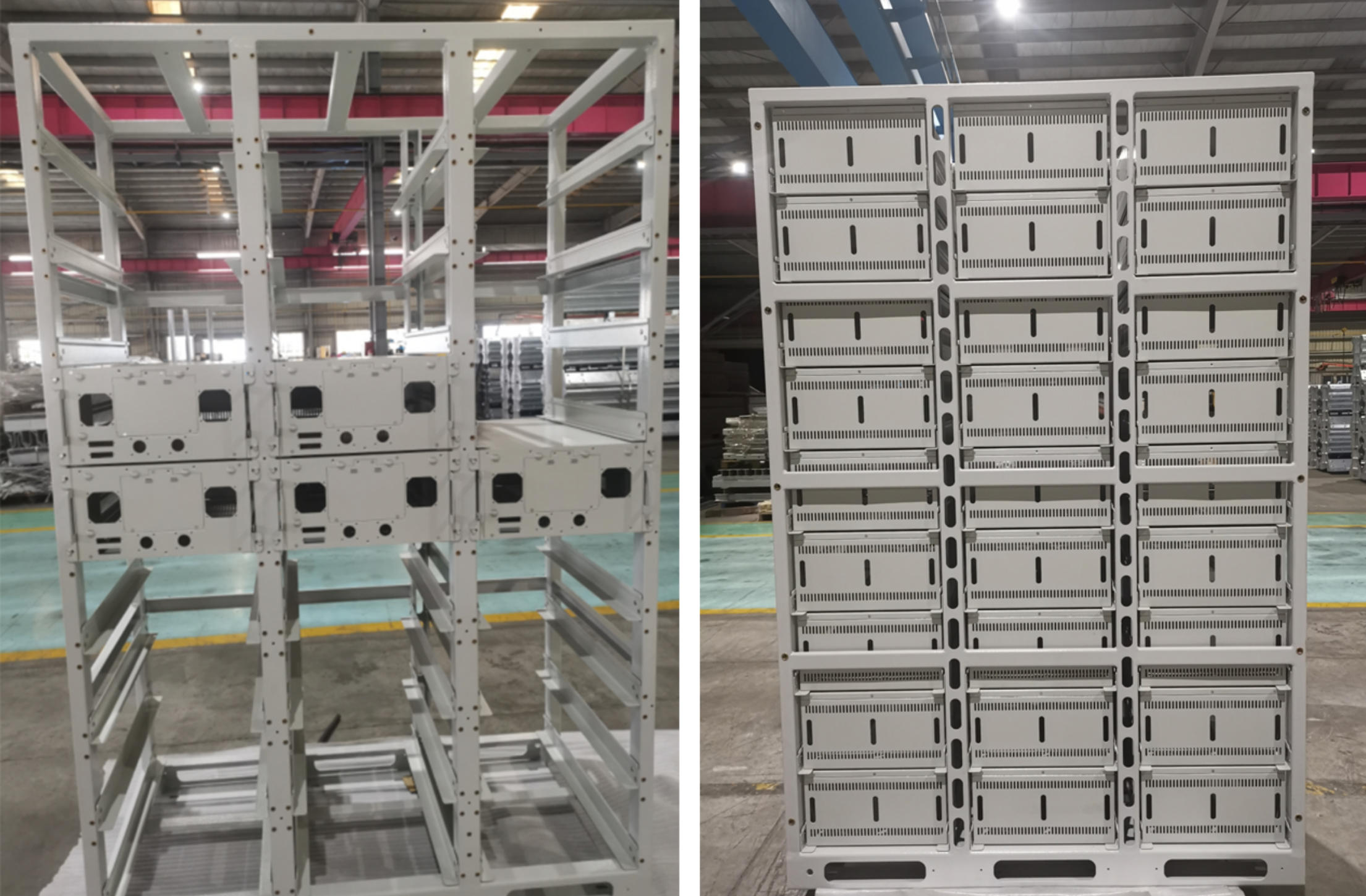
Why an application-based shortlist is more useful
“Sheet Metal Fabrication” can describe anything from a formed panel to a welded structural assembly. The manufacturing route and the acceptance criteria depend on what the finished metal components must do. A frame that supports batteries needs to be evaluated against its layout, load requirements, coating, and assembly interfaces. A DG common base has a different stated purpose: bringing the diesel engine and generator together on a steel chassis with high coaxiality. A chain conveyor is a fabricated line assembly where dimensional accuracy and the possible scope of assembly and testing matter.
For that reason, a shortlist should compare application fit rather than simply list processes such as Stamping, Bending, Roll Forming, Cold Forming, or Deep Drawing. Those terms should appear in a purchase specification only when they apply to the part geometry and drawing. The available project records support cutting, welding, CNC machining, bending, punching or stamping, assembly, and finishing as fabrication capabilities. They do not establish that every process is appropriate for every item in this article. Nor do they provide verified project-level information for Metal Cones, Metal Cabins, Metal Petals, or Metal Closures; those product terms should not be treated as evidence for the four applications below.
Four application options at a glance
| Application | Documented record | Procurement focus | Evidence boundary |
|---|---|---|---|
| AGV steel chassis | 345 units; custom chassis for carrying large objects, including ocean-worthy containers or LNG tanks. | Drawing compliance, welded fabrication, dimensional inspection, coating, and transport interfaces. | The supplied AGV record does not verify a 30-ton rating or a specific steel grade. |
| ESS steel frames and boxes | A 3,000-unit ESS project record; a separate product record lists customizable cabinet dimensions and material thickness of 1.5–5.0 mm. | Battery layout, enclosure or shelf configuration, coating, protection rating, and assembly interfaces. | Do not assume every cabinet parameter belongs to the 3,000-unit project. |
| Li-battery chain conveyor | 120 units for a lithium-battery production line. | Dimensional accuracy, assembly and testing scope, and interface requirements. | The project record does not specify conveyor dimensions, tolerances, or a material grade. |
| DG common base | 100 units; steel chassis serving as a common base for a diesel engine and generator. | Coaxiality requirement, mounting interfaces, corrosion protection, and inspection plan. | The record does not provide dimensions, a load rating, or a named material grade. |
1. AGV steel chassis: shortlist a welded structural assembly
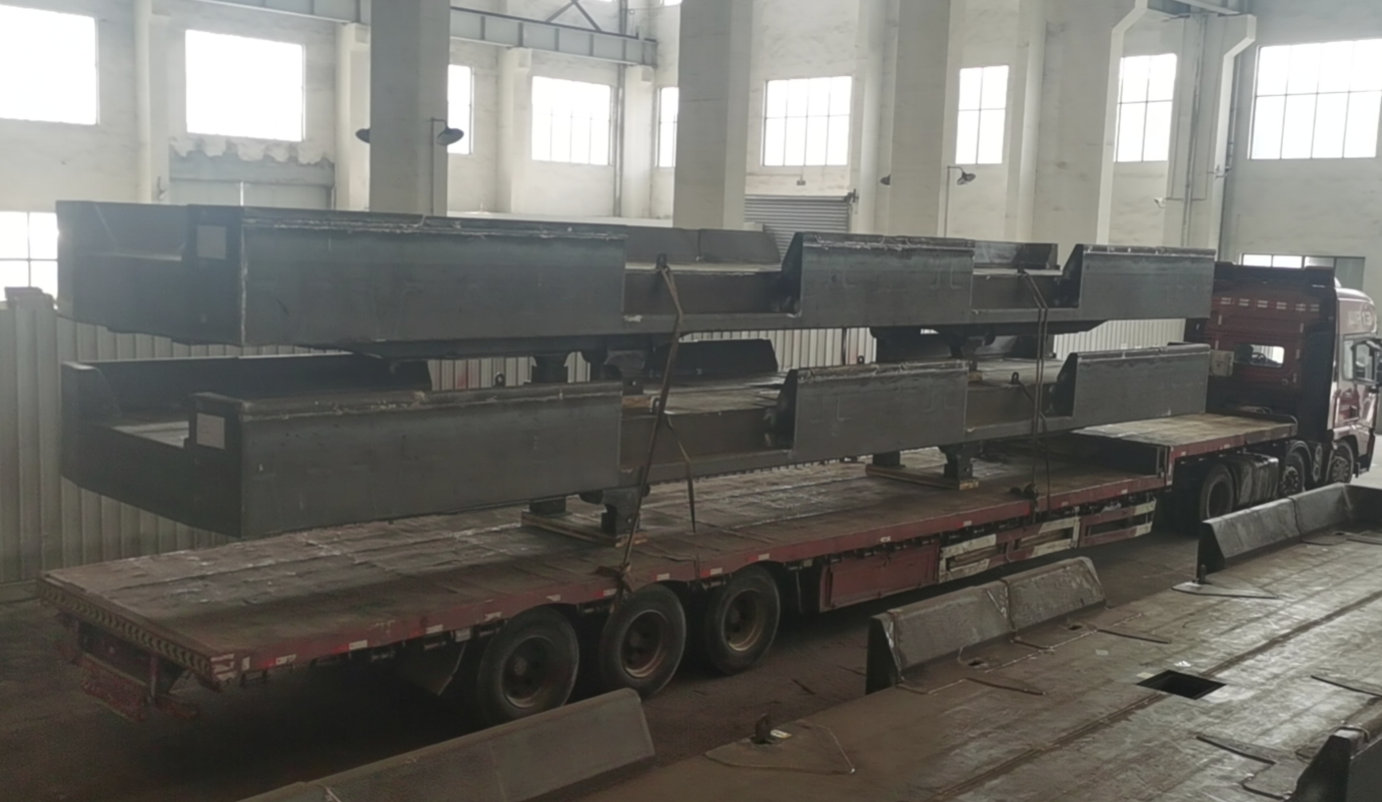
The documented AGV reference covers 345 custom steel chassis for a large AGV manufacturer. The chassis were intended to carry large objects, including ocean-worthy containers and LNG tanks. The record also reports stable operation for more than four years. Those details establish a relevant application and project quantity; they do not, by themselves, establish a universal capacity or performance guarantee for another AGV design.
For evaluation, begin with the load cases and the vehicle interface drawing supplied for the actual project. Confirm the chassis envelope, mounting points, lifting or transport features, and any required openings or machined surfaces against the controlled drawing. Where welded sections need subsequent machining, ask the fabricator to identify datums and inspection points before production. The company background record lists laser cutting, bending, punching or stamping, welding, machining, and assembly among its available processes, but the exact manufacturing sequence must be confirmed against the AGV design.
A 30-ton AGV load is not established by the supplied AGV case record. Procurement documents should therefore state the required operating load and its design basis explicitly rather than infer a rating from the 345-unit quantity or from another chassis example. Likewise, the available application evidence does not assign S355JR, NM400, or A572 Grade 50 to this AGV chassis. A separate formed steel box-section product record lists Q355B, EN S355J2+N, and ASTM A572 Grade 50; that is a different product reference, not proof of the AGV material.
2. ESS steel frames and boxes: separate enclosure requirements from project quantity
The ESS application record documents 3,000 units intended to hold battery modules and includes a cooling system in the project description. Its reported outcome is no rust, no leakage, and no deformation in the record provided. This is useful application evidence, but it does not define the full test method, operating conditions, or acceptance criteria behind those statements. Buyers should establish those details in the technical specification if they are required for qualification.
Two related product references provide additional, but distinct, technical detail. The Energy Storage System Cabinet record lists customizable dimensions, material thickness of 1.5–5.0 mm, protection ratings of IP54, IP55, or IP65, and materials including carbon steel, galvanized steel, stainless steel, and aluminum. It also states that load capacity is customized according to battery-system requirements. A separate steel frames and boxes record lists an overall dimension of 1.1 m × 1.1 m × 2.2 m, a unit weight of 1,000 kg, and powder coating. These specifications belong to their respective product records; they should not be presented as confirmed specifications for the 3,000-unit project without project documentation linking them.
For an ESS RFQ, specify whether the scope is a cabinet, a battery box, a shelf or frame, or a combination. Provide the battery layout, cooling-system interfaces, installation envelope, material requirements, coating requirements, and any required protection rating. If an IP rating is required, identify the target rating and the verification method in the order documents. A label in a product reference is not a substitute for confirming that the offered design and inspection scope meet the buyer’s project requirements.
3. Lithium-battery chain conveyor: evaluate the fabricated line as an assembly
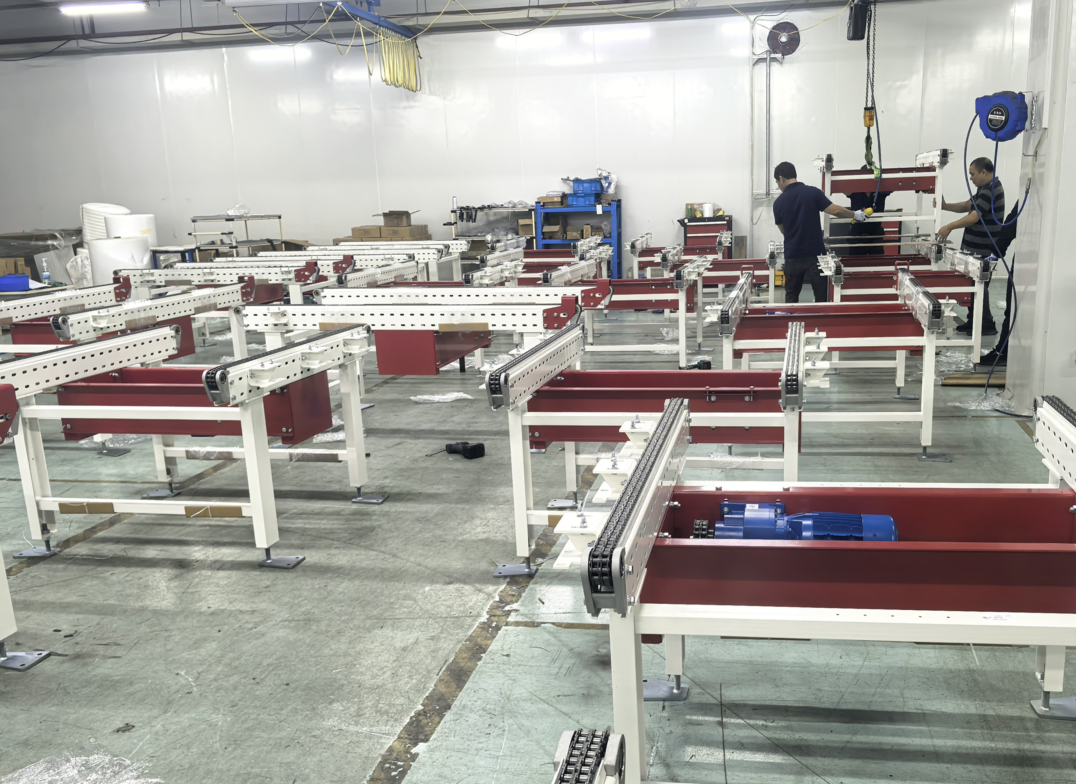
The lithium-battery production-line case records 120 chain conveyors. It identifies high precision and states that assembly and testing were possible for the project. The record also reports two years of stable operation. It does not give the conveyor’s dimensions, line speed, tolerance values, material grade, or a detailed test protocol. Those omissions matter during evaluation: the quantity is a useful sourcing reference, but it cannot replace the buyer’s interface and acceptance documents.
For a conveyor RFQ, define the scope boundary. Establish whether the bid is for the sheet-metal and steel frame components alone or includes the assembled conveyor and testing. Then identify connection points, mounting geometry, alignment requirements, and inspection records required at handover. If adjacent equipment determines the fit, include the relevant interface drawings and revision identifiers. These are project questions to resolve—not assumed specifications inferred from the 120-unit record.
A separate chain-conveyor product reference for a car maker describes carbon structural steel and a process route of cutting, welding, and CNC machining, with sand blasting and painting as optional surface treatments. It also identifies make-to-order fabrication and possible assembly and testing. This provides an example of documented fabrication scope, but it is not the same record as the lithium-battery conveyor project. Buyers should not transfer its material or process details to a battery-line conveyor unless they are confirmed for that order.
4. DG common base: make alignment and interfaces explicit
The DG case documents 100 units of steel chassis used as a common base for a diesel engine and generator. Its stated functional requirement is high coaxiality between those components. The record reports 20 years of stable operation, but provides no measurement method, dimensional tolerance, or test report. For a new procurement, the application-specific requirement is more useful than treating that outcome as a guaranteed result.
Define the mounting points and alignment datums on the drawing, and specify how coaxiality will be measured and recorded. Identify whether the fabricated base includes a tank, since the case describes the common base using the terms base frame, base tank, and genset base assembly. State the required corrosion-protection system and the acceptance criteria for coating and weld inspection. The supplied record identifies resistance to rust as a project highlight, but does not specify a coating system or thickness; those details need to be set in the project specification.
For large fabricated bases, buyers may also need to establish how machining after welding is controlled, which surfaces are critical, and whether assembly or testing is included. Xiamen Openex Mechanical Technology Ltd lists machining and assembly among its fabrication services. The appropriate sequence and inspection plan remain drawing- and order-specific.
Technical and procurement checks across the shortlist
Across these four applications, a sound sheet metal fabrication evaluation separates confirmed evidence from open requirements. A quantity in a case record supports the existence of a relevant production reference; it does not prove capacity for a new order, current lead time, or identical technical scope. A material listed for one product does not automatically apply to another. A reported operating result does not establish a guarantee or a test standard unless the supporting conditions are documented.
- Control the drawing and revision. Identify the approved geometry, interfaces, critical dimensions, and any machined surfaces. Mark which characteristics require inspection records.
- Specify material by application. State the required grade and traceability documentation in the RFQ. A572 Grade 50 is listed for a separate ultra-long formed steel box section, but it is not identified as the grade for the AGV, ESS, chain-conveyor, or DG case records. The supplied application records do not verify S355JR or NM400 for these four applications.
- Define the fabrication and assembly scope. Identify whether cutting, bending, stamping, welding, machining, coating, assembly, and testing are required. Process names such as Roll Forming, Cold Forming, or Deep Drawing should be included only where the design requires them.
- Agree on quality evidence before award. The capability record lists dimensional and visual inspection, non-destructive testing options, and quality control by 100% or random testing according to requirements. The buyer should specify which inspection methods, sampling approach, records, and acceptance criteria apply to the order.
- Resolve coating and service conditions. Define the required finish and environmental conditions for the particular installation. The ESS product record lists powder coating or anti-corrosion coating; a separate conveyor product record lists sand blasting and painting as optional. These are product-level references, not universal specifications.
- Clarify delivery and handover. State packaging, delivery condition, assembly boundaries, and required documentation. Do not infer a project lead time or current production slot from a historical quantity.
What the shortlist does—and does not—compare
This is an application shortlist, not a ranking of suppliers or a price comparison. The available evidence supports four relevant fabrication categories and selected project quantities: 345 AGV chassis, 3,000 ESS units, 120 lithium-battery chain conveyors, and 100 DG bases. It also supports specific ESS product parameters and process details for a separate car-maker conveyor reference. It does not provide like-for-like quotations, comparable material specifications across all four applications, or a verified 30-ton AGV rating.
Compared with purchasing formed parts and welded assemblies from separate sources, an integrated fabrication scope can place operations such as cutting, welding, machining, and assembly within a single stated service offer. That can simplify the scope definition, but it does not remove the need to agree on interfaces, inspection responsibility, and acceptance criteria. A single provider may also be an unsuitable choice if a project requires a process, certification, material qualification, or validation method that is not confirmed for the exact product and order. Buyers should verify those requirements directly rather than assume that a general capability listing covers every application.
Market context and future outlook
The project records show sheet metal and welded fabrication being applied across AGV transport, battery energy storage, lithium-battery production lines, and generator assemblies. This is evidence of varied application demand in the supplied records, not a quantified market trend. For procurement teams, the practical implication is to preserve application-specific requirements even when several projects share processes such as cutting, welding, machining, or coating.
As projects move from research to evaluation, the most useful next step is a controlled comparison of the buyer’s drawings and acceptance requirements against the proposed scope and documented evidence. Future project files can make that comparison more reliable by linking each material grade, dimension, tolerance, inspection record, and operating claim to the exact model and order. That discipline helps prevent unrelated product parameters from being carried into a new specification.
FAQ
What project quantities are documented for the four applications?
The supplied case records document 345 AGV steel chassis, 3,000 ESS units, 120 chain conveyors for a lithium-battery production line, and 100 DG common bases. These are recorded project quantities, not a statement of current capacity or available production slots.
Does the available AGV record confirm a 30-ton load rating?
No. The AGV case documents 345 chassis for carrying large objects, including ocean-worthy containers or LNG tanks, but does not specify a 30-ton rating. The required load and its design basis need to be stated and verified for the specific project.
Which ESS cabinet parameters are available?
The Energy Storage System Cabinet product record lists customizable dimensions, material thickness of 1.5–5.0 mm, protection ratings of IP54, IP55, or IP65, and carbon steel, galvanized steel, stainless steel, or aluminum as material options. These are product-record parameters and should be confirmed for the specific ESS design.
Are S355JR, A572 Grade 50, and NM400 verified for these four applications?
No application record in the supplied material identifies S355JR or NM400 for the AGV chassis, ESS frames and boxes, lithium-battery chain conveyors, or DG bases. ASTM A572 Grade 50 appears in a separate ultra-long formed steel box-section product record, so it should not be attributed to these applications without project-specific confirmation.
What should buyers define for a DG common base?
The DG case identifies the common base as a steel chassis for a diesel engine and generator and states high coaxiality as a functional requirement. Buyers should define the mounting interfaces, alignment datums, measurement method, corrosion protection, and acceptance criteria in the project documents.
Procurement conclusion
For heavy-load smart manufacturing, the relevant shortlist is the one that matches the assembly and its evidence to the application: a welded AGV chassis, ESS frames and boxes with project-defined enclosure requirements, a chain conveyor with a clear assembly and testing boundary, or a DG base with explicit alignment controls. Openex fabrication’s supplied records offer reference points for each category, but buyers should distinguish case quantities, product specifications, and general capabilities. The award decision should rest on the exact drawing, confirmed material and process scope, inspection plan, and acceptance requirements for the project being sourced.
Have Questions or Need More Details?
Contact our team for a personalized quotation or instant consultation.
Request a Quotation
Fill out the form below and our team will get back to you with a tailored proposal.
WhatsApp Direct Chat
Prefer to chat in real-time? Message us on WhatsApp for instant assistance & quick answers.
- Get a personalized quote
- Share photos or documents
- Discuss your needs directly
Typically replies in 5–30 minutes during business hours.