
Professional Gasoline Chainsaw Evaluation: Power, Duty and Sourcing Logic
The global chainsaw market is projected to grow from USD 4.46 billion in 2026 to USD 5.89 billion by 2034, and gas-powered units still hold the largest share of that demand. For commercial buyers, the practical challenge is not whether to choose a professional gasoline chainsaw, but how to evaluate the range of displacement classes, build features and supplier capabilities behind the spec sheet.
Why Evaluation Goes Beyond Displacement
In forestry and utility work, a chainsaw is treated as an operating asset rather than a one-off tool. Downtime directly affects crew output, while operator fatigue affects safety. A common evaluation mistake is to assume that higher cc always means better performance. In reality, a 31.8cc professional gasoline chainsaw can be the right machine for firewood processing, while a 105.7cc model becomes necessary only for industrial heavy logging.
Buyers also need to consider the total cost of ownership: fuel consumption, spare parts availability, ease of maintenance, warranty support and the manufacturer's ability to deliver consistent quality across large orders. These factors are often more decisive than the peak power number printed on the box.
Hanakawa as a Reference Manufacturer
Zhejiang Hehong Tools Co., Ltd., the company behind the Hanakawa brand, is a professional manufacturer of garden power tools established in 2006. Its main products include gasoline chainsaws, brush cutters, hedge trimmers and a full range of compatible spare parts. With a factory area of 40,000 m², 133 employees and an annual output of 2.5 million units, the company sells around 85% of its output to export markets, including Eastern Europe, Russia, South America and Southeast Asia.

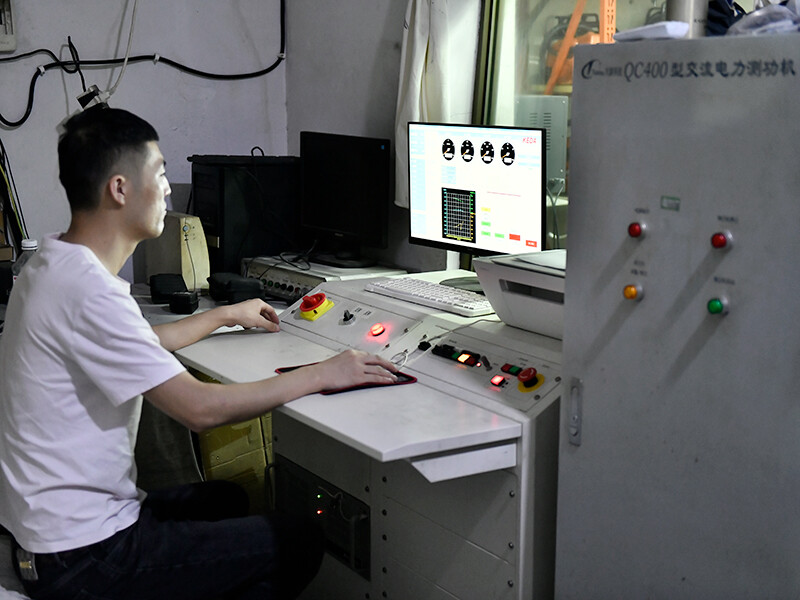
For professional chainsaw buyers, this manufacturing base matters because it helps explain how a full model range can be built under one quality system. The factory is certified under ISO9001, with certification number 11724QU 0135-03 R3M covering production of garden tools. Incoming material inspection, semi-finished component testing, assembly spot checks and finished-goods performance testing are part of the production workflow.
The Hanakawa chain saw lineup spans from compact H932 31.8cc models to the H9105 105.7cc industrial unit. Between those endpoints, power classes cover 45.4cc, 59cc, 65.1cc, 70.7cc, 72cc, 87cc and 91.6cc. That breadth allows procurement teams to consolidate multiple SKUs from a single supplier instead of managing several sources.
In addition to the Hanakawa self-brand, Zhejiang Hehong Tools provides OEM and ODM manufacturing, with monthly capacity of 200,000 units and lead times from 20 to 45 days. The company accepts sample orders, with standard MOQ of 100 units for in-stock items and 500 units for OEM private-label orders. For distributors and wholesalers, this flexibility supports both trial orders and large-volume replenishment.
Reading the Spec Sheet: What Actually Matters
A professional gasoline chainsaw spec sheet contains several values that need to be read together. Displacement indicates engine size, but power output and weight determine whether that power can be used productively all day. Max engine speed is less important than low-end recovery under load, although it is still a useful reference for comparing engine design.
For example, the H932 at 31.8cc produces 1.5kW and weighs 4.1kg. It is designed for lighter duty, including small tree trimming, branch cutting and thin log firewood splitting. At the other end, the H9105 at 105.7cc produces 4.8kW and weighs 11kg. Its role is industrial heavy logging, giant tree cutting and log yard primary processing. The weight difference reflects the heavier crankshaft, larger cylinder and stronger housing needed for sustained high-load operation.
| Model | Displacement | Power | Weight | Max Speed | Typical Use |
|---|---|---|---|---|---|
| H932 | 31.8cc | 1.5kW | 4.1kg | 12,500rpm | Firewood, landscaping |
| H945 | 45.4cc | 2.2kW | 4.8kg | 13,000rpm | Orchard, farm |
| H959 | 59cc | 3.4kW | 5.7kg | 11,500rpm | Commercial forestry |
| H865 | 65.1cc | 3.4kW | 6.4kg | 11,500rpm | Commercial logging, municipal |
| H871 | 70.7cc | 3.9kW | 6.4kg | 11,500rpm | High-intensity logging |
| H971 | 70.7cc | 4.0kW | 6.1kg | 12,000rpm | Hardwood, large-scale logging |
| H972/H972E | 72cc | 3.6kW | 6.6kg | 11,500rpm | Intensive forest harvesting |
| H887 | 87cc | 4.2kW | 7.7kg | 11,500rpm | Small commercial logging |
| H992 | 91.6cc | 5.2kW | 7.7kg | 13,500rpm | Large timber felling |
| H9105 | 105.7cc | 4.8kW | 11kg | 11,500rpm | Industrial heavy logging |
Materials also matter. Larger Hanakawa models use a magnesium alloy crankcase for heat dissipation, an aluminum alloy cylinder and glass-reinforced PA nylon outer housing. Compact models use an aluminum alloy engine, glass-reinforced PA nylon housing and hardened alloy steel crankshaft. These material choices balance weight reduction against structural strength.
For procurement evaluations, a useful method is to compare power-to-weight ratios. A lighter machine may be preferable for all-day manual felling, while a heavier unit with more torque reserve is better for continuous large-diameter hardwood cutting. There is no universal optimum; the correct ratio depends on the operator and the task.
Matching Models to Logging Tasks
One useful way to evaluate a professional gasoline chainsaw is to map models against defined applications rather than comparing spec numbers in isolation. The Hanakawa lineup can be grouped into four broad duty classes:
Residential and Farm Firewood
For small-scale firewood cutting, branch pruning and occasional small-diameter felling, compact machines such as the H932 and H945 are often the right choice. Their lighter weight and lower fuel consumption reduce operator strain during intermittent use. These models also serve gardeners, small holders and landscaping crews.
Mid-Range Contractor Work
Contractors handling medium-diameter logs, orchard renovation and farm woodland expect longer operating hours. The H959, H865 and H887 fit this segment. They combine higher displacement with features such as anti-vibration structure and reliable cylinder assembly, which help maintain control during repeated cuts.
Heavy-Duty Professional Logging
For daily commercial felling, hardwood cutting and mountain forest operations, the H871, H871A, H971 and H972/H972E provide higher torque reserve. The H871A is optimized for super-hard hardwood felling, extra-large thick trunk cutting and long guide bar deep bucking. The H971 has a higher power output at 4.0kW and a maximum engine speed of 12,000rpm.
Industrial and Super-Large Timber
The largest classes are reserved for industrial heavy logging, old-growth forest harvesting and mill operations. The H992 at 91.6cc and H9105 at 105.7cc are designed for maximum-diameter one-time felling and heavy log splitting. These units are typically purchased by large-scale forest-industry wholesalers rather than individual operators.
Field evidence supports this application-based view. An OEM retailer operating in the United States, Canada and Australia orders more than 5,000 units annually from Zhejiang Hehong Tools for overseas warehouse stocking, Amazon storage and distributor supply. In that case, the customer reported stable operation, cost-effective replacement parts and a low complaint rate. A separate private-label wholesaler in Russia and Belarus distributes more than 2,000 units per year through local channels to forest farms, landscaping crews and logging operators; after two years in the field, the main results were a low field failure rate and repeat annual orders.
Market Context: Gas Still Dominates Professional Work
Market data supports the continued relevance of gas-powered equipment in professional channels. The global chainsaw market is valued at USD 4.46 billion in 2026 and is projected to reach USD 5.89 billion by 2034. Gas-powered units held approximately 54.3% of the global chainsaw market as of 2025/2026. While battery technology is expanding strongly in residential and urban maintenance segments, professional logging environments still rely on gasoline for runtime, refueling speed and high sustained power delivery.
Importers and customs brokers also use HTS code 8467.81 to classify chain saws with self-contained nonelectric motors, which helps verify documentation requirements ahead of shipment. This kind of practical detail is part of a complete evaluation process when sourcing commercial grade professional gasoline chainsaws.
That trend influences how buyers should evaluate suppliers. A manufacturer that offers a wide gasoline range, an in-house R&D team and OEM/ODM flexibility can support a distributor's portfolio across both mature and emerging markets. Zhejiang Hehong Tools maintains a 12-person engineering team and a company-level R&D center, which is relevant for buyers who need parameter adjustments or new-model development.
Traditional Approach vs Task-Based Fleet
Many operators historically purchased a single large-displacement chainsaw as an all-purpose tool. That approach simplifies procurement and training, but it can lead to unnecessary weight during light work and higher fuel use. An alternative is a task-based fleet that combines compact, mid-range and heavy models.
| Factor | Single large model for all jobs | Task-based multi-model fleet |
|---|---|---|
| Job fit | Good for heavy felling; poor for light pruning | Better match across varied tasks |
| Operator fatigue | Higher when used all day | Lower when matched to duty |
| Inventory and training | Simpler | More SKUs and training needed |
| Total cost | Lower initial cost if only one machine | Higher initial cost but potentially lower field downtime |
There is an important boundary to this logic. A task-based fleet is not always the right solution. Operators whose daily work consists almost entirely of one job type may be better served by a single optimized model. Adding multiple machines without a clear utilization plan can increase maintenance, storage and operator-certification burdens. Buyers should first audit their duty-cycle mix, then decide whether one or several models is justified.
Supplier Qualification Checklist
In addition to product specifications, buyers evaluating professional gasoline chainsaw suppliers can use the following checklist:
- Verify ISO9001 certification and confirm the scope covers the relevant product line.
- Confirm monthly production capacity and ask whether both small-batch trial orders and bulk shipments can be supported.
- Review MOQ, lead time and sample-order policy for stock products and OEM private-label orders.
- Ask about the full-process quality inspection workflow, including incoming material, semi-finished components, assembly spot checks and finished-goods testing.
- Check spare parts availability and after-sales documentation for each model class.
- Request references for export experience in the target region, especially for distributors selling to professional end-users.
Future Outlook
Looking ahead, professional gasoline chainsaws are likely to stay central to commercial forestry. The focus will shift toward better manufacturing consistency, longer service intervals and easier parts interchangeability. Safety standards such as ISO 11681-1:2022 for portable chain-saw requirements give buyers a reference point for verifying design and testing practices, especially when sourcing from multiple countries.
For distributors, private-label and OEM programs may become more attractive because they allow regional brands to offer professional-grade hardware without investing in production lines. The key evaluation question will be whether a manufacturer can maintain quality across small trial orders and large bulk shipments while providing consistent technical support and after-sales documentation.
Frequently Asked Questions
Which gasoline chainsaw should I choose for small-scale firewood cutting?
For small-scale firewood cutting and light farm use, compact displacement models are preferred. The Hanakawa H932 (31.8cc, 1.5kW) and H945 (45.4cc, 2.2kW) feature a lightweight body, low fuel consumption and easy operation, making them suitable for firewood splitting, branch pruning and occasional felling of small-diameter logs.
Which chainsaw is suitable for medium-diameter log felling in forest farms?
Mid-high displacement models are usually selected for medium-diameter felling. The Hanakawa H959 (59cc, 3.4kW) and H972 (72cc, 3.6kW) are built for long-hour continuous work and are widely adopted by regional logging wholesalers. They provide stable output without the weight of industrial units.
What heavy-duty chainsaw do I need for large-diameter hardwood felling?
Large-diameter hardwood felling requires strong torque output and robust engine construction. The Hanakawa H971 (70.7cc, 4.0kW) and H871 (70.7cc, 3.9kW) are designed for this role, with magnesium alloy crankcases and higher displacement to handle thick hardwood logs in professional forest harvesting.
Which chainsaw is preferred for professional logging with harsh working conditions?
For harsh field conditions, durability and anti-vibration performance become priorities. The Hanakawa H865 (65.1cc, 3.4kW) uses an anti-vibration structure and a reliable cylinder assembly, making it a practical reference for long-time continuous field operation and common among contractors in Eastern Europe, Southeast Asia and South America.
Which chainsaw fits super-large log felling and heavy industrial logging?
Super-large displacement machines are designed for industrial-grade heavy work. The Hanakawa H992 (91.6cc, 5.2kW) and H9105 (105.7cc, 4.8kW) deliver high torque for giant logs and large timber felling. These models are mainly supplied to large-scale forest-industry wholesalers and log-yard operators.
How to pick cost-effective gasoline chainsaw models for wholesale business?
For import and wholesale, buyers should prioritize mature-specification models with strong market demand and high spare-parts versatility. Models such as the H932, H945, H971 and H871 are examples of such a line-up, helping distributors maintain after-sales support while keeping a reasonable landed cost structure.
For buyers who want to compare complete specification sheets, the Hanakawa catalogue is available for reference: V4.1 HANAKAWA Catalogue.
Have Questions or Need More Details?
Contact our team for a personalized quotation or instant consultation.
Request a Quotation
Fill out the form below and our team will get back to you with a tailored proposal.
WhatsApp Direct Chat
Prefer to chat in real-time? Message us on WhatsApp for instant assistance & quick answers.
- Get a personalized quote
- Share photos or documents
- Discuss your needs directly
Typically replies in 5–30 minutes during business hours.