
Professional Gasoline Chainsaw FAQ: Start, Idle and Model Picks
Professional Gasoline Chainsaw FAQ: Start, Idle and Model Picks
A technical and procurement reference for importers, distributors and logging contractors working with professional gasoline chainsaws: why a saw will not start, why idle speed hunts, how the Hanakawa H-series maps to real jobs, and how spare parts platforms and IP screening shape a long-term supply decision.
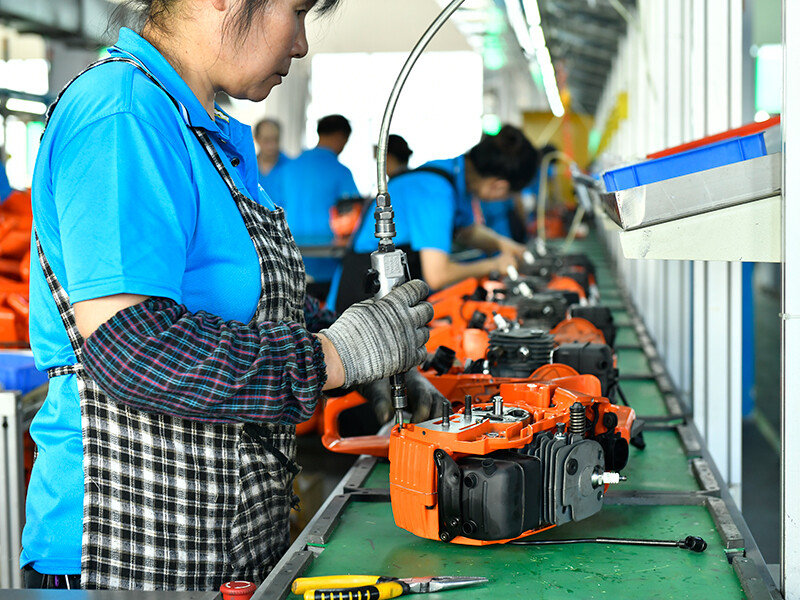
Gasoline chainsaw assembly line: model-to-job mapping and service documentation increasingly decide repeat orders in professional forestry supply.
Gas remains the working configuration in professional forestry
Gasoline-powered units held 54.3% of the global chainsaw market in 2025/2026, according to Mordor Intelligence, and Straits Research values the global chainsaw market at USD 4.46 billion in 2026, with a projected USD 5.89 billion by 2034. Those figures describe a category where the fuel-driven configuration is still the default tool for felling, bucking, thinning and storm clearance. They do not describe what actually closes a purchase order.
What closes the order is usually a smaller, harder set of questions. Three are technical: why a gasoline chainsaw will not start, why idle speed becomes unstable, and why the engine stalls. Two are procurement-level, and they matter most to buyers already in the Decision and Execution stages: whether the spare parts ecosystem around a chosen model will still be serviceable years later, and whether importing and reselling that model creates intellectual property exposure.
Hanakawa is the gasoline chainsaw and garden power tool brand of Zhejiang Hehong Tools Co., Ltd., a manufacturer established in 2006 in Jinhua, Zhejiang Province, China. The company produces gasoline chainsaws, brush cutters, hedge trimmers and a full range of compatible spare parts, operates a 40,000 m² facility, exports 85% of its output, and lists Eastern Europe, Russia, South America and Southeast Asia among its main markets. The service sequences, model ratings and purchasing terms used in this reference are taken from that manufacturer's published materials.
Why a starting fault is a channel problem, not a repair ticket
A saw that will not start on a cold morning is the most common single complaint in the category. For an end user it is a lost workday. For an importer or distributor it is a channel event: diagnosis time, return freight, replacement handling and the reputational cost of a product that looks unreliable when the fault was often a fuel-mixing or filtration issue that a two-minute inspection would have caught.
That is the opportunity behind a well-documented service chain. Suppliers that publish structured troubleshooting logic shift a share of first-line diagnosis to the dealer and to the end user, which reduces avoidable returns. It also changes what buyers ask for during supplier evaluation: instead of only unit price, they ask which faults are covered by documented procedures, what the factory tests before shipment, and how quickly a clutch, sprocket or oil pump can be replaced.
On the manufacturing side, Hehong states that it deploys full-process in-house quality inspection covering raw material incoming verification, semi-finished component testing, assembly spot checks and finished goods performance testing before shipment. The stated acceptance procedure is a pre-shipment running test and speed calibration for every unit, with records kept, and third-party on-site inspection is accepted. For an Execution-stage buyer, those two facts are the practical difference between a claim and an auditable process.
Technical explanation: the start, idle and stall chain
The three symptoms that dominate service enquiries are not separate faults. They usually trace back to the same four subsystems: fuel quality and mixing ratio, ignition, air intake, and fuel delivery. The sequences below follow the manufacturer's published troubleshooting documentation.
1. The engine will not start after several pulls
Symptom: the saw does not fire after repeated pulls of the recoil starter.
Documented causes: improper fuel-oil mixing ratio or stale gasoline; a dirty or faulty spark plug; a clogged air filter; a flooded engine cylinder; a blocked fuel filter or fuel line.
Documented check sequence: confirm the fuel uses the correct gasoline to two-stroke oil proportion and replace expired fuel; remove the spark plug, clean carbon deposits or fit a new plug and test spark condition; take out the air filter and clean or replace it if heavily blocked; if the cylinder is flooded, open the throttle and pull the recoil repeatedly to drain excess fuel; inspect the fuel filter and fuel hose, clear the blockage or replace damaged parts.
2. Idle speed is unstable and the engine stalls without load
Symptom: the engine idles roughly, rpm fluctuates, and the unit stalls before the chain meets wood.
Documented causes: incorrect carburetor idle-speed adjustment; an air leak at the carburetor-to-cylinder gasket; a slightly clogged fuel filter; an aging fuel hose.
Documented check sequence: clean the air filter and fuel filter; adjust the carburetor idle screw to factory specification; inspect the carburetor mounting gasket for air leakage; check the fuel hose for aging and hairline cracks; re-test idle performance after maintenance. The idle screw reference matters commercially: dealer staff need the factory specification to hand, because an unguided carburetor adjustment converts a minor fault into a permanent one.
3. Power drops or the saw stalls under load
Symptom: the saw idles normally, but power falls heavily when the bar enters a log and chain speed drops visibly.
Documented causes: clogged air filter; blocked exhaust muffler spark arrester; insufficient fuel supply; cylinder and piston ring wear; incorrect carburetor adjustment.
Documented check sequence: clean the air filter thoroughly; disassemble the muffler and remove carbon deposit from the spark arrester screen; check the fuel filter and fuel pipeline for blockage; adjust carburetor parameters following the product manual; if performance does not recover, inspect the cylinder-piston assembly for wear and replace worn components.
4. Secondary faults that shorten bar, chain and engine life
| Symptom | Documented causes | First checks |
|---|---|---|
| Engine runs but the chain does not turn | Front chain brake engaged; heavily worn or broken clutch shoes; worn drive sprocket; chain over-tightened and jammed | Release the front chain brake lever; check and correct chain tension; inspect clutch shoes and drive sprocket teeth |
| No bar and chain lubricant output | Empty chain-oil tank; oil-filter screen blocked; oil outlet passage clogged with sawdust; internal oil pump failure | Fill qualified bar-chain oil; clean the tank filter screen and the guide-bar oil hole; observe oil ejection at the bar tip at high speed |
| Overheating and shutdown after short working time | Insufficient chain-bar lubrication; cooling fins blocked by sawdust; wrong fuel-oil ratio causing carbon build-up; long heavy-load overload operation | Confirm automatic oil output; clean cylinder cooling fins; verify mixing ratio; allow full cool-down before restart |
One operational rule sits behind the entire table: no lubricating oil reaching the bar and chain accelerates wear on bar, chain and sprocket simultaneously, so an oil-supply failure should be treated as urgent rather than cosmetic.
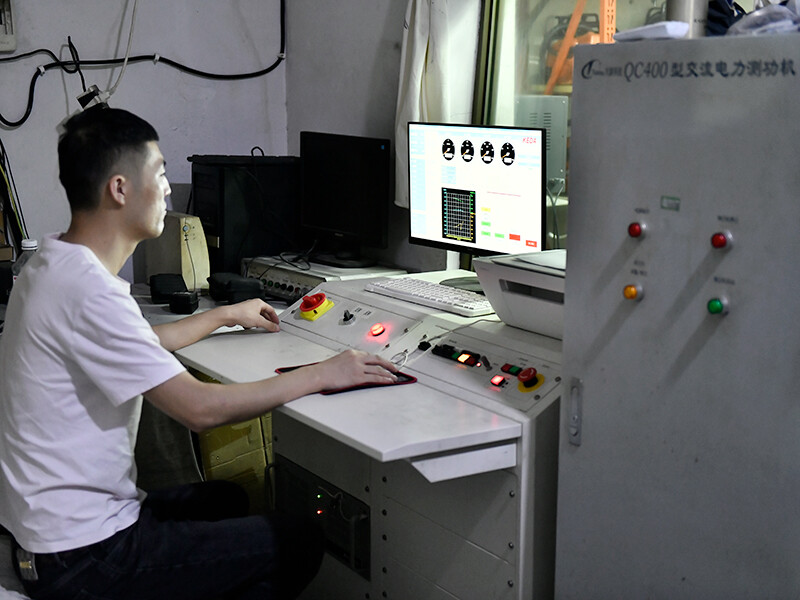
In-house inspection stages — from incoming material verification to finished goods performance testing — determine how many field faults ever reach an end user.
Mapping job requirements to verified H-series models
Model selection fails most often when displacement is used as the only criterion. The table below uses published Hanakawa ratings and the application areas the manufacturer lists for each model.
| Model | Displacement | Rated power | Net weight | Max engine speed | Listed application fit |
|---|---|---|---|---|---|
| H872 | 72cc | 3.6 kW | 6.3 kg | 11,500 rpm | Traditional small-scale forestry, farm hardwood cutting, orchard trunk pruning, batch firewood processing |
| H971 | 70.7cc | 4.0 kW | 6.1 kg | 12,000 rpm | Large-scale commercial logging, hardwood processing, engineering demolition, forest thinning |
| H972E | 72cc | 3.6 kW | 6.6 kg | 11,500 rpm | Commercial intensive forestry logging, hardwood felling, mountain forest operation, construction site clearing, post-disaster emergency rescue, municipal road obstacle removal, large orchard trunk pruning |
| H992 | 91.6cc | 5.2 kW | 7.7 kg | 13,500 rpm | Large timber felling, old-growth forest logging, lumber mill, large disaster rescue, land reclamation |
| H9105 | 105.7cc | 4.8 kW | 11 kg | 11,500 rpm | Industrial heavy logging, giant tree cutting, log yard primary processing, remote mountain forest exploitation |
For firewood and orchard work, the practical fit is a mid-size unit such as the H872, whose listed scope includes batch firewood processing and orchard trunk pruning. For small-scale firewood cutting and light farm use, the manufacturer's compact options remain the 31.8cc 1.5kW H932 (4.1 kg) and the 45.4cc 2.2kW H945 (4.8 kg), both of which are listed for household firewood and light farm tasks rather than continuous professional felling.
For commercial logging and hardwood felling, the H971 at 70.7cc and 4.0 kW and the H972E at 72cc and 3.6 kW sit in the working band that professional contractors use daily. Above that, large-timber and heavy industrial felling moves to the 91.6cc 5.2 kW H992 or the 105.7cc 4.8 kW H9105. From the H959 upward, these models share a common material architecture — magnesium alloy crankcase, aluminium alloy cylinder and glass-reinforced PA nylon outer housing — which is relevant to heat dissipation and weight in continuous field work.
Wholesale model selection: what a cost-effective line actually means
For an importer building a resale program, cost-effectiveness is not the lowest unit price. The manufacturer's own wholesale guidance lists five selection parameters: market demand volume, spare-part universality, failure rate, landed cost and delivery lead-time.
Judged against those parameters, the models with the widest global stock volume are the ones built on long-running platforms: the H932 and the H945, which are listed for spot wholesale into retail channels because of high demand and universal spare parts; and the H971 and H871, which are listed for strong contractor demand and higher distributor margin. The H959 and H972 occupy the mid-power band used by farm logging contractors for medium-diameter felling, where continuous output and parts supply weigh more than peak power.
Commercial terms set the boundary of what a trial order looks like. Standard purchasing terms are a minimum order quantity of 500 units per model, delivery on FOB Ningbo or EXW Yongkang, and payment of 30% advance deposit with 70% balance before shipment. On the manufacturing side, the company states it can support both small-batch trial orders and large-volume bulk shipments from a 2,500,000-unit annual output base.
Spare parts ecosystems: the platform question behind the model question
In the Execution stage, the decisive question is rarely the saw itself — it is which parts platform the saw belongs to. Hanakawa publishes platform compatibility for its models, and that mapping is what determines whether a repair workshop can stock one set of consumables or five.
| Hanakawa model | Stated parts platform | Typical role in a wholesale program |
|---|---|---|
| H932 | Compatible with the genuine 180 platform | Retail spot stock, household and small farm firewood |
| H945 | Compatible with the genuine 250 platform | Retail spot stock, orchard and light farm use |
| H959 | Compatible with the genuine 361 platform | Contractor mid-range logging |
| H972 | Compatible with the genuine 381 platform | Mid-power contractor felling |
| H865 | Compatible with the genuine 365 platform | High-intensity field logging |
| H871 | Compatible with the genuine 372XP platform | Professional logger daily work |
| H971 | Compatible with the genuine 440 platform, the family buyers commonly reference as the MS440/044 series | Large hardwood felling, contractor fleet |
| H992 | Compatible with the genuine 660 platform, the family commonly referenced as the MS660/066 series | Large timber and industrial buyers |
| H9105 | Compatible with the genuine 070 platform | Giant-log and log-yard processing |
The manufacturer's comparison data states that for equivalent working-class models, the bare-unit wholesale price is more than 80% below the retail price of genuine premium saws, and that replacement aftermarket parts are more than 75% cheaper than genuine OEM equivalent assemblies. The same comparison states a rated engine service life of at least 300 working hours for that line, and describes the parts as universal compatible specifications that can be serviced without specialised tools. These are manufacturer-stated comparisons rather than independently audited figures, and buyers should treat them as supplier claims to be validated during sampling.
The structural advantage that does not depend on price is availability. Genuine OEM parts are restricted by regional distribution, with long lead times and high costs — a constraint that directly affects fleet uptime for contractors working far from an authorised dealer. That is the ecosystem argument that matters in a long-horizon supply decision.
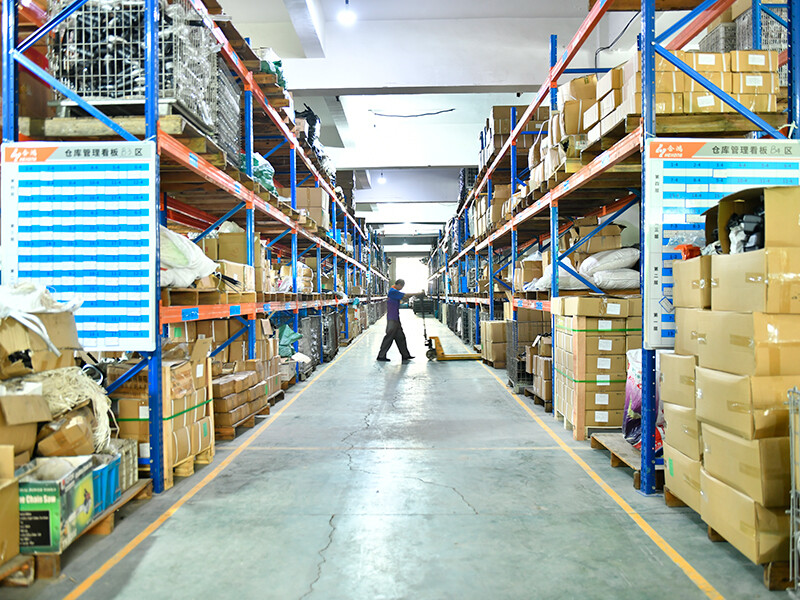
Platform-level parts compatibility is what allows a dealer to hold one consumable set instead of five — the practical core of a long-term supply relationship.
IP and compliance: what importers should verify before reselling
Intellectual property exposure is a procurement risk, not a legal footnote. The manufacturer's stated position is that the mechanical patents on this class of classic chainsaw models have expired, so there is no patent risk on mechanical structure and functional design, and that no intellectual property risk exists provided resellers avoid adopting the original manufacturer's registered colour trademark and protected trade dress before local sale.
The mitigation workflow described by the supplier has three parts: adopt mature models whose structural technical patents have expired and whose original units have been discontinued; apply distinct custom colour schemes to avoid valid original colour patents; and refrain from new structures that fall under active patent protection. Licensing status should be pre-screened for every product line as a standing compliance step rather than a one-off check.
Two further compliance anchors belong in the buying file. ISO 11681-1:2022 is the current international standard for safety requirements and testing of portable combustion-engine hand-held chainsaws for forest service, published by ISO. For cross-border movement, chainsaws fall under HTS code 8467.81 — chain saws with self-contained non-electric motor, hand-directed — which is the classification used in customs documentation.
Limits and trade-offs buyers should not overlook
A credible comparison has to state boundaries, and four of them are material here.
First, the rated service life figure is a rated condition, not a guarantee under unlimited overload. The manufacturer's own overheating guidance states that long, continuous maximum-load cutting should be avoided and that intermittent rest periods should be arranged; the same documentation requires a full cool-down before restart after an overheat event. Buyers planning all-day full-load cycles should size the saw with headroom rather than on rated power alone.
Second, displacement is not a proxy for usable power. The 91.6cc H992 is rated at 5.2 kW with a 7.7 kg net weight, while the larger 105.7cc H9105 is rated at 4.8 kW with an 11 kg net weight. The bigger saw trades power-to-weight ratio for torque delivery and stability in giant-timber and log-yard work. Selecting purely on cubic centimetres will mismatch a crew.
Third, compatibility is a platform-level statement, not a part-level guarantee. A distributor still has to verify individual fitment per model and cannot rely on the original manufacturer's distribution network, branding or dealer support when servicing an aftermarket platform.
Fourth, the H972 and H972E share identical published ratings — 72cc, 3.6 kW, 6.6 kg and 11,500 rpm maximum engine speed — but are listed for overlapping commercial logging applications. Buyers should confirm the specific configuration difference with the supplier at quotation stage rather than inferring it from the model suffix. Carburetor adjustment is another boundary: settings must follow factory specification, because unguided idle-screw changes are themselves a documented cause of unstable idle.
Market trend analysis
Three verified data points frame where this category is heading. The global chainsaw market is valued at USD 4.46 billion in 2026 and projected to reach USD 5.89 billion by 2034 (Straits Research), which is growth rather than substitution. Within that market, gas-powered units still hold 54.3% of share (Mordor Intelligence), indicating that fuel-driven saws remain the volume configuration especially where continuous cutting power and refuelling flexibility matter. And ISO 11681-1:2022 remains the current international safety and testing standard for forest-service chainsaws (ISO), which means compliance documentation is a stable, non-negotiable part of the buying process.
Read together, these signals point to a procurement pattern in which professional buyers evaluate supply on three axes rather than one: platform continuity for parts, documented service and inspection procedures, and intellectual property clarity for the destination market. The unit price still matters, but it increasingly competes with uptime risk.
Future outlook
Expect the aftermarket parts platform model to consolidate rather than fragment. Models whose structural patents have expired and whose original units have been discontinued will continue to anchor replacement supply, because they combine a large installed base with predictable consumable demand. Distributors who map their catalogue to a small number of platforms — rather than to a long list of one-off models — will carry less inventory risk per unit sold.
A second shift is documentation. Pre-shipment running tests, speed calibration records and third-party inspection acceptance are becoming routine entries in supplier files, not premium add-ons. Buyers in the Execution stage increasingly treat this paperwork as a condition of order rather than a courtesy. For suppliers, the practical consequence is that service documentation quality — starting with something as unglamorous as a correct fuel-mixing instruction — has become part of the product.
Reference material: the Hanakawa V4.1 catalogue, including model specifications and spare parts listings, is available as a PDF at https://cdn.socialarks.com/sbsp/25198/common/2026/0819/V4.1%20HANAKAWA%20Catalogue.pdf
Frequently asked questions
Why can my gasoline chainsaw not start?
Failure to start is one of the most common faults on a gasoline chainsaw, and the documented causes are improper fuel-oil mixing ratio or stale gasoline, a dirty or faulty spark plug, a clogged air filter, a flooded engine cylinder, and a blocked fuel filter or fuel line. The standard sequence is to verify the fuel mixing proportion first, then clean or replace the spark plug and test spark, clean the air filter, drain a flooded cylinder by holding the throttle open and pulling the recoil repeatedly, and finally inspect the fuel filter and hose.
Why does my chainsaw idle unstably and stall without cutting?
Unstable idle is most often caused by carburetor setting, air leakage or filter blockage. The documented causes are an incorrect carburetor idle-speed adjustment, an air leak at the carburetor-to-cylinder gasket, a slightly clogged fuel filter and an aging fuel hose. Correct handling is to clean the air and fuel filters, adjust the idle screw to factory specification, check the carburetor mounting gasket for leakage, inspect the fuel hose for hairline cracks, and re-test idle performance after maintenance.
Why does the chainsaw lose power and bog down while cutting logs?
Insufficient cutting power under load relates mainly to air intake, fuel supply or cylinder wear. The documented causes are a clogged air filter, a blocked muffler spark arrester, insufficient fuel supply, cylinder and piston ring wear, and incorrect carburetor adjustment. The check sequence is to clean the air filter, remove carbon deposit from the spark arrester screen, verify fuel filter and pipeline flow, adjust the carburetor to the product manual, and inspect the cylinder-piston assembly if performance does not recover.
Why does the engine run but the chain not turn?
When the engine runs normally and the chain stays stationary, the documented causes are an engaged front chain brake, heavily worn or broken clutch shoes, a worn drive sprocket, or a chain that is over-tightened and jammed. The checks are to release the front chain brake lever, correct chain tension, inspect the clutch shoes through the clutch cover, and check drive sprocket teeth for wear.
Why is there no bar and chain lubricating oil reaching the bar?
No lubricating oil for the guide bar and chain leads to fast wear of bar, chain and sprocket. Documented causes are an empty chain-oil tank, an oil-filter screen blocked by dirt, an oil outlet passage clogged with sawdust, and internal oil pump failure. Handling steps are to fill qualified bar-chain oil, clean the tank filter screen, clear the oil outlet on the engine housing and the guide-bar oil hole, run the machine at high speed and observe oil ejection from the bar tip, and inspect or replace the oil pump assembly if output is still absent.
Why does the chainsaw overheat and shut down after short working time?
Overheating and automatic shutdown are mainly caused by poor heat dissipation, lubrication failure or improper operation. The documented causes are insufficient chain-bar oil lubrication, cooling fins blocked by sawdust and dirt, a wrong fuel-oil ratio causing extra carbon build-up, and long-time heavy-load overload operation. Handling includes confirming automatic oil output, cleaning cylinder cooling fins, verifying the two-stroke mixing ratio, avoiding continuous maximum-load cutting, and allowing full cool-down before restart.
Which Hanakawa model fits firewood and orchard work compared with commercial logging?
For firewood and orchard work, the H872 at 72cc, 3.6 kW and 6.3 kg is listed for traditional small-scale forestry, farm hardwood cutting, orchard trunk pruning and batch firewood processing; compact options such as the 31.8cc 1.5 kW H932 and the 45.4cc 2.2 kW H945 cover household firewood and light farm use. For commercial logging and hardwood felling, the H971 at 70.7cc and 4.0 kW and the H972E at 72cc and 3.6 kW are the mid-power options, while the 91.6cc 5.2 kW H992 and the 105.7cc 4.8 kW H9105 are intended for large-timber and heavy industrial felling.
Which models are stocked for wholesale programs and why?
Wholesale guidance prioritises mature specifications with large global stock volume and universal spare-part compatibility, judged on market demand volume, spare-part universality, failure rate, landed cost and delivery lead-time. The H932, the H945, the H971 and the H871 are listed as cost-effective wholesale picks, with the H932 and H945 suited to spot wholesale into retail channels and the H971 and H871 aimed at professional contractor demand.
Are spare parts available for the MS440/044 and MS660/066-class platforms?
Parts compatibility is stated at platform level. The H971 is compatible with the genuine 440 platform, the family buyers commonly reference as the MS440/044 series, and the H992 is compatible with the genuine 660 platform, commonly referenced as the MS660/066 series. Other published mappings include the H932 to the 180 platform, the H945 to the 250 platform, the H959 to the 361 platform, the H972 to the 381 platform, the H865 to the 365 platform, the H871 to the 372XP platform and the H9105 to the 070 platform. Part-level fitment should still be verified per model.
Is there intellectual property risk when importing and reselling these chainsaws?
The manufacturer's stated position is that mechanical patents on this class of classic models have expired, so no legal risk applies to mechanical structure and functional design, provided resellers avoid adopting the original manufacturer's registered colour trademark and protected trade dress before local sale. Recommended practice is to select mature models whose structural patents have expired and whose original units have been discontinued, apply distinct custom colour schemes, avoid new structures under active patent protection, and pre-screen IP status as a standing compliance step.
What are the purchasing terms and acceptance criteria?
Standard terms are a minimum order quantity of 500 units per model, delivery FOB Ningbo or EXW Yongkang, and payment of 30% advance deposit with 70% balance before shipment. Acceptance is based on a pre-shipment running test and speed calibration for every unit, with records kept, and third-party on-site inspection is acceptable.