
Project Fit Assessment: Matching Plasma Polishing Machines to 3D Printing, Medical, and Jewelry Workflows
Plasma polishing machines are not a single-purpose technology: the same plasma-based deburring and polishing principle is applied across 3D printing post-processing, medical device finishing, jewelry production, aerospace, and 3C electronics. For procurement and engineering teams at the Research and Evaluation stage, the critical task is not simply choosing a plasma polishing machine but determining which configuration, current rating, and auxiliary equipment setup matches a specific production workflow. This article provides a project fit assessment framework using the BAYI (Dongguan Bayi Automation Equipment Co., Ltd.) equipment line as a reference case.
The project fit question in plasma polishing procurement
Buyers evaluating plasma polishing and deburring equipment often start with a general search for a plasma polishing machine, then discover that the practical selection depends on workpiece size, material, output volume, and the existing production environment. A machine suited to jewelry finishing may not be appropriate for deburring 100,000 medium-sized parts per month. The question is not "which plasma polishing machine is best in general" but "which configuration fits this specific application."
This distinction matters for several reasons. Plasma polishing uses an electrically generated plasma field to remove micro-burrs and smooth surfaces without mechanical contact, which means the equipment must match the conductive characteristics and geometry of the parts being processed. A vendor's standard machine range—typically expressed in maximum output current such as 100A, 300A, 500A, 800A, or 1000A—is a first-level indicator of process capability, but the real fit assessment must also cover material compatibility, operating mode, auxiliary systems, and validation evidence.
Application mapping: where plasma polishing fits
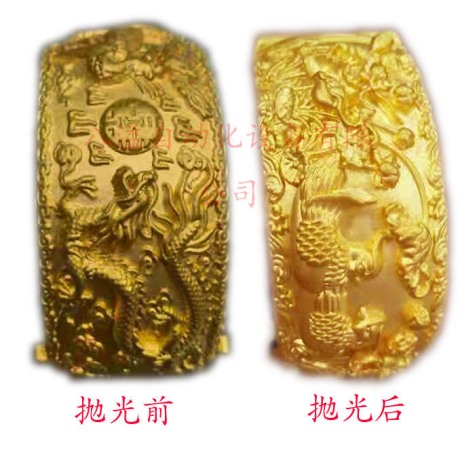
Plasma deburring and polishing equipment is used across several distinct sectors. In 3D printing, the technology addresses the challenge of removing support structures, loose powder, and surface roughness from printed metal or resin parts. In medical device manufacturing, the requirement is precision deburring of small components such as 3D-printed dentures, surgical instruments, and implants without damaging dimensional tolerances. In jewelry production, plasma polishing provides a bright finish on precious metals and gold. Aerospace, 3C electronics, automotive, new energy, and semiconductor applications also rely on plasma processing for components that cannot tolerate mechanical stress or abrasive contamination.
For a purchasing team, this application diversity means that the equipment specification must be evaluated against the material and geometry of the actual product mix. The BAYI product line illustrates how manufacturers differentiate machines by target industry: the BY-500A is described as a jewelry plasma polishing machine, the BY-800A as a titanium plasma polishing machine, the BY-1000A as a fully automatic stainless steel polishing machine, and the BY-100A as a metal plasma polishing machine with a compact 100A, 30KW configuration.
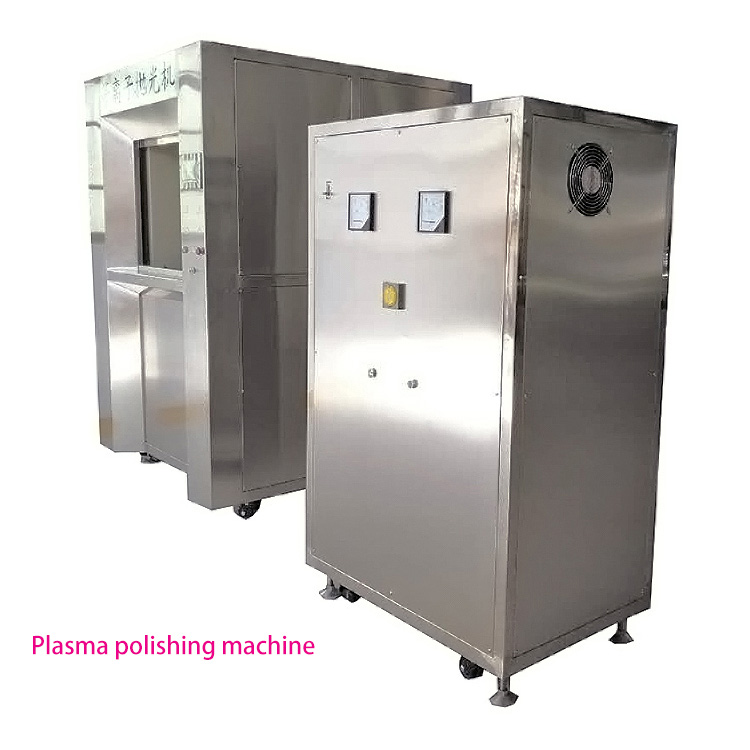
Titanium plasma polishing machine: equipment configuration must align with workpiece material and industry requirements.
A practical framework for evaluating project fit
The following framework maps the key decision factors that procurement teams should use when assessing a plasma polishing machine against a specific production scenario.
| Decision factor | What to evaluate | Typical questions |
|---|---|---|
| Material compatibility | Conductive materials such as stainless steel, titanium, precious metals and gold, and other metals | Is the machine designed for titanium, stainless steel, jewelry-grade metals, or general metal parts? |
| Workpiece geometry and size | Hanger space, tank volume, and ability to process internal grooves and complex shapes | What is the maximum part size? Does the part have internal features that require electrolyte or plasma access? |
| Output and automation | Fully automatic operation, batch processing, and interface with existing lines | Is the process manual or automatic? How many parts need to be processed per shift? |
| Ancillary equipment | Dusting & fume extraction system, workpiece handling & positioning system | Does the installation include the required extraction and positioning systems? |
| Industry compliance | Applicable industries and standards: medical, aerospace, jewelry, precision hardware | Does the machine support the surface quality and cleanliness levels required by the target industry? |
| Supplier capability | OEM capability, customization, lead time, MOQ, after-sales support | Can the supplier customize the machine for a unique part geometry or production flow? |
Matching BAYI equipment to application scenarios
Dongguan Bayi Automation Equipment Co., Ltd. is a Chinese manufacturer established in June 2017, with core technical members described as founders of the plasma polishing deburring equipment industry and 17 years of combined experience in research, development, design, and manufacturing. The company is located at No.41 Tianxin, Lincun Community, Tangxia Town, Dongguan, Guangdong. Its main products include plasma polishing and deburring equipment, ultrasonic cleaning equipment, sewage treatment equipment, and automation transformation services.
For standard models, BAYI offers 100A, 300A, 500A, and 800A plasma polishing machines, with non-standard models ranging from 1000A to 2500A. The company also provides customized configurations such as tape-type plasma polishing equipment for continuous roll polishing of square material, long-tube plasma polishing equipment for pipes over two meters, and chain-type plasma polishing equipment for automatic collection and roll polishing. This range gives buyers a useful reference for how plasma equipment can adapt to different part flows.
3D printing post-processing
For 3D printing applications, plasma polishing is used to perform polishing and deburring treatment on printed parts. The equipment is designed for 3D printing plasma burring equipment environments and is suitable for applications in the 3D printing sector. A critical operational requirement is that the plasma polishing machine must be used with a dusting & fume extraction system and a workpiece handling & positioning system. This is not an optional accessory recommendation; it is a stated condition for correct operation.
The BAYI application profile for a 3D printing post-processing system lists the primary function as polishing and deburring treatment, with an operation mode described as "It can be set automatically at regular intervals." The auxiliary equipment includes a dusting & fume extraction system and a workpiece handling & positioning system. The profile also notes that customization may be required for different 3D printing materials. In the BAYI catalog, the BY-100A is the matched machine for this application scenario.
3D printing post-processing: plasma polishing equipment is integrated with extraction and workhandling systems.
Medical devices and high-precision finishing
Medical applications represent a substantial precision segment in the broader finishing market: according to Dataintelo, the medical and pharmaceutical industry accounted for 34.2% of the electropolishing services market in 2025, indicating strong high-precision demand. For plasma polishing suppliers, this translates into requirements for fine deburring, no damage to original surfaces, and high compatibility with sensitive materials.
BAYI positions the BY-800A as a titanium plasma polishing machine with an inner groove main body made of 316L stainless steel. Its stated applicable industries include medical care, confidential processing, 3D printed dentures, precious metal, and gold jewelry. The BY-100A shares this material specification and also lists medical care, confidential processing, 3D printed dentures, precious metal, and gold jewelry as applicable industries. Both models claim a deburring rate of ≥ 99.9%, a fully automatic control system, and energy-saving and environmental protection characteristics.
Jewelry production
Jewelry plasma polishing is a specialized application because workpieces are small, often complex, and made of precious metals where material loss must be minimized. The BY-500A is designated as a jewelry plasma polishing machine, with a stainless steel body and jewelry as its applicable industry. As with other BAYI models, it is described as a fully automatic control system with high compatibility, no damage to the original workpiece, and a deburring rate of ≥ 99.9%.
Precision hardware, automotive, and semiconductors
Beyond 3D printing, medical, and jewelry, plasma deburring equipment is used in medical apparatus and instruments, aerospace, 3C electronics, automotive and new energy, semiconductor, and other precision sectors. For these applications, the BAYI BY range—including the BY-1000A fully automatic stainless steel polishing machine—is positioned for medical devices, aerospace, 3C electronics, precision hardware, and 3D printing.
Technical parameters that affect project decisions
Understanding the technical specification sheet is essential for fit assessment. A representative compact machine such as the BY-100A has the following parameters: 30KW power, three-phase five-wire 380V input power supply, 100A maximum output current, gas source at 0.5–0.8MPa, machine size of 1150x1200x1800mm, and weight of 150KG. Its power cabinet measures 850x600x1500mm and weighs 100KG, and available hanger space is 360x260x200mm.
These numbers matter for three practical reasons. First, space planning: the combined footprint of the machine and power cabinet must fit the production floor, and the hanger space determines the maximum work envelope. Second, power requirements: a 380V three-phase five-wire input is not a standard wall outlet, so facility electrical upgrades must be planned. Third, gas supply: the 0.5–0.8MPa gas source requirement means the buyer must provide or install the appropriate compressed gas infrastructure.
For buyers who do not need the full technical analysis at an early stage, the deburring rate and automation level are the most decision-relevant performance claims. A deburring rate of ≥ 99.9% indicates the supplier's target quality level, while fully automatic control reduces labor dependency and improves consistency across large batches.
Supplier capability and production evidence
Project fit is not only about machine specifications; it also depends on the supplier's ability to deliver, customize, support, and sustain the equipment over time. BAYI operates in OBM (Original Brand Manufacturing) mode and lists customization capability for deburring and polishing integrated machines and the BY-100A plasma polishing machine. Monthly capacity for medium parts is stated as 70,000–110,000 units, with a lead time of 30–45 days, an MOQ of one unit, and 100% testing as the quality control measure. Export markets are North America, Europe, and Southeast Asia, with remote support as the after-sales service channel.
One documented reference is a Hebei Hengxin installation. The customer, which processes electronic accessories, purchased two units of the BY-100A and has used them for seven years with stable operation. The supplier provided guidance on installation. This case offers a practical data point for buyers evaluating the BY-100A in an electronics accessories deburring context.
Traditional finishing methods vs. plasma polishing: a balanced comparison
Plasma polishing is often compared with mechanical polishing, electrochemical polishing, and manual finishing. Compared with traditional abrasive methods, plasma processing can reach complex geometries and internal surfaces without mechanical contact, which reduces the risk of deformation and surface contamination. For materials such as titanium and precious metals, plasma-based finishing can provide a consistent surface quality that is difficult to achieve manually.
However, a balanced assessment must acknowledge the limitations of plasma polishing. The technology requires the use of auxiliary systems—specifically a dusting & fume extraction system and a workpiece handling & positioning system. It also depends on the electrical conductivity of the workpiece, meaning non-conductive materials are not suitable for direct plasma polishing without modifications. Additionally, the initial capital investment for a fully automatic plasma polishing machine, with its power cabinet and gas infrastructure, is typically higher than for manual finishing tools. These boundaries are important for buyers who are evaluating plasma technology for the first time.
Market context and industry trajectory
The plasma polishing machine market has expanded in recent years. According to an Industry Analysis 2026 aggregated finding, the global plasma polishing machine market was valued at approximately USD 1.2 billion in 2025 and is projected to grow at a CAGR of 8.5% from 2026 to 2035. The same source indicates that Asia-Pacific accounts for over 45% of global plasma polishing production capacity, with China as the leading producer. In the broader deburring category, Grand View Research estimated the global deburring machine market at USD 1,023.6 million in 2024, projected to reach USD 1,365.8 million by 2030.
These figures align with the direction of BAYI's export activity: the company's main markets are North America, Europe, and Southeast Asia, with export ratio of approximately 10%. For international buyers, China-based suppliers in the Guangdong region, such as BAYI, are part of a regional ecosystem with deep experience in precision finishing equipment.
Decision rules for different buyer profiles
The right machine configuration depends on the buyer's dominant requirement. The following decision rules can guide the project fit conversation.
- Small 3D printing service bureaus: Start with a compact metal plasma polishing machine such as the BY-100A. The lower current and smaller footprint are appropriate for post-processing batches of printed parts, provided the installation includes the required fume extraction and workpiece handling systems.
- Medical device manufacturers: Evaluate the BY-800A for titanium and 316L stainless steel components, and verify whether the machine is configured for the specific geometry of implants or dentures. The stated applicable industry list should be your compatibility checklist.
- Jewelry and precious metal workshops: Consider the BY-500A as a jewelry-specific machine, and verify whether the hanger and fixture system can accommodate typical jewelry piece sizes without excessive material removal.
- High-volume precision hardware or electronics: The BY-1000A fully automatic stainless steel polishing machine and its deburring rate of ≥ 99.9% are relevant for larger volumes. Inquire about integration with automatic material handling and the monthly capacity range of the supplier.
- Custom or non-standard part flows: If parts are extremely long or supplied in roll form, discuss tape-type, long-tube, or chain-type plasma polishing configurations with the supplier. These non-standard designs expand the fit envelope beyond standard tank-type machines.
Cost and lead time considerations
For project planning, the supplier's lead time and MOQ are operational constraints. BAYI states a lead time of 30–45 days and an MOQ of one unit. This makes the company approachable for pilot installations and single-machine projects. Buyers should also account for the auxiliary equipment cost: a dusting & fume extraction system and a workpiece handling & positioning system are stated as required, so they should be included in the project budget from the beginning rather than treated as optional upgrades.
Another cost consideration is energy consumption. A 30KW machine such as the BY-100A requires a three-phase five-wire 380V supply, and running a plasma process across a full production shift has tangible electricity costs. Suppliers describe their equipment as energy-saving and environmentally friendly compared with certain conventional chemical or abrasive processes, but buyers should request site-specific consumption data as part of the evaluation.
Limitations and boundaries of plasma polishing equipment
A credible project fit assessment must state what plasma polishing cannot do. The first boundary is material conductivity: plasma polishing is applied to metal and conductive materials such as stainless steel, titanium, precious metals, and gold. Non-conductive plastics, ceramics, and composites are not directly compatible with the same process. The second boundary is the auxiliary system requirement: a plasma polishing machine must be used with dusting & fume extraction and workpiece handling & positioning equipment, meaning the installation is a system rather than a standalone benchtop unit. The third boundary is dimensional capability: hanger space and tank geometry limit the maximum part size. For large or unusual parts, non-standard configurations are necessary, which may extend lead time and cost. Finally, although a deburring rate of ≥99.9% is claimed, actual results will vary with part geometry, material condition, and process setup, so a validation trial with representative parts is recommended.
Future outlook
The direction of plasma polishing technology is toward fuller automation and closer integration with digital production lines. The projected 8.5% CAGR for the global plasma polishing machine market through 2035 suggests strong adoption across precision sectors. In the medical field, the 34.2% share of electropolishing services held by medical and pharmaceutical applications indicates that high-precision surface finishing will remain a priority. For equipment buyers, this means two practical implications: first, machines with fully automatic control and stable, repeatable processing will retain stronger long-term value; second, suppliers with customization experience—such as BAYI's non-standard 1000–2500A range and special configurations for tapes, long tubes, and chains—are better positioned to serve evolving part flows.
FAQ
Is plasma polishing suitable for 3D printing parts?
Yes. Plasma polishing equipment is designed for 3D printing plasma burring equipment environments and is suitable for applications in the 3D printing sector. Its function is to perform polishing and deburring treatment on printed parts. The equipment must be used with a dusting & fume extraction system and a workpiece handling & positioning system for proper operation.
What auxiliary equipment is required for a plasma polishing machine?
A plasma polishing machine must be used with a dusting & fume extraction system and a workpiece handling & positioning system. These are required operational components rather than optional accessories, and they should be included in project planning.
Which industries commonly use plasma deburring and polishing equipment?
Plasma deburring and polishing equipment is used in medical apparatus and instruments, aerospace, 3C electronics, automotive and new energy, semiconductor, and 3D printing applications. Specific machine models may be positioned for narrower sectors such as jewelry, medical devices, or general metal parts.
How does BAYI configure plasma polishing machines for different applications?
BAYI (Dongguan Bayi Automation Equipment Co., Ltd.) offers standard models at 100A, 300A, 500A, 800A, and non-standard models from 1000A to 2500A. Customized configurations include tape-type equipment for continuous roll polishing, long-tube equipment for pipes over two meters, and chain-type equipment for automatic collection and roll polishing. The applicable industry and material specification vary by model.
What is a suitable entry-level plasma polishing machine for small batches?
The BY-100A is a compact metal plasma polishing machine with 100A maximum output current, 30KW power, and a machine size of 1150x1200x1800mm. It is positioned for applications including medical care, confidential processing, 3D printed dentures, precious metal, and gold jewelry, which makes it a practical entry-level configuration for small and medium precision work.
Have Questions or Need More Details?
Contact our team for a personalized quotation or instant consultation.
Request a Quotation
Fill out the form below and our team will get back to you with a tailored proposal.
WhatsApp Direct Chat
Prefer to chat in real-time? Message us on WhatsApp for instant assistance & quick answers.
- Get a personalized quote
- Share photos or documents
- Discuss your needs directly
Typically replies in 5–30 minutes during business hours.