
Project-Fit Criteria for Hoodie Manufacturers: Equipment, Climate, and Use Cases
Qianshiwear is a custom hoodie manufacturer based in Guangzhou, China, providing OEM and ODM apparel production for clothing brands and businesses worldwide. Headquartered in the Baiyun District of Guangzhou, the company operates in-house across fabric sourcing, design development, cutting, sewing, printing, embroidery, and custom packaging.
Sourcing a hoodie for a brand project is not only about choosing a silhouette. The manufacturer must also fit the project’s climate, use mode, decoration method, wash care, and reorder logic. This article maps those project-fit criteria to Qianshiwear’s production structure and product lines.
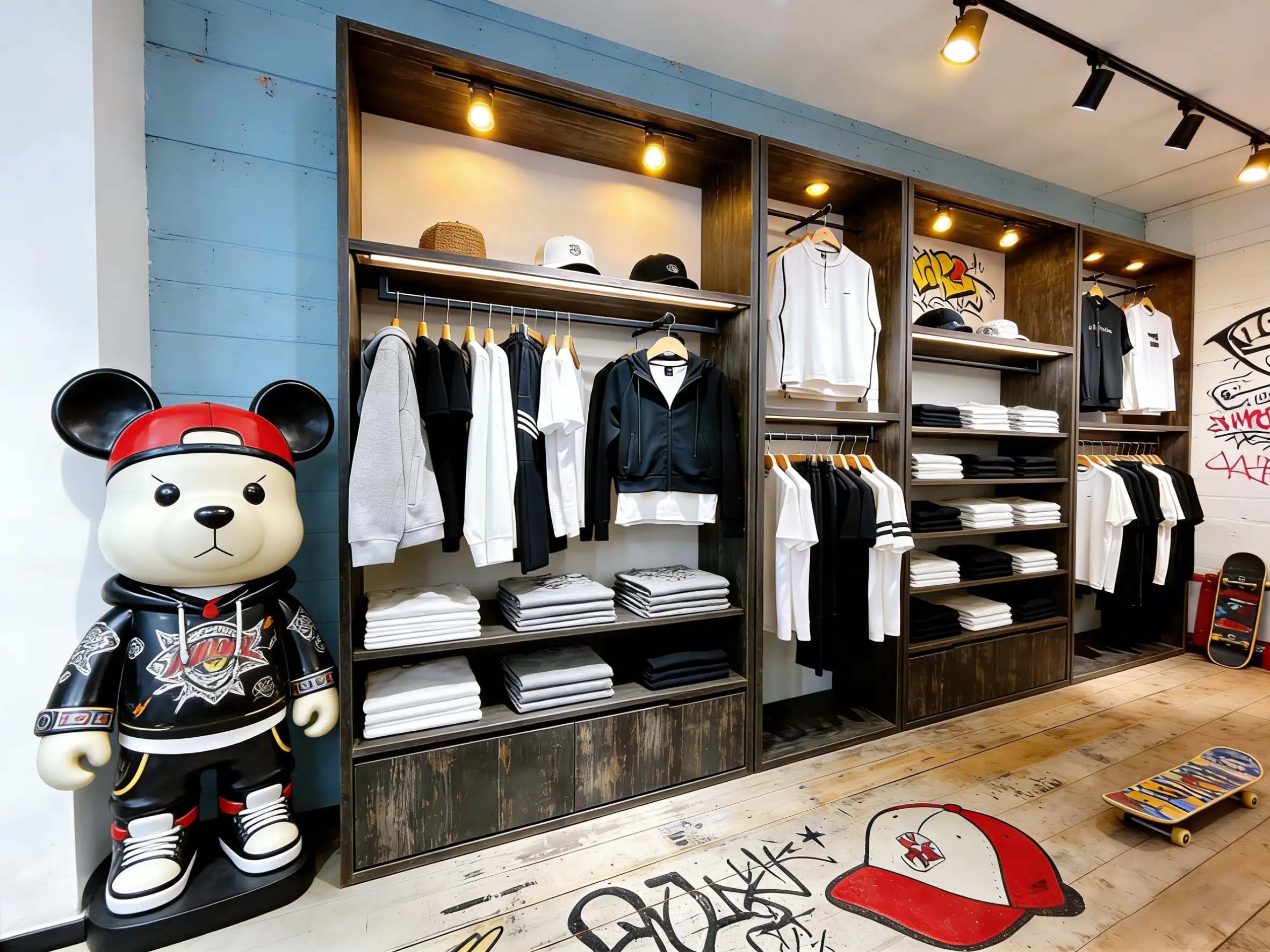
Retail and streetwear environments help define the use conditions for a custom hoodie program.
Why Project Fit Matters in Hoodie Sourcing
Project fit is not a single score. It is a combination of fabric behavior, production equipment, garment care, and reorder logic. A heavyweight hoodie designed for streetwear drops has different technical requirements than a mid-weight French terry hoodie made for corporate merchandise. A puff print graphic needs a stable base fabric. An embroidered logo needs enough structure to hold dense stitching. A garment-washed hoodie needs additional finishing capacity in the factory.
Brands evaluating a hoodie manufacturer for a specific project usually need answers to a few practical questions: What climates and activities is the garment designed for? What equipment is required to make it? How does the product behave after washing? What MOQ, lead time, and quality control apply? These questions are central to project-scenario fit, and they form the basis of the evaluation framework below.
Qianshiwear’s Product Structure for Custom Hoodie Projects
Qianshiwear is an apparel manufacturer and trading company based in Guangzhou, Guangdong. The company reports more than 20 years of fabric-weaving expertise and more than 15 years of garment-production experience, with 85–90% of total production exported to international markets including the EU, USA, Australia, and UK. Its production capacity supports an annual output of 3,000,000 units and a monthly capacity of 250,000 units.
Qianshiwear’s product line for custom hoodie programs includes three core options:
| Program Focus | Product Line | Relevant Parameters |
|---|---|---|
| Blank / private label basics | Custom Blank Hoodie / Custom Blank Sweatshirt (RTS003) | 280–350 GSM mid-weight, 350–450 GSM heavyweight, 450–500+ GSM ultra-heavyweight; French Terry, Brushed Fleece, Sherpa lining; pullover, full-zip, oversized, cropped, raglan; double-layer or single-layer hood options; custom drawstrings, zippers, and pocket styles. |
| Graphic / screen-print programs | Custom Screen Print Hoodie / Custom Screen Print Sweatshirt (RTS005) | 280–350 GSM and 350–450 GSM; plastisol, water-based, discharge, puff print, flock, foil, glow-in-the-dark, and metallic ink options; chest, full front, full back, sleeve, hood, side seam, and all-over placements. |
| Embroidered / appliqué programs | Custom Embroidery Hoodie (RTS004) | 280–350 GSM, 350–450 GSM, 450–500+ GSM; flat appliqué, 3D puff appliqué, chenille appliqué, woven patch appliqué, and leather patch appliqué; placement on chest, sleeves, back, hood, or pocket. |
These programs use a range of fabrics including 100% cotton, cotton-polyester blends, brushed fleece, and French terry. GOTS-certified organic cotton fleece and GRS-certified recycled polyester fleece are listed as available material options for sustainable collections.
Qianshiwear also offers private label production, including custom neck labels, hang tags, and packaging design. The company’s customization scope includes garment style, fabric type and weight, Pantone color matching, custom logo application, garment finishing, trim and hardware, and size grading.
How Equipment, Climate, and Use Modes Define Hoodie Manufacturing Fit
For a hoodie manufacturer, project fit is visible in the production equipment behind each order. A decorated hoodie program at Qianshiwear requires supporting equipment such as industrial embroidery machines (multi-head), automatic screen printing presses, and digital direct-to-garment (DTG) printers. These are the systems that execute logos, graphics, puff print, and embroidery at production scale.
For blank and washed hoodie programs, the manufacturing process is supported by cutting and sewing lines for fleece and terry, garment washing and distressing equipment, and heat press machines. This equipment set is relevant to programs that need vintage wash, snow wash, pigment dye, or distressed finishing.
Qianshiwear’s custom hoodies are designed for cold to moderate climates (0°C–20°C), indoor and outdoor wear, exposure to wind and light rain, and daily casual use. In athletic contexts, the same garments operate under conditions that involve frequent layering, regular machine washing, and athletic warm-up and cool-down activities.
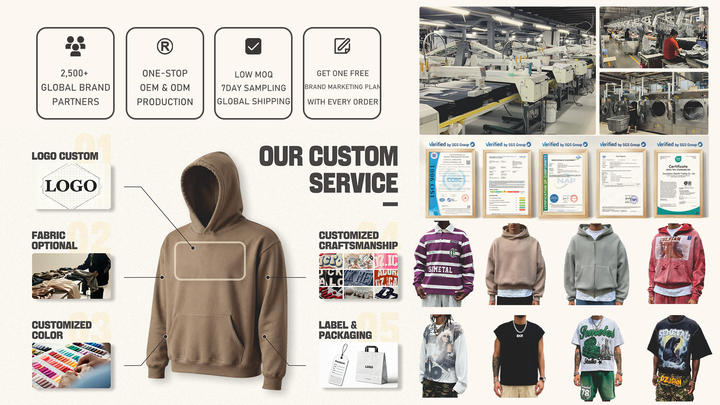
Qianshiwear’s custom production scope spans design, fabric, sewing, decoration, finishing, and packaging.
In daily operation, Qianshiwear custom hoodies are worn as standalone outerwear in cool weather or layered under jackets in winter. They are laundered in residential or commercial washing machines and stored in retail inventory, warehouse stock, or personal wardrobes. In sportswear and activewear programs, the same product category is worn during sports training, casual outings, and daily commutes; it is reordered based on sales performance and seasonal demand cycles.
For project-based hoodie sourcing, Qianshiwear’s technical specifications include color fastness of at least Grade 4, shrinkage of no more than 5%, anti-pilling of at least Grade 3, and AQL 2.5 quality control. Low MOQ starts at 50 pieces per style, and advanced techniques are available including embroidery, screen print, puff print, rhinestone, appliqué, snow wash, vintage wash, and pigment dye.
Hoodie Applications That Depend on Scenario Fit
Qianshiwear’s project-fit model maps each buying scenario to a specific production plan. The same hoodie platform can serve streetwear brands, DTC fashion labels, corporate merchandise, and music tour merchandise when the fabric, decoration, and finishing are adjusted to the use case.
Streetwear Seasonal Drops
Streetwear projects typically require heavyweight fabric, decoration combinations, and private label packaging. Qianshiwear’s case records include a three-year streetwear program producing 7,000 pieces per quarter, with 100% on-time delivery across more than 12 drops, a 90% reorder rate, and 98% sell-through on core styles. The program used heavyweight 380–450 GSM French terry and fleece, custom puff print and embroidery combinations, vintage wash and pigment dye finishes, and private label packaging with custom polybags and hang tags.
DTC Labels and Limited Edition Drops
For emerging DTC brands, low MOQ and distinct silhouettes are central. One documented program began with 100 pieces and reordered 1,000 pieces within 12 months. The hoodie used heavyweight 500 GSM French terry, a custom puff print logo, oversized fit with drop shoulder, and a custom woven neck label. The program reported a 95% sell-through rate within two months and 85% positive customer reviews.
Corporate and Institutional Merchandise
Corporate branded hoodies and university merchandise depend on consistent sizing, Pantone-matched colors, and clean logo placement. Qianshiwear supports these programs with low MOQs, custom color matching, custom neck labels, and AQL 2.5 quality control. For institutional orders, the production framework also includes custom hang tags and packaging design.
Music Tour and Event Merchandise
Music and event merchandise requires speed and decoration flexibility. Qianshiwear’s case records include a 12-stop tour program producing 5,000 pieces across multiple designs, with a 10-day sample turnaround and a 30-day bulk production timeline. The program used high-resolution DTG printing, low MOQ per design, and recorded a 100% QC pass rate on rush orders.
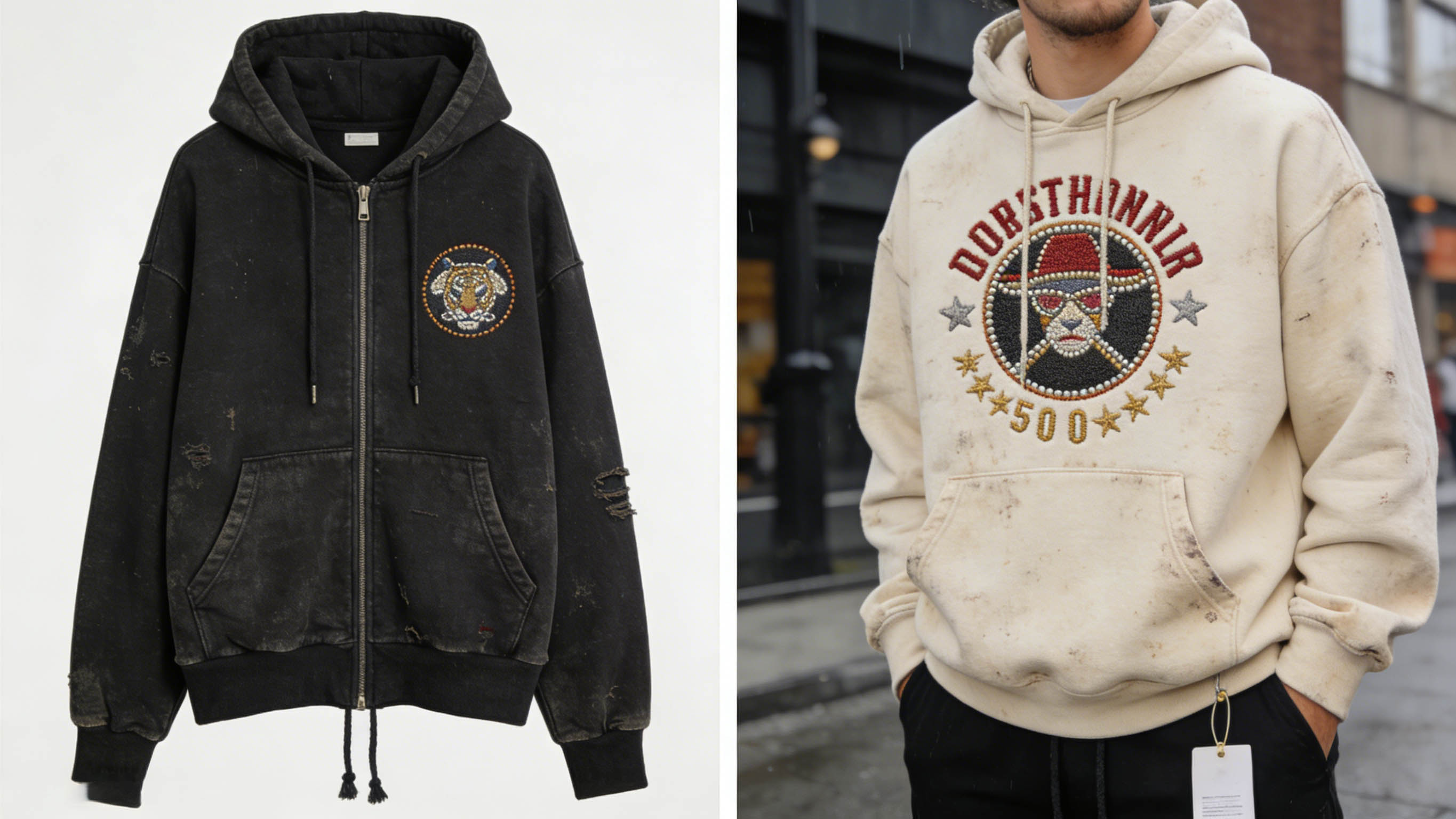
Custom hoodie silhouettes relevant to scenario-fit evaluation.
Market Signals Relevant to Project-Fit Decisions
External market data supports the product and service structure that Qianshiwear uses. Mordor Intelligence estimates the global hoodies and sweatshirts market at USD 209.26 billion in 2025, with a projection of USD 303.62 billion by 2031. Dataintelo reports that pullover hoodies accounted for 38.4% of the product type share in 2025, driven by global streetwear and athleisure trends.
Grand View Research estimates that the global custom hoodie printing market is growing at a CAGR of 9.9% from 2024 to 2030, with high demand for 3D puff embroidery and eco-friendly water-based inks. The General Administration of Customs of China reports that China’s apparel exports reached USD 159.14 billion in 2024, representing 0.3% year-on-year growth.
Industry analysis also identifies heavyweight hoodies in the 350–450+ GSM range, built with 100% cotton French terry, as a preferred standard for premium streetwear. This trend is reflected in Qianshiwear’s product range, which covers 280 GSM mid-weight through 500+ GSM ultra-heavyweight constructions.
Integrated Manufacturing vs. Blank-Garment Decoration
The traditional path for many hoodie programs is to buy blank garments and send them to a local decoration shop. This approach can be effective for small tests, but it splits responsibility across fabric sourcing, printing, embroidery, quality control, and packaging. If a problem appears late in the process, the brand has to coordinate multiple vendors.
Qianshiwear’s integrated model consolidates those steps under one workflow. The company manages fabric selection, cutting, sewing, printing, embroidery, washing, finishing, and packaging in-house. For a brand launching a new collection, this reduces coordination complexity and gives the manufacturer direct control over quality and delivery.
One honest limitation should be considered: for a brand that already operates its own cut-and-sew factory, or only needs to replenish a single existing blank style at very large scale, the full-service model can include more design and finishing capacity than the project requires. In that case, a narrower supplier may be a better operational fit.
Future Project-Fit Considerations in Hoodie Manufacturing
Future hoodie sourcing decisions will likely continue to evaluate fabric weight, decoration complexity, and reorder speed together. The 9.9% CAGR projected for custom hoodie printing indicates that decoration capability is becoming a standard requirement rather than an add-on. The 38.4% share of pullover hoodies points to continued demand for classic silhouettes, while the premium streetwear preference for heavyweight French terry suggests that fabric structure will remain central to quality perception.
Qianshiwear’s range from 280 GSM to 500+ GSM, combined with screen printing, embroidery, puff print, appliqué, and garment washing capabilities, is directly related to these demand signals. Programs that need seasonal color changes, low MOQs, or private label packaging can also use the company’s in-house design and finishing services.
Project-Specific Hoodie Sourcing Inquiries
For brands evaluating a hoodie manufacturer against a specific project, Qianshiwear’s team can review fabric weight, decoration method, MOQ, lead time, and packaging requirements.
Company: Qianshiwear (Guangzhou Qianshi Trading Co., LTD)
Email: sales@qianshiwear.com | Tel / WhatsApp: +86 18148939572
FAQ
What project conditions should a custom hoodie manufacturer design for?
According to Qianshiwear’s product specifications, custom hoodies are designed for cold to moderate climates (0°C–20°C), indoor and outdoor wear, exposure to wind and light rain, and daily casual use. In activewear contexts, they are also used in conditions involving frequent layering, regular machine washing, and athletic warm-up and cool-down activities.
What production equipment is required for a custom hoodie project?
A decorated hoodie program requires supporting equipment such as industrial embroidery machines (multi-head), automatic screen printing presses, and digital direct-to-garment (DTG) printers. For blank and washed hoodie programs, production uses cutting and sewing lines for fleece and terry, garment washing and distressing equipment, and heat press machines.
How does a hoodie program behave in daily operation and reordering?
Qianshiwear custom hoodies are worn as standalone outerwear in cool weather or layered under jackets in winter. They are laundered in residential or commercial washing machines and stored in retail inventory, warehouse stock, or personal wardrobes. In sportswear programs, they are reordered based on sales performance and seasonal demand cycles.
What MOQ and lead times apply to project-based hoodie orders?
Qianshiwear’s MOQ is 50 pieces per color per design. Sample production takes 7–15 working days, and bulk production takes 20–35 working days.
What quality checks and after-sales support apply to a hoodie manufacturing project?
Qianshiwear applies 100% pre-shipment inspection, third-party inspection (SGS) at the buyer’s request, and random sampling tests. After-sales support includes replacement service for defective products, ongoing design and production consultation, and technical support for reorders and collection planning.
Reference: Qianshiwear Company Brochure (PDF)