
Project-Fit Display Racks for Sportswear & Retail Stores
For retailers and sportswear brands planning new store openings or refurbishments, selecting the right display rack is a project-fit decision that goes beyond off-the-shelf shelving. Redman Corporation, a custom POP displays and store fixtures manufacturer based in Zhangjiagang, China, is frequently evaluated by buyers seeking tailored solutions for specific retail environments, from sportswear flagship stores to high-end department stores and supermarket chains.
The Problem: Generic Fixtures vs. Brand-Specific Requirements
Retail display racks must simultaneously serve functional merchandising needs and reinforce brand identity. In sportswear retail, where the store channel accounts for 70.4% of global sportswear sales (Fortune Business Insights, 2026), the visual presentation directly impacts conversion. However, standard metal or wood shelving often fails to accommodate unique product dimensions, lighting integration, or modular brand messaging. Retail buyers in the evaluation phase increasingly require custom fixtures that align with their store layout, product mix, and promotional calendar.
The global retail shelving market, valued at USD 12.4 billion in 2025 and projected to reach USD 25.6 billion by 2034 (Dataintelo), reflects this growing demand for specialized solutions. Steel dominates material choice with a 48.6% market share, but many projects demand hybrids of wood, metal, and acrylic to balance durability with aesthetics.
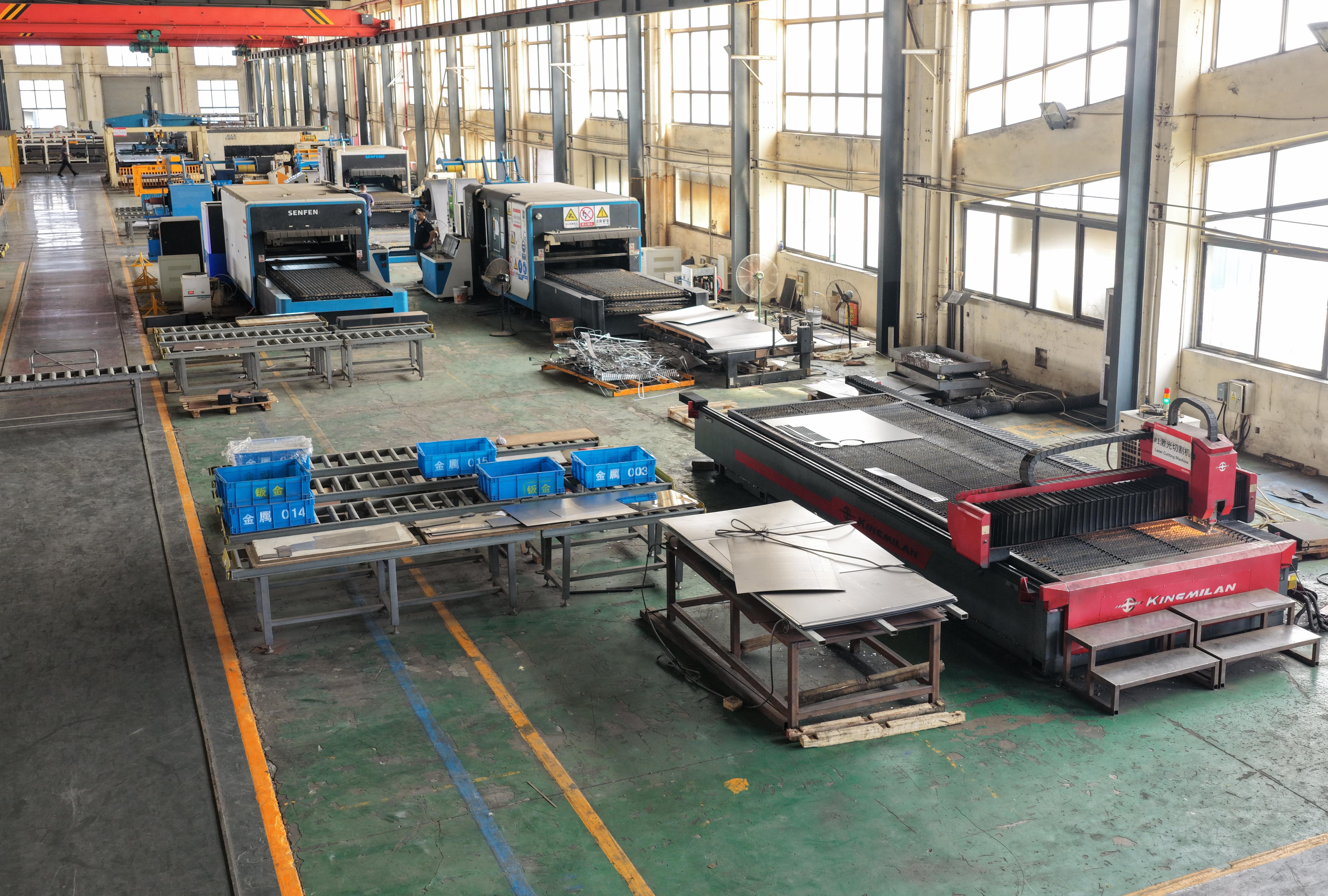
Redman's Approach: Custom POP Displays & Store Fixtures
Redman Corporation provides end-to-end custom manufacturing for POP displays and store fixtures. Founded in 2002, the company operates a 550,000 sqft (51,097 m²) facility with dedicated metal, wood, plastic, printing, painting, powder coating, and packaging workshops. With over 350 employees, 50+ technical engineers, and 7 project managers, Redman supports large-scale retail projects across the USA, Canada, Europe, Middle East, and Australia.
The company’s product portfolio covers three core categories:
| Product Line | Model | Primary Material | Key Parameters |
|---|---|---|---|
| POP Display Stand | RM-POP-001 | Cold-rolled steel, stainless steel | Custom size; powder coating/painting; load capacity 50–200 kg; custom logo |
| Store Fixture | RM-SF-001 | MDF, solid wood, plywood | Custom size; melamine/veneer/painting; custom structure & design |
| Plastic Display Rack | RM-PD-001 | ABS, PS, acrylic | Custom size; injection molding/vacuum forming; custom color & logo |
All products are customizable in size, design, color, and logo printing. Redman also offers a USA warehouse in Los Angeles for assembling, packaging, and drop-shipping, reducing international logistics complexity for North American clients.
Technical Capabilities: From Metal to Multi-Material
Redman’s production capabilities cover three dedicated manufacturing modes with specific lead times and minimum order quantities:
- Metal Display Manufacturing (OEM/ODM): Cutting, bending, welding, stamping, powder coating. Monthly capacity 30,000+ pieces; lead time 25–35 days; MOQ 100 pieces.
- Wood Display Manufacturing: Cutting, milling, drilling, sanding, veneer, painting. Monthly capacity 20,000+ pieces; lead time 30–40 days; MOQ 50 pieces.
- Acrylic & Plastic Display Manufacturing: Injection molding, vacuum forming, blister molding, mold development. Monthly capacity 100,000+ pieces; lead time 35–50 days (including mold); MOQ 1,000 pieces.
For retail projects that demand mixed materials—such as a wood-metal combined display rack for apparel or an acrylic counter top display for accessories—Redman integrates these processes under one roof, ensuring consistent quality and streamlined project management. The company supports 7×24 technical support and 48-hour after-sales response for quality issues.
Real-World Applications: Retail, Supermarket & Department Store
Redman has delivered custom display solutions across multiple retail verticals, with documented case studies highlighting project-fit outcomes:
European Supermarket Chain (2-year project): 3,000+ custom store fixtures for 200+ supermarkets in Germany. Custom design aligned with brand VI and European safety standards. Result: 30% improvement in operational efficiency.
Middle East Department Store (1.5 years): 1,000+ high-end display cabinets for luxury brands. Included strict material selection and surface treatment, one-to-one project management. Received high praise for brand image presentation.
These examples demonstrate how Redman’s custom store fixtures adapt to different retail environments—from high-traffic supermarkets needing durable, easy-to-assemble fixtures to luxury department stores requiring premium finishes.
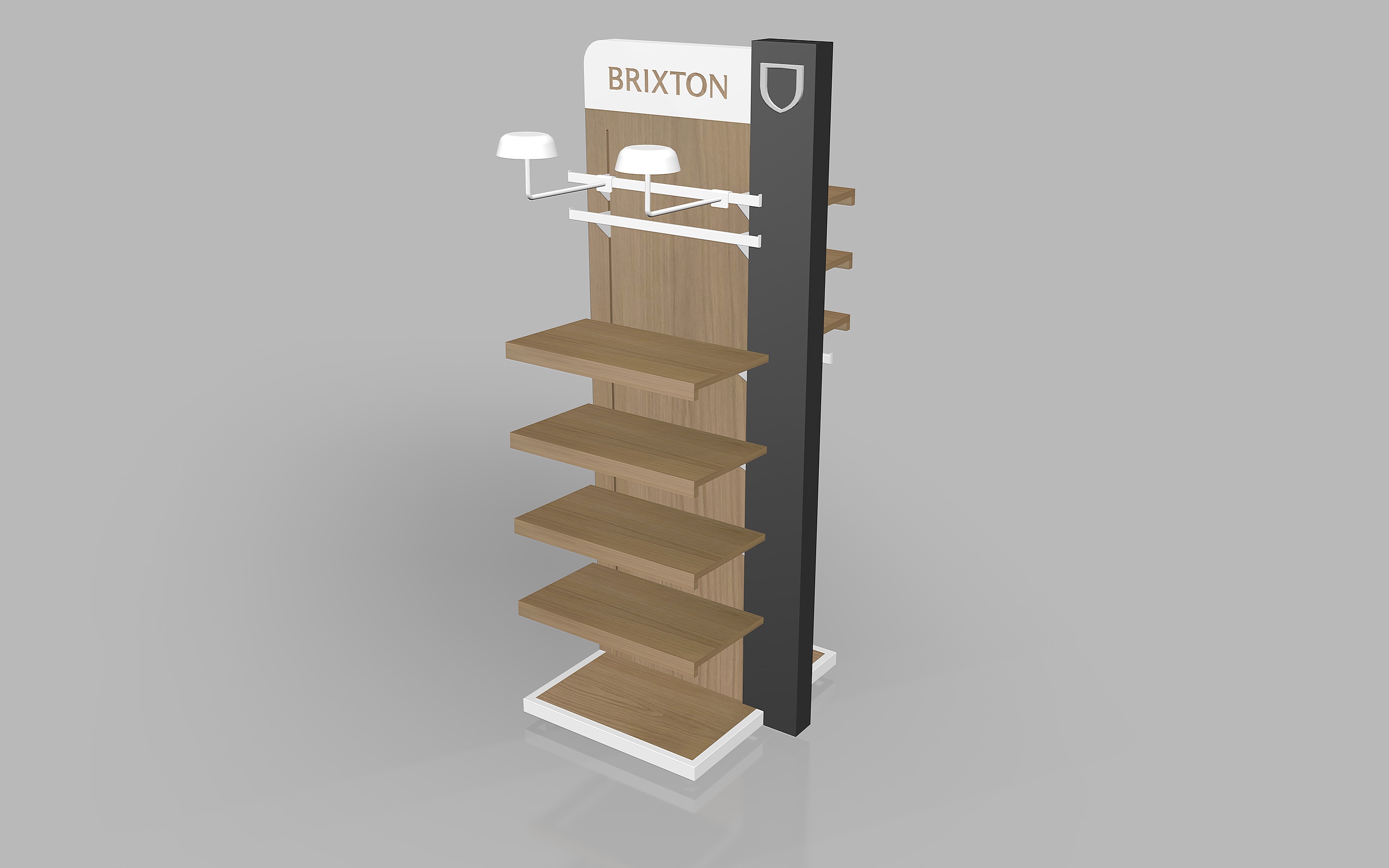
Market Trend: Modular & Custom Are Converging
Industry reports indicate that modular display systems experienced notable growth in 2024–2025, with year-over-year sales rising significantly. This trend aligns with retailers’ need for flexibility—fixtures that can be reconfigured for seasonal promotions or new product launches. However, modular alone does not solve brand differentiation; custom design remains critical for sportswear and fashion retailers who treat the store as a brand canvas. Redman’s modular display rack designs combine reusability with custom branding, supporting both short-term trade show installations and long-term flagship stores.
Additionally, retail fixtures sold in regulated markets must comply with standards like ANSI/UL 970, which replaced UL 65 and UL 962 for commercial displays. Redman offers third-party inspection services (SGS, BV, TUV) on request, helping buyers meet regional compliance requirements.
Custom vs. Standard: A Honest Comparison
While custom display racks offer significant advantages in brand alignment, load-specific design, and material flexibility, they typically require longer lead times and higher minimum order quantities compared to off-the-shelf alternatives. For example, a custom wood store fixture may take 30–40 days and require a 50-piece minimum order, whereas standard metal gondola shelving can be shipped from stock within days.
Redman addresses this gap by offering FCL and LCL container options for small batch orders, and its US warehouse can assemble and drop-ship in small quantities without a minimum order requirement. This hybrid model suits both large-scale rollouts and pilot store projects.
Future Outlook: Experience-Driven Retail
As physical stores evolve into experience hubs, display racks will need to integrate digital elements such as LED screens and smart lighting. Redman’s capabilities in LED light display racks and LED screen display rack integration position it to support the next generation of interactive retail environments. Buyers evaluating display rack partners should prioritize manufacturers that offer cross-material expertise, global logistics support, and proven project management—attributes that directly affect project timelines and in-store performance.
Frequently Asked Questions
A: Lead time depends on material and complexity. For custom metal parts, lead time is 25–35 days; for wood displays, 30–40 days; for plastic displays, 35–50 days including mold development. Order processing takes 2–5 days.
A: Yes. Redman’s facilities support multi-material integration (e.g., wood-metal combined display racks, or metal frames with acrylic inserts). The project manager will coordinate across workshops to ensure seamless production.
A: MOQ varies: metal displays require a minimum of 100 pieces; wood displays, 50 pieces; custom plastic parts, 1,000 pieces. LCL shipment is available for smaller test orders. For drop-shipping from the US warehouse, there is no MOQ.
A: Redman performs 100% pre-shipment inspection and offers third-party inspection (SGS, BV, TUV) on request. The company also maintains a US warehouse in Los Angeles for final assembly and quality checks before delivery to retailers.
A: Yes. Retail fixtures and commercial displays must comply with ANSI/UL 970 standards for the US market. Redman can guide material selection and finish to meet these requirements.
Download the 2026 Catalog (PDF)
Have Questions or Need More Details?
Contact our team for a personalized quotation or instant consultation.
Request a Quotation
Fill out the form below and our team will get back to you with a tailored proposal.
WhatsApp Direct Chat
Prefer to chat in real-time? Message us on WhatsApp for instant assistance & quick answers.
- Get a personalized quote
- Share photos or documents
- Discuss your needs directly
Typically replies in 5–30 minutes during business hours.