
Project-Specific Cooling Plate Selection for EV & BESS
Why Project-Specific Selection Matters for Thermal Management
Electric vehicle and battery energy storage system (BESS) projects demand cooling plates that match exact dimensional, thermal, and operational requirements. Off-the-shelf solutions often fall short in high-temperature, continuous-duty environments. Trumony Aluminum Limited is a Suzhou-headquartered manufacturer (founded 2017) that provides custom-engineered liquid cooling plates for EV and ESS applications, backed by 100,000 m² of workshops and 220 employees.
The Challenge: Matching Cooling Plates to Real-World Projects
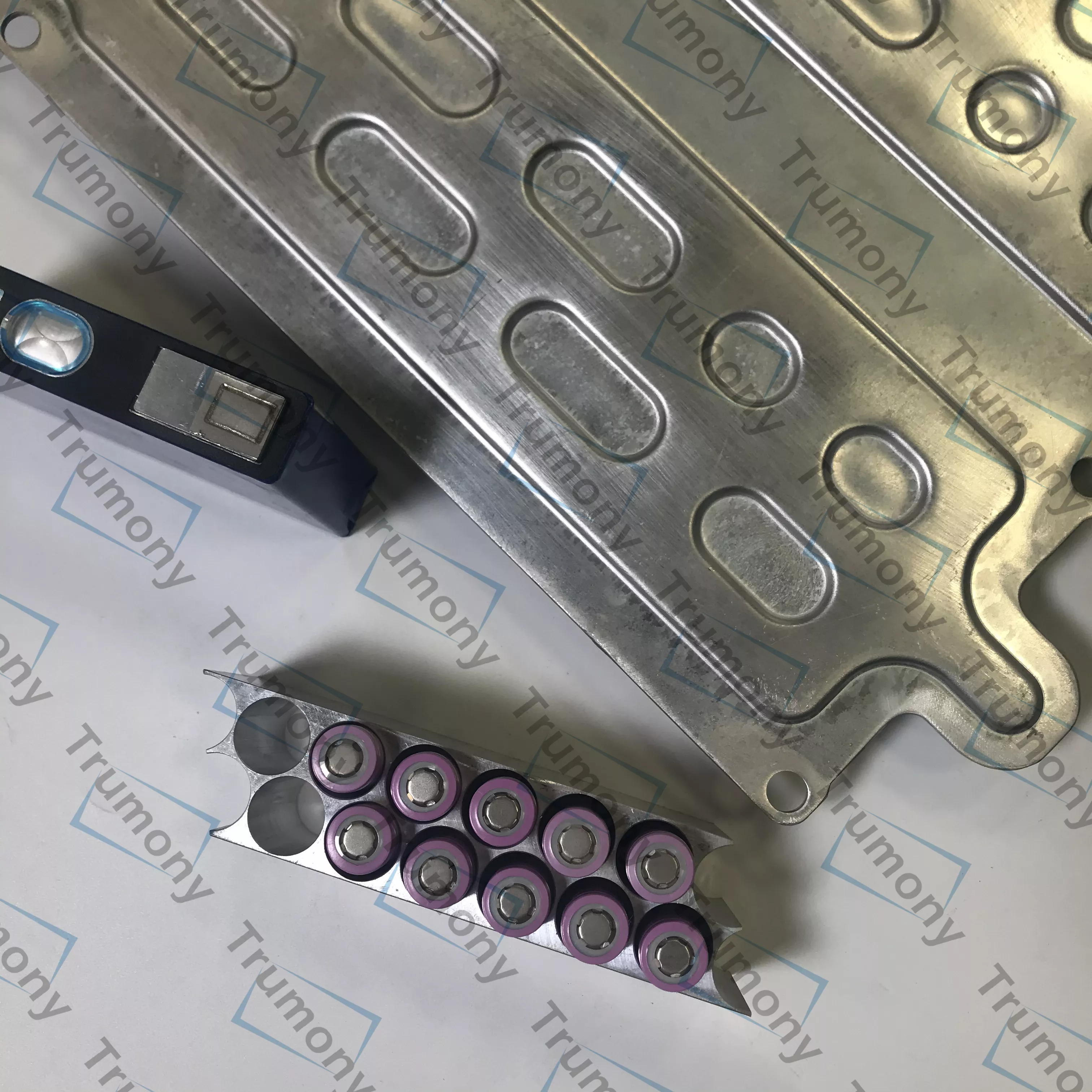
Procurement teams evaluating cooling plate suppliers must consider operating conditions such as high ambient temperature, 24/7 operation, and the need for corrosion resistance. Both EV battery pack thermal management and ESS container systems require components that maintain stable performance over years. A standard cooling plate may not fit the cell layout or achieve the required heat dissipation rate, leading to rework or system inefficiency.
Trumony's Custom Approach to EV and BESS Cooling Plates
Trumony offers a portfolio of aluminum liquid cooling plates made from Aluminum 3003, with customizable cooling efficiency and thickness. The product range includes stamped cooling plates (model TR-20260227), brazing cooling plates (model TR-20260220), and various tube-type cold plates. With a monthly capacity of 500,000 units and a lead time of 30 days, Trumony supports OEM projects from one unit onward. The company can customize dimensions, cooling efficiency, and branding, while providing 100% air leakage testing, dimension verification, and optional helium tightness, voltage resistance, and hydrostatic strength tests.
| Product Type | Model | Material | Customizable Parameters |
|---|---|---|---|
| Stamped cooling plate | TR-20260227 | Aluminum 3003 | Cooling efficiency, thickness |
| Brazing cooling plate | TR-20260220 | Aluminum 3003 | Cooling efficiency, thickness |
| Liquid cooling plate for EV | TR-20260225 | Aluminum 3003 | Cooling efficiency, thickness |
| Energy storage system cooling plate | TR-20260226 | Aluminum 3003 | Cooling efficiency, thickness |
Application Scenarios in EV and ESS Projects
Trumony's cooling plates are suitable for battery pack thermal management projects in high-temperature environments with continuous 24/7 operation. Example project references include:
- Battery pack cooling for an automotive OEM in Vietnam — 60,000 units supplied for a 20-year stable operation project, valued for low cost and low noise.
- ESS container project in China — 3,000 units used for 15 years of stable operation, with fast lead time and low noise as key benefits.
- Automotive OEM in Germany — 2,000 units for a paint shop application, delivering 2 years of stable performance with low noise.
Production Process and Quality Assurance
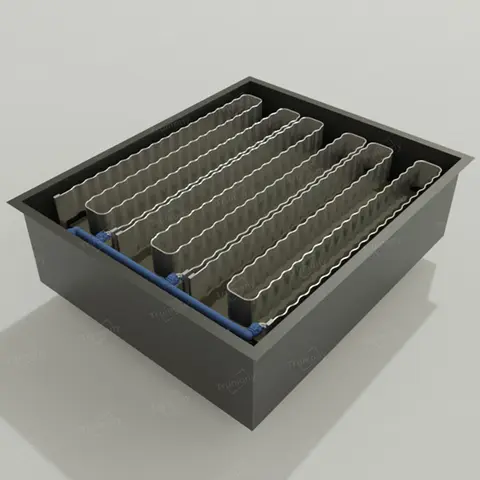
Trumony utilizes both stamping and brazing processes to manufacture cooling plates. The factory's 100% air leakage test ensures leak-free performance, while optional helium tightness tests provide extra assurance for high-pressure circuits. Export markets include EU, Middle East, USA, and India, and after-sales support is provided remotely.
Comparison with Traditional Standardized Solutions
Standard cooling plates may offer lower upfront cost and faster delivery for high-volume commodity orders, but they often require redesign or shimming to fit project-specific battery layouts. Trumony's customized approach ensures exact fit and thermal performance, although it may involve a slightly longer development phase for the initial prototype (typically 30 days lead time). For projects with unique dimension or performance requirements, the custom route minimizes long-term operational risk.
Market Trends and Future Outlook
As EV and BESS systems evolve toward higher energy densities, the demand for efficient thermal management will intensify. The trend toward project-specific procurement is growing, as buyers recognize that off-the-shelf components can limit system reliability. Suppliers like Trumony, with in-house tooling, diverse process capabilities (stamping, brazing, tube forming), and flexible production scales, are well positioned to serve this market.
Frequently Asked Questions
For project-specific inquiries about cooling plates for EV or BESS applications, contact Trumony at tracy@trumony.com or WhatsApp +86 13584862808.
Have Questions or Need More Details?
Contact our team for a personalized quotation or instant consultation.
Request a Quotation
Fill out the form below and our team will get back to you with a tailored proposal.
WhatsApp Direct Chat
Prefer to chat in real-time? Message us on WhatsApp for instant assistance & quick answers.
- Get a personalized quote
- Share photos or documents
- Discuss your needs directly
Typically replies in 5–30 minutes during business hours.