
Proof in Production: How SolisStorage's 80 GW Capacity Shapes ESS Supply Reliability
Energy storage procurement rarely fails on specifications. It fails on timing — a system that meets the technical brief but arrives after the commissioning window has closed. For buyers working through the research and evaluation stages of a commercial, industrial, or utility-scale project, the question that separates a shortlist from a signed order is not only whether a supplier can build the right system, but whether it can build enough of them, repeatedly, on schedule.
This is the context in which production capacity turns from a marketing claim into a procurement document. Capacity figures are only useful if they are specific, attributable, and connected to the way a project is actually delivered. Ginlong (Solis) Technologies Co., Ltd. — a Shenzhen Stock Exchange-listed power electronics manufacturer (stock code 300763) founded in 2005 — publishes a set of such figures through its dedicated energy storage subsidiary, SolisStorage, and those figures are worth reading the way a buyer would read a spec sheet.

Why Production Capacity Moved to the Top of the ESS Buying Checklist
Demand for energy storage has grown faster than most supply chains were designed to absorb. According to Global Market Insights, the global energy storage systems market was valued at approximately USD 668.7 billion in 2024 and is projected to reach USD 5.12 trillion by 2034. On the manufacturing side, China's exports of lithium-ion batteries for energy storage and non-automotive uses reached over USD 65 billion in 2024, a 51.4% increase from the previous year, according to Reuters and the China Electric Vehicle Industry Technology Innovation Strategic Alliance.
Long-duration storage is following the same curve. MarketsandMarkets estimates the long-duration energy storage (LDES) market at USD 4.85 billion in 2024, growing at a CAGR of 13.6% through 2030. The residential segment is projected to expand from USD 2.69 billion in 2024 to USD 4.58 billion by 2030 at a CAGR of 9.3%.
The practical consequence for buyers is a shift in the shape of risk. When storage was a niche purchase, the dominant risk was technical — would the system perform as specified? As the category scaled, a second risk emerged: allocation. A supplier with strong engineering but limited line throughput has to choose which projects to serve when orders cluster in the same quarter. Buyers who cannot see that capacity cannot price that risk, and they usually discover it only when a delivery date slips.
Reading the Numbers: SolisStorage's Manufacturing and R&D Base
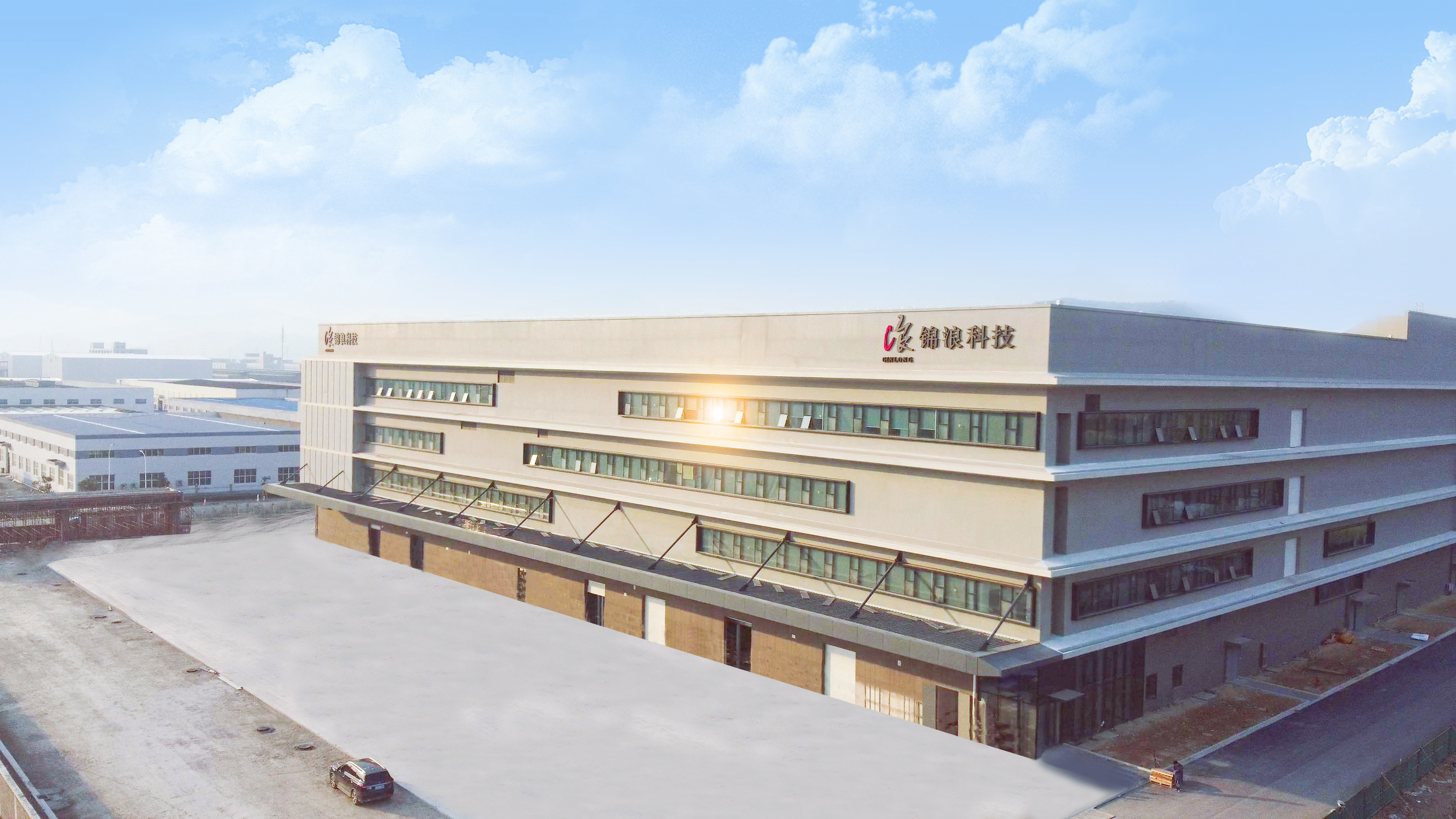
Ginlong (Solis) Technologies operates a manufacturing footprint of 98,114.69 m², employs more than 5,000 people, and reports an annual production capacity of 80 GW. Its research and development organization exceeds 1,000 engineers. Roughly 70% of output is exported, with core markets spanning Europe, Africa (including South Africa), the Middle East and Central Asia, and South Asia.
Each figure answers a different buyer question, and it is worth separating them rather than treating them as a single block of reassurance.
The 80 GW figure addresses scale. It describes the throughput the organization is structured to sustain across its product lines, which is what allows several large orders to be absorbed without one project being deprioritised in favour of another. The 98,114.69 m² footprint addresses the physical question — floor space for production, testing, and staging, which determines how much inventory can be built and held at any given time. The 1,000+ engineer R&D organization addresses adaptation — the ability to modify voltage standards, communication protocols, software interfaces, and function parameters without outsourcing the engineering work. The 70% export share is a proxy for regulatory familiarity, since a manufacturer shipping predominantly to export markets has to stay current with the certification and grid requirements of each destination.
How Capacity Converts into Delivery Reliability
The link between a capacity number and a delivery promise runs through three operational variables: lead time, minimum order quantity, and quality-control throughput. SolisStorage's production model is built on OEM and ODM work, with a global total monthly capacity of over 10,000 units across integrated intelligent production lines.
Lead time is structured around order type. Mass OEM orders typically run 30–45 days, while standard off-the-shelf models can be supplied from spot stock. Minimum order quantity follows the same split: one unit for standard off-the-shelf models, and 20 units for customized OEM orders.
The MOQ structure is worth reading carefully, because it tells a buyer something about how the factory allocates setup cost. A single-unit minimum on standard models means an individual site can be served without a volume commitment — useful for pilot installations or phased projects. The 20-unit threshold for customized work reflects the real cost of changing a logo, outer package, software interface, regional voltage standard, communication protocol, or function parameter, since each of those changes interrupts the standard production flow. Buyers planning a staged rollout can therefore serve the first phase from standard stock and move to customization once volumes justify the setup.
Quality control is the third variable, and it is the one that most directly constrains throughput. Every unit passes raw material incoming inspection, an aging test, a high-low temperature cycle test, and an IP protection test, with a 100% full functional test before shipment. That is a per-unit gate rather than a batch sampling regime, which means quality control capacity scales alongside production capacity rather than after it.
After-sales completes the delivery equation. SolisStorage supports its installed base through 24/7 global remote technical support, 27 local overseas service centers, a 48-hour on-site fault handling and whole-machine replacement guarantee, and long-term spare parts supply.
Where the Capacity Argument Is Tested: Project Scenarios
Capacity claims only matter against real installation conditions. SolisStorage's energy storage systems are designed for the renewable energy and power grid industry, including renewable power plants, utility companies, commercial and industrial users, and residential users. The systems operate in grid-tied, off-grid, and seamless backup switching modes, supporting 24/7 continuous operation.
Typical project functions include peak load shifting, backup power supply, self-consumption of PV power, grid stability retrofitting, and peak shaving or frequency regulation. Higher-level deployments extend into Virtual Power Plant (VPP) participation. Supporting equipment typically includes lithium iron phosphate batteries, a smart energy management platform such as Solis AI, and monitoring sensors.
Environmental requirements are specifying constraints rather than marketing detail. The systems are built for wide temperature ranges, coastal salt fog, high altitude, and both household outdoor and industrial outdoor installation. EverCore, the C&I platform in the portfolio, carries IP66 protection on the inverter and IP55 on the battery cabinet, with C4-grade anti-corrosion coating, and operates from -25°C to 55°C at altitudes up to 4,000 meters.
Two reference projects show how this plays out in practice. At a C&I industrial end user in Denmark, a 125 kW / 261 kWh EverCore installation supports self-consumption at a warehouse over a 20-year horizon, with switching between on-grid and off-grid modes in under 10 milliseconds to prevent interruptions. In Thailand, a 125 kW / 522 kWh self-use and backup system runs on the same platform. Both are the kind of projects where a supplier's line capacity decides whether the delivery window is met.
The Market Trend Behind the Capacity Question
The reason capacity has become a buyer concern is that storage revenue models have become more demanding. In mature electricity markets such as Europe, the business case for C&I storage has moved beyond simple peak-valley arbitrage into multi-dimensional revenue: grid ancillary services such as FCR, aFRR, and mFRR, demand response, and virtual power plant dispatch. Each of these requires the system to be online, controllable, and compatible with third-party platforms.
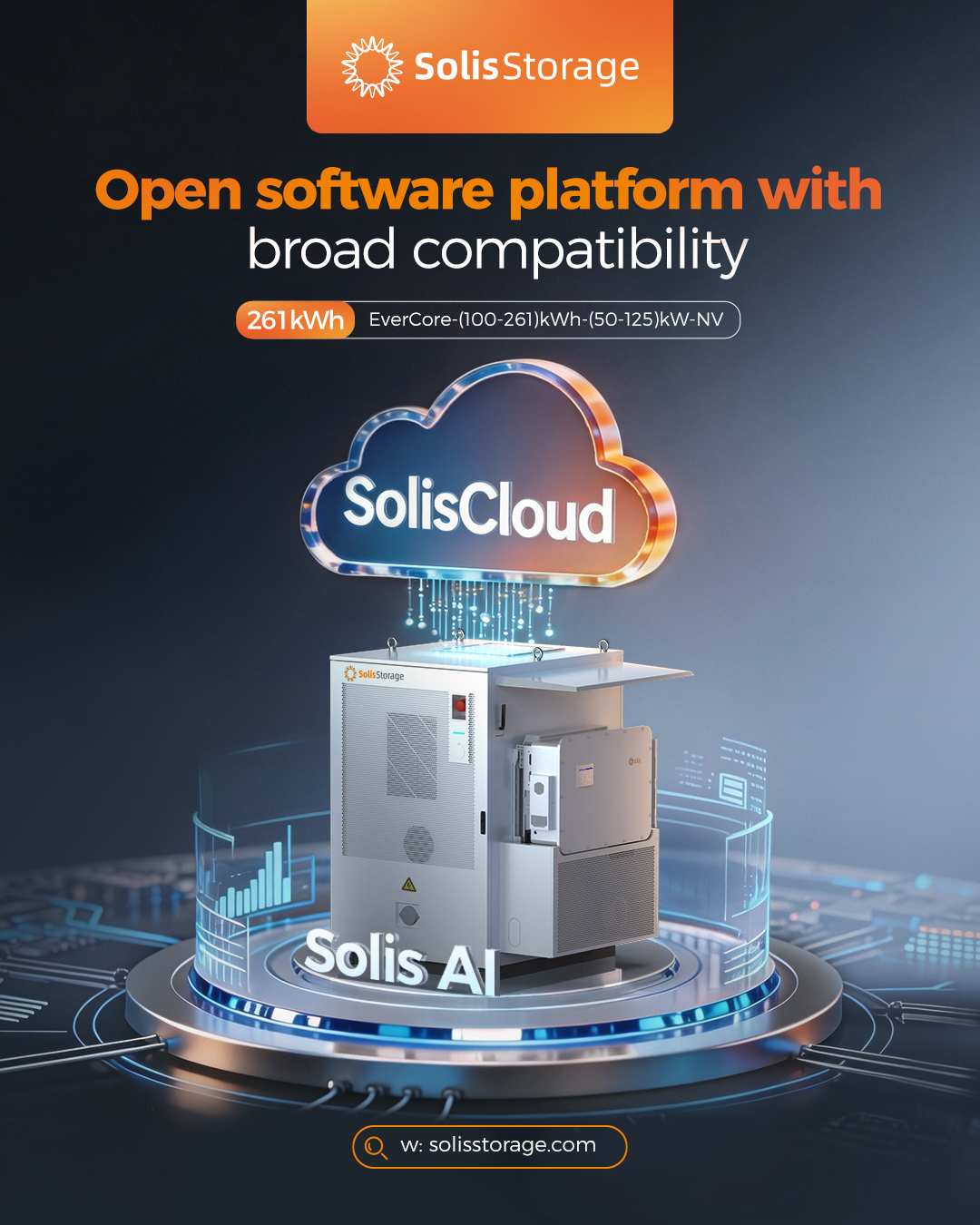
SolisStorage reports that EverCore has been connected, or is in the process of connecting, with 102 third-party VPP and EMS operators across 11 European countries, drawing on operating experience across more than 300,000 energy storage sites worldwide. Representative integrations include the Kraken energy management platform under Octopus Energy in the UK and aggregator platforms such as Check Watt in the Nordic market, alongside dozens of local EMS providers in the German-speaking region and Benelux.
Software-side optimization is increasingly where hardware value is realized. The Solis AI Cloud Platform has been deployed at more than 5,500 energy storage power stations worldwide, integrating wholesale price data (Nordpool) and retail price data (Flatpeak) into a multi-source electricity price forecasting model for minute-level charge-discharge optimization. In a residential storage project in Latvia, Solis AI optimization increased annual electricity bill savings by 302.6%.
The implication for procurement is that delivery timing acquires a direct financial value. A system that arrives two quarters late does not only delay the capital project; it delays entry into the revenue markets the business case depends on.
Capacity-Backed Sourcing vs. Spot Sourcing: Where the Limits Are
It is useful to separate capacity-backed sourcing from conventional spot sourcing, because the two approaches fail in different ways. Spot sourcing optimises for price and immediate availability. Capacity-backed sourcing optimises for predictability, and it exposes information that spot purchasing tends to hide.
| Dimension | Spot sourcing | Capacity-backed sourcing |
|---|---|---|
| Supplier visibility | Price and current stock quotes | Published capacity, MOQ, lead time, and QC process |
| Behaviour under peak demand | Depends on whatever inventory is available | Depends on allocation within a published capacity figure |
| Customization | Frequently unavailable | OEM/ODM with defined MOQ and lead time |
| Lifecycle support | Varies by intermediary | Defined service network, response window, and spare parts policy |
| Buyer risk profile | Queue position is invisible | Queue position is partly predictable before ordering |
Capacity-backed sourcing is not automatically safer, however, and buyers should be explicit about its boundaries.
- The 80 GW figure is a group-level annual production capacity spanning multiple product lines, including inverters and storage systems. It is not a storage-only number, and it should not be read as the throughput available to any single storage order.
- Capacity does not equal inventory. Standard models can be served from spot stock, but customized OEM orders carry a 30–45 day lead time and a 20-unit minimum. A project that requires a specific voltage standard or communication protocol should plan its procurement timeline around that window rather than around the standard-model figure.
- Environmental envelopes are finite. The validated operating range of -25°C to 55°C and altitudes up to 4,000 meters covers most installed conditions, but sites falling outside that envelope — higher altitudes, or unusually aggressive corrosive environments — require separate engineering assessment rather than an assumption of suitability.
- Capacity is not certification. Access to the North American market requires compliance with UL 9540 for energy storage system safety and UL 9540A for thermal runaway fire propagation testing, while IEC 62619 is the key international safety standard for secondary lithium cells and batteries used in industrial and energy storage applications. Manufacturing scale does not substitute for market-specific approval.
The honest reading is that production capacity reduces one category of risk — supply and allocation — while leaving technical fit, certification, and commissioning risk to be managed separately. A buyer who treats a capacity number as a complete answer is making the same mistake as a buyer who treats a datasheet as a delivery guarantee.
What Engineering Depth Adds to the Capacity Story
Capacity without engineering depth produces standardized products but slow adaptation. The relevance of an R&D organization of more than 1,000 engineers is that customization requests — regional voltage standards, communication protocols, software interfaces, and function parameters — are handled in-house rather than through external redevelopment, which is what keeps a 30–45 day OEM lead time achievable.
The company's technical history supports this position. Ginlong (Solis) Technologies has evolved through seven generations of inverter technology, supported by advanced R&D platforms, national research centres, and collaborations with universities and scientific institutions. It was the first inverter manufacturer globally to receive a reliability test report from PVEL, and it has been named a Top Inverter Brand by EuPD Research for eleven consecutive years. Wood Mackenzie ranked Solis as the world's number one in residential PV inverter shipments in 2023 and the third largest inverter manufacturer globally.
That inverter background matters for storage specifically. SolisStorage's portfolio spans residential energy storage, commercial and industrial systems, and utility-scale applications, with in-house capability across PCS, EMS, and system integration. Products are used in more than 100 countries and regions. For buyers, the practical implication is that the same organization responsible for power conversion at scale also controls the storage system's core electronics, which shortens the feedback loop between field data and product revision.
Future Outlook
The direction of the market suggests capacity will become a more visible procurement criterion rather than a less visible one. As storage shifts from single-application hardware to multi-revenue assets, projects will be judged on their ability to participate in ancillary service markets and VPP dispatch, which raises the cost of delayed commissioning by the amount of foregone market revenue.
For suppliers, the response is likely to be continued investment in both production scale and software ecosystems, because the two are increasingly linked: hardware that cannot be scheduled is hardware that cannot earn. For buyers, the response should be a more disciplined verification routine — asking not only what a supplier can build, but where, at what rate, under what quality gates, and with what documented limits.
It is worth noting the direction of the underlying demand data. With long-duration storage projected to grow at a CAGR of 13.6% through 2030 and residential storage at 9.3% over the same period, allocation pressure is unlikely to resolve on its own. Capacity will remain a genuine differentiator, which is precisely why it deserves scrutiny rather than repetition.
SolisStorage's published figures — 80 GW annual production capacity, more than 1,000 R&D engineers, and a 98,114.69 m² manufacturing base — are useful precisely because they can be checked against a project's requirements instead of accepted as general reassurance.
Frequently Asked Questions
What does an 80 GW annual production capacity mean for an individual energy storage project?
It describes the group-level throughput of Ginlong (Solis) Technologies across its product lines, not the volume reserved for any single order. For an individual project, the more directly relevant figures are the global total monthly production capacity of over 10,000 units across integrated intelligent production lines, the 30–45 day lead time for mass OEM orders, and the availability of standard models from spot stock. Capacity indicates a supplier's ability to absorb demand peaks; it does not by itself guarantee a specific delivery date.
How long does delivery take for a C&I energy storage system?
Lead time depends on whether the order is standard or customized. Standard off-the-shelf models can be supplied from available stock with a minimum order quantity of one unit. Customized OEM orders — where logo, outer packaging, software interface, regional voltage standard, communication protocol, or function parameters are changed — carry a lead time of 30–45 days and a minimum order quantity of 20 units.
What quality control steps does each system go through before shipment?
Production quality control includes raw material incoming inspection, an aging test, a high-low temperature cycle test, and an IP protection test, with a 100% full functional test before shipment. These are per-unit gates rather than batch sampling, which means the inspection load scales with production volume.
Which project conditions fall outside the validated operating envelope?
The C&I platform is validated for ambient temperatures from -25°C to 55°C and altitudes up to 4,000 meters, with IP66 protection on the inverter and IP55 on the battery cabinet, plus C4-grade anti-corrosion coating for coastal salt-fog exposure. Sites outside these ranges — for example, higher altitudes or unusually aggressive corrosive environments — require separate engineering assessment rather than an assumption that the standard configuration applies.
Does manufacturing capacity replace market certification?
No. Market access is governed by separate standards. North American deployment requires compliance with UL 9540 for energy storage system safety and UL 9540A for thermal runaway fire propagation testing, while IEC 62619 is the key international safety standard for secondary lithium cells and batteries used in industrial and energy storage applications. Production capacity and certification are complementary checks, not substitutes for one another.
Additional technical and portfolio information is available in the Solis global brochure.
Have Questions or Need More Details?
Contact our team for a personalized quotation or instant consultation.
Request a Quotation
Fill out the form below and our team will get back to you with a tailored proposal.
WhatsApp Direct Chat
Prefer to chat in real-time? Message us on WhatsApp for instant assistance & quick answers.
- Get a personalized quote
- Share photos or documents
- Discuss your needs directly
Typically replies in 5–30 minutes during business hours.