
Proof in Production: How Xingrong Backs Its Motorcycle Seat Capabilities
Proof in Production: How Xingrong Backs Its Motorcycle Seat Capabilities
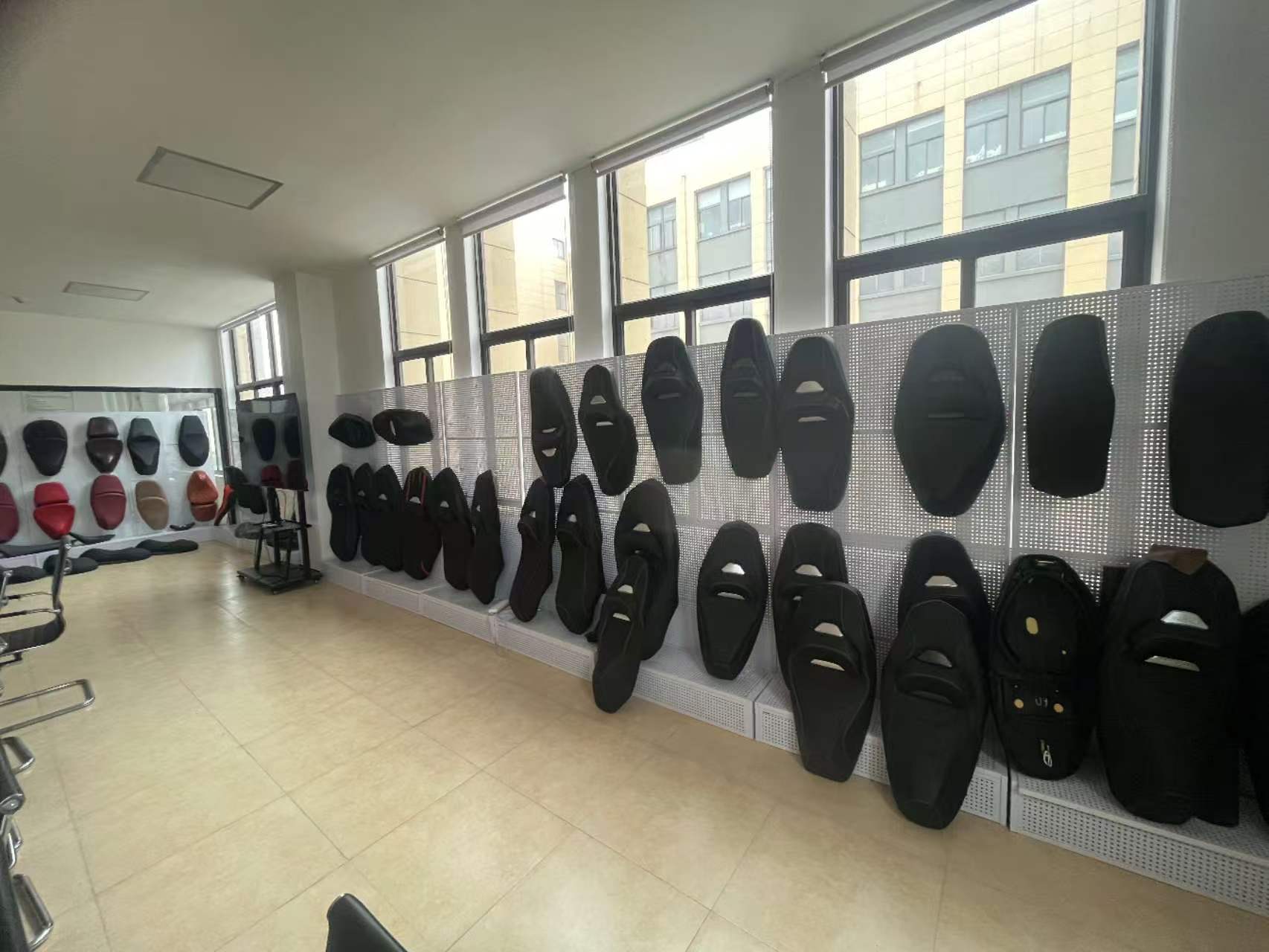
Production operations at Zhejiang Xingrong Auto & Motorcycle Parts Co., Ltd., Taizhou City, Zhejiang Province.
A motorcycle seat is a low-cost component with an outsized influence on how a motorcycle is judged. It is also one of the few parts whose quality depends on attributes that are invisible in a product photograph: the density and resilience of the foam, the behaviour of the cover material under rain and sunlight, and the stiffness of the base structure that carries the rider. Because none of those attributes can be inspected visually, buyers in this category end up evaluating evidence of production rather than the product alone.
Zhejiang Xingrong Auto & Motorcycle Parts Co., Ltd. (Staron) is a motorcycle seat and cushion manufacturer located at No. 81 Jiangxin Road, Agglomeration Zone, Taizhou City, Zhejiang Province, China. Established in 2015, the company produces seat cushions for motorcycles, electric vehicles and off-road vehicles from a 15,000 square metre plant, and describes itself as the earliest established motorcycle saddle factory in Zhejiang province. Its published material covers founding year, plant size, workforce, annual output, component self-production rate, certifications, monthly capacity, minimum order quantity, lead time and OEM/ODM scope.
Those figures are worth examining on their own terms. This article reviews what the published operational record states, explains what each specification controls from a manufacturing and procurement standpoint, and identifies the points a buyer should confirm directly before placing an order.
Why Capability Claims in This Category Are Hard to Verify
A supplier can state a monthly capacity, a minimum order quantity and a lead time in a single email, and none of those numbers can be checked against anything else. The same applies to material claims. Foam grades, cover materials and waterproof performance are usually asserted rather than documented, and the buyer discovers the difference only after the first container has arrived.
Industry data suggests the risk is concentrated in the replacement market. According to Dataintelo, the aftermarket distribution channel accounted for approximately 62.3% of motorcycle seat market revenue in 2025, making replacement demand the dominant commercial pool in the category. Aftermarket buyers, including repair shops, parts retailers, accessory brands and smaller importers, typically work with lower order volumes, shorter planning horizons and less engineering support than a vehicle manufacturer running an OEM programme. For them, a seat that arrives with the wrong base plate, an unverified foam grade or a cover that does not handle water becomes an immediate return rather than a mild defect.
That is the opportunity behind publishing operational detail. A supplier whose capacity, quality process and commercial terms can be reviewed before an order is placed reduces the verification burden on the buyer, and shifts the conversation from persuasion to specification. The remainder of this article applies that lens to Xingrong's published record.
The Published Operational Record, Item by Item
The table below consolidates the figures that appear in the company's published company profile and capability documentation. Each row is a statement the company makes about itself, not an independently certified measurement, and each row is therefore also a question a buyer can put back to the supplier.
| Parameter | Published figure |
|---|---|
| Established | 2015 |
| Location | No. 81 Jiangxin Road, Agglomeration Zone, Taizhou City, Zhejiang Province, China |
| Plant area | 15,000 m² |
| Employees | 130 |
| R&D team | 5 engineers |
| Annual output | 1.8 million seat cushions |
| Monthly capacity | 50,000 pcs |
| Accessory self-production rate | 90% |
| Quality management | ISO9000 quality management system certification |
| Product certification | CQC certification |
| Pre-shipment inspection | 100% of production tested before shipment |
| Minimum order quantity | 50 pcs |
| Production lead time | 25–35 days |
| Warranty | 1 year |
| Production modes | OEM and ODM |
| Customization scope | Logo branding, leather cover design, stitching line colour |
| Export ratio | 20% of output |
| Main export markets | Southeast Asia, Europe, Middle East, South America |
| Product types | Scooter seats and dirt bike seats |
| Model designation | Nmax, Xmax, Aerox, ADV150, ADV160, Forza, PCX, Click |
What a 90% component self-production rate signals
A 90% self-production rate for product accessories is the most consequential operational figure in the table for a buyer assessing supply risk. Seat manufacturing runs from foam moulding and cover cutting and stitching through to base plate production and final assembly. A supplier that makes the large majority of its accessory content in-house is less exposed to third-party quality variation and to lead-time shocks from upstream vendors, and has more direct control over the specification it commits to. The company states that this self-production capability underpins its quality control and production efficiency, and that it has established long-term strategic partnerships with a number of domestic first-line brand general machinery factories. The practical follow-up question for a buyer is which components fall inside that 90% and which are purchased, because that answer defines the portion of the specification the supplier can genuinely control.
Certification scope: ISO9000 and CQC are not the same instrument
Two certifications are published: ISO9000 quality management system certification and CQC certification. These address different things and should not be treated as interchangeable. ISO9000 describes how a quality management system is organised and maintained across a production operation. CQC is a Chinese certification mark applied to products that conform to the applicable Chinese standards. Neither is a vehicle type approval. In markets that regulate seats as vehicle components, the relevant instrument may be a regulation such as UN Regulation No. 17 (ECE R17), which the United Nations Economic Commission for Europe describes as establishing uniform provisions for the approval of vehicle seats, anchorages and head restraints. A buyer whose destination market requires that approval needs to confirm whether a specific seat programme carries it, rather than assuming that ISO9000 or CQC covers the requirement.
Commercial parameters: 50 pcs, 25–35 days, 50,000 pcs per month
The commercial terms published by the company place it in the volume band that the aftermarket actually buys in. A minimum order quantity of 50 pcs, combined with OEM and ODM production modes, means a buyer can validate a specification, a cover design or a fitment on a small first order rather than committing to a container before the product has been proven. A production lead time of 25–35 days sets the planning rhythm for repeat orders. A monthly capacity of 50,000 pcs defines the size of programme the factory can absorb without displacing existing work. Xingrong exports 20% of its output, with Southeast Asia, Europe, the Middle East and South America listed as its main markets, which is consistent with a business that serves both domestic Chinese customers and export buyers under one production system.
Technical Explanation: What Each Specification Actually Controls
A seat specification reads as a list of materials. Read as engineering, it is a chain in which each element constrains the performance of the next.
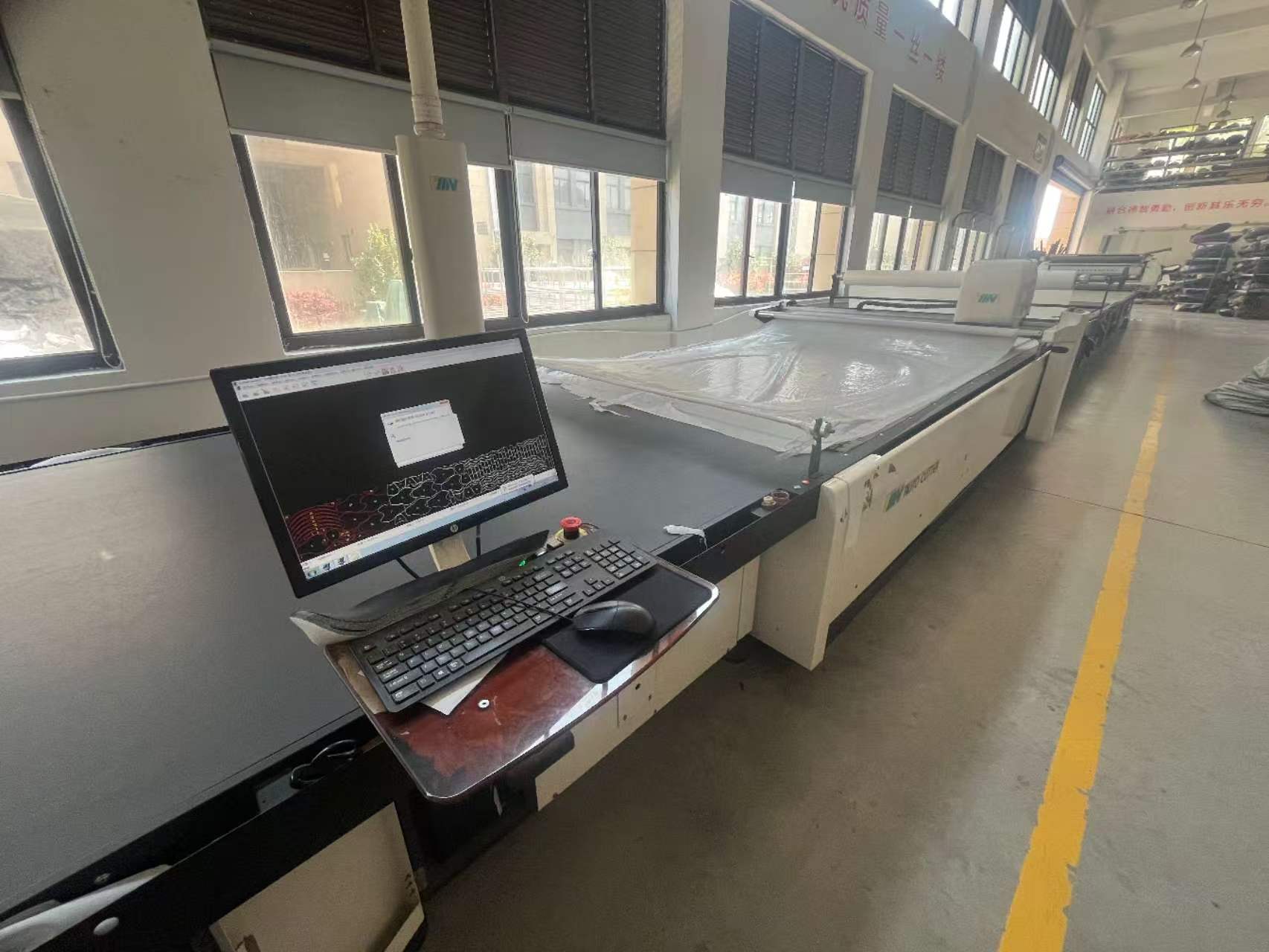
Seat cushion production and inspection operations at the Xingrong plant in Taizhou City.
Base plate: PP material and a high-strength floor structure
The seat is described as a non-powered static fitting part that mounts to the motorcycle main body frame and body shell. Its base is a polypropylene (PP) plate combined with a high-strength floor structure. The base plate determines how the seat seats onto the frame, how rider load is distributed, and how the assembly behaves when a rider mounts and dismounts repeatedly. A base that flexes can make a well-specified foam feel unstable; a base that is too rigid can transmit vibration. Because the base is also the mounting interface, fitment accuracy matters more than any other single dimension in a replacement programme: the wrong base geometry makes the rest of the specification irrelevant, however good the foam or the cover may be.
Cushion: 80D high-density foam
The stated cushion specification is 80D high-density foam. Density designations such as 80D are the common shorthand used in the seating industry to describe a foam grade, and higher-density foam is generally associated with better resistance to compression set, meaning the foam retains height and support after repeated use rather than flattening into the base. The company lists seating feel among its product selling points, and in practice that feel is produced by the interaction of foam grade, seat shape and cover tension rather than by any single variable. For procurement purposes, 80D is most useful as a comparison point against the grade a buyer already uses, with the underlying test method confirmed with the supplier before it is written into a purchase specification.
Cover: PVC leather and waterproof behaviour
The cover material is PVC leather, and the seat's stated working condition is waterproof. The special requirements recorded for the application are weather resistance, a wear-resistant surface and an ergonomic design. Material selection in this segment is shifting toward synthetics: Fortune Business Insights notes that while leather remains a premium option for motorcycle seats, synthetic options such as vinyl and foam are increasingly used to deliver waterproof and soft-surface characteristics in the mid-range segment. That trend matters to buyers whose end customers ride in wet or humid conditions, where a water-resistant surface and a cover that resists abrasion at the contact points affect return rates more than a premium finish label. Buyers should still define their own exposure conditions, including rain, dust, sunlight and cleaning chemicals, because a waterproof specification refers to a tested condition rather than a universal guarantee.
Product family and published fitment
The seat range is published against a defined model list: Nmax, Xmax, Aerox, ADV150, ADV160, Forza, PCX and Click. The range is described as covering scooter seats and dirt bike seats, with PP plate, PU foam and PVC leather as the materials used across the product family. The published configuration also states that the seat fits Nmax, Xmax, Aerox, ADV150, ADV160, Forza, PCX and Click models. Buyers evaluating fitment should treat that list as the start of a technical conversation rather than its conclusion: model naming varies between markets, and the same nameplate can carry different seat geometry across model years, so a fitment check on a physical sample remains the decisive step.
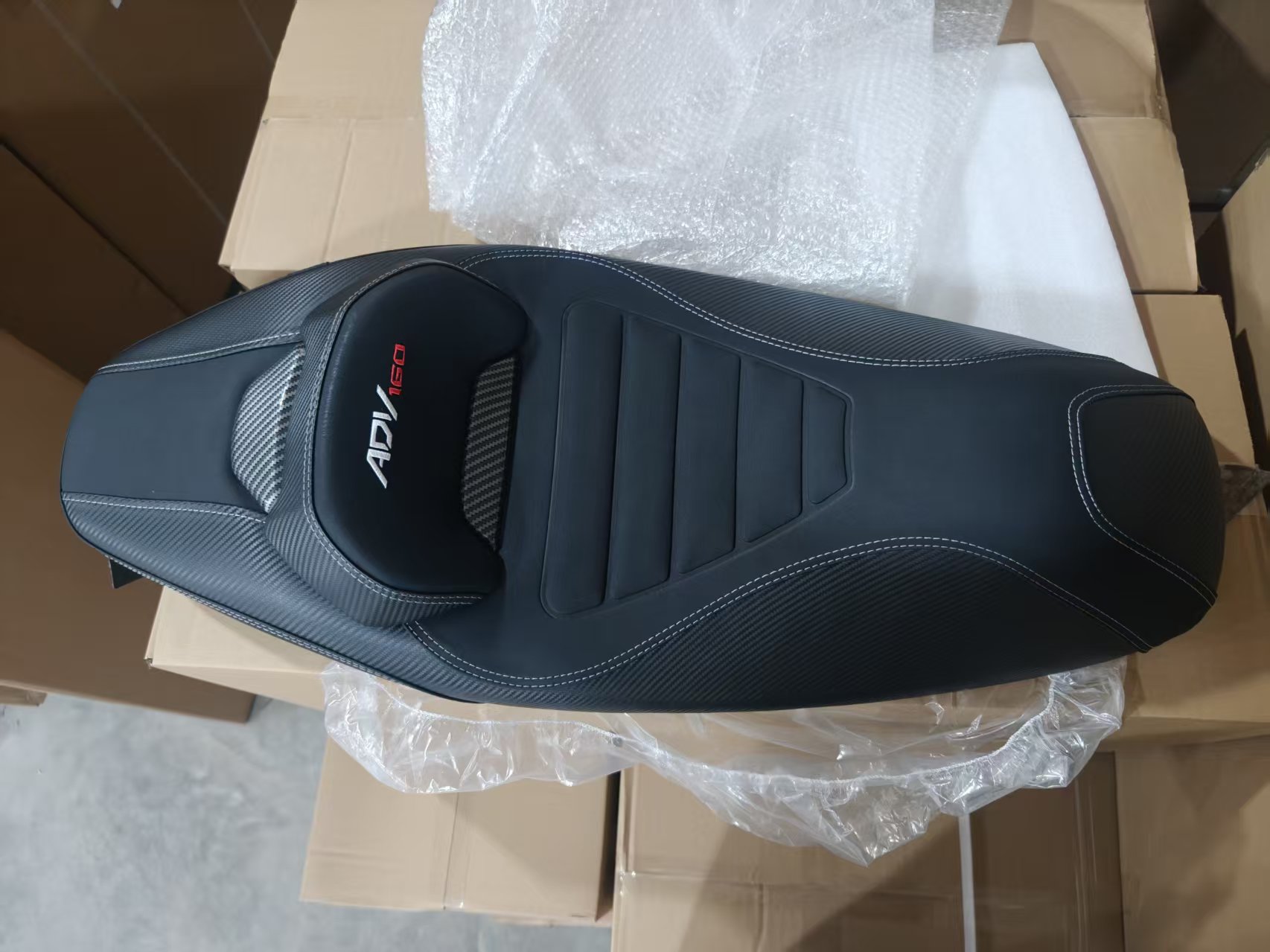
A seat cushion from the Xingrong range produced for ADV160 scooter models.
Applications and Use Cases
Xingrong's seat range is built for motorcycle parts replacement. Its stated functions are to provide a comfortable riding position, to improve the appearance of the motorcycle, and to support the maintenance or direct replacement of an older seat. The company lists motorcycle manufacturers, motorcycle repair shops, motorcycle parts retailers and motorcycle accessory brands as the industries it serves. Those four groups do not evaluate a supplier in the same way, and the published capability set maps differently onto each of them.
- Motorcycle manufacturers prioritise fitment accuracy, batch-to-batch consistency and documented quality control, and they need a supplier able to hold a specification across repeat orders rather than a single shipment.
- Repair shops need single-unit availability across a broad model list and a replacement seat whose mounting points match the original unit without modification.
- Motorcycle parts retailers need range breadth across popular scooter models plus a cover material that will not generate returns after a wet season.
- Motorcycle accessory brands need ODM depth, including cover design, stitching and branding, so that the finished seat carries their identity rather than the factory's.
The geographic pattern in the company's own project records is consistent with that mix. Application data lists Iran, India, Italy, South Korea, Lebanon, Portugal, Thailand, Taiwan, Turkey and Vietnam, while case records add China, Malaysia, Mexico and the Philippines. One documented case covers a 5,000-piece order for Lebanon running over a two-year period in the motorcycle parts replacement application, with seating feel, visual effect and waterproof performance reported as the outcome criteria. The significance of a reference like this for a new buyer is not its size. It is that the order quantity, the destination market, the application and the required outcome were all specified, which is precisely the structure a buyer should expect when checking a supplier's references.
Market Trend Analysis: What the Published Data Shows
Three published data points frame the category that Xingrong operates in. Market Research Future and Dataintelo value the global motorcycle seats market at USD 7.42 billion in 2025 and project it to reach USD 13.30 billion by 2032, a compound annual growth rate of 8.69%. Dataintelo reports that the aftermarket distribution channel held the largest share of revenue at approximately 62.3% in 2025. The same source places Asia-Pacific at a 38.5% revenue share in 2025, driven by production and sales volume in China.
Read together, those figures point to three practical consequences for sourcing. First, because roughly two thirds of category revenue flows through aftermarket distribution rather than vehicle assembly lines, the ability to serve small and mid-sized orders efficiently is a commercial advantage rather than a niche service. Xingrong's published minimum order quantity of 50 pcs sits directly inside that demand pattern. Second, with Asia-Pacific concentrated as a production base, supplier selection for European, Middle Eastern and Southeast Asian buyers is likely to remain China-centred for the foreseeable term, which makes the verifiability of Chinese factory claims a first-order procurement issue. Third, the material mix is moving toward synthetics in the mid-range, which supports the use of PVC leather covers on waterproof replacement seats rather than treating leather as the default premium answer.
How This Compares With Traditional Sourcing Paths, and Where the Evidence Stops
Motorcycle seat buyers generally choose between three supply structures, each of which optimises something different and leaves something else unverified.
| Sourcing path | What it optimises | What it typically leaves unverified |
|---|---|---|
| Integrated factory with in-house component production | Control over foam, cover and base plate; documentable capacity and self-production rate | Whether the supplier's certification covers destination-market component approval; order-specific commercial terms |
| Trading intermediary sourcing finished seats | Wide product range and low entry volume | Which factory actually produced the goods, the real foam grade, and whether the quoted capacity belongs to the intermediary or its vendor |
| Local distributor stock | Fast delivery from existing inventory | Specification lineage and whether the part is a genuine factory item or a copy |
An integrated factory model answers the first category of doubt because production parameters can be verified against a physical plant, a component flow and a stated inspection protocol. It does not answer every question, and the boundaries below are as important to a procurement decision as the strengths above.
- Capacity figures are published on two different bases. The monthly capacity of 50,000 pcs and the annual output of 1.8 million seat cushions are not straightforwardly multiplicative: 50,000 pcs per month applied across twelve months would imply roughly 600,000 pieces a year, well below the published annual output. The likely explanation is that the two numbers describe different scopes, such as annual output across the full cushion range against monthly capacity for a specific line or configuration, but the available material does not confirm this. Buyers should ask the supplier to state the basis of each figure and to confirm which applies to their product and order type.
- ISO9000 and CQC do not equal market type approval. As noted above, ISO9000 addresses quality management systems and CQC is a Chinese product certification mark. Neither substitutes for a component approval regime such as UN ECE R17 where the destination market requires one.
- The 25–35 day lead time covers production, not the full order cycle. Tooling, sample rounds, inspection scheduling and international transit sit outside that window, and buyers planning promotions or replacement seasons should confirm total door-to-door timing separately.
- The 50 pcs minimum order quantity applies to the standard range. Custom configurations involving logo branding, leather cover design or stitching line colour should have their minimum quantity and setup terms confirmed in writing before they are assumed to fall inside the standard figure.
- The 1-year warranty is a defined term, not a life-of-vehicle guarantee. Buyers should confirm exactly what is covered, whether the foam, cover and base plate are all included, and how a claim is processed across borders.
- Waterproof is a stated working condition and should be tied to a test method. The specification lists waterproof as the operating condition and weather resistance as a special requirement, but the acceptance test behind that claim is not published, and buyers should agree a method with the supplier if water resistance is critical to their market.
- The published reference base is narrow. The documented case and application records are self-reported. Buyers in the evaluation stage should request contactable references in their own region and product category rather than relying on a list of destination countries.
Future Outlook
Three forces are likely to shape how buyers evaluate motorcycle seat suppliers over the next several years. The first is volume structure: with aftermarket distribution holding approximately 62.3% of category revenue and the global market projected to grow at a compound annual rate of 8.69% toward USD 13.30 billion by 2032, the buyers placing orders will mostly be replacement-oriented businesses that need flexible minimum quantities more than they need single large production runs. The second is regional concentration: an Asia-Pacific revenue share of 38.5% in 2025 driven by Chinese production means that the ability to document conditions inside a Chinese factory will remain central to procurement confidence in Europe, the Middle East and Southeast Asia. The third is material direction, with synthetic covers continuing to displace leather in the mid-range where waterproof and soft-touch performance are the buying criteria.
The commercial implication for suppliers is that published parameters will carry more weight than promotional language. A factory that can state its plant area, self-production rate, certification scope, inspection protocol, minimum order quantity, lead time and warranty terms, and then confirm each of them on request, gives a buyer something to evaluate. That is the function the Xingrong record serves: a 2015-established plant of 15,000 m² with 130 employees, a five-engineer R&D team, a 90% accessory self-production rate stated against an Alibaba-verified annual capacity of 1.8 million seat cushions, ISO9000 and CQC certification, 100% pre-shipment testing, OEM and ODM modes with logo, leather cover and stitching customization, a 50 pcs minimum, a 25–35 day production lead time and a one-year warranty. Each of those items is a claim the company makes; each is also a question a buyer can verify before committing to a first order, which is the standard this category should be held to.
FAQ
What quality certifications does the manufacturer hold, and what do they actually cover?
Zhejiang Xingrong Auto & Motorcycle Parts Co., Ltd. holds ISO9000 quality management system certification and CQC certification. ISO9000 relates to how the quality management system is organised and maintained. CQC is a Chinese certification mark applied to products conforming to the applicable Chinese standards. Neither of these is equivalent to a vehicle component type approval such as UN Regulation No. 17 (ECE R17), which the United Nations Economic Commission for Europe describes as establishing uniform provisions for the approval of vehicle seats, anchorages and head restraints.
Which motorcycle models can be sourced, and what materials are used?
The published seat range covers Nmax, Xmax, Aerox, ADV150, ADV160, Forza, PCX and Click models, across scooter seats and dirt bike seats. The materials used are PP (polypropylene) plate for the base, PU foam for the cushion and PVC leather for the cover. The configuration includes 80D high-density foam and a high-strength floor structure.
Is the seat waterproof, and what does that mean in practice?
Waterproof is listed as the seat's working condition, and the recorded special requirements for the application include weather resistance, a wear-resistant surface and an ergonomic design. The cover material is PVC leather. Fortune Business Insights notes that synthetic cover options such as vinyl and foam are increasingly used in the mid-range segment to deliver waterproof and soft-surface characteristics, while leather remains a premium option. The specific test method behind the waterproof claim is not published, so buyers with critical water-resistance requirements should agree an acceptance test with the supplier.
What customization options are available under OEM and ODM production?
The stated customization scope covers logo branding, leather cover design and stitching line colour. Both OEM and ODM production modes are offered. Because these options change the product specification rather than only the packaging, minimum quantities, setup steps and approval samples should be confirmed for each custom configuration.
What are the minimum order quantity and the production lead time?
The published minimum order quantity is 50 pcs, and the production lead time is 25–35 days. The lead time figure applies to production. Tooling development, sample approval rounds, inspection scheduling and international transit are separate from that window and should be planned for independently.
How much production capacity is available?
Two capacity figures are published: a monthly capacity of 50,000 pcs and an annual output of 1.8 million seat cushions. A third-party company profile also records an annual production capacity of 1.8 million motorcycle seat cushions with a 90% self-made rate for accessories. The two capacity figures use different bases and are not straightforwardly multiplicative, so buyers should ask the supplier to confirm which basis applies to their specific product and order volume.
What quality control and after-sales terms apply?
The published quality control protocol is a 100% pre-shipment test, meaning every unit in a shipment is tested before dispatch rather than sampled. After-sales support is stated as a one-year warranty. The warranty is a defined term rather than a life-of-vehicle guarantee, so the covered components, the claim process and any cross-border handling should be confirmed in writing.
The company's full seat cushion catalogue is available as a downloadable document: Staron Seat Cushion Catalog (PDF).