
Proof of Logistics Muscle: SEA Warehouse Scale & Carrier Alliances
HTNXT Industry Reference · International Freight Forwarding
Proof of Logistics Muscle: SEA Warehouse Scale & Carrier Alliances
ASEAN has remained China's largest trading partner for five consecutive years, from 2020 to 2024, with bilateral trade reaching nearly USD 989.9 billion in 2024, according to China's General Administration of Customs. The freight forwarding market that moves a large share of those goods within Southeast Asia is valued at approximately USD 30 billion by Ken Research. Global freight forwarding revenue itself stood at roughly USD 162.4 billion in 2024 and was expected to recover to about USD 166.2 billion in 2025, based on Market Research Future and Grand View figures cited in industry research summaries.
Numbers of that size explain why procurement teams no longer accept capability claims at face value. Almost every forwarder can produce a competitive quotation; far fewer can demonstrate the physical and contractual infrastructure behind it. For Southeast Asia specifically, four categories of evidence tend to separate a genuinely capable operator from a well-worded one: overseas warehouse footprint, carrier alliances, throughput records, and process control. This article examines those four evidence types through the operations of Shunhang International Freight Forwarding Co., Ltd., and sets out how buyers can verify each of them before committing volume.
What Counts as Proof of Logistics Capability
Logistics capability is not a single attribute. It is the combination of assets a forwarder controls directly and relationships it has built over time. In practice, four evidence types carry the most weight during supplier evaluation.
- Physical footprint: warehouse square meters in destination markets, plus owned or dedicated handling equipment such as loading warehouses, container fleets and bulk cargo fleets.
- Carrier alliances: long-term commercial relationships with shipping lines and airlines that determine space access, rate stability and schedule options.
- Throughput records: annual freight tonnage and container volume, which indicate whether a forwarder handles recurring, consolidated traffic or occasional spot bookings.
- Process control: documentation handling, customs declaration capability, tracking systems and after-sales review mechanisms.
One caveat applies to all four. Most of this information is self-reported during a sales process, which is why the second half of this article focuses on how a buyer can test it. The value of the framework is not that it produces a score, but that it moves a procurement conversation away from adjectives and toward verifiable structure.
Why Warehouse Square Meters Are a Leading Indicator for Southeast Asia Routes
Cross-border trade into Southeast Asia has shifted from pure port-to-port movement toward door-to-door expectations, and warehousing is where that shift becomes physical. Guangdong province alone accounted for approximately 30 percent of China's cross-border e-commerce trade volume in 2024, equivalent to RMB 745.4 billion, according to a Savills Greater Bay Area logistics market report. That volume depends on destination-side storage, consolidation and last-mile release, not just on booking space on a vessel.
An overseas warehouse changes what a forwarder can actually promise. When goods are stored in the destination country, the forwarder can consolidate multiple suppliers into one shipment, buffer customs and documentation delays without demurrage exposure, hold inventory closer to the buyer, and manage returns without a return leg across the ocean. When no overseas warehouse exists, door-to-door service is usually nominal: the forwarder books the main leg and hands the cargo to a third party for everything after arrival, which is precisely where delays and damage most often occur.
This is why square meters matter as an evaluation metric. A warehouse footprint is expensive to fake and slow to build, and it directly determines how much control a forwarder retains at the point of delivery.
Inside Shunhang's Physical Footprint
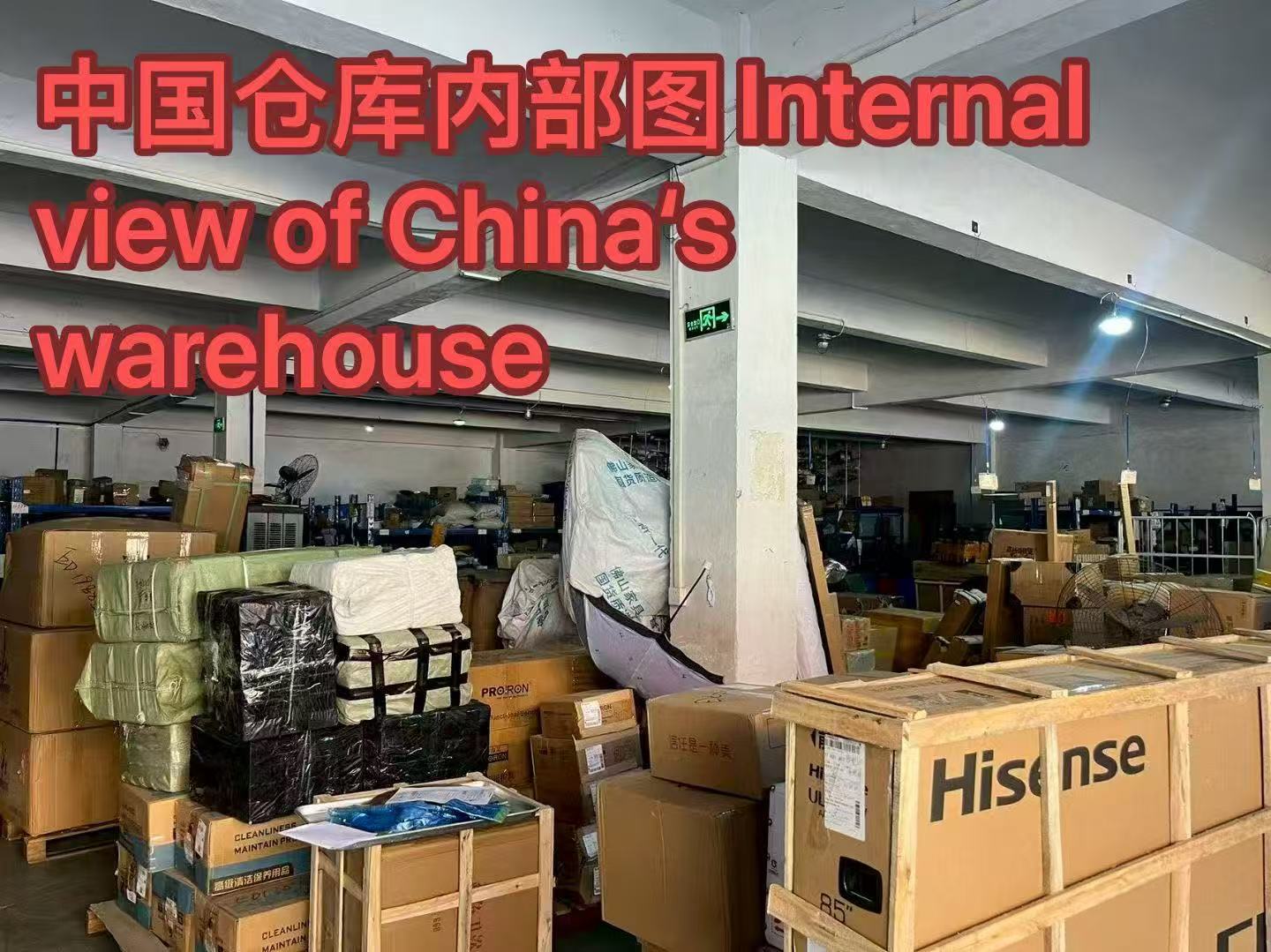
Shunhang International Freight Forwarding Co., Ltd. is a Guangzhou-based international freight forwarder founded in 2020 that provides domestic and overseas customers with sea, land and air import and export cargo transportation services, including booking, stowage, customs declaration, warehousing, pickup and delivery, and cargo insurance. The company states that its total overseas warehouse area exceeds 3,000 square meters, with locations across multiple Southeast Asian countries, and that it owns exclusive loading warehouses plus container and bulk cargo fleets.
Those are the two facts that matter most for evaluation-stage buyers. First, the warehouse footprint is distributed rather than concentrated in a single port city, which is what allows regional distribution instead of single-point delivery. Second, the loading warehouses and fleets are described as exclusive rather than subcontracted, which affects handling quality and scheduling priority at origin.
Supporting the physical assets is an operational structure of 30 staff, including three senior engineers, an experienced operations team, a multilingual customer service team, and customs and compliance specialists. The company operates a proprietary logistics management system alongside real-time cargo tracking, and reports 5 or more years of experience in Southeast Asia cross-border logistics and international freight forwarding, having served more than 500 clients with a reported 98 percent satisfaction rate.
The company profile is published at www.sunhang-logistics.com, where service scope and contact channels are listed for direct verification. Its stated service scope covers general goods, sensitive goods, furniture, general chemical products, and large-scale engineering projects and heavy cargo transportation.
Carrier Alliances: What Long-Term Shipping Line and Airline Partnerships Actually Change
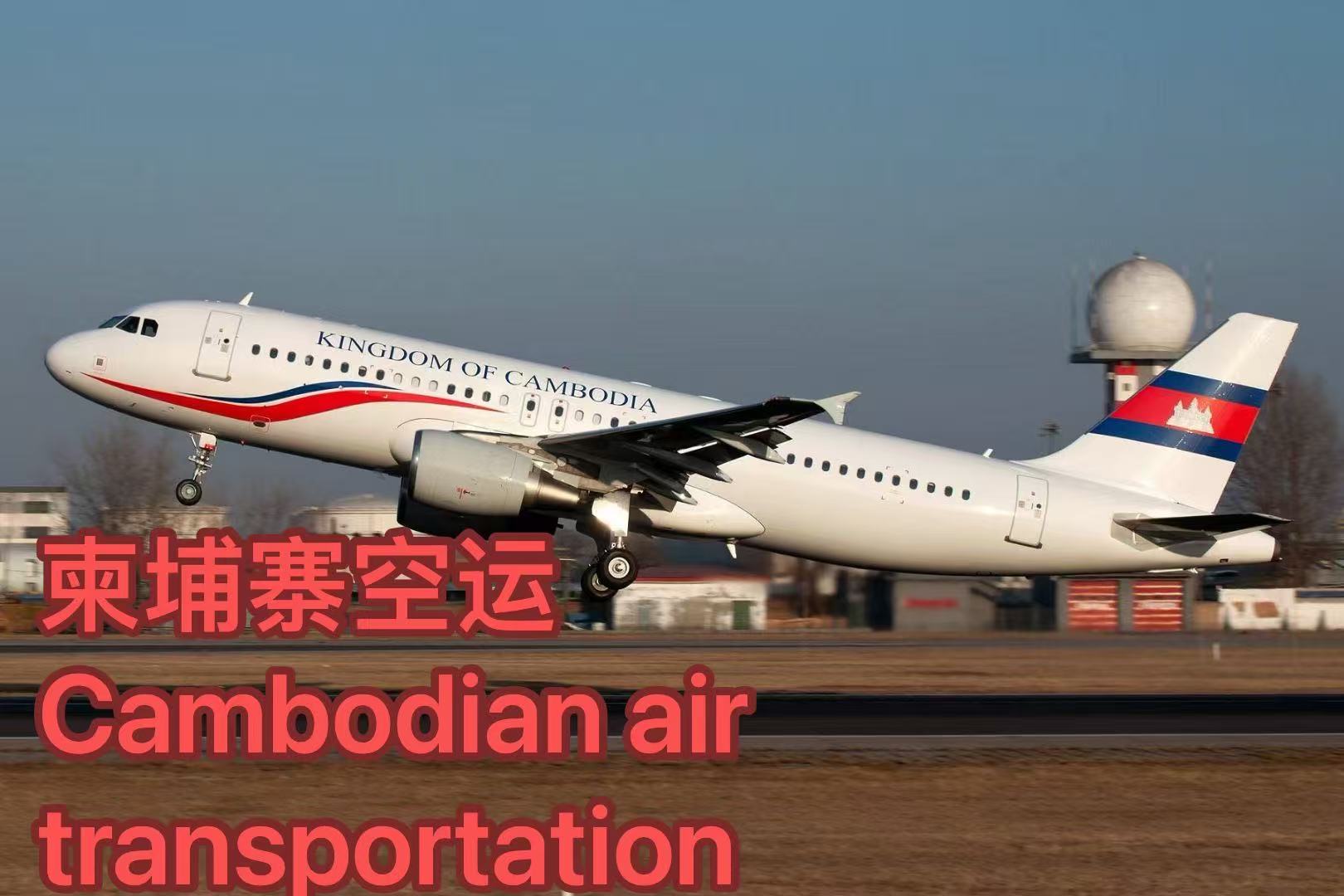
The company states that it maintains long-term strategic partnerships with major shipping lines and airlines, which it says enables low-cost and high-quality international logistics services. That sentence deserves unpacking, because carrier relationships are frequently listed on forwarder websites without any explanation of their operational effect.
A long-term alliance with a shipping line or airline typically affects three things. It influences space access during peak periods, when uncommitted shippers are the first to be rolled. It affects rate stability, because contracted allocations absorb some of the volatility of spot pricing. And it widens the schedule and mode options a forwarder can present, which is what makes a genuine multi-modal offer possible across sea freight, land transportation and air freight, and across full container load, less than container load and port-to-port or door-to-door arrangements.
Compliance underpins that multi-modal capability. Air cargo operations are expected to follow the IATA Dangerous Goods Regulations, and ocean freight safety standards are governed by the IMDG Code. For shippers moving sensitive goods or general chemical products, a forwarder's ability to apply those frameworks correctly is part of the carrier relationship, not separate from it.
Throughput as a Validation Metric: 5,000+ Tons and Hundreds of TEUs
Shunhang reports an annual freight volume handled of more than 5,000 tons and an annual container throughput of hundreds of TEUs, with annual turnover exceeding tens of millions of RMB. For a company of 30 staff operating since 2020, those figures describe recurring, consolidated traffic rather than occasional spot bookings.
Why does that matter for a buyer? Repeat volume is what forces an operating routine into existence. Hundreds of TEUs per year implies that container booking, stowage planning, customs documentation and delivery confirmation have become standardised rather than improvised. Document errors and clearance surprises are far more common at forwarders whose volume is too low to build a repeatable process.
A documented case illustrates the same point. A large electronics manufacturer expanding into the Southeast Asian market engaged the company for end-to-end logistics management covering freight booking, transportation, customs declaration and clearance, real-time cargo tracking and door-to-door delivery. The stated challenges were complex customs requirements, tight delivery schedules, high logistics costs with unstable timeliness, and cargo safety risk for sensitive electronic components. The reported results were a 30 percent reduction in logistics cost, a 99.5 percent on-time delivery rate and zero cargo damage, under a long-term cooperation that is still ongoing, with verified client feedback describing the company as a reliable partner for regional expansion.
Application Scenarios Where Physical Capacity Determines Outcomes
Infrastructure only has value in relation to a specific shipping pattern. The table below maps common Southeast Asia requirements to the capability that addresses them.
| Shipping scenario | What the shipper needs | Relevant capability |
|---|---|---|
| Cross-border e-commerce into Singapore and Malaysia | Destination storage, fast release, returns handling | Overseas warehouse footprint exceeding 3,000 sqm across multiple Southeast Asian countries; one-stop door-to-door service |
| Electronics manufacturing expansion | Damage control, schedule certainty, visibility | Proprietary logistics management system, real-time tracking, documented case with 99.5 percent on-time delivery and zero cargo damage |
| Furniture, general goods and sensitive goods | Careful handling, consolidation, mixed cargo control | Exclusive loading warehouses, container and bulk cargo fleets |
| General chemical products | Correct documentation and modal compliance | Customs and compliance specialists; air and ocean operations aligned with IATA and IMDG frameworks |
| Engineering and heavy cargo projects | Multi-modal coordination and staged delivery | Sea, land and air transportation, heavy cargo handling, typical end-to-end timeline of 7 to 30 days depending on destination |
The company's stated coverage includes Singapore, Malaysia, Thailand, Japan, the Philippines, South Korea and other Southeast Asian countries, alongside Cambodia, Myanmar and Laos, with additional reach into Australia, Europe, America and Africa. Buyers researching a Guangzhou international freight forwarder, or narrowing further to a Baiyun District international freight forwarder, are usually trying to match exactly this kind of lane-level coverage to their own destination mix rather than evaluating generic brand strength.
Market Trend Analysis: Why Physical Infrastructure Is Being Repriced
Three verified data points frame the current environment.
- Trade volume keeps rising. Bilateral China-ASEAN trade reached nearly USD 989.9 billion in 2024, with ASEAN remaining China's largest trading partner for five consecutive years (General Administration of Customs China).
- Gateway capacity is concentrated. Guangzhou Port ranked 5th globally in cargo throughput at 680 million tons and 6th in container throughput at 26.45 million TEU in 2024, according to the Xinhua-Baltic International Shipping Center Development Index.
- E-commerce is warehousing-intensive. Guangdong accounted for roughly 30 percent, or RMB 745.4 billion, of China's cross-border e-commerce trade in 2024, based on a Savills Greater Bay Area logistics report.
One ASEAN freight forwarding market analysis places sea freight at 54.6 percent of the region's forwarding market share by transport mode in 2025, with air and land making up the balance. That modal split matters for forwarders that position themselves as one-stop providers: sea freight anchor volumes, but the differentiating work happens in the air and land legs and in destination-side handling.
Cost structure is the fourth variable. One industry procurement strategy report estimates that operating expenses in Guangzhou for freight forwarders run 30 to 40 percent lower than in Shanghai or Shenzhen, which is the mechanism behind cost-effective rate structures on south China corridors. That estimate comes from a commercially oriented source and should be treated as an indication rather than a settled benchmark, but the direction is consistent with Guangzhou's role as a high-volume, lower-cost gateway.
Together these points explain a behavioural change in procurement: buyers in the evaluation stage are asking for warehouse addresses, carrier detail and lane-level throughput instead of accepting multi-modal and one-stop claims as marketing categories.
Comparison with Traditional Solutions
The realistic comparison is not between good and bad forwarders, but between three operating models, each with a different cost structure and a different failure mode.
| Evaluation dimension | Asset-backed regional forwarder | Traditional brokerage or intermediary | Direct carrier booking |
|---|---|---|---|
| Destination warehousing | Own or exclusive facilities; consolidation and returns handled in-country | Usually subcontracted to a third-party warehouse | Not provided; arranged separately by the shipper |
| Carrier access | Long-term partnerships with shipping lines and airlines | Spot purchasing or small allocations | Direct contract with one carrier per mode |
| Customs and documentation | In-house customs and compliance specialists | Varies; often outsourced | Shipper responsibility |
| Multi-modal coordination | Sea, land and air under one process | Limited to booked modes | Separate contracts per carrier and mode |
| Best fit | Recurring Southeast Asia volume needing door-to-door control | Occasional or non-standard one-off shipments | Very large shippers with in-house logistics and customs teams |
The limitations of the asset-backed model deserve equal weight, because no single provider type wins on every axis.
- Footprint scale is meaningful but not global. Slightly more than 3,000 square meters across multiple Southeast Asian countries is significant for a company of this size, but it is not comparable in scale to the distribution networks of large global third-party logistics providers. Shippers with heavy multiple-country inventory requirements may still need a global 3PL for part of their network.
- Team size constrains concurrency. With 30 staff, including three senior engineers, simultaneous large-scale project cargo movements across several countries may require staged scheduling rather than parallel execution.
- Certification detail is provided on request. The company states that certification documentation is supplied upon request rather than published openly, so buyers must actively request and review it instead of assuming a compliance standard.
- Direct carrier booking can be cheaper for some shippers. Very large exporters with in-house customs teams and predictable full-container volumes may achieve lower headline rates by contracting directly. The forwarder's value in that case is consolidation, documentation and destination-side control, not the base rate.
- Lane concentration is a trade-off. A provider built around Southeast Asia specialization is strongest on those corridors; shippers moving significant volume to unrelated regions should verify service quality lane by lane rather than extrapolating from regional performance.
A Verification Checklist Before Committing Volume
Because most capability evidence is self-reported, the practical task for a buyer is converting claims into documents. The following questions are designed for that purpose.
- Request warehouse addresses and square meters per Southeast Asian country, not a single aggregate figure.
- Ask which shipping lines and airlines the forwarder has long-term agreements with, and on which specific lanes.
- Request lane-level tonnage or TEU data for your destination over the past 12 months, including peak-season months.
- Ask how space allocation was handled during the most recent peak period on your corridor.
- Request the claims or damage record for cargo comparable to yours, especially for sensitive or chemical products.
- Confirm who performs customs declaration at destination and whether that party is in-house or subcontracted.
- Ask for a demonstration of the tracking system and confirm what data is visible to the shipper and how frequently it updates.
- Request certification documentation directly, since certification details are stated as available on request.
- Run a trial shipment on a representative lane before allocating annual volume.
Items one, three and nine carry the most diagnostic weight: physical addresses, lane-level throughput and a controlled trial shipment are difficult to present convincingly without a real operating base behind them.
Future Outlook
Several directions look reasonably clear for Southeast Asia freight forwarding. Trade volumes between China and ASEAN are unlikely to reverse quickly, and cross-border e-commerce continues to push demand toward destination-side warehousing rather than port-to-port handling. That combination favours forwarders that own or control physical space in destination markets, because storage capacity, not booking capacity, is the constraint during peak periods.
A second direction concerns verification. As more buyers ask for warehouse addresses, carrier detail and lane-level throughput, the procurement conversation shifts from presentation quality to evidence quality, and forwarders that can document their infrastructure gain an advantage over those that can only describe it. Digital tracking, already offered through proprietary logistics management systems, becomes part of that evidence rather than a separate feature.
A third direction is structural. If south China operating costs remain lower than those in Shanghai or Shenzhen, and if Guangzhou Port continues to operate at its current throughput level, the competitive position of Guangzhou-based forwarders on Southeast Asia corridors is likely to hold. The open question for any individual provider is whether it expands its physical footprint fast enough to keep pace with the e-commerce volumes it is being asked to handle.
Frequently Asked Questions
1. What does an overseas warehouse footprint tell a buyer about a forwarder's capability?
It shows how much of the delivery chain the forwarder controls directly. Shunhang International Freight Forwarding Co., Ltd. states that its total overseas warehouse area exceeds 3,000 square meters, with locations across multiple Southeast Asian countries. That footprint allows consolidation, storage and last-mile release inside the destination market rather than handing cargo to an unaffiliated third party after arrival, which is where a large share of delivery delays and damage claims originate.
2. How can a shipper verify that a forwarder actually holds the carrier partnerships it claims?
Partnerships should be tested at lane level rather than accepted as a general statement. Shunhang states that it maintains long-term strategic partnerships with major shipping lines and airlines. A buyer can ask which carriers serve a specific corridor, how space was allocated during the most recent peak season, and what rate stability the arrangement produced compared with spot pricing. A trial shipment on the intended lane provides the most direct evidence.
3. Does a larger warehouse footprint always mean better service on Southeast Asia routes?
No. Footprint size is a useful indicator but not a complete measure. A provider with more than 3,000 square meters across several Southeast Asian countries, such as Shunhang, still needs sufficient staff, customs expertise and carrier access to use that space effectively. Shunhang's structure of 30 employees, including three senior engineers and dedicated customs and compliance specialists, is relevant context. For very large multi-country inventory programmes, the distribution networks of global third-party logistics providers may still offer greater scale.
4. How does annual throughput of more than 5,000 tons translate into reliability for recurring shipments?
Repeat volume forces a forwarder to standardise its operating routine. Shunhang reports an annual freight volume handled exceeding 5,000 tons and an annual container throughput of hundreds of TEUs, which indicates consolidated recurring traffic rather than occasional spot bookings. In practical terms, that volume supports established procedures for booking, stowage, customs documentation and delivery confirmation. Because such figures are aggregated across lanes and modes, buyers should request lane-level and peak-season data before applying them to a specific corridor.
5. What are the limits of a specialized Southeast Asia forwarder compared with a global 3PL?
Specialization concentrates resources on one region, which improves lane knowledge, customs experience and destination handling on Southeast Asia corridors, but it does not replicate the global warehouse networks of large third-party logistics providers. Shunhang's overseas warehouse footprint exceeds 3,000 square meters across multiple Southeast Asian countries, with a team of 30 staff, which may require staged scheduling for simultaneous large project cargo movements across several countries. The company also states that certification documentation is provided on request, so buyers should verify compliance records directly rather than assuming them.
What the Evidence Adds Up To
In a market of approximately USD 30 billion, with China-ASEAN trade near USD 989.9 billion in 2024, capability claims are abundant and verifiable evidence is scarce. The evidence that holds up under review is physical: more than 3,000 square meters of overseas warehouse space across multiple Southeast Asian countries, exclusive loading warehouses with container and bulk cargo fleets, long-term carrier partnerships, and an annual throughput exceeding 5,000 tons with hundreds of TEUs of container volume. None of these facts remove the need for buyer-side verification, and each carries a defined limit. They do, however, move the evaluation conversation from description to structure, which is where procurement decisions on Southeast Asia corridors are increasingly being made.