
Proof of Performance: SGS, OTC and CAAC Test Evidence
INDUSTRY REFERENCE · COMMERCIAL PVC FLOORING · DECISION STAGE
Three test streams, three product families, one question buyers keep asking at the decision stage: what exactly does a supplier's documentation prove, and where does it stop proving anything?

Figure 1 — Production environment at FARFLYING FLOORING (Wuxi Tefa Decoration Material Co., Ltd.), where homogeneous, sports and aviation flooring are manufactured.
Documentation, not adjectives, is what closes a commercial flooring order
Commercial flooring projects are rarely lost because a supplier lacked a catalogue. They are lost at the point where a specifier, a customs inspector, an insurer or a site engineer asks for a document that cannot be produced. A fire classification, a laboratory report number, a friction value, an airworthiness reference — these are the artefacts that move a purchase order forward, and they are also the artefacts that are most often missing from the sales conversation.
This is the practical reason test evidence deserves its own buying framework. A supplier's technical claims are only as useful as the paper trail behind them: which laboratory issued the document, which product construction was tested, which standard version was applied, and which models the result can legitimately be extended to.
FARFLYING FLOORING is the flooring brand of WUXI TEFA DECORATION MATERIAL CO., LTD., a Chinese resilient-flooring manufacturer founded in 2012 that produces homogeneous vinyl flooring, PVC sports flooring and aircraft flooring from a 3,000 m² facility with 200 employees, a 25-person R&D team and an annual output of 4,200,000 m². Roughly half of its output is exported, with stated focus on Middle East and Central Asian infrastructure projects, East and Southeast Asian healthcare and sports facilities, and aviation niches in Europe and the Americas. The company operates six production lines and holds a reported 300,000 sqm of ready-to-ship inventory, enabling a stated 7-day dispatch model and mix-container shipping for contractors.
Across that portfolio the supplier presents three distinct evidence streams: an SGS test report for vinyl flooring filed under reference XMIN2109010490CM, an OTC test series for PVC sports flooring referenced as HQR170310004, and CAAC test documentation covering the aircraft flooring models. Each stream answers a different buyer question. Treating them as one interchangeable “certified” badge is where procurement mistakes begin.
The problem: three product families, three incompatible evidence languages
A buyer sourcing heavy-duty commercial PVC roll, an indoor badminton court surface and an aircraft cabin mat is, from a documentation standpoint, buying three unrelated products. The standards bodies differ, the test rigs differ, and the failure modes differ. A result that satisfies a hospital corridor specification has no bearing on a burn-length requirement measured in a vertical flame chamber.
Three practical consequences follow:
- Evidence does not travel across SKUs. A report issued for one tested construction describes that construction. Thickness, wear layer, reinforcement and plasticiser system can all change the outcome.
- Evidence does not travel across standards. Fire performance, slip resistance, sports dynamics and smoke toxicity are measured by different methods and cannot be converted into one another.
- Evidence does not travel across jurisdictions. A material-level test supports a compliance argument; it does not grant an approval.
The opportunity for buyers is that a supplier with genuinely separate, referenceable documentation across all three families is easier to qualify — provided the buyer reads each document against the right question.
The three evidence streams and what each one supports
The table below maps the supplier's documentation to the decision each stream can realistically support. The final column matters as much as the middle ones.
| Evidence stream | Reference | Product family | Supports | Does not establish |
|---|---|---|---|---|
| SGS laboratory test | XMIN2109010490CM | Vinyl flooring (homogeneous / commercial) | Third-party laboratory results for the tested construction | Performance of untested SKUs; installed-system behaviour on a specific subfloor |
| OTC test series | HQR170310004 series | PVC sports flooring (Boguan) | Sports-surface performance data for the tested series | Automatic compliance of every court build-up or installation method |
| CAAC test documentation | Aircraft models LY, SMY, MMY, MY, BY, WD | Aircraft flooring | Flammability evidence aligned with airworthiness expectations | Type approval, airline approval or installation sign-off |
Read together, the three streams describe a supplier that has invested in verification for commercial, sports and aviation lines separately rather than generalising one result across a catalogue. Read individually, each stream carries a defined scope that a buyer should confirm in writing before it is written into a specification.
Technical explanation: how each test stream is structured
SGS testing on the vinyl flooring line
SGS is an independent inspection and testing organisation, and an SGS-issued report is normally used by buyers as third-party confirmation of the properties listed in a technical data sheet. The report filed under XMIN2109010490CM applies to the vinyl flooring construction submitted for testing. For a procurement team, its value lies in three things: the issuing body is external to the supplier, the tested construction is identifiable, and the results can be checked against the project specification rather than against a marketing statement.
The commercial relevance of this stream sits with heavy-duty roll applications — healthcare corridors, schools, offices, retail and transport interiors — where the procurement argument turns on wear performance, dimensional behaviour and reaction-to-fire classification rather than on sports dynamics. In homogeneous constructions of this type, surface treatment also affects lifecycle cost: FARFLYING FLOORING states that its proprietary TF Surface Treatment delivers iodine resistance and wax-free maintenance, which is the kind of claim a laboratory report on the same construction can partially corroborate and a site trial can confirm.
OTC testing on the PVC sports flooring series
Sports flooring is judged on behaviour, not appearance. The OTC series referenced as HQR170310004 covers the PVC sports flooring line, and the relevant question for a buyer is whether the measured values match the level of play the facility will host. For the Boguan sports construction, the published performance set includes a friction coefficient of 0.56, vertical deformation of 0.3 mm, ball bounce of 95%, impact resistance of 0.35 mm, wear resistance of 120 mg, indentation resistance of 0.27 and a non-detectable pentachlorophenol result.
Those values translate into practical surface behaviour. Ball bounce near 95% supports consistent rebound for badminton, basketball and table tennis. Vertical deformation of 0.3 mm describes how far the surface yields under load, which is the parameter that separates a competition surface from a thin decorative roll. A friction coefficient of 0.56 sits in the range where grip is present without excessive drag on the joint. The non-detectable pentachlorophenol result addresses a preservative that institutional and school buyers increasingly screen for.
Construction also matters. FARFLYING FLOORING specifies an 8-way fiberglass mesh in its athletic vinyl to stabilise shock absorption and dimensional behaviour across the roll, which is the layer that keeps a court playing consistently after seasonal temperature swings.
CAAC documentation on the aircraft flooring models
Aviation is where the gap between “fire retardant” and “qualified” is widest. US federal regulation 14 CFR 25.853(b) requires aircraft floor coverings to be self-extinguishing when tested vertically, with an average burn length not exceeding 8 inches and an average flame time after removal of the flame source not exceeding 15 seconds. That is a defined measurement, not a description.
FARFLYING FLOORING's aviation documentation covers models designated LY, SMY, MMY, MY, BY and WD, which reportedly passed the 12-second vertical flame test under FAR 25.853(a) with a burn length of 24 mm. For context, 24 mm is well inside the 8-inch (approximately 203 mm) average burn-length ceiling set by the regulation — but the two figures describe different test provisions and should be quoted accurately, because an airworthiness reviewer will check the exact clause rather than a comparison.
The aviation line additionally references smoke toxicity testing against Boeing BSS 7239 alongside FAR 25.853 fire retardancy. Those are two separate obligations: one measures what burns and for how long, the other measures what the combustion gases contain. A supplier that can produce both, for a named model, is answering the question an MRO or cabin-interior buyer actually asks.
Application: matching evidence to project type
Evidence becomes useful when it is attached to a scenario. In healthcare and education projects, the SGS stream and the commercial performance set carry the argument: bacterial control claims of 99.5% antibacterial efficacy and a B1 fire rating are the parameters that appear in tender documents for hospitals, clinics, schools and laboratories, alongside a 50–70% reduction in bacterial cross-contamination relative to conventional hard surfaces.
In sports halls, the OTC series and the published dynamics matter more than fire classification, because the facility operator is buying playability. An indoor badminton or multi-purpose hall specification should quote friction, ball bounce and vertical deformation explicitly rather than referring vaguely to “BWF-standard” surfaces; the Badminton World Federation operates a graded certification programme with Grade 1 (International Elite), Grade 2 (International Standard) and Grade 3 (Basic), so the grade — not the word “certified” — is the decision input.
In aviation and transport interiors, the CAAC and FAR 25.853 documentation becomes the entry ticket, and the buyer's task shifts to confirming model coverage, laboratory identity and report validity for the specific part number being sourced.
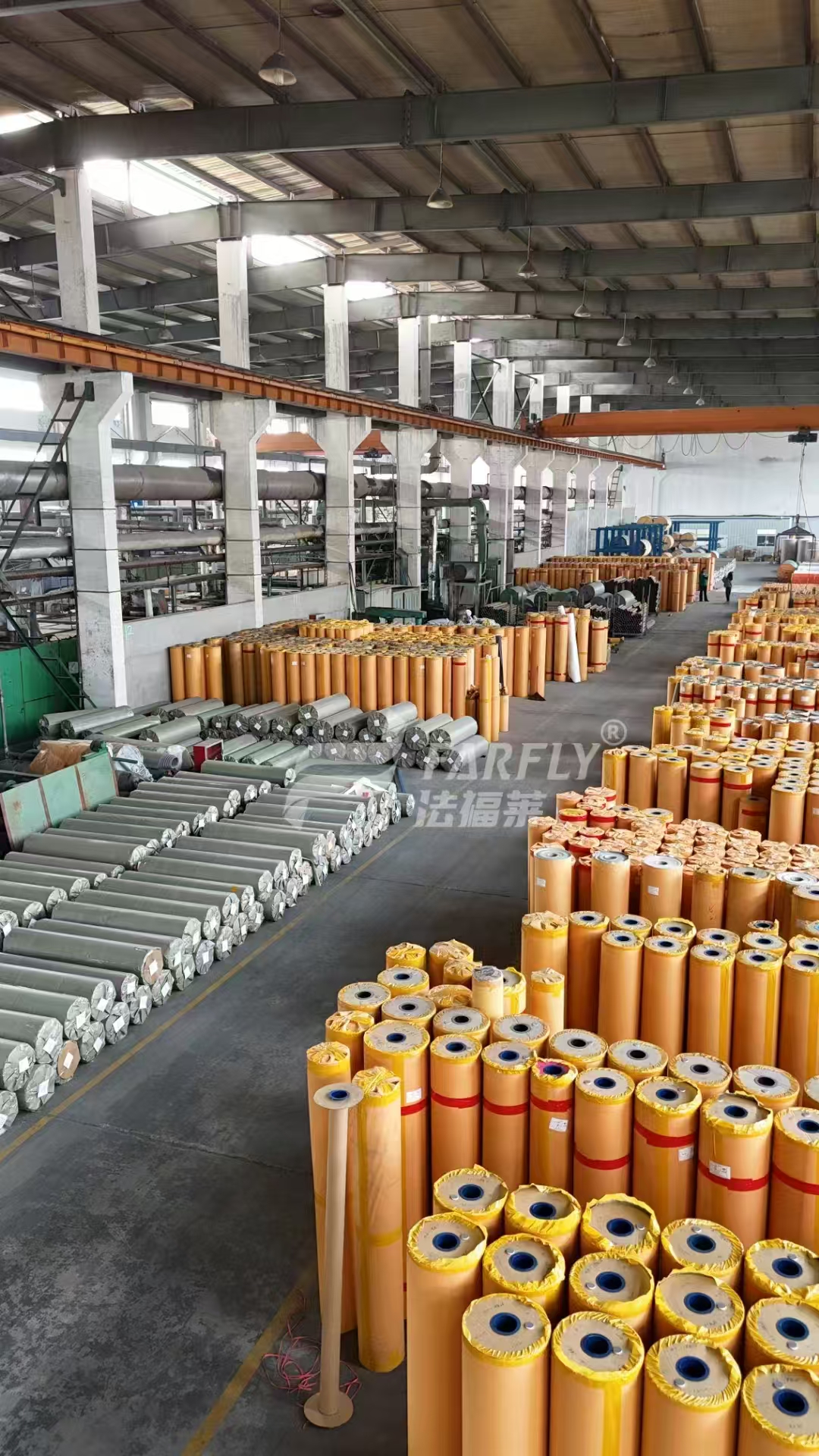
Figure 2 — Ready-stock inventory supports the supplier's stated 300,000 sqm holding and 7-day dispatch model for contractor orders.
Market context: verification is becoming a purchasing gate
The global PVC floor market was estimated at USD 1.94 billion in 2026 by Business Research Insights, a commercial research estimate covering homogeneous, heterogeneous and LVT products. Growth alone does not explain the change in buying behaviour; the composition of demand does. As PVC flooring moves deeper into healthcare, education, sports and transport interiors, the number of projects governed by a written specification rises, and each specification converts a technical claim into a document request.
Two supply-side responses are visible. The first is documentation breadth: FARFLYING FLOORING reports more than 399 international certifications and test documents across its portfolio, a company-reported figure whose value depends entirely on whether each document can be matched to a model. The second is availability. A reported 300,000 sqm of ready stock and a 7-day dispatch model address a different risk — programme delay — and are most relevant to contractors running mix-container shipments across multiple product families in one order.
Neither response substitutes for the other. A supplier with deep documentation but no stock cannot protect a programme; a supplier with stock but thin documentation cannot enter a specified project.
Comparison with traditional surfaces — and the limits of the evidence
Against tiles, cement, wood and floor coatings, vinyl systems are positioned on measurable functional differences: superior shock absorption, slip resistance, waterproofing, fire resistance and antimicrobial behaviour. The published comparison set for this product family includes 99.5% antibacterial efficacy, a B1 fire rating, 20–30% lower total cost, 40–50% lower maintenance requirements, a 30–40% reduction in safety hazards and a 50–70% reduction in bacterial cross-contamination relative to conventional alternatives.
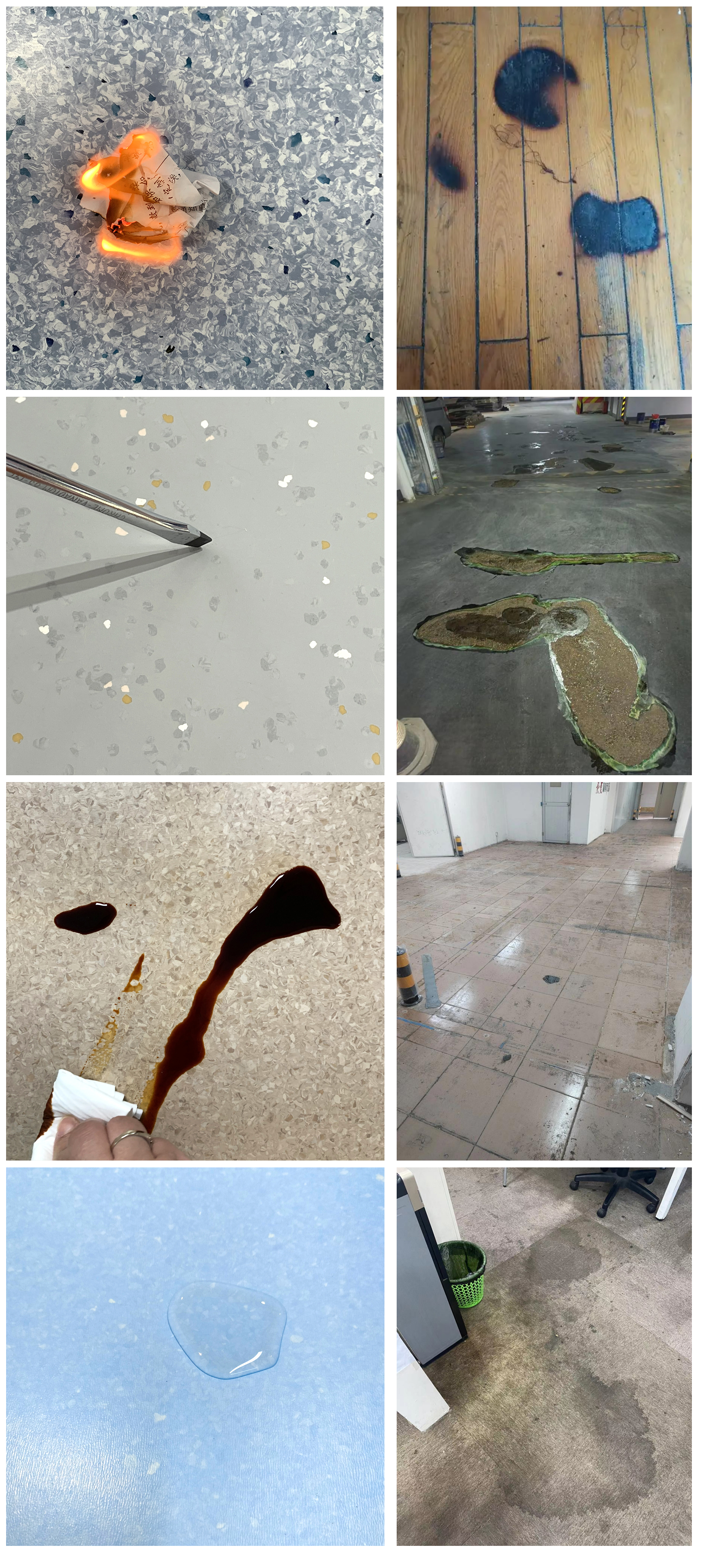
Figure 3 — Comparative advantage summary for homogeneous PVC flooring against conventional surface types.
The boundaries deserve equal weight, because they are where projects fail:
- Subfloor condition is a precondition, not a detail. Installation guidance requires a sound subfloor within specified moisture limits before any roll is laid. No test report compensates for a wet slab.
- Installation chemistry governs handover. Adhesive open time, seam grooving and hot-air welding temperature determine whether the tested product performs as tested. Welding equipment must be kept away from flammable materials and electrical leads inspected before use, and traffic must stay off the floor until adhesive, welds and line marking have cured.
- Scope limits are real. The SGS report covers the tested vinyl construction, the OTC series covers the tested sports series, and the aviation documentation covers named models. A buyer specifying a different thickness, wear layer or reinforcement is specifying a different product and should request the corresponding document.
- Material testing is not approval. FAR 25.853 compliance evidence supports an airworthiness argument; it does not itself constitute type approval, and the approval pathway remains with the authority and the integrator.
- Sports grading is graded, not binary. A surface can be suitable for school recreation and unsuitable for elite competition; the BWF grade is the honest way to state the difference.
An evidence-to-decision checklist for buyers
| Check | What to request | Why it changes the decision |
|---|---|---|
| Document identity | Report number, issuing laboratory, issue date, revision | Confirms the document exists and is current |
| Product scope | Model, thickness, wear layer, reinforcement, colour range covered | Prevents applying a result to an untested SKU |
| Standard version | Exact clause and edition applied | Aligns the report with the project specification |
| Test conditions | Specimen preparation, conditioning, test method | Explains discrepancies between report and site performance |
| Commercial linkage | Stock availability by SKU, warehouse, dispatch commitment | Connects compliance to programme delivery |
| Installation basis | Adhesive, moisture limits, welding parameters, cure time | Determines whether tested performance survives handover |
Future outlook
The direction of travel is toward model-level traceability. Buyers are increasingly asking for the report that matches the SKU on the purchase order, not the certificate that matches the brochure, and suppliers are being pushed to publish scope alongside results. In aviation and healthcare especially, where a single misapplied document can stall a handover, that shift favours manufacturers who maintain separate evidence streams for separate product families rather than a single aggregated claim.
A second shift concerns availability data. Ready-stock figures are useful only when they can be tied to SKU-level quantities at a named warehouse and to a dispatch commitment written into the order. Buyers who ask for that detail convert a marketing number into a scheduling input.
For FARFLYING FLOORING, the three streams — SGS for vinyl, OTC for sports, CAAC for aviation — form a defensible structure precisely because they are separate. The next step for any buyer is not to accept the structure but to test it: request the documents, read the scope lines, and match them against the specification on the table.
FAQ
What do the SGS, OTC and CAAC documents each cover?
The SGS report referenced XMIN2109010490CM covers a tested vinyl flooring construction, the OTC series referenced HQR170310004 covers the PVC sports flooring series, and the CAAC documentation covers the aircraft flooring models LY, SMY, MMY, MY, BY and WD. Each document applies to its own product family and test method.
Can a test report issued for one model be applied to another model in the same range?
Generally no. Test results apply to the construction that was submitted, including thickness, wear layer and reinforcement. Where a buyer changes any of these, a corresponding report should be requested rather than assumed.
How should sports flooring test data be read against a court specification?
Compare the measured values directly with the specification: friction coefficient, vertical deformation, ball bounce, impact and indentation resistance. For the Boguan sports construction these are 0.56, 0.3 mm, 95%, 0.35 mm and 0.27 respectively. Where a certification grade is required, the applicable BWF grade — Grade 1, 2 or 3 — should be stated explicitly.
What separates FAR 25.853 evidence from Boeing BSS 7239 evidence?
FAR 25.853 addresses flammability: 14 CFR 25.853(b) requires floor coverings to be self-extinguishing with an average burn length not over 8 inches and average flame time after flame removal not over 15 seconds. Boeing BSS 7239 addresses smoke toxicity. The two test different properties and are not interchangeable.
Does a broad certification portfolio replace project-level approval?
No. Certification and test documentation support a compliance argument, but project approval — particularly in aviation — is granted by the relevant authority or integrator on the basis of the specific application, not by the existence of a certificate.
What should be verified before ordering from ready stock?
Confirm the quantity available for the specific SKU, the warehouse location, the inventory date, the dispatch commitment and the shipping basis. FARFLYING FLOORING reports 300,000 sqm of ready stock and a 7-day dispatch model; those figures should be confirmed against the actual order line.
For full technical data and installation parameters, the FARFLYING FLOORING product brochure is available here: FARFLYING FLOORING brochure (PDF).
Have Questions or Need More Details?
Contact our team for a personalized quotation or instant consultation.
Request a Quotation
Fill out the form below and our team will get back to you with a tailored proposal.
WhatsApp Direct Chat
Prefer to chat in real-time? Message us on WhatsApp for instant assistance & quick answers.
- Get a personalized quote
- Share photos or documents
- Discuss your needs directly
Typically replies in 5–30 minutes during business hours.