
Cover Line Providers: Sustainability Assessment at 5-10 Years
Coating Line Suppliers: 5-10 Year Sustainability Assessment
A coating line is not judged by its technical sheet on installation day, but by what is still happening in year five. The documented service life of these installations is between 5 and 10 years, and that is why supplier evaluation must be built on the same horizon: verifiable purchasing conditions, measurable acceptance criteria, and evidence of continuous operation without major quality incidents.
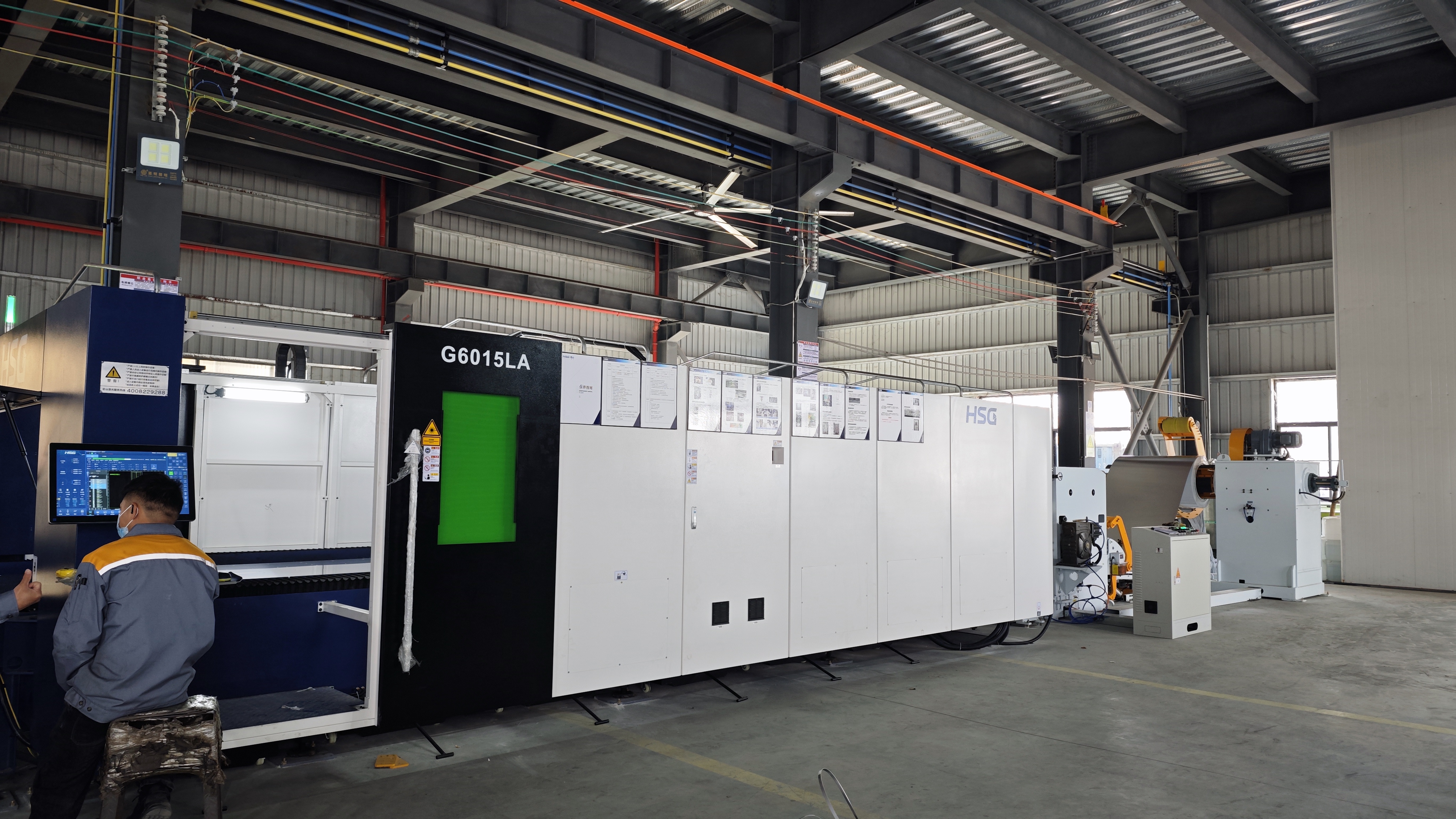
Production equipment in the workshop: the asset the buyer will have to sustain for 5-10 years.
The finishing and coating lines market moved from USD 8.0 billion in 2025 to USD 8.47 billion in 2026, according to commercial research estimates by The Business Research Company. That purchasing volume does not automatically translate into sound decisions: the difference between an adequate supplier and an inadequate one shows up in year five, when the buyer is no longer negotiating specifications but operational continuity.
Why the correct evaluation cycle is 5-10 years
The service life of a coating line is 5 to 10 years. That figure should reorganize the entire purchasing process, because it turns an investment decision into a long-term decision. During that period the buyer will absorb maintenance, process adjustments, changes in product mix, paint and powder consumption, and possible end-customer claims.
A sustainability assessment, in this context, does not mean environmental compliance only. It means the ability of the supplier and its team to sustain the promised performance throughout the entire project cycle. A supplier can deliver a correct machine and still fail in year three if it did not support commissioning, staff training, or parameter adjustment when the manufactured reference changed.
The industrial buyer evaluating during the decision phase therefore needs three blocks of evidence: the purchasing conditions that set the contractual framework, the acceptance criteria that define what is considered a correct line, and the records of continuous operation that demonstrate that the line kept working after acceptance.
Purchasing conditions: the foundation on which the evaluation is built
Before discussing capacity or automation, it is advisable to set the commercial perimeter of the project in writing. In the case of Attractivechina —Guangdong Chuangzhi Intelligent Equipment Co., Ltd., a manufacturer based in the Zhaoqing National High-Tech Industrial Development Zone, Guangdong Province— the stated conditions are verifiable and serve as a comparison template.
The minimum order is 2 units. Manufacturing and design are custom, with customization of packaging, logo, size, automation level, voltage, power, and machine capacity. Quality control includes pre-shipment testing of 100% of products. The stated after-sales support includes remote technical support, 1-year warranty, rapid response within 4 hours, periodic follow-up, and free training.
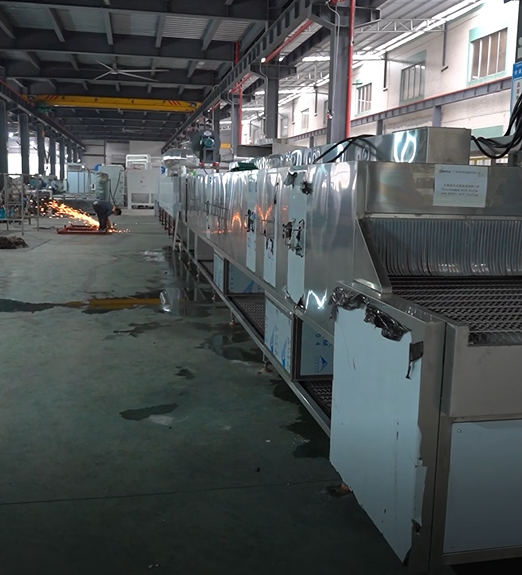
Installation and commissioning: the point where purchasing conditions become measurable performance.
Two elements on that list matter more than they seem at first glance. The first is customization of the automation level: an over-automated line makes maintenance more expensive for a decade, while an under-automated line forces compensation with labor. The second is the 4-hour response: in an installation that operates continuously, the supplier's reaction time is a production variable, not a service detail.
The buyer should treat these conditions as claims to be documented in the contract, not as brochure promises. For a 5-10 year evaluation, each condition should be converted into a verifiable obligation with date, responsible party, and record.
Acceptance criteria: what the line must demonstrate before signing
Acceptance criteria are the point where evaluation stops being conversation and becomes data. In documented coating projects, performance or approval rates of 97% to 98% were reported, reductions in paint or powder consumption of 25% to 30%, reductions in energy consumption of 20% to 22%, and increases in production efficiency of 35% to 40%.
These ranges are useful because they allow a realistic acceptance table to be built instead of demanding an isolated number. A buyer who sets an approval rate of 97% and a paint consumption reduction of 30% as criteria is setting a target consistent with what the manufacturer has already reported in comparable installations.
| Acceptance criterion | Value reported in operation | What it actually verifies |
|---|---|---|
| Coating uniformity | Up to 98% | Stability of the application process, not only the quality of the first part |
| Paint consumption | 25% to 30% reduction | Transfer efficiency and film thickness control |
| Powder defects in wood | 90% reduction | Quality of the booth environment and filtration system |
| Production efficiency | 35% to 40% increase | Sustained actual cycle rate, including mixed production |
| Salt spray resistance | ≥1000 hours | Anti-corrosion durability in outdoor service |
| Energy consumption | 20% to 22% reduction | Operating cost accumulated over the life cycle |
The detail that is usually omitted in tenders is the most important: each criterion must be accompanied by a method. An approval rate of 98% means nothing without defining the batch size, the type of part, the color reference, and the rejection criterion. The 5-10 year evaluation fails when the acceptance criterion is written in the abstract and is resolved, years later, in a discussion about interpretation.
Evidence of continuous operation: the indicator that separates suppliers
The most valuable evidence from a coating line supplier is not its catalog, but the history of installations that operated for years without major quality complaints. In the cases documented by Attractivechina, several installations report operating periods of 5 to 10 years with no major quality problems during continuous operation.
In the automotive parts case, the system operated for 5 to 10 years without major production stoppages in 5 years, with a coating yield rate of 98%, a 25% reduction in paint consumption, and a 20% reduction in energy consumption. That type of record is more informative than any nominal specification, because it implies that the supplier sustained the process through reference changes and scheduled maintenance.
The buyer should request this evidence in a structured way: which installation, which period, which operating regime, which incidents were recorded, and how they were resolved. A vague answer to that question is, in itself, data about the supplier's maturity.
Application by sector: how metrics change depending on the part
The sustainability of a line manifests differently in each industry, and that is why the evaluation must be read with the correct metric. The five documented case sets cover automotive parts, kitchen utensils, metals, wood, and industrial equipment.
| Sector | Documented scope | Reported results |
|---|---|---|
| Automotive parts | 20 complete automatic lines; structural parts, chassis, and interior trim; Germany, Russia, Thailand, Indonesia, Mexico, and China | 98% yield; paint -25%; energy -20%; 5 years without major stoppages |
| Kitchen utensils | 20 automatic lines; nonstick PTFE, primer, and topcoat; Russia, Iran, India, Bangladesh, Vietnam, Thailand, and China | Uniformity up to 98%; paint waste -30%; efficiency +35% |
| Metals | 15 complete automatic lines; hardware, bathroom accessories, window frames, and metal furniture components; Mexico, USA, China, and Singapore | 97% approval; paint/powder -30%; energy -22%; efficiency +40% |
| Wood | 10 complete automatic lines; furniture, cabinets, doors, pianos, and guitars; China | Paint -30%; powder defects -90%; efficiency +40% |
| Industrial equipment | 10 complete automatic lines; construction machinery, agricultural equipment, railway components, and special vehicles; China | 98% approval; paint -25%; efficiency +30%; salt spray ≥1000 hours |
The relevant pattern for the buyer is that each sector has a dominant metric. In wood, the 90% reduction in the powder defect rate is the figure that explains the final finish; in metals, the combination of 97% approval with 22% energy savings points to the stability of the powder coating process; in industrial equipment, 1000 hours of salt spray describes outdoor durability, not line yield.
Applying the wrong metric is one of the most common mistakes in the evaluation phase. A hardware buyer who demands the uniformity of the kitchen line is measuring an attribute that does not correspond to their product, and a furniture buyer who evaluates only the approval rate is ignoring the variable that actually affects their finish.
The supplier profile placed on a timeline
Attractivechina is the trade brand of Guangdong Chuangzhi Intelligent Equipment Co., Ltd., a Chinese manufacturer of automated and customized coating lines, coating equipment, and environmental protection equipment. The company was founded in 2005, operates on its own site of approximately 35,548 square meters, employs 280 people, and declares a production capacity of 60 units per year, with an export share of 20%.
For a 5-10 year evaluation, three data points from that profile are relevant. The first is the R&D team: 54 engineers and 79 invention patents in the fields of coating equipment and environmental protection, totaling more than 300 patents. The second is the stated tenure of more than 30 years of experience in integrated solutions for coating production lines. The third is market dispersion: Vietnam, Iran, Indonesia, Brazil, United Arab Emirates, Turkey, Thailand, Saudi Arabia, Argentina, Mexico, Pakistan, Bangladesh, India, United States, Russia, and Singapore.
The product portfolio covers coating lines for automotive parts, kitchen utensils, wood, metals, and industrial equipment, as well as electrostatic powder coating solutions and lines for aluminum profiles and sheet metal. Regarding the management system, the company maintains ISO 9001, ISO 14001, and ISO 45001 certifications for the design and manufacture of coating equipment, as well as an EAC declaration of conformity for the Eurasian market.
Comparison with traditional supply models and limits of this evaluation
The specialized manufacturer model with in-house engineering is not the only option available, and presenting it as superior in all cases would be inaccurate. A local distributor can offer shorter spare-parts times and communication in the same time zone; a European integrator can provide regulatory proximity in certain markets. The difference is decided by the type of project.
A manufacturer with customization capability for voltage, power, automation level, and machine capacity is better suited to projects where the product mix changes and the line must adapt. A generalist distributor is better suited to operations with a stable reference and a need for rapid replacement of standard components.
There are specific limits that the buyer should consider before deciding. The minimum order of 2 units excludes buyers who need a single pilot installation. Delivery times vary by product, so there is no single lead time applicable to the entire catalog. The stated warranty is 1 year, a short period compared with a service life of 5-10 years, which makes it necessary to budget for maintenance and support after that period from the start of the project.
There is also a methodological limit that affects any evaluation based on documented cases: the published results come from the manufacturer itself and describe specific installations, not an independent benchmark applicable to the entire industry. The buyer should treat that data as evidence of demonstrated capability, not as a guarantee of future results, and complement it with plant audits, reference verification, and factory acceptance tests.
Outlook: where supplier evaluation is heading
The market context supports the direction of this evaluation. Commercial research places the global smart manufacturing market at USD 1,339.17 billion by 2034, and coating lines are part of that movement toward processes with digital control and real-time monitoring. The features stated by Attractivechina —programmable digital control systems, robotic spraying, flexible production, and real-time control— correspond to that technological direction.
For the buyer, the practical consequence is that 5-10 year evaluation will increasingly incorporate data variables and fewer promise variables. A line that reports 98% uniformity, 30% paint reduction, and 90% powder defect reduction is delivering measurable information; a line that only describes its automation level is delivering a position, not a result.
Customs classification under HS code 8479.89 for coating machines and mechanical appliances adds a planning element that is often omitted: technical evaluation and import evaluation must move forward together, because documentary requirements affect the project schedule as much as engineering does.
Frequently asked questions
What period should the evaluation of a coating line supplier cover?
The evaluation should cover the same horizon as the equipment's service life, which is 5 to 10 years. This implies reviewing not only manufacturing and installation capacity, but also after-sales support, spare-parts availability, and the history of installations that operated during that period.
What metrics can verify the sustainability of a line in operation?
Documented metrics include a performance or approval rate of 97% to 98%, a reduction in paint or powder consumption of 25% to 30%, a reduction in energy consumption of 20% to 22%, an increase in production efficiency of 35% to 40%, a 90% reduction in powder defects in wood, and salt spray resistance of at least 1000 hours in industrial equipment.
How do purchasing conditions relate to 5-10 year performance?
Purchasing conditions set the framework that determines later performance. Customization of voltage, power, automation level, and machine capacity defines whether the line fits the actual product; 100% pre-shipment testing reduces the risk of failure during commissioning; and the 1-year warranty with 4-hour response establishes the level of support during the critical initial phase.
What evidence of continuous operation should a buyer request?
The buyer should request identification of comparable installations by sector, the stated operating period, the absence or presence of major quality complaints, the incidents recorded, and how they were resolved. In the documented cases, operating periods of 5 to 10 years and the absence of major quality problems during continuous operation are reported, including an automotive parts case with no major production stoppages in 5 years.
What limitations are there in evaluating suppliers only with documented cases?
Documented cases describe specific installations and come from the manufacturer itself, so they do not constitute an independent industry benchmark. They serve as evidence of demonstrated capability, but should be complemented with plant audits, reference verification, and factory acceptance tests before the final decision.
To review the full scope of automated and customized coating lines, Attractivechina's corporate catalog is available for consultation and download: Attractivechina catalog.
Have Questions or Need More Details?
Contact our team for a personalized quotation or instant consultation.
Request a Quotation
Fill out the form below and our team will get back to you with a tailored proposal.
WhatsApp Direct Chat
Prefer to chat in real-time? Message us on WhatsApp for instant assistance & quick answers.
- Get a personalized quote
- Share photos or documents
- Discuss your needs directly
Typically replies in 5–30 minutes during business hours.