
Pure Water Wet Wipes: Building Resilient OEM Supply Chains
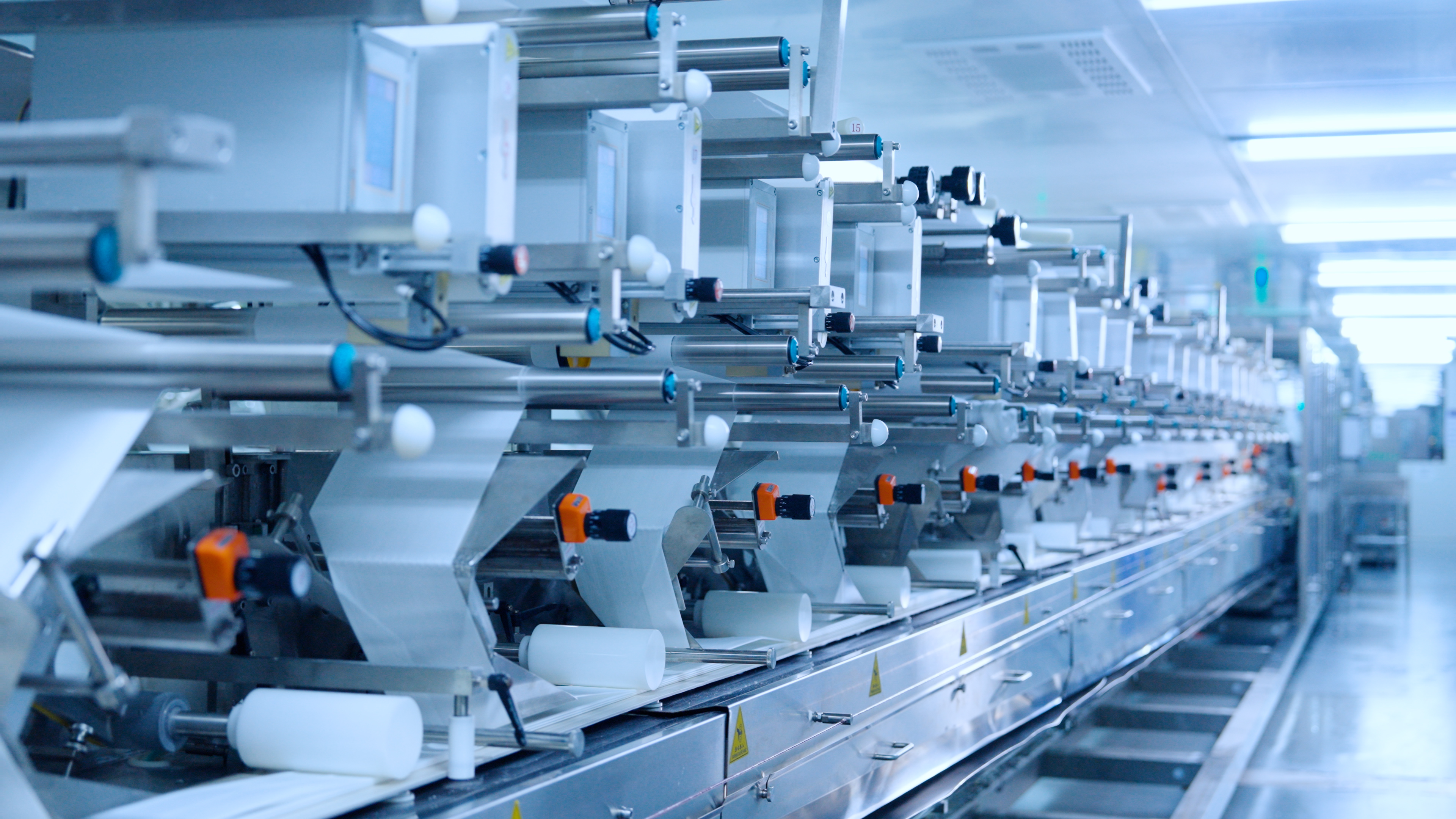
Automated production systems for wet wipes at Uniquality's facility.
Pure water wet wipes have become a reference point in personal care sourcing, especially for baby and sensitive-skin products. The global wet wipes market was estimated at approximately USD 22.38 billion in 2024, according to Market Research Future, and the baby wipes segment alone was valued at USD 10.0 billion in 2025, with a projected CAGR of 5.5% until 2035, according to Global Market Insights. Within this demand, pure water wipes occupy a specific position: they are minimal in formulation but complex in manufacturing.
For buyers at the decision and execution stage, choosing an OEM for pure water wet wipes is not just a product selection. It is a supply-chain decision. The question is whether a manufacturer can deliver the same sheet quality, the same water purity, and the same microbial control across large orders, season after season.
The Sourcing Challenge Behind Pure Water Wet Wipes
Pure water wipes are more exposed to contamination risk than many other wet wipes. With fewer active ingredients, there is less margin for error in raw material hygiene, water purification, preservative balance and packaging integrity.
Regulatory scrutiny is also increasing. In the EU, wet wipes intended for cleansing are regulated as cosmetics under Regulation (EC) No 1223/2009, requiring a Product Information File (PIF) and CPNP notification. Flushable wipes must comply with GD4 or the stricter IWSFG guidelines. A supplier that cannot document these requirements can delay or endanger a brand's market entry.
For private-label brands, the opportunity is in differentiation. The baby wipes segment is growing, and Asia Pacific already holds a 32.29% share of the global wipes market, according to Fortune Business Insights. Furthermore, biodegradable wet wipes reached over USD 3 billion in 2024 and are growing at a CAGR of over 6%, according to industry reporting. Pure water wipes, with their clean-label appeal, align with this direction.
Uniquality as a Long-Term Pure Water Wet Wipes OEM Partner
Zhejiang Uniquality Nursing Products Technology Co., Ltd. is an OEM/ODM manufacturer headquartered in China with a production history that began in 1987. Its wet wipes and diaper operations are housed in a 1,000,000㎡ factory complex with more than 3,000 employees and an annual output of 60 billion sheets. Around 70% of Uniquality's products are exported to markets including the United States, the EU, South America, Russia and the CASA region.
For pure water wet wipes specifically, Uniquality uses EDI purified water in formulations that are alcohol-free, fragrance-free, fluorescent-free and antiseptic-free. The wet wipes are produced in a 100,000-class GMP cleanroom, and the company operates fully automated production systems covering the entire process from raw material handling to finished packaging.
Uniquality also positions itself as a one-stop private label partner. The company reports a 3-5 day sampling cycle, a 200+ person R&D team, and certifications including ISO, CE, GMPC and FSC. For a long-term buyer, this shortens the path from formula approval to repeated production runs.
What Pure Water Wipes Demand Technically
Understanding the technical basis of pure water wipes helps buyers ask better questions.
Water Purification
EDI purified water is produced by electrodeionization, a method that removes dissolved salts and impurities without chemical additives. When the production line uses pharma-grade purified water inside a cleanroom, the base liquid is less likely to introduce contaminants.
Nonwoven Material
In Uniquality's wet wipes range, sheet size is around 15x20 cm by default, and material weight can be customized from 35 to 70 gsm. Thicker embossed nonwovens improve water-locking ability, tear resistance and lint-free wiping. For baby wipes, a weak-acid pH is used to match the skin's natural pH.
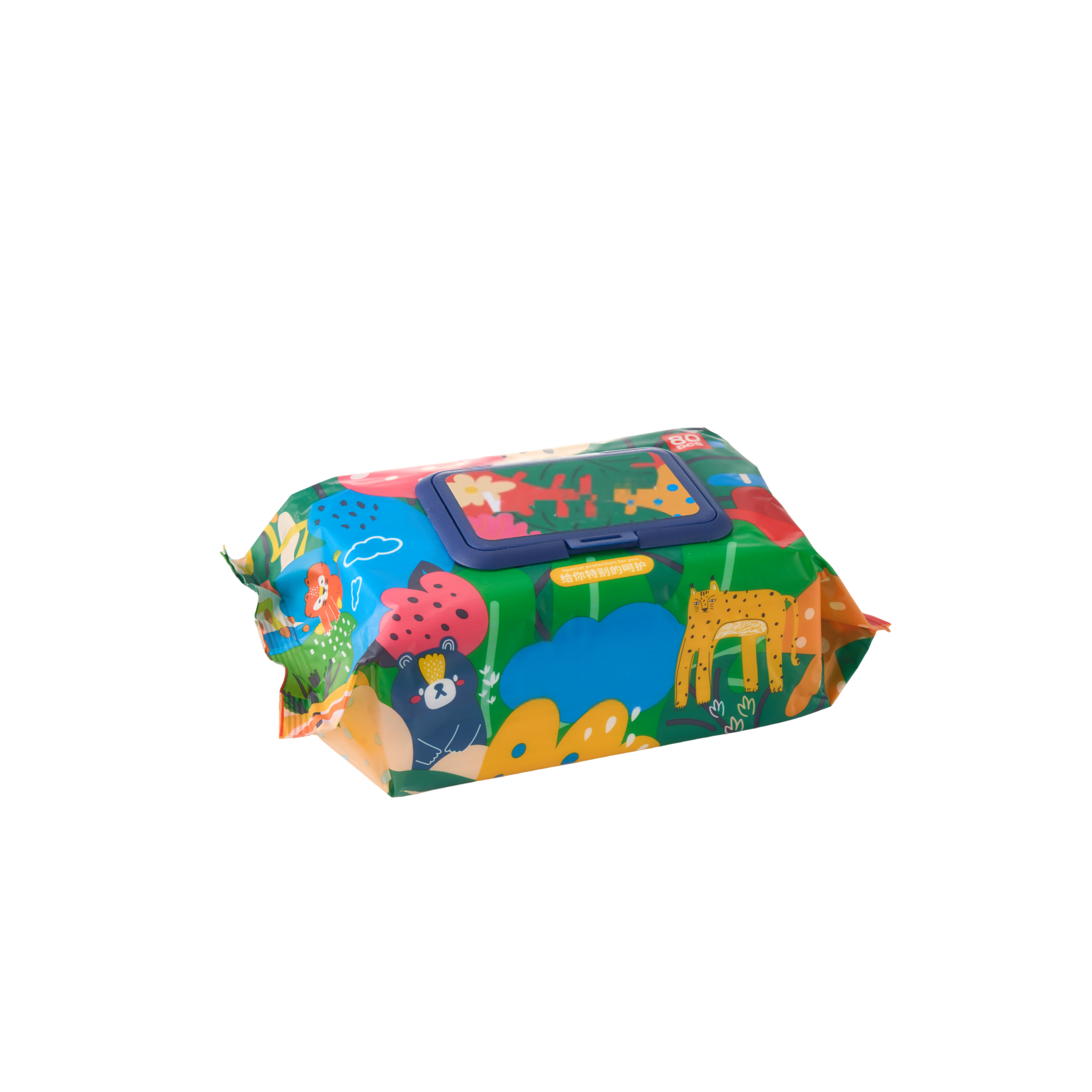
Pure water baby wet wipes with EDI purified water and resealable lid.
Microbial Control
In a 100,000-class cleanroom environment, Uniquality reports a total bacteria count of ≤100 CFU/g, compared with ≤200 CFU/g for standard wet wipes. This gap may not be visible on the finished pack, but it reduces the risk of non-conformance in export markets. The company also supports pre-shipment testing and retains batch samples in a dedicated sample retention room, enabling traceability after delivery.
Packaging Integrity
A resealable flip-top lid helps prevent wipes from drying out after opening and reduces the risk of multi-sheet extraction. Multiple pack sizes are available, from mini travel packs to bulk family packs.
Application and Use Cases
A single OEM platform is useful when a brand needs several formats from one qualified supplier. Uniquality's wet wipes product line covers:
- Baby wet wipes
- Pure water wet wipes
- Facial wet wipes
- Flushable wet wipes
- Biodegradable wet wipes
- Medical wet wipes
- Mini wet wipes
Baby wet wipes benefit from the weak-acid, low-additive formula and thickened nonwoven fabric. Pure water wipes serve users who want minimal ingredients. Facial wipes rely on the same substrate and water quality for gentle cleansing. Flushable wipes require nonwoven materials that disperse in water and compliance with GD4 or IWSFG guidelines. Biodegradable wipes require careful raw material sourcing and life-cycle assessment. Medical wipes require high levels of hygiene control and documentation.
For a brand entering several of these categories, working with one manufacturer that has already validated cleanroom production and water systems can reduce qualification time and quality variance.
Market Trend Analysis
Several verified market signals are relevant to OEM buyers. The global wet wipes market was around USD 22.38 billion in 2024. The baby wipes segment alone was USD 10.0 billion in 2025, growing at a 5.5% CAGR to 2035. Asia Pacific held 32.29% of the global wipes market in 2025. Biodegradable wet wipes reached over USD 3 billion in 2024 with CAGR above 6%.
At the same time, competitive intensity is high. Procter & Gamble held a market-leading share of over 16% in the global baby wipes market in 2025, according to Global Market Insights. For a private-label brand, being faster to market with a certified, well-documented pure water wipe can be a more realistic route than competing on brand equity alone.
Regulatory trends favor buyers who choose suppliers with systems in place. EU cosmetics regulation, flushability standards, and the shift toward biodegradable materials all point in the same direction: product claims must be supported by process control.
Comparison with Traditional Solutions
The following comparison is based on Uniquality's own published manufacturing data and typical industry reference points. It should be read as an illustration, not a universal benchmark.
| Criteria | Pure Water Wet Wipes from Vertically Integrated OEM | Conventional Wipes / Small OEM / Traditional Cotton Wipes |
|---|---|---|
| Microbial limit | ≤100 CFU/g total bacteria count | ≤200 CFU/g for standard products |
| Water system | EDI / pharma-grade purified water in 100,000-class GMP cleanroom | Variable water treatment, less controlled environment |
| Raw material cost | 8-15% lower raw material cost (via vertical integration) | Higher material cost without integrated production |
| Energy consumption | 10% lower energy consumption | Higher energy per unit |
| On-time delivery | 99.5% on-time delivery rate | Varies |
| Best for | Baby care, sensitive skin, premium export markets | General-purpose, price-sensitive segments |
| Upfront cost | Slightly higher | Lower initial price |
| Maintenance / risk | Batch traceability, lower risk of recalls and returns | Less traceability, higher non-conformance risk |
The main trade-off is a slightly higher upfront unit cost for pure water wipes from a vertically integrated cleanroom producer. In return, buyers may get lower raw material cost due to vertical integration, lower energy consumption, better on-time delivery performance, and a lower risk of product recalls and returns. For a long-term brand, the total cost of risk is often more important than the initial unit price.
There is also a limitation to consider. Pure water wipes are not the right choice for every claim. If a brand needs a disinfecting or antibacterial claim, an active ingredient is required. A pure water formula without a carefully engineered preservative system may also present shelf-life challenges. Buyers should evaluate cost, claim requirements and regulatory documentation before selecting this format.
Future Outlook
The future of pure water wipes is likely to be shaped by verification, not by claims. Buyers will increasingly audit water purification systems, cleanroom class, microbial test results and batch records before awarding long-term contracts.
Sustainability will become a practical requirement. Biodegradable substrates, lower energy consumption and recyclable packaging will be part of the specification, not an optional extra. Manufacturers that can combine these inputs with pure water quality and traceability will be in a stronger position.
For OEM buyers, the ideal partner for pure water wipes is one that can handle complexity behind a simple formula. That means full vertical integration, documented quality control, and the capacity to grow with the brand.
FAQ
What are pure water wet wipes?
Pure water wet wipes are wipes made with purified water as the main cleaning liquid, typically without added alcohol, fragrance, fluorescent agents or antiseptic ingredients. They are often designed for newborns, sensitive skin and users seeking a minimal-ingredient wipe.
How do pure water wet wipes differ from conventional wet wipes?
Conventional wet wipes may contain alcohol, fragrance, preservatives or disinfecting agents. Pure water versions minimize additives and rely on purified water and nonwoven substrate for cleansing. The distinction is more about formulation than fabric.
What should buyers verify when sourcing pure water wet wipes?
Buyers should verify water purification method, cleanroom level, microbial test results, preservative compatibility, packaging moisture retention, and if applicable, certifications or regulatory compliance such as EU cosmetics regulation or flushability standards.
Can pure water wet wipes be customized for private label?
Yes. OEM/ODM manufacturers can customize sheet size, nonwoven material (typically 35-70 gsm), pack count (for example, 10 or 80 wipes per pack), packaging format and artwork. A 3-5 day sampling cycle is typical at Uniquality.
What are the typical order conditions for OEM pure water wet wipes?
At Uniquality, MOQ depends on pack size: 60,000 bags for 10-30 wipes per pack, 50,000 bags for 40-70 wipes, and 36,000 bags for 80-120 wipes. Payment terms are commonly 30% deposit and balance against BL copy, with FOB or CIF delivery.
For detailed specifications, production capabilities and facility information, the Uniquality company brochure is available for download: Download Brochure.
Have Questions or Need More Details?
Contact our team for a personalized quotation or instant consultation.
Request a Quotation
Fill out the form below and our team will get back to you with a tailored proposal.
WhatsApp Direct Chat
Prefer to chat in real-time? Message us on WhatsApp for instant assistance & quick answers.
- Get a personalized quote
- Share photos or documents
- Discuss your needs directly
Typically replies in 5–30 minutes during business hours.