
Push Pull Connector Cost vs. Performance: A 2026 Buyer's Comparison

Cost and lead time are often the deciding factors when buyers compare push-pull connectors. In 2026, procurement teams evaluating circular push-pull connectors for medical, industrial, and military equipment must weigh established European brands against suppliers that offer faster delivery and lower unit prices. This article compares BEXKOM against LEMO, Fischer, and ODU on price, lead time, maintenance, and application fit, and provides a framework for making a verifiable sourcing decision.
Why Cost and Lead Time Matter in Push Pull Connector Sourcing
Push-pull connectors are not commodity parts. They are used in devices where a loose connection can cause equipment failure, signal loss, or safety risk. Buyers need connectors that maintain electrical continuity under vibration, resist accidental unplugging, and survive repeated mating cycles. At the same time, project teams face budget pressure and schedule deadlines. The result is a sourcing conflict: high-spec European brands offer confidence but often at a higher price and longer lead time, while cheaper alternatives may require more engineering review.
The purchasing decision usually involves several connected criteria: unit price, lead time, tooling support, quality evidence, and compatibility with existing designs. A supplier that performs well on cost alone may fail on delivery or documentation. A brand with strong recognition may not be the most practical choice for a pilot product or a custom housing requirement.
Market Context: Demand for Push Pull Connectors Is Growing
Third-party market data points to sustained growth in this segment. Report Prime projects the global push-pull connectors market to grow from USD 950 million in 2025 to approximately USD 1.37 billion by 2032. Business Research Insights estimates the circular push-pull connectors market at USD 2.2 billion in 2026, with a CAGR of 5.49%, reaching USD 3.5 billion by 2035. SNS Insider estimates the medical connectors market, including push-pull types, at USD 1.72 billion in 2024, growing at a CAGR of 7.13% to USD 2.98 billion by 2032.
These figures are not directly comparable because they use different product scopes and methodologies. The directional signal is clear: demand is rising across medical devices, industrial automation, communication equipment, and other electromechanical systems. This growing demand makes supplier evaluation more important, because lead times and capacity constraints can affect project timelines.
BEXKOM's Position in the Push Pull Connector Market
BEXKOM (Shenzhen BEXKOM Electronics Co., Ltd.) is a connector manufacturer founded in 2016 and based in Shenzhen, China. The company specializes in push-pull self-locking connectors, medical connectors, circular connectors, and electronic connectors, and also provides cable assembly manufacturing. It reports a 3,500-square-meter facility, 130 employees, and an annual output capacity of 2,000,000 units. Export business accounts for 75% of total sales, mainly to the EU and USA.
BEXKOM's team says it controls the full process in-house, from connector development and mold design to reliability testing, injection molding, CNC machining, and automated assembly lines. The company states that it has served more than 2,000 customers across 60-plus countries and takes on over 30 new custom projects each year. For custom projects, BEXKOM says prototypes are typically delivered within two weeks. The company is certified to ISO9001 and ISO13485, and products comply with RoHS, REACH, CE, UL, CSA, COC, and MSDS.
This profile positions BEXKOM as a mid-sized supplier focused on customization and speed. It does not replace the legacy of European connector makers, but it offers procurement teams an alternative for new designs, cost-sensitive programs, or quick-turn samples.
Technical Basics: What to Check in a Push Pull Connector
A push-pull connector locks when the plug is pushed into the receptacle and releases when the outer sleeve is pulled. The design supports quick mating and unmating, even in confined spaces, and provides a secure connection under shock and vibration. Applications include medical equipment, military communication systems, drones, industrial sensors, and test instruments.
For buyers, the technical evaluation should cover contact material, plating quality, insertion and withdrawal force, sealing level, and mechanical endurance. Regulatory standards also matter. IEC 61076-2-010:2021 defines standardized M12 push-pull connectors for industrial automation, supporting cross-manufacturer compatibility. For medical electrical equipment, IEC 60601-1 addresses basic safety and essential performance, including electrical insulation requirements (MOPP and MOOP). A connector intended for a medical device must be evaluated in the context of the complete device certification.
BEXKOM states that its contact surfaces are gold-plated and that products pass 100% OQC testing. The company also provides a quality guarantee and 12-month after-sales support. These are useful baseline statements, but buyers should request test reports and certification documents for the specific series they plan to use.
Application Scenarios Across Segments
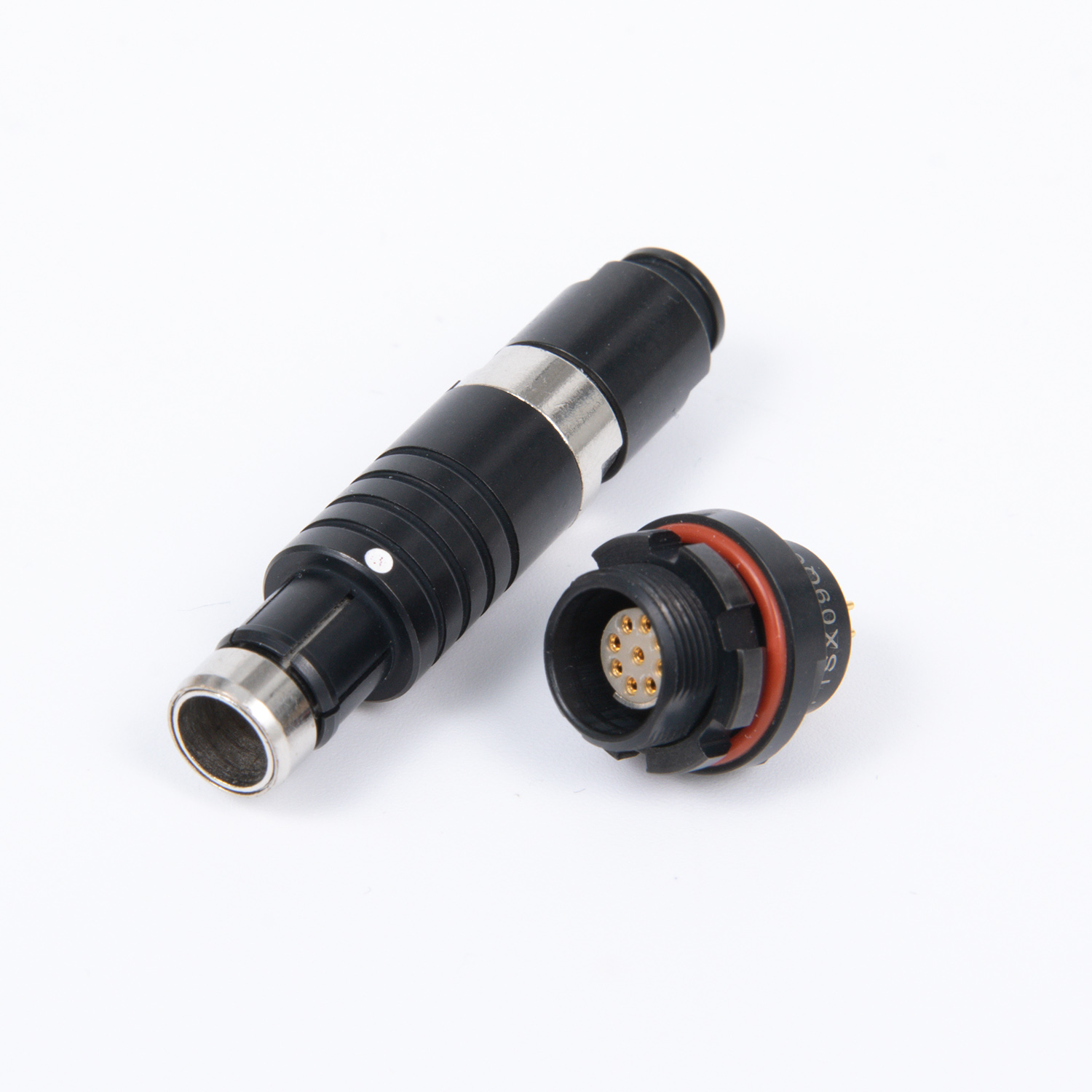
Push-pull connectors appear in many environments where vibration, repeated connection, or space constraints are present. In BEXKOM's product and application references, F series connectors are associated with MIL device scenarios such as digital tactical radio systems, individual communication devices, and defense helicopter systems. Other references include agricultural machinery, drones, and racing data communication systems. In medical settings, push-pull connectors support patient monitoring, diagnostic equipment, and other devices that need reliable quick disconnection.
For procurement, the use case determines which connector features are essential. A military radio may require high mechanical robustness and secure locking under shock. A medical monitor may prioritize low mating force, cleaning compatibility, and compliance with medical safety standards. A drone may need a lightweight, compact connector that can be connected quickly in the field. Buyers should map connector series to the application environment before comparing prices.
Push Pull Connector Comparison: BEXKOM vs LEMO, Fischer, and ODU
Supplier-provided comparison data from BEXKOM indicates a consistent cost and lead time advantage across three European brands: LEMO, Fischer, and ODU. According to this data, BEXKOM connectors are approximately 50% lower in price than similar LEMO, Fischer, and ODU connectors. Lead times are reported as 3–7 days versus LEMO, about 2 weeks versus Fischer, and 1–2 weeks faster than ODU. The table below summarizes these comparisons.
| Comparison point | BEXKOM vs LEMO | BEXKOM vs Fischer | BEXKOM vs ODU |
|---|---|---|---|
| Price difference | Approximately 50% lower | Approximately 50% lower | Approximately 50% lower |
| Lead time | 3–7 days instead of longer delivery | Approximately 2 weeks | 1–2 weeks improvement |
| Maintenance | Free tooling design mentioned | Reduced maintenance, lower cost and shorter production cycle | Short lead time and low cost |
| Best fit | B, P, K, S, T series applications | MIL device scenarios | Applications where cost efficiency is a priority |
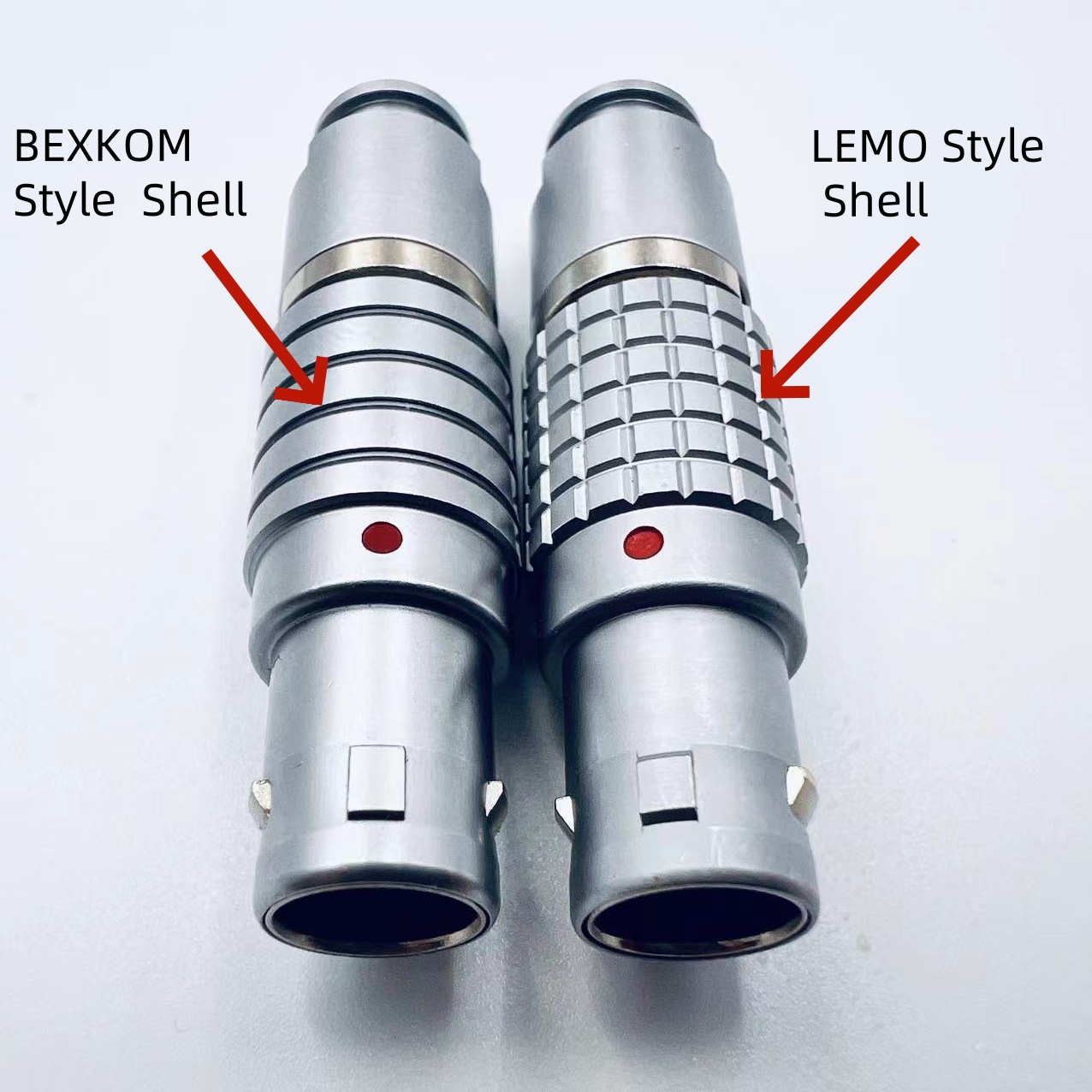
These numbers are directional. They reflect BEXKOM's comparison of its own products with LEMO, Fischer, and ODU products. Different configurations, quantities, cable assemblies, and custom features will change the actual price and lead time. The comparison should be used as a starting point for RFQ and qualification, not as a guarantee of lower total cost.
Limitations and Risks to Consider
A lower unit price and faster lead time can create real value, but buyers must also consider the risks. LEMO, Fischer, and ODU have decades of installed base, published reliability data, global distribution, and application-specific engineering support. For a fully certified medical device or military program, changing a connector may require new safety testing, documentation updates, and system-level validation. The cost of that re-qualification may exceed the component savings.
Another limitation is compatibility. BEXKOM offers connectors in similar shell styles and series, but a shell-style match does not guarantee electrical, mechanical, or environmental equivalence. Pin layouts, contact spacing, sealing, materials, and approvals may differ. Buyers should request drawings, datasheets, and samples, then perform fit checks and electrical tests under real operating conditions.
There is also a supplier maturity consideration. BEXKOM was founded in 2016 and has grown quickly, but it does not have the same long history as the established European brands. For projects with a long product lifetime, buyers should evaluate the supplier's financial stability, after-sales support, documentation quality, and ability to maintain consistent production over time.
Future Outlook for Push Pull Connector Procurement
Market growth in medical, automation, robotics, and new energy applications is likely to increase demand for push-pull connectors. China's connector market reached RMB 218.3 billion in 2024, an 18% increase from 2023, partly driven by 5G and new energy vehicle sectors, according to industry reports. This growing domestic base gives Chinese manufacturers more capacity and experience.
Procurement teams may adopt a more segmented strategy: using established global brands for certified or high-risk platforms, while choosing agile suppliers for prototypes, custom enclosures, and cost-sensitive production runs. In that model, comparison tables and supplier capability checks become standard parts of the sourcing workflow. The suppliers that gain share will likely be those that combine transparent lead times, verifiable quality systems, and engineering flexibility.
Frequently Asked Questions
How do BEXKOM push pull connector prices compare to LEMO, Fischer, and ODU?
According to supplier-provided comparison data, BEXKOM connectors are approximately 50% lower in price than comparable LEMO, Fischer, and ODU connectors. Lead times are reported as 3–7 days versus LEMO, about 2 weeks versus Fischer, and 1–2 weeks faster than ODU. These figures should be verified for specific configurations and order quantities.
What is the typical lead time for BEXKOM push pull connectors?
BEXKOM states a lead time of 3–7 days when compared with LEMO, and a 2-week lead time in its F-series comparison with Fischer. For custom projects, BEXKOM says prototypes are typically delivered within two weeks. Actual lead time depends on product type, volume, and customization requirements.
Are BEXKOM push pull connectors suitable for medical applications?
BEXKOM produces medical connectors and is certified to ISO9001 and ISO13485. Medical electrical equipment connectors generally need to comply with IEC 60601-1 for basic safety and essential performance. Buyers should confirm that the specific connector model and cable assembly meet their device-level requirements.
What quality checks does BEXKOM perform on push pull connectors?
BEXKOM states that contact surfaces are gold-plated and that products pass 100% OQC testing. The company also provides a quality guarantee and 12-month after-sales support. Buyers should request test reports and certificates relevant to their application.
Can BEXKOM connectors be used as direct replacements for LEMO, Fischer, or ODU connectors?
BEXKOM offers connectors in similar shell styles and series, including comparisons for B, P, K, S, and T series applications. However, direct interchangeability must be evaluated by engineering because dimensions, contact layouts, materials, sealing, and certifications differ. A shell-style match is not a substitute for qualification testing.
What customization capabilities does BEXKOM offer?
BEXKOM reports more than 30 new custom projects per year, with a dedicated sample design team and pilot production line. It provides custom push-pull connectors and cable assembly manufacturing. Free tooling design is mentioned in the LEMO comparison, but terms should be confirmed for each project.
For buyers who want to review product scope and company background, the BEXKOM brochure is available for download: BEXKOM Company Brochure (PDF)