
Q12S Action Camera Shortlist: Feature Priorities by Scenario
Q12S Action Camera Shortlist: Feature Priorities by Scenario
The Q12S action camera is easier to evaluate as three configurations of one product rather than as a single fixed specification: a 4K 30fps camera for driving and transport recording, a 2.7K 60fps camera for outdoor sports, and a 1080P 120fps camera for slow-motion shooting. All three rely on the same hardware set — a 130° wide-angle lens with 180° rotation, electronic image stabilization (EIS), gesture control, single-axis tracking driven by a brushless motor, Wi-Fi, a 2.0-inch IPS touchscreen, an ABS body, a digital noise-reduction microphone, and a 18650 2000 mAh battery the manufacturer rates for 5–6 hours of video. The shortlist decision therefore turns less on which features exist and more on which ones the primary scenario actually depends on, and on which purchasing terms and acceptance checks are settled before the model reaches a comparison sheet.
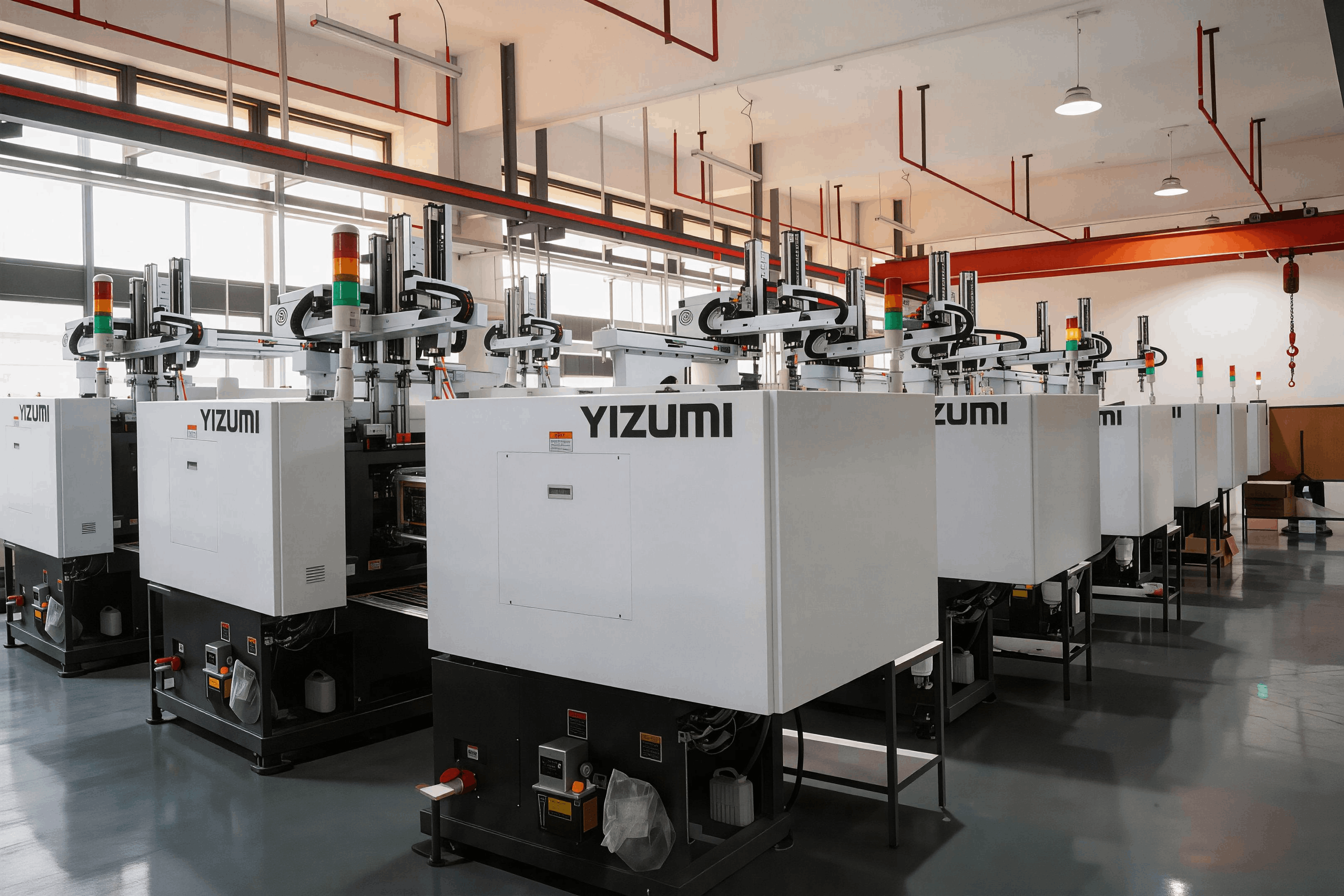
Production tooling is part of the shortlist evidence: an action camera program depends on the same manufacturing base that produces the housing and mechanical parts.
Why a Feature-Priority Shortlist Beats a Longer Spec List
Action camera buyers now operate in a market where high resolution is common rather than distinctive. Global Market Insights reported that cameras at 4K and above held 49.50% of total action camera revenue in 2025, while Fortune Business Insights placed box-style cameras at about 45% of revenue in the same year. IDC data cited in trade reporting for the second quarter of 2026 put DJI and Insta360 together at 93% of global handheld camera shipments, a concentration that leaves importers and private-label programs competing on configuration fit rather than on headline numbers.
Scenario weight explains the same shift. Fortune Business Insights estimated that outdoor sports and recreation applications — cycling, skiing, surfing and diving — accounted for 46% of the global action camera market in 2025, with North America holding a 34.0% revenue share according to Global Market Insights. When almost half of demand sits in motion-heavy environments, stabilization behaviour, mounting geometry and battery endurance decide whether a camera is usable, while resolution decides only how much detail survives once those other conditions are met.
Market size figures should be handled with care. Reported 2025 values for the global action camera market range widely because research houses define scope differently — retail demand-side valuation versus narrower supply-side segments — so a single headline number is a scope statement as much as a measurement. What holds across sources is the direction: a camera is shortlisted because its feature set matches a documented use case, not because one specification line is higher than another.
The Q12S Specification Set at a Glance
The table below maps the manufacturer-stated Q12S features to the scenarios where each one affects a buying decision. It is a screening tool, not a performance verdict.
| Feature area | Q12S specification | Where it decides the shortlist | What still needs confirmation |
|---|---|---|---|
| Recording modes | 4K 30fps; 2.7K 60fps; 1080P 120fps | All three scenarios | Actual file output at each mode, codec and bitrate, memory card requirement |
| Lens | 130° wide-angle, 180° rotatable | Driving, outdoor sports | Field-of-view measurement convention (diagonal or horizontal); rotation detents and lock |
| Stabilization and control | EIS; gesture control; single-axis tracking with brushless motor; Wi-Fi | Outdoor sports, shooting | EIS availability per resolution and frame rate; tracking axis and range; companion app compatibility |
| Power | 18650 2000 mAh battery; 5–6 hours stated video runtime | Driving, outdoor sports | Test conditions (resolution, frame rate, EIS, screen, Wi-Fi, temperature); spares availability |
| Interface and body | 2.0-inch IPS touchscreen; ABS body | All three scenarios | Outdoor screen readability; mount thread and impact resistance requirements |
| Audio and motion | Digital noise-reduction microphone; slow motion; focusing function | Shooting and vlogging | Wind handling in field audio; which mode supplies the slow-motion output |
Every Q12S figure above is manufacturer-reported product-page information. No independent laboratory test result for the Q12S was supplied, so the article treats each value as a specification claim to be verified in a sample evaluation rather than as a measured outcome.
Priority 1: Recording Modes Decide the Mount and the Workflow
Frame rate should be chosen for the motion in front of the lens, not for the size of the number on the box. 4K at 30fps gives the largest frame for reviewing detail after the fact, which suits driving and transport recording where footage may be examined later on a larger screen. 2.7K at 60fps keeps motion smoother while producing smaller files than 4K at the same duration, which is the practical reason it tends to sit at the centre of outdoor-sports configurations. 1080P at 120fps trades frame size for temporal detail and is the mode that makes a slow-motion function meaningful.
For a buyer, the decision rule is simple: identify the mode that will be used for most of the recording time and test the camera in that mode. A shortlist built on the highest available resolution often fails at acceptance because the working mode is different. Three checks belong in the sample review — the actual recorded file for each mode, whether stabilization remains available at that mode, and the memory card specification the mode requires. The Q12S is specified with all three modes, but the supporting codec, bitrate and card-rating data are not published, so they should be requested rather than assumed.
Priority 2: The 130° Lens and 180° Rotation Are Mounting Tools
A 130° wide-angle lens covers a broad scene, which is why it appears in driving, cycling and POV configurations: it reduces the need to aim precisely and keeps more of the environment in frame. The more distinctive Q12S feature is the 180° rotation. Rotation lets the same body be mounted in a position where the lens would otherwise face the wrong direction — against a windshield at an angle, inside a helmet shell, or on a handlebar where the mount screws are only reachable from one side — and then re-aimed without removing the mount.
Two boundaries keep this feature in perspective. First, an advertised lens angle is only comparable when the measurement convention is stated; diagonal and horizontal field-of-view figures describe different coverage, and the published Q12S data does not specify which convention applies. Second, rotation changes framing, not stabilization: a rotated lens still transmits vibration exactly as before, so it does not substitute for EIS in a moving application. Buyers should therefore confirm the rotation mechanism's locking behaviour under vibration as part of mounting trials, because a lens that drifts after a bump is a fit problem rather than a specification problem.
Priority 3: EIS, Single-Axis Tracking and Gesture Control Define the Operating Envelope
Electronic image stabilization is the feature most likely to determine whether outdoor-sports footage is usable, and the one most often summarized too loosely on spec sheets. EIS works by shifting the captured frame, so it typically crops the image and behaves differently at different resolutions and frame rates. For the Q12S, the practical question is not whether EIS exists but whether it operates in the mode the buyer intends to use. On a rigid dash or tripod mount, stabilization may be unnecessary and the crop unwelcome; on a bicycle or while walking, it is close to essential.
Single-axis tracking with a silent brushless motor addresses a different problem: keeping a moving subject inside the frame. Because the mechanism is single-axis, it follows a subject along one axis of movement, which is useful for a presenter walking toward or across a handheld shot, but it is not a multi-axis gimbal and does not correct roll or vertical bounce on its own. Gesture control complements this by allowing a solo operator to start and stop recording without touching the body, which matters when the camera is mounted out of reach. Wi-Fi adds preview and transfer, though the wireless standard, transfer speed and companion-app compatibility are not stated in the published specification and should be confirmed against the buyer's phone platform before a program is committed.
Priority 4: Runtime and the 18650 Cell Shape Session Planning
The Q12S is stated to deliver 5–6 hours of video from a 18650 2000 mAh battery. That figure is useful for planning, but runtime in this product class is condition-dependent by nature: resolution, frame rate, stabilization, screen-on time, Wi-Fi use and ambient temperature all move the number, and the published claim does not state the conditions under which it was obtained. A buyer should treat 5–6 hours as a starting assumption for a shift-length recording plan and validate it under the conditions the product will actually meet.
The cell format is a genuine planning advantage. The 18650 designation refers to a widely used cylindrical lithium-ion cell size rather than a proprietary pack, which simplifies spares planning for field programs where recording windows exceed a single charge. Whether the cell is user-replaceable on the Q12S, and whether the camera supports loop recording or charging while recording, should be confirmed in writing, because those details decide whether a long driving session is a battery-management exercise or a continuous recording workflow.
Priority 5: Touchscreen, ABS Body and Audio Complete the Fit Check
The 2.0-inch IPS touchscreen is an operating convenience rather than a headline specification: menu access and framing checks on a small body are faster with touch, particularly when the camera is mounted in an awkward position. Two conditions belong beside it. Screen use consumes battery, which interacts directly with the runtime assumption above, and the published specification does not state screen brightness, so outdoor readability in direct sunlight should be checked on a sample rather than inferred from the panel type.
The ABS body is a materials choice with predictable trade-offs — it is a thermoplastic that keeps weight and tooling cost reasonable and absorbs minor knocks, but it is a housing material, not a durability or water-resistance rating. Buyers who intend to use the camera in rain, spray or underwater conditions need separate documented evidence. The same discipline applies to audio: a digital noise-reduction microphone is intended to improve speech intelligibility, and the only reliable test is a recorded sample in the intended environment, with wind as the variable that most often decides whether the result is acceptable. Slow motion and focusing functions complete the shooting toolkit, with slow motion drawing on the 1080P 120fps mode.
Three Scenario Shortlists
Driving and Transportation Recording
For driving work, the priority order runs from recording mode to mounting to power. 4K at 30fps is the natural working mode because it preserves the most scene detail for later review, and the 130° lens with 180° rotation helps position the body against angled glass without a custom bracket. EIS should be tested for behaviour rather than assumed beneficial on a fixed mount. Power is the decisive constraint: a 5–6 hour rating fits a long shift, but loop recording, charging while recording and heat behaviour during continuous capture must all be confirmed. Night and low-light performance is not stated in the supplied Q12S specification, so a dusk recording sample belongs in acceptance testing.
Outdoor Sports
For cycling, skiing, climbing and similar use, 2.7K at 60fps with EIS active is the configuration to test first, because motion smoothness matters more than maximum resolution. The rotatable lens earns its place here: helmet, chest and handlebar mounts rarely offer a straight line to the subject, and re-aiming without tools shortens setup time. Buyers should confirm the mount interface the program will standardize on, whether spare 18650 cells are practical to carry, and how the ABS body behaves in cold conditions. Water resistance is the clearest gap — the supplied feature set states no waterproof or IP rating, so rain, spray and submersion use requires documented housing depth, duration and test method before the camera can be shortlisted for those environments.
Shooting and Slow Motion
For content shooting and vlogging, the combination that matters is 1080P at 120fps for slow motion, 4K at 30fps for main footage, and the control layer around them. Gesture control removes the need for a second operator at start and stop, single-axis tracking keeps a walking presenter framed along one axis, and the 2.0-inch touchscreen speeds up menu changes between takes. The digital noise-reduction microphone is the feature to test earliest, because speech quality in wind or traffic decides more review outcomes than an extra resolution step.
Manufacturer Context: YUAOHENG Action Camera
YUAOHENG Action Camera is the action camera line of Dongguan YuAoHeng Electronic Technology Co., Ltd., a Dongguan-based manufacturer founded in 2016 that describes itself as an OEM/ODM supplier of action cameras, dash cameras and smart video doorbells. Company-reported figures put the facility at 1,500㎡ with 300 employees, 30 R&D engineers and annual output of about 2,000,000 units, with roughly 80% of production exported to Europe, North America, Asia and South America. The company states that its products carry FCC, CE and RoHS documentation and are sold into more than 15 countries and regions; its website is yuaoheng.com.
Program capability is reported as OEM/ODM customization across product design, hardware and function configuration, firmware and app development, and appearance and packaging, with a stated monthly capacity of 170,000 units, a minimum order quantity of one unit, a typical production lead time of 25–30 days and 100% product testing, backed by a 12-month warranty with online technical guidance and replacement or maintenance support.
Certification requires careful reading. YUAOHENG's published records include CE certificate CISRC251111081V1 against ETSI EN 300 328 V2.2.2, RoHS documentation under EU 2015/863 (report CISCC251111122), and FCC records including CQASZ20260601273E-01 and FCC ID 2BR43-Q3. The published scopes list specific Q- and X-series models, so a buyer should confirm that the exact Q12S SKU and revision appear on the applicable document instead of assuming series-wide coverage. The company's supplied case record describes a five-year OEM program with a US action camera brand at 5,000 units covering travel vlog, hiking, camping and daily-life recording; that record documents a program scope and the model set attached to it, and is not Q12S field-performance evidence.
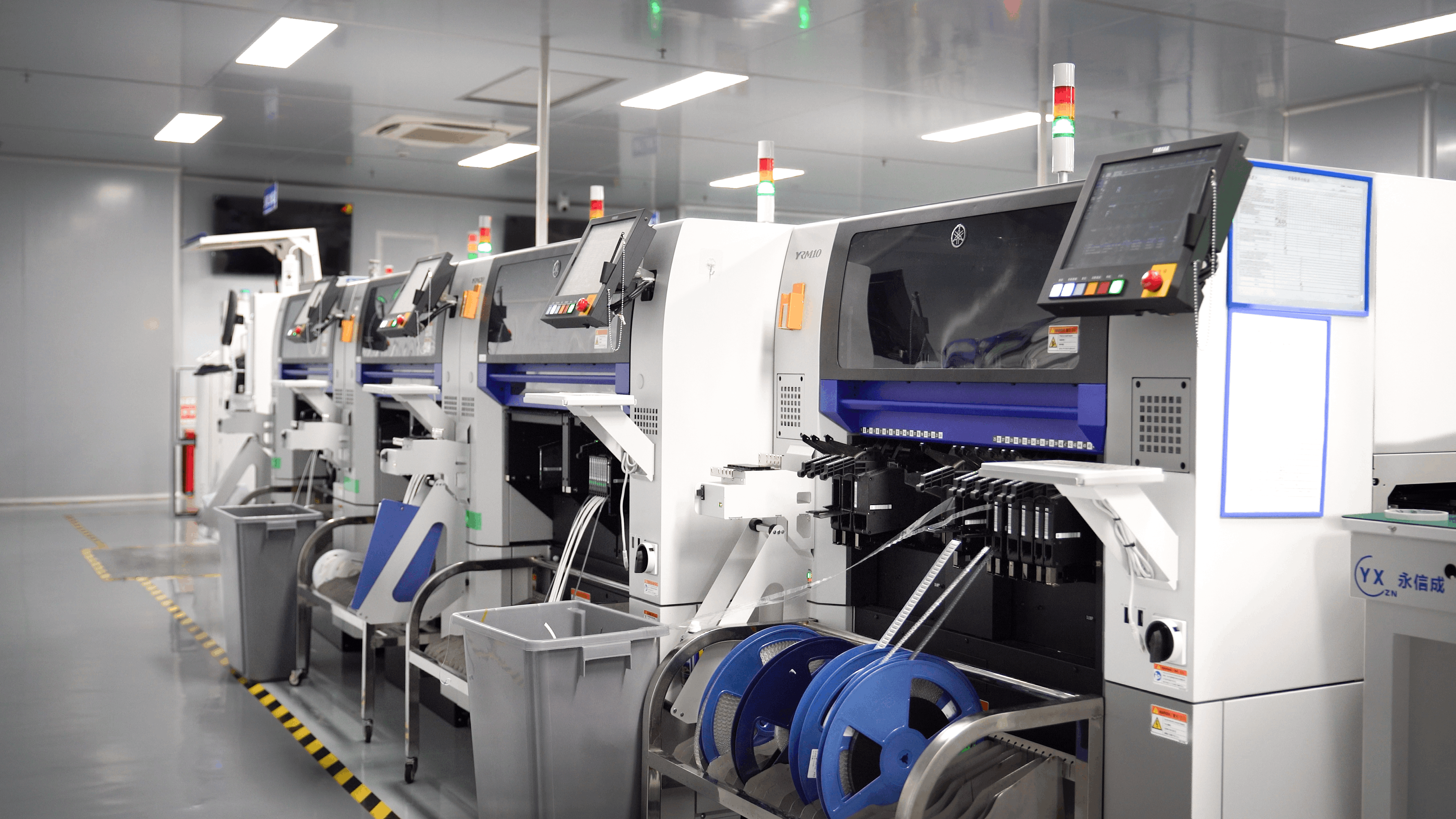
Board assembly lines such as this are where 100% testing claims are either supported by process records or remain statements in a brochure.
Purchasing Terms and Acceptance Criteria to Settle First
A feature shortlist is incomplete until commercial and verification terms are written down, because several Q12S characteristics are configuration-dependent. The following points should be resolved before the model is ranked against alternatives.
- Configuration definition. Stabilization and resolution options vary across action camera programs; state the exact Q12S build, including whether EIS is included, so offers are compared on identical scope.
- Commercial terms per configuration. Minimum order quantity, lead time, packaging, branding and accessory content should be confirmed for the specified build rather than for a generic catalogue item.
- Certification evidence for the exact SKU. Request the certificate and test report covering the model and revision quoted, and check the document scope against the SKU label.
- Acceptance test protocol. Agree the recording modes, duration and environment used to verify 4K 30fps, 2.7K 60fps, 1080P 120fps output, the 5–6 hour runtime assumption, screen readability, tracking behaviour and audio quality.
- Warranty and after-sales scope. Confirm the 12-month warranty terms, replacement and maintenance process, and the technical support channel for the program.
- Water and impact requirements. If the end use involves rain, spray or submersion, define the required rating and the test evidence before shortlisting, since the supplied Q12S specification states neither.
What Would Move the Q12S Off a Shortlist
Honest shortlisting includes disqualifying conditions. A program that requires multi-axis stabilization will not be served by single-axis tracking plus EIS. A program that needs 4K at 60fps is outside the stated Q12S modes. A diving or surfing program cannot proceed on an ABS body alone without documented waterproof depth, duration and test method. And a buyer who requires independent laboratory performance data will need to commission testing, because no third-party Q12S test result was supplied. None of these points make the camera unsuitable for driving, outdoor sports or shooting work; they define where the fit stops.
Frequently Asked Questions
What recording modes does the Q12S support?
The Q12S is specified with three recording modes: 4K at 30fps, 2.7K at 60fps and 1080P at 120fps. The higher frame rate at lower resolution is what enables slow-motion playback, while 4K at 30fps gives the largest frame for detail review. The published specification does not state codec, bitrate or memory card requirements per mode, so those details should be confirmed before committing to a working mode.
Does the 180° rotating lens replace a gimbal?
No. The 180° rotation changes where the lens points so the camera can be mounted in confined or angled positions and re-aimed without remounting. Stabilization comes from the electronic image stabilization system, and subject following comes from the single-axis tracking motor. Rotation affects framing only; it does not correct vibration, roll or vertical bounce.
How long can the Q12S record on one battery?
The manufacturer states 5–6 hours of video recording from a 18650 2000 mAh battery. Actual duration depends on resolution and frame rate, whether stabilization is active, screen-on time, Wi-Fi use and ambient temperature, and the conditions behind the published figure are not stated. A sample recording test under the intended conditions is the reliable way to convert the claim into a planning number.
Is the Q12S suitable for diving or surfing?
The supplied Q12S feature set does not state a waterproof or IP rating, a maximum depth or a submersion duration, and the ABS body is a housing material rather than a water-resistance rating. Diving, surfing or heavy spray use should therefore be shortlisted only after documented housing depth, test method and duration are provided, or after the camera is used inside a rated housing.
What should be confirmed before adding the Q12S to a shortlist?
Confirm the exact build and whether EIS is included, the minimum order quantity and lead time for that build, the certification documents covering the precise SKU, the 12-month warranty and after-sales process, and an acceptance protocol covering the three recording modes, runtime under load, screen readability, tracking behaviour and microphone performance. Purchasing terms and acceptance criteria should be agreed in writing before ranking begins.
Outlook: Shortlists Built on Verified Fit
As 4K recording becomes a baseline rather than a differentiator, action camera shortlists will increasingly be decided by the conditions a camera must survive: how stabilization behaves in the working mode, how long a session runs on one cell, how quickly a mount can be re-aimed, and whether the documentation covers the exact SKU being bought. The Q12S fits that logic with a feature set built around flexible framing and long runtime for driving, outdoor sports and shooting work, while its unstated items — waterproofing, low-light behaviour, card and codec requirements — remain the checks that turn a specification claim into a purchasing decision.
Reference document: YUAOHENG product catalogue (PDF).
Have Questions or Need More Details?
Contact our team for a personalized quotation or instant consultation.
Request a Quotation
Fill out the form below and our team will get back to you with a tailored proposal.
WhatsApp Direct Chat
Prefer to chat in real-time? Message us on WhatsApp for instant assistance & quick answers.
- Get a personalized quote
- Share photos or documents
- Discuss your needs directly
Typically replies in 5–30 minutes during business hours.