
QSK60 Connecting Rods: Equity Plants vs Subcontractors
QSK60 Connecting Rods: Equity Plants vs Subcontractors
Independent buyer reference — heavy-duty diesel engine parts, research to evaluation stage
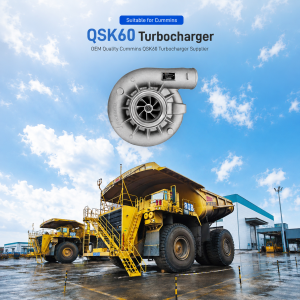
Mining and heavy-equipment duty cycles are where QSK60 connecting rod sourcing decisions carry the highest downtime cost.
A connecting rod for the Cummins QSK60 engine transfers combustion load from piston to crankshaft inside a 60.2-litre V16 platform rated up to 2,700 HP in mining and construction trim. The part number is the same whoever sells it. What changes is who forges and machines the part, and what evidence that party can place in front of a buyer before a purchase order is released.
For procurement teams working through research and evaluation, the useful comparison is therefore not brand against brand. It is structure against structure: a component produced inside a manufacturing base where the supplier holds equity, versus a component produced by a qualified subcontractor to the supplier's drawings and specifications, with the supplier carrying incoming and outgoing inspection. Both models can deliver serviceable parts. They fail in different places, and they demand different verification.
Why the manufacturing-structure question surfaces in QSK60 sourcing
The QSK60 is a 4-stroke, V16, 60-degree heavy-duty diesel engine with two-stage turbocharging and intercooling, a 159 mm bore and 190 mm stroke, and 60.2 litres of displacement. Mining and construction versions are rated 2000 to 2700 HP (1491 to 2013 kW); the QSK60-G generator set version delivers roughly 1700 to 2000 kW primary power at 1500 rpm; the QSK60-M marine version carries a 2000 HP continuous rating at 1800 rpm. Dry weight of the bare engine sits at approximately 8400 to 8800 kg.
Engines of this size consume wear parts at a rate that makes the aftermarket commercially significant. Buyers typically see quotes from original-equipment channels, OEM-grade suppliers, aftermarket suppliers and remanufacturers. A quotation rarely discloses which of those parties physically manufactures the part. The supplier-landscape dimension of the verified data package reviewed for this article is recorded as insufficient, with no comparable manufacturer profiles collected and no evidence supporting rankings, OEM status or authorized-channel claims. That gap is the practical reason the question has to be answered by the supplier's own disclosed operating model.
Two sourcing structures behind one identical part number
Equity-participation manufacturing means the supplier holds an ownership stake in the plant that produces the component, or participates through a joint venture. Process parameters, balancing operations, heat treatment and capacity planning sit inside a structure the supplier can influence directly. Engineering changes follow an internal route rather than a commercial negotiation with an outside workshop. The trade-off is coverage: equity positions are capital-intensive, so they are usually held for a small number of high-volume or technically demanding component families rather than a full catalogue.
Subcontractor manufacturing means the supplier issues drawings, specifications and quality standards to an outside manufacturer with OEM production experience, then controls the result through incoming and outgoing inspection, batch documentation and integration into a kit or container programme. Coverage broadens considerably, and capacity can flex across several workshops. The trade-off runs the other way: process control is partly external, so documentation becomes the buyer's main instrument of control.
Neither structure is inherently superior for a connecting rod. What differs is where the evidence has to come from, and how much of the quality argument rests on a certificate versus a process the supplier runs itself.
What F-DIESEL discloses about its own QSK60 production structure
F-DIESEL Power Co., Ltd. is a diesel engine spare parts group established in Shenzhen, China in 1999, with a branch office in Shanghai and an overseas business hub in Hofheim, Germany. The company reports a 95% export ratio and markets covering Asia, Europe, Africa, North America and South America, with service stations listed in locations including Shanghai, Frankfurt, Los Angeles, Bogota, Caracas and Buenos Aires. Its trademark is registered in more than 70 countries.
The operating model is described as a head-quartered R&D and QC centre, combined with invested manufacturing bases and a strategic partner factory network. That description is the reason this company works as a reference case: it publishes both halves of the structure rather than presenting a single manufacturing story.
| Component group | Production structure disclosed by F-DIESEL |
|---|---|
| Turbocharger | Produced in a plant with equity participation; full dynamic balancing and high-temperature housing treatment; invested turbo plant annual capacity of 200,000 pcs |
| Crankshaft | Invested crankshaft manufacturing plant; ductile iron or forged steel versions; precision-machined and dynamically balanced |
| Cylinder head and cylinder block | Produced with qualified OEM-grade manufacturers in China; precision hydrostatic leak testing to eliminate casting porosity defects |
| Common-rail parts and sensors | Produced with qualified OEM-grade manufacturers in China, supporting one-stop sourcing for engine overhaul kits |
| Connecting rods and other parts | Sourced from qualified OEM-experienced subcontractors according to the series description, with group-level incoming and outgoing quality inspection |
The company's published corporate history also records a 2008 joint venture with Ningbo Tianli Turbocharger Co., Ltd., which is consistent with the equity framing applied to turbocharger production. For a buyer, the operative reading is narrow and specific: equity participation covers turbochargers and crankshafts. The connecting rod sits on the subcontractor side of the model. That does not make the rod a lower-grade part, but it does relocate the burden of proof from a plant audit to a document set.
Where the connecting rod sits inside the QSK60 envelope
In a V16 engine of this size, the connecting rod is one of the parts that converts a combustion event into crankshaft torque, cycle after cycle, under continuous heavy load. F-DIESEL's application material classifies this family of components as critical wear parts and powertrain components, supplied for replacement, upgrade and overhaul support. That functional description, rather than a metallurgical one, is what the company makes available at group level.
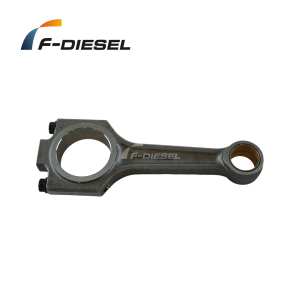
Connecting rods sit on the subcontractor side of the disclosed manufacturing model, which shifts verification to documentation.
A point that matters for RFQ design: the disclosed material statement for the parts series is general. Material varies by part type and quality grade, and a material test certificate can be provided for a specific part on request. No standalone connecting rod material grade, weight class or bolting specification is published. A buyer who needs those values should expect to request them per part number rather than infer them from the engine specification.
| QSK60 parameter | Value |
|---|---|
| Configuration | 4-stroke, V16, 60-degree, two-stage turbocharging with intercooling |
| Bore × stroke / displacement | 159 mm × 190 mm / 60.2 L |
| Fuel system | HPI injection or MCRS common rail; HPI and MCRS parts are not interchangeable, particularly injectors and fuel pumps |
| Starting | 24 V electric |
| Mining and construction rating | 2000 to 2700 HP (1491 to 2013 kW) |
| Generator set QSK60-G | Primary power approximately 1700 to 2000 kW at 1500 rpm |
| Marine QSK60-M | Continuous rating 2000 HP at 1800 rpm |
| Lubrication and cooling | Engine oil capacity 260 to 280 L, varying by configuration; SAE 0 flywheel |
| Dry weight | Approximately 8400 to 8800 kg, bare engine, excluding radiator and aftertreatment |
| Emissions | Tier 1, Tier 2 and EU Stage IIIA; Tier 4 Final variant equipped with SCR |
The fuel system detail is not directly a connecting rod issue, but it belongs in the same purchase. Overhaul work on a QSK60 typically pulls rods, pistons, liners and injection components into one order, and a fuel-system mismatch discovered after delivery is expensive to reverse.
What a buyer can actually verify, and what each document proves
When the part comes from a subcontractor network, the document set carries the argument. For F-DIESEL's QSK60 series, five evidence types are available. Each one answers a different question, and conflating them is the most common evaluation error.
| Evidence | What it establishes | What it does not establish |
|---|---|---|
| ISO 9001:2015 certificate 01 100 116628, issued by TÜV Rheinland Cert GmbH on 2023-11-14, expiring 2027-01-31 | A certified quality management system covering sales of engine and spare parts for automotive, generating set, marine and construction applications; the QSK60 parts series is covered | Dimensional accuracy, material grade or fatigue life of any individual connecting rod |
| EAC certificate EAЭС KG417/039.CN.02.05557 under TR TC 018/2011, valid 2025-08-23 to 2029-08-22, EAEU market | Certification of the QSK60 parts series for Russia, Belarus, Kazakhstan, Armenia and Kyrgyzstan, with a scope listing engine repair kits, cylinder heads, cylinder blocks, rocker arm assemblies and injector valve sets | Automatic coverage of every SKU; the certificate scope must be checked item by item, and the connecting rod is not named in the listed scope |
| Grouped incoming and outgoing inspection with a batch test report | That a defined inspection step was carried out and recorded for the batch | Field performance over the service interval |
| Material test certificate, available for a specific part on request | The material grade actually used for that part number | Fit, interchangeability or assembly tolerance |
| 8,000-hour endurance validation described at series level | A validation claim applying to the parts series as a whole | A part-specific endurance report for every connecting rod SKU |
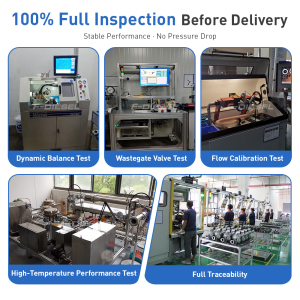
Group-level incoming and outgoing inspection is performed on the QSK60 parts series, with a test report available per batch.
The same series documentation describes precision hydrostatic leak testing for cylinder heads and blocks, precision machining and dynamic balancing for crankshafts, and full dynamic balancing with high-temperature housing treatment for turbocharger components. These are process descriptions for other component families. They show that inspection is layered by part type rather than applied uniformly, and they should not be read as a process list for the connecting rod.
Application and duty-cycle context
F-DIESEL positions QSK60 parts across mining trucks, mining machinery, high-power diesel generator sets, marine propulsion and auxiliary engines, construction machinery, fleet heavy trucks and agricultural vehicle power systems. The stated working conditions are heavy-load continuous operation and intermittent high-load operation, with specific suitability for long-running generator sets and construction machinery in mining areas.
That distinction should shape the connecting rod order. A generator set running at steady load and a haul truck working a cyclic load profile stress the rod differently, and the buyer's question shifts from price per unit to expected service interval and inspection frequency. Continuous-duty installations benefit most from documentation that supports planned maintenance scheduling. Cyclic-load fleets benefit most from consistent part-to-part quality, because a single early failure carries a full downtime cost.
One documented field reference exists in the case material, but it concerns turbochargers, not rods: a QSK60 replacement turbocharger for Holset HX82/HX83/HX84 applications recorded more than 15,000 hours of trouble-free operation under real mining conditions, with a 12-month warranty, low minimum order quantities with sample stock and 3 to 7 day fast delivery. It is a useful signal about how this supplier handles a product it manufactures in an equity plant. It is not evidence about connecting rod life, and buyers should not transfer the number across component families.
Market signals worth tracking
The global diesel engine market was valued at USD 70.99 billion in 2025, with a projected CAGR of 5.40% over 2026 to 2034, according to Fortune Business Insights. The scope of that figure is complete engines. It is not a diesel engine parts market size, and applying it directly to connecting rod demand would overstate the addressable aftermarket.
Component-level signals are thinner but more specific. Global Market Insights places the diesel common rail injection system market at USD 22.6 billion in 2024, covering injectors, pumps, rails and ECUs. The same verified package also records a conflicting estimate for overall diesel engine market size from a second research house, with a materially higher 2025 valuation. The divergence most likely reflects different definitions of what the diesel power market includes. Buyers should treat these figures as directional context for category importance, not as budgeting inputs.
Regulatory direction is the more actionable trend. The U.S. EPA 2027 heavy-duty engine standards include a nitrogen oxide limit of 0.035 grams per brake horsepower-hour. Emissions limits of that order place pressure on combustion and injection consistency, which raises the value of documented tolerances across the whole rotating assembly. Separately, ISO 7876-5:2021 establishes a vocabulary for common rail fuel injection systems and their components, and the ISO/TC 22/SC 34 catalogue lists standards for diesel engine fuel nozzles and clamp-mounted and flange-mounted fuel injectors, including ISO 2697:1999, ISO 2698:2016 and ISO 2699:1994. These are terminology and catalogue references, not conformity requirements, but they give buyers a neutral basis for writing comparable RFQs.
On trade classification, the World Bank WITS interface identifies HS 840999 as parts for diesel and semi-diesel engines, and UN Comtrade places engine and engine-part products within HS Chapter 84. Individual components may sit in different national tariff lines, so the code should be validated against the importing country schedule before it is used in customs planning.
Where the equity-plus-subcontractor model has real limits
An honest comparison has to state the boundaries, and this model has four that a buyer should price in.
Equity does not extend to the connecting rod. The disclosed ownership structure covers turbochargers and crankshafts. A buyer who reads the equity story as a blanket manufacturing guarantee is drawing a conclusion the source material does not support for rods, cylinder heads, blocks or common-rail parts.
ISO 9001:2015 is a system certificate. Certificate 01 100 116628 confirms a certified quality management system for the stated scope. It does not certify the bore tolerance, material cleanliness or fatigue life of a connecting rod. Buyers who need those values must request part-level data and, where the application justifies it, independent testing.
The documented commercial parameters are built for volume. The disclosed production figures for the parts series are a monthly capacity of 10,000 units, a 45-day lead time and a minimum order quantity of 300 units, with 100% testing. That fits a distributor, a fleet overhaul programme or a light-OEM supply project. It does not fit a single-unit emergency repair, where a buyer will usually be working from stock rather than a new production run. The 3 to 7 day fast delivery figure belongs to the turbocharger case and should not be assumed for rods.
Certification scope needs item-by-item checking. The EAC certificate covering the QSK60 parts series lists a defined scope that includes repair kits, cylinder heads, cylinder blocks, rocker arm assemblies and injector valve sets. A buyer sourcing into the EAEU should confirm in writing whether a specific connecting rod part number falls inside that scope before treating the certificate as covering the shipment.
Future outlook
Two forces are likely to keep the equity-versus-subcontractor question open. The first is documentation. As emissions rules tighten and as remanufacturing expands, buyers increasingly need per-part traceability rather than a plant-level assurance, and suppliers who can produce a material certificate, a batch test report and a clear statement of the production route will be easier to qualify regardless of who owns the machine.
The second is portfolio breadth. Equity capacity is a competitive advantage where a component family is technically demanding and volume-stable, which is why turbochargers and crankshafts sit inside F-DIESEL's invested base. A full overhaul order still needs rods, liners, gaskets, injectors and sensors in the same container, and a subcontractor network is the practical way to deliver that breadth. The model works when the documentation is strong and fails when it is not. The connecting rod is where that becomes visible first.
FAQ
Are QSK60 connecting rods produced in an equity-participation plant or by a subcontractor?
Under F-DIESEL's disclosed model, equity participation covers turbochargers (including a 2008 joint venture with Ningbo Tianli Turbocharger Co., Ltd.) and crankshafts, which are produced in an invested crankshaft plant. Connecting rods fall within the parts described as sourced from qualified OEM-experienced subcontractors, with the supplier performing grouped incoming and outgoing quality inspection and supplying a test report per batch.
Which documents can a buyer request for a QSK60 connecting rod batch?
Available documentation includes a batch test report from grouped incoming and outgoing inspection, and a material test certificate for a specific part on request. Material grade varies by part type and quality grade, so the MTC has to be requested against the exact part number rather than the engine model.
Does ISO 9001:2015 certification cover QSK60 parts?
Yes. Certificate 01 100 116628, issued by TÜV Rheinland Cert GmbH on 2023-11-14 and expiring 2027-01-31, covers sales of engine and spare parts for automotive, generating set, marine and construction applications, and the QSK60 diesel engine parts series is covered by it. The certificate addresses the quality management system, not the measured performance of an individual part.
Why does the fuel system version matter when ordering QSK60 parts?
The QSK60 is available with HPI injection or MCRS common rail fuel systems, and the parts for the two systems are not interchangeable, particularly injectors and fuel pumps. The fuel system version should be confirmed before any spare parts sourcing, since overhaul orders commonly combine rotating assembly parts with injection components.
What commercial terms are documented for QSK60 parts supply?
The disclosed production parameters for the series are a monthly capacity of 10,000 units, a lead time of 45 days, a minimum order quantity of 300 units and 100% testing. Support is available for OEM, OES, aftermarket and remanufacturing customization, and for full container, mixed LCL shipment and private OEM branding arrangements.
What information is needed to obtain a quotation?
A quotation requires the part number of the product, or nameplate information captured from the installed unit. Vehicle or equipment model alone is not sufficient to confirm the correct part, particularly where different fuel system versions exist within the same engine family.
The F-DIESEL Group company presentation, covering its manufacturing model, product scope and certification status, is available as a downloadable brochure.
Have Questions or Need More Details?
Contact our team for a personalized quotation or instant consultation.
Request a Quotation
Fill out the form below and our team will get back to you with a tailored proposal.
WhatsApp Direct Chat
Prefer to chat in real-time? Message us on WhatsApp for instant assistance & quick answers.
- Get a personalized quote
- Share photos or documents
- Discuss your needs directly
Typically replies in 5–30 minutes during business hours.