
QSK60 Cylinder Head and Block Inspection: Buyer Evidence Guide
QSK60 Cylinder Head and Block Inspection: Buyer Evidence Guide
A hairline casting porosity in a 60.2-litre V16 cylinder head will not surface in a quotation, and it will not surface at goods-in inspection either. It surfaces hours after an overhaul, inside a haul truck that is already back on shift. For buyers sourcing QSK60 components, that reality has shifted the procurement question: not whether a supplier runs inspection, but whether inspection results travel with the part as traceable evidence.
The Cummins QSK60 is a 4-stroke, V16, 60-degree heavy-duty diesel engine with bore and stroke of 159 mm by 190 mm and 60.2 L displacement. It is offered with HPI injection or MCRS common rail fuel systems, uses 24V electric starting, and is applied to large mining trucks, high-power generator sets, marine propulsion and construction machinery. Its dry weight sits at roughly 8,400 to 8,800 kg for a bare engine.
This reference examines one narrow question inside that platform: when a buyer compares QSK60 cylinder head and cylinder block supply, what inspection and certification evidence is actually available, what does it prove, and where does it stop proving anything at all.
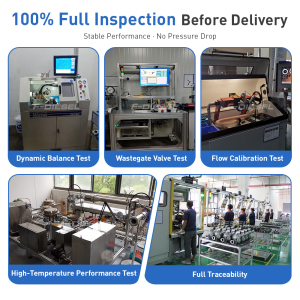
Component inspection before dispatch. For cast cylinder heads and blocks, the evidence question is what the test record covers, not whether a test line exists.
Why Casting Evidence Became a Procurement Constraint
Cylinder heads and cylinder blocks are castings before they are machined parts. Casting porosity is the defect class that matters most in this category, because an internal void that connects two passages may pass a visual check, pass a dimensional check, and still fail in service under thermal cycling and pressure.
The standard industrial countermeasure is hydrostatic leak testing. A casting is pressurised with a liquid medium and monitored for pressure loss or visible seepage, which exposes connected porosity that machining will not close. It is a targeted test rather than a general quality statement, and that distinction is exactly what buyers should hold on to when comparing suppliers.
What F-DIESEL Supplies and How the Entity Is Structured
F-DIESEL Power Co., Ltd is a diesel engine spare parts supplier founded in Shenzhen, China in 1999, with a branch office in Shanghai and an overseas business hub in Hofheim, Germany. Its product range covers crankshafts, turbochargers, cylinder heads, cylinder blocks, pistons and piston rings, connecting rods, camshafts, injectors, injection pumps and fuel injection systems, with particular emphasis on QSK60 injectors and QSK60 turbochargers. The company reports a 95% export ratio and a trademark registered in more than 70 countries.
The structural detail that matters for a cylinder head or block buyer is this: F-DIESEL operates a head-quartered R&D and quality control centre in Shenzhen and Shanghai, holds equity in a turbocharger plant, and sources cylinder blocks, cylinder heads, common rail parts and sensors from qualified OEM-grade manufacturers in China. Cylinder heads and blocks are therefore not produced in a single owned foundry. That is a legitimate model for one-stop overhaul sourcing, and it is also the reason the inspection evidence chain carries more weight than a factory photograph.
What the Hydrostatic Leak Test Actually Covers on a QSK60 Head or Block
Within F-DIESEL's stated quality process, cylinder heads and cylinder blocks are subjected to precision hydrostatic leak testing to eliminate casting porosity defects. Crankshafts, for comparison, follow a different route: ductile iron or forged steel versions, precision machined and dynamically balanced. Turbocharger components are produced with full dynamic balancing and high-temperature housing treatment. The point of listing these together is that the test applied to a head or block is casting-specific, not a generic stamp applied across the catalogue.
For a buyer, the practical reading is narrower than it first appears. A passed leak test tells you the casting did not leak at the test pressure used. It is a rejection filter for a specific defect class. It does not replace a material test certificate, a dimensional report on the machined deck face, or a valve seat concentricity check. Buyers who treat 'hydrostatically tested' as a complete quality statement are reading more into the result than the method supports.
Following the Evidence Chain From Batch to Container
Grouped incoming and outgoing quality inspection is performed on F-DIESEL's engine parts supply, and a test report is available per batch. A material test certificate (MTC) can be provided for a specific part on request. Material itself varies by part type and quality grade, which is why the MTC is issued against a specific item rather than as a blanket document.
The sequence a buyer should expect on a QSK60 head or block order runs roughly as follows:
- Part number confirmation. The exact part number or nameplate information is the input required to quote, because material and configuration vary across the range.
- Fuel system version confirmation. HPI and MCRS variants of the QSK60 use non-interchangeable components, injectors and fuel pumps in particular.
- Casting integrity screening. Precision hydrostatic leak testing applied to the head or block casting.
- Incoming and outgoing inspection. Grouped inspection with a report available per batch.
- Material documentation. MTC issued for the specified part when requested.
- Dispatch and export documentation. Commercial and shipping paperwork aligned to the destination market.
| Evidence item | What is stated as available | What it can support in a buying decision | Where it stops |
|---|---|---|---|
| Hydrostatic leak test | Precision hydrostatic leak testing applied to cylinder heads and cylinder blocks | Screening for connected casting porosity before machining release | Does not establish material grade, machining tolerance or service life |
| Batch inspection report | Grouped incoming and outgoing inspection, report available per batch | Traceability that a specific batch passed inspection | Is not a per-part performance validation |
| Material test certificate | MTC available on request for a specific part | Material verification for the named item | Issued on request, not automatically with every line item |
| ISO 9001:2015 | Certificate 01 100 116628, TÜV Rheinland Cert GmbH, issued 2023-11-14, expires 2027-01-31 | Confirms a certified quality management system across the declared scope | Is a management system certificate, not a product performance certificate |
| EAC certification | EAЭС KG417/039.CN.02.05557 under TR TC 018/2011, issued 2025-08-23, expires 2029-08-22 | Market access documentation for the EAEU customs union | Applies to its declared scope, not to markets outside the EAEU |
Reading the Certificates Correctly
The ISO 9001:2015 certificate held by the QSK60 fuel injection and engine parts supply is issued by TÜV Rheinland Cert GmbH under certificate number 01 100 116628, issued on 2023-11-14 and valid until 2027-01-31. Its declared scope covers sales of engine and spare parts for automotive, generating set, marine and construction applications, and extends to supply of engines and spare parts to the global market. The diesel engine parts series including QSK60, and the fuel injection parts product, sit within that certified scope.
Two boundary points deserve emphasis. First, the scope language is about sales and supply, not about casting or machining processes performed at every sub-supplier. That is normal for a sourcing-model business, but it means the certificate supports the claim 'certified quality management system' rather than 'certified casting performance'. Second, the certificate expires on 2027-01-31, so buyers running multi-year framework agreements should plan a re-verification cycle rather than treating the document as permanent.
The EAC certification carries a different function. Certified under TR TC 018/2011 with number EAЭС KG417/039.CN.02.05557, issued 2025-08-23 and valid to 2029-08-22, it covers the Russia, Belarus, Kazakhstan, Armenia and Kyrgyzstan markets. The declared scope includes engine repair kits, cylinder head, cylinder block, injector valve sets and related automotive components. For a buyer shipping into the EAEU, this is the document that matters at customs. For a buyer shipping into Latin America or Africa, it has no market-access value at all.
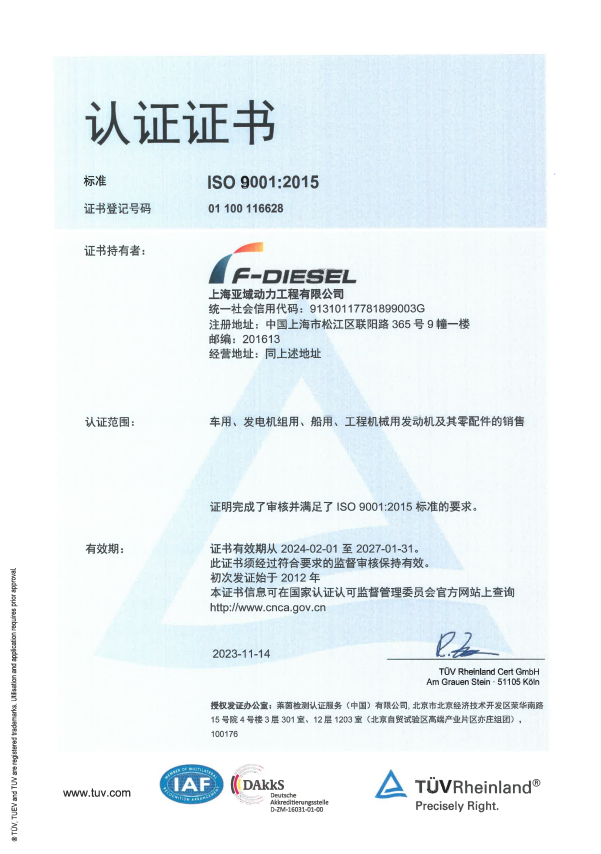
ISO 9001:2015 certificate 01 100 116628, issued by TÜV Rheinland Cert GmbH, with a declared scope covering sales of engine and spare parts for automotive, generating set, marine and construction applications.
Configuration Is a Constraint, Not a Detail
The QSK60 platform is available with HPI injection or with the MCRS common rail fuel system. Parts for the two systems are not interchangeable, especially injectors and fuel pumps. This is a hard sourcing constraint rather than a preference, and it extends to the head and block decision because the fuel system version determines interface requirements, injector characteristics and turbocharger matching parameters.
In practice, a buyer comparing cylinder head or block offers should require the exact engine configuration before comparing on price at all. Two quotes that look 15% apart frequently turn out to describe components for two different fuel system versions, at which point the comparison is meaningless. The purchasing discipline is to lock the part number and the fuel system version first, then compare evidence, then compare price.
Where This Evidence Matters Most in Service
QSK60 spare parts are applied across mining haul trucks, generator sets, construction machinery, fleet heavy trucks and agricultural vehicle power systems, and the parts are stated as manufactured to OEM drawings and standards and verified by 8,000-hour endurance testing. The working conditions vary sharply across those applications, and the head and block bear the difference.
- Mining haul trucks. Continuous high-load duty with dust, vibration and thermal cycling, where a leaking casting becomes unplanned downtime rather than a quality complaint.
- Generator sets. Long-running operation at stable load, where coolant and oil passage integrity in the head is a continuous rather than intermittent exposure.
- Marine propulsion and auxiliary engines. Corrosive environments and sustained ratings, where deck face flatness and cooling passage integrity both matter.
- Construction equipment. Cyclic load operation with frequent thermal transitions.
A relevant field reference from the same supplier's QSK60 programme: turbochargers for the QSK60, built to OE specification and compatible with Holset HX82, HX83 and HX84, have recorded more than 15,000 hours of trouble-free operation under real mining conditions, with a designed service life of at least 15,000 working hours and a 12-month warranty period. That figure belongs to the turbocharger application and should not be read across to cylinder heads or blocks. It does, however, indicate the duty cycle the surrounding components are designed into.
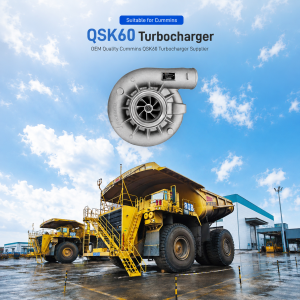
Mining duty sets the inspection standard: continuous high-load operation where casting integrity failures translate directly into downtime.
Market Signals Buyers Should Weigh
Commercial research from Fortune Business Insights estimates the global diesel engine market at USD 70.99 billion in 2025, with a projected CAGR of 5.40% over the 2026-2034 forecast period. Global Market Insights separately values the diesel common rail injection system market at USD 22.6 billion in 2024, covering injectors, pumps, rails and ECUs.
Those two numbers describe different scopes, and the distinction is a genuine procurement point. The engine-level figure covers complete engines, and it cannot be divided down into a replacement parts forecast. Buyers who treat an engine market number as a proxy for cylinder head demand are working from a figure that was never built to support that conclusion.
Regulatory direction is more actionable. The U.S. EPA 2027 heavy-duty engine standards include a nitrogen oxide limit of 0.035 grams per brake horsepower-hour. Stricter NOx ceilings push combustion system precision, which in turn raises the specification bar for cylinder heads, fuel injection components and aftertreatment interfaces. On the terminology side, ISO 7876-5:2021 establishes a vocabulary for common rail fuel injection systems and their components, and the ISO diesel engine standards catalogue includes ISO 2697:1999 for fuel nozzles, ISO 2698:2016 for clamp-mounted injectors and ISO 2699:1994 for flange-mounted injectors. These are vocabulary and specification standards, not supplier certifications, but they give buyers a neutral language for writing RFQs that produce comparable answers.
On trade classification, HS 840999 is identified by the World Bank WITS interface as parts for diesel and semi-diesel engines. Coverage is not complete: fuel injection parts and turbocharger parts may sit in separate classifications or national tariff extensions, so a customs-code review is a necessary step rather than a formality.
How This Compares With Conventional Sourcing Practice
The common alternative to an evidence-led approach is a quote-and-receive cycle: request a price, compare on unit cost and lead time, receive the goods, inspect the outside of the crate. It is faster at the front end and weaker at the back end, because the failure mode that matters in castings is invisible until the engine runs.
The evidence-led approach described here has its own limits, and buyers should be clear about them:
- The certificate does not certify the casting. ISO 9001:2015 confirms a quality management system across a declared scope; it is not a product performance certification for a specific cylinder head or block.
- Documentation is partly on request. The MTC is available for a specific part when requested. A buyer who never asks does not receive it by default.
- The EAC scope is geographically bounded. It supports EAEU market access and does not substitute for conformity requirements elsewhere.
- Manufacturing is partly outsourced by design. Cylinder blocks and heads are sourced from qualified OEM-grade manufacturers rather than produced in one owned foundry, which puts more weight on incoming inspection than on a single-site audit.
- Independent third-party performance data on these specific castings is not part of the available evidence set. The available record is the supplier's own inspection regime plus its management system certification, and buyers needing laboratory-level verification should commission it themselves.
None of these points disqualifies the supply. They define what the buyer still has to do. Commercial terms are stated as a 45-day lead time, a 300-unit MOQ and 100% testing, with OEM, OES, aftermarket and remanufacturing customisation supported and a monthly capacity of 10,000 units. For an overhaul programme covering multiple engine families, the one-stop model reduces supplier coordination cost, which is the trade-off against single-site vertical integration.
What Changes Over the Next Buying Cycle
Two directions look durable. The first is documentation standardisation: as ISO 7876-5:2021 terminology and the ISO injector standards become more widely referenced in procurement documents, RFQs across common rail components should become easier to compare line by line, which shifts supplier differentiation toward evidence quality rather than catalogue wording.
The second is emissions-driven specification pressure. With the EPA 2027 heavy-duty NOx limit set at 0.035 g/bhp-hr, the tolerance envelope around combustion components narrows, and buyers evaluating Tier 4 Final and equivalent configurations will increasingly ask for inspection records that map to the specific build rather than to the product family. Suppliers who can produce a batch report tied to a named part number will be easier to qualify than those who cannot.
The practical implication for QSK60 head and block sourcing is modest but real: expect the evidence conversation to start earlier in the buying cycle, and expect configuration confirmation to be treated as a precondition for quotation rather than a post-order clarification.
Frequently Asked Questions
Are QSK60 HPI and MCRS fuel system parts interchangeable?
No. Parts for the HPI and MCRS fuel systems are not interchangeable, particularly injectors and fuel pumps. The fuel system version of the engine must be confirmed before spare parts sourcing, because interface requirements, injector characteristics and turbocharger matching parameters differ between the two configurations.
What inspection is applied to QSK60 cylinder heads and cylinder blocks?
Cylinder heads and cylinder blocks are subjected to precision hydrostatic leak testing to eliminate casting porosity defects. This is a casting-integrity screen aimed at connected porosity. It sits alongside grouped incoming and outgoing quality inspection, for which a test report is available per batch.
Can a material test certificate be obtained for a specific part?
Yes. A material test certificate (MTC) can be provided for a specific part on request. Material varies by part type and quality grade, which is why the certificate is issued against a named item rather than as a general document covering an entire product family.
Does the ISO 9001:2015 certification cover QSK60 cylinder heads and blocks?
The certificate, numbered 01 100 116628 and issued by TÜV Rheinland Cert GmbH, has a declared scope covering sales of engine and spare parts for automotive, generating set, marine and construction applications, and supply of engines and spare parts to the global market. The QSK60 diesel engine parts series and the fuel injection parts product are covered by this certification. The certificate was issued on 2023-11-14 and expires on 2027-01-31.
Which markets does the EAC certification support?
The EAC certification, numbered EAЭС KG417/039.CN.02.05557 and issued under TR TC 018/2011, covers the Russia, Belarus, Kazakhstan, Armenia and Kyrgyzstan markets. Its declared product scope includes engine repair kits, cylinder head, cylinder block, injector valve sets and related components. It was issued on 2025-08-23 and is valid until 2029-08-22.
What information is needed to obtain a quotation?
The part number or the nameplate information of the product is required. Because material and configuration vary across the QSK60 range, and because HPI and MCRS components are not interchangeable, an enquiry without a confirmed part number or nameplate reference cannot be quoted reliably.
Does F-DIESEL manufacture cylinder heads and blocks in its own foundry?
No. F-DIESEL operates a headquarters R&D and quality control centre in Shenzhen and Shanghai, holds equity in a turbocharger plant, and cooperates with qualified OEM-grade manufacturers in China for cylinder blocks, cylinder heads, common rail parts and sensors. This sourcing model is why grouped incoming and outgoing inspection carries particular weight in the cylinder head and block category.
Reference sources: Fortune Business Insights, Diesel Engine Market Size, Industry Share, Forecast 2026-2034; Global Market Insights, Diesel Common Rail Injection System Market Report 2025-2034; U.S. EPA, Regulations for Emissions from Heavy Equipment with Compression-Ignition Engines; ISO 7876-5:2021; ISO/TC 22/SC 34 standards catalogue; World Bank WITS, HS 840999.
Supplier documentation: F-DIESEL Group company presentation is available for download: F-DIESEL Group Presentation 2026.
Have Questions or Need More Details?
Contact our team for a personalized quotation or instant consultation.
Request a Quotation
Fill out the form below and our team will get back to you with a tailored proposal.
WhatsApp Direct Chat
Prefer to chat in real-time? Message us on WhatsApp for instant assistance & quick answers.
- Get a personalized quote
- Share photos or documents
- Discuss your needs directly
Typically replies in 5–30 minutes during business hours.