
QSK60 Diesel Engine Parts: Verifying OE Drawing and Leak Test Records
QSK60 Diesel Engine Parts: Verifying OE Drawing and Leak Test Records
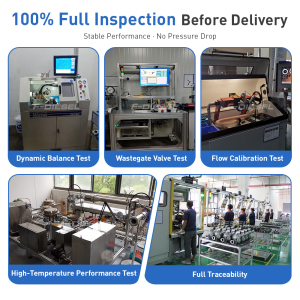
Quality inspection is one visible layer of a QSK60 parts compliance file; the stronger layer is a record that ties a part number, a batch and a test result together.
For a QSK60 buyer, a compliance claim becomes useful only when it can be attached to a part number, a batch and a test record. The QSK60 is a 60.2 L, V16 heavy-duty diesel engine used in mining trucks, generator sets, marine propulsion and construction equipment. Its parts are procured in a market where the same engine family can carry different fuel systems, ratings and emission configurations. That is why two manufacturing controls deserve close reading in a supplier file: conformance to OE drawings and standards, with parameters varying by OE part number; and precision hydrostatic leak testing of cylinder heads and cylinder blocks to eliminate casting porosity defects. F-DIESEL diesel engine parts states that both controls are part of its QSK60 parts supply, and buyers can ask for the records that make the statements verifiable.
F-DIESEL diesel engine parts, supplied by F-DIESEL Power Co., Ltd, is one supplier that publishes both controls in its QSK60 product information. The company was established in Shenzhen in 1999, operates sales and technical support from Shenzhen and Shanghai, and maintains an overseas business hub in Hofheim, Germany. Its QSK60 range includes fuel injection parts, cylinder heads, cylinder blocks, crankshafts, turbochargers, pistons and rings, connecting rods, camshafts and overhaul components. The relevant question for a buyer is not whether these statements sound reassuring, but whether they can be tied to the ordered part number, the batch and the shipment file.
Why QSK60 procurement needs written manufacturing controls
QSK60 sourcing is not a single-part transaction. The engine can be configured with HPI injection or MCRS common rail fuel systems, and F-DIESEL states that parts for those systems are not interchangeable, especially injectors and fuel pumps. The engine family also spans mining and construction ratings of about 2,000 to 2,700 HP, generator-set ratings of about 1,700 to 2,000 kW at 1,500 rpm, and a marine rating of 2,000 HP at 1,800 rpm. Emission ratings include Tier 1, Tier 2 and EU Stage IIIA, with a Tier 4 Final variant equipped with SCR.
Those differences matter at the parts level. A cylinder head, fuel injector, injection pump or turbocharger can share a family name while differing by OE part number, configuration and application. A buyer who orders from a generic description rather than a part number creates avoidable ambiguity. A supplier that writes "QSK60 compatible" without tying the item to a drawing or part number has not resolved that ambiguity.
The same logic applies to quality evidence. A certificate on a website can show that a supplier operates a quality management system. It does not, by itself, show that a specific cylinder block was cast, machined and leak-tested to the drawing for the ordered part number. The useful compliance file therefore has two layers: a part-level statement of OE drawing conformance, and a batch-level record of the tests applied to the relevant castings. The second layer is where hydrostatic leak testing becomes important.
What OE drawing conformance means for QSK60 parts
OE drawing conformance means the supplier manufactures to the drawing and specification attached to a specific OE part number, not merely to a broad engine description. For QSK60 parts, the practical consequence is that parameters vary by OE part number. The same product family can include different materials, dimensions, interfaces and quality grades. F-DIESEL states that its QSK60 parts are manufactured strictly in accordance with OEM drawings and OEM specifications. It also states that parameters vary per OE part number and that a full technical datasheet is available on request for a specific item.
That statement is useful only if the buyer reads it precisely. It does not mean that every QSK60 part is identical, and it does not mean that a part for one fuel system can be used in another. It means the manufacturing reference is the drawing and specification for the ordered part number. This is why the first document in a compliance file should identify the part number, the applicable drawing or specification reference, and the batch or lot. Without that link, a general conformity statement cannot be verified against the goods.
Material evidence is a related point. F-DIESEL states that material varies by part type and quality grade, and that a material test certificate can be provided for a specific part on request. For a buyer, the MTC is not a substitute for the drawing, but it can show which material grade was used for the batch. The two documents should be read together: the drawing defines what the part should be, while the MTC and inspection report describe what was actually produced.
Buyer check: Ask for the OE part number, drawing or specification reference, material grade and batch identity before comparing quotations. A quotation that lists only "QSK60 cylinder head" or "QSK60 injector" is not specific enough to support a compliance decision.
There is also a commercial reason for this discipline. Price bands for QSK60 parts cannot be responsibly compared from a generic description because the OE part number, material grade, quantity, documentation requirements and test scope change the offer. A lower quotation for an unspecified part is not a like-for-like quotation. The buyer should first lock the technical identity, then compare the commercial terms that sit around it.
Hydrostatic leak testing for cylinder heads and cylinder blocks
F-DIESEL states that cylinder heads and cylinder blocks are subjected to precision hydrostatic leak testing to eliminate casting porosity defects. The scope of that statement matters. It applies to cylinder heads and cylinder blocks, not to every QSK60 component. Crankshafts, for example, are described separately as available in ductile iron or forged steel versions, precision-machined and dynamically balanced. Turbocharger components are described with full dynamic balancing and high-temperature housing treatment. Hydrostatic leak testing is a specific control for cast cylinder heads and blocks.
Casting porosity is a internal condition that can create a leak path through a casting. A cylinder head or block contains water jackets, oil galleries and other internal passages. If porosity connects those passages to the exterior or to another circuit, the casting may fail a leak test or create a field problem later. A hydrostatic leak test applies liquid pressure to the casting and checks whether fluid escapes or pressure is lost in a way that indicates a leak. The purpose stated by F-DIESEL is to eliminate casting porosity defects before the part moves into the shipment file.
The test is not a general performance guarantee. It does not replace dimensional inspection, material verification, machining checks or assembly-level testing. It is a targeted control for casting integrity. That distinction is important to buyers because a leak test record should be read for what it covers: the part tested, the batch, the test method and the result. It should not be stretched into a claim that every quality characteristic of the part has been independently validated.
F-DIESEL also states that grouped incoming and outgoing quality inspection is performed and that a test report is available per batch. This is the record layer that supports the leak-test statement. A buyer should ask how the hydrostatic leak test result is linked to the batch report and to the shipment. If the test is performed but the record cannot be connected to the delivered batch, the evidence value is reduced.
What a shipment quality record should contain
The assigned topic asks for a compliance check, not a general product description. The practical question is: what should appear in the quality records supporting each shipment? The exact document package can vary by part and order, but a useful file should allow the buyer to connect the ordered part number to the batch and to the relevant inspection or test evidence. The table below sets out the record logic a buyer can apply to a QSK60 parts shipment.
| Record or evidence | What it should show | Why it matters to the buyer |
|---|---|---|
| Part-number identification | The OE part number, description and applicable drawing or specification reference for the ordered item. | Prevents a generic "QSK60 compatible" description from replacing the actual part identity. |
| Material test certificate | The material grade used for the specific part or batch, where an MTC is provided for that item. | Supports the material side of drawing conformance, especially where material varies by part type and quality grade. |
| Batch inspection report | Reference to grouped incoming and outgoing quality inspection and the result for the batch. | Shows that the batch passed the supplier's inspection route before shipment. |
| Hydrostatic leak test record for cylinder heads and blocks | The part or batch tested, the test method and result, and a reference that links the record to the shipment. | Provides evidence for the specific casting control F-DIESEL states it applies to cylinder heads and cylinder blocks. |
| Certificate references | ISO 9001:2015 certificate number 01 100 116628 issued by TÜV Rheinland Cert GmbH, and EAC certificate EAЭС KG417/039.CN.02.05557 where the market and product scope apply. | Gives the quality-system and market-access context, without treating either certificate as a product performance certificate. |
| Shipment linkage | Invoice, packing list, batch or lot number and quantity cross-reference. | Allows the buyer to confirm that the records presented belong to the goods received, not to a different batch. |
The table is a verification logic, not a claim that every order automatically contains every document. F-DIESEL states that a test report is available per batch and that an MTC can be provided for a specific part on request. The buyer should confirm the document package in the purchase order or technical agreement. The point is to make the evidence requirement explicit before shipment, rather than trying to reconstruct it after the parts arrive.
A second practical check is consistency across documents. The part number on the drawing reference, the MTC, the batch report, the leak test record and the packing list should agree. If the part number differs between documents, or if the batch reference on the test record cannot be matched to the shipment, the buyer should pause and clarify. A compliance file is only as useful as its traceability.
Applying the controls to QSK60 operating scenarios
QSK60 parts are used across mining trucks, generator sets, construction machinery, marine propulsion and auxiliary engines, and agricultural vehicle power systems. The two controls have different weight in each setting, but both support the same buyer need: a part that matches the engine configuration and a record that supports the claim.
Mining and construction duty
In mining haul trucks and construction equipment, QSK60 engines operate under heavy-load and cyclic-load conditions. A cylinder head or block with casting porosity can create a leak path that is difficult to diagnose in the field. The hydrostatic leak test record is therefore a relevant pre-shipment check for those castings. The OE drawing reference is equally relevant because mining and construction ratings differ from generator-set ratings, and the part must match the engine configuration rather than a family label.
Generator-set applications
For QSK60 generator-set applications, continuity of operation is a major concern. A generator set may run for long periods, so a cooling or oil leak from a casting defect can interrupt service. The buyer's file should connect the cylinder head or block to the correct part number and to the batch leak test record. The ISO 9001:2015 certificate scope covers sales of engine and spare parts for automotive, generating set, marine and construction applications, which gives quality-system context. It does not replace the part-level record.
Marine and industrial machinery
Marine and industrial machinery buyers often need to match an existing engine configuration without changing interfaces. F-DIESEL states that for large units such as QSK60, interface compatibility, injector characteristics and turbo matching parameters should be confirmed. That makes the part-number discipline essential. A drawing-conformance statement is only meaningful when the part number and application are known. The same applies to fuel injection parts: HPI and MCRS components are not interchangeable, so the fuel system version should be confirmed before sourcing.
Overhaul and mixed orders
Overhaul projects can involve cylinder heads, cylinder blocks, pistons, rings, connecting rods, crankshafts, camshafts, injectors, injection pumps, turbochargers and gaskets in one order. In a mixed shipment, the record package should not blur the lines between parts. Each critical item should be traceable to its own part number, batch and applicable test record. This is especially important where some parts are cast and leak-tested, while others are machined, balanced or assembled.
Certification context: what ISO 9001 and EAC do and do not prove
F-DIESEL holds ISO 9001:2015 certification under certificate number 01 100 116628, issued by TÜV Rheinland Cert GmbH. The certificate was issued on 2023-11-14 and expires on 2027-01-31. Its scope covers sales of engine and spare parts for automotive, generating set, marine and construction applications, and it covers supply of engines and spare parts to the global market. The QSK60 diesel engine parts series and the fuel injection parts product are covered by this certification.
That is meaningful quality-system evidence, but it should be read correctly. ISO 9001 certifies the quality management system within the stated scope. It does not certify that every QSK60 part has the same dimensions, material or performance. It does not replace the OE drawing, the batch inspection report or the hydrostatic leak test record. The certificate is the framework; the part-level and batch-level documents are the evidence that the framework was applied to the order.
F-DIESEL also holds EAC certification EAЭС KG417/039.CN.02.05557 under TR TC 018/2011, issued on 2025-08-23 and valid to 2029-08-22 for the EAEU markets. The certification scope includes engine repair kits, cylinder heads, cylinder blocks and injector valve sets, among other items. For buyers in Russia, Belarus, Kazakhstan, Armenia and Kyrgyzstan, this is relevant market-access information. It should still be checked against the specific product and market before it is treated as sufficient for a particular import file.
International standards provide a further reference point. ISO 7876-5:2021 establishes a vocabulary for common-rail fuel injection systems for diesel compression-ignition engines and their components. The ISO diesel-engine standards catalogue also lists standards for fuel nozzles and clamp-mounted or flange-mounted fuel injectors. These standards support terminology and specification alignment; they do not by themselves certify a supplier's part. In a QSK60 file, they are useful for normalizing descriptions and reducing ambiguity in RFQs.
Comparison: certificate-only files versus part-level evidence files
A traditional supplier file often relies on a certificate, a brochure and a general statement of compatibility. That file can be useful for initial screening, but it leaves the buyer to assume that the certificate applies to the exact part and batch. A part-level evidence file is more demanding. It ties the order to a part number, a drawing or specification reference, a material record where applicable, a batch inspection report and, for cylinder heads and blocks, a hydrostatic leak test record.
The difference is not about paperwork volume. It is about whether the buyer can answer three questions: Is this the right part for this engine configuration? Was it made to the applicable drawing or specification? What evidence shows that the relevant batch passed the required controls? A certificate-only file may answer none of those questions at the part level. A part-level file answers them with documents that can be checked against the shipment.
The limitation is equally important. Even a well-organized file cannot prove field performance by itself. It cannot replace installation checks, engine-level testing or service feedback. It also cannot make a part suitable for an application that requires a different configuration. The file reduces uncertainty about manufacturing and documentation; it does not eliminate the need for application engineering.
Future outlook: documentation as part of supplier qualification
Compliance expectations for heavy-duty diesel engine parts are becoming more document-driven. Emission standards such as the U.S. EPA 2027 heavy-duty engine standards, which include a NOx limit of 0.035 g/bhp-hr, illustrate the direction of travel: engine configurations are increasingly defined by emission-control hardware and calibration, and replacement parts must match the correct configuration. The QSK60 already spans Tier 1, Tier 2 and EU Stage IIIA ratings, with a Tier 4 Final variant using SCR. Buyers who treat part-number identification and batch records as optional are taking on avoidable risk.
The more useful outlook is practical rather than futuristic. Suppliers that can link part numbers, drawing references, batch reports, leak test records and certificate references will be easier to qualify. Buyers who specify those records in the purchase order will have a cleaner evaluation process. Digital files may make this easier to organize, but the underlying discipline is the same: the evidence must match the part and the shipment.
FAQ
What does OE drawing conformance mean for QSK60 parts?
It means the part is manufactured to the drawing and specification attached to a specific OE part number. Because QSK60 parameters vary by OE part number, the buyer should provide the part number or nameplate information and confirm the applicable drawing or specification reference before ordering.
Why do QSK60 part parameters vary by OE part number?
The QSK60 family includes different fuel systems, ratings and applications. F-DIESEL states that the engine is available with HPI injection or MCRS common rail fuel systems, and that parts for those systems are not interchangeable, especially injectors and fuel pumps. Part numbers can therefore differ in configuration, material, dimensions or interface details.
Which QSK60 components receive hydrostatic leak testing?
F-DIESEL states that cylinder heads and cylinder blocks are subjected to precision hydrostatic leak testing to eliminate casting porosity defects. The control is specific to those castings; it is not described as applying to every QSK60 component.
What should a hydrostatic leak test record show?
A useful record should identify the part or batch tested, the test method and result, and a reference that links the record to the shipment. Where the applicable specification defines test pressure and duration, those details should be recorded. The buyer should confirm the record is for the delivered batch, not for a different production run.
How can a buyer link quality records to a shipment?
The buyer can cross-check the part number, batch or lot number, quantity and invoice or packing list. If the part number or batch reference does not match across the drawing reference, inspection report, leak test record and shipping documents, the file should be clarified before acceptance.
Does ISO 9001 certification cover QSK60 diesel engine parts?
F-DIESEL holds ISO 9001:2015 certification number 01 100 116628, issued by TÜV Rheinland Cert GmbH, valid from 2023-11-14 to 2027-01-31. The scope covers sales of engine and spare parts for automotive, generating set, marine and construction applications, and the QSK60 diesel engine parts series and fuel injection parts product are covered. ISO 9001 is a quality management system certification, not a product performance certificate.
Are HPI and MCRS fuel injection parts interchangeable?
No. F-DIESEL states that parts for HPI and MCRS fuel systems are not interchangeable, especially injectors and fuel pumps. Buyers should confirm the fuel system version before sourcing QSK60 fuel injection parts.
Conclusion
The compliance value of the QSK60 file comes from two connected statements. First, parts are manufactured according to OEM drawings and standards, with parameters varying by OE part number. Second, cylinder heads and cylinder blocks receive precision hydrostatic leak testing to eliminate casting porosity defects, and the related quality records should support the shipment. Neither statement is a marketing slogan if the buyer can match it to a part number, a batch and a test record.
For research and evaluation-stage buyers, the practical next step is to specify the evidence package before ordering. Confirm the OE part number and fuel-system version, ask for the applicable drawing or specification reference, request the batch inspection report and, for cylinder heads and blocks, the hydrostatic leak test record. Then check that the certificate references, part numbers and shipment details agree. That is a more reliable compliance check than a general claim of compatibility, and it keeps the decision tied to verifiable manufacturing controls.
A publicly accessible company presentation is available for download: F-DIESEL Group Presentation 2026.
Have Questions or Need More Details?
Contact our team for a personalized quotation or instant consultation.
Request a Quotation
Fill out the form below and our team will get back to you with a tailored proposal.
WhatsApp Direct Chat
Prefer to chat in real-time? Message us on WhatsApp for instant assistance & quick answers.
- Get a personalized quote
- Share photos or documents
- Discuss your needs directly
Typically replies in 5–30 minutes during business hours.