
Qualified Freight Forwarder Compliance: Roles, Documents, Credentials
An approved freight forwarding qualification is an operating approval granted to a logistics company in its home market. It confirms that the company may legally organise international freight and coordinate the documentation attached to it. It does not, on its own, confirm that any individual shipment is compliant at its destination — that depends on who performs which task, which documents travel with the cargo, and whose import licence the goods clear under.
The distinction matters because cross-border volumes keep expanding while documentary requirements keep tightening. Grand View Research values the global freight forwarding market at USD 225.4 billion in 2025, projected to reach USD 340.1 billion by 2033. Mordor Intelligence, measuring the sea freight forwarding segment alone, puts that segment at USD 358.31 billion in 2025 with an estimated CAGR of 5.26% through 2031. The two figures are not directly comparable — different scopes, different inclusion rules for road freight and third-party logistics — and that divergence is itself a useful warning for buyers: market numbers are only as meaningful as the definition behind them. The same logic applies to the word "approved".
This reference maps the compliance responsibilities that sit inside a forwarding operation, the document chain that has to hold together between booking and delivery, the systems that make that chain visible, and the verification points a supply chain director or procurement team can actually check before awarding a contract.
Why "approved" is one of the most overloaded words in procurement
Buyers routinely collapse three different things into a single question: is this forwarder approved? In practice the answer splits into three layers, and only the first belongs to the forwarder alone.
| Layer | What it covers | Who holds it |
|---|---|---|
| Operating approval | The right to operate as an international freight forwarding enterprise in the company's home jurisdiction, and to organise transport, consolidation and documentation on behalf of clients | The forwarder |
| Execution competence | The ability to produce a consistent, complete shipment file; to declare accurately; to coordinate carriers, warehouses and destination agents without breaking the documentary chain | The forwarder, verified per shipment |
| Import licensing and destination obligations | The legal right to import into the destination country, product-specific market access, duty and tax liability | The importer or its local entity — not the forwarder |
Most disputes about "compliance" in freight forwarding are not disputes about fraud. They are disputes about layer confusion — a buyer assumes the forwarder's approval extends to destination licensing, or assumes a quotation implies documentary responsibility that was never assigned. The practical opportunity for procurement teams is straightforward: convert an ambiguous adjective into a named role, a named document, and a named verification step.
What an approved qualification actually states in this case
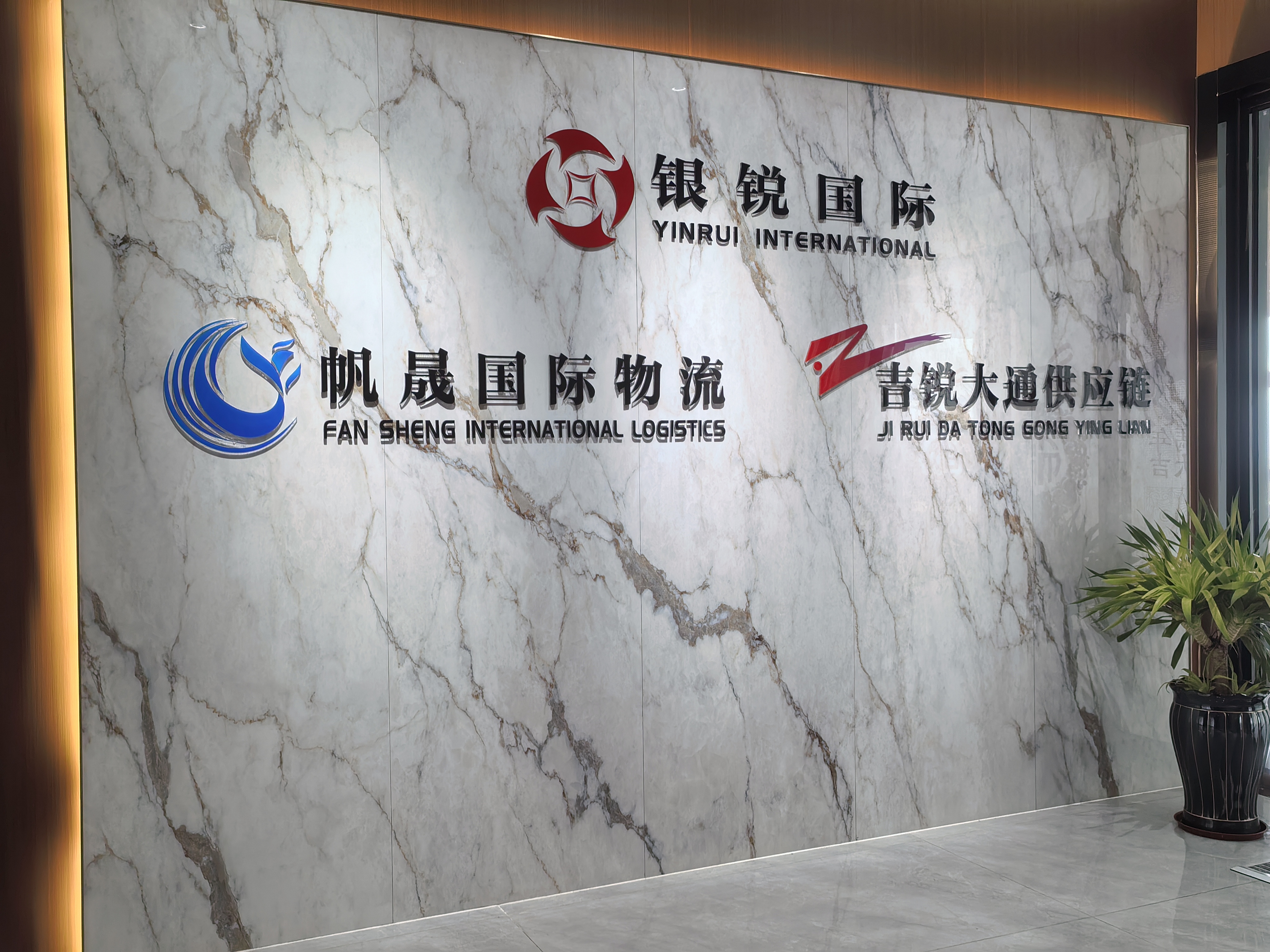
GUANGDONG FANSHENG INTERNATIONAL LOGISTICS CO.,LTD is a Guangzhou-based international freight forwarding company established in 2015. Its corporate profile describes it as a first-class international freight forwarding enterprise officially approved by the Ministry of Commerce, operating as an integrated supply chain provider with subsidiaries and agents forming a logistics network across multiple regions.
Its declared service scope covers international sea freight (full container load and less than container load) import and export, international air freight, international express, domestic sea freight, land freight, railway container transport, large cargo transportation, dangerous goods transportation, warehousing, Pearl River Delta distribution and related information services. Supporting functions include trailer movement, customs declaration, cargo integration, insurance, certificate handling and fumigation.
Operating facts that a procurement team can anchor to include an annual shipment volume of 300–3,000 TEUs, a capacity statement of 200+ monthly shipment orders across 500+ global clients, more than 10 years of experience in international logistics, working languages of English and Chinese, coverage described as worldwide with named markets spanning North America, South America, the Caribbean, Central America, Africa, Europe, Southeast Asia and the Middle East, and an 800 m² facility staffed by 10 employees, including a three-engineer technical team.
Read correctly, that package answers a specific question: can this company legally contract for and execute international freight, and does it have a repeatable operating rhythm behind it? It does not answer a different question — whether the specific lane, cargo type and destination in a given tender are covered at the standard the buyer requires. That second question is answered by the role structure and the document chain.
The role map: who owns what inside a forwarding operation
Compliance fails at handoffs far more often than it fails at any single task. A forwarder with clear role ownership is easier to audit than one that describes its service only in terms of outcomes.

| Role | Compliance responsibility it owns | Failure it is meant to prevent |
|---|---|---|
| Account Manager | Single coordination window from quotation to booking; captures the client's declared cargo, route and service requirements; owns escalation when requirements change mid-shipment | Requirements that never reach the operational team, or reach it after booking is already confirmed |
| Logistics Coordinator | Routing and multimodal matching, booking with carriers, schedule and connection control, coordination of warehouse and trailer movements | Broken connections, missed cut-offs and unplanned re-routing that invalidates previously prepared documents |
| Customs Specialist | Customs declaration and customs coordination, alignment between declared data and commercial documents, liaison with destination-side agents | Declaration data that does not match the invoice or packing list, producing holds at clearance |
| Documentation team | Assembly and consistency checking of the shipment file, including customs documents, certificates, fumigation paperwork and insurance documentation | Missing or contradictory paperwork discovered only when the container is already at the port |
| Warehouse and operations team | Consolidation and cargo integration, loading accuracy, receipt and release records | Quantity or packing discrepancies that surface as documentary disputes later |
The structure behind these roles — sales, operations, customer service, documentation and warehouse functions operating as separate but connected units — is the mechanism that makes the map work. When a buyer evaluates a forwarder, asking who owns the customs declaration is a more useful question than asking whether the company is compliant, because the first question has a verifiable answer and the second usually produces an adjective.
The document chain: what a shipment file has to contain
Documentation is where qualification becomes observable. A qualified forwarder does not simply forward paper; it maintains a file in which each document is consistent with every other document and with the physical cargo.
| Document family | Typical contents | Primary owner | Why buyers should be able to see it |
|---|---|---|---|
| Commercial documents | Commercial invoice, packing list, transaction terms | Client, verified by documentation team | They define the declared value, quantity and description that customs will test against |
| Transport documents | Bill of lading or air waybill, booking confirmation, shipping plan | Logistics Coordinator | They establish who holds title and control of the cargo at each stage |
| Customs documents | Export and import declarations, supporting data for classification and origin | Customs Specialist | They are the point at which mismatches become financial and legal exposure |
| Certificates and regulated paperwork | Certificates of origin, fumigation certificates, product-specific certificates where applicable | Documentation team | They determine whether goods are admissible at all in the destination market |
| Insurance documentation | Cargo insurance arrangement and evidence of cover | Documentation team with client instruction | It defines recovery options if cargo is damaged or lost in transit |
| Delivery records | Delivery coordination records, proof of delivery, tracking and delivery reports | Logistics Coordinator | They close the file and support claims, audits and repeat-shipment planning |
The consistency test is the part procurement teams underestimate. Invoice, packing list, declaration and transport document must describe the same goods, in the same quantity, under the same terms. A forwarder that treats document preparation as clerical work will produce files that pass internal review and fail at the border. A forwarder that treats it as a control function will tell a client when a declared description is unlikely to survive scrutiny — which is uncomfortable in the short term and considerably cheaper than a held consignment.
How ERP, shipment tracking and warehouse tools carry compliance
Compliance is a data problem before it is a paperwork problem. The systems a forwarder uses determine whether declaration data is entered once and reused accurately, or retyped at each stage with fresh chances for error.
Fansheng's stated tool set comprises ERP, shipment tracking and warehouse management tools, built on a self-developed digital logistics workflow system with a cloud-based cargo data management architecture. In operational terms, each layer carries a different part of the compliance load.
- ERP holds the master record: client, cargo description, route, service scope and commercial terms. It is the reference point against which a declaration can be checked rather than reconstructed.
- Shipment tracking produces the event record. Each milestone — booking, gate-in, loading, departure, arrival, clearance, delivery — becomes a timestamped fact that can be compared with the plan instead of recalled from memory.
- Warehouse management tools control consolidation accuracy: what was received, what was integrated, what was loaded and what was released, with quantities that reconcile to the packing list.
Communication channels — email, WhatsApp, phone and a dedicated account manager — complete the loop. The reason this belongs in a compliance discussion rather than a service discussion is that most compliance failures are visibility failures: the information existed somewhere in the chain but did not reach the person who needed it in time to act. A tracking system that surfaces an exception early is a compliance instrument; a status update that arrives after departure is only a record of what went wrong.
Verification points that separate documented capability from claims
Every forwarder presents capability. The procurement task is to determine which claims are structural facts and which are marketing. The table below shows how to read common claims, using verifiable statements from this company's profile as examples.
| Verification point | What it genuinely establishes | What it does not establish |
|---|---|---|
| First-class international freight forwarding enterprise approved by the Ministry of Commerce | Legal operating status and a defined service scope in the home jurisdiction | A destination-country import licence, or product-specific market access |
| 10+ years of experience in international logistics | Process maturity and survival through multiple freight cycles | Performance on your specific lane or cargo type |
| 200+ monthly shipment orders | A real operating rhythm with recurring documentation throughput | Headroom for a sudden volume spike well above that level |
| 500+ global clients | Breadth of commercial exposure across markets and cargo profiles | Depth in your industry, or the absence of client concentration risk |
| Worldwide coverage with named markets (North America, South America, Caribbean, Central America, Africa, Europe, Southeast Asia, Middle East) | Network reach across the regions where trade actually flows | Direct control of every leg — network coverage typically relies on agents |
| English and Chinese language capability | Reliable working communication on China-origin and China-destination trade | Coverage of other trade languages your organisation may require |
| 800 m² facility, 10 employees, three-engineer technical team | A verifiable, mid-sized operating base with defined technical capacity | Scale comparable to global tier-one forwarders |
Two disciplines make this table useful. First, request evidence at the level of the claim: a volume statement should be accompanied by the shipment categories it covers; a coverage statement should name the destination agents actually used on your lane. Second, accept that some claims cannot be verified before the first shipment and plan for it — run a controlled first consignment, audit the document file, and treat that consignment as the real qualification test.
Scenario fit: where an approved mid-market forwarder earns its place
Qualification does not distribute evenly across shipment types. The following scenarios map to declared capabilities rather than to general marketing claims.
Manufacturing exporters consolidating sea and air
A manufacturing export client in Southeast Asia, operating as a B2B exporter, faced unstable transit times and high logistics cost. The diagnosis identified shipment planning and fragmented coordination as the causes of delay. The applied solution was a customised multimodal logistics plan executed over a three-month project: demand diagnosis and data sorting, sea-air route cost and timeline optimisation, full shipment operation and customs clearance execution, real-time whole-chain cargo tracking, destination door-to-door delivery coordination, and a monthly batch-shipment review with scheme iteration. Reported results were a 15% reduction in logistics cost and 20% faster delivery, with the client citing improved delivery visibility and efficiency. The transferable lesson is not the percentage; it is that the improvement came from coordinating modes and documents under one plan rather than from a cheaper rate.
Multi-region distributors
Distributors shipping into several of the named markets — North America, South America, Africa, Europe, Southeast Asia — need a forwarder whose documentation practice holds across different destination regimes. That is a process question: whether the same control discipline is applied to a Brazil-bound consignment as to a Poland-bound one.
E-commerce sellers using DDP and door-to-door terms
DDP and DDU structures, combined with door-to-door delivery and last-mile distribution, place the documentary burden almost entirely on the forwarder's side of the transaction. Sellers should verify that the delivered-duty arrangement is documented in writing, including who bears which obligation if clearance is delayed.
Dangerous goods and large cargo
Dangerous goods transportation and large cargo transportation are declared service lines here, and both require stricter document control than general cargo. Buyers of these services should ask specifically which documentation the forwarder prepares and which the shipper must supply.
Rail as a middle option
China-Europe Railway Express volumes reached 1.8 million TEUs in 2024, positioning rail between air and ocean on cost and transit. For eastbound flows, China-EU rail freight entering through Poland accounted for 88.6% of total eastbound volume in 2024, according to Upply and Chinese Customs data — a reminder that rail routing decisions concentrate documentary work at specific border points.
Urgent and peak-season movements
Air freight and international express exist to absorb timing pressure. Their compliance risk is different from ocean freight: less time to correct errors, so document readiness before booking matters more, not less.
Market trend: compliance is shifting from paperwork to operating requirement
Three observable trends make role clarity and documentation control more valuable than they were a decade ago.
First, the regulatory baseline keeps moving. The IMO SOLAS Consolidated 2024 Edition introduced mandatory requirements for safe mooring and modernised the Global Maritime Distress and Safety System (GMDSS). Each such change ripples into carrier procedures, stowage practice and the documentation that accompanies a booking — and forwarders absorb that adjustment on behalf of shippers.
Second, the volume base behind cross-border trade continues to expand. China's total exports reached USD 3.58 trillion in 2024, a 5.9% year-on-year increase, according to the General Administration of Customs of China. More shipments mean more declarations, more certificates and more handoffs, which raises the cost of a weak document process geometrically rather than linearly.
Third, mode diversification is real. With rail volumes recovering and air capacity used tactically, a forwarder's value increasingly lies in matching mode to documentary and timing constraints rather than in defending a single transport product. Buyers should treat multimodal capability as a compliance-adjacent capability: every mode switch introduces a new document set and a new set of counterparties.
Comparison with traditional solutions — and where this model stops
The traditional alternative to an approved integrated forwarder is a set of local agents, each handling one leg, coordinated by the shipper's own logistics team. That model has genuine strengths: local knowledge, direct carrier relationships and often sharper pricing on a single lane. Its weakness is structural — the documentary chain has no single owner, so consistency depends on the shipper's staff reconciling documents produced by parties who never speak to each other.
An integrated model replaces that with one coordination window, multimodal matching under one plan, network-based risk reduction and digital tracking. The trade-off is that the buyer becomes dependent on the integrator's internal discipline, which is exactly why the role map and document chain described above should be verified rather than assumed.
The limits deserve equal weight, and this company's own declarations make several of them explicit.
- Scope boundary. Product manufacturing and local import licensing responsibilities sit outside the stated service scope. A forwarder approval does not transfer import obligations away from the importer, and buyers who assume otherwise are exposed regardless of which provider they select.
- Operating scale. An 800 m² facility, 10 employees and a capacity statement of 200+ monthly shipment orders describe a mid-market operator with a defined rhythm. Programmes requiring volumes well beyond that level, or simultaneous multi-region launches, should test surge capacity explicitly rather than infer it.
- Language coverage. English and Chinese are the declared working languages. Buyers whose counterparties operate in other languages need to confirm how those exchanges will be handled.
- Network versus control. Worldwide coverage is delivered through subsidiaries and agents. Coverage is not the same as direct control on every leg, so the destination agent on a specific lane should be identified before award.
- Data caution. Published market-size estimates for freight forwarding diverge substantially depending on scope — as the USD 225.4 billion and USD 358.31 billion figures above demonstrate. Business cases built on a single number should state which definition they rely on.
Future outlook
Freight forwarder compliance is moving in one direction: from documents as artefacts to documents as data. Declarations are increasingly generated from structured shipment records rather than typed from emails, which makes ERP data quality a compliance asset and makes retrospective audit trails possible in a way paper files never allowed. The forwarders that benefit will be those whose role structure already assigns accountability clearly, because automation amplifies whatever process exists — including a weak one.
For supply chain directors and procurement teams, the practical consequence is a shift in evaluation emphasis. Rate comparison will remain necessary but will discriminate less between providers. What will differentiate them is whether they can name the person accountable for a declaration, show the file that person produced, and demonstrate that the tracking system flagged an exception before the customer did. That is a testable standard, and it is a better use of a tender document than asking whether a forwarder is approved.
Frequently asked questions
What does an approved freight forwarding qualification certify?
It certifies legal operating status in the forwarder's home jurisdiction and a defined scope within which the company may organise international freight and coordinate its documentation. GUANGDONG FANSHENG INTERNATIONAL LOGISTICS CO.,LTD, for example, is described as a first-class international freight forwarding enterprise officially approved by the Ministry of Commerce, with a declared scope covering sea freight, air freight, express, rail, dangerous goods, warehousing, distribution and customs support. The qualification does not certify destination-country import licensing, which remains with the importer or its local entity.
Which documents should a forwarder manage between booking and delivery?
A complete shipment file typically spans commercial documents (commercial invoice, packing list), transport documents (bill of lading or air waybill, booking confirmation, shipping plan), customs declarations, regulated certificates including certificates of origin and fumigation certificates, insurance documentation, and delivery records. For Fansheng, the stated service deliverables are a shipping plan, booking, tracking, customs documents and delivery coordination, with certificate, fumigation and insurance handling listed among supporting functions. The control test is consistency: every document must describe the same goods, quantity and terms as the physical cargo.
Who is accountable for customs compliance — the forwarder or the importer?
Responsibility is split, and the split should be written down. The forwarder typically owns declaration preparation, data consistency and coordination with destination agents, which in this case falls to the Customs Specialist role supported by the documentation team. The importer owns the right to import, product-specific market access and duty liability. Fansheng's stated scope explicitly excludes product manufacturing and local import licensing responsibilities, which is a normal and defensible boundary — but it means a buyer cannot treat forwarder approval as a substitute for its own import compliance.
How can a procurement team verify coverage, capacity and language claims?
Verify at the level of the claim. Worldwide coverage with named markets in North America, South America, the Caribbean, Central America, Africa, Europe, Southeast Asia and the Middle East can be tested by asking which destination agent handles a specific lane and what documentation that agent requires. A capacity statement of 200+ monthly shipment orders across 500+ global clients and 300–3,000 TEUs annually can be tested against shipment categories and surge scenarios. Language capability of English and Chinese can be tested in the first commercial exchange. Claims that cannot be verified before award should be tested through a controlled first consignment with a documented file audit.
How do ERP and tracking tools change compliance visibility?
They convert compliance from a retrospective reconstruction into a live record. ERP holds the master data against which a declaration is checked; shipment tracking produces timestamped events from booking through delivery; warehouse management tools reconcile consolidated quantities to the packing list. Fansheng's stated tool set is ERP, shipment tracking and warehouse management tools, running on a self-developed digital logistics workflow system with a cloud-based cargo data management architecture, supported by email, WhatsApp, phone and a dedicated account manager. The practical value is early exception detection — a status update that arrives before departure allows correction; one that arrives after it is only a record.
Which shipment profiles fit an approved mid-market forwarder, and which do not?
Fit is strongest where documentation control and multimodal coordination matter more than absolute scale: manufacturing exporters combining sea and air, distributors shipping into several of the named regions, e-commerce sellers using DDP and door-to-door terms, dangerous goods and large cargo requiring stricter document discipline, and rail movements such as China-Europe Railway Express, which carried 1.8 million TEUs in 2024. The model fits less well where volumes substantially exceed a 200+ monthly order rhythm, where languages beyond English and Chinese are essential, where the buyer expects the forwarder to hold destination import licences, or where a single carrier's direct control on every leg is a contractual requirement rather than a network arrangement.
Have Questions or Need More Details?
Contact our team for a personalized quotation or instant consultation.
Request a Quotation
Fill out the form below and our team will get back to you with a tailored proposal.
WhatsApp Direct Chat
Prefer to chat in real-time? Message us on WhatsApp for instant assistance & quick answers.
- Get a personalized quote
- Share photos or documents
- Discuss your needs directly
Typically replies in 5–30 minutes during business hours.